REVIEW · TRIER
Trier Private Walking Tour With A Professional Guide
Book on Viator →Operated by Global Guide Services · Bookable on Viator
Porta Nigra sets the tone. This private walking tour helps you cover Trier’s biggest sights on foot, with a professional guide explaining the why behind the walls, arches, and churches.
I like that the route is built for quick orientation: you hit the major landmarks early, then everything clicks into place as you walk. I also like the private-group format, since you’re not squeezed into a mass shuffle and you can ask questions along the way.
One consideration: at $290.70 per group (up to 15), it’s not the cheapest way to see Trier if you’re just one or two people, and entrance fees aren’t included.
In This Review
- Key highlights you’ll feel on the walk
- Why Trier makes a great private walking tour
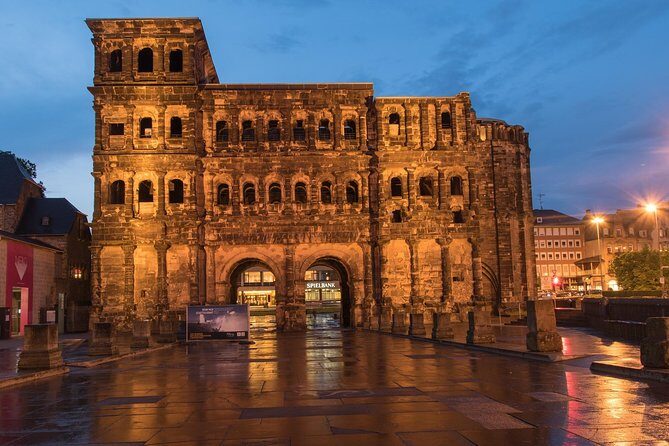
- Meeting at Porta Nigra: Trier’s Roman front door
- Dreikönigenhaus and the shortcut to the market mood
- Hauptmarkt: half-timbered charm plus named medieval details
- Trier Cathedral: Germany’s oldest church, with a story that keeps shifting
- Konstantin-Basilika: the scale of Roman power in one room
- Electoral Palace and rococo flair in the middle of the old core
- Kaiserthermen: time travel in the subterranean labyrinth
- Private-guide value: what you gain beyond a photo stop
- Who this tour suits best (and who might want something else)
- Price and value: $290.70 per group is only “worth it” if you use it right
- Final thoughts: should you book this Trier private walking tour?
- FAQ
- How long is the Trier private walking tour?
- Is this tour private?
- What’s the meeting point?
- What language is the tour offered in?
- What’s included in the price?
- Are entrance fees included?
- Does the tour include a mobile ticket?
- Can I cancel for a full refund?
Key highlights you’ll feel on the walk
- UNESCO Porta Nigra right at the start, built around A.D. 180
- Stops paced for photos and context, including Dreikönigenhaus on the way to the market
- Hauptmarkt sights that mix half-timbered charm with named medieval buildings like Steipe
- Big Roman scale at Konstantin-Basilika, the largest remaining Roman hall
- Gothic-meets-Roman church logic, connecting Trier Cathedral to Liebfrauenkirche
- A dramatic finale at the Kaiserthermen subterranean labyrinth
Why Trier makes a great private walking tour
Trier is one of those German cities where the layers are obvious—Roman first, then church power, then later styles shaping the same core area. Doing it on foot matters. Distances are short enough that you can stay in “walk-and-learn” mode, and your guide can connect one stop to the next without you having to play archaeologist on your own.
This tour is also a smart value if you’re traveling as a small group. The price is per group (up to 15), so the more people you have, the easier it is to turn the cost into something reasonable. And because it’s private, the guide’s pacing works for you, not for a predetermined bus schedule.
You can also read our reviews of more walking tours in Trier

Meeting at Porta Nigra: Trier’s Roman front door
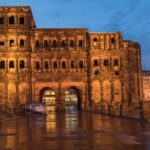
You start at Porta-Nigra-Platz, with Porta Nigra (Black Gate) taking center stage immediately. This UNESCO World Heritage site dates to about A.D. 180. That alone is enough to make people slow down—but the real point is what happened after the Romans.
This gate wasn’t left to become just a relic. It was later converted into two churches, and it was even renovated by Napoleon. That mix of uses is why this stop works as your “map in stone.” As you stand there, your guide can explain how a structure survives by being useful to whoever controls the story next.
Practical tip: give yourself a minute to look at it from different angles. The gate has a way of looking simple until you start noticing the details your eyes miss when you’re only taking photos.
Dreikönigenhaus and the shortcut to the market mood
From the gate, you move toward Trier’s main square. On the way, you’ll stop to take pictures of Dreikönigenhaus (House of the Three Magi), a 13th-century building with a distinctive name and presence.
This isn’t just a quick photo stop. It’s a chance to shift gears from Roman scale to medieval street life. You’re training your eye to recognize style changes as you walk—stone weight here, timber and ornament there—so the later stops don’t feel like disconnected “checkpoints.”
If you like architectural variety, this stretch helps a lot. It keeps the tour feeling like a guided stroll rather than a list of monuments.
Hauptmarkt: half-timbered charm plus named medieval details
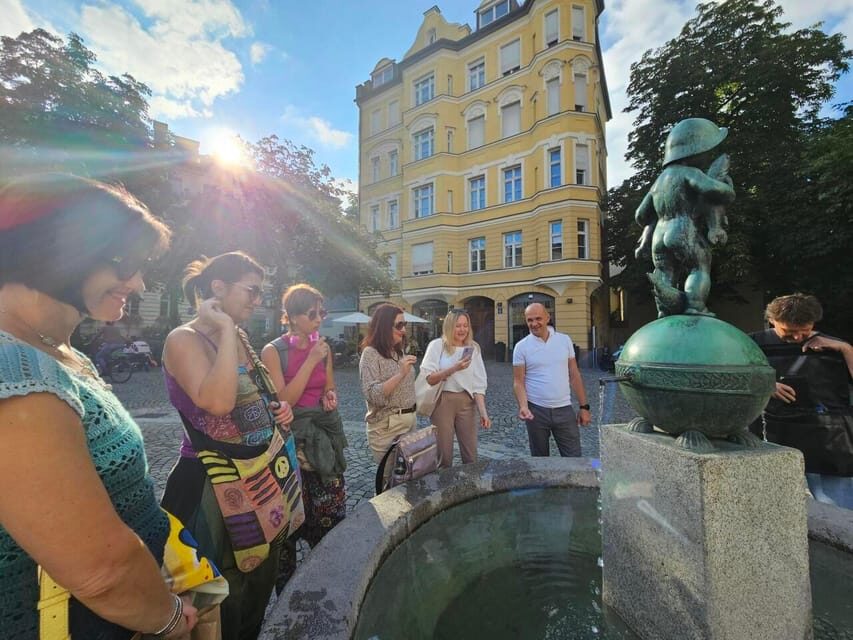
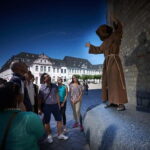
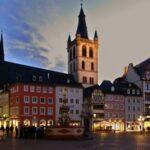
At the Hauptmarkt (Main Market), you’ll see Trier’s classic market-square character: half-timbered houses and a set of landmarks that make the space feel curated without being staged.
Two named sights make this stop more than pretty scenery:
- Steipe, a 15th-century Gothic house
- The Market fountain, dating to the 16th century
Why I think this matters: market squares are where cities show their everyday face. Even when you’re there for history, Hauptmarkt helps you understand what people gathered for—trade, news, announcements—long before the city became a destination.
Potential drawback: market squares can be busy in peak times. Since this is private, your guide can position you to keep the walk moving and the explanations audible, but you may still need patience for photos during high-traffic moments.
Trier Cathedral: Germany’s oldest church, with a story that keeps shifting
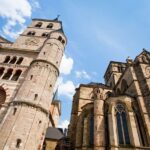
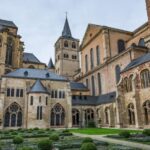
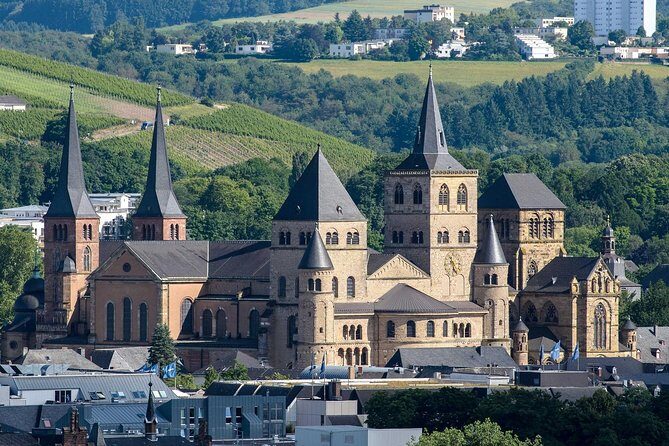
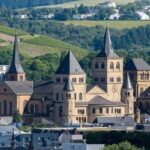
Next comes Trier Cathedral, built in the 4th century and widely considered Germany’s oldest church. This is the kind of sight where you don’t just read the building—you feel the time span.
Your guide also helps connect the cathedral to what came next. The south side was destroyed in the 12th century, and it was replaced by Liebfrauenkirche (Church of Our Lady). That’s key, because it lets you see how a single site evolves, rather than treating each church as an isolated “era.”
Liebfrauenkirche is considered the earliest Gothic church in Germany, which gives you a clean “timeline marker” in the middle of a walk. You can literally compare how design language changes when styles shift.
If you’re the kind of traveler who likes to understand why things look the way they do, this is one of the best stops on the route.
You can also read our reviews of more guided tours in Trier
Konstantin-Basilika: the scale of Roman power in one room
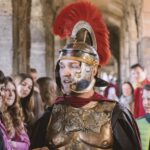
After the cathedral area, you’ll reach Konstantin-Basilika (Roman Imperial Throne Room). This is described as the world’s largest remaining Roman hall, built for Emperor Constantine.
That’s not marketing fluff. It’s scale. Big Roman civic buildings make more sense when you’re standing near them, not just seeing them in a quick picture. On this tour, your guide can point out what “imperial” would have meant in everyday terms—how impressive architecture signaled authority.
Also, this stop is strategically placed next to the electoral complex (coming up), so you get a contrast between Roman monumental space and later European style. If you’re trying to understand Trier as a layered capital, this pairing works.
Electoral Palace and rococo flair in the middle of the old core
Right near Konstantin-Basilika is the Electoral Palace, a 17th-century rococo building. It’s considered the most beautiful of its kind.
This is the moment the tour stops being only about “old Rome and old churches” and shows you how later tastes claimed the same central location. The palace gives you permission to enjoy the decorative side of history, not just the stone-and-sword side.
In practical terms, it also helps break up the heavier stops. You’ll have something lighter to look at before the tour ends with a more underground experience.
Kaiserthermen: time travel in the subterranean labyrinth
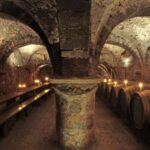
Your last stop is the Kaiserthermen (Imperial Baths), where you’ll get a “travel back in time” feeling. The standout here is the visit to its subterranean labyrinth, where history turns from architecture to atmosphere.
Baths are a big deal in Roman life, and this setting helps you understand why. Not just for washing—Roman baths were social spaces, status spaces, and daily routine spaces. Being underground makes it feel more real because you’re not only looking at what’s left above ground.
If you want a memorable finale, this ending works. It lands the tour with a sensory twist: you leave with the sense that you’ve stepped into how people moved through the city day-to-day.
Private-guide value: what you gain beyond a photo stop
The biggest advantage here isn’t that the sights are famous. Trier has plenty of famous sights. The advantage is how the guide connects them.
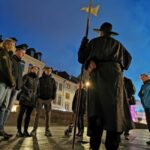
In one example, the guide Wolfgang was praised for being right on time and for sharing interesting historical facts and background behind the events shaping these buildings. Another guide, Michael, brought a portfolio of drawings and images showing how areas looked in Roman, Gothic, and Renaissance times. That kind of visual support can turn a stone wall into a scene you understand.
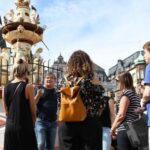
You should expect commentary as you walk, not a long lecture at one spot. And because the tour is private, you can ask for small course corrections—like spending a little longer at a building you love or moving faster past something less interesting for your group.
Who this tour suits best (and who might want something else)
This is a strong fit if you:
- Want a 2-hour orientation to Trier without planning every stop
- Like walking tours with a guide who explains both architecture and context
- Travel with a group where sharing the group price makes sense
- Want English commentary on the main “greatest hits” plus a couple of named details
You might consider a different format if you’re:
- Only visiting for a very short time and prefer self-guided flexibility all day
- Traveling solo and want the lowest possible cost per person
- Sensitive to walking time and uneven old-city surfaces (the tour is listed as suitable for most people, but it’s still a walking route)
Price and value: $290.70 per group is only “worth it” if you use it right
At $290.70 per group for up to 15 people, you’re paying for:
- A local guide dedicated to your group only
- A private route through the key Trier core
- Commentary throughout the walk plus the option to customize on the spot
This can be good value when you split it. Even for smaller groups, the value often comes from saving your time and confusion: you don’t have to figure out what’s important, what order makes sense, and what to ignore. In a compact center like Trier, guides can be efficient.
Just remember: entrance fees aren’t included, so if you want a fully ticketed day, plan for that separately.
Final thoughts: should you book this Trier private walking tour?
I’d book it if you want to leave Trier feeling like you understand the city, not just the postcard views. The route covers the big anchors—Porta Nigra, Hauptmarkt, Trier Cathedral, Konstantin-Basilika, Electoral Palace, and the Kaiserthermen—in an order that helps the story build as you walk.
If you’re going as a group, this is especially compelling because the price stays per group, not per person. If you’re going solo or as a duo, it can still be worthwhile, but only if you really value a guided explanation and plan to spend those two hours asking questions.
FAQ
How long is the Trier private walking tour?
It’s about 2 hours.
Is this tour private?
Yes. It’s private, and only your group participates.
What’s the meeting point?
The start is at Porta-Nigra-Platz, 54290 Trier, Germany.
What language is the tour offered in?
It’s offered in English.
What’s included in the price?
You get a local guide with your group only, plus a private guided tour. The tour also allows possible customizing on the spot.
Are entrance fees included?
No. Entrance fees are not included.
Does the tour include a mobile ticket?
Yes. The tour uses a mobile ticket.
Can I cancel for a full refund?
Yes. Free cancellation is available, as long as you cancel at least 24 hours before the experience starts.