REVIEW · TRIER
Luxembourg to Trier: Tour of Germany’s Oldest City.
Book on GetYourGuide →Operated by Viva´s Tour · Bookable on GetYourGuide
Trier is Germany’s most rewarding shortcut. This half-day-and-change trip starts in Luxembourg and swaps countries for a focused tour of one of the oldest cities in Germany, built around Roman monuments you can still touch. Porta Nigra, the Basilica of Constantine, and UNESCO-listed Roman baths make the day feel like a time machine. The payoff is real: you get guided history in a small group, then two hours to wander on your own.
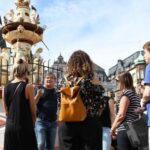
I like the way the route is paced. You hit the big Roman and cathedral stops with a guide, and you’re not trapped in a long lecture—then you’re released into the old town to slow down and browse at street level. The group size cap (up to 15) helps you actually hear what’s being said, even at indoor stops.
One possible drawback: it’s a packed day. With about 1 hour each way by train and multiple guided segments, you’ll want to treat your free time as your only true browsing window—plan for quick coffee and photos, not a marathon.
In This Review
- Key highlights you’ll feel right away
- Why Trier is such a good one-day detour from Luxembourg
- Getting from Luxembourg to Trier: train time that actually matters
- Porta Nigra: the Black Gate and the Roman “front door” of Trier
- Aula Palatina and the imperial clue you carry into the basilica
- Roman Trier in real size: amphitheater and St. Barbara Roman Baths
- Karl Marx House: ideas next to stone monuments
- St. Peter’s Cathedral: the stop with the most payoff per minute
- Market Square free time: use it like a local, not a sprint
- Price and value: is $129 a fair deal for a 5.5-hour day?
- Who this day trip is best for
- Should you book this Trier tour from Luxembourg?
- FAQ
- How long is the tour from Luxembourg to Trier?
- Do I need to bring identification?
- What’s included in the price?
- How big is the group?
- What languages are available for the live guide?
- How much free time do I get in Trier?
- Where do I meet the guide?
- Is there free cancellation?
Key highlights you’ll feel right away
- Porta Nigra (Black Gate): a guided walk-through of the Roman entrance and why its stones look the way they do
- Basilica of Constantine: built in 310, with a story tied to imperial power (the apse once held the emperor’s throne)
- Roman Trier UNESCO moment: St. Barbara Roman Baths are included as a UNESCO World Heritage Site
- Karl Marx House: a museum stop about socialism and communism, housed in a building dating to 1727
- St. Peter’s Cathedral: original 10th-century walls, plus altars and tombs, with a fun “look downstairs” mystery
- 2 hours of independent time: use it for market-square wandering and your own pace
Why Trier is such a good one-day detour from Luxembourg
Trier is close enough to feel effortless, but old enough to feel big. That mix is the secret. You’re not just ticking off a few photos—you’re walking through layers of time: Roman gates and amphitheater-era spaces, then churches and medieval details, and finally modern ideas via Karl Marx’s story.
If you care about seeing how empires left physical marks on Europe, Trier is a strong choice. The tour gives you the main anchors: Porta Nigra, the imperial-linked basilica, Roman baths, and the cathedral. After that, you’re set loose in the center so you can connect the dots yourself.
This kind of trip also works well if you’re already in Luxembourg and don’t want to commit to an overnight in Germany. You get the satisfaction of a cross-border day without the stress of planning a full second-city itinerary from scratch.
You can also read our reviews of more city tours in Trier
Getting from Luxembourg to Trier: train time that actually matters
The meeting point is Luxembourg’s Gare Centrale (Tram), and you’ll ride the train to Trier for about 1 hour. That matters because it keeps the “new place” feeling intact. You don’t burn half the day on logistics, and your first stop arrives while you’re still fresh.
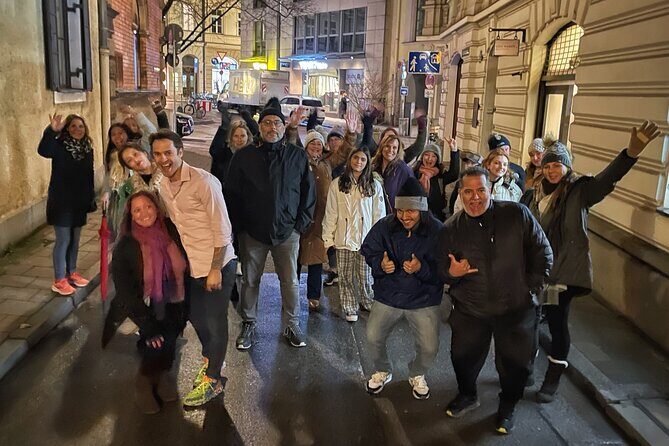
This is also set up as a small-group guided day. Limited to 15 people, you’re less likely to get lost in the crowd, especially at narrow old-town corners and inside churches. The tour runs in English and Spanish, which helps if you want the guide’s explanations in a language you’re comfortable with.
Bring an ID or passport. It’s the kind of day where you’ll be glad you did the simple thing in advance. Also, no pets are allowed, so you’ll need to leave them behind.
Porta Nigra: the Black Gate and the Roman “front door” of Trier
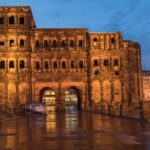
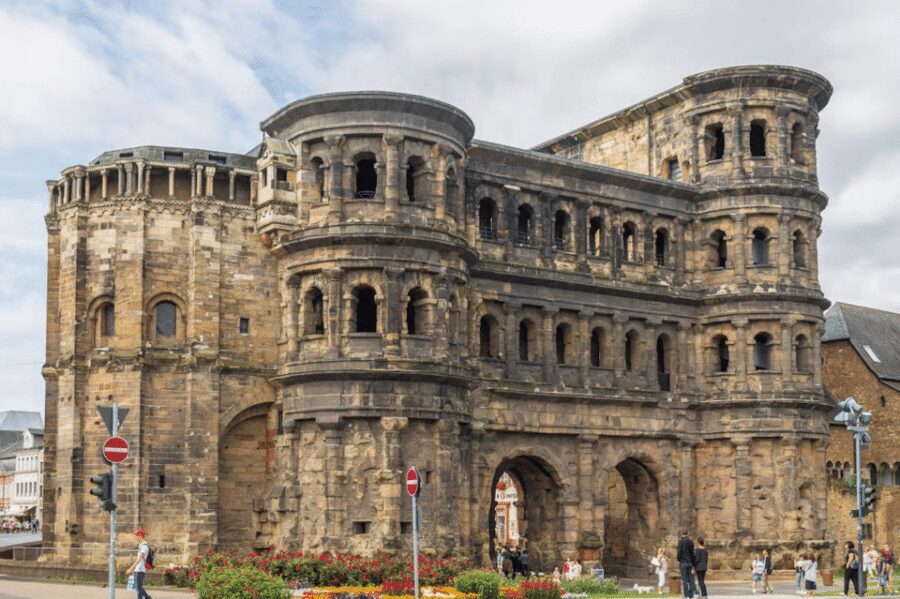
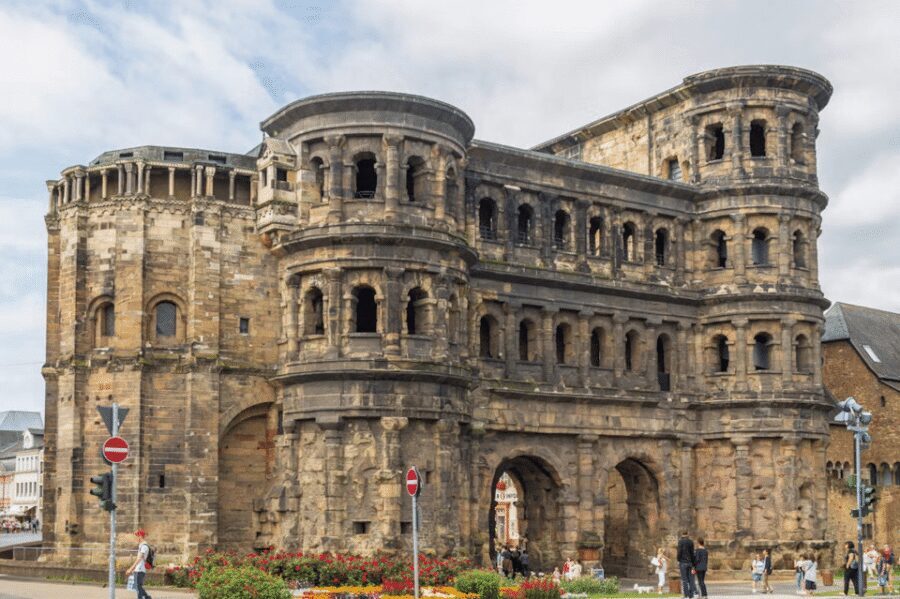
The day starts with a walk-through at Porta Nigra, with a guided segment of about 30 minutes. This is the kind of sight that feels different from a regular photo stop because it’s not just a monument—you’re entering a Roman-designed gateway that still holds its structure.
What I like here is the focus on meaning. The tour doesn’t just say it’s impressive. It points out that Porta Nigra is the largest Roman-style entrance in the world and then explains why the stones look black. You don’t need to know the reason before you go; the guide handles that for you.
Even if you’ve seen Roman ruins elsewhere, this feels special because the gateway is so intact that your brain can picture movement: people walking through, goods passing, the city functioning. It’s a “get your bearings fast” stop—after this, the rest of Trier makes more sense.
Aula Palatina and the imperial clue you carry into the basilica
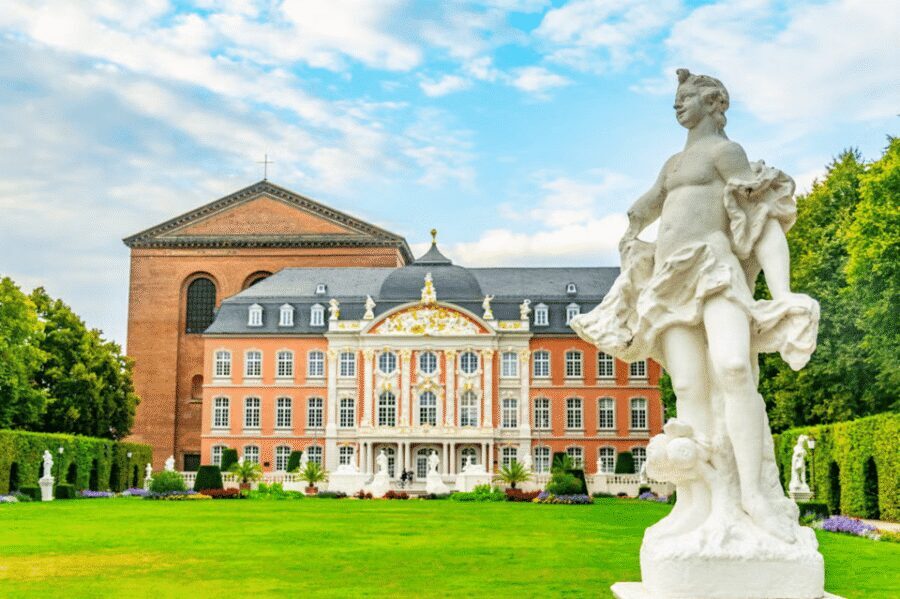
Next comes Aula Palatina, guided for about 25 minutes. Think of this as an orientation moment. You’re moving from the Roman entrance into the area where Trier’s imperial era becomes easier to understand.
The tour then shifts into a major payoff: the Basilica of Constantine, built in 310. This isn’t presented as a random church stop; it’s framed as a place where power once showed up in architecture. The apse once housed the throne of the Roman emperor, and that detail changes how you look at the space.
If you’re the type who likes your sightseeing to have a storyline, this is where the day clicks. You go from gate → imperial buildings → “why this place mattered.” That’s a big value-add versus simply walking past landmarks without context.
Roman Trier in real size: amphitheater and St. Barbara Roman Baths
Roman Trier gets a second gear with a stop tied to the 2nd-century amphitheater. The guided explanation helps you picture what performances and public events would have meant in that era, and it also helps you understand why the area was such a big deal.
Then you visit the St. Barbara Roman Baths, a UNESCO World Heritage Site. This is one of those places where the details reward your attention because baths weren’t just about cleanliness—they were social and functional hubs. You’ll likely find it easier to connect to Roman daily life when you can stand near the remains and hear what the space used to do.
One consideration: Roman sites can be uneven in what’s physically visible, depending on preservation and viewing areas. The guide helps you interpret what you’re seeing, but if you’re expecting a fully restored set piece, keep expectations grounded. What you get here is history you can think your way through, with the UNESCO status signaling why it’s worth the stop.
Karl Marx House: ideas next to stone monuments
After the Roman section, the tour pivots to the Karl Marx House, guided about 20 minutes. Marx is not just mentioned—his birthplace is part of the walking story, and it’s housed in a building dating to 1727.
What makes this useful is that it turns Trier into more than archaeology. The museum portion tells the story of socialism and communism, so you’re seeing how a modern political thinker connects back to a long-standing city with deep roots.
If you’re curious about how European cities shaped ideas—and how ideas shaped Europe—this stop adds a surprising layer. It also breaks up the “all Roman, all the time” rhythm so the day doesn’t get one-note.
St. Peter’s Cathedral: the stop with the most payoff per minute
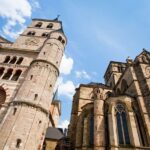
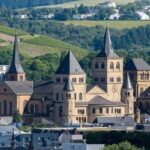
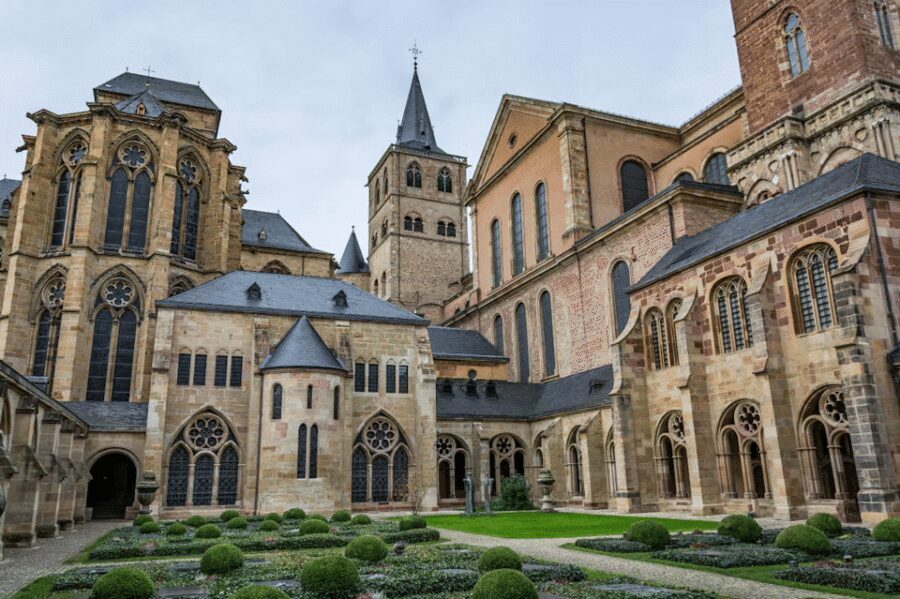
Next is St. Pierre Cathedral (St. Peter’s Cathedral), guided around 20 minutes. This is Trier’s major landmark in the city-center orbit, and the tour focuses on features you can actually notice: altars, tombs, and the original 10th-century walls.
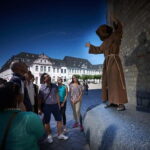
I like that the tour doesn’t treat the cathedral like a background prop. It includes a playful element too—if you go downstairs, you’ll be pointed toward the cathedral’s mysterious guardian. Even without being spooky, that kind of detail makes the visit memorable.
This is also the kind of stop where your guide’s pacing matters. You don’t need long hours to get value if someone points out what to look for. The result is a cathedral visit that feels guided and specific rather than rushed and generic.
Market Square free time: use it like a local, not a sprint
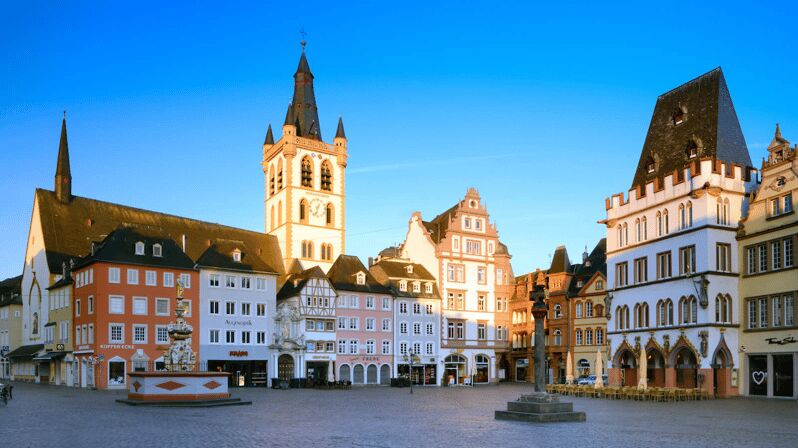
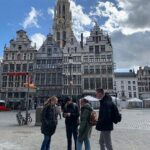
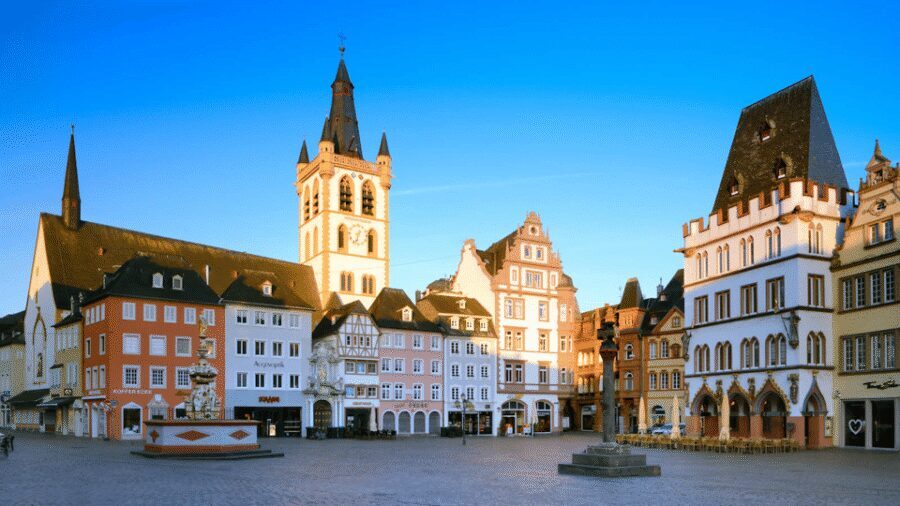
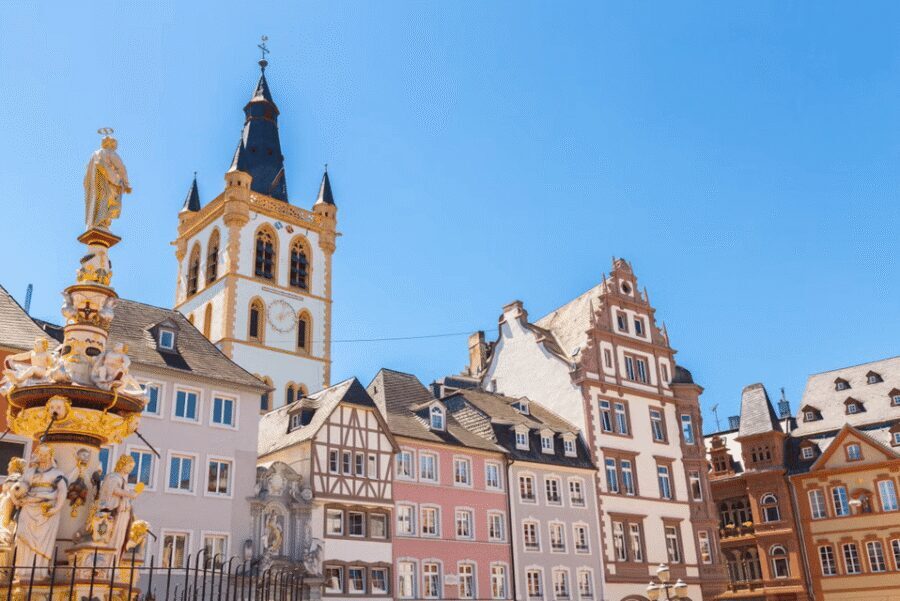
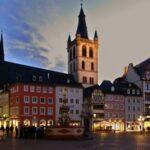
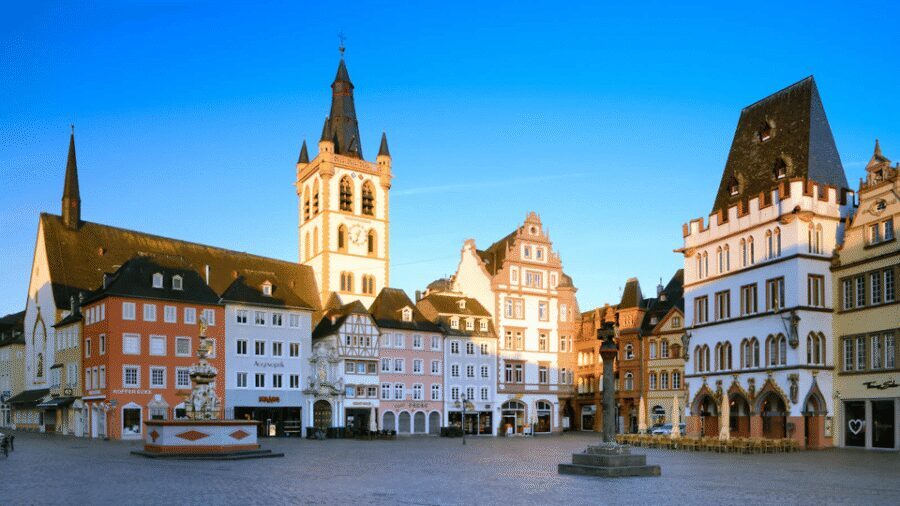
You’ll end with about two hours of free time in the market-square area, including the chance to see the St. Peter Fountain and browse the squares with colorful houses, flower and fruit stalls, and a classic old-town vibe.
Here’s how I’d use your time: pick one “anchor” and build around it. Walk to the fountain area for photos, then choose one direction and follow it without checking your watch every ten minutes. If you want a calm break, use the time for coffee or a quick snack and sit where you can watch the flow of people.
This part is your chance to decompress after a tight guided schedule. It’s also where you’ll notice what the guide prepared you for. The Roman walls and cathedral details start popping in unexpected places when you’re free to wander.
Price and value: is $129 a fair deal for a 5.5-hour day?
At $129 per person for a tour that runs about 330 minutes, the value is mostly about what’s included and how much work you don’t have to do.
You get:
- Round-trip train ticket between Luxembourg and Trier
- Guided tour for the route
- Small group limited to 15
- English and Spanish live guiding
That combination matters. Train planning can be simple, but it’s still time and mental load. Here, your transportation is covered and your time is structured around the best-known Trier sights.
If you were to DIY this day, you’d save a little on guiding—but you’d likely spend more time figuring out what’s worth your attention inside each site, and you’d miss the interpretive details that make Porta Nigra and the basilica click. For most people, that guidance is the difference between seeing monuments and understanding them.
Who this day trip is best for
I’d point this tour at you if:
- You want one strong day in Trier without worrying about logistics
- You like Roman sites with clear explanations and specific “look for this” details
- You enjoy a mix of major landmarks and a little independent wandering afterward
- You prefer small-group pacing over big-bus crowds
It’s also a good fit if you’re traveling with someone who likes history but doesn’t want an all-day museum marathon. You get Roman anchors, cathedral highlights, and then an easier window to explore on your own.
Should you book this Trier tour from Luxembourg?
If your goal is a structured day trip with serious sights—Roman Trier, St. Peter’s Cathedral, and Karl Marx’s birthplace—this is a strong booking choice. The best reason to say yes is the balance: you get expert guidance on the “why” and the “what to look for,” then you get two hours to enjoy the town at your own pace.
I’d skip it only if you hate tight schedules or want unbroken free time. With a fixed set of guided stops, there’s less room for long detours than you might hope.
FAQ
How long is the tour from Luxembourg to Trier?
The total duration is about 330 minutes, and the day is structured around guided stops plus time to explore on your own.
Do I need to bring identification?
Yes. You should bring a passport or ID card.
What’s included in the price?
The price includes the round-trip train ticket and guided tour coverage of the route.
How big is the group?
It’s a small group, limited to 15 participants.
What languages are available for the live guide?
The tour is offered in English and Spanish.
How much free time do I get in Trier?
You’ll have about two hours of free time to continue exploring the city independently.
Where do I meet the guide?
Meet the guide at Luxembourg’s Gare Centrale (Tram), next to the Oberweis café.
Is there free cancellation?
Yes. You can cancel up to 24 hours in advance for a full refund.