REVIEW · TRIER
Trier: Guided Old Town Highlights and History Walking Tour
Book on GetYourGuide →Operated by k3 stadtführungen · Bookable on GetYourGuide
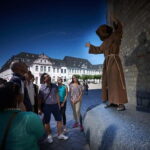
Trier’s old stones come with stories. This 1.5-hour old town walk links Porta Nigra Roman engineering to later medieval and modern Trier, with guides such as Patrick and Herbert adding facts plus a good dose of humor. I especially like how you get both big landmarks (the cathedral and market area) and the personal angle of Karl Marx at his residential house. One thing to consider: the tour guide is German only, so plan for that if your German is limited.
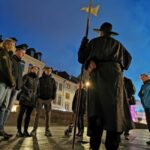
You meet your guide in front of the Mercure Hotel, right opposite the Porta Nigra, and the whole route is built around turning corners and watching the city explain itself. Expect a steady pace that makes it easy to ask questions along the way, then leave with a short list of where to eat and have a drink afterward.
If you want a taste of Trier that feels more like a guided conversation than a checklist, this is a solid pick at $16 per person. The tour is short, but it’s designed to keep the key ideas and sights connected, so you don’t end up with random photos and no context.
In This Review
- Key highlights at a glance
- Where the story starts: the Porta Nigra in Roman Trier
- Trier’s medieval and modern mix: cathedral and the Main Market
- Karl Marx’s residential house: ideas meet a real address
- What the daily-life explanations add (and what they don’t)
- Pace, duration, and group energy for 1.5 hours
- Meeting point: starting opposite the Porta Nigra
- Price and value: getting context for $16 per person
- Who should book this Trier old town highlights tour
- Should you book this guided highlights tour of Trier?
- FAQ
- How long is the Trier guided old town highlights tour?
- Where do I meet the guide?
- What sights are included on the tour?
- Does the tour include a live guide?
- What language is the tour conducted in?
- How much does the tour cost?
- Is Karl Marx part of the tour?
- Are children allowed, and is it free for young kids?
- Can I cancel and get a refund?
Key highlights at a glance
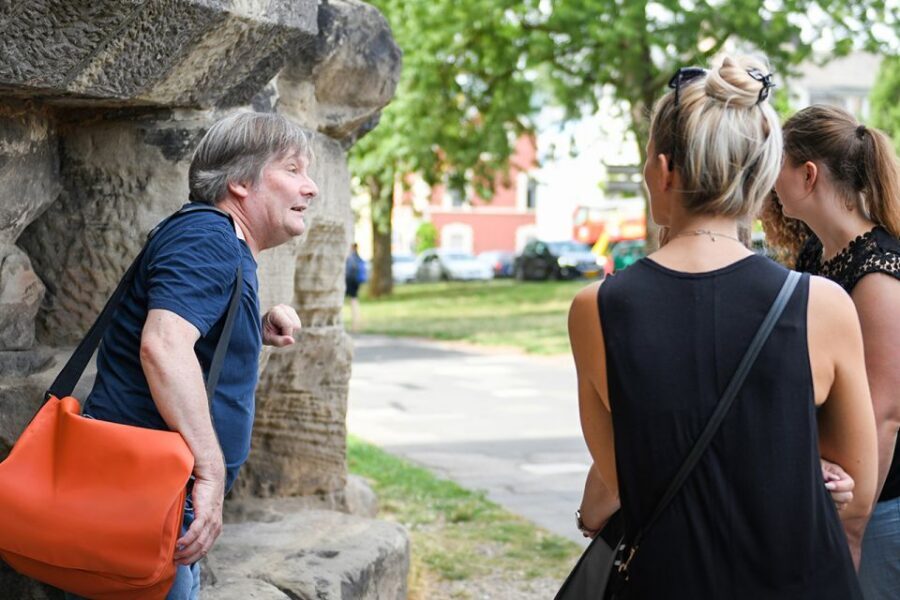
- Porta Nigra, built by Romans as early as 170 AD, with daily-life context behind the stone
- Trier Cathedral and medieval architecture, explained as part of the city’s change over time
- Main Market stop, so you see where civic life still breathes in the present
- The residential house of Karl Marx, tying a famous thinker to a real street address
- Live guide in German, plus time for questions and local restaurant and bar tips
- 1.5-hour duration, ideal for a half-day rhythm without feeling rushed all the time
Where the story starts: the Porta Nigra in Roman Trier
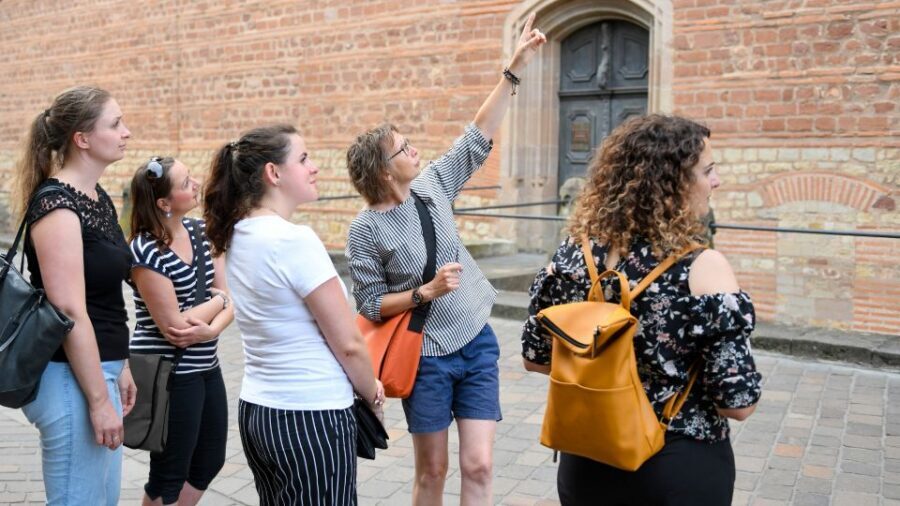
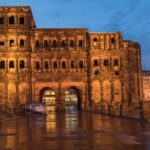
You begin with the Porta Nigra, Trier’s most iconic Roman landmark, and it sets the tone for the entire walk. The structure dates back to the Roman period, with construction occurring as early as 170 AD. That date matters because it’s not just an old monument sitting there—it’s a gateway that helps you picture how a Roman city functioned.
Your guide doesn’t treat it like a photo op. Instead, you’ll learn what life could look like under Roman rule, using the gate and its role as a starting point. The result is surprisingly practical: you start noticing how movement, trade, and access would shape daily routines, even if you’re standing in the same spot centuries later.
A good plus here is that this kind of landmark works for different interests. If you like Roman architecture, you get a clear anchor. If you prefer human stories, the Roman setting gives your mind a framework before you move into the later centuries.
You can also read our reviews of more walking tours in Trier

Trier’s medieval and modern mix: cathedral and the Main Market
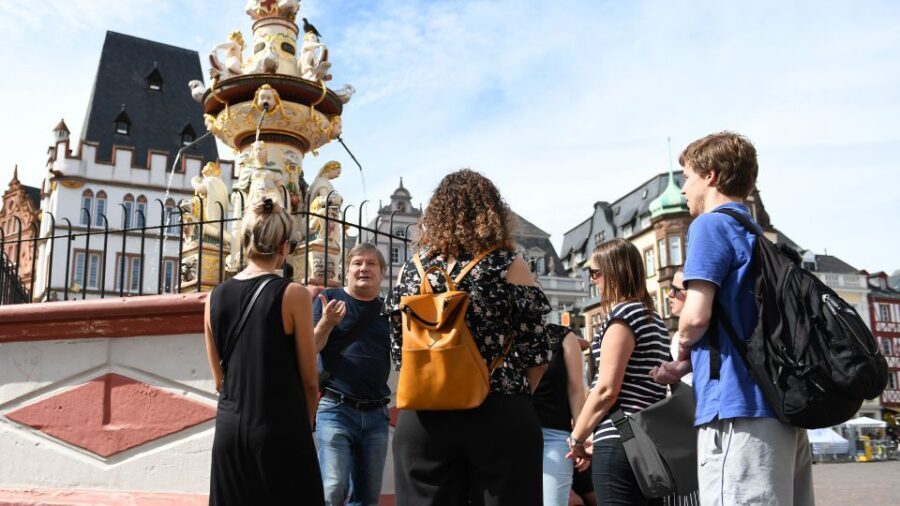
After the Roman “opening act,” the tour shifts gears. You’ll see highlights from the Middle Ages and get examples of how the city’s look changes over time. This is one reason I like this format: the guide connects eras instead of presenting them like separate chapters with no overlap.
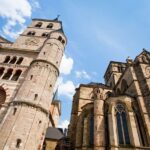
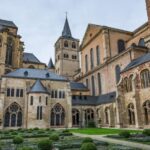
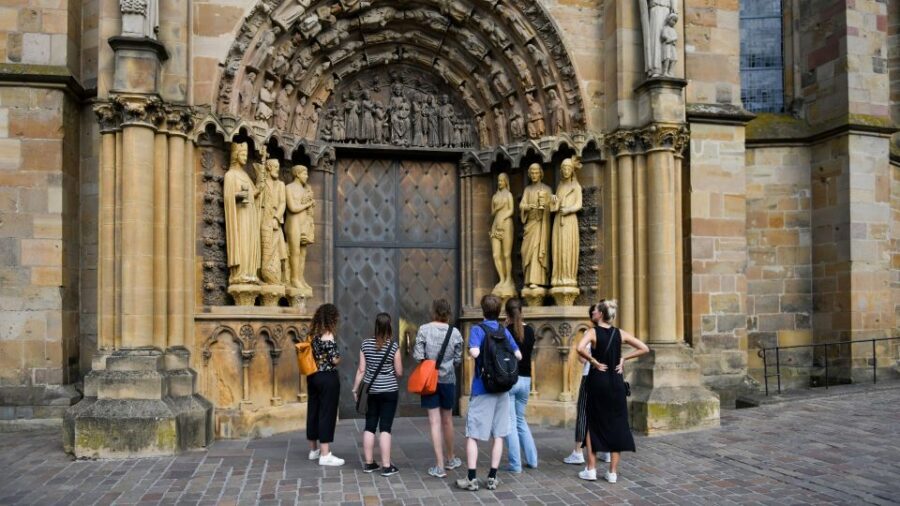
The route includes Trier Cathedral, one of the biggest architectural draws in the city. Even without turning this into an art history lecture, the stop is useful because it shows how Trier’s identity evolved after the Roman era—how power, belief, and civic life left their marks in stone and structure.
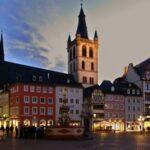
Then you move toward the Main Market area. Market squares matter because they’re one of the most direct ways to measure continuity. Even when streets and buildings change, a market district tends to keep the rhythm of everyday life going. When your guide points out what you’re looking at and why it ended up here, the square stops being just a pleasant open space and becomes part of the city’s story.
One balance to keep in mind: the tour is only 1.5 hours. That means each stop gets context, but you won’t have time to linger for long at every corner. If you’re the type who wants to read every plaque slowly, you’ll still enjoy the walk—you just might want extra time afterward to return on your own.
Karl Marx’s residential house: ideas meet a real address
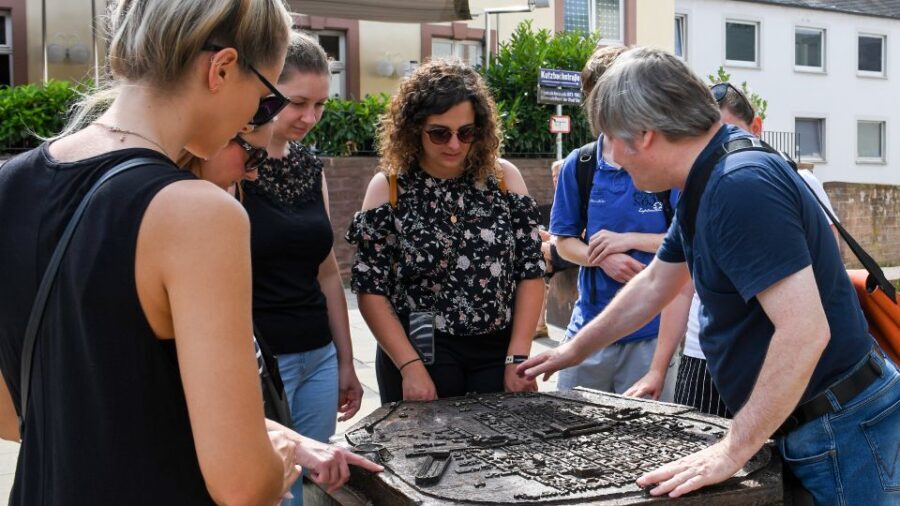
One of the most distinctive parts of the tour is the visit to the residential house of Marx, one of the most influential philosophers. This isn’t “famous person cosplay.” The point is to link the man and his ideas to a place you can actually stand in.
Hearing about Karl Marx in the middle of an old town walk changes the way you process him. Instead of thinking of him as a distant figure from textbooks, you experience him as a neighbor connected to a city with deep layers: Roman foundations, medieval architecture, and then the modern world taking shape.
Your guide frames this stop in a way that supports the overall theme of the tour: Trier’s story is still visible in everyday spaces. It’s a reminder that big names and big ideas often have ordinary coordinates—streets you can point to, doors you can stand near, and urban neighborhoods that shaped their environment.
And because the guide is live, you can ask questions if something feels unclear—like how the city’s later history fits into what Marx is associated with. That small Q&A moment is part of what makes the tour feel like more than sightseeing.
What the daily-life explanations add (and what they don’t)
A standout feature is that you’re not only told what you’re looking at—you’re also told what daily life might have looked like under Roman rule. That approach is powerful because it makes the city feel usable in your imagination. A gate becomes more than a wall; it becomes a clue about movement, security, and the flow of people and goods.
The same goes for the medieval and civic pieces. When you understand how places like the cathedral area and main market functioned, you start reading the city differently. You notice vantage points, street patterns, and which spaces likely drew people in daily.
Still, keep expectations realistic. This is a highlights walk, not a museum deep dive. You’ll get crisp context, but not a full lecture on architecture, theology, or political history. If you like quick clarity and a strong “orientation story,” this will feel satisfying. If you want hours of detailed study, you’ll want a second stop afterward.
Pace, duration, and group energy for 1.5 hours
The timing is a gift: 1.5 hours fits neatly into a day in Trier without stealing too much of your schedule. You can do this at the start of your sightseeing block, then use the rest of the day to explore at your own tempo with better context.
The guide format also supports a smooth pace. The walk structure is simple: start at the Porta Nigra, work through major old town highlights, then close with the Marx house and city advice. That means you’re not constantly checking your bearings or guessing where the next landmark will be.
From the reviews, a theme is how fast the time passes. People describe the tour as both informative and fun, with humor and a personal touch that keeps attention from drifting. I’d treat that as a practical cue: this is the kind of tour where you can pay attention even if you’re not a “history every day” person.
One more consideration: it’s in German. Even if you follow most of it, fast-moving commentary can be tough if you’re relying on translation. If your goal is to absorb every detail, you might find it helpful to bring a basic understanding of names like Karl Marx and the Porta Nigra, so you’re not starting from zero.
You can also read our reviews of more guided tours in Trier

Meeting point: starting opposite the Porta Nigra
Logistics are unusually straightforward here. You meet your guide in front of the Mercure Hotel, opposite the Porta Nigra. That’s a helpful setup because the landmark is the first focus anyway. You’re not walking across town to find the tour’s beginning—you’re stepping right into it.
If you like to arrive early to get your photos and calm nerves, the location makes it easy. You can stand near the gate, get oriented, and then slide into the group without stress. For a 1.5-hour experience, that head-start matters more than you might think.
Price and value: getting context for $16 per person
At $16 per person, this tour is priced for a smart hit of guidance without a big budget commitment. The value comes from the mix: major sights (Roman and later), plus a tie-in to Karl Marx, plus the chance to ask questions and get restaurant/bar tips.
You’re paying for three things that are hard to replicate on your own on short timelines:
- A clear storyline that connects eras instead of scattering highlights
- Real commentary that turns buildings into living context
- A live person who can answer questions on the spot
If you only have one half-day in Trier, paying for a guided route is often the cheapest way to save time. You get a map of what matters, plus a sense of what you might want to revisit later without guessing.
And because the tour is short, you’re less likely to feel like you “wasted” money if your day runs long elsewhere. You can still plan the rest of your itinerary around how you feel after the walk.
Who should book this Trier old town highlights tour
This is a great match if you:
- Want an efficient overview of Trier’s Roman roots, medieval highlights, and modern-day relevance
- Prefer guided context over reading every sign on your own
- Like a bit of humor and personality in a tour guide, not just facts
- Plan to stick around the city after the walk and want local advice for food and drinks
It’s also a good family-friendly option. One of the reviews specifically noted that the tour worked well for children, thanks to the guide’s engaging style. If you’re traveling with kids, a shorter, storyline-driven walk is often easier than a longer museum day.
The main mismatch is language. If you need guided support in English or another language, this one won’t fit well. Since the tour is German with a live guide, you’ll want to be comfortable enough to follow along—or be okay with understanding the big picture even if some details pass quickly.
Should you book this guided highlights tour of Trier?
I’d book it if you’re looking for the fastest way to understand Trier instead of just collecting landmarks. Starting at the Porta Nigra gives you an unforgettable “anchor,” and then the stops around the cathedral, main market, and Marx’s residential house connect the city’s layers into something coherent.
The strongest reason to choose it is the human element: guides like Patrick and Herbert are described as entertaining and able to answer questions, with humor and a personal touch that keeps the pace lively. With a 1.5-hour runtime, you can do it even on tight schedules, then spend the rest of your day exploring with a better sense of what you’re seeing.
Skip it only if you need a non-German guide or if you want deep, stop-by-stop study time instead of a highlights-focused storyline.
FAQ
How long is the Trier guided old town highlights tour?
It lasts 1.5 hours.
Where do I meet the guide?
Meet your guide in front of the Mercure Hotel, opposite to the Porta Nigra.
What sights are included on the tour?
You’ll see the Porta Nigra, Trier Cathedral, the Main Market, and the residential house of Marx.
Does the tour include a live guide?
Yes, the tour includes a live guide.
What language is the tour conducted in?
The live tour guide speaks German.
How much does the tour cost?
The price is $16 per person.
Is Karl Marx part of the tour?
Yes. You’ll visit the residential house of Marx and learn about his connection to the city.
Are children allowed, and is it free for young kids?
Children aged 0–5 years can join for free.
Can I cancel and get a refund?
Yes. You can cancel up to 24 hours in advance for a full refund.