REVIEW · TRIER
Trier: City Walking Tour
Book on GetYourGuide →Operated by Trier Tourismus und Marketing GmbH · Bookable on GetYourGuide
Trier reads like a history textbook. This 1.5-hour walking tour threads Rome, the Middle Ages, and Baroque Trier into one easy loop, passing four UNESCO sites along the way. You start at the Tourist Information and finish near the Kurfürstliches Palais, with a guide who keeps the story moving from stone to street.
I like two things a lot: the way the route stays tight while still covering the big hits, and how the guide explains connections you usually miss, from medieval political drama to the city’s key religious landmarks. The only real drawback is practical—this is a walking tour—so you’ll want comfortable shoes and an even pace.
In This Review
- Key highlights at a glance
- A 90-minute story of Rome, medieval quarrels, and Baroque Trier
- Meet at Trier Tourist Information: how this official tour works
- Porta Nigra: Trier’s Roman power gate up close
- From Dreikönigenhaus to Hauptmarkt: the Middle Ages walk you’ll remember
- Trier Cathedral area: Church of Our Lady, the courtyard, and the city’s big faith
- Aula Palatina and Kurfürstliches Palais: finishing with imperial theatre
- Price, pacing, and who this $18 tour is best for
- Should you book the Trier City Walking Tour?
- FAQ
- How long is the Trier City Walking Tour?
- What does the tour cost?
- Where is the meeting point?
- Is there a live guide, and what languages are offered?
- Which UNESCO monuments are included?
- Is the tour wheelchair accessible?
- What is included in the price?
- Can I cancel for a refund?
- Is there a reserve now, pay later option?
Key highlights at a glance
- Official Trier Tour Provider: Run by Trier Tourismus und Marketing GmbH with professional, official guides
- Four UNESCO stops in 90 minutes: Porta Nigra, the cathedral area, Church of Our Lady and basilica, and Aula Palatina
- Roman-to-Baroque storyline: One continuous center-city walk from antiquity to later splendor
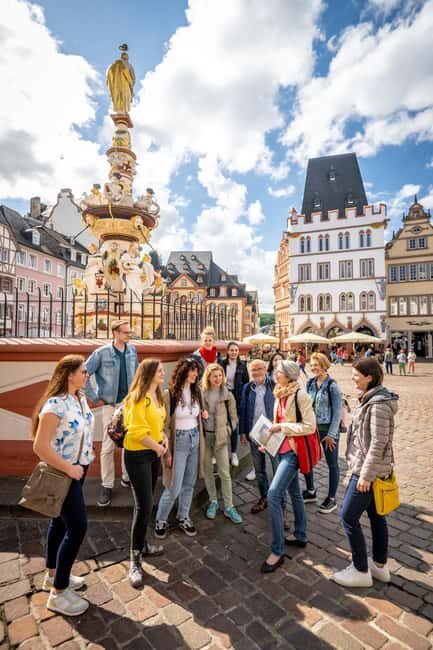
- Medieval backstory you can picture: fortified citizens, imperial immediacy, and dramatic fights involving knights and even monkeys
- Live guide in German and English: so you’re not left guessing at what you’re seeing
- Wheelchair accessible: the route is designed to be doable for wheelchair users
A 90-minute story of Rome, medieval quarrels, and Baroque Trier
This tour works because it treats Trier like one connected place, not four random monuments. You walk a classic center-city route that starts at the city’s most famous Roman landmark and then moves forward through the Middle Ages and later Baroque influence.
At $18 per person for about 1.5 hours, you’re paying for guidance plus curated UNESCO time, not just sightseeing. That matters in Trier, where the most interesting parts are often about meaning—why a building was built, who it served, and what power struggle it reflects—not just what it looks like from the street.
You also get a clear promise: you’ll see a selection of Trier’s classics, passing four UNESCO World Heritage buildings. In a short window, that’s a big deal. You’re not spending half your day figuring out routes, and you’re not leaving the best-known stops for later planning.
You can also read our reviews of more walking tours in Trier
Meet at Trier Tourist Information: how this official tour works
The tour meets directly in front of the Tourist Information, and it’s offered by Trier Tourismus und Marketing GmbH. The format is simple: you start, you walk together through the city center highlights, and you’re dropped off at the Kurfürstliches Palais area and the palastgarden.
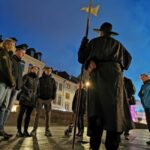
The guide is live and the tour runs in German and English. That’s helpful if you want your history in plain language, with explanations you can actually remember while you’re still standing at the landmark.
This is also a tour that’s designed to be accessible. It’s listed as wheelchair accessible, which means the plan accounts for mobility needs rather than assuming everyone can handle lots of steep, awkward stops.
One small thing to keep in mind: because you’re moving through the city center, you’re likely to be sharing space with other visitors around major sights like the Porta Nigra and the cathedral area. The upside is that those are exactly the places where you’ll get the best photo angles and the most guide context.
Porta Nigra: Trier’s Roman power gate up close
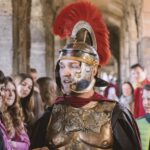
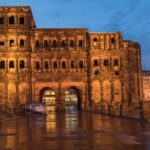
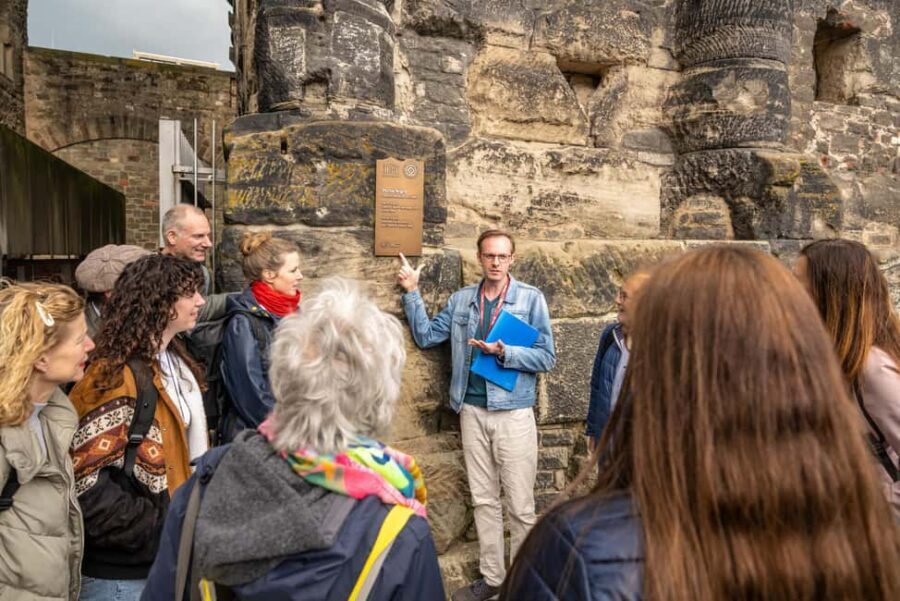
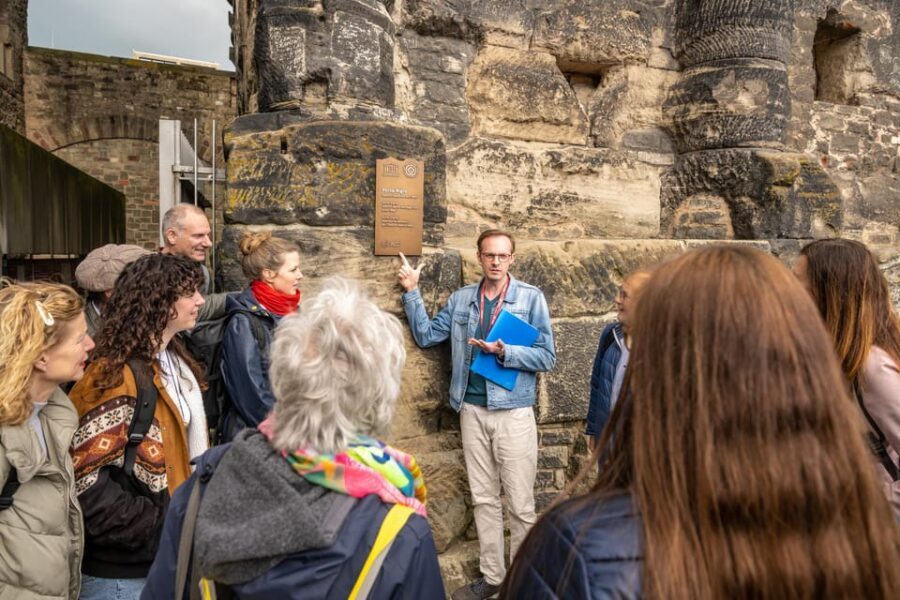
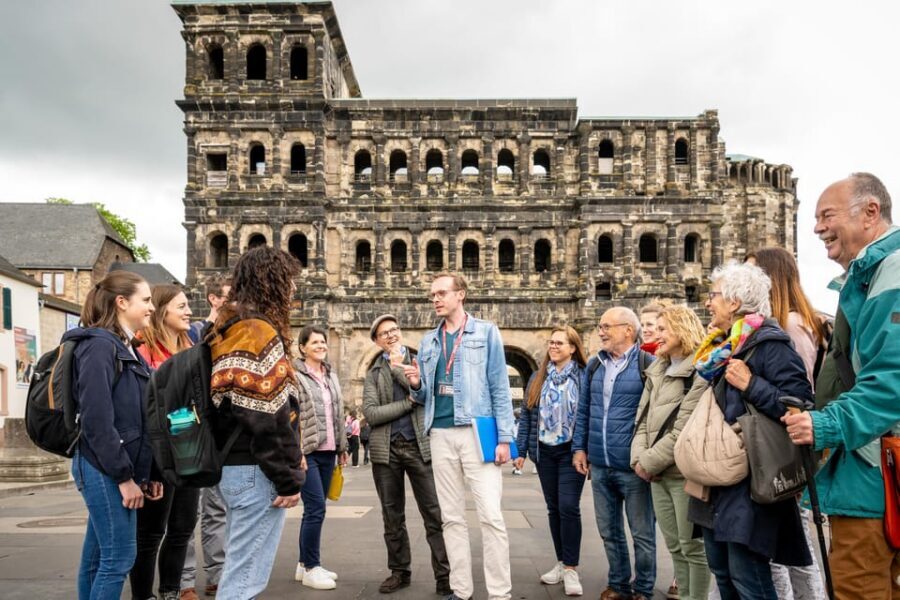
The tour starts with Porta Nigra, and that’s the right call. It’s Trier’s best-known Roman landmark, and beginning here gives you a sense of the city’s early scale and ambition. When you start with the gate, later stops make more sense, because you can mentally track how Trier’s importance evolved over time.
You’ll get a guided look at the building itself, but more importantly, you’ll hear the story behind the Roman kick-off. The tour frames this as the start of the center of antiquity, which helps you place what you’re seeing inside a timeline rather than treating it like a standalone relic.
For me, the value of starting at Porta Nigra is pacing. You’re not “saving” the most famous sight for the end. You hit it early, while your brain is fresh, and you build understanding as you walk.
From Dreikönigenhaus to Hauptmarkt: the Middle Ages walk you’ll remember
After the Roman beginning, the tour shifts into the Middle Ages—where Trier gets dramatic. This section is where the guide’s storytelling really matters, because Trier’s medieval character isn’t always obvious at street level.
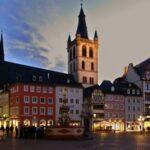
You pass key center-city areas such as the Dreikönigenhaus, the Judengasse, and the Hauptmarkt. Those names aren’t just trivia. They’re windows into how people lived, defended what they had, and shaped the city’s identity.
The tour also highlights the theme of protection and power. It explains how fortified citizens tried to defend possessions with architectural tricks, which adds a practical layer to your viewing. When you’re looking at buildings later on, you’ll know to ask: is this structure functional defense, status, or both?
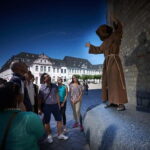
One of the most memorable parts of the tour is the political and religious tension tied to St Peter. The story covers how self-confident citizens fought the bishop for imperial immediacy, and it includes the wild, specific details of how conflicts could be played out—sometimes with knights, monkeys, and church towers. Even if you don’t remember every date, you’ll keep the picture of a city where politics was not polite and power was physical.
Trier Cathedral area: Church of Our Lady, the courtyard, and the city’s big faith
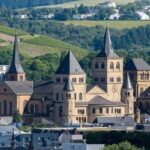
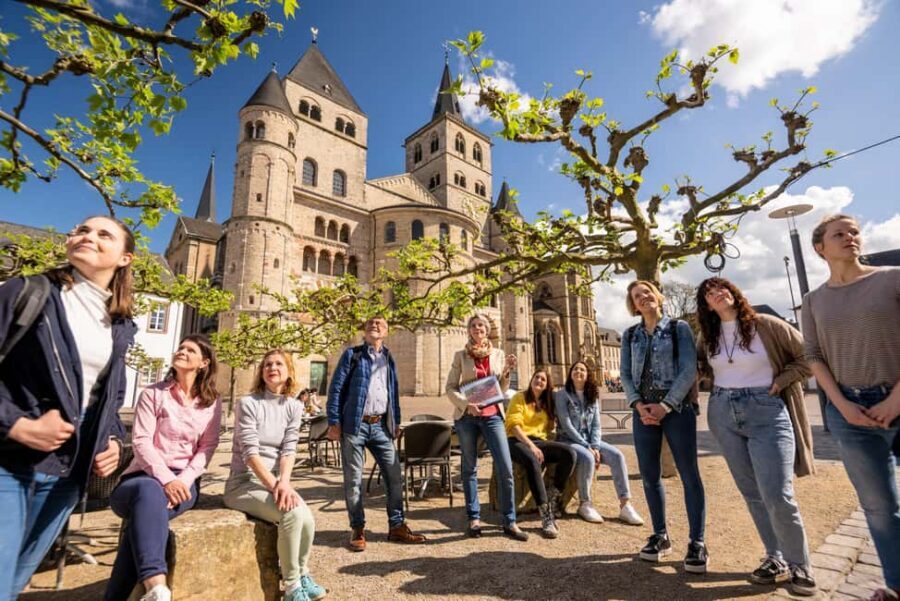
Next comes one of Trier’s emotional anchors: Trier Cathedral and the surrounding cathedral courtyard area. This stop is a turning point, because you move from medieval street-level drama into a space shaped by long-standing religious authority.
You also pass the Church of Our Lady and basilica, which is one of the UNESCO buildings included on the route. Having this explained by a guide is especially useful here. Cathedral and church architecture can look similar across Europe if you only glance, but guided context helps you see what’s distinctive and why it mattered to Trier.
The tour’s framing around this area is clear: it’s about how the city’s center of power and belief formed over time. The guide’s explanations help you connect the earlier timeline (Roman → medieval → later) with what you’re standing in front of now.
A practical reason I recommend this stop on the itinerary: it gives you the best chance to absorb the scale of Trier as a historical capital. If you rush, you’ll miss it. If you slow down a touch and listen, you’ll feel why locals cared so much about building these religious landmarks.
You can also read our reviews of more city tours in Trier

Aula Palatina and Kurfürstliches Palais: finishing with imperial theatre
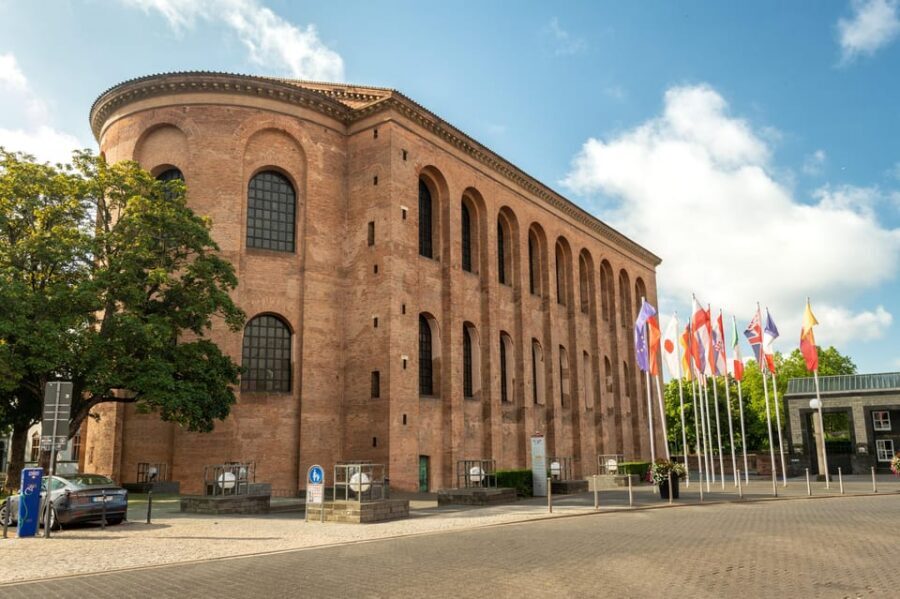
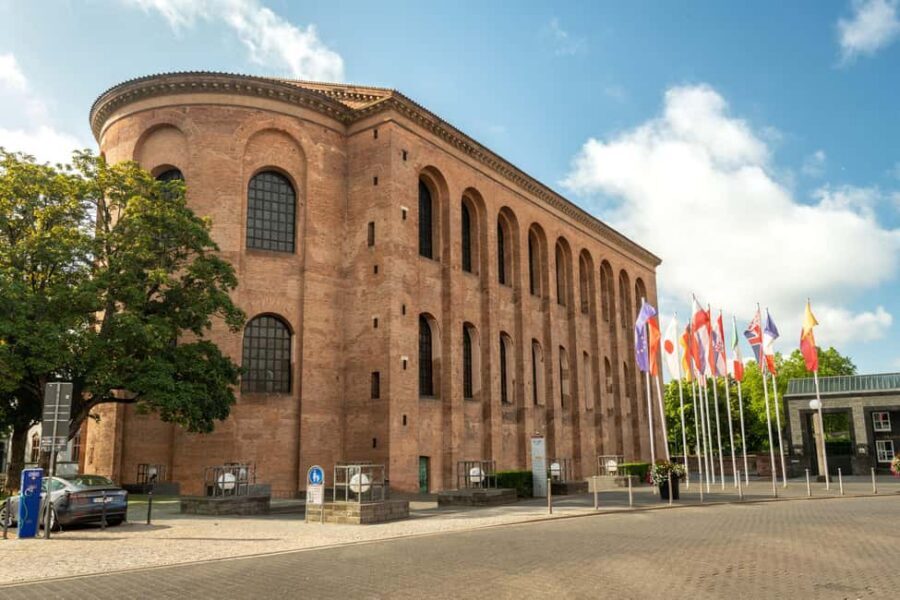
The last major UNESCO stop on the route is the Aula Palatina. After the cathedral and church area, this helps you finish with a sense of official power and imperial presence. The timing works because you’ve already learned how much Trier valued authority and institutions; now you can see that lesson in another architectural form.
Then the tour moves into the later style vibe with the Electoral Palace, the Kurfürstliches Palais, and the palastgarden area. The tour describes this as Baroque splendour of modern times, which is a useful way to think about it: you’re not only touring the ancient and medieval city, you’re seeing how the city kept projecting status long after antiquity.
Ending near the palace grounds also makes sense for your own planning. Even after the tour ends, this area is a natural place to keep walking or take a break, since it’s a scenic drop-off rather than a random corner.
If you’re choosing just one short tour to orient yourself in Trier, this ending layout helps. You leave with a full set of “anchor images”: Porta Nigra, the cathedral area and Church of Our Lady/basilica, Aula Palatina, and the palace grounds.
Price, pacing, and who this $18 tour is best for
For $18 and about 90 minutes, you’re getting three things at once: a professional guide, a focused center-city route, and visits tied to four UNESCO monuments. In other words, your money buys structure. That’s usually where short tours earn their keep.
This tour is a strong fit if you:
- want the main UNESCO hits without building an itinerary yourself
- prefer a guided storyline over reading plaques
- like history that’s explained in plain terms, with details you can carry as you walk
- have limited time but still want a “complete enough” Trier experience
It’s also a good choice if you’re pairing Trier with nearby plans. The duration is short enough that you can keep flexibility in your day, while still leaving with a solid mental map of the city’s timeline.
On the pacing side, the big advantage is the concentrated route. You’re not hopping between far-flung attractions. You’re walking through the kind of compact city center where one stop helps you understand the next.
Should you book the Trier City Walking Tour?
Book it if you want a high-value, guided UNESCO highlights walk that stays focused and tells you what to look for. This is the kind of tour that works even if you’re not a “hardcore history” person, because the guide makes connections clear and keeps the story moving.
Skip it only if you strongly dislike walking tours or you’re looking for a longer, slower deep-dive at fewer sites. At 1.5 hours, you won’t linger in one spot for long. But if you want a smart orientation through Trier’s best-known UNESCO buildings, this is a solid bet for the money.
FAQ
How long is the Trier City Walking Tour?
The tour lasts about 1.5 hours.
What does the tour cost?
The price is $18 per person.
Where is the meeting point?
Meet directly in front of the Tourist Information.
Is there a live guide, and what languages are offered?
Yes. The live tour guide speaks German and English.
Which UNESCO monuments are included?
The tour includes visits to four UNESCO monuments: Porta Nigra, Trier Cathedral, the Church of Our Lady and basilica, and Aula Palatina.
Is the tour wheelchair accessible?
Yes, it is listed as wheelchair accessible.
What is included in the price?
You get a local guide and a visit of 4 UNESCO monuments.
Can I cancel for a refund?
Yes. Free cancellation is available up to 24 hours in advance for a full refund.
Is there a reserve now, pay later option?
Yes. You can reserve now and pay later to keep travel plans flexible.