REVIEW · TRIER
Trier: Private Guided Walking Tour
Book on GetYourGuide →Operated by Travmonde OÜ · Bookable on GetYourGuide
Trier can feel like a time machine. This private walking tour strings together UNESCO-era Roman power, early Christian sights, and the birth of Karl Marx, all on foot in about 2 hours. I particularly like how the guide uses the big landmarks to explain the smaller stories you’d miss on your own.
I also like the tour’s mix of stops: Porta Nigra at the start, then major Roman remains like the Konstantin-Basilika, plus the House of the Three Magi, Trier’s oldest German cathedral, and the underground passages that reveal a different side of the city. You finish with the charm of half-timbered streets and Moselle vineyards that make Trier feel lived-in, not museum-only.
One possible consideration: the experience depends heavily on the guide’s pace and clarity. A couple of reviews complained about the tour being too fast and not always easy to follow, and one issue involved the guide calling because of a missed notification. If communication matters to you, plan to ask early and stay flexible.
In This Review
- Key highlights worth your time
- Why Trier Feels Like a Roman City in Germany
- Entering the Historic Core at Porta Nigra (the Black Gate)
- Konstantin-Basilika: Roman Power in Plain View
- House of the Three Magi: Legends That Teach You How to Look
- Trier’s Oldest German Cathedral: Why Age Changes the Feel
- The Subterranean Labyrinth: Trier Under Your Feet
- Moselle Vineyards and Half-Timbered Charm: The Break From Stone
- Private Guide Value: How $280 Works for Real Groups
- What You’ll Likely Do During the 2 Hours
- Who This Tour Fits Best (and Who Might Prefer Something Else)
- Should You Book This Trier Private Guided Walking Tour?
- FAQ
- How long is the Trier private guided walking tour?
- Where do we meet the guide?
- Is this a private tour?
- What languages are available?
- Are entrance fees included?
- Can I reserve now and change my plans?
Key highlights worth your time
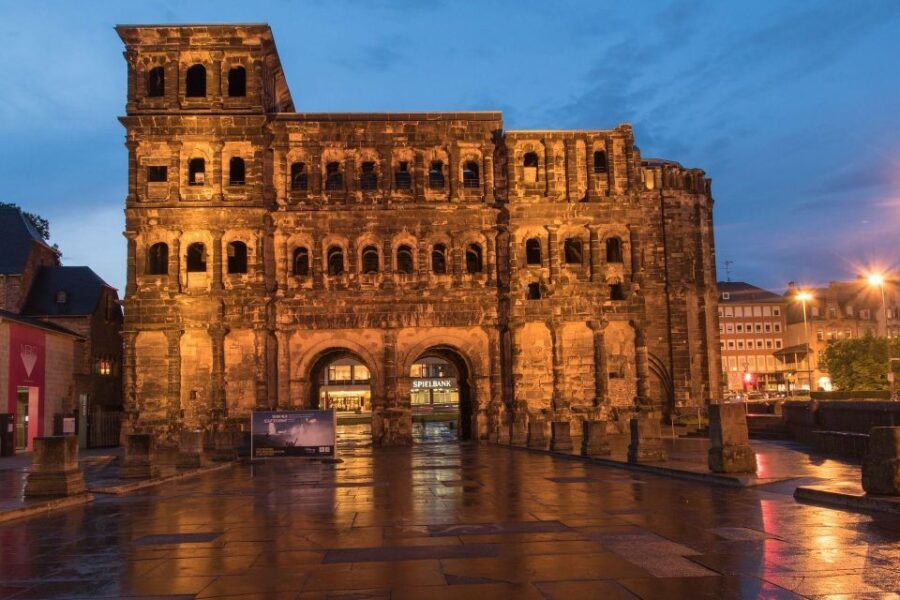
- Porta Nigra’s name and story at the Black Gate, with explanations you won’t find on a quick plaque read
- Konstantin-Basilika, the world’s largest remaining Roman structure, and what that means in real terms
- House of the Three Magi, tied to intriguing local legends and interpretive details
- Trier Cathedral, described as the city’s oldest German cathedral, plus the context that makes it click
- Trier’s subterranean labyrinth, where the city’s hidden layers start to make sense
- Private pacing for your group, with the guide staying with you only (no mixing into a crowd)
Why Trier Feels Like a Roman City in Germany
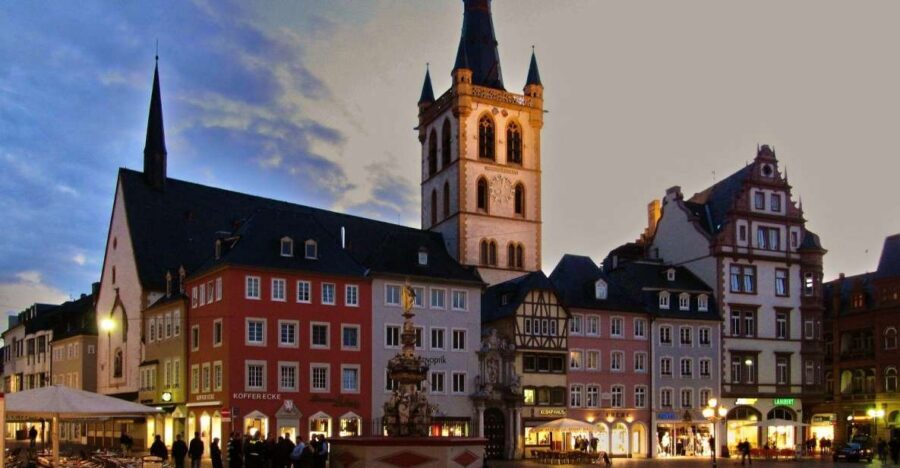
Trier is one of those rare places where you don’t have to choose between Roman ruins and medieval charm. In a compact historic center, you get the sense of a city that kept re-inventing itself—Roman first, then Christian and civic life shaping what you see today.
What makes this tour work so well for most people is that it doesn’t treat the UNESCO sights like separate checkboxes. Instead, you connect them into a timeline: Roman streets and monuments, then the cathedral story, then the underground spaces that hint at how daily life and power moved beneath the surface. You’ll also hear the Karl Marx connection, which adds a modern “why this place mattered” layer to all that stone.
You can also read our reviews of more walking tours in Trier

Entering the Historic Core at Porta Nigra (the Black Gate)
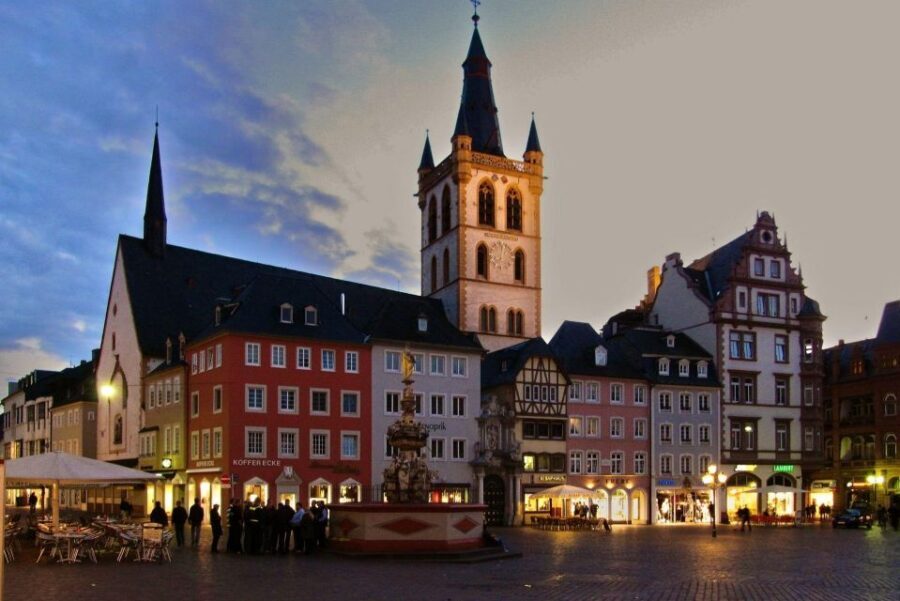
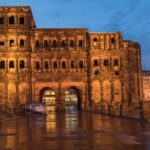
Your meeting point is simple and central: in front of the Black Gate (Porta-Nigra-Platz), Trier. From the moment you stand there, Porta Nigra dominates your sense of scale. You’re looking at a Roman structure that still feels massive, even after centuries of weather, rebuilding, and changing uses.
The best part isn’t only seeing the arch. The guide focuses on the intriguing origins of the name—how people started calling it the Black Gate—and what that tells you about how later generations interpreted the Roman remains. Even if you know the monument exists, you’ll likely leave with a clearer idea of why this site became Trier’s anchor.
Practical tip: Porta Nigra sits in an active public area. Give yourself a minute to orient your group before you start walking, so you’re not constantly stopping and regrouping while you’re listening.
Konstantin-Basilika: Roman Power in Plain View
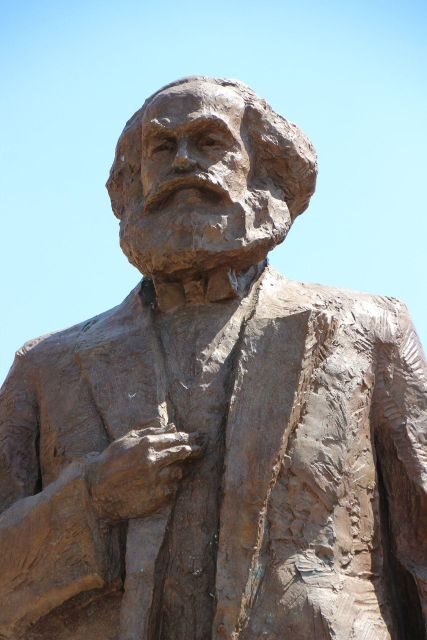
The tour calls out the Konstantin-Basilika as the world’s largest remaining Roman structure. Hearing that fact is impressive, but what helps is the way it frames the building as more than a relic. Roman basilicas were tied to administration and public life. So when you look at the scale, you can start picturing how Trier functioned as a major hub, not just a backwater on a map.
I like that the tour keeps returning to “what did this do?” rather than only “what does it look like?” That approach makes Roman architecture easier to read. You’ll also be better prepared for why nearby sites fit into the same larger story of rule, religion, and civic identity.
If you get a guide who talks clearly (a couple of reviews praised this directly, including one highlight about a guide named Susanne), you’ll come away feeling like you can explain the place to a friend.
House of the Three Magi: Legends That Teach You How to Look
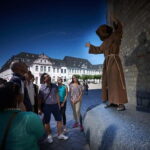
Next comes the House of the Three Magi, a stop that works especially well if you enjoy stories that connect art, symbol, and local interpretation. This is one of those locations where the details matter, and the guide’s job is to point your attention at the right things.
The tour’s value here is perspective. Without guidance, you might walk past certain features and think you’ve seen enough. With a guide, you start seeing how myths and meaning got attached to buildings over time, and how later culture kept finding ways to interpret what Romans built.
This stop also makes the walk feel less like a history lecture and more like a city conversation—small signs that point to bigger ideas.
Trier’s Oldest German Cathedral: Why Age Changes the Feel
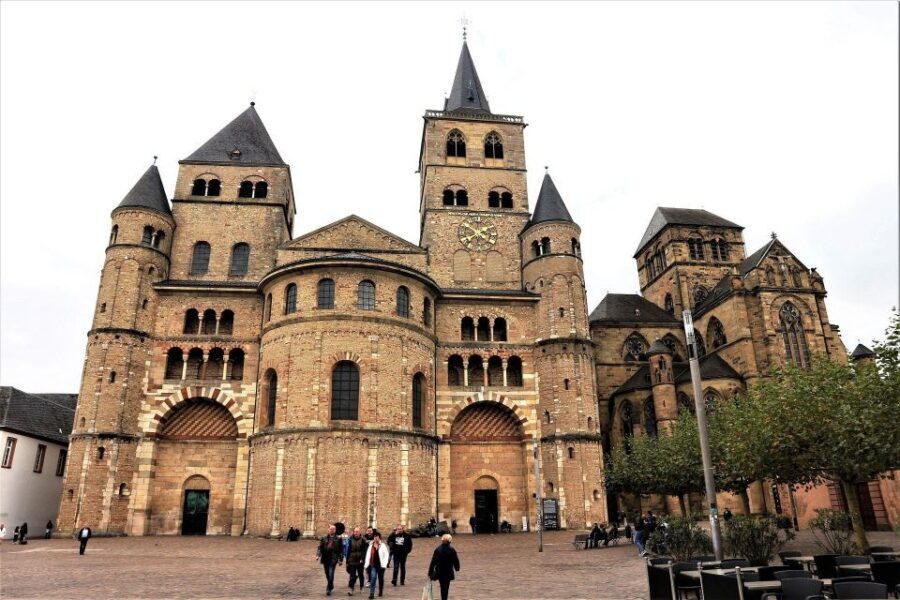
Trier is often described as Germany’s oldest town in a historical sense, and the cathedral stop is part of why. The tour highlights the city’s oldest German cathedral, and that label matters because it changes how you read everything around it.
When a place is that old, it’s not just about the structure. It’s about layers: how worship, architecture, and community priorities changed across generations. A good guide helps you connect that layering to the bigger UNESCO core idea, so the cathedral doesn’t feel isolated.
Drawback to keep in mind: entrance fees are not included. Depending on the cathedral’s specific access needs and what’s required during your visit, you might need to budget a little extra on-site. The guide can still help you make sense of what you see, but the ticket side is on you.
You can also read our reviews of more guided tours in Trier


The Subterranean Labyrinth: Trier Under Your Feet
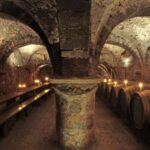
One of the most memorable parts of this tour is the subterranean angle. The highlights promise you’ll navigate the city’s subterranean labyrinth, unraveling hidden history below street level.
That kind of stop is a big deal for travelers who like “how did people actually live here?” questions. Above ground, you see what rulers and institutions wanted to be seen. Underground, you get a stronger sense of infrastructure and practical needs—storage, movement, and the kinds of spaces that don’t get the same postcard treatment.
Also, underground spaces can affect your comfort. Wear shoes that handle uneven ground and plan for cooler temperatures than the street. If you’re traveling with mobility needs, this is the one part where you may want to check on physical suitability with the operator before booking, since underground passages often mean stairs, tight spots, or uneven surfaces.
Moselle Vineyards and Half-Timbered Charm: The Break From Stone
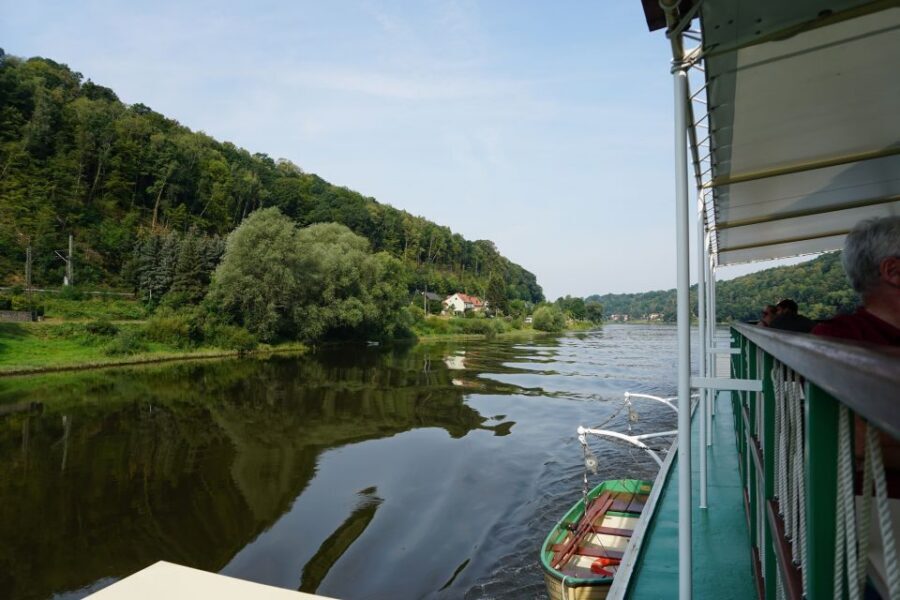
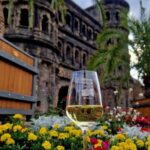
Between the major Roman and cathedral stops, the tour brings you through Trier’s human-scale beauty: half-timbered houses and vineyards along the Moselle. This is where the city stops feeling like a set of UNESCO monuments and starts feeling like a place people still choose to live, work, and celebrate.
This also helps you absorb the history. When the walk includes both grand structures and everyday streets, your brain gets a chance to reset between the heavy facts. You’ll likely notice how the Moselle corridor and vineyard culture connect to how Trier developed as a regional center.
Don’t rush this part. If your guide pauses for questions, take advantage. A private guide is there to help you tailor what you care about—especially if you’re more into Roman buildings, church history, or the Marx connection.
Private Guide Value: How $280 Works for Real Groups
The price is $280 per group up to 15 people, for a 2-hour private guided walking tour. That means your per-person cost depends on how full your group is.
- If you fill it with up to 15 people, you’re effectively around $19 per person.
- If it’s just a couple of you, it’s more like a premium experience, because the guide time doesn’t scale down.
This is exactly the kind of tour where a private group tends to pay off. You get a local professional guide who stays with your group only, and you can customize on the spot if you want to spend extra time on one sight or ask lots of follow-up questions.
English and German are both offered, so you can choose the language that helps you track details best.
What You’ll Likely Do During the 2 Hours
While exact timing can vary by pace and crowds, here’s what the flow feels like based on the included highlights:
1) You start at Porta Nigra’s square, get grounded with the name story and how the monument fits Trier’s Roman story.
2) You move toward the major Roman centerpiece, including the Konstantin-Basilika.
3) You stop for the House of the Three Magi and its interpretive stories.
4) You reach the cathedral zone and learn why this particular site anchors the city’s older religious identity.
5) You shift into the underground element for the subterranean labyrinth portion.
6) You wrap with the calmer, pretty sides of Trier—half-timbered streets and Moselle vineyard views.
If you’re the type who likes asking questions, you’ll want to bring them early. Private tours usually work best when you show interest upfront, not at the very end.
Who This Tour Fits Best (and Who Might Prefer Something Else)
This tour is a strong match if you:
- want a focused, high-impact introduction to Trier’s UNESCO core in a short window
- enjoy Roman history but also want the cathedral and underground dimension
- prefer private guidance over reading alone at monuments
It’s also a good fit for groups who can spread the cost. With up to 15 people, it can work well for friends, families, or small clubs who want one guide handling the details.
If your top priority is a long sit-down museum-style day, this might feel short. But if your goal is “see the key sites and understand what you’re looking at,” the 2-hour format is right.
Should You Book This Trier Private Guided Walking Tour?
Yes—if you want a shortcut to understanding Trier without feeling rushed. The biggest reason to book is the combination: major Roman landmark context at Porta Nigra and Konstantin-Basilika, storytelling at the House of the Three Magi, the cathedral anchor, and the subterranean labyrinth that gives the city a hidden-history twist. Add the Moselle and half-timbered streets, and you get both meaning and atmosphere in one walk.
Book with extra care if your comfort depends on slow pacing and very clear explanations, because reviews include at least one complaint about the tour moving too fast and being hard to follow. Also remember entrance fees are not included, so check on-site costs for any ticketed segments.
If you’re flexible and you value a guide-led storyline, this is a good way to experience Trier like it’s connected—rather than separate stops.
FAQ
How long is the Trier private guided walking tour?
It lasts 2 hours.
Where do we meet the guide?
Meet in front of the Black Gate at Porta-Nigra-Platz, 54290 Trier, Germany.
Is this a private tour?
Yes. It’s a private group, and the guide is with your group only.
What languages are available?
The live guide is available in English and German.
Are entrance fees included?
No. Entrance fees are not included.
Can I reserve now and change my plans?
Yes. You can reserve now and pay later, and you can cancel up to 24 hours in advance for a full refund.