REVIEW · BERLIN
Private Sachsenhausen Concentration Camp Memorial Tour
Book on Viator →Operated by Your Tour Berlin · Bookable on Viator
Sachsenhausen is not a quick stop. What makes this experience workable is the private format and the structure of a licensed memorial guide who can connect the camp’s physical layout to the political shifts that fed it, with guides like Aaron, Paul, and Julian earning standout praise for turning tangled 1930s–WWII history into a clear timeline. I especially like that you get a guided route through major areas such as Tower A, the SS and Gestapo prison spaces, and Station Z, without feeling rushed through something heavy. One consideration: this is a somber, emotionally demanding site, and a 6-hour total day can feel long even when the pacing is good.
Because it is private, you can actually ask questions as you walk. I like that the tour is designed around how Sachsenhausen and the broader Nazi camp system formed, expanded, and changed as the regime hardened and World War II reshaped prisoner categories. You’ll be back where you started, with a mobile ticket and admission included for the memorial visit, but remember that you’re responsible for your own transport tickets and any private ride, if you use one.
In This Review
- Key highlights that make this Sachsenhausen tour worth your time
- A private Sachsenhausen tour with a licensed guide
- Why Sachsenhausen’s story is tied to Nazi power, not just war
- The 6-hour plan: what happens during the full day
- Tower A to the camp’s first logic of control
- Camp infirmary and pathology building: when medicine served cruelty
- Station Z: the execution facility built for a purpose
- Exhibition in the former camp kitchen building
- SS and Gestapo prison spaces: detention as part of the system
- Former prisoner barrack blocks: what the site says about imprisonment
- Price and value: what $390.50 buys for a private group
- Getting to Sachsenhausen from Berlin: don’t ignore transport
- What kind of traveler this tour fits best
- Final decision: should you book this Sachsenhausen private tour?
- FAQ
- How long is the Private Sachsenhausen Concentration Camp Memorial Tour?
- How much does the tour cost, and what’s the group size?
- What language is the tour offered in?
- Is admission included?
- What areas of Sachsenhausen are included in the visit?
- Where do we meet, and where does the tour end?
- Are public transport tickets or private transportation included?
Key highlights that make this Sachsenhausen tour worth your time
- Licensed memorial training: you’re guided by someone trained by the Camp’s Memorial Foundation
- A purpose-built execution stop (Station Z): see how the site’s design reflects the system of killing
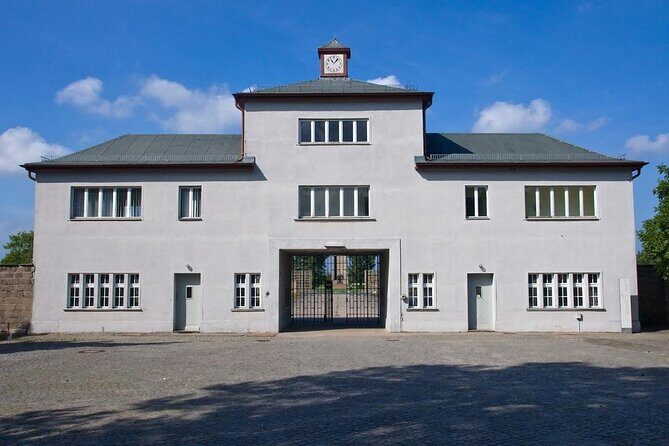
- Tower A and the main entrance axis: a clear first look at how people entered the camp machinery
- SS and Gestapo prison areas: learn how interrogation and detention fit into the wider camp system
- Private group pacing for hard topics: you can ask questions and slow down where you need to
A private Sachsenhausen tour with a licensed guide
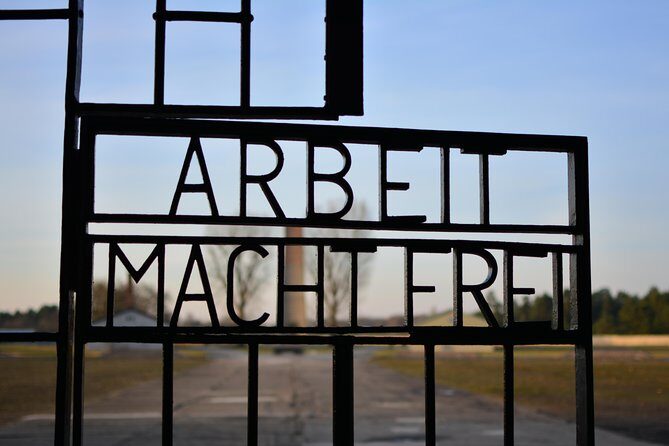
Sachsenhausen is one of those places where the layout does part of the teaching. Standing where uniforms once directed forced lives makes history feel physical, not textbook-only. That can be unsettling, so I’m glad this tour leans on a guide who’s specifically trained for the memorial.
The private setup matters more here than on most tours. When the subject is brutal and complicated, I want time to ask the questions that hit me personally, not just hear a set script at the speed of a group schedule. Guides named in the tour experience—like Aaron, Paul, and Julian—are praised for explaining difficult material carefully and at a pace that still lets you absorb what you’re seeing.
And yes, you get a professional guide—not just a generic “local expert.” The tour lists that the guide is licensed and trained by the camp’s memorial organization, which is exactly what you want for a place with real educational responsibility.
You can also read our reviews of more private tours in Berlin


Why Sachsenhausen’s story is tied to Nazi power, not just war
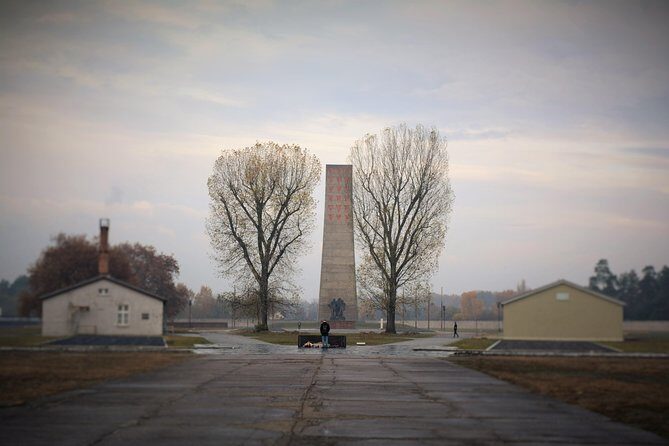
This isn’t presented as a pile of facts about one camp. The tour is built around how Sachsenhausen and the broader camp system came into being, how it developed over time, and how prisoner groups shifted as Nazi dictatorship strengthened in the 1930s and then as World War II changed everything.
That’s the key. If you only focus on dates and numbers, you miss the mechanism. If you can follow the evolution—how the regime’s goals hardened and then expanded with war—you start to understand why camps weren’t random cruelty bursts. They were part of policy.
The route is also designed to support that bigger story. You aren’t just walking through separate buildings and calling it a day. The stop choices line up with different functions of the camp system, so the explanations make more sense as you move from entrance structures to medical and execution spaces and then into detention and prisoner barracks.
The 6-hour plan: what happens during the full day
The total time is about 6 hours, and the main memorial visit is listed as about 3 hours at the Sachsenhausen site. That split helps: you get enough time to see the major areas without pretending that one human pace can cover everything. The rest of your day is built around meeting at the start point and returning there at the end.
Your tour starts at Academy of Arts, Pariser Platz 4, 10117 Berlin. It ends back at the same meeting point, which keeps things simple when you’re dealing with a place that will likely stay with you longer than most sightseeing.
You’ll also have a mobile ticket, and English is offered. That’s useful if you want to spend more of your energy on the meaning of what you’re seeing rather than logistics.
Tower A to the camp’s first logic of control
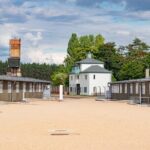
Your tour focus begins at Gedenkstatte und Museum Sachsenhausen. The visit includes Tower A, often described as the main entrance point, and this is where the camp’s organization becomes obvious. Even if you know the broad facts already, seeing the built environment helps you understand how control was built into everyday movement.
I like starting here because it sets the mental map fast. Tower A and the entrance perspective help you grasp what the camp was designed to do from the start: separate people, manage access, and enforce hierarchy.
From there, the tour keeps you moving through spaces that explain the system from different angles. Instead of treating each area as isolated, the guide connects them into one functioning machine.
Camp infirmary and pathology building: when medicine served cruelty
One of the more disturbing listed stops is the camp infirmary and pathology building. In a typical museum day, medical buildings might feel clinical and educational. Here, the context forces a harder question: what happens when institutions that claim care become part of harm?
This is where the guide’s role really counts. The tour is designed to help you learn not only what happened in a general sense, but how the camp system operated as it evolved, including changes in prisoner categories and the shifting priorities of the regime. That makes the medical and scientific language at a place like this feel like a warning, not a neutral term.
If you’re the kind of traveler who wants to understand how systems work, this stop gives you that. If you’re sensitive to medical-related imagery or topics, give yourself permission to pause, step back, and ask for a slower pace.




Station Z: the execution facility built for a purpose
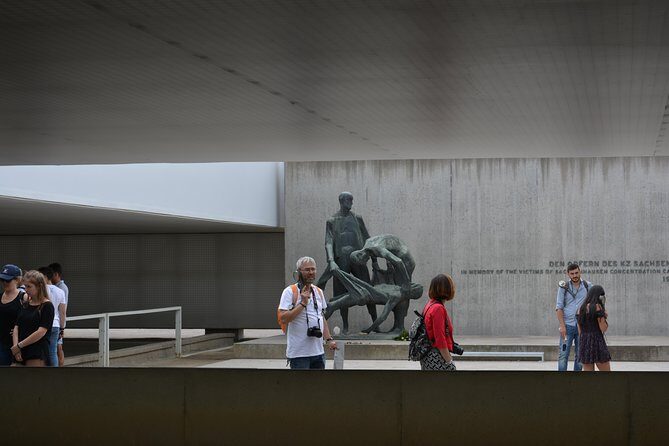
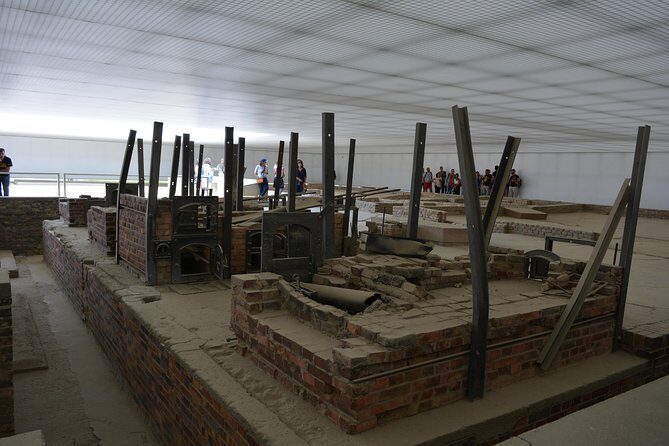
The tour includes Station Z, described as a purpose-built execution facility. This isn’t an abstract topic, and seeing a site tied directly to execution can feel like a jolt. The value of going with a licensed guide is that you’re not left with vague impressions.
What I appreciate here is how the tour frames Station Z within the broader story: how Sachsenhausen fit into the Nazi camp system, and how that system strengthened and adapted through the 1930s and during the Second World War. The physical layout teaches the point that killings weren’t random; they were organized.
The downside is also real. Station Z can be heavy in a way that’s hard to mentally buffer. If you think you’ll struggle, don’t try to power through. This is exactly the kind of moment where private pacing helps.
Exhibition in the former camp kitchen building
You’ll also see an exhibition in the former camp kitchen building. That detail matters. When you learn about forced labor and deprivation at camps, food and basic daily systems often sit at the edge of people’s assumptions. Putting an exhibition in a former kitchen space makes those daily-world themes part of the core narrative instead of a sidebar.
This stop is useful for readers who like context. It’s the kind of place where you can connect what you’ve already learned about the camp’s control to the lived conditions that prisoners endured.
If you prefer a guided experience that’s not purely architectural, the kitchen-exhibition stop is a good balance point.
SS and Gestapo prison spaces: detention as part of the system
Another included area is the SS and Gestapo Prison. This is the part of the tour that clarifies that camps weren’t only about forced labor and confinement. They were also about interrogation, detention, and repression as policy.
I find it especially meaningful that the tour doesn’t treat these spaces as standalone rooms with spooky signage. It ties them back to how the overall system came into being and how it developed as Nazi dictatorship strengthened. In other words, you’re learning how the camp system fit into political goals.
The best way to handle this stop is to keep your questions active. If something doesn’t make sense in the moment—how detention worked, or how different categories were processed—this is where you’ll get the most benefit from asking.
Former prisoner barrack blocks: what the site says about imprisonment
The tour also includes former prisoner barrack blocks. This is where the camp becomes human-scale, even when it still feels too big to take in emotionally. You’ll leave with a clearer sense of how confinement was structured spatially.
This stop also supports the tour’s central promise: to explain how Sachsenhausen and the prisoner population changed over time. The narrative isn’t just about what the camp looked like at one moment. You learn how prisoner types, numbers, and nationalities shifted as the Nazi regime and World War II reshaped the system.
If you’re visiting Sachsenhausen as part of a broader Holocaust learning trip, this barrack-block portion helps you connect the dots. It also helps you understand how imprisonment was built to last and to break routine.
Price and value: what $390.50 buys for a private group
The price is $390.50 per group, up to 5 people. That means your cost per person drops quickly if you’re traveling with family or friends, and the private format can be worth it at a site where pacing and questioning matter.
Also, you get an admission ticket included for the memorial visit portion. And you’re not paying extra for a licensed guide qualification listed as trained by the Memorial Foundation. For a major historical site, that’s part of the value: you’re paying for responsible interpretation, not just a route.
Is it expensive? Compared to a standard public-group tour, yes. But for a private day at a place this demanding, I’d treat it as paying for clarity, not convenience. If your group includes teenagers or anyone who asks lots of questions, the private setup usually pays you back fast.
Getting to Sachsenhausen from Berlin: don’t ignore transport
The tour meeting point is in central Berlin at the Academy of Arts, Pariser Platz 4. That’s convenient for starting your day, and the tour notes you’re near public transportation.
But the tour also specifies that public transport tickets are not included, and private transportation is not included. So I recommend you plan how your group will get there and back before the day arrives. If you already know how you’ll travel, you reduce stress during a day you’ll want to stay present.
One more practical note: the experience ends back at the meeting point. That helps if you’re trying to keep your evening plans flexible.
What kind of traveler this tour fits best
This is a good fit if you want the camp to make sense as part of Nazi policy and wartime transformation, not just as an inventory of horrors. The tour is designed around learning how Sachsenhausen came into being, how it developed, and what changed in prisoner categories over time.
It also fits well for mixed groups, including families traveling with teenagers. One of the themes in the experience feedback is that guides manage to make hard topics understandable without turning them into fluff. A private group also helps you tailor the pacing to emotional needs.
If your group needs strict silence and minimal conversation, a guided tour may feel like too much interaction. But if you want to ask questions and get context on why certain sites mattered, this tour structure supports that well.
Final decision: should you book this Sachsenhausen private tour?
If you’re coming to Sachsenhausen to learn—not just to see—I think this private, licensed-guided format is a smart booking. The route focuses on key areas such as Tower A, the execution facility at Station Z, SS/Gestapo prison spaces, and the barrack blocks, and it ties those spaces to the evolution of the Nazi system across the 1930s and World War II.
Book it if your group includes people who want a clear timeline, want help turning difficult material into something you can process, and will value the time saved by not juggling transport logistics. Skip it only if you’re very uncomfortable with structured explanation in an emotionally intense setting. Otherwise, consider it a high-value way to honor the seriousness of the place with proper context.
FAQ
How long is the Private Sachsenhausen Concentration Camp Memorial Tour?
The tour duration is about 6 hours total.
How much does the tour cost, and what’s the group size?
It costs $390.50 per group for up to 5 people.
What language is the tour offered in?
The tour is offered in English.
Is admission included?
Yes. Admission is included for the Gedenkstatte und Museum Sachsenhausen portion of the tour.
What areas of Sachsenhausen are included in the visit?
The tour includes Tower A (main entrance), the camp infirmary and pathology building, Station Z (execution facility), an exhibition in the former camp kitchen building, the SS and Gestapo Prison, and former prisoner barrack blocks.
Where do we meet, and where does the tour end?
Meeting point is Academy of Arts, Pariser Platz 4, 10117 Berlin, Germany. The tour ends back at the meeting point.
Are public transport tickets or private transportation included?
No. Public transport tickets and private transportation are not included.