REVIEW · TRIER
Trier: Private Walking Tour with a Local Guide
Book on GetYourGuide →Operated by Blackbuck Travels · Bookable on GetYourGuide
Roman Trier is waiting on your feet. This private walking tour uses a local guide to connect the big sights into one clear story, with Porta Nigra as the dramatic anchor. I like that you get an official guide in English or German, and I also like the hands-on way you move from Roman power to medieval faith and back again. A possible drawback: you are walking for about 3 hours, so you’ll want comfortable shoes.
If you want one simple review takeaway, it’s this: the best part is how smoothly the guide explains what you’re seeing, not just recites dates. In a tight old city, that kind of clarity matters.
In This Review
- Key highlights worth showing up for
- Why a private guide works so well in Trier
- Getting your bearings at Hotel Römischer Kaiser (and why it helps)
- Porta Nigra: the Roman city gate you actually want to see first
- Dreikonigenhaus and the human side of an old Roman city
- Frankenturm: a fortified tower that doesn’t look like a museum
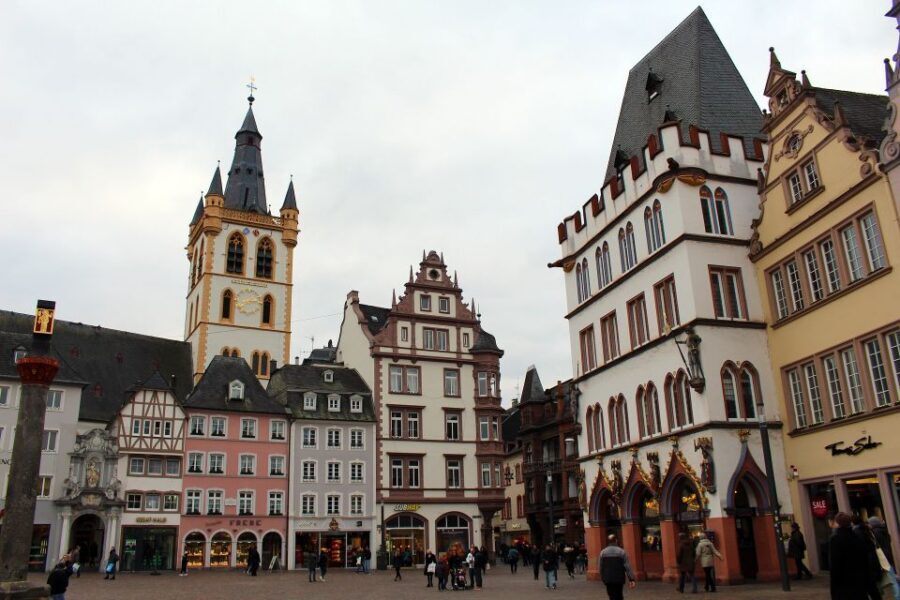
- Strolling the main market and the Market Cross trading hub
- St. Gangolf Kirche: a church with early roots in the city
- St. George’s Fountain in Kornmarkt: an 18th-century detail that feels specific
- St. Peter’s Cathedral: oldest in Germany, and huge in Trier
- Basilica of Constantine: walls preserved through the hardest years
- Throne Room of Constantine the Great: Roman power in a later church setting
- The Archbishops and Electors’ residence: where religion met governance
- Roman bath complex: your final walk through 4th-century daily life
- Price and value: what $441 per group really buys you
- Who this tour is best for (and who should pick something else)
- Guide quality matters more than you think here
- A few practical tips so you enjoy the full 3 hours
- Should you book this Trier Private Walking Tour?
- FAQ
- Is this a private tour?
- How long is the walking tour in Trier?
- What languages are the guides available in?
- Where does the tour start?
- Where does the tour end?
- What major sights does the tour include?
- Are entrance fees included?
- What does the tour price include?
- What is the price for this experience?
- Can I cancel for a full refund?
Key highlights worth showing up for
- UNESCO Porta Nigra: the ancient world’s largest city gate, built with grey sand after 170 AD
- Frankenturm: a fortified 11th-century residential tower you’ll spot as you walk
- Market Cross (Kreuz) in the main market: a medieval trading hub with shops and cafés around it
- St. Peter’s Cathedral: described as the oldest church in Germany and the largest religious structure in Trier
- Basilica of Constantine: walls kept intact even after World War II repairs, plus the Throne Room
- Roman bath complex: a 4th-century finish that gives you one last Roman punch
Why a private guide works so well in Trier
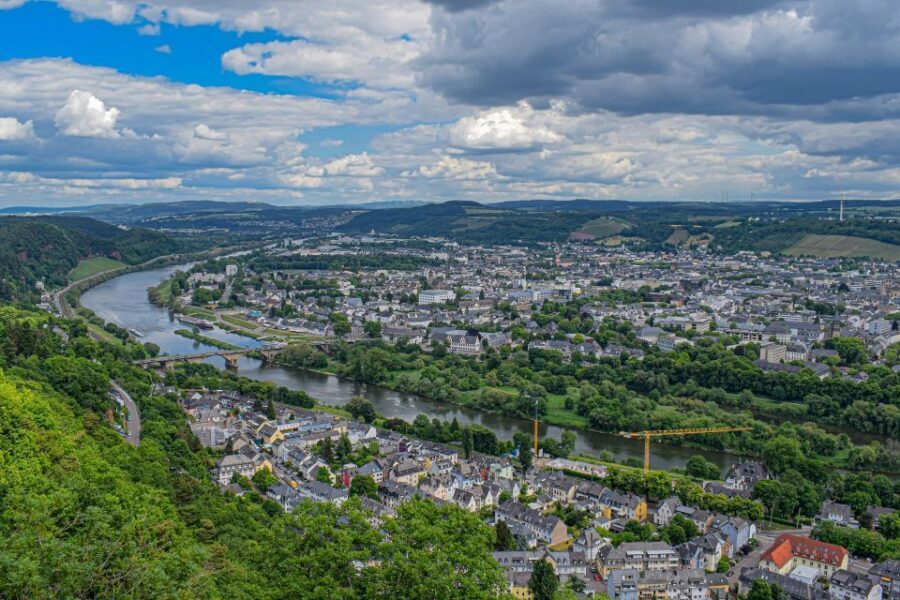
Trier is one of those cities where the layers matter. Roman remains are close to churches, medieval streets twist around older foundations, and the meanings change block by block.
With a private format, you get to go at the pace that fits you. I like that you’re not stuck timing your questions around a group stampede, and you can ask for practical context as you walk.
You can also read our reviews of more walking tours in Trier
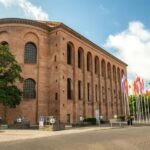
Getting your bearings at Hotel Römischer Kaiser (and why it helps)
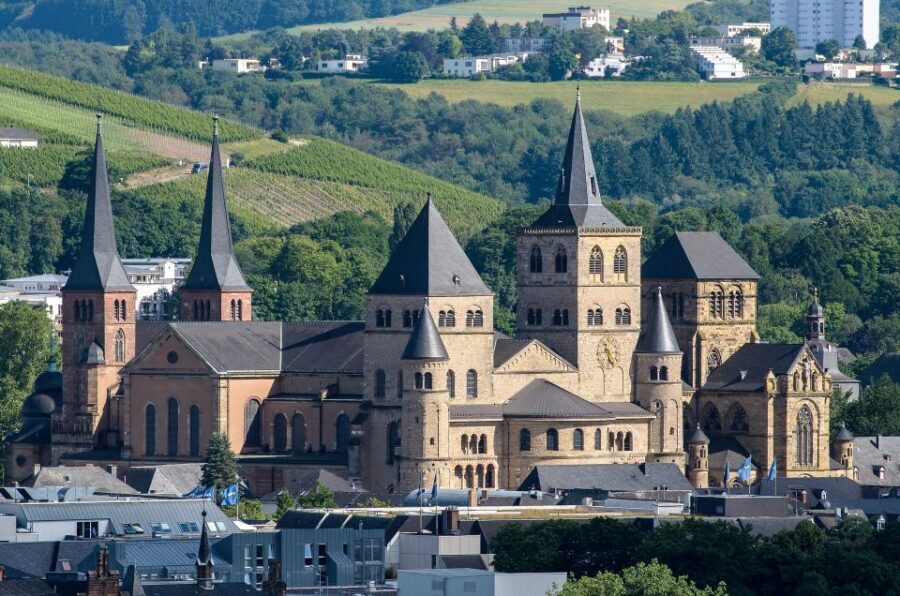
The tour starts at the front of Hotel Römischer Kaiser, close to Porta Nigra. Starting here is smart because it places the city gate right at the beginning, so everything you see later feels connected.
From the start, you’ll be in the right mindset: this is Trier as it looked when Roman ambition was still fresh. If you’ve never visited, that first sight helps you orient fast without “getting lost and hoping.”
Porta Nigra: the Roman city gate you actually want to see first
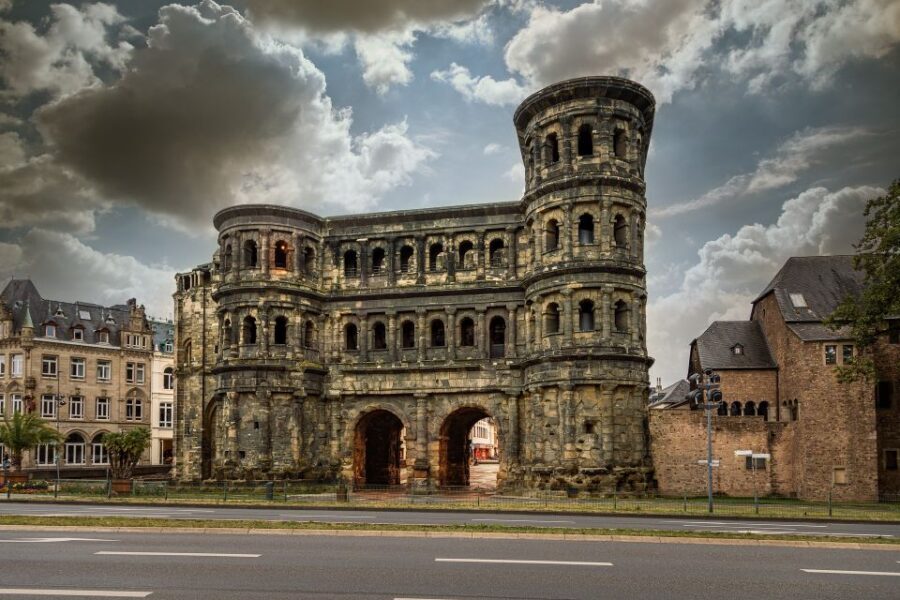
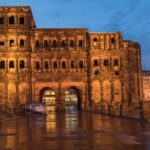
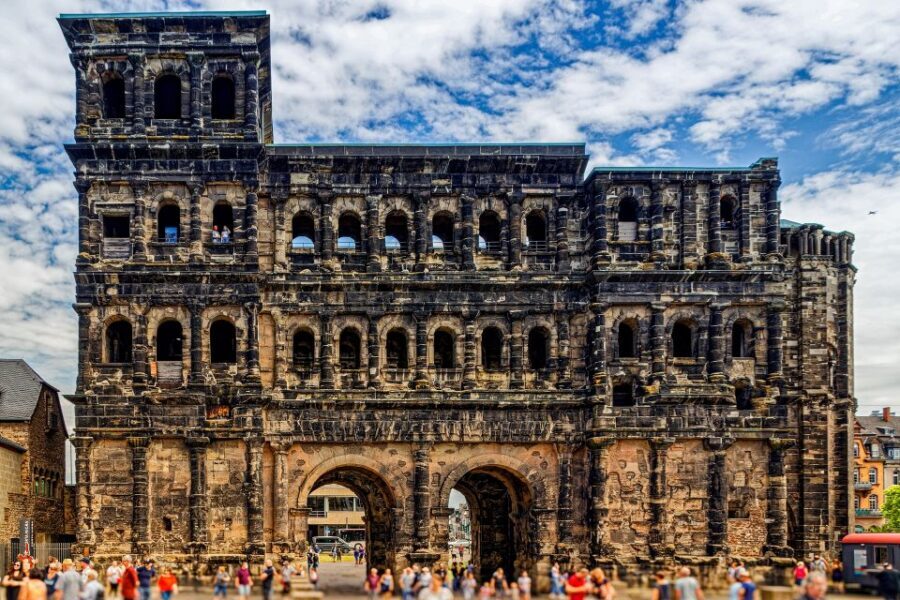
The main early stop is Porta Nigra, a UNESCO World Heritage site and the largest city gate from the ancient world. It was built with grey sand after 170 AD, and you’ll notice the sheer scale right away.
What I like about this stop is how it sets the theme for the rest of the walk. You’re not just looking at stones; you’re seeing the kind of fortified statement that helped define power, movement, and status in Roman Trier.
If you’re the type who likes photos, this is also one of your best windows. Even if you’re not a photo person, Porta Nigra gives you a strong visual anchor for the whole itinerary.
Dreikonigenhaus and the human side of an old Roman city
Next comes Dreikonigenhaus, known for being a distinctive house in Trier. It’s the kind of stop that keeps the tour from feeling like a textbook walk through monuments only.
This is where I start appreciating the “city walking” angle. You’re not only moving between landmark sites; you’re also seeing how everyday buildings sit next to the heavy history.
It’s a good moment to ask your guide what locals associate with certain buildings. Trier’s stories can feel abstract until you see how they’re woven into the streets.
Frankenturm: a fortified tower that doesn’t look like a museum
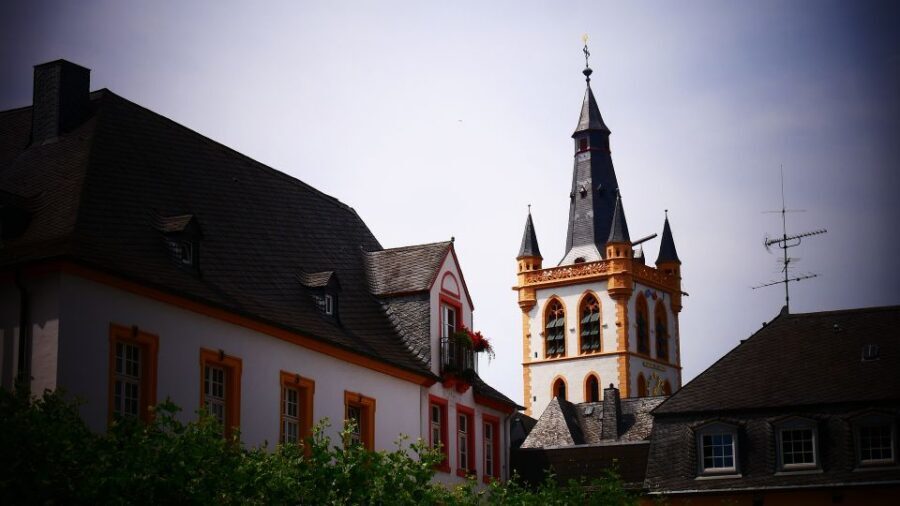
You’ll then see the Frankenturm, a fortified brick residential tower built in the 11th century. The structure’s purpose reads in the architecture: it looks meant to protect as much as to house.
This stop adds variety after Roman masonry and before the church-heavy stretches. It’s also a reminder that Trier didn’t stop being important after the Roman period; the city kept evolving.
If you like medieval architecture, this is one of those “pay attention” moments. Look at how the tower’s mass and form communicate defense without turning it into a dramatic set piece.
You can also read our reviews of more guided tours in Trier
Strolling the main market and the Market Cross trading hub
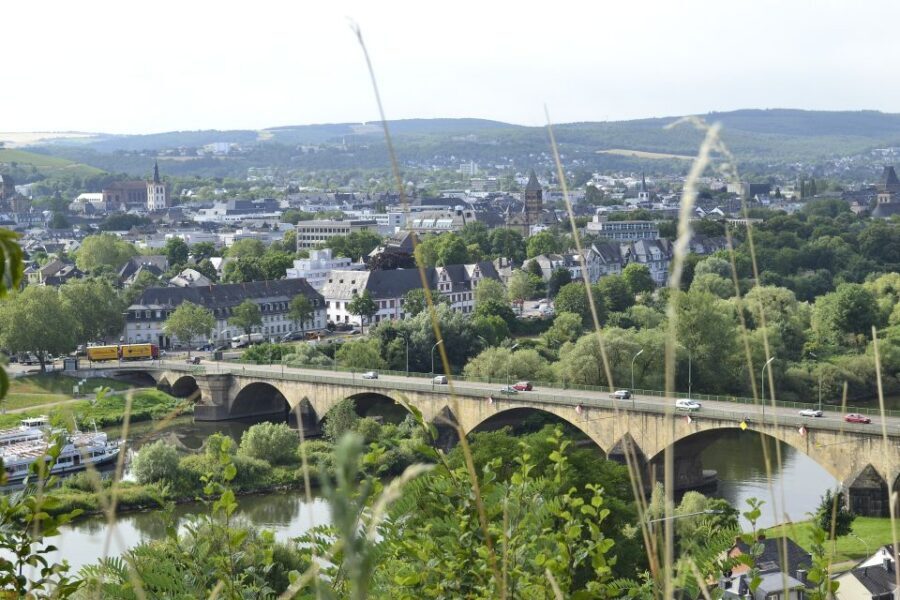
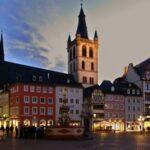
On the way, you pass through the main market area, including the Market Cross. It’s famous as a medieval trading hub, which matters because Trier’s economy shaped what people built and where they gathered.
I like this section because it breaks the sightseeing rhythm. You get the chance to take in the street layout and the central public space, not just individual monuments.
If you need a snack or a pause, this is the area where cafés and shops are nearby. Keep your timing in mind so you don’t lose the flow of the walk.
St. Gangolf Kirche: a church with early roots in the city
You’ll visit St. Gangolf Kirche, dedicated to St. Gangulphus. It’s described as the second-oldest church in Trier, which gives the stop extra weight.
This isn’t just another church stop. It’s a chance to understand how religious sites became long-term “memory anchors” after the political shifts of earlier centuries.
Spend a little time listening to your guide here. The value is in connecting the church to what came before in the city’s timeline.
St. George’s Fountain in Kornmarkt: an 18th-century detail that feels specific
In the Kornmarkt area, you’ll see Saint George’s Fountain, built between 1750 and 1751. It was built by the same builder of the Electoral Palais, which ties the fountain to a larger architectural story.
I appreciate stops like this because they give you something concrete to remember. Not every tour spends time on a named fountain with named dates, and that makes the city feel more like a place you’re passing through rather than a slideshow.
St. Peter’s Cathedral: oldest in Germany, and huge in Trier
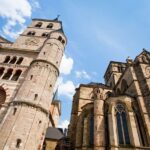
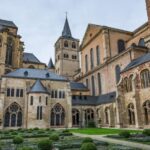
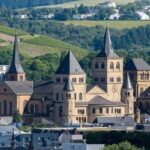
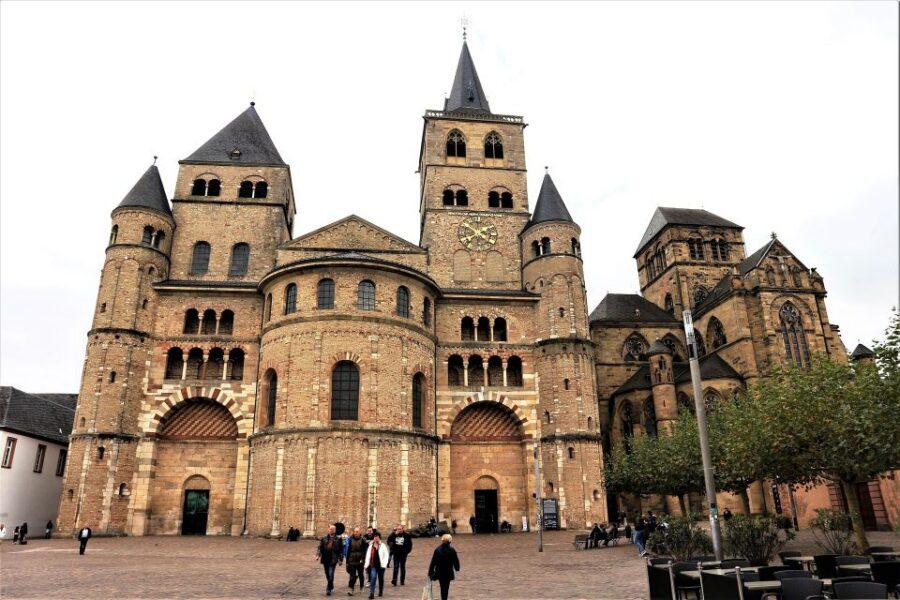
Then you’ll reach St. Peter’s Cathedral, described as the oldest church in Germany and the largest religious structure in Trier. The foundation was laid by Roman bricklayers in the early 4th century, which is a fun twist on how Roman craft turned into later religious power.
This stop works best when you let your guide connect the dots between eras. You’ll feel how Trier reuses skill, materials, and sacred meaning across time.
If the interior is open, plan to pause and take it in. Even when you know the basics, the scale is the part that hits first.
Basilica of Constantine: walls preserved through the hardest years
The walk continues to the Basilica of Constantine, built around 310 AD. The highlight here is that the inner walls have been kept intact, without changes, even after World War II repairs.
That single detail is the reason this stop matters. It turns the basilica from a historical building into a living witness that survived disruption.
Throne Room of Constantine the Great: Roman power in a later church setting
Inside, you’ll see the Throne Room of Constantine the Great and later Roman emperors from the 4th century. What I find especially interesting is how Roman structures in the throne room are now used as a Protestant church.
So you’re not only seeing Roman architecture; you’re seeing how later communities repurposed it. That kind of reuse is common in Europe, but Trier makes it feel unusually direct.
If you like “how things change use without fully disappearing,” this is your moment. It’s also a great point to ask your guide how they explain the layers visually.
The Archbishops and Electors’ residence: where religion met governance
After that, you’ll continue to the 16th-century residence of the Archbishops and Electors of Trier. This stop is about status and power structures, not just worship.
It also helps you understand why Trier’s religious buildings can feel political. For centuries, the people who shaped the church also shaped decisions beyond it.
Take a moment to notice where the buildings sit in relation to the surrounding streets. The city plan often tells you how authority wanted to be seen.
Roman bath complex: your final walk through 4th-century daily life
The tour ends at the large Roman Bath complex, constructed in the 4th century AD. Ending with baths is a smart choice because it shifts away from monuments and into daily routine—this is how people lived, relaxed, and socialized.
It’s also a satisfying closing loop back to Rome. After churches and medieval markers, the baths remind you that the Roman city wasn’t only about walls and thrones.
When your walk finishes, you return to the meeting point area. That keeps the experience tidy and gives you an easy place to decide what you want to do next.
Price and value: what $441 per group really buys you
The price is $441 per group up to 20, for a 3-hour private walking tour with an official guide. That sounds like a big number until you think about the format: you’re paying for a guide’s time plus a private routing plan for a compact time window.
Here’s how I think about value. If you’re traveling with a small group, private guiding becomes more cost-effective than you might expect, because you’re not sharing with strangers you can’t coordinate with. And for a city with layers like Trier, having someone explain what to look for often saves you from spending extra time piecing together meanings later.
Also, entrance fees aren’t included. For you, that means your budget is likely mostly about what you choose to pay on your own during the walk, plus any optional stops you want after.
Who this tour is best for (and who should pick something else)
This is a strong fit for:
- Couples or friends who want a private guide and a focused timeline
- History-minded walkers who want Roman and medieval sites connected in one storyline
- Anyone who appreciates clear explanations in English or German
You might want to choose another option if:
- You want minimal walking and more time staying inside a building
- You’re only interested in one era (like strictly Roman Trier) and don’t care about the church and medieval segments
Guide quality matters more than you think here
The tour shines because the guide communication comes through. One guide named Nicholas is specifically praised for being kind and very easy to understand, which matters a lot during a timed walk through dense sights.
Another guide named Andrea Tullius is described as friendly and able to guide you through the city in a way that feels smooth rather than lecture-like. That combination—warm delivery plus clear explanation—is exactly what you want when you’re switching between Porta Nigra, multiple churches, and the Basilica.
A few practical tips so you enjoy the full 3 hours
Wear shoes you can walk in for an extended city stretch. Trier’s center can involve uneven sidewalks around old buildings, and you’ll appreciate not thinking about foot comfort.
Bring a charged phone for photos, but don’t rely on it to understand what you’re seeing. This tour works best when you let the guide point out the details that are hard to spot on your own.
If you’re sensitive to cold or rain, plan for it. Even with good weather, you’re outside for the whole time window, so a light layer helps.
Should you book this Trier Private Walking Tour?
Book it if you want Trier to make sense fast. The UNESCO Porta Nigra, St. Peter’s Cathedral, the Basilica of Constantine, and the Roman bath complex are big names, but the real payoff is having someone connect them into one clear story you can remember.
Skip or compare if you’re only after self-guided monument photos or you don’t want to walk for three hours. In that case, you might prefer a shorter or more flexible option.
Overall, this is a high-value way to see Trier with a private official guide, especially if you care about explanations that are easy to follow in English or German.
FAQ
Is this a private tour?
Yes. It’s a private walking tour with an official guide.
How long is the walking tour in Trier?
The tour lasts 3 hours.
What languages are the guides available in?
The live guide is available in English and German.
Where does the tour start?
Meet your guide in front of Hotel Römischer Kaiser, close to Porta Nigra in Trier.
Where does the tour end?
The tour ends back at the meeting point.
What major sights does the tour include?
You’ll see Porta Nigra, Frankenturm, St. Gangolf Kirche, St. Peter’s Cathedral, the Basilica of Constantine (including the Throne Room), Market Cross in the main market, and the Roman bath complex, among other stops.
Are entrance fees included?
No. Entrance fees are not included.
What does the tour price include?
It includes the private walking tour and the official guide.
What is the price for this experience?
The price is $441 per group, up to 20 people.
Can I cancel for a full refund?
Yes, free cancellation is available up to 24 hours in advance for a full refund.