REVIEW · TRIER
Trier: Solve the Mystery of the Merchant’s Gold!
Book on GetYourGuide →Operated by TEAMTACTIVES · Bookable on GetYourGuide
Trier turns into a game in 90 minutes. In Solve the Mystery of the Merchant’s Gold, you follow clues in Roman-era Augusta Treverorum, helping young Marcus Aurelius untangle a letter from his merchant uncle, Gaius Magnus. Two things I really like: the story-driven puzzles make you pay attention, and the tour is genuinely practical because you start on the spot with no app download. One thing to consider: the content is only in German, so language can be the deal-breaker.
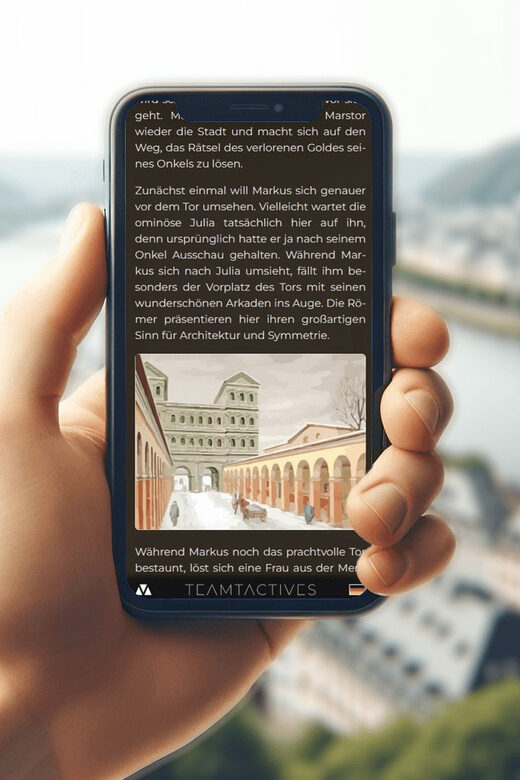
This is a self-guided outdoor walk through the city, designed for you to set your own rhythm. You get a shared token for your group, and each person can follow along on their own smartphone. You can start and stop anytime during your session, which is great when you want to pause for photos, or slow down when the clues feel tricky.
It’s also built for families and it’s fully barrier-free, so you’re not stuck with a “serious adult only” vibe. The walk is about 1.3 km total, and the puzzle difficulty is rated 2/5, which usually means it’s more about observation and following steps than solving brain-bending math.
In This Review
- Key points before you go
- Roman Trier Meets a Mystery: The Story Behind the Merchant’s Gold
- Porta Nigra Start Point: Setting the Scene for Puzzles
- The 1.3 km Puzzle Walk: How the Clues Work in the City
- Finish at Kaiserthermen: Why the Roman Baths Make a Good Ending
- Difficulty 2/5: Family-Friendly, Not Too Mathy
- Price and Value for Groups Up to 3
- Smartphone Reality Check: Internet, Battery, and Language
- Who This Works Best For (and Who Might Want Something Else)
- Should You Book Trier: Solve the Mystery of the Merchant’s Gold?
- FAQ
- How long is the tour?
- What distance do I walk?
- Where does the tour start?
- Where does the tour end?
- Do I need to download an app?
- What do I need on my smartphone?
- Can multiple people follow on their own phones?
- Is the tour available in English?
- Is it good for families and kids?
- Is admission to attractions included?
Key points before you go
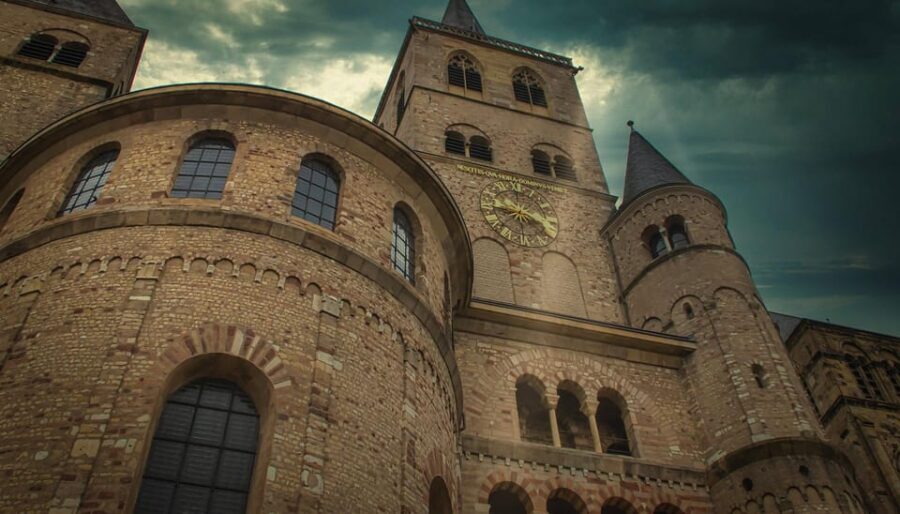
- Roman mystery storyline set in Augusta Treverorum with Marcus Aurelius and Gaius Magnus
- No app installation needed: a web app works immediately
- Start and stop anytime on a self-paced route
- 1.3 km outdoor walk from Porta Nigra to Kaiserthermen
- Difficulty 2/5 and family-friendly
- German-only content, so plan around that
Roman Trier Meets a Mystery: The Story Behind the Merchant’s Gold
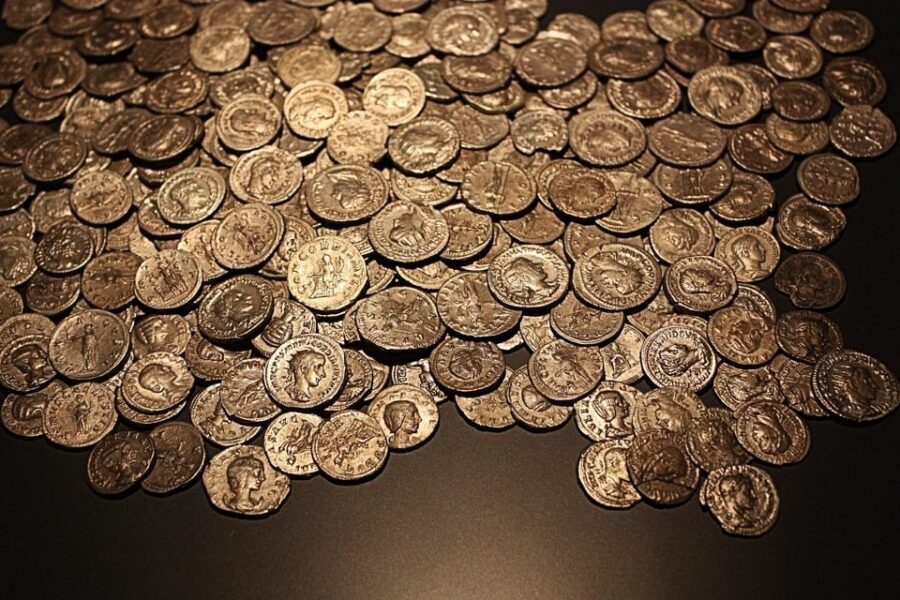
Trier has a serious Roman résumé, and this experience turns that fact into something you actually do, step by step. You’re set back to 310 AD, when the city was known as Augusta Treverorum. The plot starts with Marcus Aurelius getting a mysterious letter from his uncle, Gaius Magnus, a merchant in Trier.
The clever part is how the story pulls you across the city. Instead of reading a plaque and moving on, you’re solving a chain of clues that pushes you to the next location. Along the way, you’re picking up historical details about Germany’s oldest city—Trier—and how people lived around its Roman landmarks.
Think of it like a modern scavenger hunt with a historical backbone. You won’t just see monuments; you’ll understand why they mattered to the story. And because the tour is designed around a puzzle path, you naturally slow down, look up, and connect what you’re seeing to what the clues are asking.
You can also read our reviews of more tours and experiences in Trier.



Porta Nigra Start Point: Setting the Scene for Puzzles
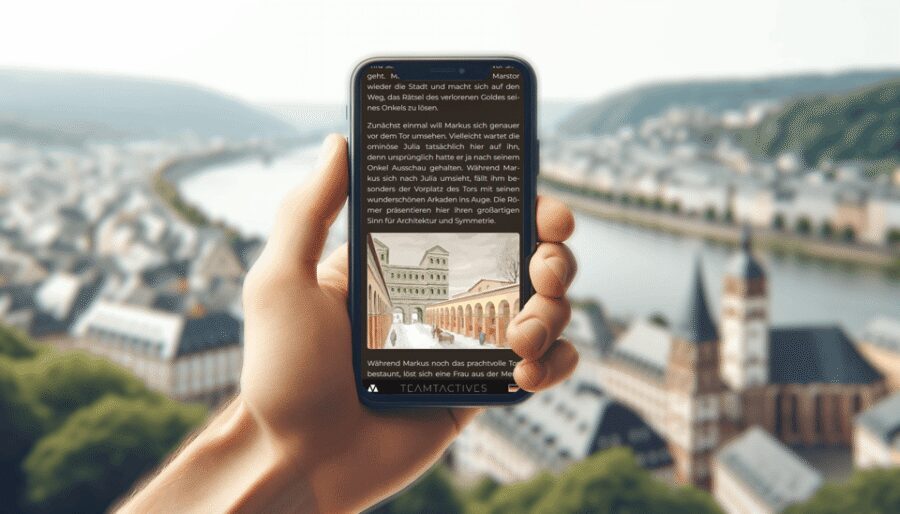
You begin at Porta Nigra, Trier’s iconic Roman city gate. It’s a fitting starting point because it looks dramatic even before you add anything “game” related. Starting here also helps because you can quickly orient yourself: you’re standing at one of the most recognizable Roman structures in town, and the rest of the walk feels like you’re following the city’s Roman geography.
From the first moment, you’ll be using your phone to follow the story and work through the early puzzles. The format is straightforward: find the clue prompt, move toward the next point, and unlock the next step by solving what’s asked. If you’re the type who gets restless waiting for guided groups, you’ll like this. No waiting around. You’re already in the action.
Practical tip: arrive with a little patience for your setup. You need a charged smartphone and mobile internet because the tour content is delivered through a web experience. If your battery is low or your signal is spotty, the first couple of minutes can feel more annoying than the puzzles themselves.
The 1.3 km Puzzle Walk: How the Clues Work in the City

The route is about 1.3 km and typically takes about 90 minutes (you may stretch it closer to 1.5 hours depending on your pace and how often you stop to read or regroup). This is a walk designed to keep you outside and moving. You get fresh air, you get city views, and you get the satisfaction of figuring out where to go next.
What makes this kind of self-guided puzzle tour work is that it gives you a reason to look at the details. You’re not wandering randomly. The clue prompts act like a handrail: they guide you from one “question” to the next, and each correct step also teaches you something historical along the way.
Puzzle difficulty is rated 2/5, which lines up with what I’d expect from an activity that works for mixed ages. It’s not a horror movie for your brain. Still, it’s engaging enough that adults shouldn’t feel bored, and kids shouldn’t feel completely lost. One practical benefit of this difficulty level is that it keeps the tour from becoming either a total walk in the park or a stressful slog. You can enjoy the city without constantly fighting the mechanism.
A fair caution: the tour gives interesting facts at the stops, but if you crave deeper, location-by-location context, you may want extra reading after the game. Some people would love a bit more information at each monument rather than a shorter, story-focused fact.
How you pace it matters. Because you can start and stop anytime, you can tailor the experience:
- If you want quick momentum, keep solving and moving.
- If you want photos, pause between clues and restart when you’re ready.
- If a puzzle slows you down, you can step away and reset—no one’s counting your time but you.
Finish at Kaiserthermen: Why the Roman Baths Make a Good Ending
The tour ends at Kaiserthermen. Roman baths are one of the best “final stops” imaginable for a Roman-themed walk, because they feel like a place where daily life and empire-level architecture meet. Ending here gives you a natural sense of closure: you start at Porta Nigra, symbol of Roman city structure, then you finish near a Roman bathing complex—another big piece of how Romans shaped public life.
By the time you reach the finish, you’ve usually trained your eyes on the city in a different way. You’re less likely to treat Trier like a background to photos, and more like a living layout of Roman-era decisions. The mystery format helps, because your last segment often ties together what you’ve learned through the clue steps.
Also, ending at Kaiserthermen works well for practical wandering afterward. Even without turning this into a guided museum marathon, you’ll likely feel ready to explore the area further on your own. The tour itself doesn’t include admission to attractions, so if you want to go inside anything, you’ll need to plan that separately.
Difficulty 2/5: Family-Friendly, Not Too Mathy
This experience is rated 2/5 for puzzle difficulty, and that rating matters. It signals that the puzzles are designed to be approachable, not gatekeeping. For families, that’s the sweet spot: enough structure to keep kids engaged, but not so hard that adults feel stuck solving alone while everyone else waits.
Here’s what that usually means in real life:
- You’ll spend more time paying attention than doing heavy thinking.
- You’re likely to solve most clues with a little teamwork and observation.
- If you miss something, you can usually backtrack without derailing the entire outing.
The feedback I’ve seen from similar puzzle formats is that some people found it fun but could handle a slightly tougher challenge. So if you’re a die-hard puzzle person who wants a real brain workout, you might find it on the easier side. But if your goal is city sightseeing plus light-to-moderate problem solving, this difficulty level is a good match.




Price and Value for Groups Up to 3
It costs $23 per group for up to 3 people. That price structure is one of the smartest things here, because you’re not paying per head for a self-guided experience. For families or small groups, the value can feel much better than individual pricing, since you can split the cost across the people using the token.
Let’s look at it practically: if you have the maximum group size of three, you’re paying roughly $7–$8 per person (ballpark math, but the idea is what matters). For a 90-minute activity that gets you walking, learning, and solving, that’s reasonable—especially in a city where you might otherwise spend time doing the same route without a structured reason to look closely.
One more value point: the token model means each person can follow on their own phone. You’re not passing one device around like it’s a hot potato. That makes the experience feel more like a shared adventure instead of a single-user game.
Smartphone Reality Check: Internet, Battery, and Language
This is the part you should plan for. The tour uses a web experience, so you don’t download an app, but you do need:
- a charged smartphone
- mobile internet access
If you forget the basics, you’ll lose the fun fast. Low battery is the classic travel problem. Mobile internet is the second classic one, especially depending on where signal gets weak.
Then there’s the language. The tour is German-only, and that’s not a small detail. The puzzles and historical facts are delivered in German, so if you don’t read German, you’ll likely be stuck when it comes to clue interpretation. You could still follow some visual steps, but the full experience depends on the text.
My practical recommendation: if German isn’t comfortable for you, either bring someone who reads it well or treat this as a “city walk with partial puzzle support,” not a fully story-driven experience.
Who This Works Best For (and Who Might Want Something Else)
This tour fits best if you like city walking that has a purpose. You’ll probably enjoy it if:
- you want Roman Trier context without joining a formal group
- you like puzzles, but you don’t want them to take over the day
- you’re traveling with kids or a mixed-age group and need a format that keeps everyone moving
- you prefer flexible pacing over rigid schedules
It might be less ideal if:
- you need an English experience (the tour is currently German-only)
- you dislike being dependent on your phone for navigation and information
- you want deep historical detail at each site without supplementing with guidebooks or optional museum time
Should You Book Trier: Solve the Mystery of the Merchant’s Gold?
I’d book this if you want a light-to-medium puzzle adventure that makes Roman Trier feel more personal. Starting at Porta Nigra and finishing at Kaiserthermen gives the route a strong spine, and the 1.3 km walk keeps it from turning into a long slog. The cost makes sense for small groups up to three, especially if you’re splitting the price.
If you read German (or you have a group member who does), this becomes a great way to spend an afternoon. If you don’t, I’d treat it as a partial experience and consider whether you’d rather use your time for a language-friendly option.
Bottom line: this is a smart choice for people who like to learn while moving, and who don’t mind using a smartphone as your tour guide.
FAQ
How long is the tour?
The self-guided experience takes about 90 minutes (about 1.5 hours).
What distance do I walk?
Plan for about a 1.3 km walk.
Where does the tour start?
It starts at Porta Nigra.
Where does the tour end?
It finishes at Kaiserthermen.
Do I need to download an app?
No. The web app is ready to use immediately at the start point, with no installation.
What do I need on my smartphone?
You’ll need a charged smartphone and mobile internet access.
Can multiple people follow on their own phones?
Yes. You get a shared access token so each person can access the content on their own smartphone.
Is the tour available in English?
No. The tour is currently only available in German.
Is it good for families and kids?
Yes. It’s described as family-friendly and designed to be enjoyable for all ages, with puzzle difficulty rated 2/5.
Is admission to attractions included?
No. Admission to any attractions along the route is not included.