REVIEW · TRIER
Trier: Adventure tour: “The Secret of the Porta Nigra”
Book on GetYourGuide →Operated by Trier Tourismus und Marketing GmbH · Bookable on GetYourGuide
Porta Nigra turns into a living story. In The Secret of the Porta Nigra, you spend about an hour in the heart of ancient Trier, with Roman history brought to life through a tense, interactive performance. You’ll see the fortress the way most visitors can’t, and you’ll feel the pressure of duty and survival that Romans faced every day.
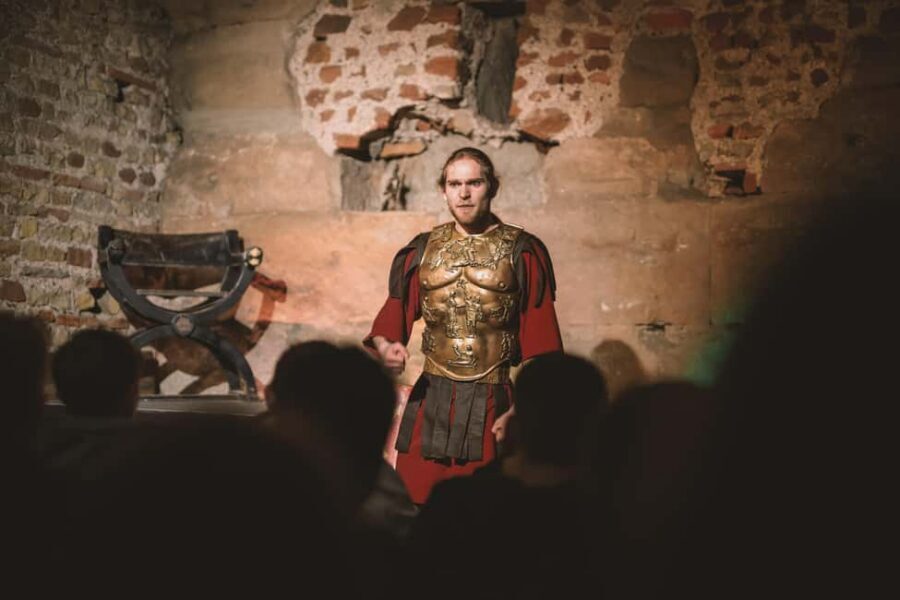
What I really like is the way the cast uses staging that pulls you in, not just over your shoulder. A professional actor plays a Roman centurion in full costume, and the performance is designed so you become part of what’s happening. Second, I love the access: you get into exclusive rooms of the Porta Nigra that are otherwise off-limits, so the experience is more than a storytelling walk.
The one caution: this isn’t a sit-and-listen museum talk. Expect interactive action and some entertaining theatrics, plus it’s in German (with some content in the original), so if you want a quiet, purely factual tour, the tone may feel a bit too playful. And you also need to handle stairs—two levels via a spiral staircase—before you even get to the best rooms.
In This Review
- Key things that make this tour worth your time
- Finding the tour and stepping into the Porta Nigra mindset
- The Roman centurion storyline: tension, duty, and a growing question
- What you see inside: the “hidden side” of Trier’s UNESCO treasure
- Stairs, cooler rooms, and how to plan your comfort
- Language and pacing: what to expect if your German isn’t perfect
- Price and value: is $25 fair for what you get?
- Who this tour suits (and who might not love it)
- Practical do’s: simple tips before you go
- Should you book The Secret of the Porta Nigra?
- FAQ
- Where do I meet for the tour?
- How long is The Secret of the Porta Nigra tour?
- How much does it cost?
- What language is the tour in?
- Is the tour suitable for young children?
- Is it wheelchair accessible?
- Can I take photos inside Porta Nigra?
- Is audio recording allowed?
- Do I need warm clothing?
- Is there a lot of stair climbing?
- Are pets allowed?
Key things that make this tour worth your time
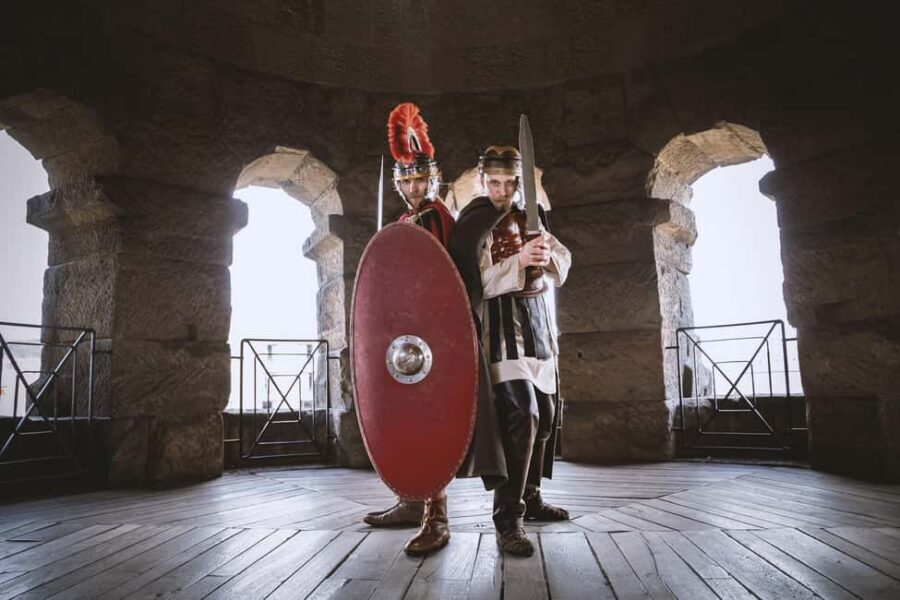
- Restricted Porta Nigra rooms: you see parts most visitors can’t reach.
- A professional actor in full Roman costume: the centurion performance is the engine of the tour.
- Interactive audience moments: you’re not just watching; you’re involved.
- A suspense-style story: there’s a sense of suspicion and unfolding plot, not just lectures.
- You’ll climb via a spiral staircase: bring shoes that work on steps.
- German-led with some original-language content: plan to follow through tone and action, not just words.
Finding the tour and stepping into the Porta Nigra mindset
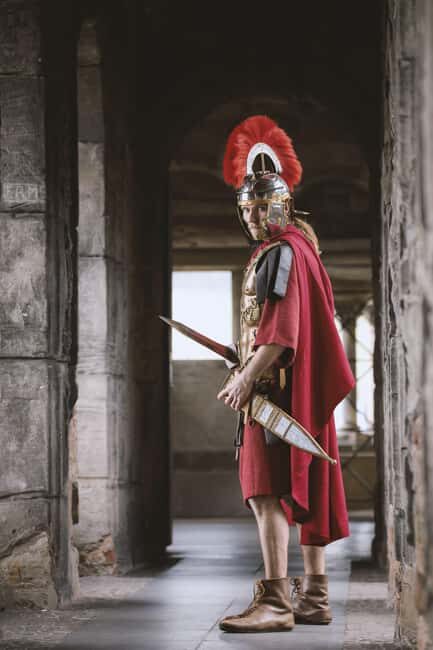
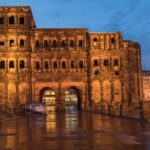
The experience starts right at the Porta Nigra. You wait in front of the entrance, and a Roman legionnaire picks you up. That small moment matters because it sets the tone immediately: this is a guided adventure, not a standard guided tour where you wander and then stand back for facts.
From there, you’re pulled into the story. A Roman centurion takes over as the main guide figure, and you move with the group into the fortress experience. Expect short, clear segments of explanation mixed with performance beats. The pace is built so you’re not bored, but you’re also not trapped in non-stop acting.
If you’re the type who likes to get your bearings quickly, you’ll probably appreciate that you’re guided from the start. It’s also useful to know that you’ll be entering cooler rooms inside the structure, so dress with that in mind. Even in pleasant Trier weather, those interior spaces can feel noticeably cooler once you step in.
You can also read our reviews of more tours and experiences in Trier.


The Roman centurion storyline: tension, duty, and a growing question
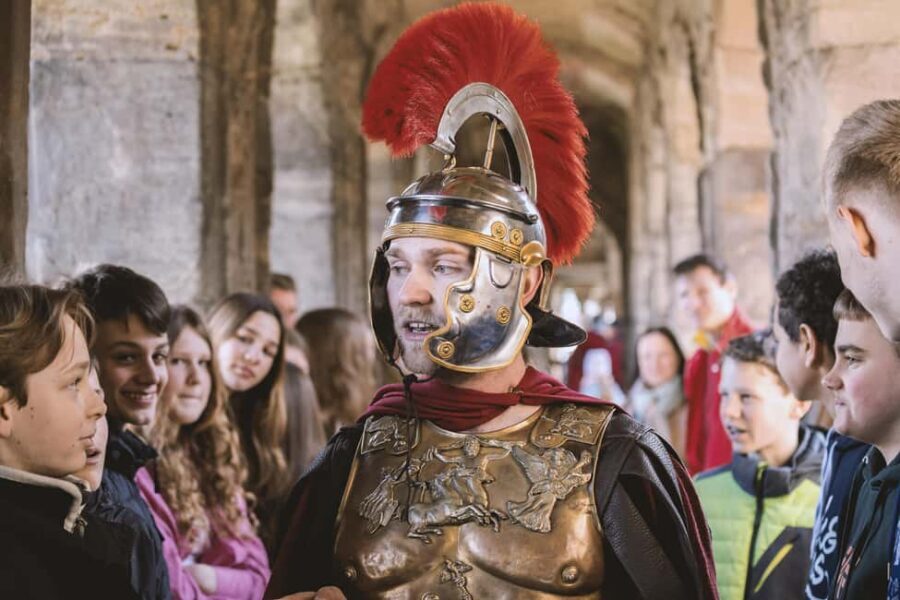
The heart of this tour is the character-driven narrative. You meet a Roman centurion—played by a professional actor—who shares gripping tales about duty, pride, combat, and survival. The goal is to make Roman life feel real: hard days, constant risk, and the mindset of someone who had to keep functioning even when things went wrong.
What makes it work is the structure. The show isn’t just a monologue. It brings you into the action, and that shifts how you understand the space. Instead of thinking of stone walls as a backdrop, you start imagining them as a working environment—built for defense, movement, and control.
There’s also a twist built into the experience. The performance gradually raises suspicion about the centurion himself. That’s clever because it gives you a reason to pay attention beyond basic “Rome was impressive” facts. You’re not only listening to history; you’re following a storyline.
One more thing: the cast leans into entertainment. You’ll see interactive elements and exciting staging, and that’s great when you like being part of a show. If you prefer strict facts with minimal acting, be aware that humor and theatrics are part of the package—even while the tour still aims to deliver solid information about the Porta Nigra and the wider Roman world.
What you see inside: the “hidden side” of Trier’s UNESCO treasure
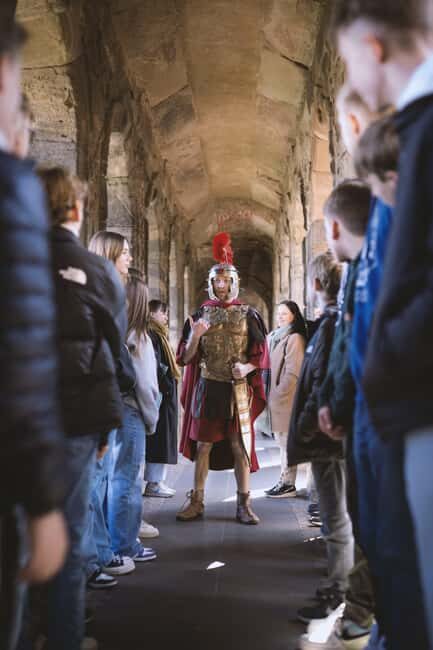
Yes, you can visit the Porta Nigra as a normal tourist. But the real value here is that you get into areas that are otherwise closed off. That means your tour includes more than just walking past the iconic outer structure.
Inside, you’re given access to exclusive rooms. The point isn’t to make the site feel secret for marketing reasons—it’s to help you understand how the monument functioned and why it mattered. When you can stand in spaces most people never reach, you naturally notice details differently: how light falls, how thick the walls feel, how movement would work inside, and how a defensive gate becomes part of daily Roman operations.
The tour also keeps linking the performance to the site itself. As the centurion speaks about life as a soldier around 1,800 years ago, you’re not far from the physical reality of what those walls represent. That connection can make a big difference for first-time visitors. Without the story, the Porta Nigra can still be impressive. With the story, it becomes understandable.
I also like how the experience aims to balance action with explanation. It’s easy for theatrical tours to become either pure theater or pure facts. This one tries to do both: you get interactive staging while still learning about the Roman Empire in general, not only the gateway monument.
Stairs, cooler rooms, and how to plan your comfort
This tour is only about 1 hour, but it packs in movement. You’ll climb two high floors using a spiral staircase. That doesn’t sound like much on paper, yet spiral staircases can feel steeper and tighter once you’re moving with a group and paying attention to where you place your feet.
Before you book, think about your comfort with stairs and crowded movement. There’s no avoiding this part. Plan on wearing shoes with good grip, and skip anything with slippery soles. If you tend to feel uneasy on narrow stairs, consider another option, because the tour’s main flow depends on that vertical access.
Also, you’ll enter cooler rooms. That means layering helps. A light jacket or sweater is a practical idea even if the Trier day feels mild when you start. The site’s interior temperature can surprise you once you’re inside.
Finally, the tour has content restrictions. Photography inside isn’t allowed, and audio recording is also not permitted. That’s not just rule-following—it shapes how you experience the spaces. You’ll rely more on what you see in the moment and less on later “let me zoom in on that” photos.
Language and pacing: what to expect if your German isn’t perfect
The guide language is German, and some content is shown in its original language. If you speak German, you’ll likely catch more of the nuance in the performance and the explanations. If you don’t, you can still follow much of the experience because the staging and physical interaction do a lot of the communication work.
In other words, don’t count on a purely multilingual script. But do count on a performance that communicates through action, tone, and group participation. The best approach is to treat it like a guided show: watch the actor, listen for key phrases, and let the story’s rhythm do some of the work for you.
Pacing matters here. You’re not expected to translate every sentence to get value. You’ll still understand the central themes: life of a soldier, how the Porta Nigra fits into Roman Trier, and why the tour’s “secret” access changes your perspective.



Price and value: is $25 fair for what you get?
At $25 per person for about an hour, this falls into the “small splurge” category. The question is whether you get enough to justify it—and here, the math is fairly strong.
You’re paying for three things that most normal tours don’t include:
- Access to rooms not open to regular visitors
- A professional actor running the performance in costume
- Interactive staging tied directly to the Porta Nigra space
If you’ve ever paid similar money for a standard guided walk, you know how easy it is for value to feel thin. Here, it doesn’t. The restricted access and the theatrical, character-led format give you tangible differences in what you experience, not just better narration.
Also, the price points to a tour designed for efficiency. Since it’s around an hour, you’re not committing an entire morning or afternoon to just one site. That’s useful in Trier, where you may want time to pair Porta Nigra with other stops around the old town.
Who this tour suits (and who might not love it)
This experience is best for adults and older kids who like interactive storytelling and don’t mind a bit of theater in their sightseeing. It’s not suitable for children under 10, and it’s not aimed at wheelchair users. Stairs and the nature of the performance make that clear.
If you’re a history fan who still wants to feel entertained, you’ll probably enjoy the mix of Roman life themes—duty, pride, combat, survival—with the real monument under your feet. If you’re the type who wants only quiet facts, you might find some moments too playful. That doesn’t mean the tour lacks information. It means the show uses entertainment as part of the teaching.
I’d also recommend this when you’re visiting Trier for the first time. The Porta Nigra is famous, but this tour gives it a second layer: you learn how it connects to Roman life, not just how it looks from outside.
Practical do’s: simple tips before you go
A few things can make your visit smoother:
- Wear grippy shoes for the spiral staircase.
- Bring a light layer for cooler interior rooms.
- Go in expecting a German-led performance with some original-language moments.
- Skip plans that rely on interior photos. Photography inside isn’t allowed.
- Don’t bring pets (assistance dogs are allowed).
If you’re traveling with someone who prefers a calm style, decide in advance whether interactive acting will be fun or annoying. It’s part of the concept, so you’ll feel it one way or the other.
Should you book The Secret of the Porta Nigra?
Book it if you want more than a standard “look at the monument” visit. The standout reason is the combination of restricted access and a professional actor who turns the Porta Nigra into a story you can participate in. For first-timers to Trier, it’s also a great way to get perspective fast on Roman Trier without sitting through long lectures.
Skip it if you need wheelchair accessibility, are uncomfortable with stairs, or want a quiet tour with no audience interaction. Also consider your German level. It’s not presented as a fully multilingual lecture, so you’ll rely on staging and tone to bridge the language gap.
If those trade-offs sound manageable, I think this is an excellent use of an hour in Trier—one that makes the Porta Nigra feel like a place Romans actually moved through.
FAQ
Where do I meet for the tour?
You meet in front of the entrance to the Porta Nigra. A Roman legionnaire will pick you up there.
How long is The Secret of the Porta Nigra tour?
The tour lasts about 1 hour.
How much does it cost?
It costs $25 per person.
What language is the tour in?
The tour guide speaks German, and some content is shown in its original language.
Is the tour suitable for young children?
No. It is not suitable for children under 10.
Is it wheelchair accessible?
No. It is not suitable for wheelchair users.
Can I take photos inside Porta Nigra?
No. Photography inside is not allowed.
Is audio recording allowed?
No. Audio recording is not allowed.
Do I need warm clothing?
The tour includes entering cooler rooms, so dressing appropriately is recommended.
Is there a lot of stair climbing?
Yes. You’ll need to climb two high floors via a spiral staircase.
Are pets allowed?
Pets are not allowed. Assistance dogs are allowed.