REVIEW · TRIER
Trier – Private Guided Walking Tour
Book on Viator →Operated by BlackBuck Travels · Bookable on Viator
Trier is Rome you can walk into. This private guided stroll pulls together major sights—Roman gates, ancient churches, and imperial power—without turning it into a museum marathon. You get a real personal guide and a route designed for efficient, on-foot sightseeing.
I like the straightforward way this tour spotlights Trier’s key landmarks. Porta Nigra sets the tone early, and then the walk keeps moving through standout churches like St. Peter’s Cathedral and the Basilica of Constantine.
One drawback to factor in: it’s roughly 2 hours on foot, so you’ll want decent walking shoes and an energy level that matches a city-walk pace.
Key highlights at a glance
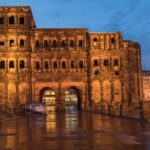
- Porta Nigra first, so you start with Trier’s most iconic Roman landmark
- Church stop sequence that helps you compare ages and roles in the city’s story
- Basilica of Constantine throne room access, framed as Roman imperial space repurposed for worship
- St. Gangolf and St. Peter’s give you two major Christian anchors early in the route
- Market Cross + Kornmarkt fountains add the medieval/18th-century street texture
- Electoral Palace followed by the Roman baths, so the ending feels big and meaningful
In This Review
- Trier’s Roman and Church Centers, on Foot and in Plain English
- Porta Nigra: The UNESCO Gate That Sets the Whole Tone
- Market Cross and the Shops/Cafes Break in the Middle
- St. Gangolf Kirche: A Smaller Stop With Big Historical Weight
- Trier Saint Peter’s Cathedral: Oldest Church in Germany, Massive Structure in the City
- Basilica of Constantine: When a Roman Throne Room Becomes a Church
- Kornmarkt to Electoral Palace: The City’s “Civics” Ending Moves the Story Forward
- Two-Hour Pace, Private Group Size, and Why That Matters
- Price and Value: $369.34 Per Group for a Tight, High-Impact Route
- The Guide Factor: Clear Explanations and Fewer Crowds
- Who Should Book This Walk (and Who Might Rethink It)
- Should You Book This Trier Private Guided Walking Tour?
- FAQ
- How long is the Trier private guided walking tour?
- Is this tour private or shared?
- What group size is allowed?
- What language is the tour offered in?
- Where does the tour start?
- Where does the tour end?
- Are admission tickets included for the stops?
- Do I need to bring a printed ticket?
- Is the tour near public transportation?
- Is this tour refundable or changeable?
Trier’s Roman and Church Centers, on Foot and in Plain English
Trier feels built for walking. You move through layers—Roman, medieval, and later religious power—almost in order. And with a private guide, the route turns into a story you can follow instead of a list of stones.
The big win here is how the landmarks connect. Porta Nigra anchors the Roman city gate idea. Then you shift into churches tied to early Christianity in Trier. Finally, you end with the Electoral Palace and the Roman baths complex, which closes the loop back to imperial-era Trier.
Because it’s private for groups up to 15 and in English, you can set the pace. You can ask questions. You can slow down for details. You can also keep it brisk if you’re trying to maximize a day.
Porta Nigra: The UNESCO Gate That Sets the Whole Tone
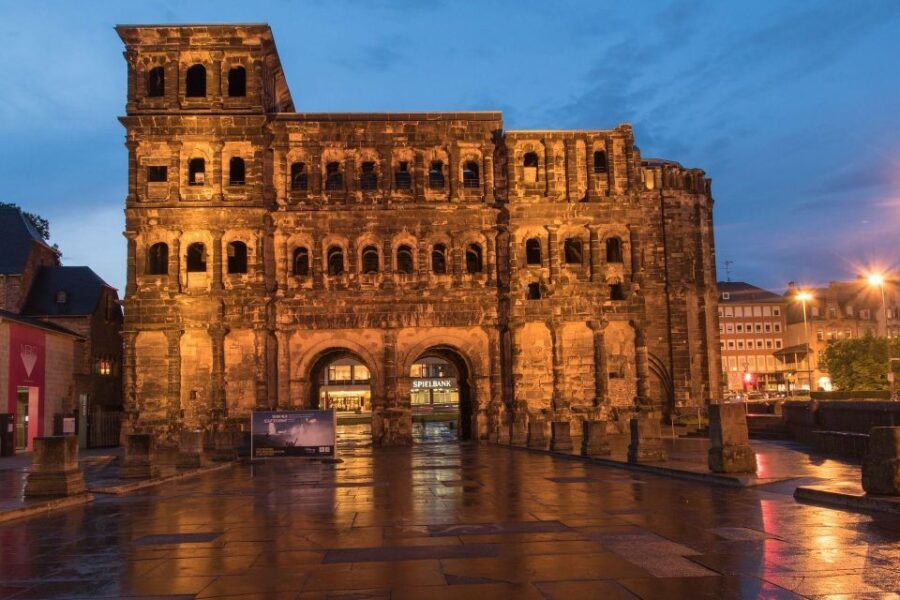
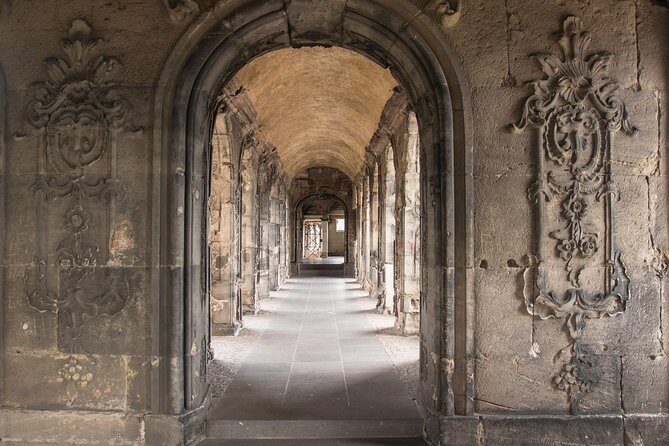
The tour starts at Porta-Nigra-Platz, and it makes sense. Porta Nigra is a UNESCO World Heritage Site and described as the largest city gate from the ancient world. It was built with grey sand after 170 AD, which already tells you this wasn’t a small-town project.
This stop isn’t just about looking at a wall. You also pass key nearby pieces of the old city fabric. One example is the Dreikonigenhaus, a unique house in Trier that the tour route points out as part of what makes this area characterful.
Then comes another visible marker of medieval fortification: the Frankenturm, a fortified brick residential tower built in the 11th century. You get that mix of periods right away—Roman scale, then later defensive architecture.
Practical note: the stop includes free admission, so you’re not juggling extra costs mid-walk. It helps keep the tour value feeling straightforward.
You can also read our reviews of more walking tours in Trier
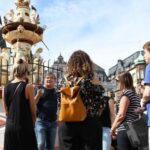

Market Cross and the Shops/Cafes Break in the Middle
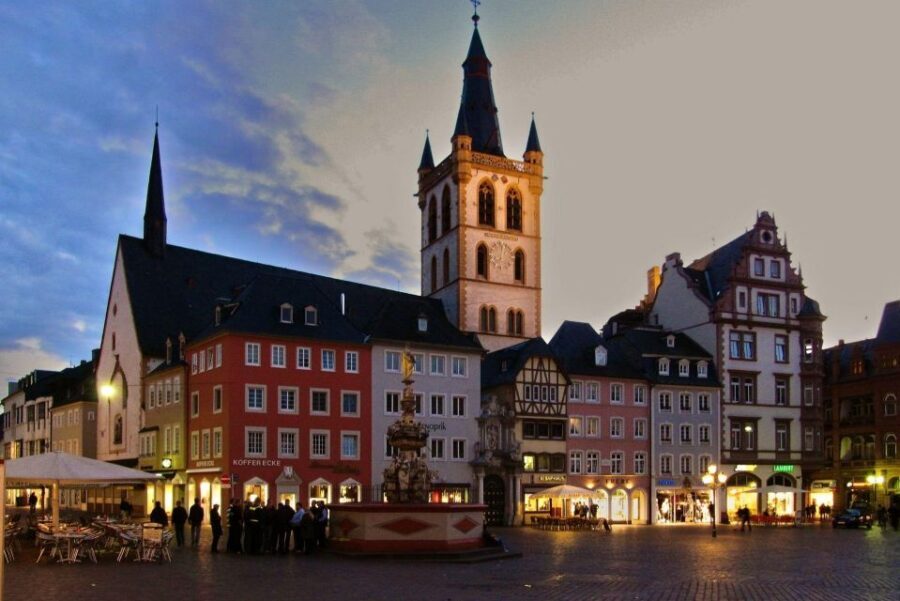
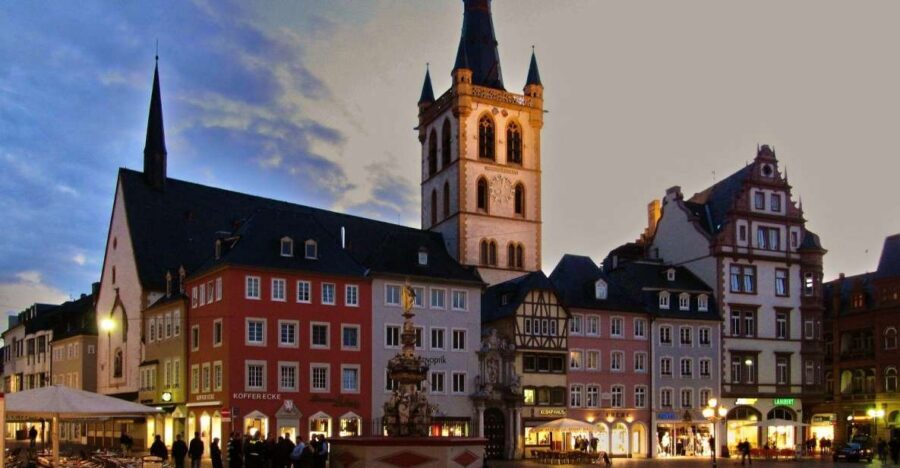
You’ll pass through the Market Cross on the main market, a square known as a medieval trading hub. This matters because it’s the shift from “big landmark” sightseeing to how people actually lived and moved through the city.
Even if you don’t plan to shop, this is a good moment to reset. You’ll find plenty of options around the main market area, including cafes and urban shopping. The tour uses this stop to keep you oriented and grounded in everyday Trier.
Since this stop is also listed as admission ticket free, it’s a low-pressure pause. Think of it as a breathable chapter before more serious church stops.
St. Gangolf Kirche: A Smaller Stop With Big Historical Weight
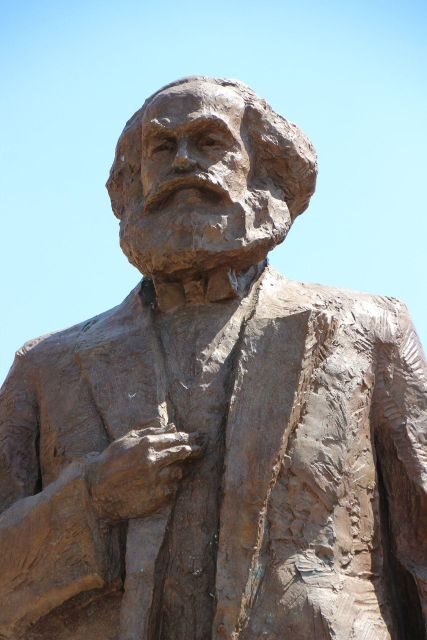
Next up is St. Gangolf Kirche, dedicated to St. Gangulphus. The guide’s angle here is smart: you’re not only seeing a church facade. You’re also learning that this is the second-oldest church in Trier, which changes how you interpret what you’re standing in front of.
The tour clocks this stop at about 15 minutes, which is about right. It’s long enough to take in the basics and get the historical framing. It’s not so long that you’re stuck waiting while everyone else re-reads the same plaque.
In the same stretch, you also get a nearby reference point: Saint George’s Fountain at the Kornmarkt. The fountain was built between 1750 and 1751 by the same builder of the Electoral Palais. That kind of shared authorship detail is the sort of thing that turns a pretty street corner into a meaningful connection.
This stop is also free to enter based on the tour details, which keeps the overall trip feeling efficient.
Trier Saint Peter’s Cathedral: Oldest Church in Germany, Massive Structure in the City
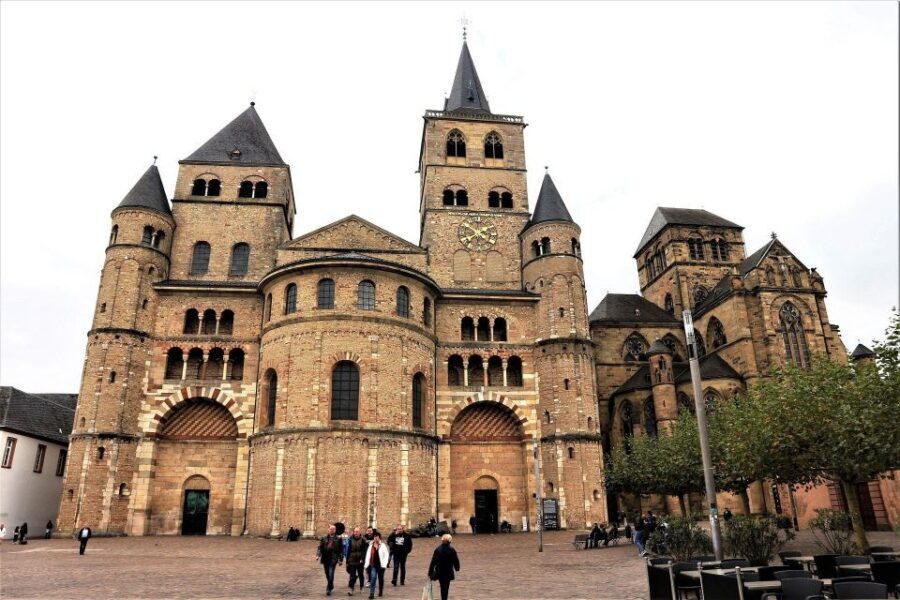
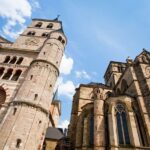
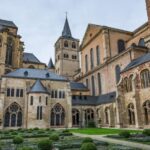
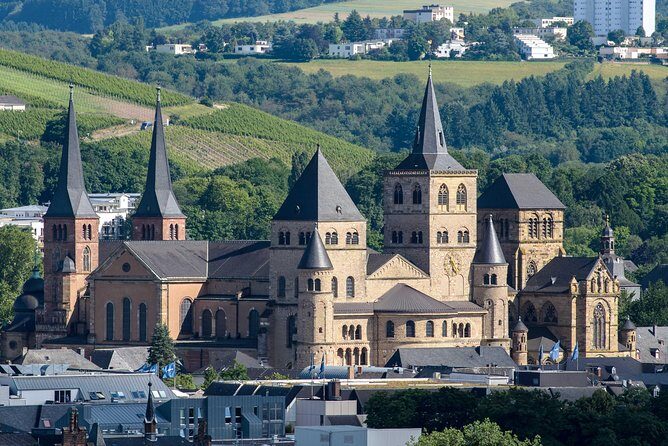
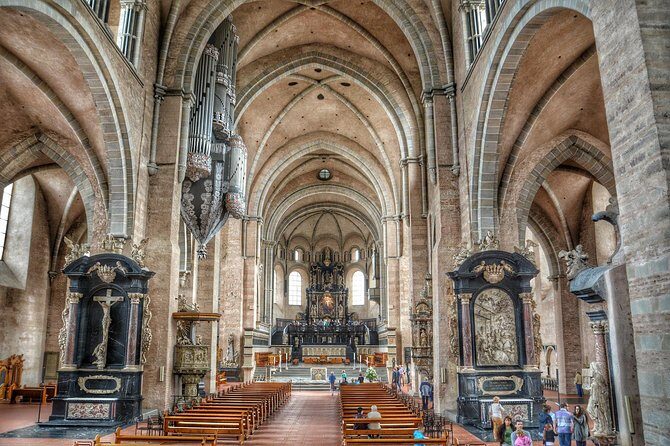
Then you hit Trier Saint Peter’s Cathedral. This is where the guide’s story arc sharpens again. The cathedral is described as the oldest church in Germany, and it’s also the largest religious structure in the city.
Its early origins matter for context: the foundation was built by Roman brick in the early 4th century. That’s the kind of detail that makes a building feel less like a standalone attraction and more like a timeline you’re walking through.
The stop is short—about 15 minutes. But if you use that time well (stand back, look up, and ask one question), it’s enough to anchor your understanding of Trier’s religious role over time. It’s listed as admission ticket free, which helps you stay focused on viewing rather than planning payments.
Basilica of Constantine: When a Roman Throne Room Becomes a Church
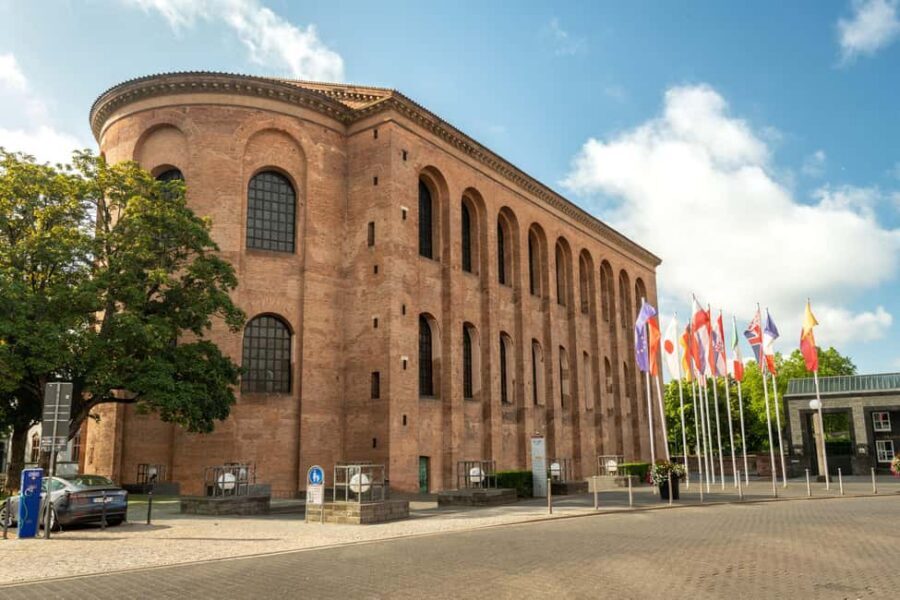
The next major moment is the Konstantin-Basilika (also referenced as Evangelische Kirche zum Erlöser). Built around 310 AD, it’s one of those “you’re looking at ancient function” spaces, not just a later replica.
The tour highlights a detail that’s hard to appreciate without being told: the inner walls have been kept intact even after repairs due to World War II. That means the space carries layers of survival, not just original construction.
Here’s the most compelling part for many people: the tour includes the Throne Room of Constantine the Great and subsequent Roman Emperors from the 4th century. You’re seeing Roman structures inside a space now used as a Protestant church. That conversion of power-space to religious space is the kind of contrast your guide can explain in a way that makes it click.
It’s listed as admission ticket free, so you won’t feel nickeled-and-dimed while you’re trying to soak it all in. The stop is around 20 minutes, which is a good balance for taking in scale plus learning the story.
You can also read our reviews of more guided tours in Trier
Kornmarkt to Electoral Palace: The City’s “Civics” Ending Moves the Story Forward
After the Roman-imperial church stop, you shift back into civic and urban form. The tour again passes Saint George’s Fountain in the Kornmarkt area, built between 1750 and 1751 by the same builder as the Electoral Palais. The repetition isn’t redundant. It helps you connect architectural authorship and time periods.
Then you continue to the Electoral Palace, described as a 16th-century residence of the Archbishops and Electors of Trier. This is where the tour naturally moves from Roman power to later regional authority. You’re basically watching the storyline go from emperor-level influence to church-state governance.
And the ending is big. The walking tour finishes at the Roman Bath complex, constructed in the 4th century AD, tied to the end point at the Imperial Baths area. That’s a satisfying last step because you return to Roman daily life and infrastructure, not only monumental gateways and imperial rooms.
This final stretch runs about 15 minutes as listed, and it lands the route with a finish that feels deliberate.
Two-Hour Pace, Private Group Size, and Why That Matters
This is designed for about 2 hours. It’s a short window, but it doesn’t feel chopped. The stops are spaced so you can learn without spending half the time finding the next corner.
Group size is capped at up to 15, and it’s private, meaning only your group participates. That matters because you’re not sharing your guide with strangers who might move at a different rhythm. Your guide can answer questions tailored to your group’s interest level, whether you’re into architecture, church history, or simply wanting the fastest way to understand what you’re seeing.
The tour is offered in English, and it uses a mobile ticket. That’s handy if you’re already walking around on your phone and don’t want to worry about paper tickets.
One more practical detail: the start and finish points are in Trier’s core sights area—near public transportation is listed—so it’s easy to plug into a day that also includes other casual exploring.
Price and Value: $369.34 Per Group for a Tight, High-Impact Route
The price is $369.34 per group for up to 15 people. That sounds high until you do the math the way you should for private tours. If you’re splitting across a small group or family, the per-person cost can drop a lot.
More importantly, the value isn’t only in the price. This tour includes an official tour guide and a private guided tour. It also lists free admission at each stop, which means you’re not facing surprise entrance fees while you’re moving through multiple major sites.
You also get a route that covers a meaningful arc: Roman gate → medieval and market life → multiple key churches → Constantine-era imperial space → palace and Roman baths. For a compact city center walk, that’s good use of limited time.
If you’re traveling solo, it might feel pricey compared with joining a larger group tour. But if you care about the guide’s pace, question time, and focus, private can be worth it fast.
The Guide Factor: Clear Explanations and Fewer Crowds
The name that comes through from guide performance is Andrea. People highlight her as engaging and highly effective at turning history and architecture into something you can understand while you’re standing in front of it.
One of the best signs is that the tour held interest even for three teens in a 2-hour window. That’s not luck. It usually means the guide keeps the story moving, doesn’t overload with dates, and points out the details that people tend to miss when they’re sightseeing on their own.
Another good signal: Andrea reportedly takes people to places not as frequently visited. In a city with major Roman anchors, that’s often the difference between seeing only the obvious angles versus getting a fuller feel for the city’s layout.
If you want a tour where the guide handles the connections between sites, this is the kind of setup that can make Trier feel simple—even when the timeline is anything but.
Who Should Book This Walk (and Who Might Rethink It)
This tour fits best if you want an efficient intro to Trier. It’s ideal for couples, families, and small groups who like guided walking and want clear context for major landmarks.
It also works well if you’re the person in the group who likes to ask, wait, and learn as you go. With a private guide, you can spend a little extra time where your curiosity is strongest, whether that’s Porta Nigra or the Throne Room story.
The main reason someone might rethink it: it’s still a walk-through city sights route. Even with short stop times, you’re outdoors and moving between sites. If your group has limited mobility or expects long seated downtime, you might prefer a more flexible format.
Should You Book This Trier Private Guided Walking Tour?
I’d book it if your goal is to understand Trier fast, on foot, with a guide who connects the Roman and church eras in a way you can actually remember. The biggest selling points for me are the private group up to 15, the smooth 2-hour structure, and the fact that the key stops are listed as free admission.
It also makes sense if you care about doing fewer things poorly and more things well. This route hits major anchors without turning into a half-day slog.
One last thought before you commit: the tour is non-refundable and cannot be changed. So only book if your timing is solid and your group is ready for a focused walking outing.
If that’s you, this is a smart way to see Trier with context, not confusion.
FAQ
How long is the Trier private guided walking tour?
It runs for about 2 hours.
Is this tour private or shared?
It’s private, and only your group will participate.
What group size is allowed?
The group can be up to 15 people.
What language is the tour offered in?
The tour is offered in English.
Where does the tour start?
The meeting point is Porta-Nigra-Platz, 54290 Trier, Germany.
Where does the tour end?
The tour ends at the Imperial Baths, 54290 Trier, Germany.
Are admission tickets included for the stops?
The stop details list Admission Ticket Free.
Do I need to bring a printed ticket?
No. The tour uses a mobile ticket.
Is the tour near public transportation?
Yes, it is listed as near public transportation.
Is this tour refundable or changeable?
It’s non-refundable and cannot be changed for any reason.