REVIEW · TRIER
Trier: Guided City Walk with Wine Tasting
Book on GetYourGuide →Operated by Trier.Guide · Bookable on GetYourGuide
Trier has a way of making history feel close. This walking wine tour strings Moselle wine culture through Porta Nigra and Trier’s standout religious and Roman sites, with tastings that connect directly to what you’re seeing. I like the format because you get both major sights and real wine context without spending a full day stuck in planning mode, plus the guide (often Simon) keeps the story moving. I also love that you’re not just handed pours; you get breadsticks and water, and each stop has a reason for the next glass.
There is one catch: the walk goes through lively city-center streets, so at busier moments you’ll want to stand where you can hear the guide clearly.
In This Review
- Key things I’d plan for
- Trier’s Roman core, solved in one easy walk
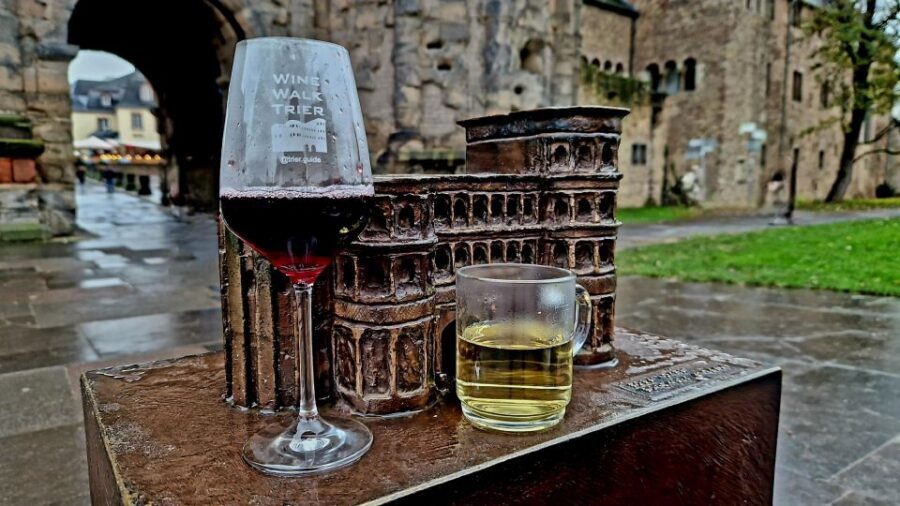
- Meeting point: find the city model, then follow the story
- Porta Nigra to Viehmarkt Square: the route that makes Trier make sense
- 1) Porta Nigra: the Roman fortification that still anchors the city
- 2) Market Cross on the main market: old Trier in a working-city setting
- 3) Trier Cathedral: Christianity’s big statement after Rome
- 4) Liebfrauenkirche, Trier: a second church stop that deepens the timeline
- 5) Aula Palatina: power and people, not just stones
- 6) Electoral Palace: where authority shows up in the streets
- 7) Kaiserthermen: the bathing ruins that fit the Moselle setting
- 8) Forum baths and the finish at Viehmarkt Square: the final Roman echo
- Wine tasting on the walk: not just sips, but matching stories
- What you get with each tasting
- How the tasting connects to place
- Non-alcoholic swap: grape juices
- Summer vs winter: what changes beyond the drink
- Value check: why $43 can be a good deal here
- What’s included vs what costs extra
- Tips so you enjoy every stop (and hear the guide)
- Should you book the Trier wine walk?
- FAQ
- How long is the guided city walk with wine tasting?
- How much does it cost?
- Where do I meet the guide?
- How many wines are included?
- What happens in winter if fewer than 6 people register?
- Is there a non-alcoholic option?
- Is the tour rain or shine?
- Is it barrier-free and is pickup included?
Key things I’d plan for
- Porta Nigra first: the Roman gate sets the tone before you move into the heart of old Trier
- A short, focused 2-hour loop from the gate to Viehmarkt Square and the Forum Baths
- Seasonal tastings: summer brings 5 regional wines; winter switches to 4 mulled wines in some dates
- Wine tied to place: breadsticks and water with each tasting, plus city connections at every stop
- A practical bonus: a voucher for 1 glass with a main course at Weinwirtschaft Friedrich-Wilhelm
- No-step, rain-or-shine walking: the route is described as barrier-free and doesn’t require climbing steps
Trier’s Roman core, solved in one easy walk
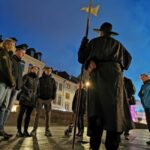
If you only have a couple hours in Trier, this tour is a smart fix. You start at the Porta Nigra, a Roman gate that still dominates the approach to the old city, then follow a route through central landmarks that explain how Trier grew from Roman importance into a Christian stronghold. It’s not a museum sprint. It’s a stroll with stops that give you photo moments and a story you can actually remember.
The pacing works because the guide doesn’t treat the wine as a side quest. The tastings are woven into what you’re standing next to. That means you’re learning while your brain is already primed by the flavor in your glass. In a city like Trier, where every corner seems to have something old under it, this kind of structure is the difference between seeing a lot and truly getting what you’re seeing.
And yes, it’s built for real life: it runs rain or shine, and the walk is described as completely barrier-free with no step climbing required. So you can plan it without doing mental gymnastics about weather, stairs, or accessibility.
You can also read our reviews of more walking tours in Trier
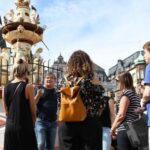
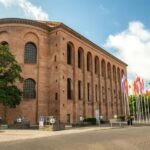
Meeting point: find the city model, then follow the story
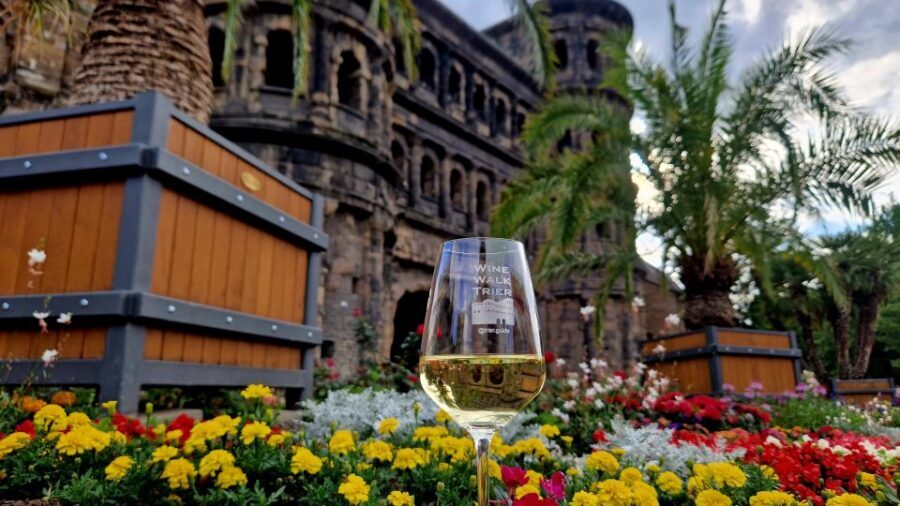
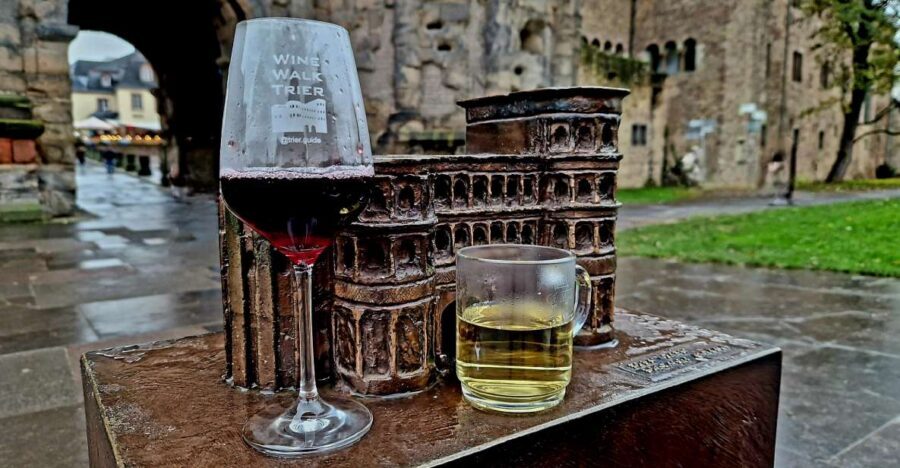
The meeting point is practical and hard to miss: meet on the left side of the Tourist Information in front of the city model near the flags. The tour is described as not provided by the Tourist Information, so you’re looking for the guide handling the wine-walk group.
From there, you head toward the main opening scene at Porta Nigra. You’ll usually get a quick photo stop and then the guided start kicks in right away. I like tours that start with a clear landmark, because it helps you orient fast. Trier can feel layered and compact at once, and early orientation makes the rest of the walk click.
The tour runs with a live guide in German and English, so you won’t lose the plot if your German is rusty.
Porta Nigra to Viehmarkt Square: the route that makes Trier make sense
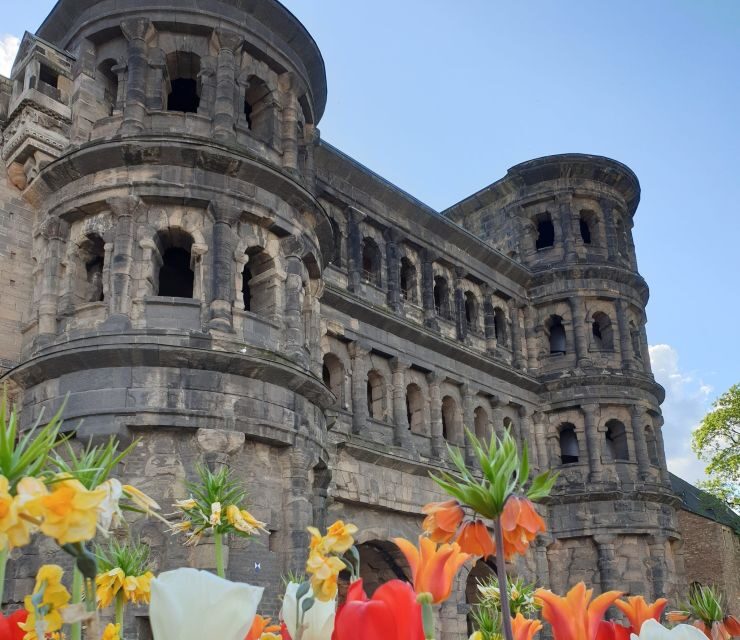
This is the core “you’ll remember this later” part of the tour. Each stop is chosen to show you a different face of Trier—Roman engineering, medieval and religious power, and the remains of the city’s bathing culture.
1) Porta Nigra: the Roman fortification that still anchors the city
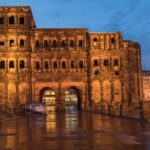
You start at Porta Nigra, built by Romans as part of the city’s fortifications system. Even if Roman ruins are not your usual thing, this stop has a visual power that does the heavy lifting for you. It’s a gate with presence. The guide’s job here is to connect that presence to how Trier’s status helped shape the region around it, including the long relationship with wine culture in the Moselle area.
If you like photos, this is the time. The tour plan includes a photo stop here, which is useful because you’ll be moving soon.
2) Market Cross on the main market: old Trier in a working-city setting
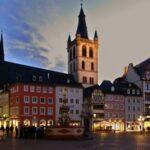
Next up is the Market Cross on the main market. This is where the tour shifts from grand ruins to the everyday fabric of the city. You’re still in the historic center, but the energy of the square gives context: Trier didn’t freeze in time. It kept living, shopping, and gathering.
This is also one of the moments where you’ll likely taste as part of the guided flow. The tour includes breadsticks and water with the drinks, so you can keep comfortable even as you stop and sip.
You can also read our reviews of more food & drink experiences in Trier
3) Trier Cathedral: Christianity’s big statement after Rome
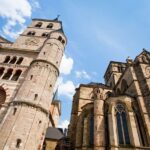
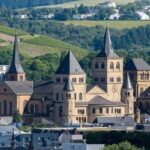
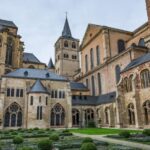
At Trier Cathedral, you get another photo stop and guided sightseeing. The tour highlights Trier’s dramatic cathedrals, and this stop is one of the places where that religious shift becomes impossible to ignore. The guide ties the story back to the broader arc: a city shaped by Roman rule, then reshaped by Christianity and later power centers.
What I like: it’s not just about walking by a famous building. The guide’s wine-tie approach means you’re thinking about how people lived, not just what was built.
4) Liebfrauenkirche, Trier: a second church stop that deepens the timeline
Then comes Liebfrauenkirche. The itinerary keeps offering you photo moments at the major sites, and this one adds another layer to the religious narrative. It’s one of those stops where you can take in the exterior and let the guide connect it to how Trier’s identity evolved over centuries.
If you’re the kind of person who loves when architecture becomes a timeline, this is a good match.
5) Aula Palatina: power and people, not just stones
At the Aula Palatina, you’ll get another guided stop. This part of Trier tells you that the city was never only religious. It also functioned as a place of leadership and governance. The tour’s strength is that it keeps the story moving in a believable way rather than turning into a list of monuments.
6) Electoral Palace: where authority shows up in the streets
The tour then reaches the Electoral Palace. This stop supports the theme of Trier as a city where political status mattered. Again, the guide doesn’t treat it like a photo backdrop. You’ll get context and a reason the timing works, which helps you understand why wine history belongs in the same walk.
7) Kaiserthermen: the bathing ruins that fit the Moselle setting
At Kaiserthermen, you’re back with Roman-world remains, specifically the city’s bathing culture. This is a good contrast stop: religious sites earlier, then Roman ruins again, and you’re tasting and listening in between.
In Trier, bathing ruins are not “only archaeology.” They help explain daily life. That matters for the wine piece too, because wine wasn’t a modern hobby—it was part of how the region fed and entertained people.
8) Forum baths and the finish at Viehmarkt Square: the final Roman echo
You end at Viehmarkt Square, finishing outside the Forum Baths—a ruin of a Roman bath complex. Ending here works because it lands on a place that feels like closure: you’ve walked past gate, market, churches, palaces, and Roman bathing remains, and now you see the last big Roman piece of the puzzle.
It’s also where the tour naturally gives you a break after the tasting sequence. You’re not stuck lingering at a single site. You finish on a central square where it’s easy to keep your evening plan flexible.
Wine tasting on the walk: not just sips, but matching stories
The tour includes tasting options that change by season. In summer, you’ll enjoy 5 different regional wines. In winter, you’ll have 4 different mulled wines instead, with an important condition: from mid-November until the end of January, mulled wine replaces the normal wine only when at least 6 people register.
If the group minimum for the winter version isn’t met, the tour uses the summer-style format with 5 different wines instead. Either way, you’re tasting multiple drinks rather than a token sip.
What you get with each tasting
You also get breadsticks and water. That’s a small thing that makes the tour smoother, especially if you’re tasting while walking. A warm drink in winter also helps take the edge off cold air, and bread helps your stomach keep up.
How the tasting connects to place
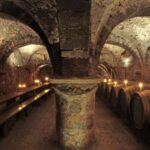
The tour is built on the idea that each wine has a historic connection to buildings or places in Trier’s city center. In practice, that means the guide pauses the walking story at each site and then explains why the glass in your hand relates to what you’re seeing in the street.
If you like your wine education simple and story-driven, this format is easier than hopping from winery to winery. You’re getting local context where the city’s buildings act like a map.
Non-alcoholic swap: grape juices
If you prefer not to drink alcohol, there’s a described option for 4 different grape juices. The note says this is bookable over email, so if that’s you, plan ahead. It’s not an “ask on the spot” detail.
Summer vs winter: what changes beyond the drink
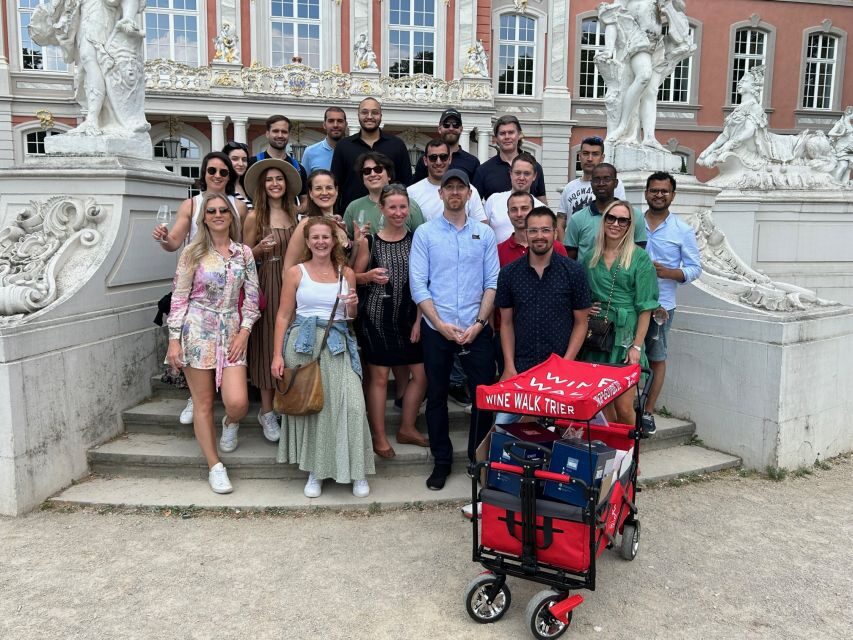
This tour isn’t a copy-paste in different seasons. The tasting lineup changes, and that changes the feel of the whole walk.
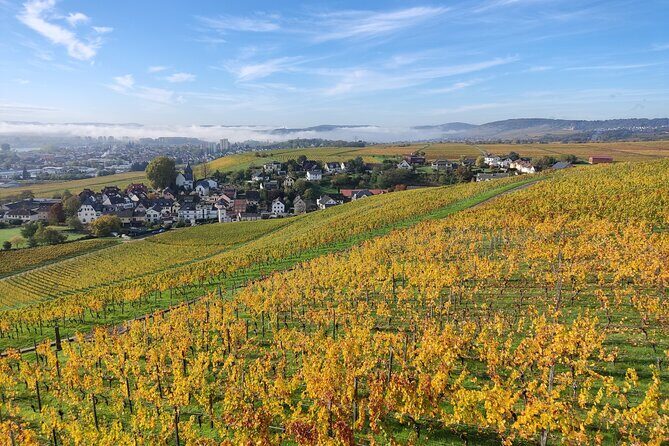
In summer, the tour offers 5 regional wines. Recent experiences include mention of chilled Riesling styles, which makes sense for the Moselle region. Even if your palate favors something else, tasting multiple regional options gives you a baseline for what Moselle does well.
In winter (from mid-November through end of January), the tasting becomes 4 mulled wines. Expect warmth and spice rather than the crisp clarity of a cold bottle. The guide’s pairing logic still ties the drink to stops in Trier, so you’re not just drinking because it’s cold—you’re still learning, just in a seasonal flavor language.
Value check: why $43 can be a good deal here
At $43 per person for a 2-hour guided walk, you’re paying for three things bundled together: history narration, a structured route, and multiple wine tastings.
If you try to do this on your own, you’ll likely spend money on:
- transport time between major stops,
- entry fees or guided add-ons if you want context,
- and tasting costs at restaurants or wine bars.
Here, the tour provides 5 wines (or 4 mulled) plus water and breadsticks. On top of that, there’s a voucher for 1 glass of wine to a main course at Weinwirtschaft Friedrich-Wilhelm in Trier next to the Basilika. That’s a practical bonus because it nudges you toward a real meal after the walk instead of leaving you hunting.
So yes, it’s not free. But the cost is easier to justify when you total up the drinks, the guide’s time, and the fact the route is already chosen for you.
What’s included vs what costs extra
Here’s the clean breakdown based on what’s stated:
Included:
- Walking tour with guide
- 5 regional wines in warmer months, or 4 mulled wines in winter when the minimum registrations are met (otherwise 5 wines)
- Water and breadsticks
- Voucher for 1 glass of wine with a main course at Weinwirtschaft Friedrich-Wilhelm
Not included:
- Glassware: you can purchase the glass for 6€ after the tour
- Wine glass holders: 3€ after the tour
If you hate the idea of extra purchases, plan to simply use what’s provided during the tasting and skip the souvenir-style glassware.
Tips so you enjoy every stop (and hear the guide)
Because the tour includes both walking and tasting, it helps to show up ready:
- Wear comfortable shoes. It’s not a long hike, but it is a steady 2-hour circuit.
- Pick a spot where you can hear during tastings. In open market areas, it can get loud.
- If you want grape juice instead of wine, email in advance. It’s mentioned as a bookable option, so don’t assume it’s automatic.
- Bring your photo patience. The tour includes repeated photo stops, but you’ll want to stay with the group so you don’t break the flow of story and tastings.
Should you book the Trier wine walk?
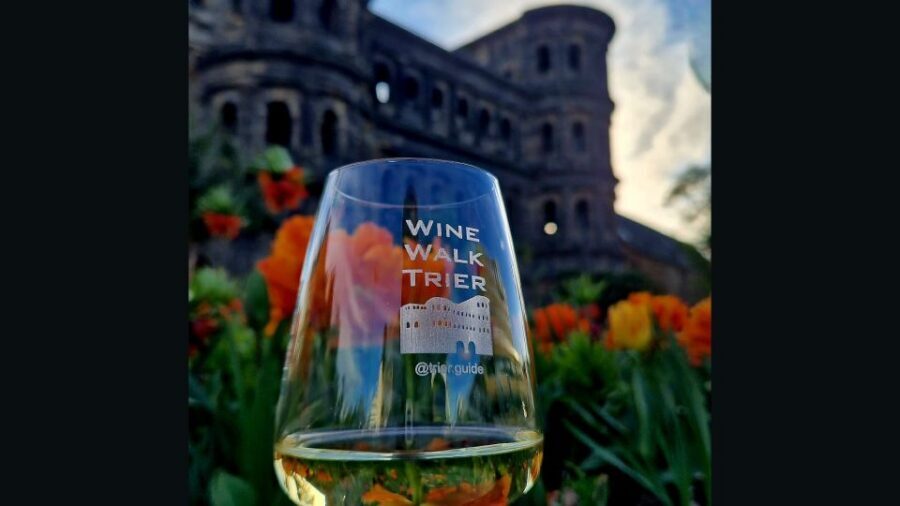
I’d book it if you want a quick way to understand Trier without doing homework, and you like wine that comes with context. The big reason to choose this tour is the pairing: the drink connects to the city’s most important Roman and religious landmarks, with the walk ending at the Roman bath ruins at Forum Baths.
Skip it if you’re not into alcohol (unless you can do the grape juice option) or if you prefer unstructured sightseeing where you can linger for long periods at just one site. This tour is built to keep moving, tasting, and learning in a tight time window.
FAQ
How long is the guided city walk with wine tasting?
The tour runs for 2 hours.
How much does it cost?
The price is listed as $43 per person.
Where do I meet the guide?
Meet on the left side of the Tourist Information in front of the city model near the flags. The tour also notes starting location options including Trier Tourismus und Marketing and Porta Nigra.
How many wines are included?
In summer, you get 5 different regional wines. In winter, the format changes to 4 different mulled wines if at least 6 people register.
What happens in winter if fewer than 6 people register?
From mid-November through end of January, the tour features 4 different mulled wines only when at least 6 people register. If not, it uses the summer-style approach with 5 different wines.
Is there a non-alcoholic option?
Yes. Instead of wines, you can have 4 different grape juices, but it is bookable over email.
Is the tour rain or shine?
Yes, the tour runs rain or shine.
Is it barrier-free and is pickup included?
The tour is described as completely barrier-free and does not require climbing steps. Hotel pickup and drop-off are not included, so you’ll need to get yourself to the meeting point.