REVIEW · BREMEN
Bremen: Historic old town tour with Geo Epoche
Book on GetYourGuide →Operated by Eat the World GmbH · Bookable on GetYourGuide
Bremen changes fast when someone tells the right stories. This Geo Epoche Old Town tour turns a simple walk into a time-jump across the city’s Hanseatic rise and rebellious streak. I like that it’s built around specific questions, not vague facts. I also like the pace you get for the price: 2 hours is long enough to connect the dots, but not so long you stop caring. One drawback to keep in mind: delivery can vary, and noise in the city center can throw you off on busy days.
What makes it worth your time is the focus on cause and effect. How did a tiny settlement around a wooden church become a powerful Hanseatic city? How did Bremen’s merchants square off against a powerful archbishop? And then the tour slides from “power politics” into darker street-level history with the poisoner Gesche Gottfried and the origins of Böttcherstraße. It’s the kind of tour where you start looking at buildings and streets like evidence.
This is also a practical tour. You’ll be outside, in all weathers, so plan for real Bremen weather and bring comfortable shoes. It’s live and in German, so if that’s a stretch for you, you may enjoy the walk less than you’d like.
In This Review
- Key things to know before you go
- Starting at Domshof: St. Peter’s Cathedral and Bremen’s first “why”
- From wooden church to Hanseatic city: the trade-power story
- Merchants vs. archbishop: why Bremen won, and why it mattered
- Böttcherstraße origins: more than a street name
- Gesche Gottfried: a darker chapter with historical context
- How Geo Epoche structures time in Bremen’s Old Town
- Price and value: $29 for 2 hours in the center of it all
- What to bring, and how to stay comfortable
- Who should book this Bremen Old Town tour (and who should skip it)
- Should you book this tour?
- FAQ
- How long is the Bremen Historic Old Town tour with Geo Epoche?
- How much does the tour cost?
- Where is the meeting point?
- Is the tour in English?
- Does the tour run in bad weather?
- What should I bring?
- Are pets allowed?
- Is the tour suitable for people with mobility impairments?
Key things to know before you go
- Geo Epoche time-jumps: the tour links big medieval battles to specific places you’ll walk by.
- Hanseatic Bremen, explained simply: you learn how trade power became city power.
- Böttcherstraße has a backstory: not just a pretty street name.
- Gesche Gottfried gets human context: Bremen’s darker legend is told in a historical frame.
- 2 hours fits a tight itinerary: good for a first pass through the Old Town.
- Small-group potential: some runs feel intimate, even with rain.
Starting at Domshof: St. Peter’s Cathedral and Bremen’s first “why”
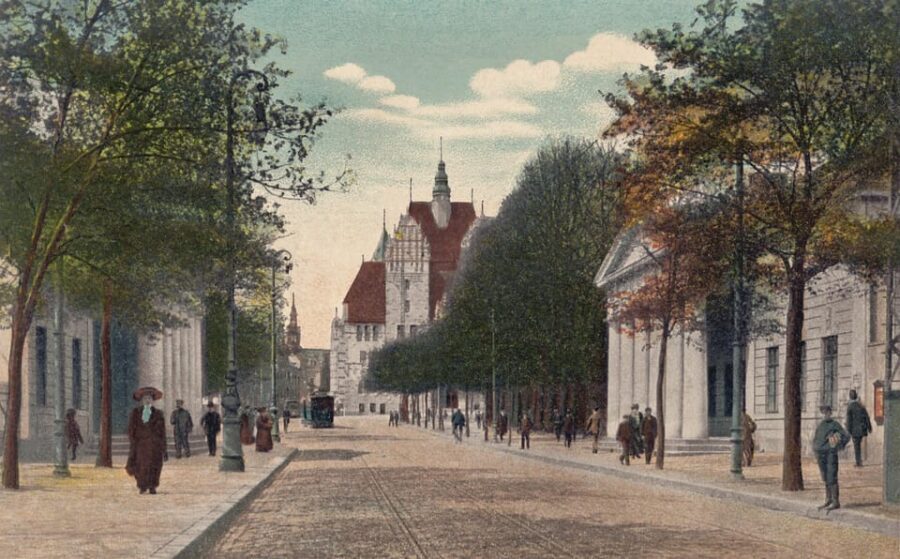
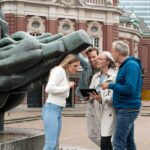
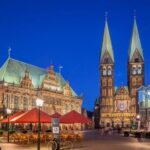
You meet at the Bismarck monument in front of St. Peter’s Cathedral, Domshof 1 (bus stop: Dormsheide). That’s a smart starting point. It puts you right in the center of Bremen’s historic gravity, where church authority, civic life, and trade all sit in the same neighborhood. In other words: you start where the city’s “who had power” question is easy to feel.
From there, the guide’s job is to get you thinking in timelines. You’re not just walking from landmark to landmark; you’re being asked a few tight questions and then shown how the answers shaped the city. This is the core Geo Epoche idea: history as a chain of decisions, not a list of dates.
One thing to be ready for: because the tour is in German, your success depends on your comfort level with listening. The tour includes some content in its original language, so it may mix in bits beyond easy German for tourists. If you’re at least conversational with German, you’ll likely be fine. If you’re not, you can still follow the main thread, but details may float past.
You can also read our reviews of more historical tours in Bremen
From wooden church to Hanseatic city: the trade-power story

One of the tour’s main threads starts with a surprisingly humble question: how did a tiny settlement around a wooden church grow into a proud Hanseatic city? That’s a great setup because it forces the guide to explain the “mechanics” of growth: why people stayed, why trade mattered, and how Bremen became more than a dot on a map.
This is where you’ll start noticing a shift. Early on, Bremen isn’t presented as a fairy tale of progress. It’s shown as a city that earned its status through organization and bargaining—skills merchants needed every day. When you hear it explained this way, Bremen’s later confidence makes sense. You stop seeing the Old Town as decoration and start seeing it as infrastructure for power.
Practical takeaway for you: if you’re the type who likes to understand cities as systems—who traded, who ruled, who negotiated—this part will click. If you’re hoping for only architectural commentary, you might find it more story-driven than expected.
Merchants vs. archbishop: why Bremen won, and why it mattered
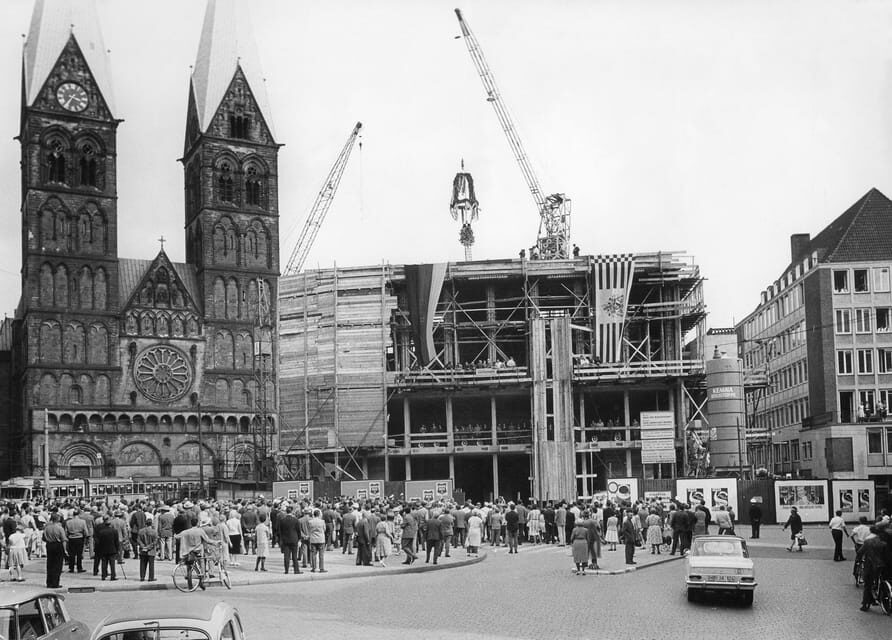
The tour doesn’t treat the Middle Ages like distant theater. It focuses on a specific clash: how Bremen’s merchants managed to win against a powerful archbishop. That’s a big claim, and the value here is that the guide connects the conflict to the city’s everyday reality—money, legal rights, and the ability to keep trade flowing.
Even without drowning you in dates, this kind of story teaches you how cities actually formed their authority. In the medieval world, being “a city” wasn’t only about walls or monuments. It was about leverage. And Bremen, as the guide frames it, had leverage because commerce created influence.
Here’s the balanced view: this segment can feel intense compared to the lighter myths people sometimes expect on walking tours. But that’s also the reason it works. If you’re tired of tours that only skim the surface, this is the kind that gives you the tension underneath the pretty streets.
Böttcherstraße origins: more than a street name
Then the tour shifts gears to a place-name you’ll probably hear about even if you don’t know its story. Böttcherstraße is where Bremen’s identity becomes visible in details: the way craft, design, and civic pride show up in a single street.
The key point I’d watch for while you’re there is the “how it came about” angle. The tour doesn’t just say what Böttcherstraße is today. It treats the street like an outcome—something created by people with tastes, resources, and plans. That’s helpful because it changes your role as a visitor. You start looking for cues: what feels deliberate, what feels like a statement, and what looks like it was shaped to be remembered.
If the weather is bad, this is still a good stop. Streets and facades are easier to enjoy even when you’re hurrying, and the guide’s story gives you something to hold onto besides the rain.
Gesche Gottfried: a darker chapter with historical context
Every city has its legends. What I appreciate about this tour’s approach is that it treats the poisoner Gesche Gottfried as a story tied to history, not just shock value. The tour’s question-style setup helps here: who she was, why the story stuck, and how it fits into Bremen’s social world.
This is a worthwhile moment for you if you like history that includes the uncomfortable parts. It reminds you that Old Town spaces were lived in by real people with real fears and real consequences. You get to see the same streets as both everyday places and stages for public scandal.
Potential drawback: if you dislike darker topics, this part might feel heavier than you expected in a “walking tour” format. But the tour frames it within Bremen’s broader narrative, so it doesn’t feel random.



How Geo Epoche structures time in Bremen’s Old Town
Geo Epoche tours have one big advantage: they’re built around turning points. Instead of roaming, the guide moves through selected episodes and then anchors each one to where it happened. That structure makes the 2 hours feel denser than many longer city walks.
You’ll likely notice the rhythm as the tour progresses:
- start with foundational origins (how Bremen became Bremen),
- move into power struggles (merchants vs authority),
- then end with street-level stories (Böttcherstraße and Gesche Gottfried).
That order matters. It’s almost like learning a family history. Origins explain the mindset. Conflict explains why people behaved the way they did. Legends and specific places explain what that history left behind.
If you’re visiting for the first time, this structure helps you get your bearings fast, even if you only see Bremen once on this trip. And if you’ve been before, it can still refresh your view by reminding you that famous streets and famous battles usually share the same underlying forces: power, money, and public memory.
Price and value: $29 for 2 hours in the center of it all
At $29 per person for a 2-hour live guided walk, this tour lands in the “good value if you like stories” category. You’re paying for two things: a history-focused guide and a brochure. That’s the core of what’s included—tour guide plus a printed handout.
What you’re not paying for is what often inflates travel costs: there’s no mention of meals or drinks, and there’s no hotel pickup. So treat this like a focused city walk. If you want a “sightseeing plus snacks” experience, you’ll need to plan your own food.
Also, because it runs in German, the value depends on language comfort. If you can follow the guide well, $29 feels like a decent deal for a tight 2-hour session. If you can’t, you may be paying for a walk with fewer details in your head.
What to bring, and how to stay comfortable
This is a straightforward outdoor tour, and you should dress for the weather. The tour takes place in all weathers, so don’t assume you can skip layers just because the forecast looks mild.
Bring:
- comfortable shoes
- comfortable clothes
- a reusable water bottle
That’s not just “nice to have.” A 2-hour walk around historic streets can be more tiring than it sounds, and bad weather can make surfaces slippery and slows you down. Comfort lets you focus on the stories.
Pets aren’t allowed, so leave furry friends at home for this one.
Who should book this Bremen Old Town tour (and who should skip it)
This tour is a strong pick if:
- you enjoy history told through real places and specific questions,
- you like Hanseatic trade stories and civic power struggles,
- you’re curious about Bremen’s darker legends, including Gesche Gottfried,
- you can handle a German-language guide for the full 2 hours.
It’s not a fit if you have mobility impairments. The tour data states it’s not suitable for people with mobility impairments, so don’t plan to “make it work.”
One more honest note on quality: the overall rating is mixed, and the experiences reported suggest the tour can run smoother or less smooth depending on the guide and day. If you’re the type who needs a tightly organized, animated presentation, pick your time carefully and be prepared that street events can add noise.
Should you book this tour?
I think you should book it if you want a first-pass understanding of Bremen as a Hanseatic city and you like your history with characters and conflicts, not just facts. The $29 price point is fair for a 2-hour guided walk, and the story anchors—origins, merchants vs archbishop, Böttcherstraße, Gesche Gottfried—give the tour shape.
I’d skip it if you rely on English or need a very predictable, polished delivery every time. In German-only tours, comprehension is everything, and a heavier or slower presentation can make the experience feel less worth it.
If you fit the audience and you’re comfortable with outdoor walking, this is a solid way to get Bremen to “click” quickly.
FAQ
How long is the Bremen Historic Old Town tour with Geo Epoche?
The tour lasts 2 hours.
How much does the tour cost?
The price is $29 per person.
Where is the meeting point?
You meet at the Bismarck monument in front of St. Peter’s Cathedral, Domshof 1, 28195 Bremen. The bus stop is Dormsheide.
Is the tour in English?
No. The live tour guide language is German.
Does the tour run in bad weather?
Yes. The tour takes place in all weathers.
What should I bring?
Bring comfortable shoes and comfortable clothes, plus a reusable water bottle.
Are pets allowed?
No, pets are not allowed.
Is the tour suitable for people with mobility impairments?
No. It is not suitable for people with mobility impairments.