REVIEW · BERLIN
Discover Berlin Half-Day Walking Tour
Book on Viator →Operated by Original Berlin Walks · Bookable on Viator
Berlin is not one story. It’s four or five stacked on top. This half-day walk connects the Prussian era, Imperial Germany, the Nazi years, and the Cold War into one route you can actually remember. You’ll cover the big landmarks like Brandenburg Gate, the Holocaust Memorial, Checkpoint Charlie, and Topography of Terror, with an English guide to keep the facts straight.
I especially like the way the tour turns famous streets into timeline markers, like Unter den Linden shifting from royal boulevard to parliamentary Germany. Second, the guide-driven format means you’re not just reading plaques while your brain scrolls; you get context, and you can ask questions along the way (and the reviews I saw highlighted guides like Amanda, Emma, Tobi, and Walid for making the darker material careful and clear). The only drawback to plan for is that it’s a lot of walking in one go, with short stops, so you’ll want good shoes and patience for chilly weather days.
In This Review
- Key things you’ll notice on this Berlin walk
- How this 3.5-hour walk strings Berlin’s eras together
- Meeting at Neue Promenade 3 and staying comfortable on the move
- Unter den Linden and Brandenburg Gate: from royal boulevard to modern power
- Museum Island, Einstein’s workplace, and Berlin’s intellectual center
- Nazi-era sites: Pariser Platz, Bebelplatz, and the Holocaust Memorial
- Cold War geography: Checkpoint Charlie, the Berlin Wall, and 1953
- Topography of Terror: the former Gestapo and SS headquarters in plain sight
- Reichstag, Victory Column, and building your Berlin map for later days
- Price and logistics: is $24.19 a smart value for this much ground?
- Should you book this Berlin history walk?
- FAQ
- How long is the Discover Berlin Half-Day Walking Tour?
- What does the tour cost?
- What’s included, and what’s not included?
- Is the tour offered in English?
- Where do I meet, and where does the tour end?
- Are there admission tickets needed for the stops?
- Can I cancel for free?
- What’s the maximum group size?
Key things you’ll notice on this Berlin walk
- One guide, many eras: Prussians to Imperial Germany, then Nazi rule, then the Cold War and reunification.
- Under 4 hours, lots of stops: think quick orientation pauses, usually about 5 minutes each, with longer time at major memorials.
- The route is built for understanding: Unter den Linden, Museum Island, Pariser Platz, and the Berlin Wall area all connect thematically.
- Heavy sites handled thoughtfully: Holocaust Memorial and Topography of Terror get the time and framing they deserve.
- Smaller group feel: capped at 25 people, which helps questions and pacing.
How this 3.5-hour walk strings Berlin’s eras together
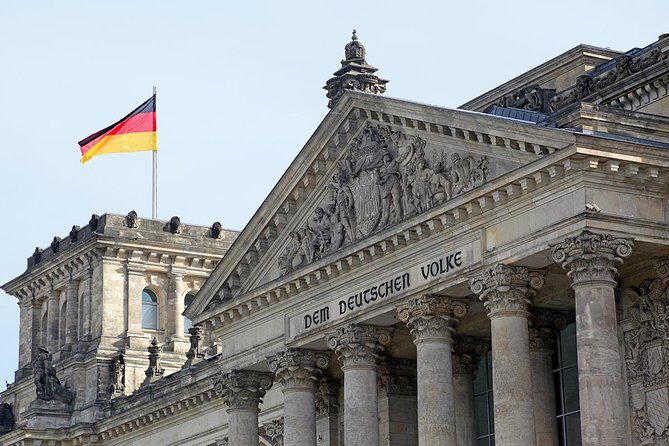
Berlin’s history can feel like a jigsaw puzzle, with missing pieces everywhere you look. This tour helps because it builds a simple line through complicated decades. You start with the city’s earlier power centers and official symbolism, then you move toward the 20th century, when politics turned brutal and public space became propaganda. After that, you hit the Cold War, where Berlin’s streets physically split, and you end up at places tied to surveillance, imprisonment, and escape routes.
What makes this format work is the balance of “wow factor” and “why it matters.” Brandenburg Gate and the Reichstag are visually striking, yes. But the guide also frames them as political statements across eras, not just photo backdrops. The Holocaust Memorial and Topography of Terror are the opposite of wow. They’re meant to make you slow down. The pacing reflects that: you get longer pauses at the major memorials and a steady flow through everything else.
One more reason I like this approach: it gives you a practical baseline for the rest of your trip. After one route like this, you stop guessing how neighborhoods connect, and you start knowing what to revisit later.
You can also read our reviews of more walking tours in Berlin



Meeting at Neue Promenade 3 and staying comfortable on the move
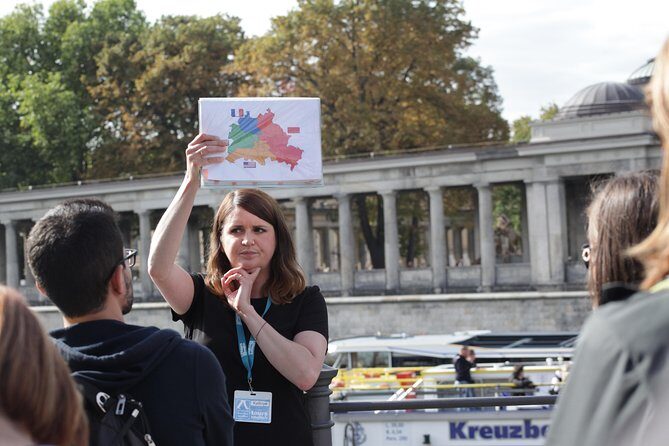
You meet at Neue Promenade 3, 10178 Berlin. The tour uses a mobile ticket, and it’s offered in English. The meeting point is near public transportation, which matters in Berlin where you can bounce between transit lines fast. Also, the group size max is 25, so you’re not stuck behind a river of people.
Timing is about 3 hours 30 minutes (approx.). That’s short enough to fit on most itineraries, but long enough that comfort matters. Expect lots of outdoor time and continuous walking between stops. If it’s cold or rainy, you’ll feel it. Plan layers. Keep water with you. And don’t forget that memorial stops can involve standing and looking at layouts for a while.
Food is the one real missing piece. The tour doesn’t include meals or drinks (unless a specific stop adds something, and one of the guide styles noted in the feedback includes a chance to warm up at a café). So I recommend you eat before you go and keep a simple snack option in your day bag, especially if you’re traveling with teens or anyone who gets grumpy when their stomach joins the argument.
Unter den Linden and Brandenburg Gate: from royal boulevard to modern power
Your walk leans hard into Berlin’s most iconic political spine: Unter den Linden. This boulevard connects the royal palace axis toward public squares and the Brandenburg Gate area. The key is that you’re not just strolling a pretty street. You’re tracing how power shaped architecture and how regimes used the same “stage” for different messages over time.
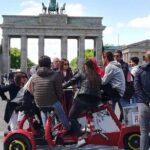
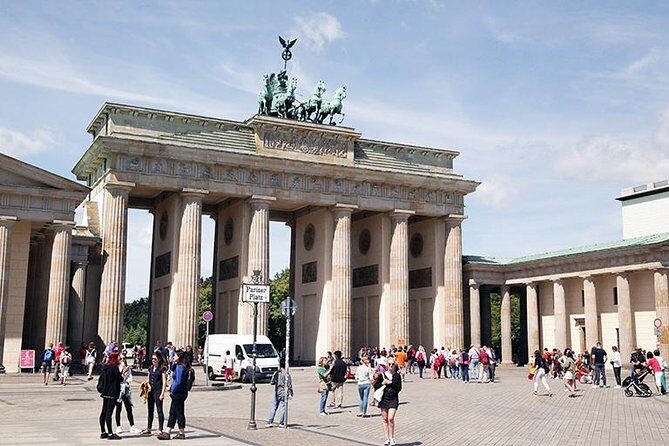
Along the way, you’ll pause near the cultural and civic institutions clustered by the route. You also make a stop by Museum Island territory, which helps explain why Berlin became a hub for art, learning, and public ceremony. Then comes the big moment: moving past the Brandenburg Gate, treated as a gateway symbol that marks shifting eras. The guide framing here matters because the gate isn’t just a landmark; it’s a visual shorthand for national identity that different governments tried to claim.
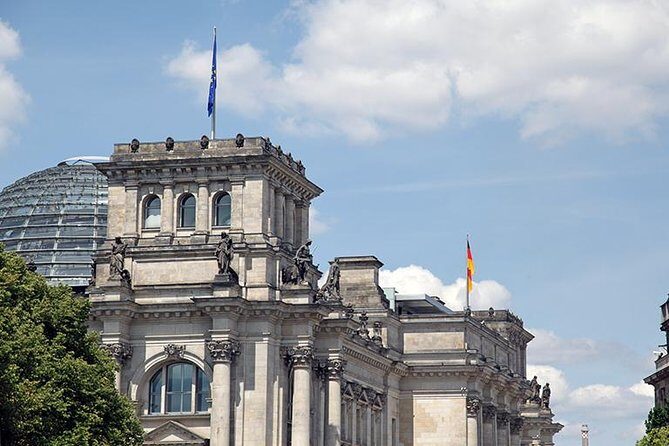
Next, you’ll get close to the Reichstag area. Even without going inside, the building’s purpose as Germany’s parliament makes the politics feel immediate. And if you’re wondering whether Berlin’s democracy survived the 20th century’s storms, this is where the tour nudges you to connect dots: who held power, how it was displayed, and how that display changed.
If you like history that connects directly to what you can see today, Unter den Linden is the heart of this whole experience.
Museum Island, Einstein’s workplace, and Berlin’s intellectual center
One of the tour’s strengths is that it doesn’t treat history as only wars and dictators. It also shows Berlin as a city that built institutions, shaped public education, and made culture part of its identity. You start picking up that thread early as you move through the Museum Island zone and surrounding civic spaces.
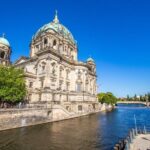
You’ll make stops around the Museum Island complex, including major museum buildings such as the Neues Museum and Pergamonmuseum, plus the Altes Museum. You also pause near Humboldt University, which helps connect Berlin’s academic legacy to the physical layout of the area. If you’ve ever wondered why so many big German museums feel concentrated here, this kind of route explains how the city planned its “brain” in stone.
There’s also a stop at the Berlin State Library, noted as the former workplace of Albert Einstein. That detail is small but powerful, because it turns a building you might otherwise rush past into a real anchor point for how scientific thought lived inside the same city that later generated propaganda.
Even if you don’t go into the museums during this tour, the quick pauses help you understand what each building represents. It also gives you a decision map: if you’re a museum person, you’ll spot which specific one you want to return to later with tickets and time.
Nazi-era sites: Pariser Platz, Bebelplatz, and the Holocaust Memorial
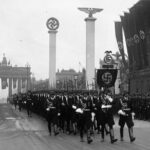
This section of the walk is the emotional core, and it’s handled with seriousness. You pass through Pariser Platz, where the tour frames the significance of the surrounding political history, including the location of Hitler’s bunker. You’ll also connect that area to the broader Nazi-era story so it doesn’t feel like isolated trivia.
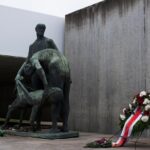
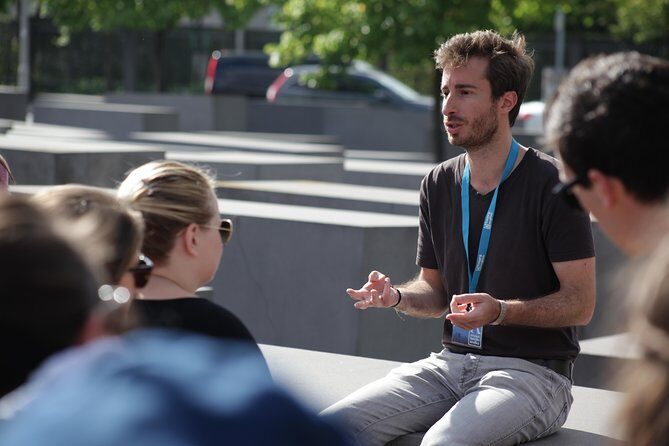
Then comes one of Berlin’s most important places to understand modern European history: the Holocaust Memorial (Memorial to the Murdered Jews of Europe). The tour gives it extra time, which I appreciate because this is not the place for a fast photo-and-move-on routine. The guide’s job here is to help you read the space: how the memorial’s design forces you to slow down, and how that design echoes remembrance.
You’ll also make a stop at Bebelplatz, including the book burning memorial. It’s a striking way to grasp how Nazis used censorship as a weapon. The tour connects the event to a wider pattern: control the ideas, control the future. Even in a city packed with monuments, this kind of reminder hits differently because you can picture the act of burning words in a real public square.
This is heavy content. If you prefer purely visual sightseeing, you might find it emotionally intense. But if you want Berlin to make sense beyond headlines, these stops are non-negotiable.
A few more Berlin tours and experiences worth a look



Cold War geography: Checkpoint Charlie, the Berlin Wall, and 1953
Berlin during the Cold War wasn’t abstract. It was street-level. This tour makes that real by focusing on border symbolism and the physical mechanics of division.
At Checkpoint Charlie, you trace the path connected to the so-called death strip, the infamous crossing point between East and West Berlin. The guide explanation helps you understand why this site became so famous, and why it also became so dangerous. The point isn’t only to see the place; it’s to understand what it represented in a city where freedom depended on paperwork, fences, and luck.
You also walk along the Berlin Wall memorial areas, where the tour ties the location to the boundary between East and West during the Cold War. You’ll hear about the wall’s fall in 1989, and how that moment reshaped Berlin practically, not just politically.
There’s also a stop at Platz des Volksaufstandes von 1953. Even with short pauses, this helps you connect the Wall era to earlier uprisings and public pressure. It’s one of those details that makes the Cold War feel like a sequence of tensions rather than a single event.
Guides can make or break this part. The feedback I saw highlighted that some guides, like Tobi and Gregor, bring an East Berliner perspective and mix facts with careful, respectful context, so you don’t get a one-note interpretation.
Topography of Terror: the former Gestapo and SS headquarters in plain sight
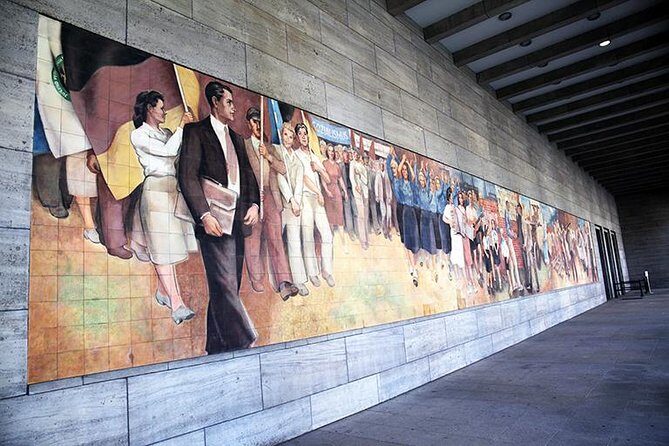
Few places in Berlin feel as directly connected to state terror as Topography of Terror. Here you’re standing on the site of the former Gestapo and SS Headquarters, and the tour explicitly frames why the city chose to confront it. That matters: Berlin didn’t hide it away. It turned the location into a learning space, so the past stays visible instead of repeatable.
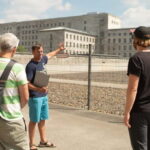
What I find most impactful is how the guide uses the building’s layout to explain the system. You’ll hear about the significance of the location and then look down into the excavated cellars, described as a haunting spot where political prisoners were tortured and killed. That physical detail is hard to forget because it turns a sentence in a textbook into a space your eyes can register.
This isn’t just about naming organizations. It’s about understanding how a government can use bureaucracy and architecture together. If you want to grasp the “how” behind the horror, this stop helps connect it to geography.
If you’re sensitive to dark topics, plan for a slower rhythm here. Give yourself a moment to stand back after the cellars part. Then keep walking while the tour continues to connect the past to what Germany became afterward.
Reichstag, Victory Column, and building your Berlin map for later days

The tour doesn’t end with only one era. It pulls you through the civic center so you can form a mental map of Berlin’s political geography.
After Brandenburg Gate and the Reichstag area, you’ll also see the Victory Column, which adds another layer to Germany’s public monument tradition. It’s not a war memorial in the same way as the Holocaust Memorial. It’s tied to the idea of national pride and state-building symbolism. The guide uses it to show how public space carries political meaning, even when it looks like a “nice view” on a sunny day.
You also pass through central neighborhoods around Nikolaiviertel, plus older-meets-new spaces near the main squares, keeping the city from feeling frozen in 1945. The Stadtschloss Berlin stop helps explain how leaders tried to reshape what “Germany’s center” meant across different regimes.
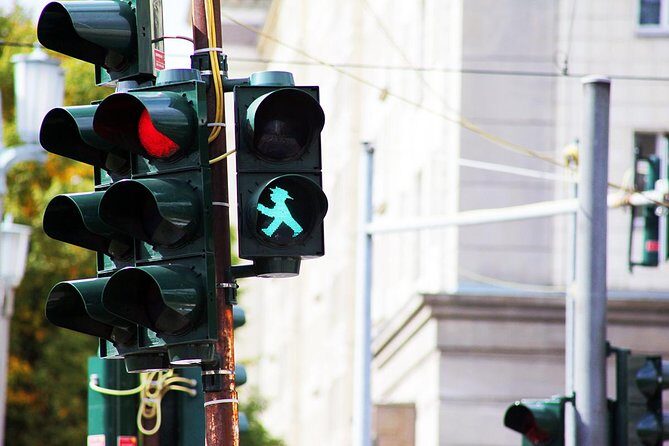
There’s even a small pop-culture pause noted on the route: Ampelmann Shop. That sort of stop might feel odd in a tour packed with dark sites, but it makes sense in a practical travel way. It shows how East-West history also left everyday design traces people still recognize and sell today.
By the time you reach the Holocaust Memorial area and then continue toward Topography of Terror and the checkpoints, you’ve basically built a mental “spine” of Berlin you can navigate later. That makes it easier to choose what to return to with tickets, longer museum time, or just extra wandering.
Price and logistics: is $24.19 a smart value for this much ground?
At $24.19 per person for about 3.5 hours, this is strong value if your goal is orientation plus context. The price includes a professional guide and uses a mobile ticket. Most stops are listed as admission ticket free, which helps keep costs from ballooning mid-walk.
Here’s the practical trade-off: you’re paying for guidance because you get clarity fast. The route hits major landmarks you’d likely visit anyway, but without the guide, you’d spend more time trying to connect era-to-era meaning on your own. With the guide, those connections get laid out while you’re standing in the right spots.
What’s not included is also clear: food and drinks are not part of the ticket. So your budget should include your own snack plan or a café break if you want one.
Group size capped at 25 and reviews-style feedback that many guides are fun while still respectful suggests the tour stays under control. And the rating shown as 4.9 with 98% recommended signals that the format works for a lot of different travelers, including first-timers.
One more tip: the tour is often booked about 27 days in advance, so if your dates are fixed, I’d reserve early rather than hoping for a late opening.
Should you book this Berlin history walk?
Yes, if you want Berlin to make sense without spending weeks studying a timeline. This tour is especially good for:
- First-time Berlin visitors who want the main sights connected into one story
- History-minded travelers who don’t want to miss context at the big monuments
- People who prefer a structured route when walking in a city with heavy emotional sites
Skip it or reconsider if:
- You hate long walking days or struggle standing outdoors for long stretches
- You want a lighter tone with fewer heavy stops
- You’re looking for museum ticket entry time, because this is built around short stops and key outdoor/monument moments
If you book, do it early in your trip so the rest of your days feel easier. You’ll come back to certain places with better questions, not just better photos.
FAQ
How long is the Discover Berlin Half-Day Walking Tour?
It runs for about 3 hours 30 minutes.
What does the tour cost?
The price is $24.19 per person.
What’s included, and what’s not included?
The tour includes a professional guide. Food and drinks are not included unless something is specified separately.
Is the tour offered in English?
Yes. The tour is offered in English.
Where do I meet, and where does the tour end?
You meet at Neue Promenade 3, 10178 Berlin, Germany. The tour ends in a different location, so your confirmation should show the exact end point.
Are there admission tickets needed for the stops?
Many stops are marked as admission ticket free in the route notes. It’s still smart to check any specific venue hours or options if you plan to go beyond what the tour covers.
Can I cancel for free?
Yes. You can cancel for a full refund up to 24 hours before the start time.
What’s the maximum group size?
The tour has a maximum of 25 travelers.