Berlin hides its best rooms in plain sight. This 2-hour walk through Mitte courtyards takes you off the main streets and into the kind of Berlin space you rarely notice from the sidewalk. You’ll start at BUTLERS Berlin Hackescher Markt and work through Spandauer Vorstadt, built up around the New Synagogue area and reshaped over time into one of the city’s most creative neighborhoods.
I especially like two things. First, the way the guide ties what you’re seeing to the district’s changing story, so courtyards stop feeling random and start feeling meaningful. Second, the contrast in stops: the Haus Schwarzenberg courtyard with art studios and old-building layers, then the color-soaked Heckmann Höfe where the whole courtyard feels like a little break from the street.
One thing to plan for: this tour goes rain or shine, so bring real rain protection and comfy walking shoes. Also, double-check your language choice (English or German) for the exact departure you book, since a few people need to confirm they’ll get the language they expect.
In This Review
- Key Courtyard Highlights to Look For
- Berlin’s Courtyard Culture: What You’ll See in Two Hours
- Starting at BUTLERS Hackescher Markt and Entering Spandauer Vorstadt
- Haus Schwarzenberg Courtyard: Art Studios Inside a Historic Yard
- Hackesche Höfe and Rosenhöfe: Seeing the Courtyard Network in Mitte
- Sophienkirche, Auguststraße, and How the Jewish Quarter Changed
- Heckmann Höfe Courtyard: Bright Color, Ivy, and a 19th-Century Pause
- Pacing, Rain Reality, and What to Bring
- Price and Value: Is $23 a Smart Deal for Courtyard Access?
- Who Should Book This Hidden Backyards Tour?
- Quick FAQ
- FAQ
- Where do I meet for the Berlin Hidden Backyards tour?
- How long is the tour?
- What languages are available?
- Is the tour only inside buildings?
- Does the tour run in bad weather?
- What’s included in the price?
- Should You Book This Tour?
Key Courtyard Highlights to Look For
- BUTLERS Berlin Hackescher Markt start: easy to find, right in Hackescher Markt.
- Spandauer Vorstadt context: you learn how the area grew into a Jewish-life center around the New Synagogue, then changed again.
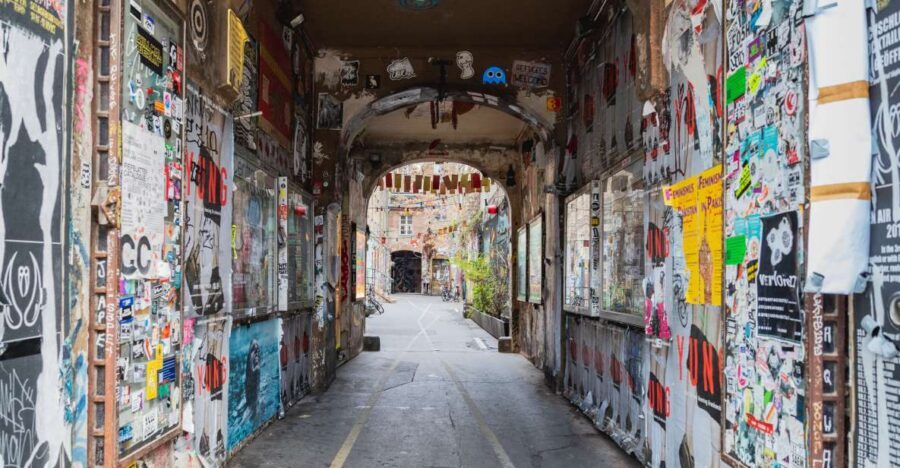
- Haus Schwarzenberg courtyard: you’ll see a historic yard turned into working art studios, including street-art style touches on the walls.
- Hackesche Höfe and Rosenhöfe pauses: you’ll step into the “courtyard world” of Mitte that most visitors miss.
- Sophienkirche and Auguststraße route: landmark stops that help explain how the neighborhood’s character shifted over time.
- Heckmann Höfe courtyard: a 19th-century, tree-shadowed, ivy-lined hangout with bright painted walls.
Berlin’s Courtyard Culture: What You’ll See in Two Hours
This tour is built around a simple idea: Berlin’s personality shows up in the spaces between streets. Not big monuments. Not long museum lines. Instead, you get guided access to the interior “rooms” of the city—courtyards and passageways where people live, work, create, and hang out.
That’s why this is such a smart first or second-day activity. It helps you see the city’s layout fast. After just two hours, you’ll understand how Mitte can feel both dense and human-sized, thanks to these shared-in-between spaces. If you like architecture, you’ll enjoy the way the guide reads buildings like a storybook. If you like neighborhoods, you’ll enjoy the way the route shows where culture and community actually happen.
And because it’s guided, you’re not just looking at pretty doorways. You’re getting the “why.” You’ll connect the courtyards to the development of Spandauer Vorstadt and its shift into a center of Jewish life around the New Synagogue, then into today’s international, creative-feeling area.
You can also read our reviews of more walking tours in Berlin



Starting at BUTLERS Hackescher Markt and Entering Spandauer Vorstadt
You meet at BUTLERS Berlin Hackescher Markt (Hackescher Markt 4), standing in front of the shop. It’s a practical meeting spot: busy enough that you’ll find it easily, but central enough that you won’t waste time figuring out where to start.
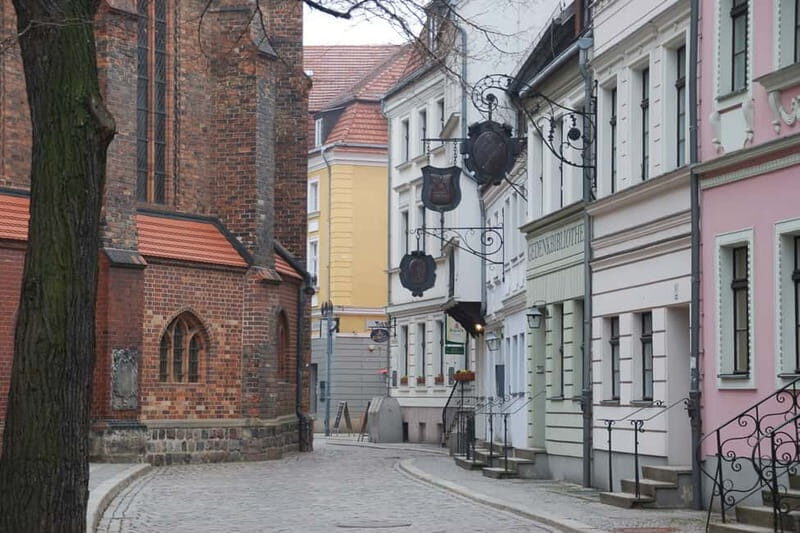
From there, the tour moves into Spandauer Vorstadt in Berlin-Mitte. This is one of those areas where “walking” turns into “orientation.” You’ll notice how the street grids relax into side lanes, how courtyards appear like hidden punctuation, and how the neighborhood shifts in tone as you move.
The guide’s job here is to make the geography understandable. You’ll get an explanation of the area’s origins and transformation—especially how Jewish life concentrated around the New Synagogue. That context matters, because courtyards weren’t just aesthetic choices. They were part of how people organized daily life in the city: where workspaces could exist, where social life could gather, and where community could form in shared outdoor space.
A nice bonus: some guides keep the tone friendly and conversational—names like Nick, Nicolas, Lydia, Alex, and Susanne come up for their engaging delivery. It’s history with momentum, not history delivered like a lecture.
Haus Schwarzenberg Courtyard: Art Studios Inside a Historic Yard
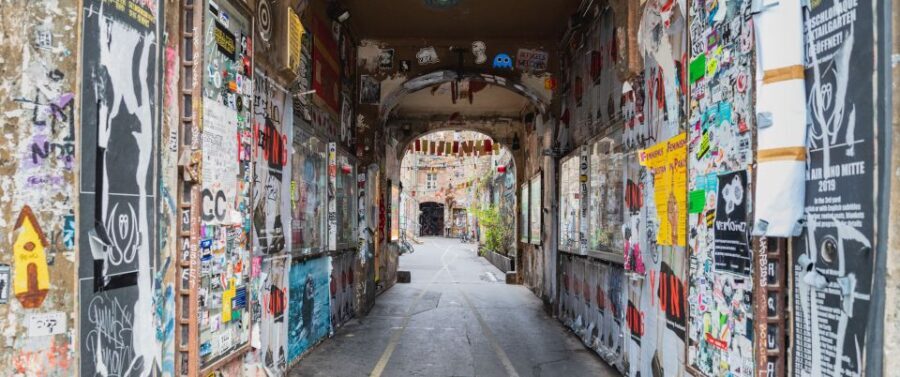
The Haus Schwarzenberg stop is one of the strongest reasons to book this tour. You’re not just looking at a building; you’re walking into the courtyard logic of Berlin.
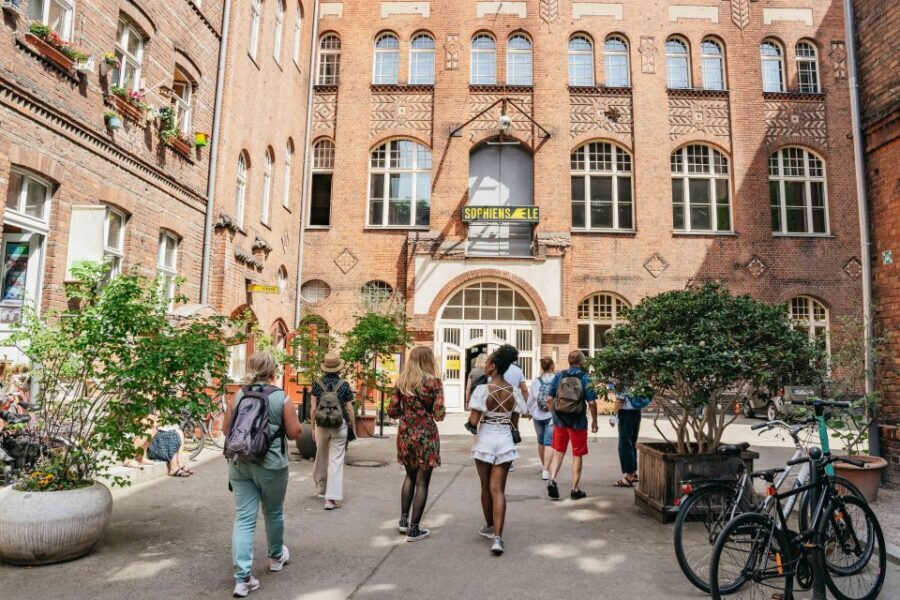
Here’s what you should expect: a courtyard that functions like a relic from a bygone era, now repurposed. The yard is home to numerous art studios, so you’ll see the way older structures can keep working instead of becoming dead shells. The walls around the courtyard show street-art style decoration, and the historic buildings have had multiple functions over the years.
That mix is the point. Berlin often keeps layering uses over time—art spaces, creative work, and daily-life infrastructure in the same footprint. The guide connects that to the wider story of the neighborhood, so the courtyard feels like part of the city’s evolution rather than a standalone curiosity.
Practical note: courtyard tours are usually best with a slower pace. Take a second to look up as well as straight ahead. Street-level entrances can feel ordinary, but upper angles often show how the buildings hold the courtyard like a bowl.
Hackesche Höfe and Rosenhöfe: Seeing the Courtyard Network in Mitte
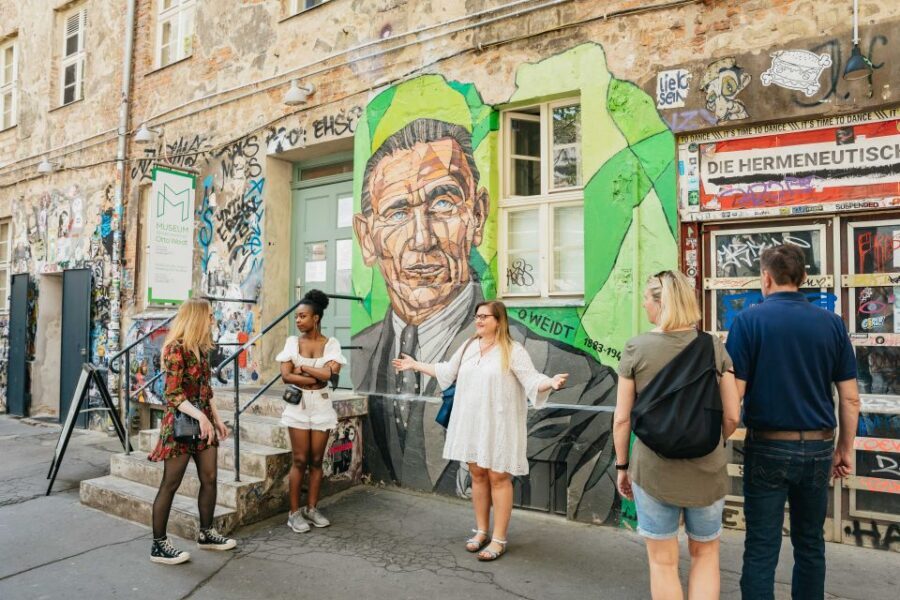
After Haus Schwarzenberg, you’ll move through other courtyard areas around Mitte—stops that include Hackesche Höfe and Rosenhöfe. Even if you’ve seen the outside streets, these places can feel like a different Berlin inside: quieter, more enclosed, and made for passing time rather than just crossing it.
The value of these stops is how they broaden your understanding of “courtyard Berlin.” Schwarzenberg gives you the creative-studio contrast. Hackesche Höfe and Rosenhöfe widen that contrast and show that courtyards weren’t one-off designs. They’re a recurring urban solution in this part of the city: outdoor shared space tucked within dense blocks.
During these pauses, listen for what your guide emphasizes—often it’s the way architecture shapes behavior. In a courtyard, you don’t just move through. You linger. People work and meet in ways the street doesn’t allow. That’s also why this type of tour works for different interests. You can enjoy it as architecture. Or you can enjoy it as neighborhood life.
If you’re the kind of person who likes photos, this is where you’ll want your camera ready—courtyards often deliver that classic Berlin geometry, with angles, doorways, and planted corners that feel more intimate than big open squares.
Sophienkirche, Auguststraße, and How the Jewish Quarter Changed
Midway through, the itinerary includes Sophienkirche and Auguststraße. These stops help you connect the courtyard spaces you’ve been seeing with the larger story of the area’s Jewish-life development around the New Synagogue.
Even if you’re not a deep-history person, this part can click quickly because the guide frames what you’re seeing as a chain of changes rather than a list of dates. You learn how the quarter grew, why Jewish life concentrated there, and how the district’s identity shifted again into a more trendy, colorful, international-feeling neighborhood.
This is one of the tour’s best strengths: it doesn’t treat the Jewish-quarter story as an isolated chapter. It ties it to the physical environment—courtyards, building reuse, and the “in-between” city spaces where daily life happens.
And you’ll probably notice something practical here. When you understand the district’s development, the courtyards stop feeling random. They start feeling like intentional infrastructure for community life—spaces built for people, not just for scenery.
You can also read our reviews of more guided tours in Berlin





Heckmann Höfe Courtyard: Bright Color, Ivy, and a 19th-Century Pause

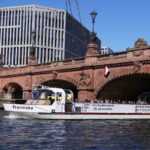
If Haus Schwarzenberg is the creative-work courtyard, Heckmann Höfe is the atmosphere stop. This is the brightly colored, local hangout courtyard featured on the tour, and the setting is part of why it feels special.
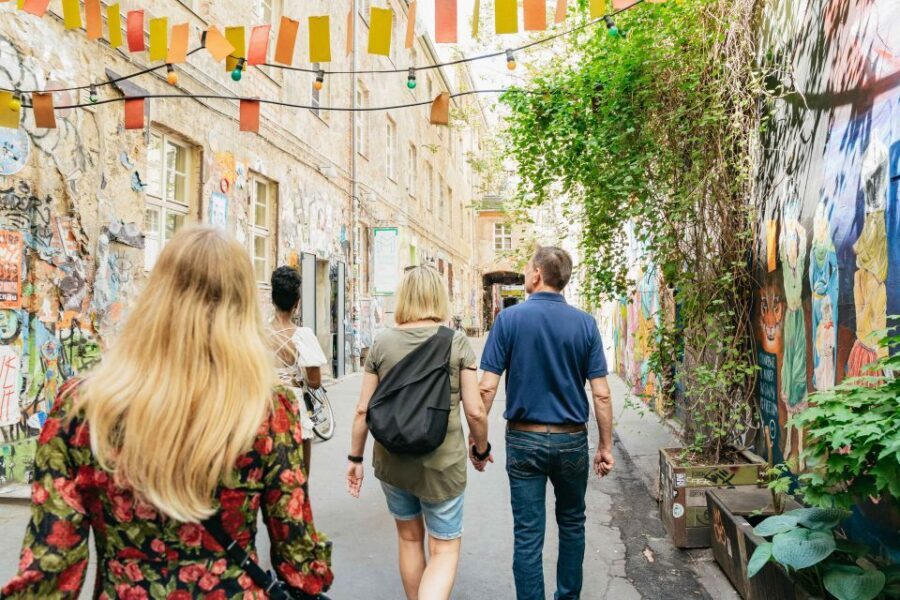
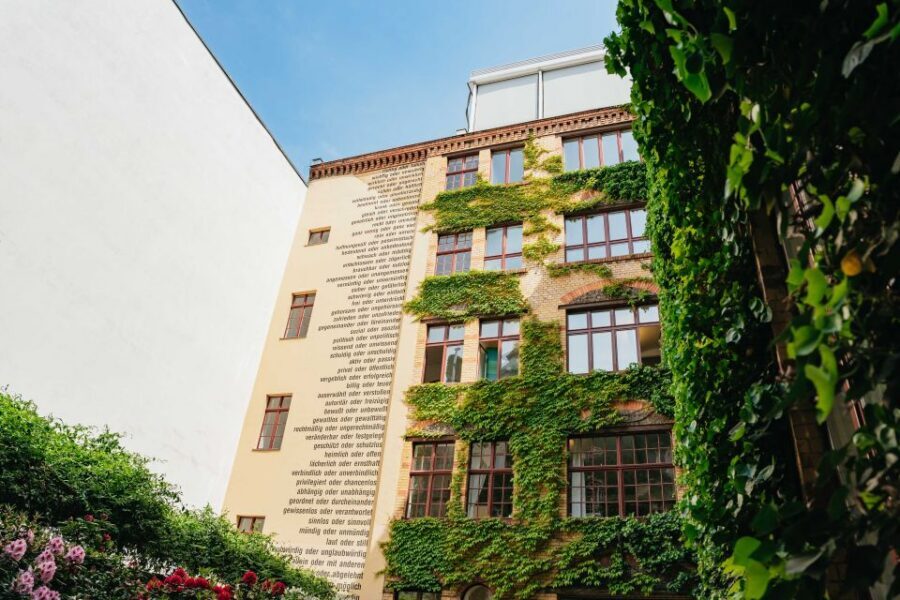
You’ll spend time in a 19th-century courtyard where you can feel the contrast with the busy Berlin street outside. Trees cast shade, buildings are lined with ivy, and the courtyard itself acts like a little outdoor room—colorful, quiet enough to hear the details, and open enough to feel like a shared neighborhood space.
This is a good moment to slow down and just look around. Since there’s no food or drink included, your guide’s job isn’t to keep you entertained with snacks—it’s to keep you oriented with story and observation. Heckmann Höfe is where that pays off: you get to connect the history and design to something you can actually feel in the present.
I’d also recommend taking a quick mental note of how locals might use it. Even without a long break, the courtyard shows you how Berlin’s “hidden” spaces work as everyday gathering points.
Pacing, Rain Reality, and What to Bring
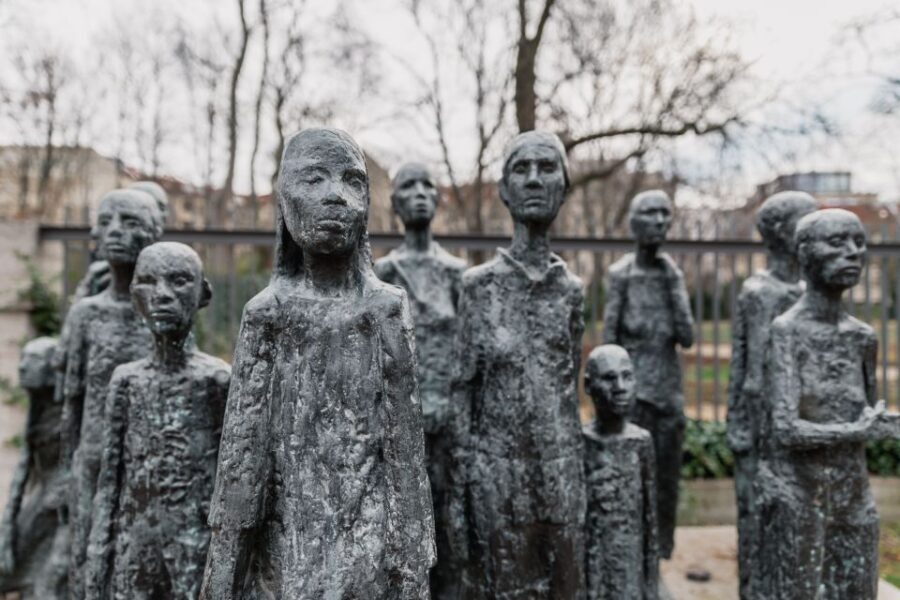
This is a walking tour with a total duration of 2 hours. That’s an ideal length if you want a meaningful slice of the city without turning your day into a marathon.
The tour runs rain or shine, so plan for wet conditions. Bring a rain layer you can actually walk in, and wear shoes that handle puddles and slick pavement. If you’re thinking about photos, rain can also make surfaces and colors look extra dramatic—just make sure your hands stay dry enough to handle a camera.
Because the tour includes multiple short courtyard entries and street segments, it’s best when you keep your pace steady and listen for directions from the guide. Don’t just rush to the next doorway. Part of the fun is the guide pointing out what changes when you move from street to courtyard.
One more practical tip: since there’s no food or drinks included, you’ll want to eat before or after. The tour is about walking and learning, not pausing for a meal.
Price and Value: Is $23 a Smart Deal for Courtyard Access?
At $23 per person, this tour is priced like a value-first Berlin experience. You’re paying for two things: a structured route through lesser-seen places and a guide who connects architecture and neighborhood development to what you’re looking at.
Here’s how I think about the cost. You’re not buying an “attraction ticket.” You’re buying interpretation. Courtyards are easy to pass by. They’re harder to understand without context. This tour covers the context you’d otherwise miss: why Spandauer Vorstadt mattered, how Jewish life formed around the New Synagogue, and how buildings and spaces adapted into today’s creative neighborhood.
Also, it’s only two hours. That matters because you’re getting a lot of orientation quickly—especially if you’re visiting for a short time.
If you already plan to spend plenty of time in the major sights, this is a great “balance” purchase: you keep your sightseeing day diverse without needing to commit to a full half-day.
Who Should Book This Hidden Backyards Tour?
I think this tour is a strong match if you want:
- A calmer, local-feeling slice of Berlin beyond the usual museum loop
- Courtyard-focused architecture and neighborhood story connections
- Jewish-quarter context around the New Synagogue area without relying on a big formal tour format
- A guide-led route that helps you find places you’d likely miss on your own
It’s also a good fit if you enjoy guides who keep the storytelling human. Names like Nick, Nicolas, Lydia, Alex, Susanne, and Minit show up for a friendly, informative approach with a steady pace. You’re not just receiving facts—you’re being guided through meaning.
If you dislike walking, or if you can’t handle standing and moving around outdoors in rain, you’ll probably want to think twice. This is not a sit-down, indoor-only experience.
Quick FAQ
FAQ
Where do I meet for the Berlin Hidden Backyards tour?
Meet your guide in front of the BUTLERS Berlin shop at Hackescher Markt 4.
How long is the tour?
The tour lasts 2 hours.
What languages are available?
The live tour guide is available in English and German.
Is the tour only inside buildings?
No. It’s a guided walking tour through courtyards and passageways, including outdoor courtyard areas.
Does the tour run in bad weather?
Yes. It takes place rain or shine.
What’s included in the price?
You get a walking tour with a tour guide. Food and drinks are not included.
Should You Book This Tour?
If you want Berlin to feel like a city you can actually picture, not just a list of major sights, I’d book it. The route is short enough to fit any day, the courtyards give you a real sense of how people use space in Berlin, and the Jewish-quarter context around Spandauer Vorstadt adds weight to what would otherwise look like stylish interior courtyards.
Just go prepared for rain and comfortable walking, and confirm the language you need for your departure.