REVIEW · BERLIN
Berlin Third Reich Sites: Half-Day Walking Tour
Book on Viator →Operated by Original Berlin Walks · Bookable on Viator
Berlin can feel like an open history book. This half-day tour turns the page fast—without rushing the meaning. You get an efficient route through the Third Reich story, starting with how the Nazis gained control and ending near the Reichstag as the war collapsed.
I especially like the historian-guide approach. You’re not just looking at plaques. You’re learning how the regime worked, why certain institutions mattered, and how victims were targeted. Second, I love that you can ask questions and slow down when you need clarity, even while the group keeps moving.
One consideration: this is a heavy, very focused route. If you want lots of cheerful detours or a long comparison of Nazi vs. non-Nazi Berlin, this tour may feel like it stays in one dark lane.
In This Review
- Key things I’d plan for (and why they matter)
- Why This Half-Day Route Works in Berlin
- Getting Started Near Hackescher Markt: How the Tour Sets the Tone
- Otto Weidt’s Workshop: Survival Stories You Might Miss
- The Neue Synagogue Area and Anhalter Bahnhof: Deportation as a System
- Topography of Terror (Prinz-Albrecht-Strasse): Where Terror Had an Office
- Luftwaffe Headquarters and the Sinti and Roma Story: Power With Different Targets
- Johann Georg Elser Sculpture: An Attempt on Hitler’s Life
- Holocaust Memorial and Other Victim Reminders: Seeing Multiple Losses Clearly
- Reichstag Finale: The Nazis Take Power, Then Lose It
- Price and Logistics: What You’re Really Paying For
- Who This Tour Fits Best (and Who Might Want Something Else)
- Should You Book This Berlin Third Reich Sites Half-Day Tour?
- FAQ
- How long is the Berlin Third Reich Sites half-day walking tour?
- What language is the tour offered in?
- Where do I meet the guide, and when does the tour start?
- Do I need a public transport ticket?
- Are admissions included for the stops?
- How large is the group?
- Does the tour run in bad weather?
- Can I cancel and get a full refund?
- Are service animals allowed?
Key things I’d plan for (and why they matter)
- A 4-hour route that covers the core sites so you see more than you would on your own
- Historian-guides who welcome questions and make the connections clear
- Topography of Terror at Prinz-Albrecht-Strasse where SS and Gestapo power is explained
- Memorial stops for more than one victim group, including Roma and persecuted LGBT people
- A mix of major landmarks and lesser-known reminders, like Otto Weidt and Johann Georg Elser’s legacy
- An ending near the Reichstag, so you can keep exploring after the tour ends
Why This Half-Day Route Works in Berlin
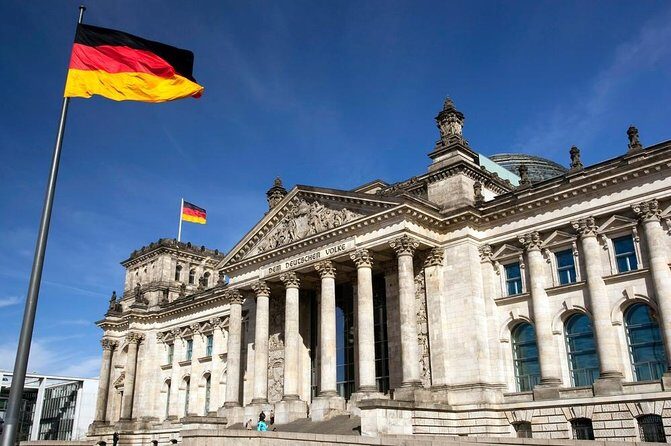
Berlin spreads out, and the temptation is to bounce from one famous stop to the next. This tour is built to do the opposite: it links locations into a single story line. You spend about half a day walking through the rise of Nazi power, the machinery of repression, and the physical places where it all happened.
The value for your time is strong. At about $21.77, you’re paying for a guide who can explain what you’d otherwise have to piece together from multiple books and websites. Also, it helps that the group is capped at 25 people, which keeps the pacing workable and the questions less likely to get lost.
The other win is timing. You finish early enough to spend the rest of the day choosing your own Berlin—museums, neighborhoods, cafés, or just long walks where you set the pace.
You can also read our reviews of more walking tours in Berlin



Getting Started Near Hackescher Markt: How the Tour Sets the Tone
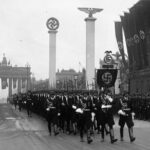
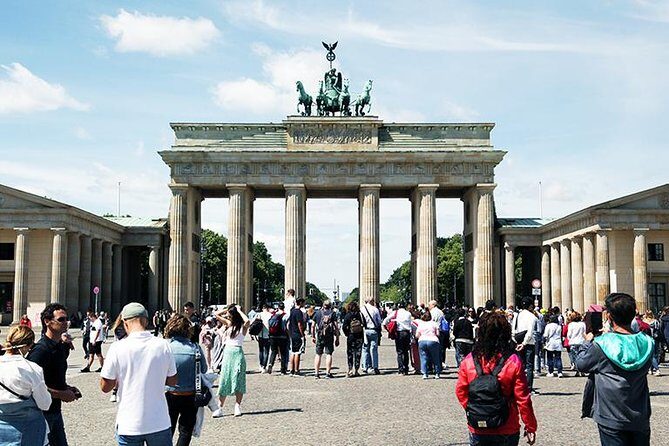
The tour begins at Neue Promenade 3 (near the Hackescher Markt S-Bahn area) and starts at 10:00 am. From the start, your guide frames the period as more than dates. You get an introduction to Adolf Hitler and the Nazi Party, and how dictatorship and violence reshaped Germany between 1933 and 1945.
That matters because Berlin’s landscape can trick you. A street can look ordinary today, while it once housed networks of surveillance, propaganda, and coercion. Beginning with context gives you a mental map before you walk into the hard sites.
You’ll move at a steady clip, because the tour is designed as a route with multiple stops, not one long museum session. The upside: you’ll cover a lot. The trade-off: some stops are brief, so it’s smart to bring curiosity and accept that this is an overview first.
Otto Weidt’s Workshop: Survival Stories You Might Miss
One of the early stops is Museum Blindenwerkstatt Otto Weidt. Even if you know a bit about Berlin’s Jewish history, this kind of site tends to surprise people because it’s smaller and more human-scaled than the big memorial landmarks.
Your guide explains what this place represents and why it’s historically significant. The way the story is presented tends to focus on the lived realities behind the wider Nazi system—what people did to protect one another and how survival could depend on individual choices.
What I like here is the balance. The tour isn’t only pointing at institutions of terror. It also highlights what existed alongside persecution—people finding ways to help, even in narrowing conditions.
The Neue Synagogue Area and Anhalter Bahnhof: Deportation as a System
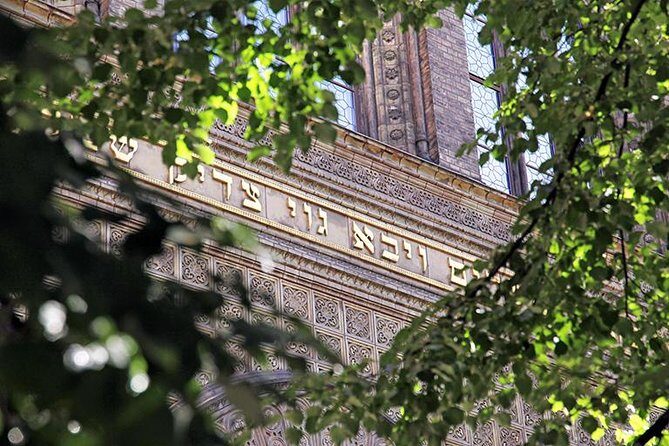
Next you’ll visit Stiftung Neue Synagoge Berlin – Centrum Judaicum. Your guide walks you through the history of the site, and it helps set up what comes soon after: the fact that persecution wasn’t just ideology. It was also logistics.
Then you continue to Anhalter Bahnhof, a key part of Berlin’s Jewish deportation story. This station ruins-and-remnants stop is short, but it lands hard because it ties the regime’s policies to physical departures—how lives were uprooted and sent away.
A practical note: because the time at each stop is limited, keep your eyes open for what the guide points out, not just what you can read on your own. The real payoff is the explanation of how the Nazi state made deportation work in practice.
Topography of Terror (Prinz-Albrecht-Strasse): Where Terror Had an Office
The tour moves to Topography of Terror, located where the former SS and Gestapo headquarters stood on what was once Prinz-Albrecht-Strasse. This is the anchor stop for many people because it’s where you can see how terror was organized and administered.
Your guide explains how the regime operated and how these institutions functioned. That’s crucial: it turns the abstract word terror into something operational. You start to understand the links between surveillance, detention, deportations, and how information flowed inside the Nazi system.
You’ll spend around 15 minutes here, which is not long enough to do everything in the museum on your own terms. But for a half-day walking tour, it’s the right amount of time to grasp the core story and then decide if you want to return later for a longer look.
A few more Berlin tours and experiences worth a look



Luftwaffe Headquarters and the Sinti and Roma Story: Power With Different Targets
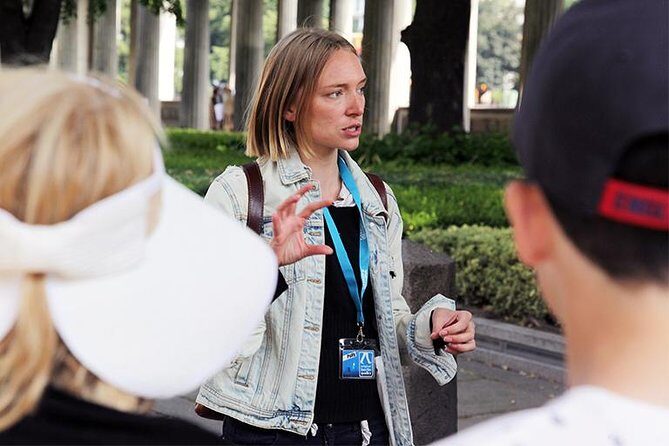
After the SS and Gestapo focus, the tour shifts to another important center of Nazi control: the former Ministry of Aviation, tied to the German Luftwaffe headquarters. Your guide discusses the consequences of Nazi rule, including how it affected Jewish people and Sinti and Roma communities.
This part works because it avoids a single-track narrative. The Nazi regime persecuted multiple groups, using a mix of ideology and state policy. When you learn that framework, the later memorial stops make more sense. You’ll see the city less as a set of unrelated memorials and more as an environment where multiple victim stories were targeted.
Johann Georg Elser Sculpture: An Attempt on Hitler’s Life
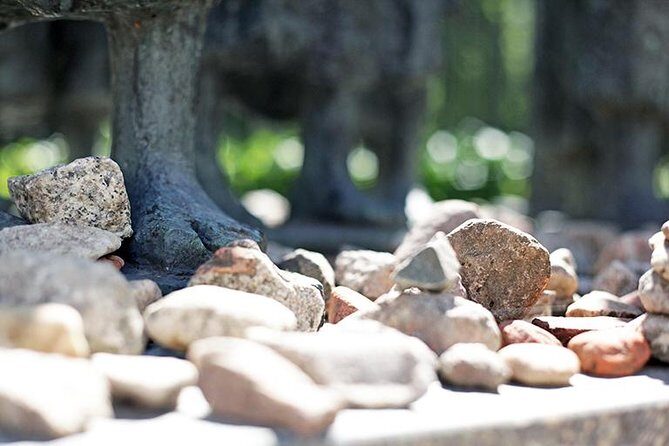
A short stop follows at the Johann Georg Elser Sculpture, which your guide connects to the attempt on Hitler’s life. This is a change of pace, and in a good way.
Instead of only looking at how the regime crushed dissent, you get a reminder that people tried to stop it from within the darkest system. The goal here isn’t to turn the tour into a thriller. It’s to show that Nazi rule didn’t go unchallenged—though the cost of resistance was enormous.
Holocaust Memorial and Other Victim Reminders: Seeing Multiple Losses Clearly
Then you’ll reach the Memorial to the Murdered Jews of Europe. Your guide explains the history of the site, and the focus is on honoring victims while also grounding you in what happened and why it matters.
From there, the tour continues to the Monument to Homosexuals Persecuted Under the National Socialist Regime. That stop helps close a gap many visitors accidentally leave open. If your mental picture of Nazi persecution only includes one group, this tour gently forces the correction.
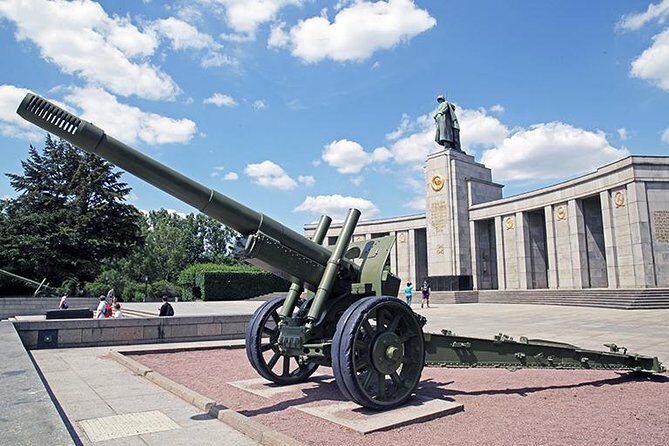
After that, you’ll see a Soviet Memorial in Tiergarten and hear its history. This keeps the story from becoming only Germany vs. Germany. It includes the wider wartime suffering connected to Soviet lives and losses.
If you’re sensitive to emotional impact, plan for it. These stops can feel quiet but heavy. I like that the tour doesn’t rush past them with jokes. At the same time, a good guide keeps explanations steady and helps you stay oriented.
Reichstag Finale: The Nazis Take Power, Then Lose It
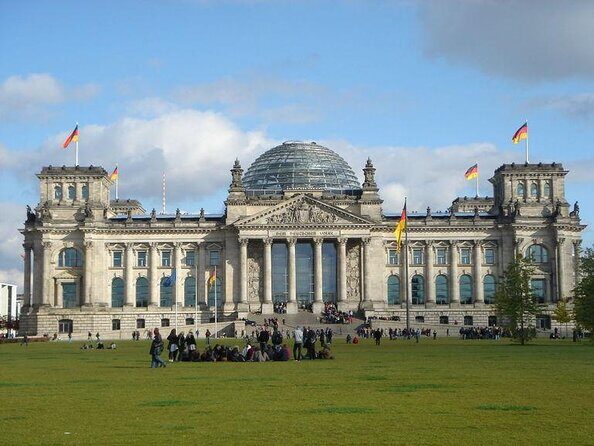
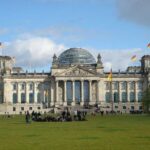
The tour ends outside the Reichstag building, at Platz d. Republik 1. This finale is smart because it ties the opening to the closing.
Your guide explains how the Nazis came to power in 1933, and it connects that to the final days of World War II in 1945. Walking the route gives you a sense of the timeline in your legs. You’re not just hearing about the rise and fall—you’re moving from one site to the next in the geography of the story.
Also, finishing near the Reichstag gives you options. After the tour, you can keep exploring the parliamentary area on your own schedule, or just sit for a bit with a clearer sense of what you’re seeing.
Price and Logistics: What You’re Really Paying For
The tour costs $21.77 per person for about 4 hours of walking. For that price, you’re getting:
- a professional guide speaking English
- an organized route that connects major and meaningful sites
- brief access-style stops where you learn context as you go
The “not included” part is simple: you may need an AB Zone transport ticket (about €3.80). If you’re already using public transit, that’s normal Berlin overhead, not a hidden fee.
Also, this one has free admission tickets listed for the stops, which is a real value booster. You avoid paying extra at each stop and focus on learning.
What to wear: you’ll be walking enough that comfy shoes are not optional. The tour runs in all weather, so plan for rain or cold, even if Berlin decides to be dramatic.
Who This Tour Fits Best (and Who Might Want Something Else)
This tour is a good match if you want:
- a structured route through the Third Reich sites
- a historian-guide who can connect institutions, policies, and victims
- a half-day format that leaves time for your own choices afterward
- an experience that’s sensitive to the subject and still stays practical
It may be less ideal if you:
- want a broader mix of non-Nazi Berlin themes on the same walk
- need long museum time at one location rather than quick context at many
- prefer a lighter historical tone
The strongest reviews you’ll see tend to emphasize guides who are easy to hear, open to questions, and appropriately sensitive. Names that come up often include Peter, Glen, Tom, Hannah, Gregor, James, Jonathan, and Anja. If you like a guide who can both explain and handle questions without getting cold or scripted, this format is usually a win.
Should You Book This Berlin Third Reich Sites Half-Day Tour?
I’d book it if you’re visiting Berlin for a short time and you want the “how it worked” version of Nazi history. The route efficiency plus the guide’s explanations make the experience far more useful than trying to self-tour these sites with only general knowledge.
Don’t book it if your priority is a casual sightseeing loop or if you need lots of relief from the subject matter. This is a purposeful walking tour of persecution, terror, and memorials.
My rule of thumb: if you want context you can actually use—what Nazi institutions did, who they targeted, and how Berlin remembers it—this half-day choice is strong. Then, use the rest of your day to explore on your own, with your brain finally able to connect the dots.
FAQ
How long is the Berlin Third Reich Sites half-day walking tour?
The tour lasts about 4 hours.
What language is the tour offered in?
It is offered in English.
Where do I meet the guide, and when does the tour start?
The start point is Neue Promenade 3, 10178 Berlin, and the meeting time is 10:00 am. The tour ends at Platz d. Republik 1, 11011 Berlin.
Do I need a public transport ticket?
An AB Zone transport ticket is not included and is approximately €3.80.
Are admissions included for the stops?
Admission tickets are listed as free for the listed stops.
How large is the group?
The tour has a maximum of 25 travelers.
Does the tour run in bad weather?
Yes, it operates in all weather conditions, so dress appropriately.
Can I cancel and get a full refund?
Yes. Free cancellation is available up to 24 hours in advance for a full refund.
Are service animals allowed?
Yes, service animals are allowed.