REVIEW · BERLIN
Third Reich Berlin: Hitler and WWII Walking Tour
Book on Viator →Operated by Insider Tour Berlin · Bookable on Viator
Hitler’s last days start right under your feet. This 3-hour route turns Berlin street corners into a timeline of the Third Reich’s rise, its propaganda machine, and the final Soviet push in 1945. Two things I really like: you get Hitler’s bunker area in the walk, and you also get clear context that makes the places connect instead of feeling like random stops. One drawback to keep in mind: it’s emotionally heavy history, and you’ll be outside for much of the time.
The tour is built for small groups, max 25 people, and it’s offered in English. Expect a brisk pace (plan for around 5,000 steps) and bring layers, because even a blue-sky day can turn into a cold Berlin afternoon. The payoff is big: you see major sites you’d struggle to stitch together on your own, then finish near Checkpoint Charlie.
In This Review
- Key Highlights Worth Your Attention
- A 3-Hour Route Through Nazi Berlin: What It Really Covers
- Meeting at Reichstagufer and Getting Your Bearings in Berlin
- Friedrichstraße and Wilhelmstrasse: The Machine Behind the Regime
- Trains to Life Trains to Death: Deportations, Not Abstractions
- Reichstag and the 1933 Fire to 1945 Soviet Flag Moment
- Tiergarten Soviet War Memorial and the Cost of Victory
- Brandenburg Gate, Academy of Arts, and Nazi Architecture’s Influence
- The Holocaust Memorial to the Murdered Jews of Europe: How to Look at It
- Führerbunker Area: Standing Above Hitler’s Last Days
- Wilhelmstrasse’s Ministries, Goebbels, and Göring’s Air Ministry
- Topography of Terror: SS and Gestapo Headquarters Made Visible
- Who This Tour Fits Best (and Who Might Skip It)
- Practical Value: Price, Time, and What You Actually Get
- Should You Book This Third Reich Berlin: Hitler and WWII Walking Tour?
- FAQ
- How long is the Third Reich Berlin walking tour?
- What does the tour cost?
- Where does the tour start and where does it end?
- What language is the tour offered in?
- Is there a guide included?
- Are any entrance tickets included?
- What should I do about my schedule on the day of the tour?
- How big are the groups?
- Is the tour only for people who already know history?
- Is free cancellation available?
Key Highlights Worth Your Attention
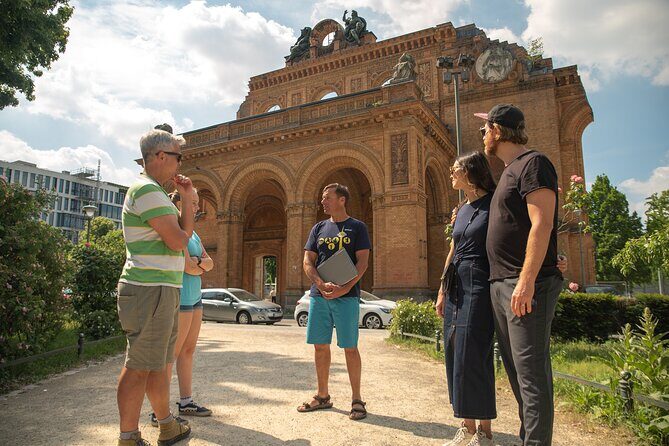
- Hitler’s bunker area and the end of WWII: you’ll stand above the location tied to his final days in April 1945
- Wilhelmstrasse power centers: the ministries where policy turned into persecution
- Trains to Life Trains to Death: a memorial that focuses on deportations from Berlin
- Reichstag’s two shocks: the 1933 fire used to crush democracy, then the 1945 Soviet flag moment
- Soviet War Memorial in Tiergarten: a visible reminder of the human cost of the final battle
- Topography of Terror: SS and Gestapo headquarters turned museum and memorial space
A 3-Hour Route Through Nazi Berlin: What It Really Covers
This walk follows the story of the final act of World War II in Berlin, but it doesn’t stop at 1945. You’ll also get the political and ideological roots that made the war and the Holocaust possible, so the memorials land with more meaning than if you only saw them as monuments.
The structure is simple: start near the Reichstag zone, move through the government-and-propaganda belt, pass key memorials, then end at Topography of Terror near Checkpoint Charlie. It’s the kind of tour that helps you read Berlin like a document: place, decision, consequence.
Because the subject is so serious, a good guide matters. The highest praise in the guide feedback centers on clear explanations, strong storytelling, and patience for questions. Names that came up repeatedly in positive feedback include Maria, RU, Tom, Ben, Eran, Canadian Chris, Jamie G, Pete F, Carlos, and Paul.
You can also read our reviews of more walking tours in Berlin


Meeting at Reichstagufer and Getting Your Bearings in Berlin
You meet at Reichstagufer 17 (10117 Berlin). This is an efficient launch point because it puts you near the core of the Third Reich government district and the walking corridor that leads into the memorial sites.
Arrive about 15 minutes early so you’re not rushing in the cold or trying to find the group. This isn’t a “hop on, hop off” experience—most of your time is outdoors, and the pace is brisk enough that comfortable shoes are not optional.
If you’re the kind of person who likes to ask questions, this tour style is built for that. Multiple guide comments mention how the guides actively answered questions and kept explanations easy to follow, even when the topic was grim.
Friedrichstraße and Wilhelmstrasse: The Machine Behind the Regime
Early on, you start around the Friedrichstraße Station area. From there, the tour frames what you’re looking at: Berlin as the command center for military planning and propaganda, not just a pretty backdrop.
One big theme is how the regime used buildings as instruments. As you move through this zone, you’ll connect Wilhelmstrasse with the government offices where key decisions were made, including the Ministry of Propaganda linked to Joseph Goebbels and the administration spaces tied to the Nazi state.
You also hear about the Luftwaffe leadership and locations tied to Germany’s air force, including references connected to planning for the Battle of Britain. Even if you already know the names, the value here is linking the aviation story to the broader war planning and the way propaganda supported military aims.
And yes, you’ll also learn how Berliners experienced the regime daily, including the reality of air raids and life under dictatorship. That’s what keeps this from being just a list of famous names.
Trains to Life Trains to Death: Deportations, Not Abstractions
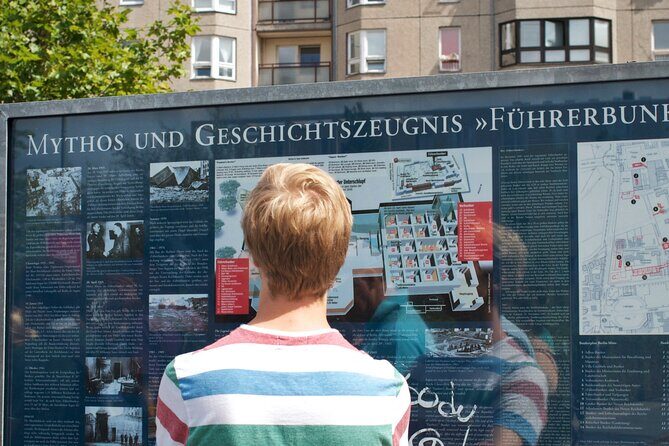
At the Trains to Life Trains to Death memorial, the focus narrows in a necessary way. This site tells the story of how Jews from Berlin were deported to Nazi concentration camps during World War II.
What I appreciate about this stop is that it’s not just general Holocaust education. It’s tied to Berlin and to the mechanism of deportation—meaning the violence has a location, a route, and a bureaucratic pathway. It shifts the story from ideology to forced reality.
The tour doesn’t treat the memorial as a quick photo break. You’ll have a short moment to absorb what it represents, then move on with the rest of the political and military context still in your head.
Reichstag and the 1933 Fire to 1945 Soviet Flag Moment
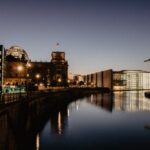
The Reichstag is one of those places where history feels layered. In 1933, a fire damaged the building, and the Nazis used it as a pretext to consolidate power—suspending liberties and accelerating the end of democratic governance.
Then the story flips in the final days of the war. After the Battle of Berlin, the Soviet flag was raised over the Reichstag, marking a symbolic end to Nazi Germany. That contrast is the tour’s point: the same building tied to democracy’s collapse becomes tied to the regime’s defeat.
Important practical note: the tour description indicates admission for the Reichstag is not included. If you care about going inside, plan your time around that reality.



Tiergarten Soviet War Memorial and the Cost of Victory
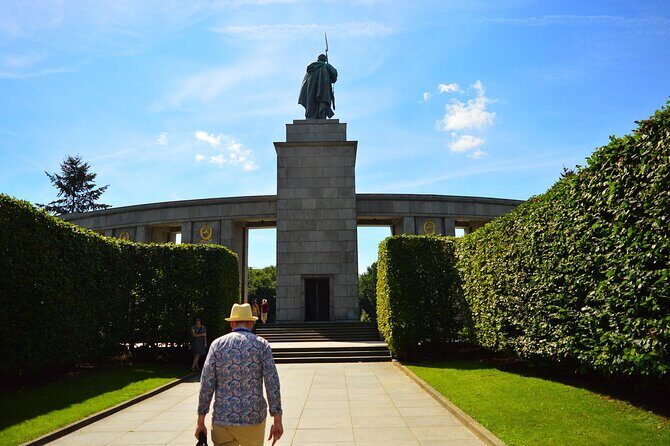
Next comes the Soviet War Memorial in Tiergarten. This stop is quiet, factual, and direct: it commemorates Soviet soldiers who fought and died in 1945.
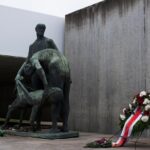
The visual symbolism matters here. The monument shows a Soviet soldier holding a flag over two fallen Nazi soldiers, which the tour frames as the defeat of Nazism. It’s surrounded by a military cemetery, and that setting makes the cost of war feel less like a statistic and more like bodies and graves.
You also get the narrative thread that the Soviets pushed through the city in a final assault that eventually reached the Reichstag. That walk-through framing helps you understand why Berlin became a decisive battleground.
Brandenburg Gate, Academy of Arts, and Nazi Architecture’s Influence
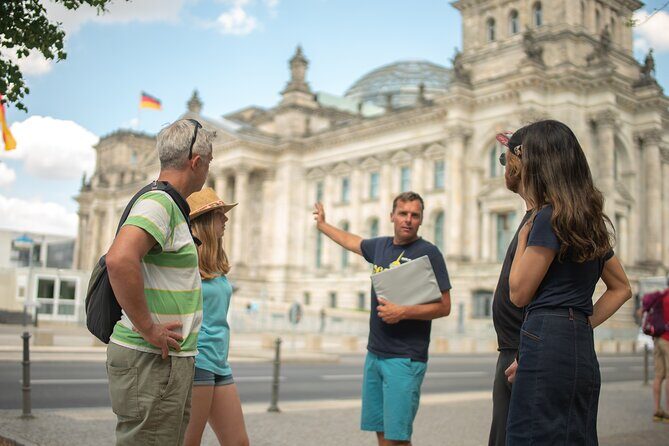
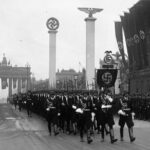
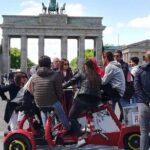
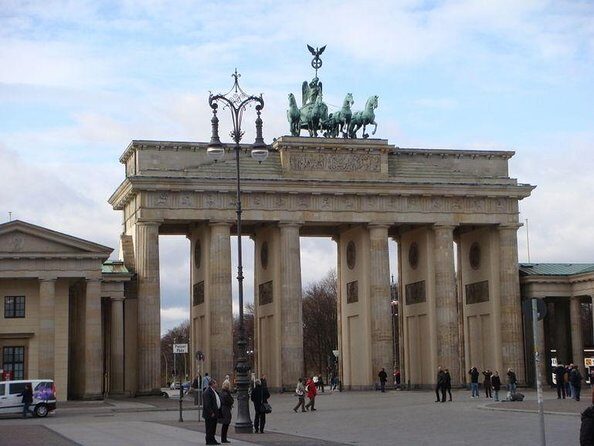
The Brandenburg Gate is easy to spot, and the tour gives you the harder context. During the Third Reich, it wasn’t only an iconic landmark—it was used in rallies and as a backdrop for Nazi propaganda. The area was adorned with swastikas, linking the site to public displays of power.
Then you’ll hear about the Akademie der Künste (Academy of Arts) area and how Albert Speer’s architectural influence reached across Nazi projects. The key lesson is that the arts weren’t living in a separate world. Style, monumentality, and the built environment were part of how the regime projected authority.
After the war, Berlin faced a painful reckoning with those ties, and you’ll see how the conversation continues through today’s art institutions. This stop works best if you like connecting culture to politics, not treating them as separate categories.
The Holocaust Memorial to the Murdered Jews of Europe: How to Look at It
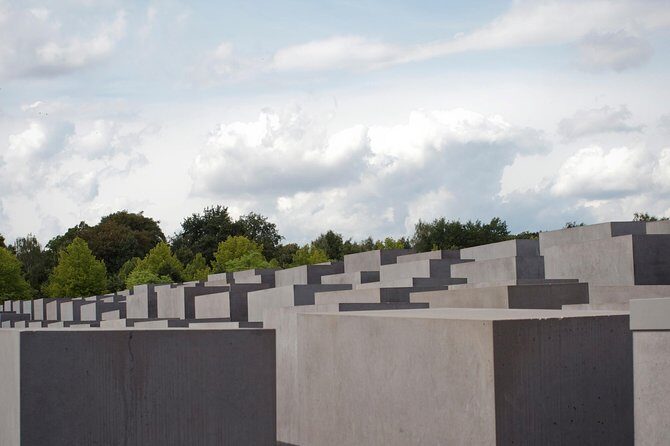
The Memorial to the Murdered Jews of Europe uses an unsettling design: 2,711 concrete slabs of different heights. The paths between them create disorientation on purpose, and the tour gives you a moment to take it in slowly rather than treating it like a landmark checklist.
This is one of the most affecting stops because it doesn’t rely on text for the emotional hit. It puts your body in the experience of confusion and loss, and that’s exactly the point.
The guide also ties the memorial back to the larger story of Nazi ideology and the forced machinery that created genocide. When that connection is explained clearly, the memorial stops feeling like a static exhibit and starts feeling like a warning written into stone.
Führerbunker Area: Standing Above Hitler’s Last Days
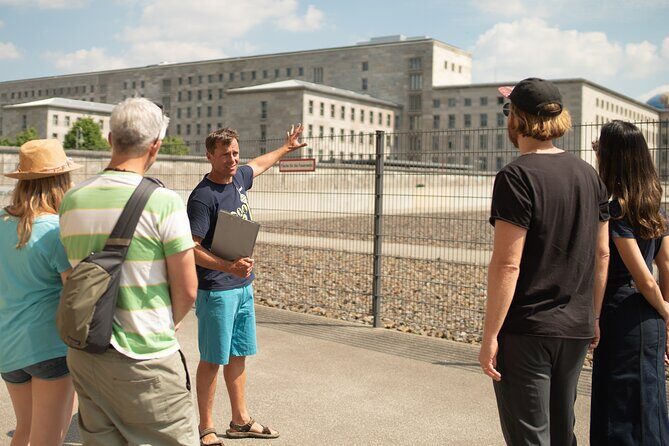
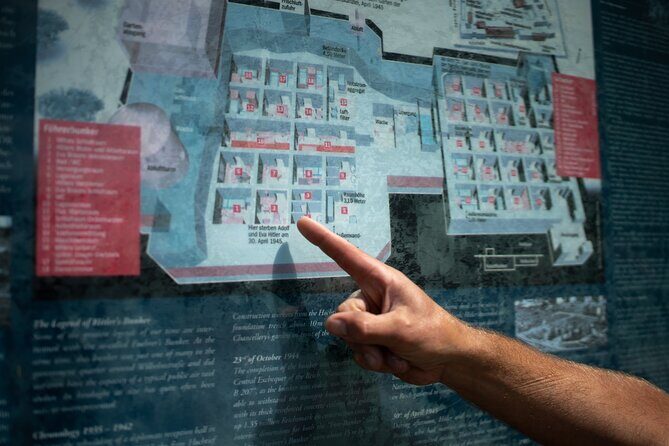
The tour includes a viewpoint over the location of Hitler’s bunker, where he spent his last days of World War II. You’re essentially standing at the hinge point of April 1945—where the Third Reich’s collapse became personal and final.
Guides in the feedback often highlight how they reveal details at the right moment, which helps the bunker stop land harder. One example mentioned a guide choosing to tell the bunker story only after reaching the bunker site sign, making the experience more impactful.
If you’re sensitive to the topic, this can be the toughest stop. I’d treat it like a pause in the story, not a sprint for photos.
Wilhelmstrasse’s Ministries, Goebbels, and Göring’s Air Ministry
Back in the Wilhelmstrasse orbit, the tour slows down the focus toward government functions. You’ll learn how Joseph Goebbels was tied to the Nazi propaganda apparatus, and you’ll hear about what that meant in practice for speech, messaging, and political control.
The tour also addresses Hermann Göring’s power through the former Air Ministry, the Reichsluftfahrtministerium. As you pass the area tied to that ministry, the tour explains how it represented Göring’s role as head of the Luftwaffe and Hitler’s second-in-command, and how military and air operations were administered from these offices.
This part is valuable for anyone who thinks of WWII as just battles on maps. The real story includes decisions made in rooms, policies written into regulations, and persecution carried out through institutions.
Topography of Terror: SS and Gestapo Headquarters Made Visible
You finish at Topography of Terror on Niederkirchnerstraße. This site is built on the former SS and Gestapo headquarters, and it focuses on state-sponsored repression—showing how these organizations enforced Nazi terror and helped drive the Holocaust.
It’s the place where the story becomes most concrete. Photographs, documents, and accounts are presented so you can see the system, not just the myth. If you want to keep going after the walking portion, this is also a natural place to extend your learning while you’re still mentally in the era.
Ending near Checkpoint Charlie is convenient too. When you’re done, you’re not stranded far from the rest of Berlin’s transit and sightseeing.
Who This Tour Fits Best (and Who Might Skip It)
This is a strong choice if you’re a history fan who wants your Berlin tour to have a backbone. It’s also great for parents traveling with teens who can handle serious topics; several guide notes mentioned teens staying engaged.
It may not be ideal if you want a lighter, more scenic walk. This route spends time on genocide and state terror, and the memorial moments are meant to be felt.
It’s also worth noting: even with clear explanations and a guided pace, you should expect a brisk walking rhythm for several kilometers. If walking in cold weather is hard for you, consider doing another Berlin tour that’s more spread out with fewer outdoor memorial stops.
Practical Value: Price, Time, and What You Actually Get
At $24.07 per person for roughly 3 hours, the value is high because the tour strings together many of the most significant WWII and Third Reich-related sites in one guided route. You’re paying for interpretation as much as transportation—how the guide links propaganda, policy, battle outcomes, and memorial locations into one usable storyline.
Because it’s a small-group format and the guide is included, you’re also not stuck translating alone. That matters in Berlin, where layers of history sit right next to modern streets.
One more practical point: the tour includes a mobile ticket, and it avoids hotel pickup, so you’re meeting near the Reichstag area and walking from there. If you already plan to spend time around central Berlin, that keeps things simple.
Should You Book This Third Reich Berlin: Hitler and WWII Walking Tour?
Book it if you want a guided Berlin route that connects major WWII sites with the decisions behind them. It’s especially worth it if you care about getting context fast, staying oriented, and learning how resistance, propaganda, and political power turned into mass violence.
Skip it if you need a lighter pace or you’re not up for heavy memorial visits. You should also dress for real weather and wear comfy shoes, because you’ll be outside for a full 3-hour block.
If you like, you can also use the guide names from the positive feedback as a hint when choosing departures that list a specific guide. Maria, RU, Tom, Ben, Eran, Canadian Chris, Jamie G, Pete F, Carlos, and Paul all received standout mentions for making the story clear and for handling questions well.
FAQ
How long is the Third Reich Berlin walking tour?
It runs for about 3 hours.
What does the tour cost?
The price listed is $24.07 per person.
Where does the tour start and where does it end?
It starts at Reichstagufer 17, 10117 Berlin and ends at Topography of Terror, Niederkirchnerstraße 8, 10963 Berlin, very close to Checkpoint Charlie.
What language is the tour offered in?
The tour is offered in English.
Is there a guide included?
Yes. The included part is a local expert guide and a 3-hour walking tour.
Are any entrance tickets included?
Admission is not included for the Reichstag building stop. Other stops listed in the tour description show free admission.
What should I do about my schedule on the day of the tour?
Arrive about 15 minutes before the start time to meet the guide.
How big are the groups?
The tour has a maximum of 25 travelers.
Is the tour only for people who already know history?
No. Most travelers can participate, and the tour is designed to explain the story through the sites on the route.
Is free cancellation available?
Yes, free cancellation is offered if you cancel up to 24 hours in advance for a full refund.