REVIEW · BERLIN
Private 3-Hour Walking Tour of Berlin
Book on Viator →Operated by A Friend in Berlin UG · Bookable on Viator
Berlin teaches fast on foot. This private 3-hour walk strings together Berlin’s most important sights with a local guide who explains the how and why behind the places. I like that it’s customizable, so you can steer questions toward what you actually care about, not just what’s on a fixed script.
The biggest practical win for me is the ease: hotel or private residence pickup means you don’t waste your first hour of the day figuring out transit. One catch: it’s a walking tour, runs in all weather, and food and drinks aren’t included, so plan water and a snack strategy before you start.
You’ll also like the feel of the guide team. Names like Sven, Thomas, and Tomas show up in past experiences, and the common thread is clear, prepared storytelling with a careful touch when the topics get heavy.
In This Review
- Key points to know before you go
- Private walking tour in Berlin: what the format means for you
- Reichstag Building: the parliament building that survived being ignored
- Brandenburg Gate and Unter den Linden: Berlin’s grand boulevard and moral geography
- Potsdamer Platz: modern design meeting the Wall’s physical reminders
- Topography of Terror: where ruins become documentation
- Checkpoint Charlie: the easiest shortcut to understanding Cold War crossings
- Gendarmenmarkt and Berlin Dome: architectural symmetry with a royal past
- Museum Island: UNESCO status and an easy add-on for your afternoon
- Price and value: is $432.55 per group a smart deal?
- What to wear, what to bring, and how to get the most out of it
- Should you book this Berlin walking tour?
- FAQ
- FAQ
- How long is the private walking tour?
- What size is the group?
- Do you pick me up from my hotel?
- Is the tour offered in English?
- Are there admission tickets involved?
- Does the tour run in bad weather?
- Is food or drinks included?
- What is the cancellation window for a full refund?
Key points to know before you go
- Private, small group attention so you can ask questions without waiting your turn
- Hotel pickup in Berlin cuts the friction and helps you start on time
- Free entry is listed for the stops, so you can keep ticket budgeting simple
- A guided route through Cold War and reunification landmarks with context, not just photos
- Potsdamer Platz + Wall remains + landmark squares in one compact 3-hour loop
- All-weather operation, so your clothes matter more than you might expect
Private walking tour in Berlin: what the format means for you
A private 3-hour walking tour is a smart way to get oriented in Berlin. You cover major sites, but you’re not trapped in a big-group shuffle. Instead, you move at a pace where your guide can slow down for explanations or speed up if you’re itching to see one more view.
This one also gives you levers. The route can be adjusted to your interests, and because it’s private, you’re not stuck with random detours that don’t match your vibe. That matters most on a city like Berlin, where the difference between a great walk and a forgettable one is usually context.
The group stays small (private group up to 8 people), which helps with both comfort and questions. And since it includes mobile tickets and is offered in English, you’re set up to focus on the sights instead of logistics.
You can also read our reviews of more walking tours in Berlin



Reichstag Building: the parliament building that survived being ignored
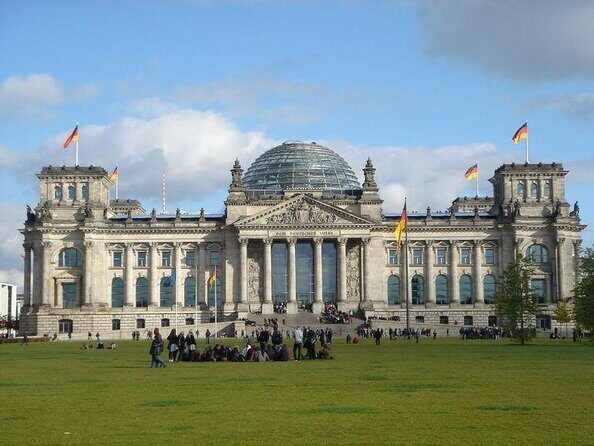
You start at the Reichstag Building, which has a long, political afterlife. Built in 1894 for the German parliament, it later became the home of the Weimar Republic’s parliament. Then came the 1933 fire, shortly after Hitler rose to power, which left the inside damaged and the building closed.
Here’s the key idea your guide will likely stress: the Reichstag story isn’t just about architecture. It’s about how power can render institutions irrelevant—and how buildings sometimes get repaired only after the politics change.
The stop is listed with free admission ticket access for this tour, so you can focus on the narrative without worrying about adding another ticket line item. Even if you’re not a politics person, it’s a strong starting point because it sets the tone for everything you’ll walk into next.
Brandenburg Gate and Unter den Linden: Berlin’s grand boulevard and moral geography
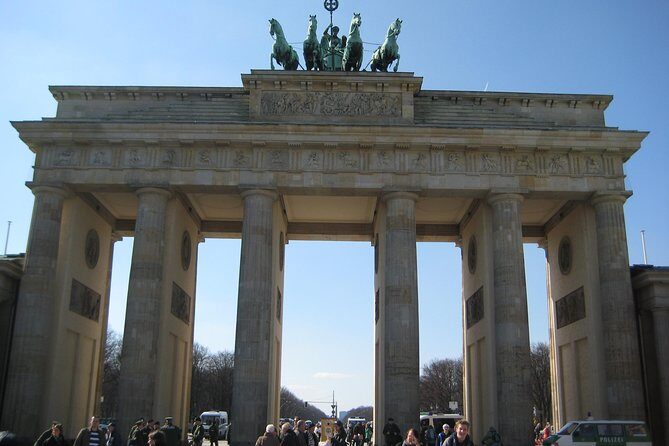
Next up is the Brandenburg Gate, the city’s most famous landmark. It’s the kind of place where your photos will look good even if you’re not sure what you’re looking at. Your guide’s job is to make sure you understand why it became a symbol—and why Berlin keeps revisiting its own meaning.
Then the walk shifts along Unter den Linden, a historic boulevard that begins near the Hohenzollern Palace area and runs toward the Brandenburg Gate. This stretch holds some of Berlin’s older landmarks, including the Opera and the Kronprinzenpalais. It’s the sort of street where the details help you read the city like a timeline.
What I like about including this segment is that it slows the pace just enough to connect the dots between eras. You’re seeing places that were built for power, culture, and prestige, and then learning how Berlin reworked those spaces after major political turns.
Potsdamer Platz: modern design meeting the Wall’s physical reminders
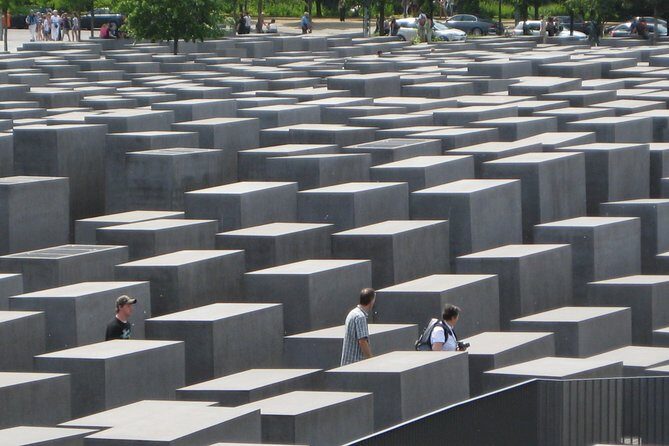
Potsdamer Platz is where Berlin shows its ability to rebuild. You’ll see the Sony Center with its striking architecture, and you’ll also hear about Germany’s oldest traffic light—one of those small details that makes a big place feel human.
This stop also brings back the Wall into the conversation. You’ll spot remains of the Berlin Wall and also see architecture connected to major designers such as Renzo Piano, Hans Kollhoff, and Helmut Jahn. That mix—avant-garde design beside reminders of division—sums up why this city is so compelling to walk with a guide.
One practical note: Potsdamer Platz can be busy, and your guide can help you pick viewpoints and crossing timing so you’re not spending your tour energy dodging crowds. You’re here for history and scale, not for frustration.
Topography of Terror: where ruins become documentation
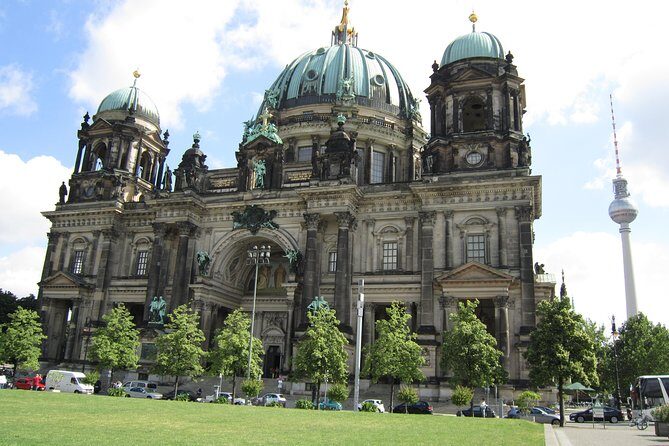
From the polished edges of Potsdamer Platz, you head to Topography of Terror. This area sits on the site of the former SS and Gestapo headquarters. Instead of hiding what happened, the site keeps it visible through excavated foundations and a Documentation Center.
This is the kind of stop where your guide’s approach matters. Past guides are praised for handling Berlin’s unforgiving history with intelligence and sensitivity. That’s important here because you’re not just sightseeing—this is about state terror and how systems operate, not only about tragedy as a story.
The tour also notes remains of the Berlin Wall in this area. So even while the main focus is the SS and Gestapo sites, you get the larger Cold War context layered underneath.
Time at this stop is listed at about 15 minutes. That’s enough for the big picture and to choose what you want to read more about on your own afterward. If you’re the type who wants more time inside documentation spaces, you may want to schedule a follow-up visit the same day or another day, because 15 minutes can only scratch the surface of such an intense topic.
You can also read our reviews of more private tours in Berlin



Checkpoint Charlie: the easiest shortcut to understanding Cold War crossings
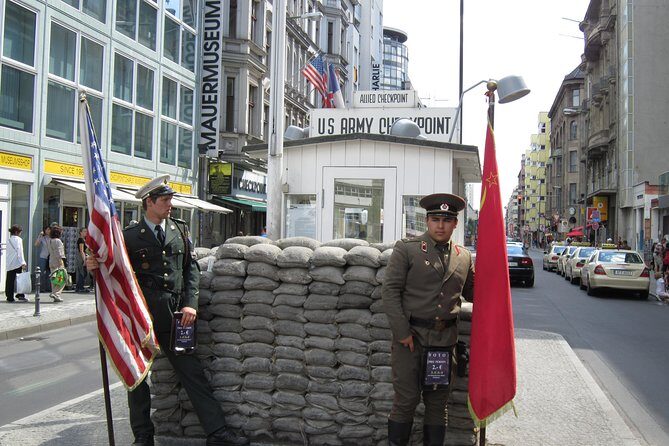
Checkpoint Charlie is arguably the most famous checkpoint of the Berlin Wall era. This specific checkpoint was reserved for military personnel and foreign visitors—many of them American—who wanted to enter the eastern part of the city.
The value here is learning how controlled movement worked, and how borders became lived experiences. You’re likely to walk away understanding that a checkpoint wasn’t just a location. It was a gatekeeping mechanism, with rules that shaped daily life and personal risk.
It’s listed as a short stop (about 10 minutes), but it plays well as a mid-tour anchor. By the time you reach it, you’ve already seen the Wall’s remnants, the political symbolism, and the city’s political infrastructure. Checkpoint Charlie ties those ideas together into a clear Cold War snapshot.
Gendarmenmarkt and Berlin Dome: architectural symmetry with a royal past
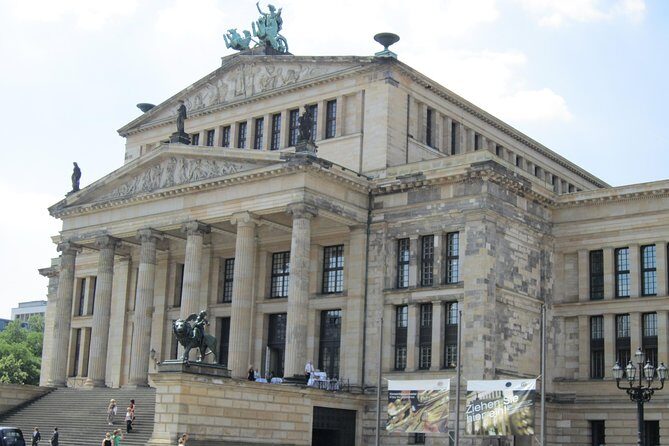
Then you move into Gendarmenmarkt, described as Berlin’s most beautiful square, flanked by the German Dome and the French Dome. In the center is Schinkel’s Konzerthaus, adding another layer of cultural weight to the scene.
If you like architecture, this is a satisfying contrast to the heavier stops. Squares like this are where Berlin shows its planning and its taste for grandeur. It’s also a relief break for your brain before the tour ends with the museum zone.
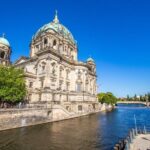
You’ll also learn about the Berlin Dome nearby. It’s Germany’s largest Protestant church, modeled after St. Peter’s in Rome. And it ties the Hohenzollerns directly into the story: the Hohenzollerns used to worship there, and many family members, including King Friedrich Wilhelm I and his wife, are buried here.
Even if you don’t go into the church, the significance is worth absorbing. You’re seeing how religion, power, and national identity all share the same skyline.
Museum Island: UNESCO status and an easy add-on for your afternoon
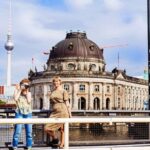
Finally, you reach Museum Island, where you’ll get a taste of Berlin’s museum crown. The five museums there have UNESCO World Heritage recognition, and it’s a logical place to end a walking tour because you can continue at your own pace.
The tour gives you a suggestion that’s practical: if you have the time, consider visiting the Pergamon Museum and/or the Neues Museum after your guided portion. Both are famous, and Museum Island is set up for exactly this kind of follow-on wandering—one of the best ways to turn a short tour into a full day.
If you’re the kind of visitor who likes to learn first and look closer later, ending here works perfectly. Your guide gives you the framework, then you choose which museum stories you want to pursue without time pressure.
Price and value: is $432.55 per group a smart deal?
The price is listed at $432.55 per group (up to 6) for about 3 hours. That sounds like a lot until you translate it into what you get: private guiding, hotel pickup, and a route that covers multiple major landmarks that otherwise take planning time.
What makes the value feel real is the combination:
- You’re not just seeing sites. You’re getting the narrative glue that connects them. That’s where a private guide justifies the cost.
- Stop admissions are marked free for this tour, which helps you avoid surprise ticket expenses while still covering top-tier destinations.
- Hotel pickup means you’re paying for convenience, not only interpretation.
How to decide? If you’re traveling as a small group (family, couple, or 3–4 friends), this can compare favorably to buying multiple separate tickets plus the mental cost of navigating alone. If you’re solo, it can still be a great choice if your priority is a tailored explanation and you don’t want to spend your day herding yourself across Berlin.
Tip: if you care about a particular theme—Berlin Wall history, political symbolism, or how design and architecture changed after reunification—tell your guide early. Customization is one of the standout features, and you’ll get more out of the money when you drive the focus.
What to wear, what to bring, and how to get the most out of it
Because the tour operates in all weather conditions, dress like Berlin is going to do what it wants. Comfortable walking shoes matter more than your favorite outfit. Bring a light rain layer if forecasts look uncertain, and if it’s warm, consider a small bottle of water since food isn’t included.
Also, bring a charged phone for the mobile ticket. You’ll be hopping between landmark zones, so having your confirmation details ready saves time. If you use a service animal, the tour notes that service animals are allowed.
This is near public transportation, so you can also recover quickly if you need to adjust your day plan. That flexibility helps if you’re combining this walk with museum time or other stops.
Should you book this Berlin walking tour?
I’d book it if you want a tight, meaningful loop through Berlin’s defining landmarks in just a few hours. It’s especially worth it when you care about context: how places changed hands, what symbols meant, and how the city rebuilt after division.
Skip it (or at least rethink it) if you’re hoping for long, sit-down museum time during the guided portion. This is a walking overview with short stops—great for orientation and understanding, not a substitute for deep museum afternoons.
If your goal is to get your bearings fast and leave with a clear mental timeline of Berlin, this private format is a strong match. And if you’re traveling with others who want to ask questions—without waiting—you’ll likely love the attention the guide can give your group.
FAQ
FAQ
How long is the private walking tour?
It runs for about 3 hours.
What size is the group?
It’s a private tour with a small group size, listed as up to 8 people per booking.
Do you pick me up from my hotel?
Yes. Pickup is offered from your hotel or private residence in Berlin.
Is the tour offered in English?
Yes, it’s offered in English.
Are there admission tickets involved?
The tour description lists the stops as admission ticket free, which helps keep costs predictable.
Does the tour run in bad weather?
Yes. It operates in all weather conditions, so you should dress appropriately.
Is food or drinks included?
No. Food and drinks are not included.
What is the cancellation window for a full refund?
You can cancel up to 24 hours in advance of the experience start time for a full refund.