REVIEW · BERLIN
Berlin’s Best: 2 Hour Walking Tour Third Reich and the Cold War
Book on Viator →Operated by Insider Tour Berlin · Bookable on Viator
Berlin can feel like a history book you can walk through. This tour connects Third Reich power to the Cold War face of the city, all on foot. In just two hours, you hit the landmarks that shaped modern Berlin—then your guide ties them to what life feels like here today.
Two things I really liked: you get a tight route that hits major sites (from Brandenburg Gate to Checkpoint Charlie) without rushing, and the guiding style tends to be both clear and thoughtful. I also appreciate that guides often answer questions directly, keeping tough material handled with care; I’ve seen that approach with guides like Glen, Mikhail, and Mikey.
One drawback to plan for: it’s a walking tour through outdoor spaces, so weather matters. If it’s cold or wet (and reviews mention winter), wear proper shoes and bring layers.
In This Review
- Key Highlights You’ll Feel Fast
- A 2-Hour Route That Gives You Bearings
- Brandenburg Gate to Reichstag: Berlin’s History in Two Blocks
- Tiergarten Tanks and the Soviet Shadow: WW2 Aftershocks in the Park
- Victory Column and Speer’s Germania Dream: The Capital That Never Happened
- Holocaust Memorial and Führerbunker: When the Story Changes Gear
- Air Ministry to Topography of Terror: How Systems Worked
- The Berlin Wall at Niederkirchnerstraße and the End at Checkpoint Charlie
- Who This Tour Fits Best
- Should You Book This Walk?
- FAQ
- How long is the Berlin Third Reich and Cold War walking tour?
- What language is the tour offered in?
- Where do I meet, and where does the tour end?
- Do I need to pay admission fees for the stops?
- Is there a mobile ticket?
- How many people are in a group?
- What should I do if I’m late for the start?
- Is it okay for most travelers to participate?
- Can I bring a service animal?
- Is cancellation free?
Key Highlights You’ll Feel Fast
- A two-hour walk that covers Berlin’s most important “why” sites
- Brandenburg Gate to Checkpoint Charlie, in a logical historical arc
- Free entry at every listed stop, so you can focus on the story
- Guides who explain hard topics with respect and good pacing
- Photo-based context at stops for clearer mental images (Mikhail, Glen)
- Small groups (up to 30) that make questions easier
A 2-Hour Route That Gives You Bearings
This is the kind of tour that helps you understand Berlin quickly—without turning it into a checklist. You’re not just seeing famous buildings and memorials. You’re getting a guided timeline of how power worked here in the 1930s and 40s, then how the city was split, policed, and finally reunited.
The route also makes practical sense. You start at the Brandenburg Gate area and end at Checkpoint Charlie. That matters because Berlin’s key sites are spread out, and the walk keeps you oriented in the central city while your guide narrates the big shifts. For $24.07, the value is strong because the tour includes entry being free at every stop listed—so you’re paying mainly for the guide and the walking route, not for site tickets.
The emotional center of the tour is real. You’ll stand at locations tied to mass murder, dictatorship, and the machinery of terror. I found that the best parts are when your guide slows down just enough for you to process what you’re looking at—without pretending it’s easy.
You can also read our reviews of more walking tours in Berlin



Brandenburg Gate to Reichstag: Berlin’s History in Two Blocks
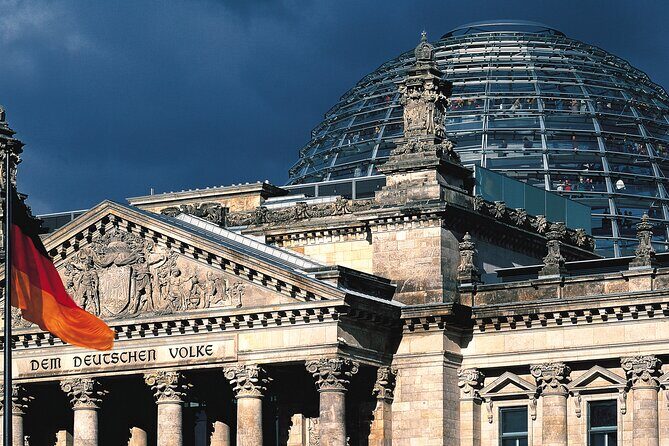
Your first stop is the Brandenburg Gate, one of those places that feels instantly symbolic. Your guide explains why it became the “face” of a reunified Germany—and why that symbol didn’t appear out of thin air. Even if you’ve seen photos, standing there helps you grasp how a single monument can carry different political meanings in different eras.
From there, you move to the Reichstag building—the German parliament. This is where the story gets specific. You’ll hear about the Reichstag fire in 1933 and how Hitler used the building and the moment to strengthen dictatorship. The value here is in the cause-and-effect: your guide doesn’t treat history like separate chapters. You connect the political move, the propaganda logic, and the way institutions get repurposed.
Practical note: these early stops set your tone. If you’re the type who gets overwhelmed, tell your guide you want a steady pace. Several guides on this kind of tour are known for balancing seriousness with a human delivery, and that first stretch often determines how smoothly the rest of the walk lands.
Tiergarten Tanks and the Soviet Shadow: WW2 Aftershocks in the Park
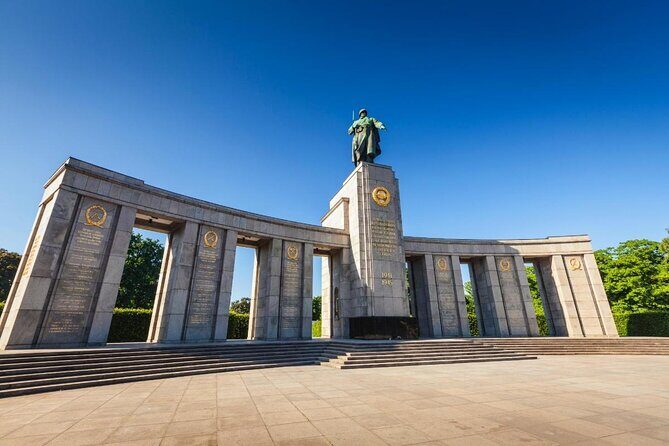
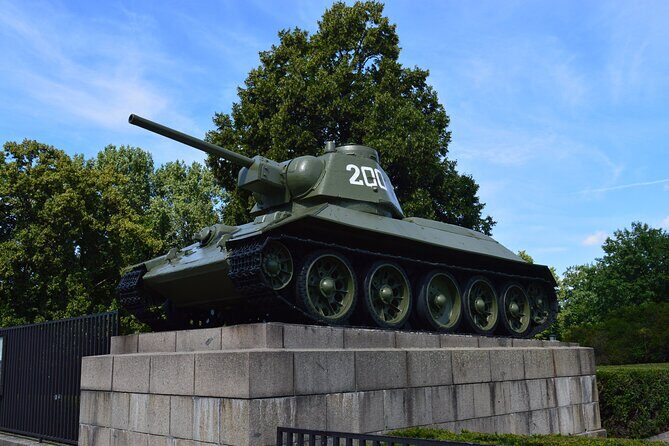
Next comes the Soviet Memorial in the Tiergarten. This stop is visually memorable because it includes wartime hardware: Soviet T34/76 tanks and field artillery displayed as part of the memorial setting. Your guide explains why it’s there and what it represents in the landscape of postwar Berlin.
What I like about this segment is that it expands the story beyond Nazi Germany. Berlin didn’t only experience one occupying force or one ideology. The city became a stage for rival systems, and that competition shaped daily life after 1945.
This part also tends to be a nice breather in the route. You’re still in the “heavy” zone, but the setting helps. A park environment can make history feel more physical and less abstract, especially when you’re looking at real equipment tied to the war.
Victory Column and Speer’s Germania Dream: The Capital That Never Happened
You then see the Victory Column and hear a fascinating piece of planning history: Albert Speer moved it from its original location to the new site. Your guide also explains Speer’s vision for a transformed capital city—Germania—and how Berlin might have been renamed and reshaped if the Nazi regime had won the war.
This stop is worth your attention because it’s about ambition. It shows how totalitarian planning aimed at reshaping not just politics, but space, monuments, and identity. The point isn’t to get lost in architectural trivia. It’s to understand how ideology tries to engineer the future by controlling what people see and remember.
If you like “what if” stories with real-world implications, this is one of your best moments on the walk. You’ll leave with a clearer sense of how power tries to build permanence—even when it’s already doomed.
Holocaust Memorial and Führerbunker: When the Story Changes Gear
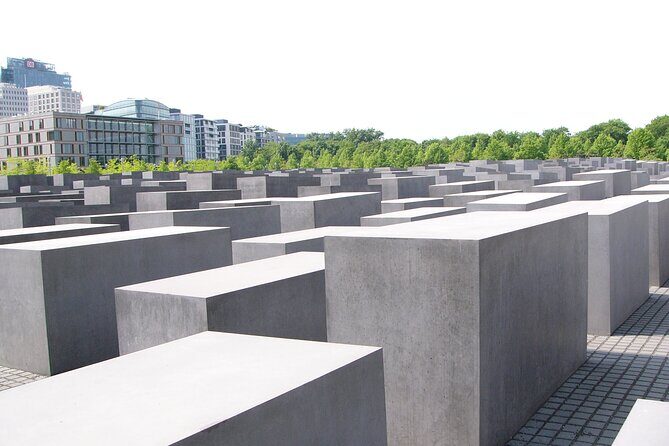
At the Holocaust Memorial—Memorial to the Murdered Jews of Europe—you walk through an immense field of structures. This is not a place where the guide can explain your way out of emotion. Instead, your guide frames what you’re seeing and what it represents, so you understand the purpose of the memorial and why it needs to feel overwhelming.
I appreciate that this stop is handled as a pause point in the tour rhythm. Your body keeps moving, but your mind slows down. It’s one of the places where the tour’s respect shows. If your group is chatty, your guide typically keeps the tone steady.
Then you move to the Führerbunker. You stand above Hitler’s bunker and listen to the late-war story: the final days of World War II and Hitler’s suicide in the bunker on April 30th, 1945. Your guide also explains how Germans deal with this destructive past today.
This segment can be intense, and it’s also where good guiding matters most. In the reviews for this kind of tour, the strongest praise often points to guides who treat grim topics seriously while still communicating clearly. That’s exactly what you want here—so you don’t get shock without context, or context without respect.
A few more Berlin tours and experiences worth a look

Air Ministry to Topography of Terror: How Systems Worked
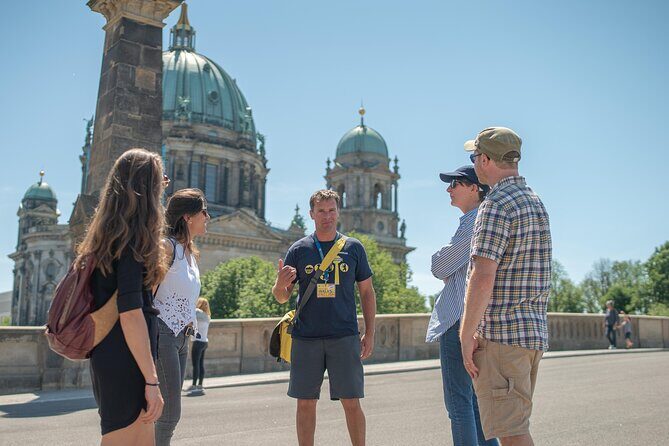
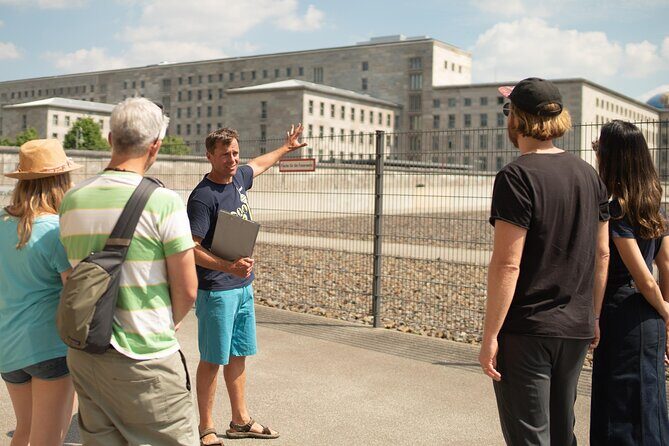
One of the more interesting transitions comes at the Aviation Ministry of Berlin—linked to Hermann Göring’s air force ministry. Your guide points out that this was also the location where East Germany (GDR) was proclaimed in 1949. That’s a powerful reminder: buildings can outlive regimes, then get reused by totally different states.
From there, you go to Topography of Terror, the site connected to the Nazi institutions—SS, Gestapo, and SD—where their headquarters operated. Today, the Topography of Terror exhibition documents the crimes and shows how these organizations functioned.
What makes this stop valuable is the shift from “big leaders” to “systems.” You’re meant to understand how terror wasn’t just a set of evil intentions—it was administration, bureaucracy, and enforcement. Even if you know the headline facts already, standing on the site helps your brain connect history to mechanism.
If you respond well to visuals, you might be in luck. Some guides on this tour style use historical images at certain stops, which can make the changes in the area easier to picture.
The Berlin Wall at Niederkirchnerstraße and the End at Checkpoint Charlie
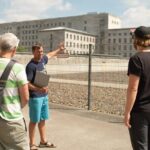
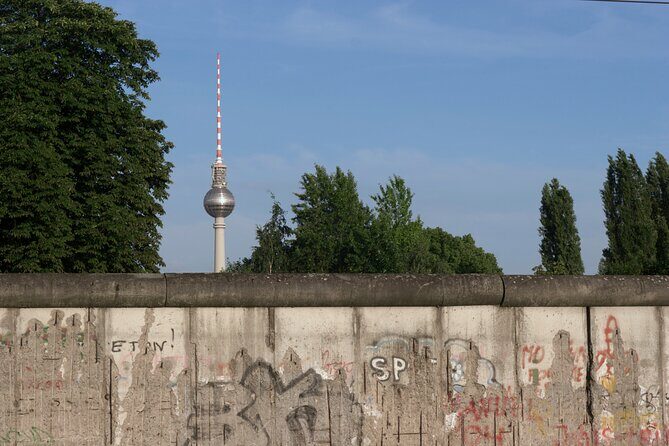
You then see a large piece of the Berlin Wall at Niederkirchnerstraße. Here the story becomes personal: your guide shares escape attempts—stories of people trying to cross and what happened to those who didn’t make it. Your guide also explains life on both sides: East Berlin and West Berlin.
This is one of the most “you are here” stops in the walk. The Wall is physical proof that politics can be enforced in stone, and in the everyday lives it controls. If you’re the kind of visitor who wants to understand how ordinary people experienced history, this is where you’ll feel it most.
Finally, you end at Checkpoint Charlie. It’s the most famous checkpoint through the Wall, and your guide adds two key pieces:
- the Soviet vs USA tank standoff on this street in 1961
- how the Berlin Wall came down on the night of November 9th, 1989
Then your tour closes with what reunification has meant over the last 30+ years. That last bit matters. It keeps the walk from ending in despair and gives you a sense of where Berlin went after the split.
If you’re wondering how to make sense of Berlin’s contradictions—monuments for conflict and reminders for survival—ending here is smart.
Who This Tour Fits Best
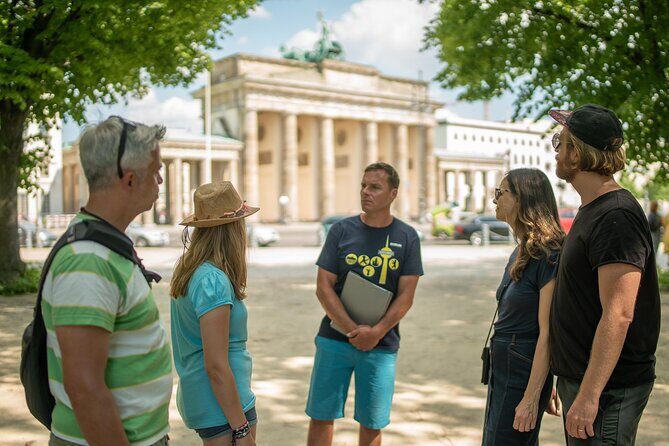
This tour is ideal if you want a fast, guided orientation to Berlin’s most central historical chapters. It suits you if:
- you’re short on time but want more than a casual highlights tour
- you want context that explains how events connect (not just dates)
- you like walking between meaningful sites rather than riding a bus past them
- you care about how Berlin remembers and talks about the past
It’s also a good choice for curious first-timers who feel overwhelmed by museums. You get the big picture on the street, then you can choose what to study deeper afterward.
Should You Book This Walk?
Yes—book it if you want a clear, guided timeline of Berlin’s 20th-century turning points, delivered in English and packed into a manageable two hours. The value is strong at $24.07 because admission is free at every stop listed, and you’re paying for professional interpretation, not entry fees.
Skip it only if you’re looking for a relaxed, scenery-first walk. This route moves through sites tied to dictatorship and genocide. It’s respectful and guided, but the material is serious, and the walk is outdoors.
FAQ
How long is the Berlin Third Reich and Cold War walking tour?
The tour lasts about 2 hours.
What language is the tour offered in?
The tour is offered in English only.
Where do I meet, and where does the tour end?
Meet at the Brandenburg Gate (Pariser Platz side) at the Tourist Information office. The tour ends at Checkpoint Charlie on Friedrichstraße 43-45.
Do I need to pay admission fees for the stops?
According to the tour details, admission tickets for the listed stops are free.
Is there a mobile ticket?
Yes, the tour includes a mobile ticket.
How many people are in a group?
The tour has a maximum of 30 travelers.
What should I do if I’m late for the start?
Meet 15 minutes before the tour begins in front of the Tourist Information office at the Brandenburg Gate side, and look for the guide with the pink umbrella.
Is it okay for most travelers to participate?
Yes. The tour notes that most travelers can participate.
Can I bring a service animal?
Yes, service animals are allowed.
Is cancellation free?
Yes. You can cancel up to 24 hours in advance for a full refund.