REVIEW · BERLIN
Berlin: Third Reich, Hitler, and WWII Walking Tour
Book on GetYourGuide →Operated by Insider Tour Berlin · Bookable on GetYourGuide
Berlin reads different when you walk it. In this 3-hour WWII walk, you’re standing on sites tied to Nazi power and its collapse, from Hitler’s Führer Bunker area to the Topography of Terror exhibit. I love how the route links names like Goebbels and Himmler to places you can actually stand in front of, and I love the sharp contrast of Nazi locations followed by the Soviet War Memorial with T-34 tanks and Red Army howitzers. One consideration: this is not a relaxed, pretty-sightseeing stroll. You’re dealing with heavy history and you’ll be outside rain or shine.
You also get a guide format that many people seem to rate highly for clarity and engagement. In recent groups, guides such as Maggie, Campbell, Hannah, and Jimmy are described as friendly, funny when appropriate, and ready to answer questions without rushing you. With a 4.9 rating from 1,757 reviews, the big value is simple: a short walk that helps you connect the dots without turning into a lecture marathon.
In This Review
- Quick takeaways from this Berlin Third Reich walking tour
- Walking Berlin’s WWII map: Nazi power to Soviet judgment
- Start at Friedrichstraße: easy meeting, clear guide look
- Friedrichstraße and the Reichstag: quick stops that set your mental map
- Tiergarten’s Soviet War Memorial and the Brandenburg Gate contrast
- Holocaust Memorial stop: a serious moment in the middle of the walk
- Hitler’s Bunker: from the Germania plan to the regime’s end
- Detlev-Rohwedder-Haus: where Nazi administration stories start to connect
- Topography of Terror: your short museum stop that locks in context
- 3 hours on your feet: timing that keeps the story readable
- What you get for $19: strong value for a short, high-impact walk
- Who this tour suits best (and who might not love it)
- Should you book this Berlin Third Reich, Hitler, and WWII walking tour?
- FAQ
- How long is the Berlin Third Reich, Hitler, and WWII walking tour?
- How much does the tour cost?
- Where do I meet the tour guide?
- What languages are available?
- Does the tour run in bad weather?
- Is pickup included?
- Where is the tour going at the end?
- What should I bring for the tour?
- Is there a cancellation policy and does reserve-and-pay-later work?
Quick takeaways from this Berlin Third Reich walking tour
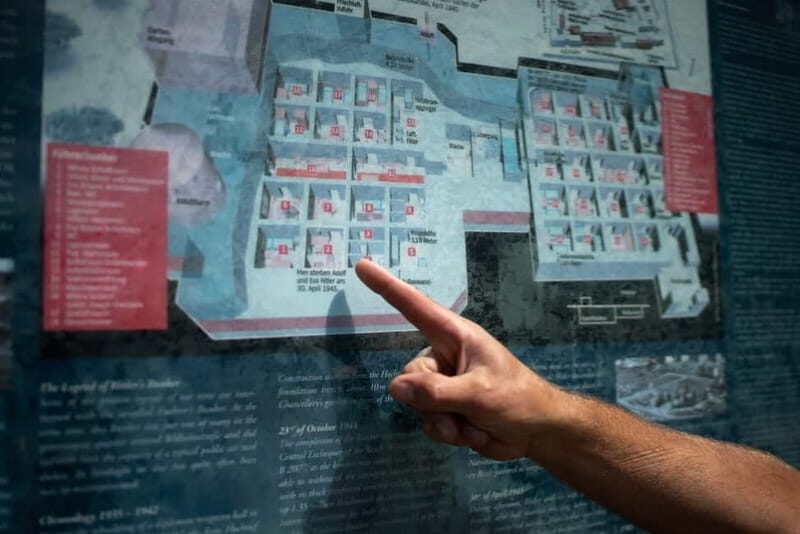
- Führer Bunker stop: you get the location tied to Hitler’s suicide and what happened to his remains.
- Real power sites, not just names: you visit the areas connected to Nazi Europe’s seat of power and key ministries’ functions.
- Topography of Terror: a short museum/exhibit stop that adds clarity to what you just heard outside.
- Soviet War Memorial contrast: you see the memorial area flanked by T-34 tanks and Red Army howitzers.
- Guides that move with the group: many people highlight guides who ask questions and keep even pre-teens engaged.
Walking Berlin’s WWII map: Nazi power to Soviet judgment
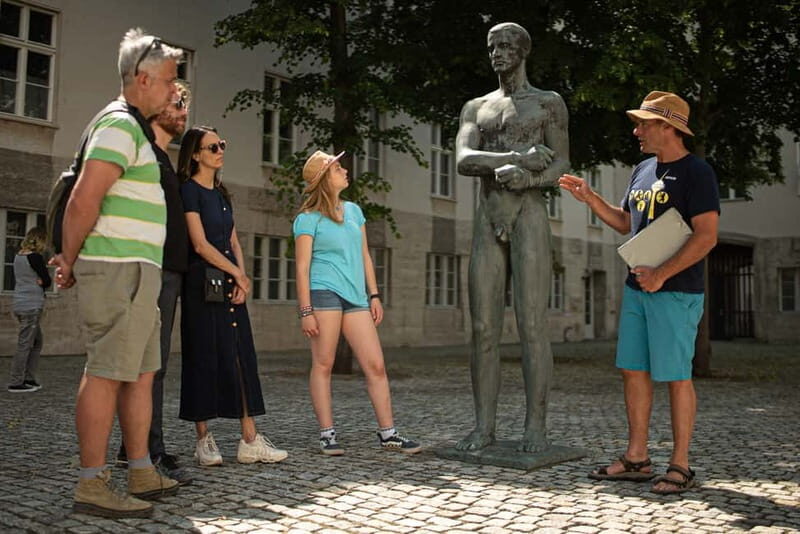
There’s a reason this kind of tour hits harder than a traditional museum visit. Berlin isn’t hiding the evidence. You’re walking through a city where power, propaganda, and terror were planned in real places, and where the aftermath is still visible in monuments and rebuilt spaces.
What I like most is how the tour structure builds context as you go. You start with Nazi Germany’s rise and the machinery of control, then you move toward the collapse: Hitler’s final days and the end of the regime. After that, you pivot to how the Soviet side marks the same timeline with the Soviet assault path and memorials. It’s not random stopping. The stop order helps your brain organize what you’re seeing.
You’ll also notice the guides keep the tone careful. One recurring theme in people’s feedback is a mix of honesty, sensitivity toward victims, and enough humor to keep the group from going numb. That balance matters because the subject is brutal.
You can also read our reviews of more walking tours in Berlin



Start at Friedrichstraße: easy meeting, clear guide look
You’ll meet outside Friedrichstraße train station, on the square between Tränenpalast and the station. Look for guides wearing a blue lanyard and a yellow name tag, often holding yellow umbrellas. As of April 1, 2020, this is the meeting point, and it’s a simple landmark to find.
The tour runs rain or shine, so plan like it’s going to be wet or cold. Comfortable shoes are non-negotiable here. The route is short at 3 hours, but it’s still a lot of standing, walking, and listening.
If you’re doing a private option, pickup is available only for private groups. The guide meets you in the hotel lobby and you’re told to wait about 5 minutes before pickup time, with the same yellow name tag for recognition.
Friedrichstraße and the Reichstag: quick stops that set your mental map
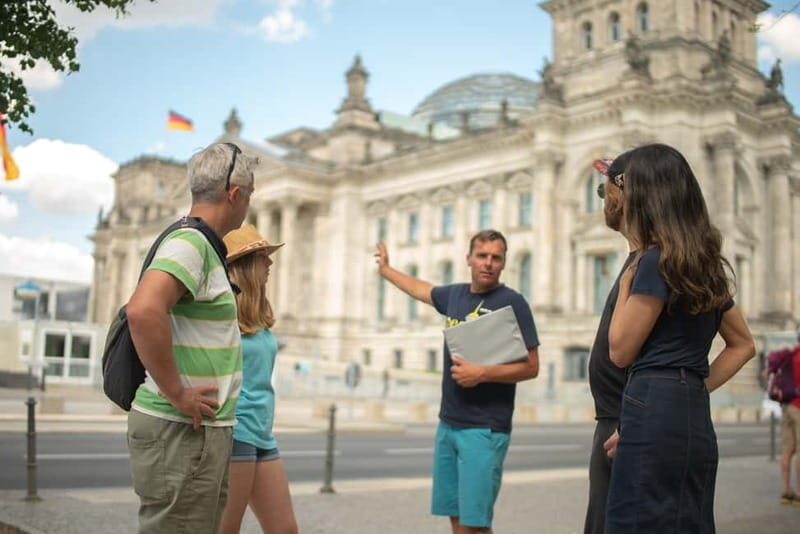
The first real “orientation” moment comes at Friedrichstraße. You get a photo stop and a guided segment (about 15 minutes). This is where you begin placing what you’re about to hear into a Berlin frame. It’s not about taking the perfect picture. It’s about getting your bearings fast so the rest of the walk makes sense.
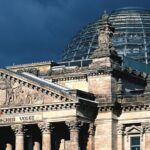
Then you move to the Reichstag for another guided/photo stop (about 15 minutes). The tour links the Reichstag to the final battlefield of Nazi Germany. Even if you’ve read about Berlin’s late-war fighting, standing in the area and hearing the story in sequence helps. It becomes less like trivia and more like cause-and-effect: Nazi power tightening, propaganda escalating, and then the final crunch as the city changes hands.
A practical upside: these early stops are short. You don’t feel dragged into a long history monologue before your legs even warm up.
Tiergarten’s Soviet War Memorial and the Brandenburg Gate contrast
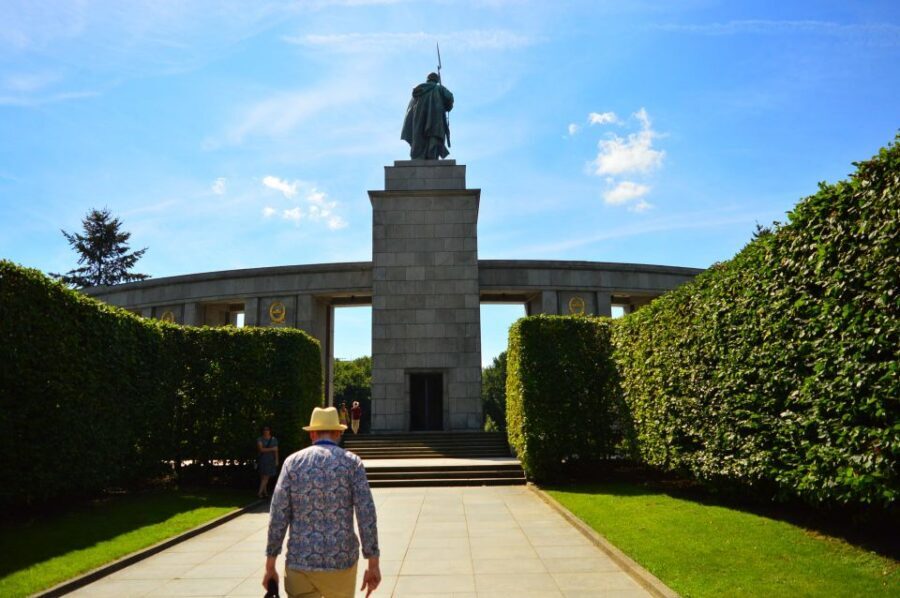
One of the most striking parts of this tour is the contrast shift. You don’t just hear about Nazi Europe. You then follow the path of the Soviet assault as you stand before the Reichstag area and continue toward the Soviet War Memorial in Tiergarten.
The Soviet War Memorial stop is paired with a photo stop and guided time (about 15 minutes). It’s described as being flanked by T-34 tanks and Red Army howitzers. That detail matters because it turns the story from something abstract into something physical. You can look at the memorial and understand what the Soviets wanted to communicate about victory, sacrifice, and the end of the war.
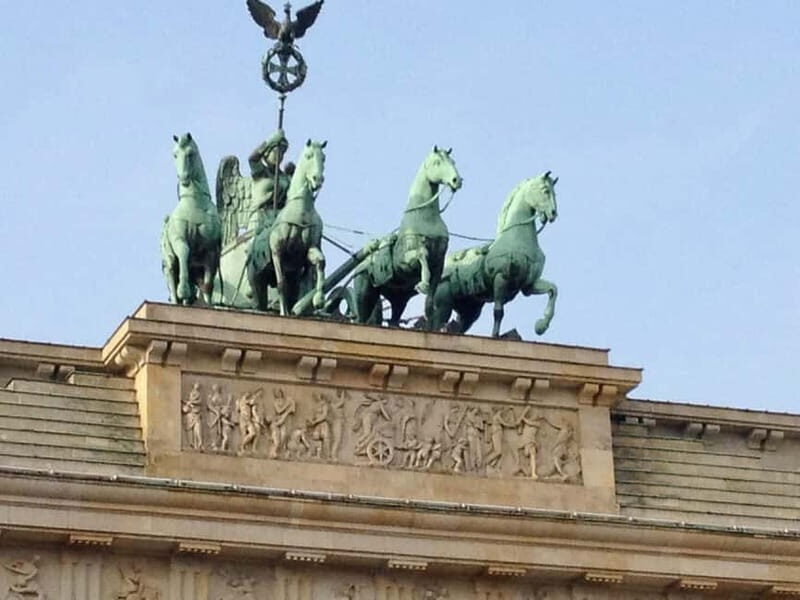
Along the way, you also pass through Brandenburg Gate. The tour frames it as a symbol of Nazi power at one point, then a marker of a Cold War divide later. Again, that’s the theme: the same city spaces, different meanings depending on who’s in control.
If you want an emotional “turn” point on your walking tour, this is one of the best places on the route for it.
Holocaust Memorial stop: a serious moment in the middle of the walk
After Tiergarten, you stop at the Holocaust Memorial. You’ll get a photo stop plus guided time (about 15 minutes).
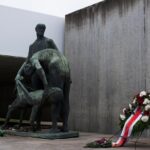
The data doesn’t spell out specific talking points for this stop, but the inclusion itself is a big deal. It prevents the tour from becoming only about leaders, bunkers, and battlefield movement. Nazi rule isn’t only military history. It’s also the systematic destruction of people. A stop like this helps keep the story tied to victims, not just strategies.
This is also where your guide’s delivery style becomes important. Many guides in the tour’s feedback are described as sensitive, respectful, and willing to explain clearly without sensationalizing. If you prefer factual, careful narration, this stop is worth it.



Hitler’s Bunker: from the Germania plan to the regime’s end
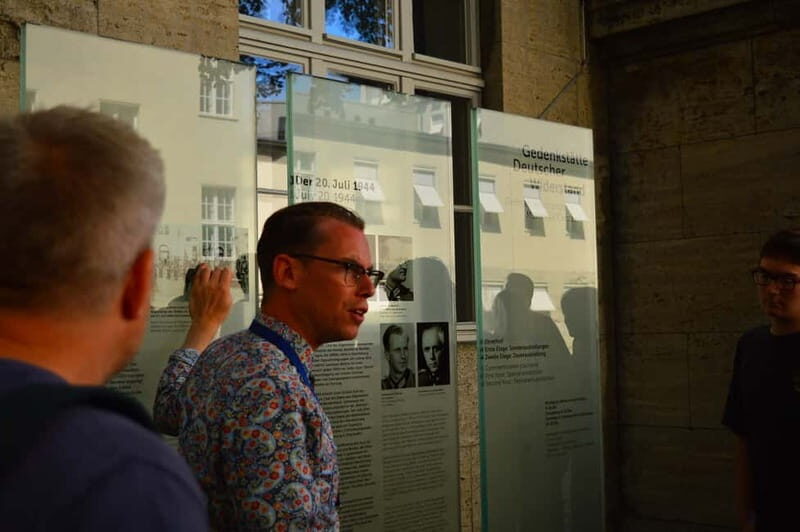
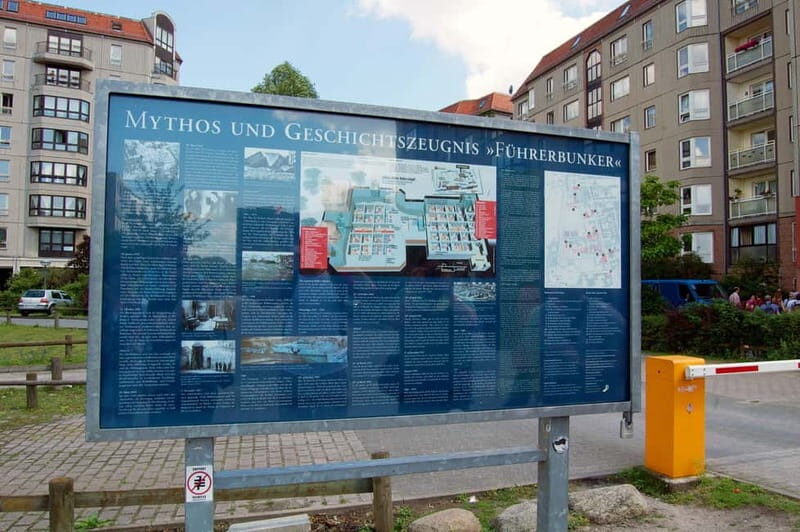
The emotional peak on this walk is the Hitler’s Bunker area stop. You get a photo stop and guided time (about 15 minutes), and the tour specifically focuses on the location tied to Hitler’s suicide in the Führer Bunker.
You’ll also hear the step-by-step account of Hitler’s final days and the fate of his remains. That can sound morbid, but presented in a historical framework it’s a major part of understanding how the Nazi regime collapsed. This is where “Berlin WWII history” turns into “the end of a system.”
The tour also mentions Hitler’s New Reich’s Chancellery, seat of power for Nazi Europe, and the walk along Hitler’s planned Germania axis designed by Albert Speer. For me, that makes the story feel more than episodic. You start seeing how planning, architecture, and propaganda were part of the same machine. It wasn’t just street-level violence. It was top-down control.
One caution before you go: this stop is intense. Dress warmly, take a moment if you need it, and let your guide’s pacing guide you.
Detlev-Rohwedder-Haus: where Nazi administration stories start to connect
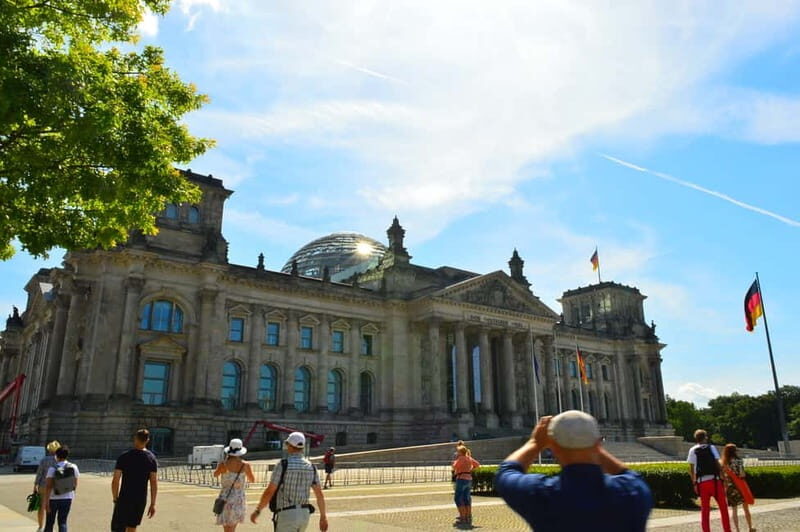
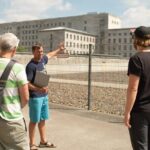
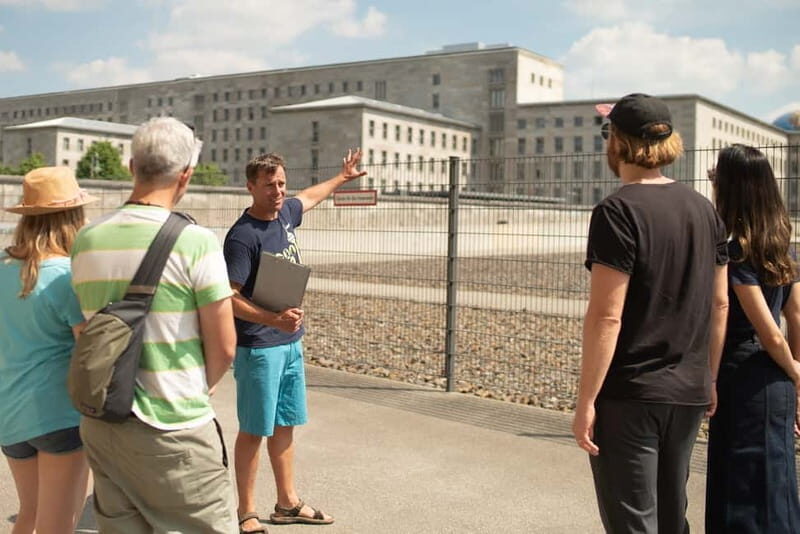
Next comes Detlev-Rohwedder-Haus with a photo stop and guided time of about 15 minutes. This is one of those stops that can feel slightly less dramatic visually than the bunker or the memorials, but it’s useful because it helps connect the dots across multiple parts of the Nazi power structure.
The tour description makes it clear you’re looking at former locations tied to the core Nazi terror and control network. That includes the former Goebbels Propaganda Ministry and the Himmler SS and Gestapo HQs. It also points to Goering’s Air Defence Ministry, where the Luftwaffe planned the Blitz.
Here’s why that’s valuable for you: propaganda, policing, and war planning weren’t separate lanes. They fed each other. A good guide helps you see that the terror apparatus and the war strategy operated in the same system.
If you like your history with clear cause-and-effect links, this is the section that does that job.
Topography of Terror: your short museum stop that locks in context
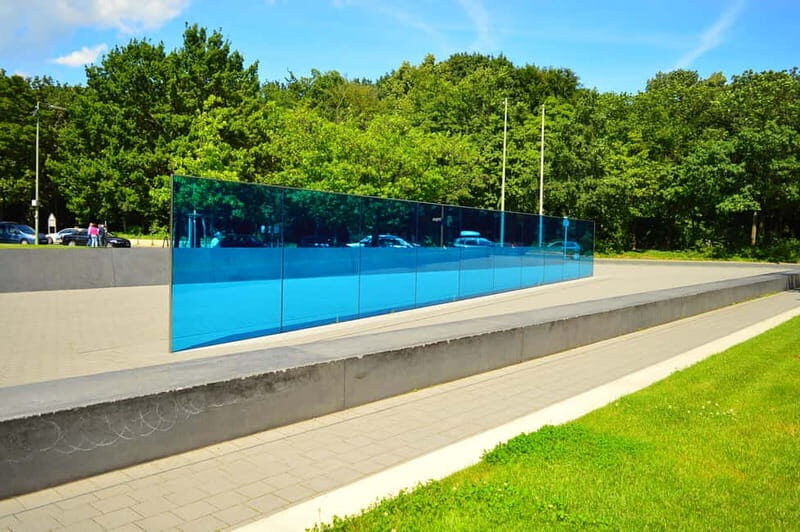
The final named stop is Topography of Terror, with photo stop and guided time of about 16 minutes. This is the place where the tour often becomes easier to remember later, because the exhibit adds layers to what you heard outside.
The route framing is straightforward: outside you get the places and stories tied to Nazi ministries and power centers. Then inside the Topography of Terror exhibit, you get a more focused historical lens. Even with a shorter time window, it helps you connect faces, institutions, and timelines.
Based on guide feedback in recent groups, the best moments here are the “how it connects” explanations. People describe guides as answering questions and keeping information clear, even when topics are intense. That kind of guidance turns a quick stop into a lasting reference point.
3 hours on your feet: timing that keeps the story readable
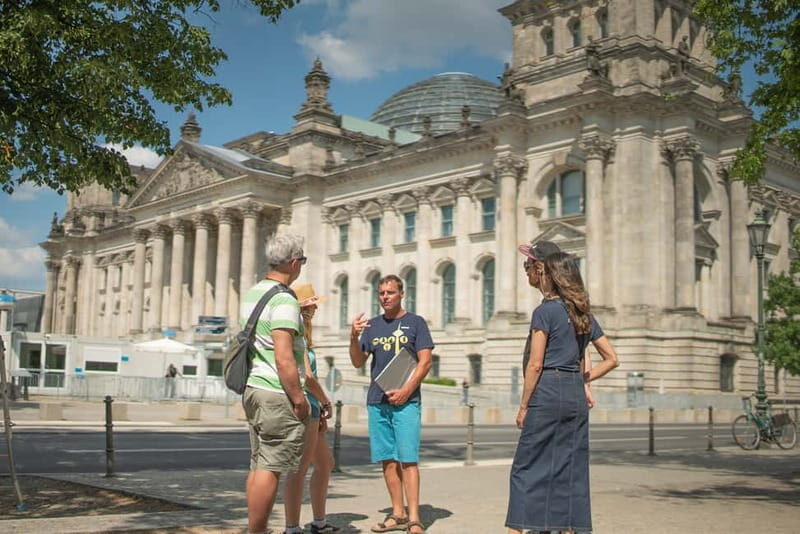
The tour runs for 3 hours. The walking time is broken into guided/photo segments, each typically around 15 minutes, with Topography of Terror at about 16 minutes.
This timing matters. If you’ve ever done a long walking history tour that turns into fatigue and vague recall, you’ll appreciate this pacing. Short segments let you reset your attention. You’re not expected to memorize everything instantly, but you’re given enough structure to keep the thread.
You might also get a break. One review notes a refreshment break after about two hours. That’s not listed as a guaranteed feature in the core details you have, so treat it as a possibility rather than a promise, but it’s a good sign that guides plan for group comfort.
Practical tip: bring water when you can, and wear layers. This isn’t a sprint, but it is a sustained focus session.
What you get for $19: strong value for a short, high-impact walk
At $19 per person for a 3-hour walking tour with a live guide, you’re paying for something simple: an expert route through sites connected to the Third Reich, WWII, and the Soviet aftermath.
The value isn’t only that you visit famous places. It’s that you get interpretation at each stop:
- Hitler’s bunker and the end of the regime
- The Nazi power axis (Germania) described with the Albert Speer connection
- Former ministry/terror headquarters tied to Goering, Goebbels, Himmler, and the SS/Gestapo system
- A Soviet memorial context with T-34 tanks and Red Army howitzers
- Topography of Terror to anchor the story
In other words, you’re buying time savings and context. Without a guide, you might see buildings and monuments and still miss the connective tissue. With a guide, the route becomes a timeline you can actually carry around in your head.
If you like your history grounded in place and you have limited time in Berlin, this is one of the more cost-efficient ways to get there fast.
Who this tour suits best (and who might not love it)
This tour is ideal if you want:
- A structured WWII and Third Reich overview through meaningful Berlin sites
- A guide who keeps the group engaged and answers questions
- A route that includes both Nazi and Soviet perspectives, not only one side
It’s also a good fit for motivated students and history-minded adults. Several reviews mention keeping pre-teens engaged, and guides are described as thoughtful and clear while staying sensitive.
If you’re seeking a lighter, photo-first Berlin day, this probably won’t feel like that. The content is heavy, and you’ll want the mental bandwidth for careful listening. If your travel style prefers comedy walking tours with no dark topics, you might choose a different kind of day.
Should you book this Berlin Third Reich, Hitler, and WWII walking tour?
I’d book it if you want a tight 3-hour format that turns Berlin’s WWII history into a legible route. The standout reasons are the mix of stops: Hitler’s suicide-linked bunker area, the Nazi power planning explained through the Germania axis, the Soviet War Memorial setting, and Topography of Terror as an anchor. Guides in recent groups are repeatedly praised for being friendly, organized, and quick to answer questions while handling the topic with care.
If you’re short on time, this is a strong way to get grounded fast. If you’re emotionally sensitive to dark history, go with calm expectations and dress for the weather. You’ll learn a lot, but you’ll earn it with focus.
If that sounds like your kind of Berlin day, this one is worth reserving.
FAQ
How long is the Berlin Third Reich, Hitler, and WWII walking tour?
It lasts 3 hours.
How much does the tour cost?
The price is listed as $19 per person.
Where do I meet the tour guide?
You’ll find guides outside Friedrichstraße train station, on the square between Tränenpalast and the station. Guides wear a blue lanyard and a yellow name tag holding yellow umbrellas.
What languages are available?
The live tour guide is offered in English, German, and Spanish.
Does the tour run in bad weather?
Yes, it operates rain or shine.
Is pickup included?
Pickup is optional and only available for private options. You wait in the hotel lobby 5 minutes before your scheduled pickup time, and the guide will have a yellow name tag for easy recognition.
Where is the tour going at the end?
It has two drop-off locations, including Dokumentationszentrum Topographie des Terrors, Berlin.
What should I bring for the tour?
Wear comfortable shoes and comfortable clothes, plus weather-appropriate clothing.
Is there a cancellation policy and does reserve-and-pay-later work?
The tour offers free cancellation up to 24 hours in advance for a full refund, and it also offers reserve now & pay later.