REVIEW · BERLIN
Berlin: Muro,Guerra Fría y Museo de la Stasi
Book on GetYourGuide →Operated by cultourberlin by cultour-incoming · Bookable on GetYourGuide
Cold War Berlin hits different. This Spanish 4-hour tour maps the Berlin Wall to the places where the Stasi ran daily life. You’ll see how the city functioned under constant pressure, not just how it looked in photos.
I love the focus on the Berlin Wall and the Death Strip—the tour treats these as real spaces, not vague symbols. I also like that it ends with Stasi Museum entrance, where you learn how the secret police controlled East Berliners through practical methods.
One thing to plan for: the Transport Card AB (one day) is necessary and not included in the price. If you don’t already have one, budget time to buy it before you start.
In This Review
- Key highlights that make this tour worth your time
- Cold War Berlin, laid out for your brain in 4 hours
- Meeting at Alexanderplatz: easy to find, but arrive on time
- Price and value: $41 is a bargain for what you’re actually seeing
- Berlin Wall remains and the Death Strip: where geography did the harm
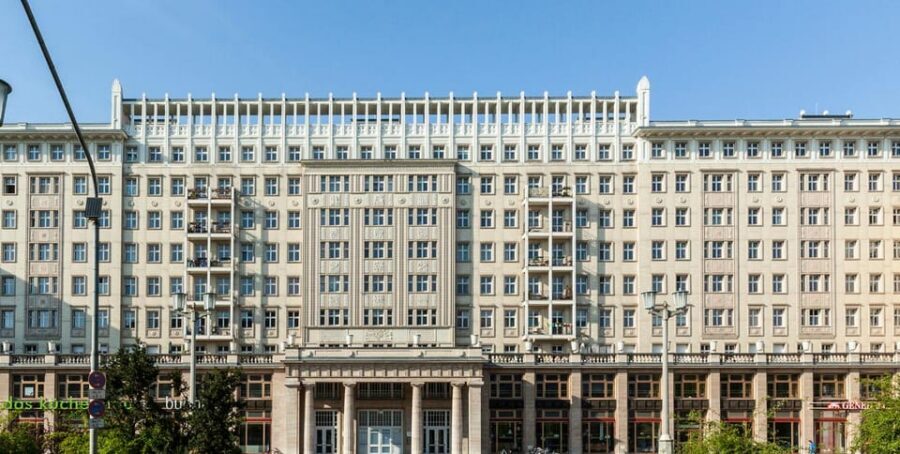
- Frankfurter-Allee Avenue: the Cold War corridor you can still picture
- Bernauer Strasse Wall Memorial: memory with structure
- Ghost underground stations: when public transport became a boundary
- Stasi Museum entrance: how control worked in real life
- How the Wall fell, and what changed after
- Best for whom: history lovers, transit fans, and truth-seekers
- Quick logistics you should plan before you go
- Should you book this Berlin Wall, Cold War, and Stasi tour?
- FAQ
- How long is the tour?
- What language is the tour guide?
- What is the meeting point near Alexanderplatz?
- How much does the tour cost?
- Is a public transport ticket included?
- Does the tour include the Stasi Museum entrance?
- Which major places are part of the experience?
- Is the tour wheelchair accessible?
- What’s the cancellation policy?
- Can I reserve without paying right away?
Key highlights that make this tour worth your time
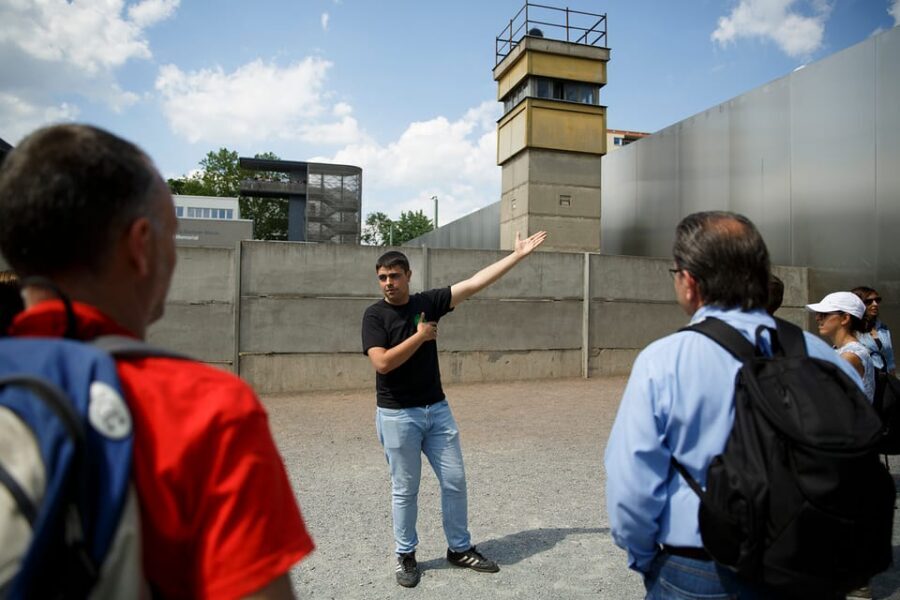
- Berlin Wall remains and the Death Strip explained in context, with clear on-the-ground visuals
- Bernauer Strasse Wall Memorial as a powerful focal point for the story of division
- Frankfurter-Allee Avenue as a key Berlin corridor tied to Cold War life
- Former ghost stations of the underground lines that show how movement was controlled
- Entrance to the Stasi Museum and how the secret service operated
- A Spanish-speaking guide who can keep a hard subject clear and human
Cold War Berlin, laid out for your brain in 4 hours
Berlin’s Cold War story can feel huge. This tour is built to keep it manageable. In four hours, you cover the wall, the spaces between East and West, and the systems that made the division last.
You’ll get a chain of cause and effect, not disconnected stops. Why the wall was built. How people tried to cross. What changed when the wall started to come down. And how Berliners’ everyday lives shifted as the city moved forward.
At the same time, the tour doesn’t try to sanitize the topic. The Stasi side is explained as methods used to control the population in East Berlin. It’s not just dates and headlines.
You can also read our reviews of more tours and experiences in Berlin.



Meeting at Alexanderplatz: easy to find, but arrive on time
Your meetup point is at Alexanderplatz, near the Fernsehturm (the TV Tower). Look for a green flag with the text tours en español. You’ll find it just by the only entrance to the tower, between the tower and Alexanderplatz train station, next to the Espresso House.
This matters more than it sounds. Alexanderplatz is busy and spread out, and a meeting point that’s off by a few minutes can turn into a stressful hunt. If you’re taking transit in, build in a little buffer so you’re not racing.
The tour is Spanish-language, and the guide is live. That’s a big plus here, because the Cold War topic has lots of details. When someone can explain them in Spanish in real time, it lands better than reading alone on a bench.
Price and value: $41 is a bargain for what you’re actually seeing
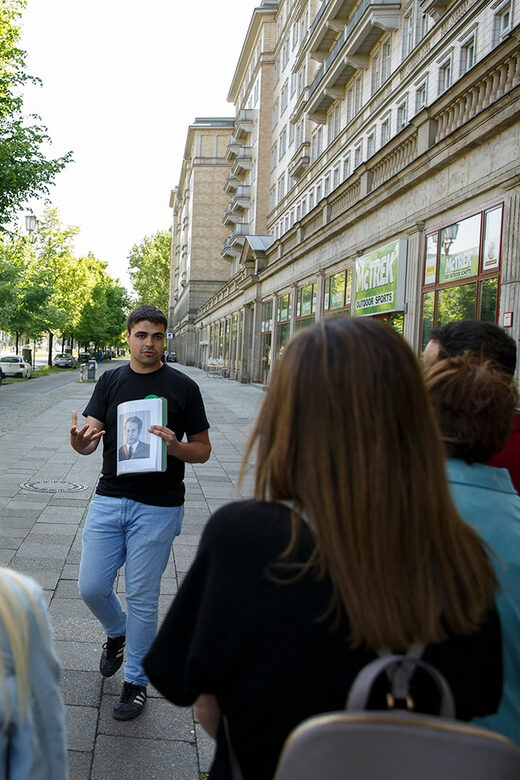
At around $41 per person for a 4-hour, Spanish-led walk through major Cold War sites, this is strong value. You’re not just looking at a single monument. You’re covering multiple meaningful locations tied to both sides of the division: the wall itself, memorial ground, underground ghost stations, and the Stasi Museum.
Also, small cost items can add up in Berlin. Here, the tour price covers the guided experience, but it does not include the public transport ticket you need for the route. You’ll want to factor in the Transport Card AB (one day) when you calculate total cost.
If you prefer guided context over self-guided wandering, this is the kind of tour that can save you time and head-scratching. You’ll know what to look for instead of guessing.
Berlin Wall remains and the Death Strip: where geography did the harm
This is the spine of the tour. You’ll see what remains of the Berlin Wall and learn about the notorious Death Strip—the space engineered to reduce escape and discourage crossing.
Even if you’ve seen wall segments online, standing near the remnants gives you a different feel. The Cold War wasn’t only in political speeches. It was in layout. In distances. In what you could see from where you were standing—and what you couldn’t.
The guide also connects the wall to why it was built in the first place. Then you move into the next layer: how Berliners tried to cross despite the risks. That practical, human angle is what turns geography into a story.
A helpful thing to keep in mind: the wall and the Death Strip are emotional ground. If you want a tour that’s purely light and scenic, this one isn’t it. But if you want to understand how a city worked under extreme control, this stop delivers.
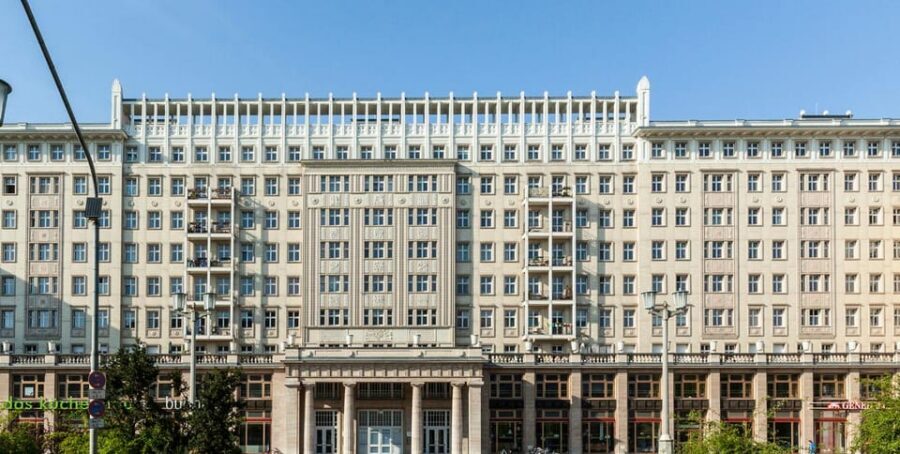
Frankfurter-Allee Avenue: the Cold War corridor you can still picture
You’ll also visit Frankfurter-Allee Avenue, one of the key streets that people connect with East Berlin life. Think of it as a place where the city’s Cold War reality wasn’t hidden. It was built into everyday movement and urban design.
Why this stop is useful is simple. It stops the story from being only about walls and memorials. A divided city isn’t only fences and guard towers. It’s the roads people use, the routes they take, and the public spaces they learn to live around.
If you like your history with real-world navigation, this part helps. It trains you to “read” the city as you go, instead of treating it as a set of separate attractions.



Bernauer Strasse Wall Memorial: memory with structure
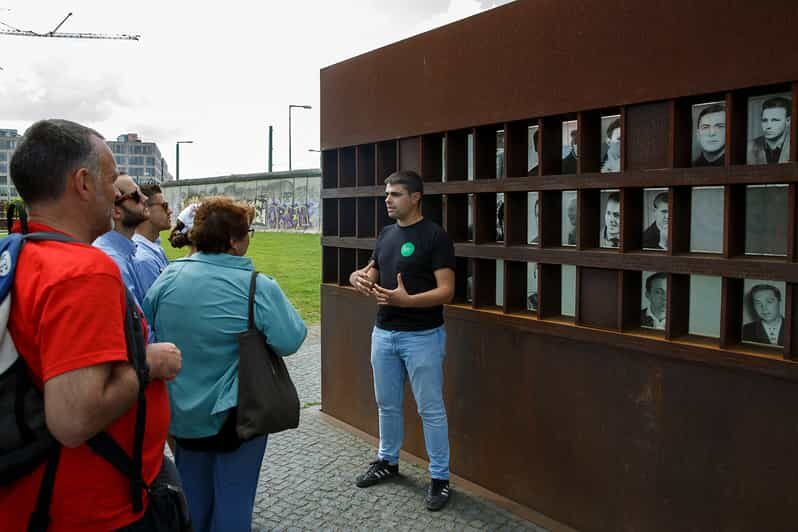
At the Bernauer Strasse Wall Memorial, the story tightens. This is where the wall becomes more than a physical barrier; it becomes a recorded account of what the division meant.
You’ll explore the wall memorial as a key chapter in why Berlin’s Cold War period shaped the city’s identity. The guide’s role is especially important here. Memorials can be powerful but also overwhelming if you don’t know what you’re looking at.
This stop also balances the experience. Before, you’re dealing with the wall’s physical presence. Here, you’re dealing with how the city chooses to remember the people affected and the attempts to escape.
If you’re the type who likes learning through specific places (not just general lectures), this memorial is one of the best parts of the route.
Ghost underground stations: when public transport became a boundary
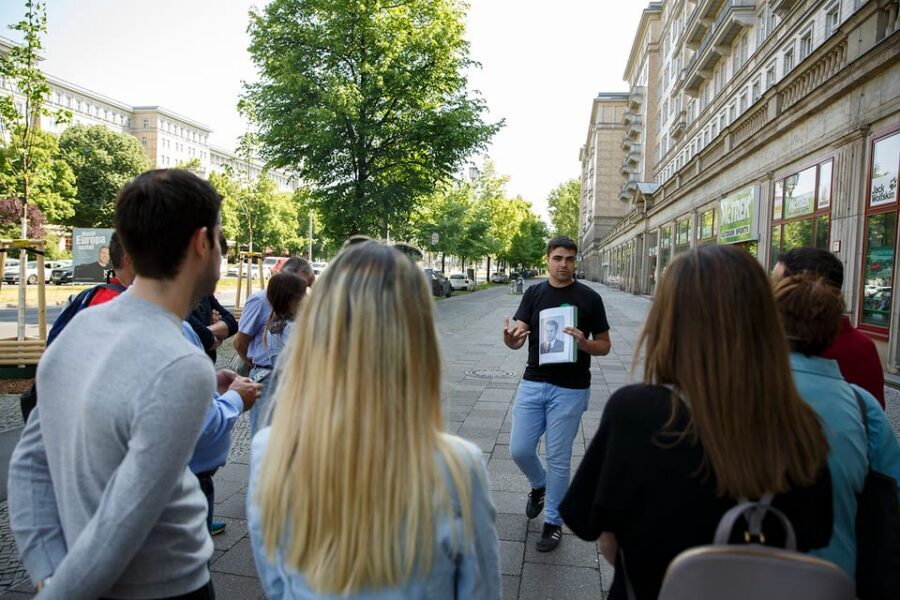
One of the more haunting elements is the visit to former ghost stations of the underground lines. This is where the Cold War shows up in something ordinary: trains.
The basic idea is chilling. Underground infrastructure still moved, but the stations were controlled so they couldn’t serve everyone equally. That’s a very Berlin kind of detail: the division didn’t only block roads above ground. It changed access below ground too.
Why it’s worth your attention is that it shows control in a different form. The wall is one type of barrier. Ghost stations are another. They represent how systems can restrict freedom without needing to be loud or obvious at every moment.
If you’re into transit history, pay extra attention here. The story of what did and did not happen on those platforms is part of what makes the tour feel grounded.
Stasi Museum entrance: how control worked in real life
The tour includes entrance to the Stasi Museum, and this is where the Cold War shifts from “what happened” to “how it was enforced.”
You’ll learn about the methods the secret service used to control the population in East Berlin. The key value isn’t only the subject matter—it’s the explanation style. A hard topic like this needs clear structure, and a good guide helps you connect the dots between daily life and state control.
One practical note: a previous participant got a bit confused about whether the guided museum portion matched their expectations. To avoid any misunderstanding, check your confirmation details before you arrive, and make sure you know what’s included as part of the four-hour plan. The highlight list says Stasi Museum entrance is part of the experience, so it’s worth verifying your exact timing.
If you want to understand why East Berlin felt different, this is the part that gives you the most leverage. After the museum, the wall story stops being only about escape routes. It becomes about what happened after people stayed.
How the Wall fell, and what changed after
By the end of the tour, you’ll connect the Cold War timeline to Berlin’s transformation. You’ll learn why the wall eventually came down, and what changed in the lives of Berliners after the city began developing in a new direction.
This final phase matters because the wall isn’t only a past event. It’s a marker that influenced how Berlin rebuilt itself—physically and socially.
I like how the tour closes the loop. You start with the barrier and the systems behind it. Then you finish with the consequences—what Berlin became once the wall stopped defining movement and access.
Best for whom: history lovers, transit fans, and truth-seekers
This tour is ideal if you:
- Want a guided explanation of major Cold War sites without bouncing between them on your own
- Prefer clear story structure over reading plaques solo
- Care about how control systems shaped ordinary life (not just politics)
It also suits you if you enjoy walking plus short transit hops. The tour duration is four hours, and the requirement for the AB transport card suggests the route uses public transit between stops.
If you’re traveling with kids or teens, keep your comfort level with heavy themes in mind. This is a serious subject. But with the right guide and your own framing, it can be educational and thought-provoking.
Quick logistics you should plan before you go
You’ll want to show up ready to move. The route covers several meaningful locations in a short time, and the AB ticket requirement means you should plan your transit in advance.
The tour language is Spanish, and it’s live-guided. Wheelchair accessibility is listed, so it’s worth asking the provider if you want extra confirmation on how the route works on the ground.
If you’re sensitive to emotional content, treat this like a museum visit: slow down at the memorials and let the information land.
Should you book this Berlin Wall, Cold War, and Stasi tour?
Yes, if you want the Cold War explained through the exact places where it played out. The combination is smart: Wall remains and Death Strip for the physical barrier, Bernauer Strasse Wall Memorial for the remembered meaning, ghost U-Bahn stations for the access-control angle, and Stasi Museum entrance for how control operated.
It’s also a good choice for Spanish speakers who don’t want to piece the story together from scattered signs. A strong guide makes this kind of history much easier to follow. From past experiences shared by others, guides like Constantino (described as passionate and detailed) and Jordi (described as competent and engaged) are examples of the kind of storytelling you’ll want on this topic.
If you’re only looking for a quick photo stop at a single wall segment, you might feel this is more than you need. And if you hate any administrative prep, remember the AB transport card is required and not included in the base price.
Overall: book it for understanding, not sightseeing.
FAQ
How long is the tour?
The tour lasts 4 hours.
What language is the tour guide?
The tour is guided in Spanish.
What is the meeting point near Alexanderplatz?
Meet next to a green flag with the text tours en español, just by the only entrance to the Fernsehturm (TV Tower). It’s between the tower and Alexanderplatz station, next to Espresso House.
How much does the tour cost?
The price is listed as $41 per person.
Is a public transport ticket included?
No. You need a Transport Card AB (one day) for this tour, and it is not included in the tour price.
Does the tour include the Stasi Museum entrance?
The tour highlights say that entrance to the Stasi Museum is included.
Which major places are part of the experience?
You’ll see remains of the Berlin Wall and the Death Strip, visit Frankfurter-Allee Avenue, go to the Bernauer Strasse Wall Memorial, explore former ghost stations of the underground lines, and visit the Stasi Museum.
Is the tour wheelchair accessible?
Yes, wheelchair accessibility is listed.
What’s the cancellation policy?
Free cancellation is available up to 24 hours in advance for a full refund.
Can I reserve without paying right away?
Yes. The booking option is listed as reserve now & pay later.