REVIEW · BERLIN
Berlin Wall, Cold War and Stasi Museum Tour
Book on Viator →Operated by cultourberlin · Bookable on Viator
Berlin after WWII isn’t a straight line. It’s a split story, and this walking tour follows the seams from East Berlin to the Wall. I like how the route mixes big places like Alexanderplatz with the more chilling reality of the Stasi, and I also like the steady, small-group pace that keeps the Cold War understandable. One possible snag: the walk plus a full 2-hour Stasi Museum stop means you’ll want decent stamina and attention for heavy subject matter.
The tour’s format is built for people who don’t want to stitch the city together on their own. You get a guide, time at key sites, and a mobile ticket that keeps things simple. With a maximum group size of 25, it still feels personal even when you’re in Berlin’s most important history zone.
The value is strong for the price point, especially because Stasi Museum entry is included. Just plan for Berlin transit on top (the AB zone daily ticket is €9.90), and if language matters to you, confirm up front whether your guide is scheduled for English or Spanish.
In This Review
- Key highlights to know before you go
- A 4-hour route through divided Berlin
- Price and logistics: what’s included, what you’ll add
- Starting at Alexanderplatz: the Cold War map begins
- Karl-Marx-Allee and the story in socialist streets
- Frankfurter Allee: the older route behind the new border logic
- The Stasi Museum: where state security had a workplace
- The Palace of Tears: Cold War movement, with a human cost
- Berlin Wall Memorial on Bernauer Straße: the division you can feel
- What the small-group format changes in real life
- Who should book this Berlin Wall and Stasi tour
- Should you book this Berlin Wall, Cold War and Stasi Museum Tour?
- FAQ
- What is the duration of the Berlin Wall, Cold War and Stasi Museum Tour?
- Where does the tour start and end?
- What time does the tour begin?
- Is the Stasi Museum ticket included?
- Are any other admissions included?
- Do I need a public transportation ticket?
- How big is the group?
- Is free cancellation available?
- What language is the tour offered in?
Key highlights to know before you go
- A focused 4-hour route that links the GDR era to the Wall Memorial on Bernauer Straße
- Stasi Museum entry included, plus time to see what the Ministry of State Security actually did
- Small group size (max 25) for a more personal explanation as you walk
- Stops that show contrast, from Alexanderplatz to Karl-Marx-Allee’s socialist apartment blocks
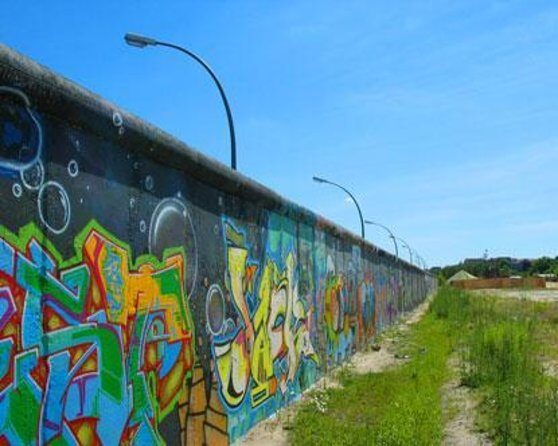
- Bernauer Straße for division and reunification, where the Wall’s impact feels immediate
- Mobile ticket for easier entry on the day
A 4-hour route through divided Berlin
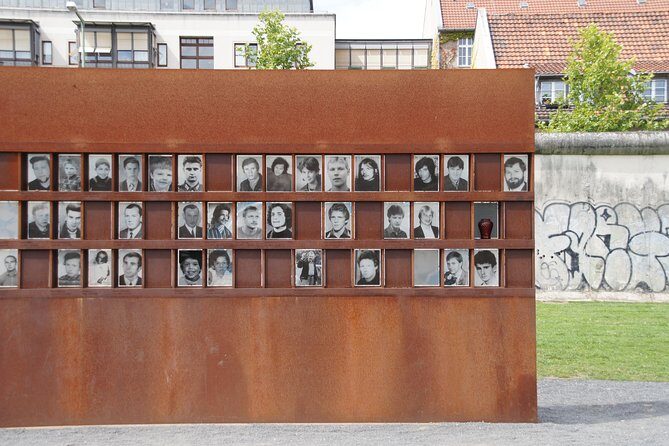
This tour is designed like a guided timeline you can walk through. You start at Alexanderplatz, move through major East Berlin thoroughfares, then hit the Stasi Museum, and finish at the Berlin Wall Memorial on Bernauer Straße. In just about 4 hours, you get the city’s Cold War logic: why the GDR built a Wall, what it meant for daily life, and how Berlin eventually stitched itself back together.
If you like history that comes with street-level context, you’re in the right place. Berlin isn’t just museums and facts; it’s architecture, borders, and the choices governments made. This route helps you connect those dots fast.
The pacing also matters. The day isn’t a long haul across the entire city center. It’s a tight loop that keeps you in the places where the Cold War was experienced, not just discussed.
You can also read our reviews of more museum experiences in Berlin

Price and logistics: what’s included, what you’ll add
The tour price is $32.56 per person for a 4-hour experience, and that includes your guide plus entrance to the Stasi Museum. Several other stops also include admission tickets, while one of the route segments is marked as free time at the site.
What you should budget for beyond the tour: Berlin public transport. An AB zone ticket for 24 hours costs €9.90, and that is not included in the price. If you’re already paying for transit during your stay, this is easy to handle. If you’re planning to walk most days, you can still do that, but the tour route is set up for a mix of walking and quick transit hops.
You’ll also want to show up ready for walking. The total itinerary includes multiple stops with set time blocks, and the Stasi Museum portion alone takes 2 hours. That’s the heaviest chunk of the tour, so comfortable shoes are not optional.
Finally, the tour uses a mobile ticket. That’s one less thing to print or misplace, and it speeds up check-in when you’re trying to get moving in Berlin.
Starting at Alexanderplatz: the Cold War map begins
Alexanderplatz is a perfect starting point because it’s unmistakably Central Berlin. You’ll spend about 15 minutes here getting grounded in the setting, before the story narrows into the GDR’s version of the city.
This first stop is more than a “look at the view” moment. It’s where your guide typically sets the terms: post–World War II Berlin, how the city ended up divided, and why the GDR’s decisions made daily life feel controlled and constrained. Even if you’ve read general history, this is where the tour turns it into a practical walking narrative.
Tip: arrive a little early and take a moment to orient yourself. Alexanderplatz can feel like a lot at first. A quick scan of the area before the group starts helps you absorb what comes next.
Karl-Marx-Allee and the story in socialist streets
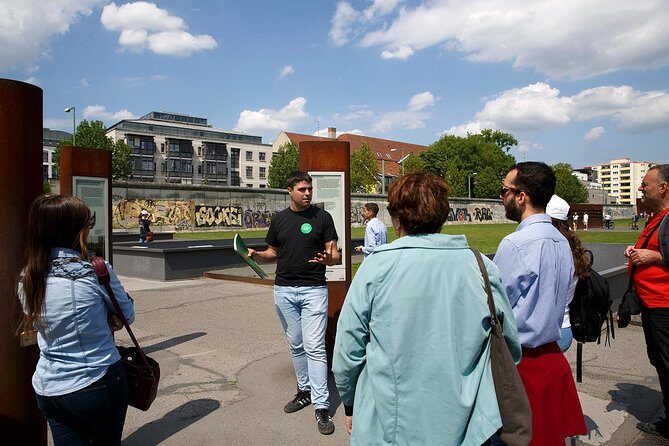
Next up is Karl-Marx-Allee, a major avenue that captures the GDR’s public face. You’ll spend about 30 minutes here, including the chance to see the socialist-style apartment blocks built in the 1950s.
This is one of the tour’s strongest ideas: architecture as ideology. The GDR didn’t just enforce borders with the Wall. It also shaped the city’s look to signal a worldview—order, permanence, and a planned future. Walking this stretch lets you see how that messaging played out in real blocks, not just slogans.
You’ll also likely get the context for why this street became so recognizable. The avenue wasn’t random. It was meant to represent a system and project confidence.
What to watch for on this segment: the scale and the building rhythm. Even without “knowing the names,” you’ll feel how the streets were built for mass city life, not for quiet side streets and individual routines.
Frankfurter Allee: the older route behind the new border logic
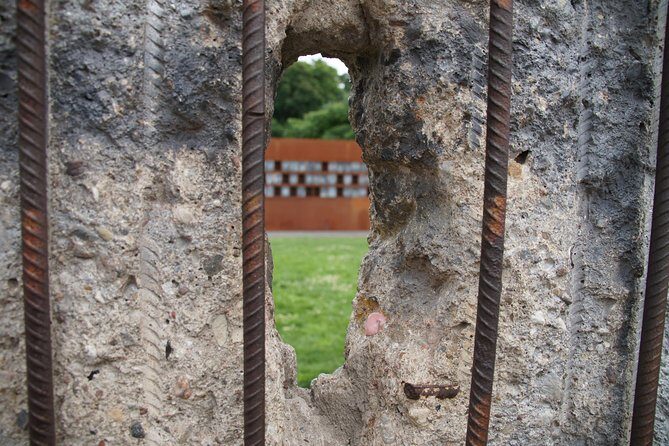
Frankfurter Allee comes next for about 15 minutes, and it’s described as an extension of Karl-Marx-Allee. This short stop works like a bridge: it keeps the tour moving without breaking the story’s flow.
Because it’s an older traffic route in Berlin, it adds a useful contrast. You’re not only seeing planned socialist space; you’re also seeing how the GDR worked with existing routes while still turning the city’s overall movement into something controlled and predictable.
This segment is ideal if you want a quick interpretive moment without a long museum-style focus. Think of it as a short geography check—where you are, how movement worked, and how the Wall story connects to streets you still walk today.





The Stasi Museum: where state security had a workplace
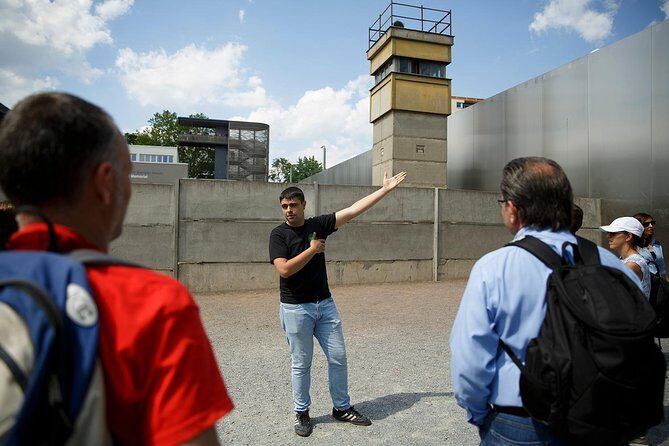
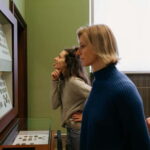
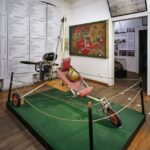
Now comes the centerpiece: the Stasi Museum, in the former headquarters of the Ministry of State Security. You’ll spend about 2 hours here, and admission is included.
This is the part of the tour that shifts from city layout to personal impact. The Stasi isn’t just a political chapter; it’s the everyday fear mechanism that shaped behavior. In a place that used to function as a working headquarters, the story lands differently than a textbook explanation.
Why I think this stop is worth the time: it gives you a clearer sense of scale. A system built for surveillance isn’t only about dramatic events. It’s about routines, paperwork, reporting, and the way power operates through information.
Practical advice: go in with a slower mindset. Two hours can fly by if the material clicks, but it can also feel heavy if you’re not ready for emotionally serious history. If you’re sensitive to oppressive regimes and human rights topics, plan to take a breather during the visit rather than rushing.
You’ll leave with a stronger answer to the basic question behind the Wall: why a border system needed more than barriers. It needed monitoring—because walls don’t stop curiosity by themselves.
The Palace of Tears: Cold War movement, with a human cost
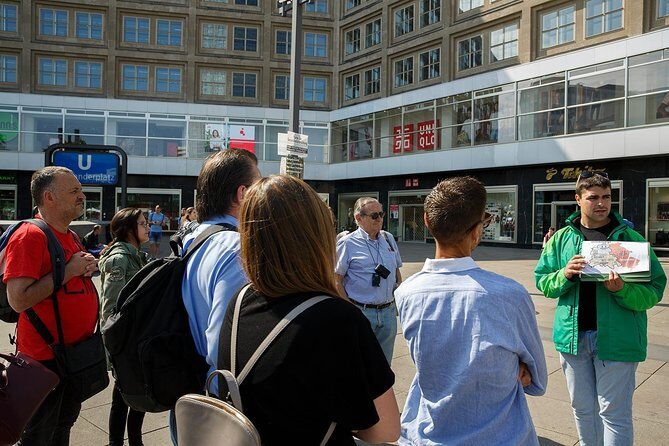
One of the landmark names tied to this tour is the Palace of Tears. Even when you’re not spending a dedicated chunk of time there, the tour’s route is set up so you understand why places like this mattered.
Why it belongs in a Wall tour: it represents the friction of movement between East and West. The Cold War wasn’t only about what you couldn’t cross. It was also about what it cost to try, the delays, and the emotional weight of crossing points for ordinary people.
If you like your history with real-world consequences, keep an eye out as the guide points out where these transit moments fit into the broader division of Berlin. That’s the value here: the tour ties the “big Wall” story to the daily experience of crossing, waiting, and not knowing what would happen next.
Berlin Wall Memorial on Bernauer Straße: the division you can feel
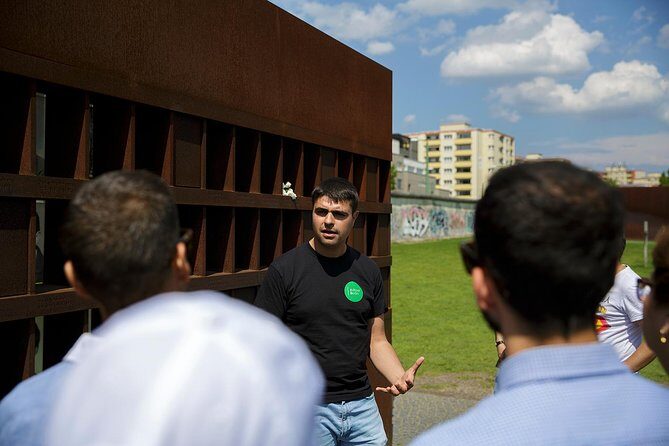
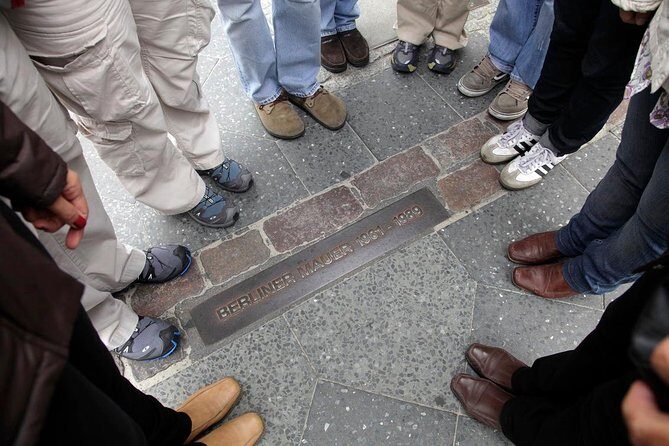
You finish at the Berlin Wall Memorial on Bernauer Straße, with about 1 hour at this key site. This is where the tour’s final message comes into focus: the city’s division and the reunification of Berlin’s capital.
Bernauer Straße is especially powerful because it’s the Wall story in a concentrated form. You’re not just hearing that the Wall split Berlin. You’re seeing a place where the boundary’s impact is part of the physical landscape and the commemorative design.
This ending works well because it loops back to the start. You begin with Berlin’s major center, then move through East Berlin streets, and then end where the Wall’s meaning becomes unavoidable.
If you have time before or after the tour, I’d treat this memorial area as the “slow down” part of your day. Even if you’re not a museum person, the memorial space tends to prompt a natural quiet that helps the history sink in.
What the small-group format changes in real life
A maximum group size of 25 sounds like a number on a page. On the ground, it usually means something more helpful: the guide can keep the group together without turning the tour into a sprint. It also makes it easier to ask clarifying questions when something doesn’t click.
This tour is also built around short stop times early on (15 to 30 minutes), so you’re not stuck listening for hours before you see the main sites. Then the Stasi Museum brings the longer focus. That pacing keeps your attention from burning out, as long as you’re okay with the heavier museum content.
If you like your guides practical—explaining why a place matters rather than only describing what it looks like—this format tends to suit you. You’ll likely spend more time understanding cause-and-effect than memorizing dates.
Who should book this Berlin Wall and Stasi tour
This tour is a good match if you:
- Want a guided Berlin Wall story that includes both the city’s layout and the Stasi’s role
- Prefer a structured 4-hour walk instead of trying to plan multiple stops alone
- Like learning in the places where history happened, not only inside buildings
It’s also a solid choice if you’re visiting Berlin for the first time and want to leave with a coherent Cold War framework. Even if you already know the basics, the connection between East Berlin streets and Stasi power can add clarity fast.
You might want to skip or adjust if:
- You’re not comfortable with heavy themes related to surveillance and state repression
- You don’t handle long indoor exhibits well, since the Stasi Museum is a full 2 hours
Should you book this Berlin Wall, Cold War and Stasi Museum Tour?
I’d book it if you want value plus structure. At $32.56, you’re getting a guided walk, multiple major Cold War landmarks in sequence, and included admission to the Stasi Museum. The overall rating is strong (4.9) with a high recommendation rate (98%), and the small-group cap of 25 supports the kind of tour where you can actually track the story.
The main decision factor for you is mindset. This is not a casual city stroll about monuments. It’s a Cold War reality check, and the Stasi Museum is the emotional anchor.
If you like practical history tied to specific places—Alexanderplatz, Karl-Marx-Allee, and ending at Bernauer Straße—this tour gives you a clean, efficient way to see a lot without feeling scattered. Just confirm the tour language when booking (English vs Spanish can matter), bring transit for the AB zone if you need it, and wear shoes for real walking.
FAQ
What is the duration of the Berlin Wall, Cold War and Stasi Museum Tour?
The tour lasts about 4 hours.
Where does the tour start and end?
It starts at Alexanderplatz, 10178 Berlin and ends at the Berlin Wall Memorial on Bernauer Str. 111, 13355 Berlin.
What time does the tour begin?
The start time is 10:00 am.
Is the Stasi Museum ticket included?
Yes. Entrance to the Stasi Museum is included.
Are any other admissions included?
Admission tickets are included for multiple stops along the route, while one stop (Frankfurter Allee) is listed as free.
Do I need a public transportation ticket?
Yes. The AB zone transportation ticket is not included. A daily ticket price (24 hours) is listed as €9.90.
How big is the group?
The tour has a maximum of 25 travelers.
Is free cancellation available?
Yes. You can cancel up to 24 hours in advance for a full refund.
What language is the tour offered in?
Language can be English or Spanish. If you’re unsure, confirm at booking that you’re scheduled for the language you want.