REVIEW · BERLIN
Private Walking Tour Berlin Third Reich Hitler and World War II
Book on Viator →Operated by Insider Tour Berlin · Bookable on Viator
Berlin forces you to look close. This private Third Reich walking tour threads key Nazi-era locations with hotel pickup and drop-off included, so the learning feels practical instead of museum-stuffing; it is also a long walk through heavy, emotional material, so you may want a slower pace and solid layers if the weather is bad.
I love how the route connects power and policy sites to remembrance places, so you see the whole chain instead of a few isolated photos. It also helps that it runs in all weather, which means you are not waiting around for the skies to clear.
In plain terms, the guides can make or break a history tour, and this one tends to shine. Names like Georgia, Jasper, Simon, Jimmy, and Daniel show up in past tours as people who tailor the pace, explain clearly, and even share practical ideas for what to revisit after the walk, especially at Topography of Terror and the Memorial to the Murdered Jews of Europe.
In This Review
- Key things that make this tour worth your time
- Price and timing: what $192.97 buys you
- The route logic: Nazi power, state terror, and the work of memory
- Tiergarten memorial and Wilhelmstraße’s power buildings
- Topography of Terror: SS and Gestapo, explained through documents and space
- Bendlerblock and Bebelplatz: resistance and censorship in the same breath
- Reichstag, the Holocaust Memorial, and Hitler’s last refuge above ground
- Anhalter Bahnhof and T4: deportations and the murder of disabled people
- Moltkebrücke: the final battle’s movement across a bridge
- What it feels like in real life: walking pace, guide style, and staying present
- Should you book it? My decision guide
- FAQ
- How long is the tour?
- Is hotel pickup and drop-off included?
- Is it a private tour?
- What language is the tour offered in?
- Are admissions included?
- Does the tour run in bad weather?
- Is food included?
- Will we cover multiple famous memorials?
- Can I cancel if plans change?
Key things that make this tour worth your time
- Hotel pickup and drop-off mean you start and finish with less hassle
- Private tour so your questions and pace are actually heard
- Big Nazi-era sites grouped logically, from Wilhelmstraße to the Reichstag area
- Multiple remembrance stops that focus on victims, not just leaders
- Most admissions are free, with the Reichstag ticket not included
- Guides tailor the walk, with some praised for engaging families and kids
Price and timing: what $192.97 buys you
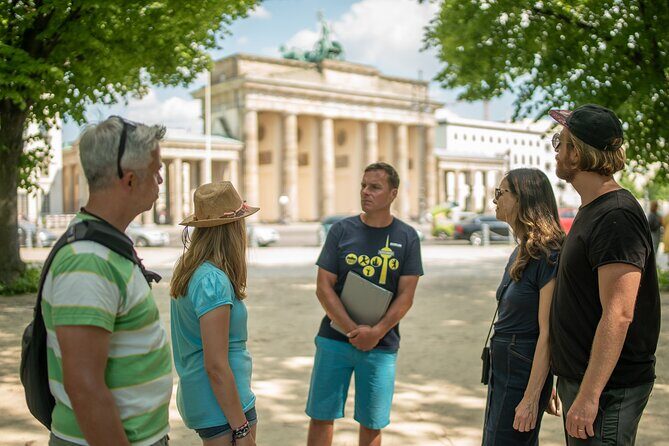
At $192.97 per person for about 3 to 4 hours, you are paying for three things: a professional guide, a private format, and hotel pickup plus drop-off. That combination matters in Berlin. You lose less time getting to start points, and your guide can keep the story moving stop to stop without the usual group bottlenecks.
The private nature is the real value add. On a tight walking route, a small shift in pacing can make the difference between rushing and actually taking things in. In past tours, guides like Jasper and Jimmy were praised for keeping the timing right and adjusting the plan to what the group wanted, which is exactly what you need on a theme this intense.
One practical consideration: the tour is outdoors often enough that weather will affect your comfort. Even if you are fine with walking, you will likely want a hat, a warm layer, and good shoes. One tour described the cold as brutal, but said it was still worth it. I’d plan on dressing like you are going to be outside the whole time, because you are.
You can also read our reviews of more walking tours in Berlin



The route logic: Nazi power, state terror, and the work of memory
What I like about this tour is that it is not just a list of “Hitler places.” The stops track a bigger pattern: how a state organized itself, how repression worked, how victims were targeted, and how Berlin tries to remember in ways that do not let history fade.
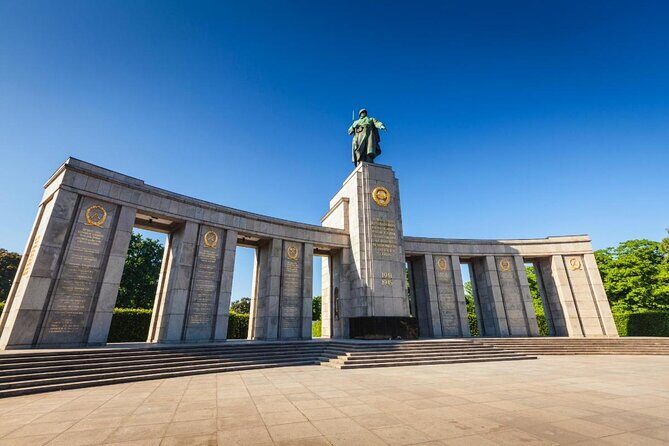
You start with the Soviet Memorial Tiergarten, which might feel like a surprising opener if you expect a straight Nazi-only timeline. But that choice is smart. It frames the end of the war first, then lets you understand the scale of what followed in the final battles.
Then the walk shifts toward the administrative and political core. Areas like Wilhelmstraße and buildings tied to Nazi governance help you see how power was structured day to day, not just as speeches and slogans. After that, you move into sites built on the idea of testimony and survival: repression at Topography of Terror, moral courage at the German Resistance Memorial Center, and the consequences carved into public space at the Holocaust Memorial and other memorial stops.
That “from power to memory” arc is the difference between a tour that tells facts and one that leaves you with a sense of how systems cause harm.
Tiergarten memorial and Wilhelmstraße’s power buildings
Stop 1: Soviet Memorial Tiergarten
This is a free, outdoor-feeling start that commemorates Soviet soldiers who fell during the Battle of Berlin in 1945. The guide helps you read the architecture and understand what the memorial represents: victory and sacrifice, placed right in the middle of Berlin life. It is not a quick photo-stop. You’ll get context for how Berlin ended up at the center of a brutal city battle.
Stop 2: Aviation Ministry area (Detlev-Rohwedder-Haus)
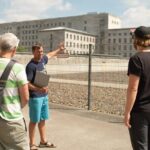
Next comes the Detlev-Rohwedder-Haus on Wilhelmstraße, tied to Nazi administration through Hermann Göring and the aviation ministry. You are looking at a building that changed hands and meanings over time, which is one of Berlin’s most uncomfortable realities. Even if you walk by it every day on your own, a guide can point out why Wilhelmstraße mattered and how “government space” can become decision space for atrocities.
Stop 12: Wilhelmstraße (the street itself)
Later, you revisit Wilhelmstraße in a more walking-and-seeing way. That repetition is useful because it anchors the story. You connect the specific building you saw earlier to the larger admin geography—ministries, offices, and propaganda culture that shaped wartime decisions.
A drawback to flag: Wilhelmstraße is central and walkable, but it can also feel like you are moving through streets that still carry energy. On days with heavy rain or wind, your focus may jump from details to comfort. That is where a good guide’s pacing helps, and multiple guides were praised for adjusting the tour to what the group wanted.
Topography of Terror: SS and Gestapo, explained through documents and space
Stop 3: Topography of Terror (free)
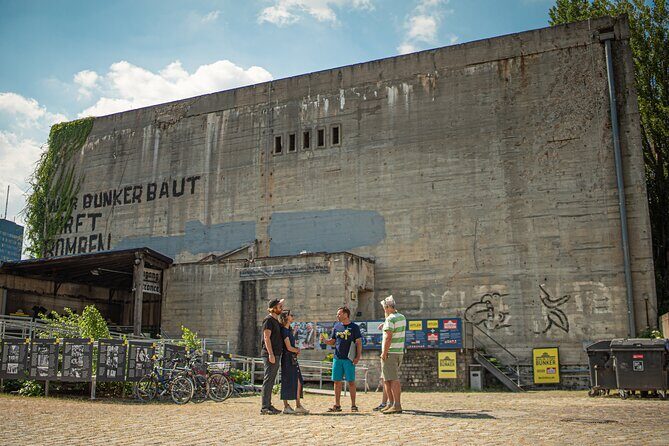
This is one of the tour’s anchors. You’ll walk through indoor and outdoor exhibition areas on the grounds tied to the former SS and Gestapo headquarters. The value here is that it does not rely only on historical narration. You have photographs, documents, and testimonies, which forces you to confront how repression worked in real life, not as abstract ideology.
In practice, this stop can go two ways. If you are tired, it becomes overwhelming fast. If you can slow down, it becomes clearer—how terror was organized, who was targeted, and how fear was used to control society.
Since the tour includes a guide, you are not left staring at panels. Past guides such as Simon were specifically praised for explaining the sites in a way that made it easy to revisit later. That is a good sign for how you will use the time here. I’d treat this as your “take notes mentally” stop. If you can, pause for a full minute before moving on, and let the exhibit settle into your head.
Bendlerblock and Bebelplatz: resistance and censorship in the same breath
Stop 4: German Resistance Memorial Center at the Bendlerblock (free)
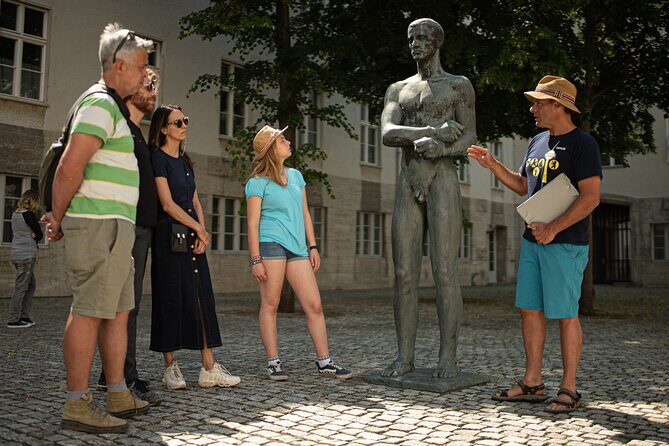
Here you shift from perpetrators and systems to people who resisted. You’ll learn about resistance movements in Germany and key figures such as Claus von Stauffenberg, connected to the July 20, 1944 assassination attempt on Hitler. The room tone matters at memorials like this. The point is moral courage—and the price paid when tyranny tightens.
If you are the kind of traveler who likes “What were they thinking?” moments, this stop delivers. Your guide should connect motivations to consequences, and that helps resistance history feel human instead of heroic-only.
Stop 5: Bebelplatz and the empty shelves memorial (free)
Then the tour hits book burning at Bebelplatz from May 10, 1933, when Nazi power used censorship to attack ideas. You’ll also look at architecture around you—like the State Opera House and Humboldt University area—while standing near the memorial beneath the square with empty bookshelves.
This pairing works: resistance shows up as action, and Bebelplatz shows up as the effort to remove thought. Together, it becomes a useful lens for understanding how totalitarianism operates—first by controlling information, then by controlling people.
You can also read our reviews of more private tours in Berlin



Reichstag, the Holocaust Memorial, and Hitler’s last refuge above ground
Stop 6: Reichstag Building (not included for admission)
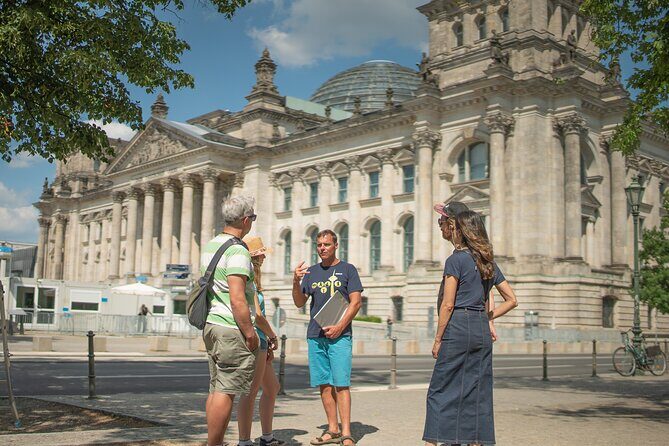
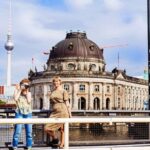
The Reichstag is a must-see building even if you know nothing about Nazi history. On this tour, the emphasis is on the Reichstag Fire of 1933, which the Nazis used to consolidate power and suppress opposition. You’ll also hear what happened during the war and how restoration came later to reframe the building as part of modern democratic identity.
One thing to plan for: the Reichstag admission ticket is not included. That is normal, but it means you should budget extra for that specific entry if you want to step inside.
Stop 7: Memorial to the Murdered Jews of Europe (free)
This is a powerful, low-key stop that hits hard. The memorial’s 2,711 slabs create a disorienting walk that symbolizes the magnitude and complexity of memory. The guide explains the design and the historical context—Nazi policies and the impact on European Jewry—so you are not just looking at shapes.
I recommend treating this as a slow stop. Even with a time limit, you can stand, turn, and absorb how space affects your mood. If your group is quiet, the memorial tends to make the silence feel meaningful rather than awkward.
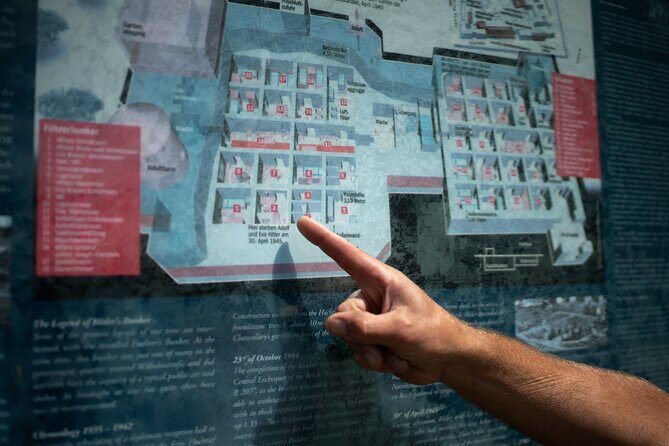
Stop 8: Fuhrerbunker (Führerbunker) (free, above the area)
Next comes the last-days reality: the bunker beneath the Reich Chancellery, where Hitler took refuge as Allied forces closed in. Much of the original complex was destroyed after the war, but standing above the site gives you a sobering sense of how leadership behaved in collapse.
This stop can be emotionally intense. If you need a breather, take it without guilt. The goal is understanding, not speed.
Anhalter Bahnhof and T4: deportations and the murder of disabled people
Stop 9: Anhalter Bahnhof (free)
Anhalter Bahnhof is not just architectural. It is part of the story of deportations, including the departure of Jews sent to concentration camps. The tour frames the station as a place where families were separated, and then connects it to today’s reminders—memorials and exhibits that keep the names and events from disappearing.
If you like historical specificity, this stop delivers because trains are such a concrete symbol. When you pair that with a guide’s explanation, it stops feeling like generic WWII suffering and becomes specific to people and journeys.
Stop 10: T4 Memorial for the Victims of the Nazi Euthanasia Program (free)
This memorial is a crucial piece people often miss. The tour explains the T4 program as a Nazi campaign targeting people deemed unworthy of life, including people with disabilities and mental illnesses. You’ll see informative displays and hear stories connected to that effort.
I appreciate this stop because it expands the usual “WWII equals soldiers” mental shortcut. It shows how Nazi ideology extended into health, institutions, and everyday lives—using bureaucracy to create killing at scale.
Moltkebrücke: the final battle’s movement across a bridge
Stop 11: Moltkebrücke (free)
On Moltkebrücke, you focus on April 1945 and the strategic crossing by Soviet forces during their assault on Berlin. It is a short stop, but it is vivid: you hear how the bridge fed the advance, where fighting nearby shaped the area, and what the Soviet push meant for Berlin’s next chapter.
Bridges are great teaching sites because you can physically imagine flow—troops, movement, pressure. If you’re the kind of traveler who learns by connecting space to action, you’ll likely find this stop sticks.
What it feels like in real life: walking pace, guide style, and staying present
This tour is designed as a walking experience, so your comfort matters more than on a bus tour. The total time is about 3-4 hours, and the stops themselves are short—often 10 to 20 minutes—so you keep moving while your guide fills in context.
A number of guides praised in past tours were known for tailoring the pace. For example:
- Georgia was praised for starting at a hotel and personalizing the route in a rainy late August day.
- Jasper was praised for passion and for making the four-hour walk feel smooth.
- Jimmy was praised as relaxed and fun while still teaching deeply.
- Daniel was praised for meeting at the hotel, then quickly adjusting the plan based on what the group wanted.
You’ll also notice the recurring theme: clear explanations and the ability to answer questions. One guide even shared extra ideas for what to see next, which is useful because you will likely want to re-check a few sites afterward on your own.
Balanced reality check: one past review complained that the guide seemed to have their own agenda in parts and that a native Berliner preference shaped expectations. That is a reminder to choose with your priorities in mind. If you want a strict, unswerving timeline with minimal interpretive commentary, ask your guide upfront to keep the story tight and question-driven.
Should you book it? My decision guide
Book this tour if you want:
- One organized route through major Nazi governance sites and major memorial spaces
- A private guide who can adjust pacing and questions
- A mix of places that explain both state power and victim memory
- Mostly free admissions, with the only notable extra being the Reichstag ticket
Skip—or at least be cautious—if:
- You want an upbeat day. This is heavy history, and even with great pacing, you will feel it.
- You dislike outdoor walking in bad weather. The tour runs in all weather, so plan for that.
My take: if Berlin is on your list and you care about understanding how terror worked and how societies remember, this is one of the more focused ways to do it. The hotel pickup and private format reduce friction, and the stop choices connect the story rather than leaving you with scattered snapshots.
FAQ
How long is the tour?
It lasts about 3 to 4 hours.
Is hotel pickup and drop-off included?
Yes. Hotel pickup and hotel drop-off are included.
Is it a private tour?
Yes. It is private, meaning only your group participates.
What language is the tour offered in?
The tour is offered in English.
Are admissions included?
Most stops are listed as free, but the Reichstag Building admission ticket is not included.
Does the tour run in bad weather?
Yes. It operates in all weather conditions, so you should dress appropriately.
Is food included?
No. Food and drinks are not included.
Will we cover multiple famous memorials?
Yes. Key stops include Topography of Terror, the German Resistance Memorial Center, the Holocaust Memorial, the Führerbunker area, and other WWII-era memorial sites.
Can I cancel if plans change?
Yes. You can cancel for a full refund up to 24 hours before the experience’s start time.