REVIEW · MUNICH
Munich: Walking Tour Old Town and Viktualienmarkt
Book on GetYourGuide →Operated by Weis(s)er Stadtvogel GmbH · Bookable on GetYourGuide
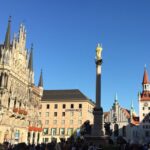
Old Munich gets real fast. This guided walk strings together the places you see on every postcard, and makes them click—especially once you’re standing at Marienplatz under the Neo-Gothic New Town Hall and hearing how the Glockenspiel fits into Munich’s story. It’s a tight loop through the historic core that helps you understand what you’re looking at, not just where to take photos.
I really love the Viktualienmarkt stop, because it’s more than a quick photo op. You get time to wander amid stalls selling fresh bread, cheeses, and sizzling sausages, with your guide’s context helping you know what’s worth noticing. One drawback: the schedule is fast, with brief stops (think about 10 minutes per main sight), so if you like to linger inside churches or read every plaque, plan to return later.
In This Review
- Key points you’ll feel on the walk
- Setting out from Munich’s center: Marienplatz and the New Town Hall
- St. Peter’s Church: oldest parish vibes, explained in plain language
- Viktualienmarkt: how to enjoy a food market without turning it into homework
- Alter Hof and Burgstraße: walking where Bavarian power used to sit
- Hofbräuhaus: the beer-hall icon, seen in context
- Maximilianstraße: switching from history mode to luxury-shopping mode
- Munich Residenz area, Bavarian State Opera, and Odeonsplatz
- Why your guide matters more than you think (and which styles you’ll see)
- Price and value: is $282 per group up to 30 worth it?
- Timing, weather, and smart ways to make the short route feel complete
- Should you book this Munich Old Town and Viktualienmarkt walk?
- FAQ
- How long is the Munich Old Town and Viktualienmarkt walking tour?
- How much does it cost?
- Where do we meet the guide?
- What’s included in the price?
- Are entrance fees included?
- Are meals and drinks included?
- What languages are the tour guide services offered in?
- Will the tour run in bad weather?
- Is the tour wheelchair accessible?
- What should I bring?
Key points you’ll feel on the walk
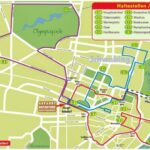
- Two easy starting points near the action: Mariensäule by München 1 or the area around Neues Rathaus
- Marienplatz to Hofbräuhaus in one smooth loop with the right landmarks in the right order
- Viktualienmarkt as the food-and-people moment with plenty of sensory wandering
- Medieval lanes plus power centers like Burgstraße and the Old Court (Alter Hof)
- A strong contrast walk from older alleys to Germany’s most exclusive shopping street, Maximilianstraße
- Architecture sightings without museum fatigue across Residenz area squares and churches
Setting out from Munich’s center: Marienplatz and the New Town Hall
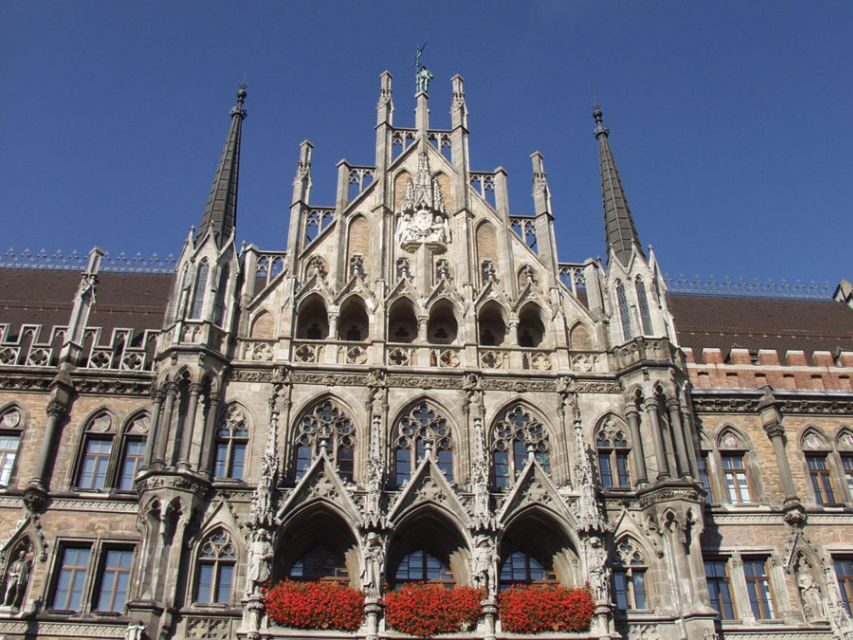
You start in central Munich, with one of two common meeting spots: near the Mariensäule (München 1) or in the vicinity of Neues Rathaus. Either way, you’re dropped right into the city’s “navigation hub,” which is great if you’re new here and trying to get your bearings fast.
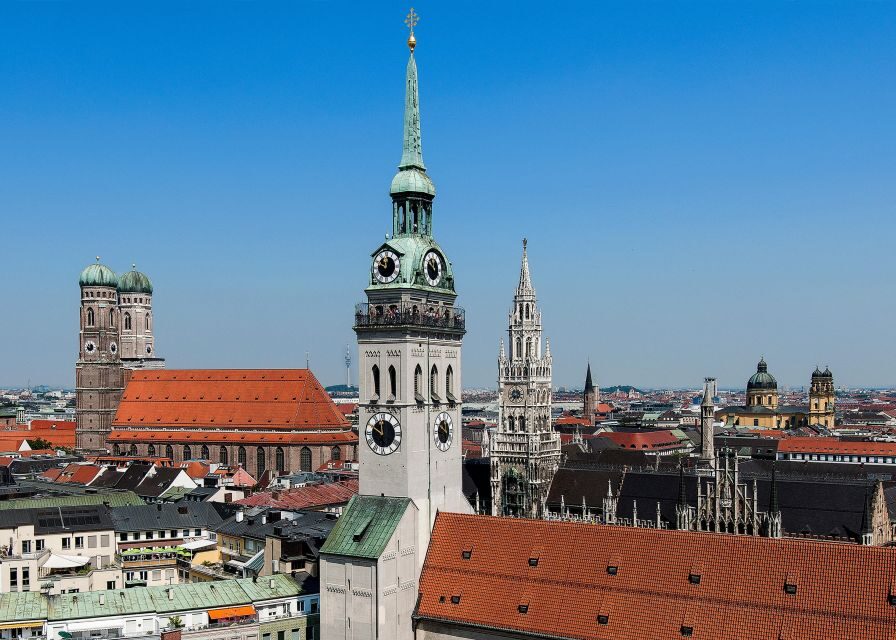
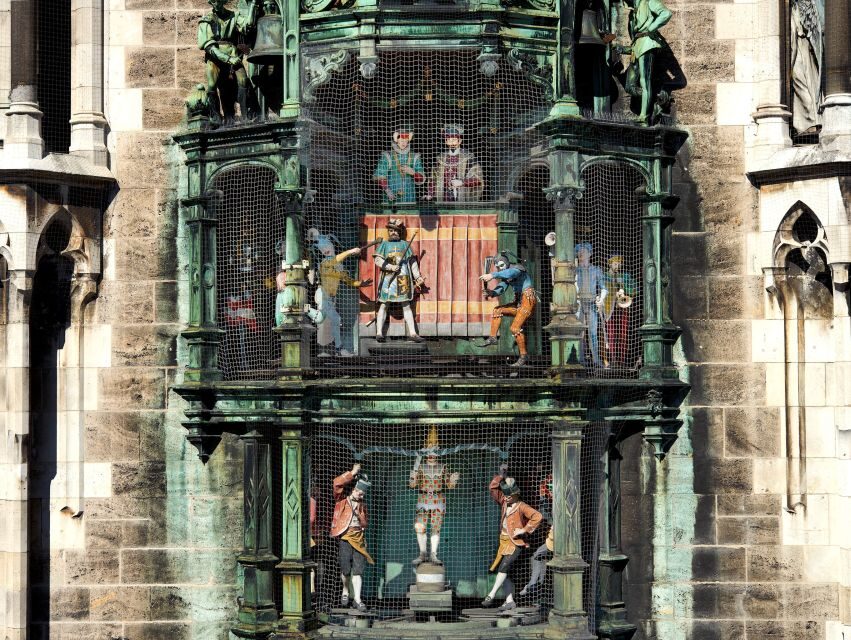
Your first stop is the Neo-Gothic New Town Hall area at Marienplatz, including the Glockenspiel zone. Even if you’ve seen the building in pictures, it lands differently when you’re standing at street level, surrounded by the flow of locals and visitors. A good guide here does two things: they translate the big visuals (gothic shapes, civic importance) and they explain the day-to-day role the square plays.
Practical note: the square has a lot of space around statues and monuments, so double-check your exact meeting point and aim to be there on time. One guest mentioned it wasn’t immediately obvious where the guide was standing, even though the guide was punctual—so being early really helps.
You can also read our reviews of more walking tours in Munich

St. Peter’s Church: oldest parish vibes, explained in plain language
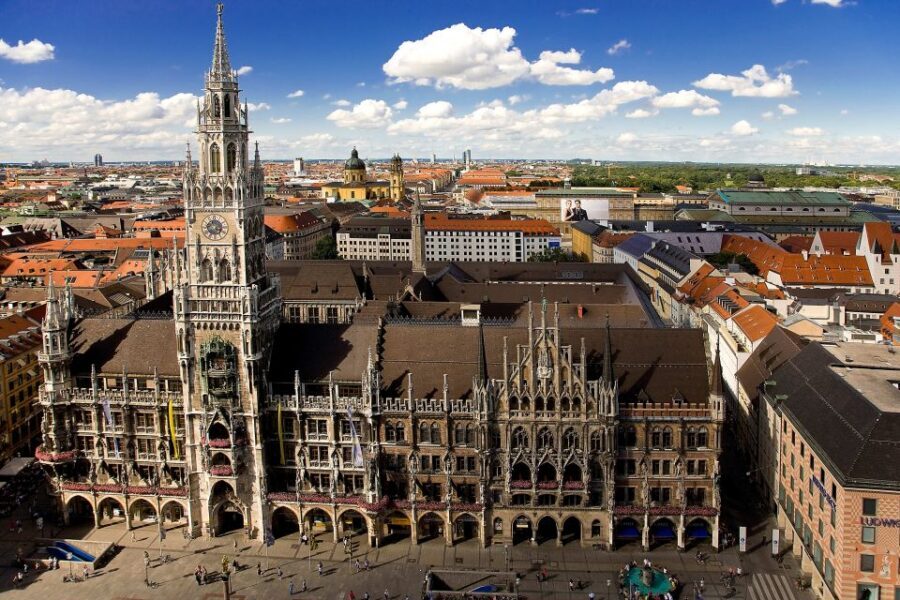
From Marienplatz, the route moves to St. Peter’s Church, known as the oldest parish church in Munich. This is one of those stops where the exterior alone can feel like “just another church,” unless someone tells you what matters.
What I like about this part of the walk is how it anchors the timeline. You’re not only seeing impressive architecture; you’re getting a sense of how Munich’s community life formed around church and civic spaces. Expect the guide to point out what to look for and why it’s significant, which is especially useful if you don’t have time (or patience) for a full museum day.
There’s also a good rhythm here: you’re moving from a large open square into a more human-scale urban area. That shift helps the history feel connected instead of chopped into random stops.
Viktualienmarkt: how to enjoy a food market without turning it into homework
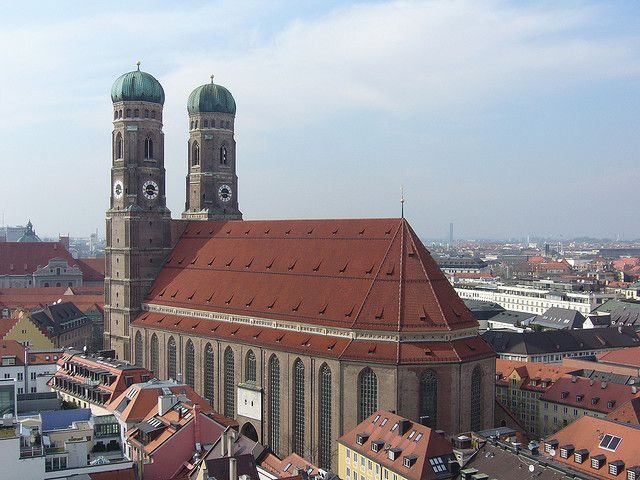
Then you hit the Viktualienmarkt, Munich’s largest and most traditional food market. This is the sensory break in the itinerary—the part that most people remember even months later because it feels lived-in.
You’ll stroll through colorful stalls and hear the usual market sounds: people chatting, vendors calling out, and the steady hum of shoppers making choices. You’re told what to look for, from the fresh bread and cheeses to sizzling sausages. Since meals and drinks aren’t included, treat this as a chance to taste and snack if your budget allows, or simply enjoy the atmosphere if you’d rather keep walking.
The value here is that your guide helps you make the market feel intelligible. Instead of wandering aimlessly (which is fun, but inefficient), you learn what’s locally typical and how to think like a shopper for 10 minutes.
Small drawback to keep in mind: markets can get crowded fast, and if it’s busy, you’ll want to pause briefly, not linger at every stall. Wear comfortable shoes and keep moving with the group.
Alter Hof and Burgstraße: walking where Bavarian power used to sit
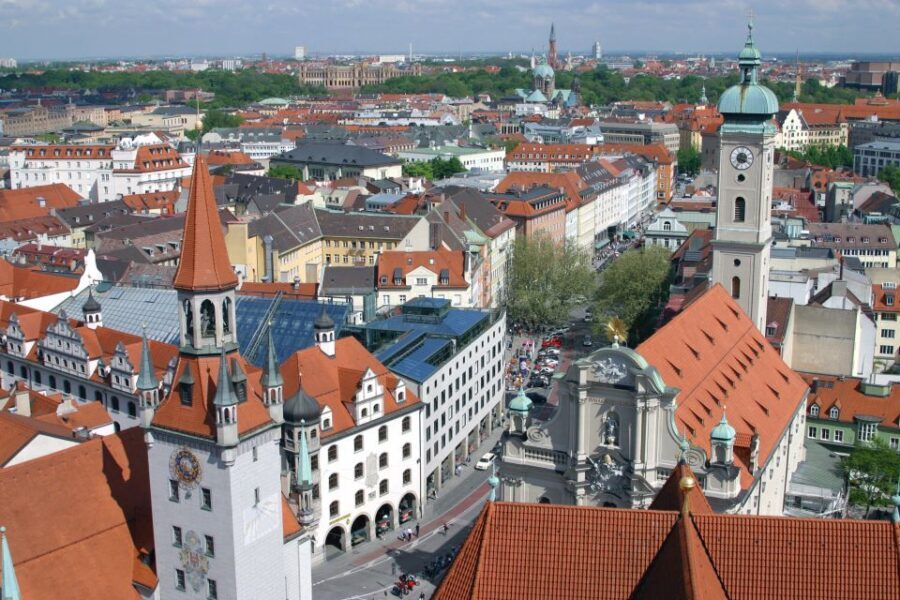
Next comes a shift toward older Munich’s political heartbeat: Alter Hof (the Old Court) and the surrounding area along Burgstraße, one of Munich’s oldest streets.
This is where the tour helps you read the city like a timeline. Alter Hof was the former seat of the Wittelsbach dukes, so the area isn’t just scenic—it’s loaded with meaning. Your guide’s job here is to connect the stones to the people and explain why rulers mattered to how the city formed.
You’ll also get that medieval alley feel as you continue through Platzlgassen—winding lanes that mix older architecture with everyday modern life. This is a great stretch for photos, but it also works as a breathing pause from the big public squares.
If you’re the kind of traveler who likes the “why” behind landmarks, this segment will click. If you’re more into pure sightseeing, it still gives context that makes later stops land better.
Hofbräuhaus: the beer-hall icon, seen in context
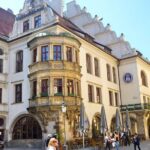
After the historical lanes, the walk reaches Hofbräuhaus München, the world-famous beer hall. You don’t spend hours here, but you do get the essentials: why this place became such a symbol and how beer culture ties into Munich identity.
What to expect in real life: this is one of the places where the exterior energy can overwhelm you. Lots of people, lots of noise, and a constant sense that you’re stepping into a famous scene. A guide helps you slow your brain down enough to notice the important details and understand what you’re looking at.
Also remember: entrance fees and meals aren’t included. So treat the stop as a look-and-learn moment. If you want a beer or a meal inside, you’ll need to do that separately and decide based on your timing and appetite.



Maximilianstraße: switching from history mode to luxury-shopping mode
Then you get a sharp contrast: Maximilianstraße, described as Germany’s most exclusive shopping street. This is one of those moments that helps you understand Munich isn’t just about old buildings and beer halls. It’s also a modern city with a clear taste for luxury.
This segment works best as a mental palate cleanser after Hofbräuhaus and older courtyards. You’re seeing a different kind of Munich—cleaner lines, high-end storefronts, and a vibe that feels more designer and less medieval.
Is it worth it if you don’t shop? Yes, because the street becomes a visual lesson in how cities evolve. You’ll see how the old core and wealthy modern elements sit close enough to feel like the same day, not different eras.
Munich Residenz area, Bavarian State Opera, and Odeonsplatz
The final stretch heads toward the grand civic-and-royal part of town: the Residenz area and beyond.
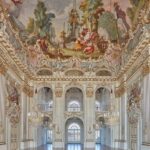
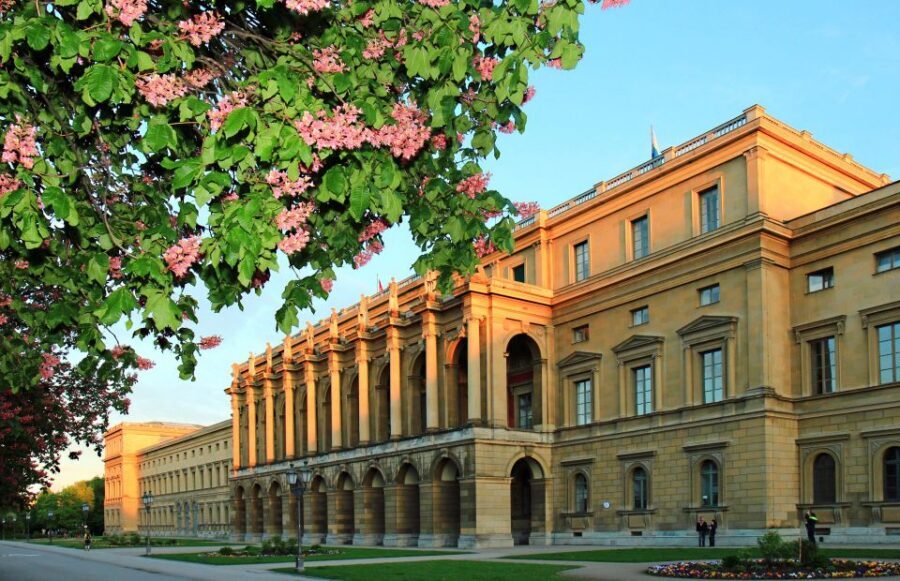
You’ll pass Munich Residenz, connected to Bavaria’s royal past, and the route also includes the vicinity of the Bavarian State Opera, a neoclassical building beside the Residenz. Even if you don’t tour the interiors, you’ll get a sense of scale and importance—these structures weren’t built to be overlooked.
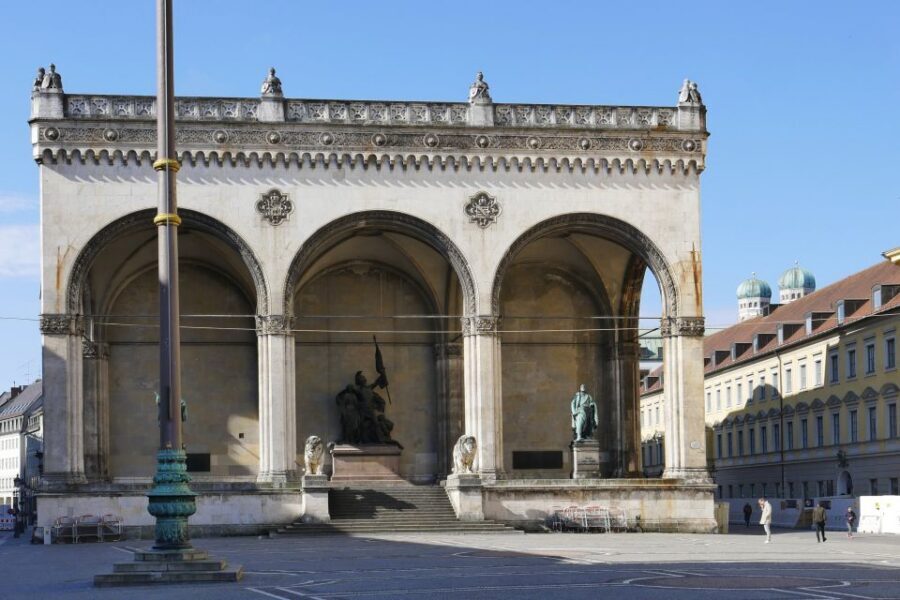
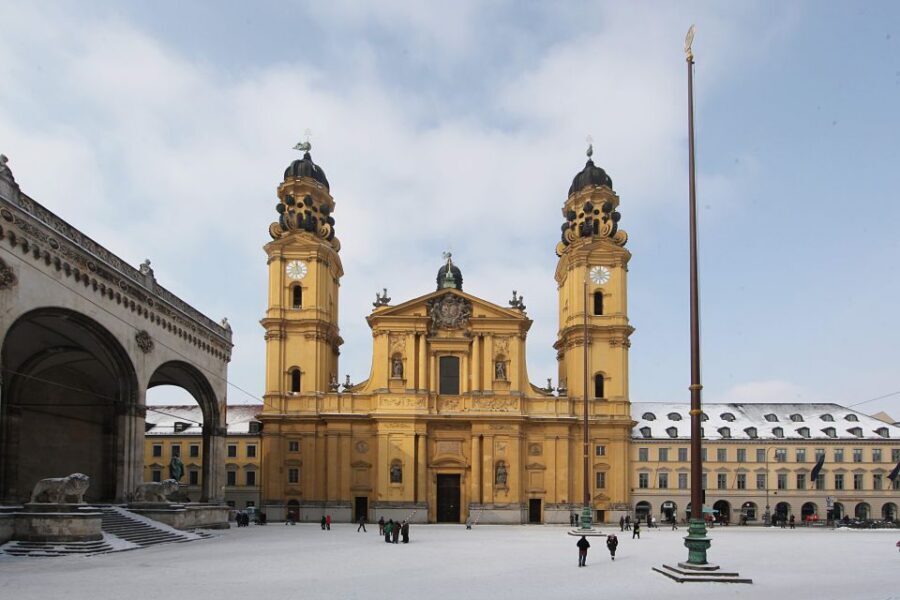
Then you continue to Odeonsplatz, a stately square surrounded by impressive buildings, including the Feldherrnhalle. Opposite stands Theatinerkirche, built in striking Italian Baroque style—part of the reason Munich gets described as having an Italian flavor in certain corners.
This portion is ideal for travelers who like architecture and city geometry. The square feels like a stage: you can stand, look around, and let the guide connect the dots between power, religion, and cultural prestige. If you’re traveling with kids, this is also the area where short attention spans often reset because the buildings look different from each other, fast.
Why your guide matters more than you think (and which styles you’ll see)
This tour is only 1.5 hours, so the guide’s approach becomes the difference between a rushed walk and a memorable one.
In recent experiences, guides like Claudia leaned into storytelling—building the tour like a narrative so places felt connected. Others, like Karen, reportedly tailored the pace and explanations to the group, even engaging with a child learning German and encouraging practical language use. Gerhard was praised for being personable and extremely knowledgeable, with helpful recommendations for where to eat and visit next.
Some guides also bring extra tools. One guest specifically noted that additional pictures helped them understand what they were seeing, which is huge in Munich Old Town where facades can look similar at a distance.
Takeaway for you: go in with a couple of priorities. If you care most about beer culture, ask questions around Hofbräuhaus. If you want architecture, focus your questions near the Residenz area and the Italian Baroque church. A good guide adjusts fast when you give them a direction.
Price and value: is $282 per group up to 30 worth it?
The price is listed as $282 per group up to 30, with a 1.5-hour duration. That structure can be a strong value if you’re traveling with a small crew or family group, because the guide’s cost is spread across more people.
Here’s how to judge it fairly for your trip:
- You’re paying for guided interpretation of multiple top landmarks in one compact loop (Marienplatz, Viktualienmarkt, Alter Hof, Hofbräuhaus, Maximilianstraße, Residenz area, Odeonsplatz). If you’d otherwise piece it together with guidebooks or map-hopping, a live guide saves time and reduces wrong turns.
- The tour includes the guide, but entrance fees, meals, and drinks are not included. So if you want to go inside lots of places, budget separately and use the tour as orientation.
- Because the stops are time-boxed, it’s best if you enjoy a “greatest hits” overview rather than a slow, deep, inside-everything day.
If you’re solo or a couple, the per-group pricing can still work out well compared with multiple individual paid experiences—just check what group size you’re likely joining.
Timing, weather, and smart ways to make the short route feel complete
This is a rain-or-shine tour. That matters in Munich because weather can change fast, and you’ll still be walking between stops. Bring layers and stick to comfortable shoes, especially since you’ll likely be on uneven or historic surfaces typical of central old-town routes.
Also, accept the pace. The itinerary is designed so you see everything quickly. That’s the tradeoff for fitting so many landmarks into 1.5 hours. If you find yourself wishing you had more time at a specific church, beer hall, or square, use the tour to decide what to revisit later.
One more practical tip: if meeting points are unclear (and some are, because statues and plazas can look identical from different angles), arrive a few minutes early and use the guide instructions from your confirmation. It’s an easy way to avoid that awkward moment of wondering if you’re at the wrong spot.
Should you book this Munich Old Town and Viktualienmarkt walk?
Book it if you want a fast, high-signal overview of Munich’s center: Marienplatz, a real market experience at Viktualienmarkt, the beer-hall icon of Hofbräuhaus, and a satisfying contrast to Maximilianstraße and the grand Odeonsplatz area. It’s also a good choice for families, because guides often keep it engaging and flexible.
Skip it or pair it with something else if your style is slow and detailed. This is not the tour for you if you plan to read every inscription or want long interior time at churches and palaces. Instead, treat it as your orientation day: get the story, then return later for the places you liked most.
If you like history told in human terms—plus a little humor and a few practical next-step recommendations—this one is easy to recommend.
FAQ
How long is the Munich Old Town and Viktualienmarkt walking tour?
The tour lasts about 1.5 hours.
How much does it cost?
The price is listed as $282 per group, up to 30 people.
Where do we meet the guide?
There are two starting location options: München 1, Mariensäule, or the area around Neues Rathaus. The meeting point may vary depending on the option you book.
What’s included in the price?
A live tour guide is included.
Are entrance fees included?
No. Entrance fees are not included.
Are meals and drinks included?
No. Meals and drinks are not included.
What languages are the tour guide services offered in?
The tour is available in German and English.
Will the tour run in bad weather?
Yes. The tour takes place rain or shine.
Is the tour wheelchair accessible?
The information says wheelchair accessible, but it also notes it may not be suitable for people with mobility impairments. If this applies to you, it’s smart to ask before booking.
What should I bring?
Comfortable shoes are recommended.