REVIEW · NUREMBERG
Nuremberg: WWII Tour, Courtroom 600 and 3rd Reich Sites
Book on GetYourGuide →Operated by Suzart Tour · Bookable on GetYourGuide
Nuremberg carries weight in every direction. This WWII walking tour leads you straight into the places tied to the Major War Criminals Trial and the architecture built for Nazi spectacle. The small group size also helps: you get more back-and-forth than on huge bus tours.
What I like most is the way the route mixes courtroom history with the rally grounds. You see Courtroom 600 inside the Palace of Justice, then you walk through the broader setting where the Nazi regime tried to manufacture power through scale, symmetry, and staging.
One thing to consider: the pace is tight in a good way, but it can also mean less time at Courtroom 600 than you might hope, especially if you arrive late or want to linger in the exhibition areas.
In This Review
- Key highlights worth your time
- A focused 4-hour plan in Nuremberg (with real stops, not just photos)
- Getting into Courtroom 600 at the Palace of Justice
- Luitpold Arena and the rally-land logic of Nazi planning
- Große Straße: the straight-line approach to power
- Kongresshalle (Congress Hall): scale as a message
- Zeppelin Field: where rallies were staged at maximum volume
- Documentation Center Nazi Party Rally Grounds: the modern counter-lesson
- Transportation and pacing: what works well, what to watch
- Who should book this Nuremberg WWII tour?
- Price: is $147 per person a good value?
- Should you book? My honest take
- FAQ
- How long is the Nuremberg WWII tour?
- Does the tour include hotel pickup and drop-off?
- How large is the small group?
- Is Courtroom 600 included in the price?
- Is the Palace of Justice or Courtroom 600 open every day?
- What languages are the live guides available in?
- Is the tour wheelchair accessible?
Key highlights worth your time
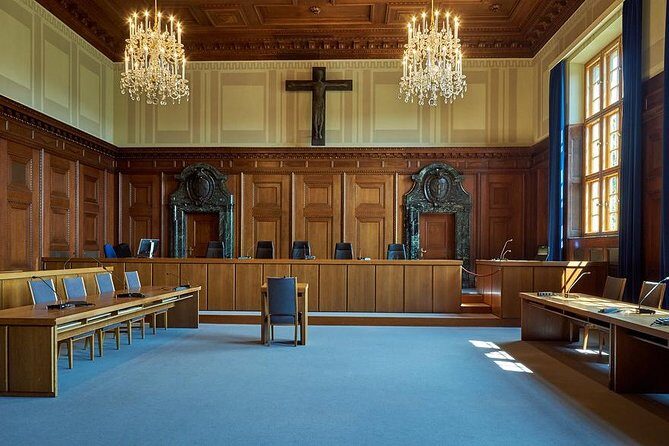
- Courtroom 600 at the Nuremberg Palace of Justice: the setting of the International Military Tribunal trials
- Small group (max 8): easier questions, better listening, less wandering
- Skip the ticket line for the Palace of Justice area (but entrance is still extra)
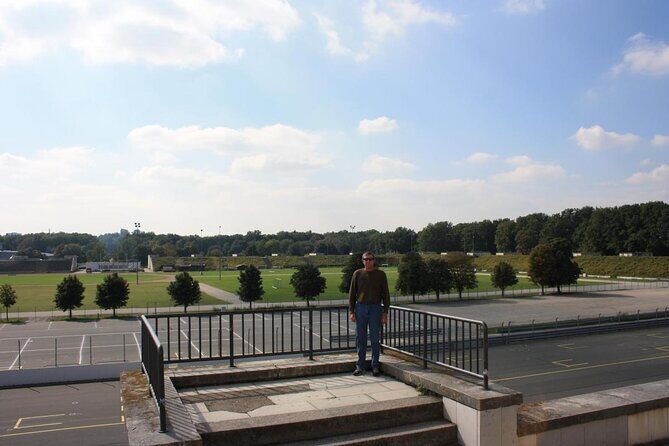
- Nazi rally grounds stops: Luitpold Arena, Große Straße, Zeppelin Field, Kongresshalle/Congress Hall
- Documentation Center Nazi Party Rally Grounds: a modern counterpoint to the original designs
- Guides like Rob and Sheba: animated, high-energy explanations that keep the story moving
A focused 4-hour plan in Nuremberg (with real stops, not just photos)
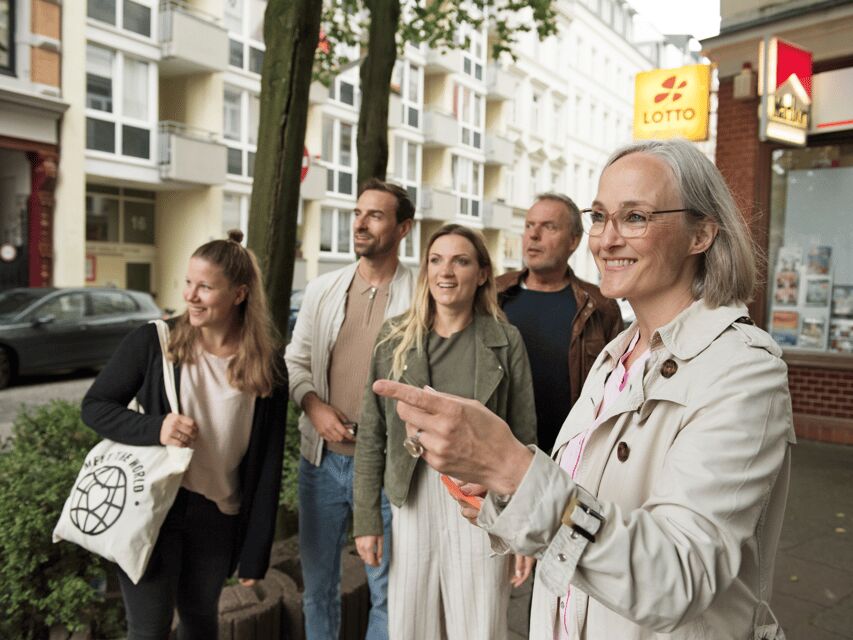
This is a 4-hour Nuremberg WWII tour that’s built around efficient movement and guided explanation. You’re picked up from your accommodation in a comfortable vehicle, then you’re transferred toward the main sites so you spend less time figuring out logistics and more time understanding what you’re seeing.
The group stays intentionally small, capped at 8 participants. That matters here. The subject is heavy, and you’ll do better when you can ask questions, hear details clearly, and keep your bearings without a crowd pushing you along.
You can also read our reviews of more tours and experiences in Nuremberg.
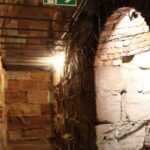
Getting into Courtroom 600 at the Palace of Justice
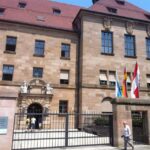
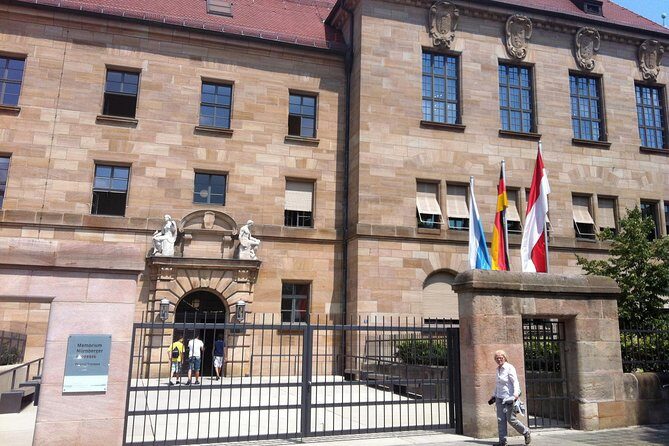
Courtroom 600 is the headliner for a reason. This is where the Major War Criminals Trial took place during the Nuremberg Trials, and the room’s purpose is impossible to ignore once you’re inside. Even if you already know the basics of the trial, standing in the same courtroom setting shifts the story from abstract events to something immediate.
The tour helps with one practical problem: you can skip the ticket line. That’s a real time-saver when you’re traveling and your schedule is limited. The entrance fee is separate, so plan on paying €7.50 per person for the Palace of Justice area.
A small heads-up from the pacing: if you want the deepest, longest linger in the courtroom exhibition spaces, you may find the end portion moves quickly. This isn’t the fault of the guide—it’s the math of a 4-hour circuit—but it’s worth weighing.
Luitpold Arena and the rally-land logic of Nazi planning
After the courtroom stop, the tour shifts your attention to the larger stage the Nazi regime tried to build for itself. At Luitpold Arena (Luitpoldhain), you’ll get a guided walk and a sense of the open space meant to host mass events. The key isn’t just what the site was used for—it’s how it was designed to create spectacle and collective emotion.
One of the smartest things this tour does is connect the courtroom outcome to the earlier propaganda machinery. The rally grounds aren’t just “old ruins.” They show how the regime tried to turn politics into performance, with architecture acting like an amplifier.
Große Straße: the straight-line approach to power
You’ll also pass through and be guided around Große Straße, part of the processional and staging area tied to the Nazi rally complex. This is one of those places where the details matter more than the length of time.
The guided time here is short, but it’s enough to help you understand how the layout encouraged control: direct sightlines, a sense of inevitability in movement, and a choreography that made participants feel like part of something bigger than themselves.
Kongresshalle (Congress Hall): scale as a message
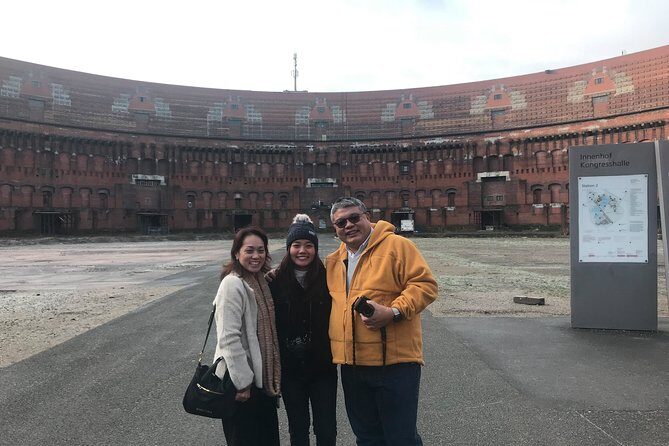
The Kongresshalle / Congress Hall stop is about scale. From the outside, it can be hard to grasp how the Nazis intended it to communicate megalomania and control through size and symmetry. That’s why you get both a photo stop and guided framing.
If you’re the type who likes to read details into architecture, you’ll enjoy this part. The building’s proportions are the story: it was meant to dwarf people, not the other way around. Even when you know the ideology, seeing the ambition in stone still lands.
Zeppelin Field: where rallies were staged at maximum volume
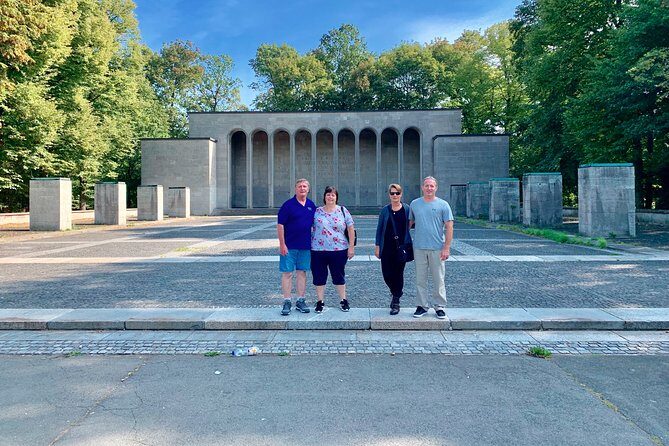
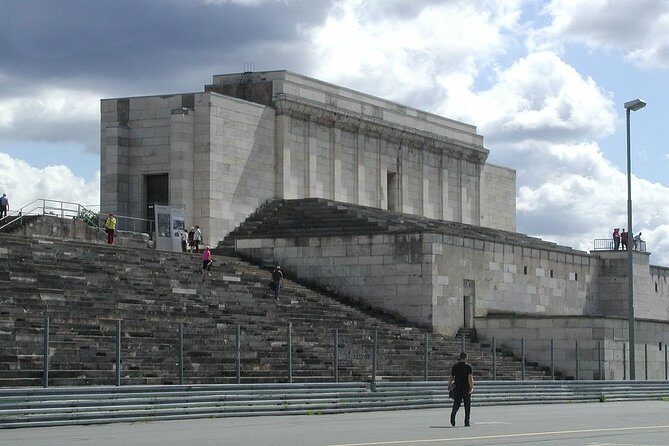
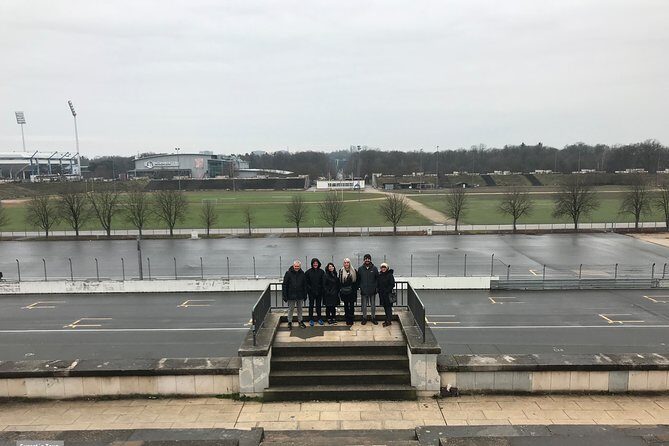
Next comes Zeppelinfeld / Zeppelin Field, another core rally area. You get time for a guided visit and time to stop for photos. Again, it’s not about a single object so much as the space itself—how it’s shaped for crowds and designed for spectacle.
In my view, this stop works best if you take a slow minute at the open areas and let your mind picture how it might have been used. The emptiness today makes the original intention feel sharper, not softer.
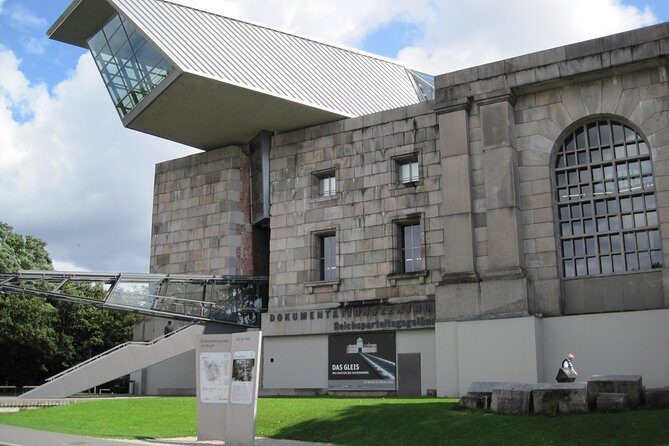
Documentation Center Nazi Party Rally Grounds: the modern counter-lesson
The Documentation Center Nazi Party Rally Grounds is an important architectural and educational pivot point. The museum sits in a zone that still carries the original intent, but it’s designed to interrupt the Nazi visual language rather than continue it.
The tour frames it as an “architectural pun,” and that’s a good way to think about it. The modern presentation forces you to ask what happened here, how people were manipulated, and how the built environment supported ideology.
If you like museums that explain through design choices, you’ll probably appreciate how this space tries to change your mental footing. You’re no longer standing only in the past—you’re being guided out of it.
Transportation and pacing: what works well, what to watch
You’re on the move through multiple sites, and the tour builds in a vehicle transfer period (about an hour) before the guided walk portion settles into the main complex. That helps you avoid the “I’m rushing and still lost” feeling that can happen with self-guided plans.
The upside of the pacing is coherence. You don’t just jump between unrelated photos. You move from the courtroom—the legal accounting of evil—to the rally grounds—the stagecraft that tried to sell it to a public.
The potential downside is time pressure near the end. A few people found the amount of time at Courtroom 600 didn’t match what they expected, so if you consider the courtroom the main event, arrive on time for the start, and keep an eye on your schedule so you don’t feel shortchanged.
Who should book this Nuremberg WWII tour?
This is a strong fit if you want a guided Nuremberg WWII overview that hits the big emotional and educational anchors: Courtroom 600, Congress Hall, Zeppelin Field, and the documentation-focused museum stop.
It’s especially good for small-group travelers who don’t want to spend their day stitching together transit maps and ticket timing. The guide’s energy helps here. In past departures, guides like Rob and Sheba have been described as engaging and interactive, which is exactly what you need when the topic isn’t light.
If you’re traveling with kids or teens, you’ll want to judge how your group handles difficult material. This tour doesn’t shy away from the seriousness of what happened. For older teens and adults who can handle heavy context, it’s well suited.
Price: is $147 per person a good value?
At $147 per person, you’re paying for more than “someone walking with you.” You’re getting hotel pickup and drop-off, a live guide, and a compact route that covers the key Nazi-era rally grounds plus the Palace of Justice experience.
Because the €7.50 Courtroom 600 entrance fee is not included, your all-in cost depends on the final total once you add entry. But even with that add-on, the value can make sense if you’d otherwise pay for separate transport time and tickets while trying to self-coordinate a multi-stop day.
In plain terms: this price works best when you want structure. If you enjoy slow wandering and self-guided reading at your own tempo, you might feel limited by the 4-hour frame.
Should you book? My honest take
Yes—if you want a high-impact WWII route with a guide who can connect the courtroom to the rally grounds. The small group size makes it easier to process what you’re seeing, and the stop at Courtroom 600 is the kind of experience that’s difficult to replicate on your own without careful planning.
If your top priority is maximum time inside Courtroom 600’s spaces, book with the understanding that the tour is tightly scheduled. I’d still choose it, but I’d mentally plan for shorter viewing windows.
And because access can depend on the calendar, note that the Palace of Justice and Courtroom 600 are closed on Tuesdays. If you’re traveling on a Tuesday, choose a different day.
If you’re aiming for a guided day that’s powerful without being chaotic, this is a solid pick—especially with a tour company that runs comfortable pickup logistics and keeps the group small.
FAQ
How long is the Nuremberg WWII tour?
The tour lasts 4 hours.
Does the tour include hotel pickup and drop-off?
Yes. Pickup and drop-off are included, and pickup is from outside your accommodation in Nuremberg.
How large is the small group?
The group is limited to 8 participants.
Is Courtroom 600 included in the price?
No. The Nuremberg Palace of Justice entrance fee (including Courtroom 600) is €7.50 per person, and that fee is not included in the tour price.
Is the Palace of Justice or Courtroom 600 open every day?
No. The Palace of Justice and Courtroom 600 are closed on Tuesdays.
What languages are the live guides available in?
Live tour guides are available in English, Portuguese, Spanish, and Italian.
Is the tour wheelchair accessible?
Yes. The tour is wheelchair accessible.