REVIEW · BERLIN
Rude Bastards tour of Berlin (CYHIT)
Book on Viator →Operated by Rude Bastards Tour Berlin · Bookable on Viator
Berlin history hits hard, then gets funny.
This 3-hour-plus walk strings together landmark sights from the German capital’s darkest chapters to the city’s postwar rebuilding, with a guide who mixes jokes and clarity to keep you moving. I love the small group size and the tight time on key stops, so you don’t spend your day waiting around. I also love that the route covers both the major icons and the places that explain how Berlin got divided and then reassembled.
One possible drawback: it’s aimed at adults (18+) and the humor can be off-color, so if profanity or banter will bother you, choose carefully—especially on days when you’re also trying to take in the serious memorials.
In This Review
- Highlights At a Glance
- A Small-Group Berlin Walk With Off-Color Humor
- Price and Logistics (Why This Is Such a Value)
- Potsdamer Platz Start: Getting Oriented Without Feeling Lost
- Tiergarten and the Soviet Soldier Memorial: Mourning in Plain Sight
- Brandenburg Gate: The German Entrance That Means More Than Photos
- The Holocaust Memorial Stop: Serious Grounds, Short Time, Clear Framing
- Hitler’s Bunker Location (Fuhrerbunker): The End of the Story
- Reichstag, Old Cold War Lines, and Berlin’s Rebuild Mindset
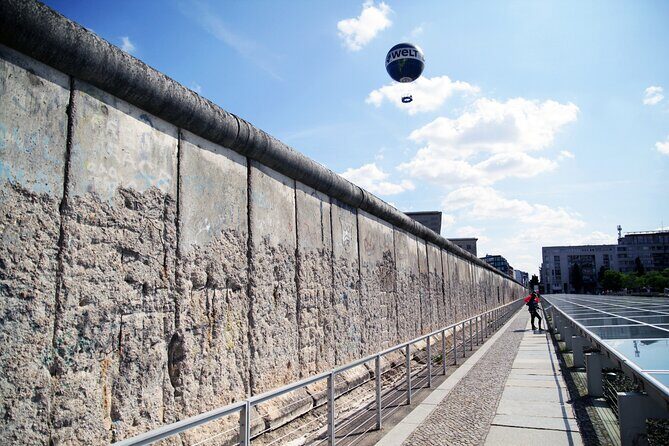
- Luftwaffe HQ, Berlin Wall, and Checkpoint Charlie: Where the Division Became Real
- Gendarmenmarkt and Bebelplatz: Finishing on Learning and Memory
- Pacing, Walking Comfort, and How to Handle Weather
- Who Should Book This Rude Bastards Tour (and Who Should Skip)
- Should You Book This Berlin Walking Tour?
- FAQ
- How long is the Rude Bastards tour of Berlin?
- How much does it cost?
- What language is the tour offered in?
- How many people are in the group?
- Where does the tour start and end?
- Do I need an admission ticket at the main sites?
- Is a mobile ticket used?
- Is the tour aimed at adults only?
- Is it near public transportation?
- Can I cancel for a refund?
Highlights At a Glance
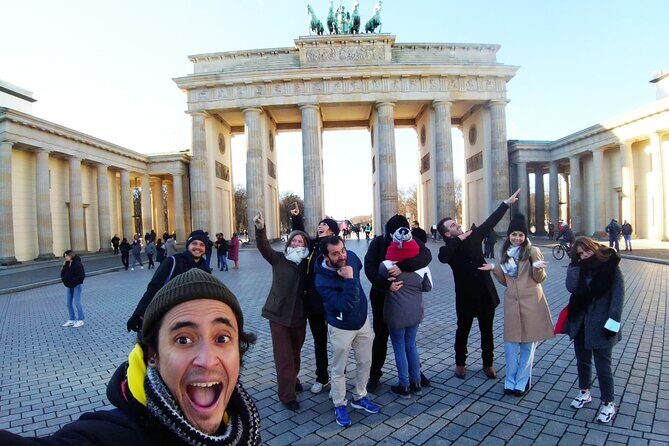
- Small group (max 10): more questions, less crowd chaos.
- English-speaking guides: easy to follow without a history class vibe.
- Major WWII and Cold War stops: Brandenburg Gate, Reichstag area, Hitler’s bunker location, Berlin Wall, Checkpoint Charlie.
- Quick, useful stop times: you’ll get context without burning the whole day at one point.
- Entry notes built into the visit: some memorials are free, others aren’t included.
- Built-in break: a short pause mid-walk so you can reset.
A Small-Group Berlin Walk With Off-Color Humor
This isn’t the gentle, cookie-cutter history tour. The tone is more like a sharp-tongued friend showing you Berlin’s turning points—serious when it needs to be, funny when it helps you remember. Guides you might encounter include Kai, Alex, Arthur, Anna, Nichole, Frey, Jason, Felix, and Nicole, and the common thread is energy: lots of storytelling, lots of pacing, and quick answers when people ask questions.
If you’ve ever sat through a “fun facts” tour that feels scripted, you’ll likely appreciate how this one reads as real talk. One guide style you’ll notice in how the tour lands: jokes show up to keep attention up, but the serious stops get respected instead of rushed.
You can also read our reviews of more tours and experiences in Berlin.



Price and Logistics (Why This Is Such a Value)
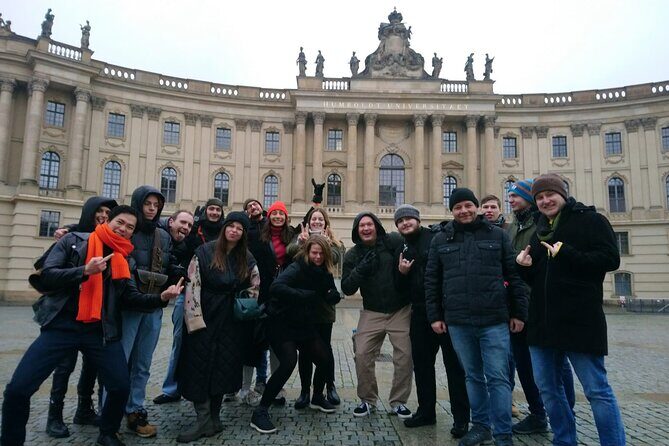
The listed price is $3.63 per person, which is almost suspiciously low for a 3+ hour guided walk. Even so, I’d treat it as a bargain that’s primarily paying for the guide’s interpretation and the guided path—not for admission to every site.
Here’s the practical part:
- Some stops are free: for example, time at Brandenburg Gate is listed as free, and Fuhrerbunker is also listed as free.
- Some tickets aren’t included: the Memorial to the Murdered Jews of Europe explicitly says admission is not included.
So the value isn’t just the headline price. It’s that you’re likely to get a guided overview of the “what happened here” story across multiple eras, without paying for every stop yourself.
Also, the tour uses a mobile ticket, runs in English, and keeps the group to 10 travelers max. That small size matters in Berlin, where waiting for a crowd to gather can eat time fast.
Potsdamer Platz Start: Getting Oriented Without Feeling Lost
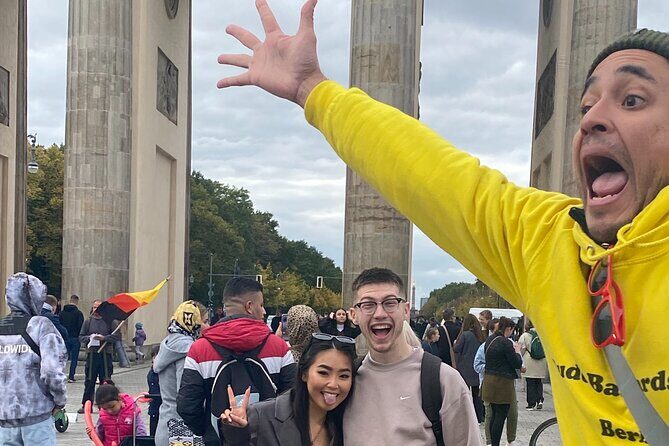
Most good Berlin trips start with orientation. This one begins at Potsdamer Platz—a spot that feels like a crossroads between eras: modern street life nearby, but the city’s wartime and division history still sits in the background of the streets.
From there, you’re set up to understand Berlin as a “layers” city:
- the prewar political center,
- the Nazi period and its aftermath,
- then the Cold War line that split everyday life,
- and finally reunification-era Berlin.
Because the group is small and the walk is roughly 3 hours 15 minutes, you get enough coverage to connect the dots for the rest of your trip. You’ll likely finish with a better sense of which sites you want to return to on your own.
Tiergarten and the Soviet Soldier Memorial: Mourning in Plain Sight
The route passes through Tiergarten, Berlin’s central park (noted as Germany’s third largest). Even if you’re not a “park person,” this stop helps you feel the scale of Berlin outside the built-up monuments.
Then comes a memorial that anchors the tour’s WWII weight: a Soviet soldier memorial in Berlin with statues, tanks, and an obelisk. It’s the kind of place where the setting does work for the meaning. You’re not just looking at a plaque—you’re seeing how public space was used to frame sacrifice and victory.
Practical tip: this is one of the moments where your guide’s pacing matters. In the reviews, people praise guides for shifting tone correctly—jokes stay on pause here, and you get room to absorb what you’re looking at.
Brandenburg Gate: The German Entrance That Means More Than Photos
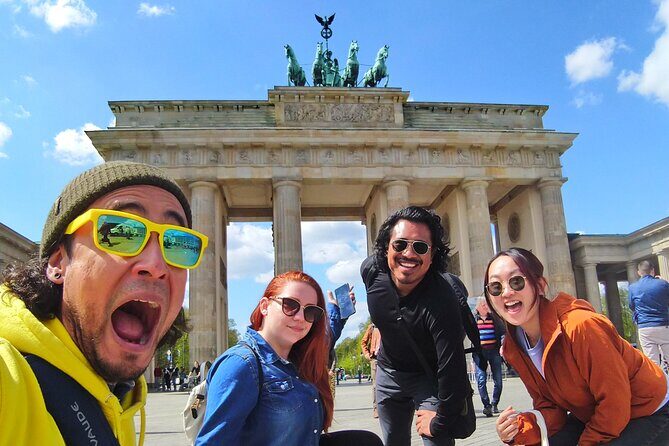
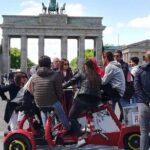
The tour spends time at the Brandenburg Gate, described as Germany’s main landmark and the city’s main entrance. That matters, because it’s easy to treat it like a postcard backdrop.
In this tour, you’re guided to see the gate as a symbol that has been reused by different political realities over time. You’ll get about 15 minutes here, which is just long enough to notice details and understand why the gate keeps showing up in arguments about German identity.
A quick note: you don’t need an admission ticket for this stop, and that helps keep your day smooth.



The Holocaust Memorial Stop: Serious Grounds, Short Time, Clear Framing
Next up is the Memorial to the Murdered Jews of Europe—the Holocaust Memorial. It’s listed as 10 minutes, with admission not included.
Even with a short stop time, this is one of the most important places on the route because it forces you to slow down. The memorial is designed to create discomfort and reflection. So when a guide keeps it respectful and focused, you get more than a “look at that” moment.
If you want to spend longer than the tour allows, plan to come back later. This stop is a “quality over quantity” kind of visit. You’ll likely leave feeling like you should read more, not because the tour was rushed, but because the subject deserves space.
Hitler’s Bunker Location (Fuhrerbunker): The End of the Story
The tour includes the Fuhrerbunker area—where Hitler spent his last months. The timing listed is 10 minutes, and it’s marked as free.
This is one of those stops where context is everything. A good guide doesn’t try to sensationalize. Instead, they connect the location to the collapse of the Nazi regime and Berlin’s final turning point. Expect the tour’s tone to stay serious here, even if the guide’s style is usually playful.
If you’re the kind of traveler who likes to understand how cities changed day-to-day, this stop helps you connect “politics” to “streets,” because the bunker wasn’t some abstract concept—it was part of the reality of the final days.
Reichstag, Old Cold War Lines, and Berlin’s Rebuild Mindset
As you move along the tour’s arc, you’ll pass major government and civic areas like the Reichstag vicinity and broader memorial settings tied to the city’s war and aftermath. The tour also references an “old customs checkpoint” feel—set between the Soviet Communist and American Capitalist sectors.
That’s a big deal for how you understand Berlin. The city wasn’t just divided by walls; it was organized by checkpoints, paperwork, and the daily friction of borders. When you learn that in context—near the sites where the division was physically enforced—you stop thinking of the Cold War as something that happened far away in history books.
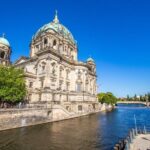
You’ll also see Museum Island referenced on the route, which gives you a natural sense that Berlin isn’t only monuments and memorials. It’s also where art, learning, and public life reasserted themselves after the devastation.
Luftwaffe HQ, Berlin Wall, and Checkpoint Charlie: Where the Division Became Real
These are the stops that most people picture when they think Berlin—the Berlin Wall and Checkpoint Charlie.
- The Berlin Wall segment is where you get the explanation of how a single city became two narratives.
- Checkpoint Charlie is treated like a story anchor: the border site that lets you understand how people moved (or couldn’t), how power worked, and why these locations kept their symbolic punch long after the physical systems were gone.
The tour also includes Luftwaffe HQ and other Cold War-era institutional landmarks along the way. Even if you don’t know the name before you arrive, your guide’s job is to connect those buildings to the larger story of control, conflict, and postwar power shifts.
Practical reality: you’ll be walking through areas where people take photos constantly. If you want better pictures, move with your guide so you’re not stuck waiting at the back of a group.
Gendarmenmarkt and Bebelplatz: Finishing on Learning and Memory
As you near the end, the tour routes you toward Gendarmenmarkt and then finishes at Bebelplatz (Unter den Linden).
This ending is smart because it balances emotion and civic meaning. Bebelplatz feels like a place where the city is talking to itself—about culture, institutions, and how memory gets kept alive in public squares. The tour also points you toward Museum Island nearby, which is a good nudge if you want to turn your walking context into a focused museum visit later.
If you’re planning a second day in Berlin, this finish can make planning easier. You’ll know which directions feel most relevant based on what your guide highlighted.
Pacing, Walking Comfort, and How to Handle Weather
The tour is built around a walking rhythm of roughly 3 hours 15 minutes, with a short break mid-route (listed as a 20-minute break at a Berlin mall). Reviews also mention that the walk time feels manageable—flat roads help, but it’s still a real walking day.
A few practical tips from how this tour typically plays:
- Bring a rain layer. Several people mentioned wet or cold weather and still praised the experience.
- Wear comfortable shoes. You’ll cover multiple zones, not just one tight museum cluster.
- If you’re a smoker, be mindful of the timing and your impact on the group. One person flagged that smoking during the walk reduced enjoyment. You don’t want that kind of disruption on a day where everyone is sharing space.
Who Should Book This Rude Bastards Tour (and Who Should Skip)
This tour is best for you if:
- you want Berlin’s key WWII and Cold War sites in one guided circuit,
- you like a guide who uses humor to keep you listening,
- you’re okay with adults-only tone and off-color banter,
- and you like asking questions in a small group.
It may not fit if:
- you prefer strictly neutral, museum-style narration,
- you’re easily offended by profanity or spicy jokes,
- or you want a long, slow visit at memorial grounds with lots of quiet time.
Also, because it’s 18+ for adults, it’s not trying to be family friendly.
Should You Book This Berlin Walking Tour?
If you want an efficient way to understand why Berlin looks the way it does today—without turning your day into a march through silence—this tour is a strong pick. The small group size (max 10) plus the quick focus on the core landmarks (Brandenburg Gate, Holocaust Memorial, Fuhrerbunker area, Berlin Wall, Checkpoint Charlie) makes it a good first or second day option when your goal is to get oriented fast.
I’d book it if you can handle a rougher-edged guide style and you’re paying attention at the serious stops. Skip it if humor and profanity will pull you out of the memorial moments.
FAQ
How long is the Rude Bastards tour of Berlin?
The duration is approximately 3 hours 15 minutes.
How much does it cost?
The price listed is $3.63 per person.
What language is the tour offered in?
The tour is offered in English.
How many people are in the group?
This tour has a maximum of 10 travelers.
Where does the tour start and end?
It starts at Potsdamer Platz 10, 10785 Berlin, Germany and ends at Bebelplatz (Unter den Linden), 10117 Berlin, Germany.
Do I need an admission ticket at the main sites?
Some stops are free (like Brandenburg Gate and Fuhrerbunker), but the Memorial to the Murdered Jews of Europe lists admission as not included.
Is a mobile ticket used?
Yes, it uses a mobile ticket.
Is the tour aimed at adults only?
The tour is for adults 18 years and above.
Is it near public transportation?
Yes, it’s listed as near public transportation.
Can I cancel for a refund?
Yes. Free cancellation is available up to 24 hours in advance for a full refund.