REVIEW · NUREMBERG
Nuremberg World War II
Book on Viator →Operated by Suzart Tour · Bookable on Viator
Three hours can feel like a timeline rewind.
This Nuremberg tour strings together the biggest Third Reich landmarks with a preplanned route, so you spend less time figuring out logistics and more time seeing how propaganda space was built. I especially like the focus on the Nuremberg trials and the chance to stand in Courtroom 600.
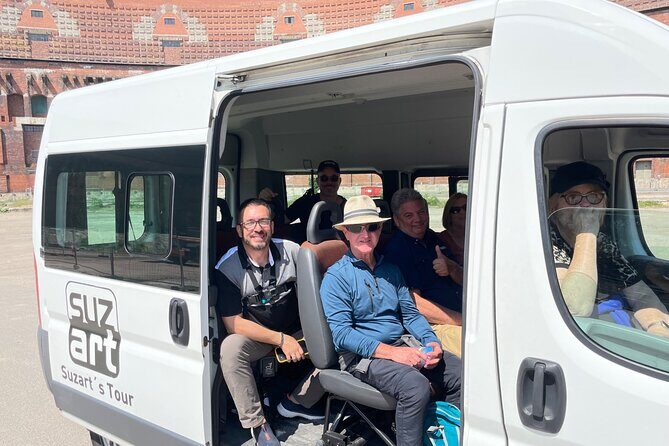
Two things I love here: you get pickup in Old Town (or a set meeting point nearby) plus private transportation, and the pacing is designed for a small group (up to 8). On a heavy topic, that kind of comfort matters, and it makes it easier to ask questions along the way.
One consideration before you book: the Palace of Justice ticket is not included (it’s €7.50), and the Palace of Justice is closed on Tuesdays. If your dates land on Tuesday, you’ll need to choose another day or another tour.
In This Review
- Key points to know before you go
- Nazi architecture in Nuremberg: what this tour is really about
- Pickup and private transport: less hassle, more time on the ground
- Documentation Center at the Nazi Party Rally Grounds: the 4-square-kilometer backstory
- Zeppelinfeld: the parade ground, the Speer connection, and a quick hit of scale
- Courtroom 600 in the Palace of Justice: the emotional core of the tour
- Timing and pacing: why 3 hours can feel both efficient and short
- Price value: what you’re paying for, and what adds cost
- The guide factor: Rob’s storytelling style (and what to expect)
- Who should book this WWII Nuremberg tour?
- Should you book? My practical take
- FAQ
- How long is the Nuremberg WWII tour?
- What sites are included?
- Is pickup included, and where does it start?
- Is the Palace of Justice admission included in the price?
- Is the Palace of Justice open every day?
- How big is the group?
- Can I cancel for a full refund?
Key points to know before you go
- Old Town pickup and private transport so you can focus on sites, not maps.
- Documentation Center + rally grounds shows how the Nazi rallies were staged across 4 square kilometers.
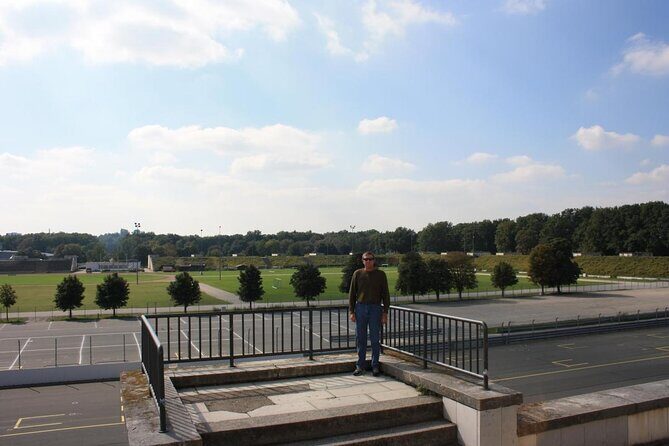
- Zeppelinfeld is a short stop, but it connects directly to Albert Speer and the grand parade-ground design.
- Courtroom 600 is the emotional anchor, and it’s still used for certain court cases.
- Small group size (max 8) keeps the tour feeling personal rather than rushed.
- Palace of Justice runs on a daily schedule and closes on Tuesdays.
Nazi architecture in Nuremberg: what this tour is really about
Nuremberg is one of those German cities where the past sits in the landscape. This tour is built around that idea, walking you through places tied to the Nazi party rallies and then ending at the courtroom where major war-crimes defendants were tried after the war.
The tour also makes the story concrete. You see the rally grounds as physical propaganda stagecraft, then you move into a courtroom setting that re-centers the narrative on accountability. That shift is the point.
You can also read our reviews of more tours and experiences in Nuremberg.
Pickup and private transport: less hassle, more time on the ground
You start with pickup in Nuremberg Old Town, specifically the River Cruise Port area. If your hotel is outside the Old Town, you’ll go to the pick-up point instead: Novotel Hotel Centre Ville, Bahnhofstrasse 12.
From there, the driver-guide handles the moving pieces. A private vehicle matters here because the sites aren’t all clustered right next door, and you don’t want to burn your morning hunting down buses or taxis while the rest of the group is ready to roll.
Also nice: you get a mobile ticket, and confirmation comes at booking time. If you like a smooth start, this format tends to deliver.
Documentation Center at the Nazi Party Rally Grounds: the 4-square-kilometer backstory
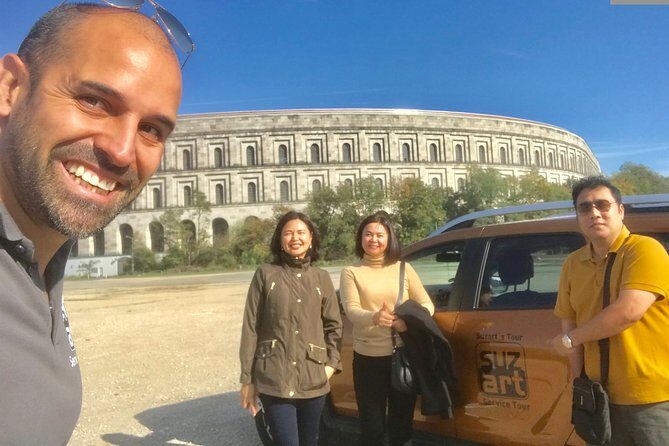
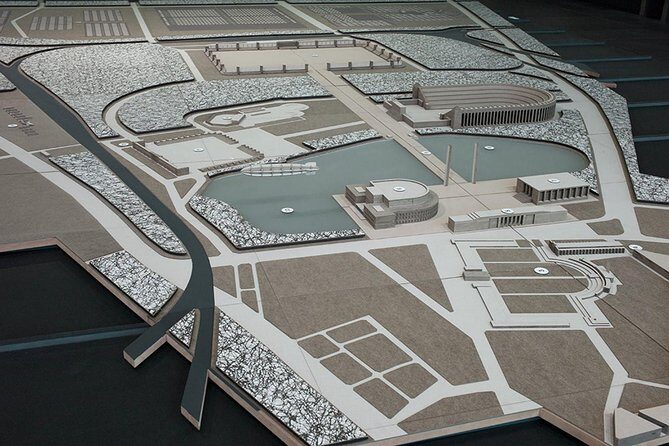
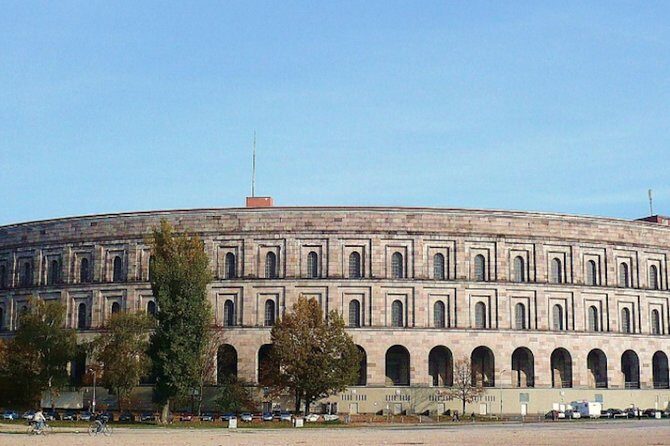
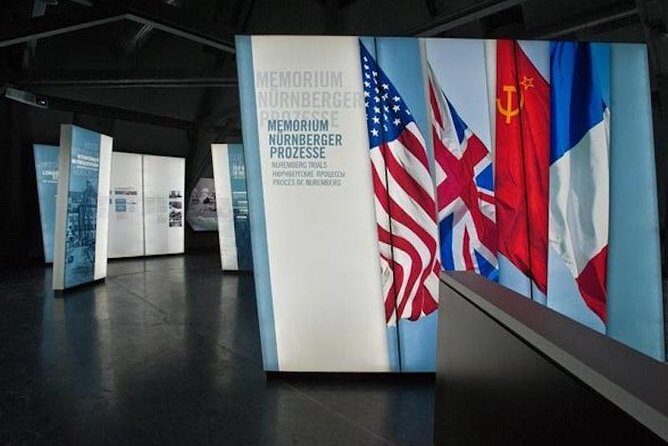
The first stop is the Documentation Center at the Nazi Party Rally Grounds. Between 1933 and 1938, the National Socialists held their party rallies in Nuremberg, using the city as a stage for mass spectacle. Today, parts of the monumental structures still mark the scale.
This is more than a quick glance. The museum/exhibition setting gives context for the dictatorship and the history of the rallies—how the space was used, and why those events were engineered to look inevitable and powerful. Expect about 1 hour here, and note that the ticket for this stop is free.
Why this stop works: without background, those sites can look like impressive-but-blank ruins. With the right framing, you start noticing the deliberate design choices—who the space was meant to impress, how the crowd would be directed, and how the whole thing functioned as theater.
Practical tip: museums like this reward slow looking. If you want to read everything, you might wish you had more than the scheduled time—but you’ll still come away with a stronger lens for the outdoor sites that follow.
Zeppelinfeld: the parade ground, the Speer connection, and a quick hit of scale
Next comes Zeppelinfeld. This stop is short—about 20 minutes—but it’s targeted.
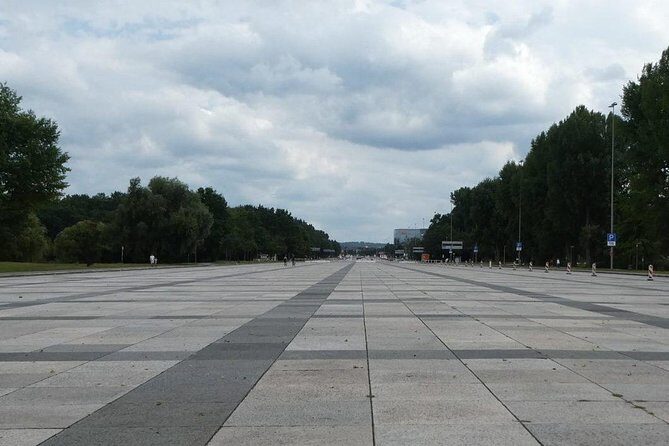
In 1935 to 1937, the Zeppelinwiese (Zeppelin Field) was redesigned based on Albert Speer’s 1934 design. The idea was a parade-ground layout with grandstands, and the northeast side included a Zeppelin grandstand as a dominant backdrop. The good news is that Zeppelinfeld is described as the only completed building on the larger Reichsparteitagsgelände complex.
So yes, it’s quick. But it’s a useful pause because you connect the museum framing to real outdoor geometry. Even with limited time, you get the sense of how engineered the space is for procession and mass viewing.
If you’re the type who hates rushing, do this stop as a visual check-in: look at sightlines, notice how big the ground feels, and then let the guide do the rest.
Courtroom 600 in the Palace of Justice: the emotional core of the tour
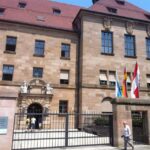
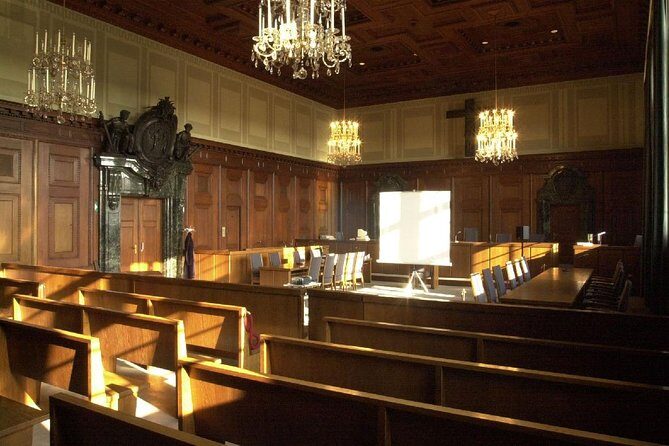
The Palace of Justice is the highlight stop for many people for a reason: this is where the Nuremberg Trials took place (from 1945 to 1949) for the main surviving German war criminals of World War II.
The building was chosen because it was almost undamaged, had enough space, and included a large prison complex. And Nuremberg itself mattered symbolically, since the Nazis had held major Nuremberg rallies in the city.
Here are the key details you should know going in:
- The famous room was courtroom number 600, in the palace’s eastern wing.
- The courtroom is still used, especially for murder trials.
- After the trials ended, courtroom 600 was refurbished. The space was adjusted: a removed wall was re-erected, and the judges’ bench was repositioned (turned 90 degrees) so it no longer sits in front of the window the way it did during the wartime proceedings.
Admission here is not included: you pay €7.50 per person. The tour schedule includes about 1 hour at the palace.
Two practical notes that can change your experience:
- The Palace of Justice is closed on Tuesdays. That one rule can make or break your day.
- If you’re hoping for lots of time inside the courtroom museum/exhibition areas, you may find the allocated time tight. The tour can feel like an introduction that sends you wanting more.
This is a sober location. I suggest you pace your own breathing and don’t feel pressured to race through the room just because the group moves on.
Timing and pacing: why 3 hours can feel both efficient and short
The tour runs about 3 hours total, with the heaviest stop at the Palace of Justice and an hour at the Documentation Center. Zeppelinfeld is brief by design.
This timing is a trade-off. You get a sensible sampler of the sites that matter most, and you don’t waste time backtracking. But if you want to linger, read every board, and fully absorb the trial context at length, you may wish the day were longer than the set duration.
That said, the structure is smart for first-time visitors. It gives you an ordered path: propaganda space first, then the justice space. Your brain builds the contrast fast, and the story lands.
Price value: what you’re paying for, and what adds cost
The price is $91.71 per person for a roughly 3-hour tour. What’s included:
- Driver-guide
- Private transportation
What’s not included:
- Palace of Justice admission: €7.50 per person
- Also, remember the Tuesday closure.
So your all-in cost is basically that base fee plus the courtroom admission. For many travelers, the value comes from the combination of guided interpretation and the convenience of private transport between the sites.
If you’re someone who already plans to rent a car or take your own route, you might compare costs. But for this specific mix—rally grounds plus a trial courtroom—the guided framing is a big part of the payoff. It’s not just seeing buildings; it’s understanding why they were built and what happened in them.
The guide factor: Rob’s storytelling style (and what to expect)
The tour has a driver-guide format, and the most frequent standout theme is how the guide handles story and clarity on an intense subject.
One guide named Rob is repeatedly described as friendly and lively, arriving early and making sure the group is comfortable. He also used visual materials—photos shared to passengers on his phone—to help people imagine what the sites looked like in Nazi Germany. Another described highlight was him demonstrating acoustics in the rally space, using it as a way to explain how the propaganda events were engineered for impact.
You’ll also find the tone tends to include context beyond just the sites—like how international businesses related to the war effort, and small details that make the bigger picture feel less abstract. Even with that extra context, the tour stays within its set time.
Not every experience lands the same for every person. A few comments mentioned English speed or clarity, and one mentioned late arrival due to traffic, which cut the tour short. Your best move is to pick a date when you can be flexible and to communicate if you need slower pacing or clarification.
Who should book this WWII Nuremberg tour?
This is a good match if you:
- Want the top Nazi-era sites without driving yourself
- Are specifically interested in the Nuremberg Trials and Courtroom 600
- Prefer a small group format (max 8) and a guide who can answer questions
- Like your history explained in a guided, structured way rather than reading everything solo
It may be less ideal if you:
- Want hours and hours inside the Palace of Justice and museum areas
- Are very sensitive to tour timing and cannot tolerate schedule changes
- Need extremely slow, highly detailed narration to feel confident in your understanding
For anyone doing Nuremberg as part of a longer Germany trip, this tour is a strong “core day.” It also sets you up to explore the Old Town afterward with better context.
Should you book? My practical take
Book it if you want a focused, guided sweep of the most important Nazi rally sites and the courtroom where the trials happened. The combination of pickup, private transport, and a small group keeps the day manageable, and the Courtroom 600 stop is the kind of experience that tends to stay with you.
Skip (or reschedule) if your dates fall on a Tuesday, because the Palace of Justice is closed then, and that stop is the heart of the tour.
FAQ
How long is the Nuremberg WWII tour?
It runs about 3 hours.
What sites are included?
The tour includes the Documentation Center Nazi Party Rally Grounds, Zeppelinfeld, and the Palace of Justice (Courtroom 600).
Is pickup included, and where does it start?
Pickup is offered in Nuremberg Old Town at the River Cruise Port area. If your hotel is outside the Old Town, you’ll go to the pick-up point at Novotel Hotel Centre Ville, Bahnhofstrasse 12.
Is the Palace of Justice admission included in the price?
No. You’ll pay an admission fee for the Palace of Justice: €7.50 per person.
Is the Palace of Justice open every day?
No. The Palace of Justice is closed on Tuesdays.
How big is the group?
The tour has a maximum of 8 travelers.
Can I cancel for a full refund?
Yes. You can cancel up to 24 hours in advance for a full refund.