REVIEW · NUREMBERG
Nuremberg WWII Tour, Courtroom 600 and 3rd Reich Sites
Book on Viator →Operated by Suzart Tour · Bookable on Viator
Courtroom 600 changes how you see Nuremberg. This is a focused WWII and Third Reich tour that saves you from map-and-parking-lot wandering by putting a guide in charge of the route. I really like the combo of outside rally-ground architecture plus the legal aftermath at the Nuremberg Palace of Justice, and I also love that you can ask questions in a way city walking tours often don’t allow—depending on your guide (for example, Rob or Seba have led groups before).
One thing to consider: the Palace of Justice has extra planning needs. It’s closed on Tuesdays, and the €7.50 entrance fee is not included—plus the time you spend inside can vary if exhibits close for repairs.
In This Review
- Key highlights worth planning around
- Nuremberg’s Nazi sites make more sense when you can ask questions
- Leaving the driving and map work to someone local
- Stop 1: Hall of Honour and the scale game of Nazi architecture
- Stop 2: Kongresshalle Nürnberg Documentation Center and what survives
- Stop 3: Zeppelinfeld and the symbolism of 1945 (plus 1909)
- Final stop: Nuremberg Palace of Justice and Courtroom 600
- Price and value: $160.90 buys time, transport, and interpretation
- Comfort, timing, and the one thing to watch: pace and clarity
- Who this tour suits best
- Should you book the Nuremberg Courtroom 600 and Third Reich Sites tour?
- FAQ
- How long is the Nuremberg WWII tour?
- What’s included in the tour price?
- Which entrances are not included?
- Is the Palace of Justice open every day?
- Where does pickup happen?
- How many people are in the group?
- Can I get a full refund if I cancel?
- FAQ
- Is the tour offered in English?
- What’s the main stop time at Courtroom 600?
- What should I expect at the rally-ground stops?
Key highlights worth planning around
- Private vehicle for a max group of 8 means you’re not stuck waiting behind other groups or playing timing Tetris.
- Rally-ground stops are mostly outside, so you’ll want good layers if the weather turns.
- Courtroom 600 is the emotional center of the trip, connected to the Major War Criminals Trial (1945–1946).
- Some parts of the experience rely on museum hours (especially Palace of Justice), so flexibility helps.
- You learn the site design, not just the slogans, including big-picture context like Albert Speer’s role in the rally grounds.
Nuremberg’s Nazi sites make more sense when you can ask questions
Nuremberg is one of those places where the buildings are still talking. The difference here is that you’re not just looking at stone and grass—you’re moving between locations that were built to impress, intimidate, and organize power. Then you end in the courtroom where that power was judged.
What makes this tour work is the pacing and the order. You start on the Nazi rally-ground side first, where you can see how the regime staged mass events in real space. Then, as the tour moves toward the judicial side, the whole story sharpens: propaganda and spectacle come first, and accountability comes later.
The small group size (up to 8) matters more than it sounds. It means your guide can tailor explanations, and you can actually ask follow-up questions instead of racing through a script. If you’ve ever been on a tour where your question dies in the middle of someone else’s time slot, this one feels more humane.
You can also read our reviews of more tours and experiences in Nuremberg.
Leaving the driving and map work to someone local
This is a private transport tour, with a guide guiding the whole route. That’s practical in Nuremberg, where the main Third Reich sites are separated enough that self-guiding can turn into a lot of walking between parking lots and “are we still going the right way?” moments.
Also, because it’s private, you can usually pause for photos without feeling like you’re holding up strangers. In rain, that can be the difference between huddling under a phone umbrella and still getting good views.
Where you meet is straightforward—Old Town pickup plus the River Cruise Port. If you’re staying outside the Old Town, you’ll go to the designated pickup point at the Novotel Hotel Centre Ville on Bahnhofstrasse 12. Build in a little buffer so you don’t start late. A late start can cut into the most important indoor segment.
Stop 1: Hall of Honour and the scale game of Nazi architecture
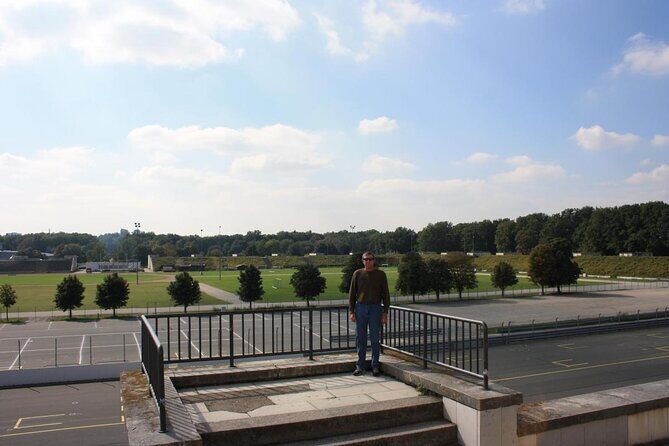
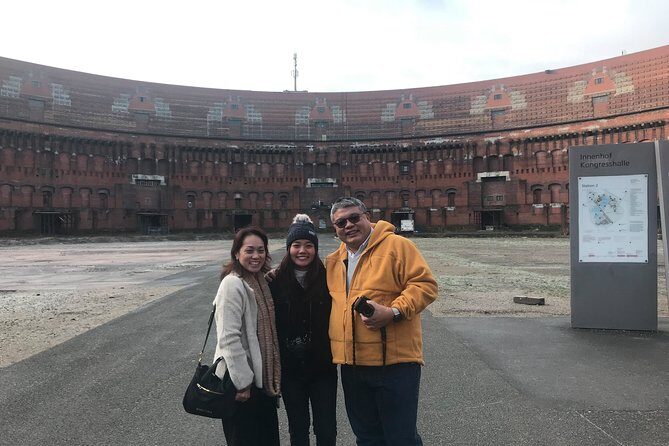
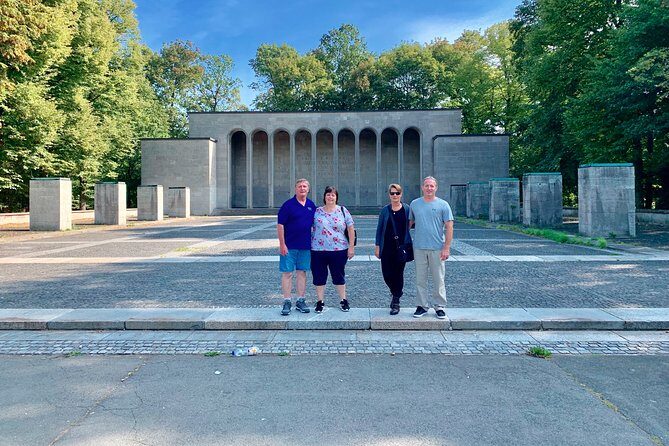
The Hall of Honour sits in the Nazi Party Rally Grounds area southeast of the city. This site is closely tied to the idea of mass participation and controlled sightlines—where a crowd doesn’t just attend history, it becomes part of the performance.
You’ll spend about one hour here, and the ticket is free for this stop. Even without going full museum-mode, you’ll appreciate how large the overall rally grounds are (more than 16.5 km²). The explanations focus on who designed what and how the layout worked as propaganda space—Albert Speer’s basic concept and Walter Brugmann’s detailed work are specifically part of what your guide should connect to what you’re seeing.
Why this stop matters: you’re learning how power was staged before it was destroyed. The scale hits differently when you’re standing in the area rather than reading about it.
Practical tip: because this stop is big and mostly outdoor walking/standing, wear shoes you can stand in comfortably for a while. If the weather is cold, plan for wind.
Stop 2: Kongresshalle Nürnberg Documentation Center and what survives
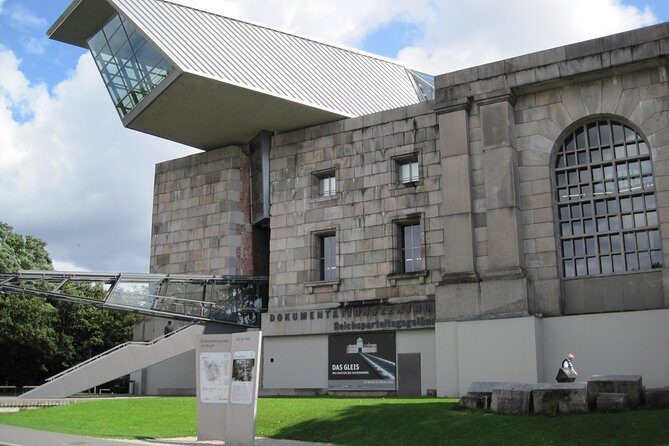
Next comes the Kongresshalle area, now tied to the Documentation Center at the Nazi Party Rally Grounds. This is where the tone shifts from “look at the size” to “understand the machine.”
Plan on about 40 minutes here, and this stop’s entry is not included. The point is not just to see remaining structures—it’s to understand how the rallies were organized and produced from 1933 to 1938, and how propaganda took physical form.
This stop is a good checkpoint during the tour. The rally grounds are impressive, but the documentation center helps you translate impressions into facts. If you tend to get overwhelmed by dates, museums like this are often where the timeline clicks.
Drawback to know: because admission isn’t included, you should expect to pay separately here (your final total will depend on what you add on top of the base tour price).
Stop 3: Zeppelinfeld and the symbolism of 1945 (plus 1909)
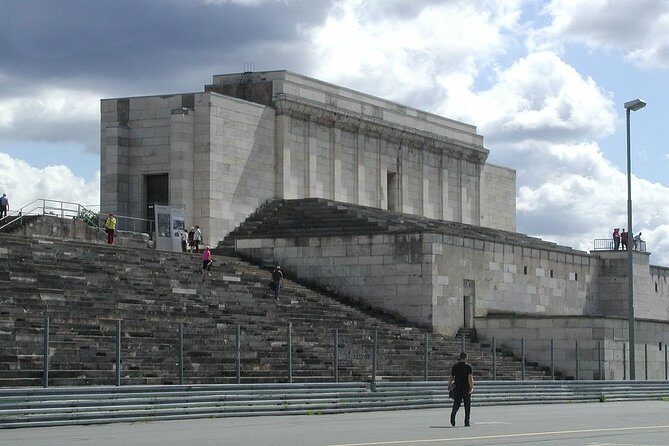
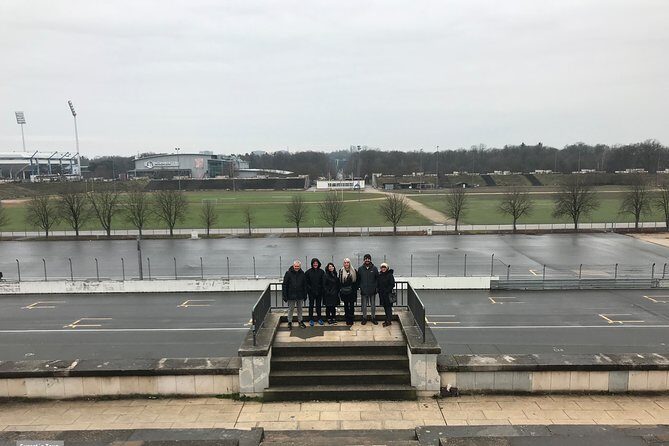
Then you head to Zeppelinfeld, also known as Zeppelinwiese. This stop blends political theater with a surprising pre-Nazi footnote: Ferdinand Graf von Zeppelin landed an airship here in August 1909 (LZ6).
About 30 minutes is typical. The tour explanation ties the grandstand design to major architectural ideas, including the width of the main stand (360 meters / 390 yards) and how the design was influenced by the Pergamon Altar concept. You’ll also get a visual sense of how the space was built for spectacle, with the focus on sightlines and crowd control.
One detail that tends to land hard is the story of 1945—when the swastika was blown from the top of the grandstand after Germany’s fall in World War II. It’s a reminder that symbols aren’t permanent, even when the structures are.
Practical note: this is another outdoor-heavy stop. If you’re visiting in colder months, plan for time outside even when you think most of the trip will be “driving only.”
Final stop: Nuremberg Palace of Justice and Courtroom 600
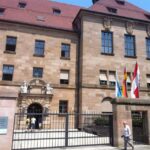
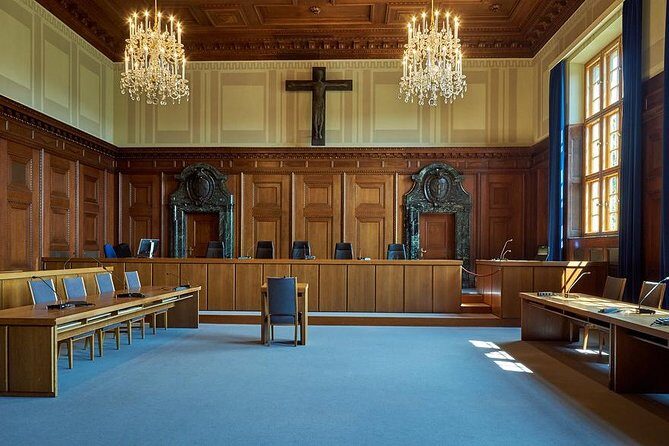
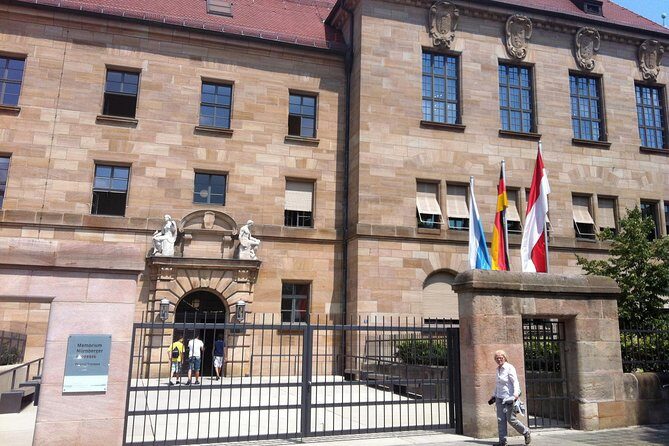
This is the part most people talk about afterward, and it’s easy to see why. The Nuremberg Palace of Justice is where the Major War Criminals Trial took place before the International Military Tribunal, running from November 20, 1945 to October 1, 1946.
Then the story continues. From 1946 to 1949, additional “Subsequent Trials” took place in the same courtroom, run by U.S. American military tribunals. Courtroom 600 gained worldwide notoriety because it became the stage for that shift from dictatorship-era power to international legal process.
Timing and tickets: your tour includes the guided visit, but entry has a separate fee. The Palace of Justice costs €7.50 per person, and the site is closed on Tuesdays.
How long you’ll be inside can vary. In past tours, people reported different lengths at Courtroom 600—sometimes around 35–40 minutes, and once the whole courtroom visit was affected by closure timing. That’s not a small detail: Courtroom 600 is the kind of place where you want time to read and look slowly, not just step through.
Why I consider this a must for the value: this tour doesn’t treat the courtroom like a quick photo spot. A strong guide connects what you see on the walls and floor to why an international trial mattered—human rights, responsibility, and law as a response to mass crimes.
The best way to use your time inside: go in with questions you actually care about. If the guide is asking a pace you can follow, don’t be shy—this is where that Q&A advantage matters most.
Price and value: $160.90 buys time, transport, and interpretation
At $160.90 per person for an about 4-hour tour, the price isn’t low. But you’re also not buying just a route—you’re buying:
- a guide who can connect multiple sites to one storyline
- private transport (not a crowded bus)
- a small-group format (up to 8)
Then there’s the part that affects your real total: additional admissions. Courtroom 600 requires the €7.50 entrance fee, and the Kongresshalle Documentation Center entry isn’t included. If you want Courtroom 600 and the documentation component, you should budget for these add-ons so you don’t get surprised halfway through.
So is it worth it? I’d say yes if you’re coming to Nuremberg specifically for WWII and want interpretation that ties architecture and trials together. If you’re sightseeing casually and only want one site, you might get better value by doing one self-guided museum day. But if you want both the rally grounds and the courtroom, this structure saves real time.
Comfort, timing, and the one thing to watch: pace and clarity
Most guides on this kind of tour use fast narration to fit the story between stops. That can be great—until it’s not. Some people found certain guides hard to understand because of speed or accent. The good news is this is a small group in a private vehicle, so you can set expectations early.
My practical advice:
- At the start, ask the guide to speak a bit more slowly if you prefer clarity.
- If you’re wearing hearing aids or you’ve had trouble with accents before, mention it right away so seating and speaking volume can adjust.
- Bring a light layer for outdoor portions; if it’s cold, your attention tends to drop when you’re shivering.
Timing also matters. If you arrive late or miss the pickup point you were assigned, the tour start can slide—and that can squeeze time at the most important indoor stop.
Who this tour suits best
I’d point you toward this tour if you:
- care about WWII aftereffects, not just battlefield dates
- like learning how propaganda was built into space and then answered by international law
- want a small group with a guide you can actually question
- are okay paying extra entry fees for the museums that aren’t included
This also works well for couples or small families who don’t want a large tour crush. If you’re traveling with limited time in Nuremberg but want the big story arc, it’s a strong fit.
Should you book the Nuremberg Courtroom 600 and Third Reich Sites tour?
Book it if you want Nuremberg to make sense as a connected story—from rally-ground design to courtroom accountability—and you’re okay with the extra entrance costs for the Palace of Justice and the documentation center.
I’d skip or reconsider if you’re mainly looking for a light sightseeing day, or if you’re sensitive to fast narration and you don’t feel you’ll be able to follow the tour language in real time. Also, if you’re visiting on a Tuesday, confirm how the Palace of Justice closure impacts your day before you commit.
FAQ
How long is the Nuremberg WWII tour?
It runs for about 4 hours (approx.).
What’s included in the tour price?
You get private transport and a tour guide.
Which entrances are not included?
The Nuremberg Palace of Justice entrance fee is not included and costs €7.50 per person. The Kongresshalle Nürnberg Documentation Center admission is also not included.
Is the Palace of Justice open every day?
No. The Palace of Justice is closed on Tuesdays.
Where does pickup happen?
Pickup is offered in Nuremberg Old Town and at the River Cruise Port. If you’re outside the Old Town, you’ll need to go to the pickup point at Novotel Hotel Centre Ville, Bahnhofstrasse 12.
How many people are in the group?
The tour has a maximum of 8 travelers.
Can I get a full refund if I cancel?
Yes. You can cancel up to 24 hours in advance for a full refund.
FAQ
Is the tour offered in English?
Yes, it’s offered in English.
What’s the main stop time at Courtroom 600?
The tour includes a stop at Courtroom 600 as part of the Nuremberg Palace of Justice visit, and the time spent there has been reported around 35–40 minutes depending on circumstances.
What should I expect at the rally-ground stops?
You’ll see major Nazi Party Rally Grounds locations such as the Hall of Honour, Kongresshalle Nürnberg Documentation Center, and Zeppelinfeld, with a mix of outdoor walking and structured explanations.