REVIEW · NUREMBERG
Medieval Tour in Nuremberg in Spanish
Book on Viator →Operated by Hallo Nuremberg! · Bookable on Viator
That Medieval Nuremberg is hiding in plain sight. This Spanish-guided walk mixes famous landmarks with witchcraft, justice, and strange legends—the city’s quieter, darker stories—so you leave with a way bigger picture than the usual postcard route.
I especially love how the guide turns street-corners into mini-mysteries, with topics like Kaspar Hauser and the executioner’s trade brought to life. I also like that the stops are short and paced well for a 2.5-hour stroll, with free entry at each main stop so you’re not constantly paying extra to keep going. One thing to consider: this is story-heavy, so if you want lots of museum time or quiet, slow sightseeing, you may prefer a more standard sightseeing tour.
In This Review
- Key highlights to look for
- A 2.5-hour walk where Nuremberg tells darker stories
- Meeting at Hauptmarkt and setting the Medieval tone
- St. Lorenz: church-building stories with real human drama
- Heilig-Geist-Spital and Till Eulenspiegel’s lesson
- Weisser Turm: the first city wall and why it matters
- Ehekarussell: the source of married life
- Unschlitthaus and Kaspar Hauser’s palace intrigue
- Hangman’s Bridge: the executioner’s trade and achievements
- Weissgerbergasse: the most medieval street in Nuremberg
- City walls and hidden history at Beim Tiergärtnertor
- Kaiserburg: flying horses, dark women, and the castle’s shadow
- Price and value: $19.60 for a guided story route
- The guide factor: why Fede makes the difference
- Who this Medieval Nuremberg tour fits best
- Should you book this Medieval Tour in Nuremberg (Spanish)?
- FAQ
- What language is the tour guided in?
- How long is the Medieval tour in Nuremberg?
- How much does it cost?
- Where does the tour start and end?
- What time does the tour begin?
- Do I need a paper ticket?
- Are the entrances included for the stops?
- What’s the group size?
- Is the meeting point easy to reach?
- Is free cancellation available?
Key highlights to look for
- Spanish guide with strong storytelling: Fede’s communication and humor are a standout.
- A darker side of Nuremberg: witches, the devil, and the city’s fearsome trades.
- Short, efficient stops: about 10 minutes each, so you get variety without fatigue.
- Main sights plus hidden-feeling alleys: like Weissgerbergasse and wall viewpoints.
- Ends at the Kaiserburg: a dramatic finish at Nuremberg’s Imperial Castle area.
A 2.5-hour walk where Nuremberg tells darker stories
This tour is built around the idea that Nuremberg has more than just Albrecht Dürer and the usual shopping-and-chocolate route. You’ll still pass through the core of the old town, but the guide steers you toward the Medieval and hidden Nuremberg: folklore, moral lessons, and the kind of legends people used to tell when life felt unpredictable.
It’s also a very practical length. Roughly 2 hours 30 minutes means you can fit it into an afternoon without burning your whole day. The group size is capped at 30, which helps keep questions possible and stops from feeling like a stampede.
And since it’s guided in Spanish, it’s a nice fit if you want the stories in a language you can follow easily. You’ll be using a mobile ticket, not a paper voucher—easy once you arrive.
You can also read our reviews of more tours and experiences in Nuremberg.


Meeting at Hauptmarkt and setting the Medieval tone
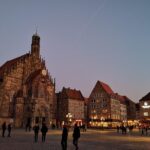
The tour starts at Hauptmarkt (Hauptmarkt 14). This is smart, because it drops you right into the historical center and lets the guide set the theme immediately. Expect the opening to connect the city’s identity to the “brand” idea—how Nuremberg became known and remembered—then shift you toward the more ominous chapters.
You’ll spend about 10 minutes there, and admission is free. In that short time, you’re not meant to “study the square.” Instead, you’re meant to get your bearings: what kind of city this was, and why people talked about monsters, miracles, punishment, and clever tricks in the same breath.
Practical tip: bring comfy shoes. You’ll be walking through old-town streets, and even when stops are brief, the cobblestones add up.
St. Lorenz: church-building stories with real human drama
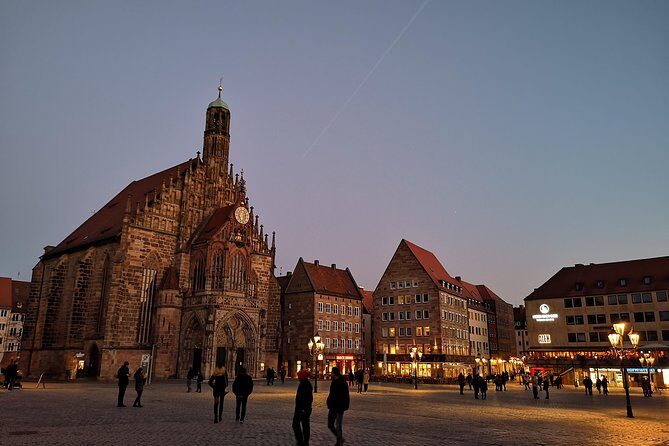
Next you’ll head to St. Lorenz, with another short stop of about 10 minutes. This isn’t treated like a quiet “look and move on” photo stop. The guide focuses on the church’s construction and the stories attached to it—so the building feels less like stone and more like a product of decisions, money, power, and community.
Admission here is also free. The advantage is that you can spend your attention on what the guide says instead of worrying about timed entries or ticket counters.
If you usually skip churches because you think it will be too formal, this one may change your mind. The draw is that the guide uses the architecture as a backdrop for narrative—who built, why it mattered, and what people believed.
Heilig-Geist-Spital and Till Eulenspiegel’s lesson
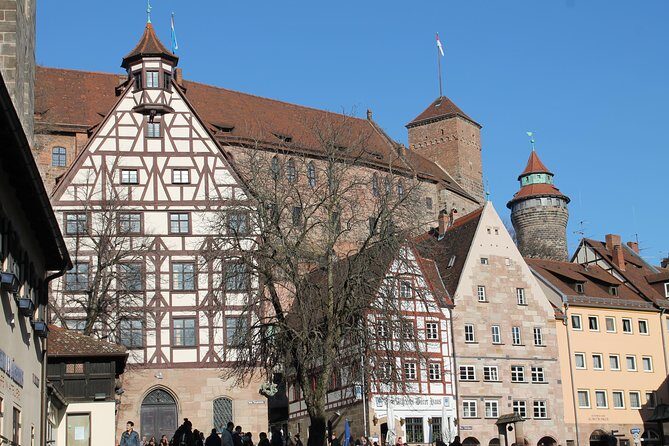
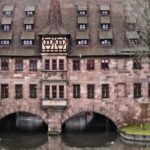
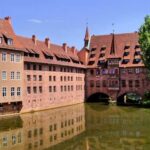
At Heilig-Geist-Spital, you’ll hear the story of Till Eulenspiegel, typically the kind of character Medieval Europe loved: a trickster, a cheat, a walking warning. Your stop is about 10 minutes, and again admission is free.
This is a good moment in the tour because it shifts from institutions and big buildings to street-level humor and misbehavior. The lesson usually comes through sideways. You laugh at the trick, then realize the story is pushing you to think about ethics, survival, and social rules.
You’ll likely enjoy this stop most if you like legends that are half comedy and half moral. It’s also a nice reset before the tour moves into harsher subjects.
Weisser Turm: the first city wall and why it matters
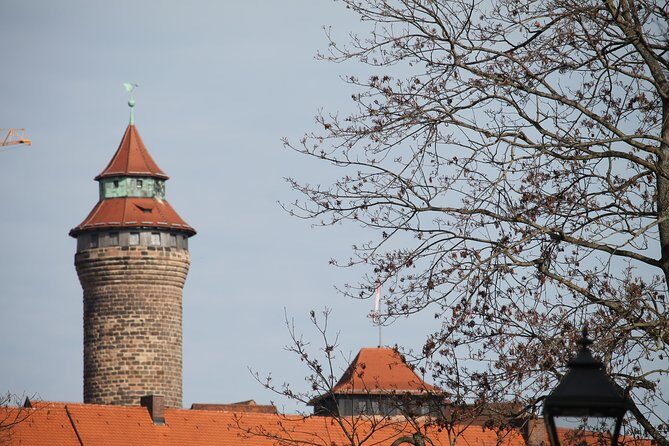
Then comes Weisser Turm, with a shorter 5-minute stop. This is the point where the tour starts emphasizing defenses and boundaries—how Nuremberg protected itself and how the city’s layout shaped daily life.
You’ll hear about this tower as part of the first city wall, which helps you understand why certain routes and neighborhoods make sense. Even if you don’t memorize every detail, the value here is the mental map. You start seeing the city not just as a place to visit, but as a place to survive.
Quick consideration: because it’s only about 5 minutes, you won’t get long explanations. If you want to ask questions, this is the spot to do it—right when the guide is talking about walls and layout.

Ehekarussell: the source of married life
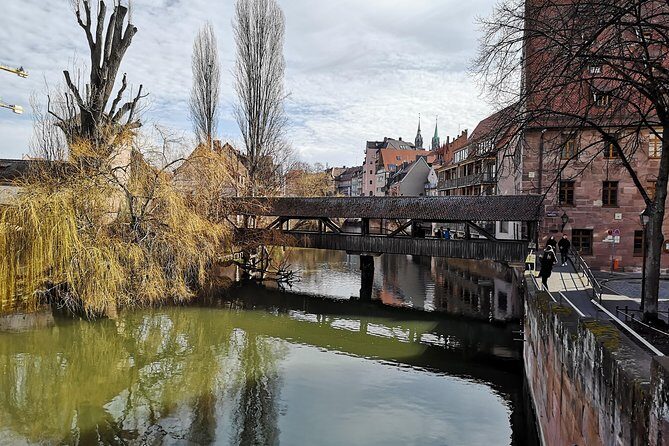
One of the more surprising stops is Ehekarussell, described around the source of the delights of married life. This is about relationships, social customs, and how the city used humor or symbols to talk about love, death, and the serious business of marriage.
Stop time is about 10 minutes, admission free. In a tour that covers witches and executioners, this stop plays a balancing role. It reminds you that Medieval life wasn’t only fear and punishment. It was also matchmaking, gossip, rituals, and everyday desires.
If you like learning how past societies handled topics that still feel personal today, you’ll probably appreciate this one. It’s the kind of story you remember because it feels human, not just historical.
Unschlitthaus and Kaspar Hauser’s palace intrigue
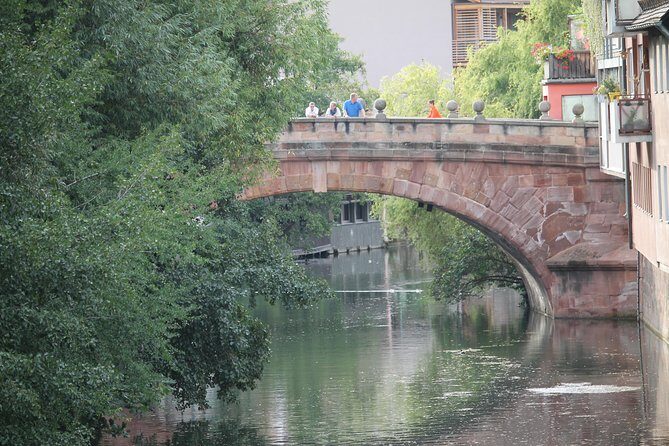
Now you’ll get one of the most mysterious stories the tour promises: Kaspar Hauser, the orphan of Europe. The stop at Unschlitthaus is about 10 minutes, and admission is free.
This is where the tour leans into intrigue—how palace politics and hidden agendas can warp a life. The guide frames it as a turning point for understanding how power worked behind closed doors, not just in public halls.
If you’re the type who likes your history with a plot, this stop is a strong payoff. It also connects well with the tour’s darker theme: in a world of limited rights and big patronage systems, what seems like fate can actually be strategy.
Hangman’s Bridge: the executioner’s trade and achievements
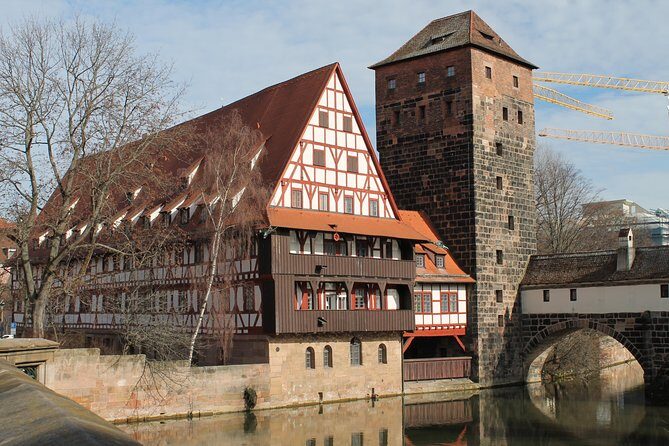
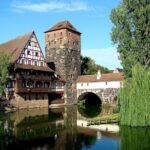
Next is Hangman’s Bridge, where the tour focuses on the executioner of Nuremberg—his trade and his achievements. Your stop is about 10 minutes, admission free.
This part can feel heavy, but that’s the point. Medieval cities didn’t separate “justice” from daily life the way modern people often do. The executioner was a real occupation with a role in public order, and stories about the job reveal how people understood crime, punishment, and moral order.
One consideration: if you’re sensitive to grim topics, you’ll want to mentally brace for this segment. Still, it’s handled through storytelling, not gore—more about what the role meant than graphic details.
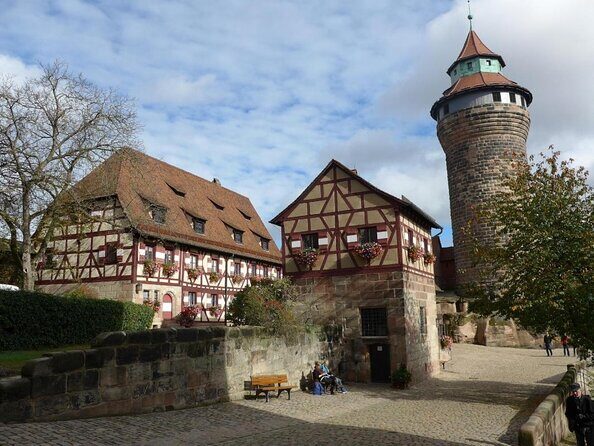
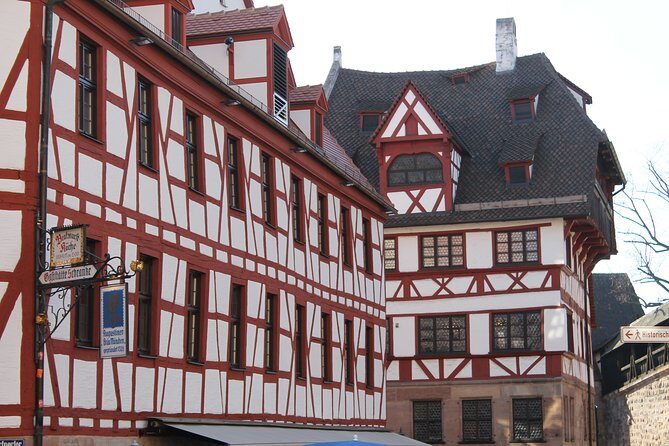
Weissgerbergasse: the most medieval street in Nuremberg
At Weissgerbergasse, you’ll spend about 10 minutes in what’s described as the most Medieval alley in the city. Admission is free here too, so you’re basically paying with your attention instead of money or waiting time.
This is a “slow down” moment even though the stop is short. Narrow streets and old urban shapes make the stories easier to believe. When you’re standing somewhere that feels like it hasn’t changed much, the guide’s references to trades and medieval life land better.
The tour also promises trades in Medieval life, including Mendel’s book. Even if you don’t catch every named detail, the street stop helps you connect the dots between professions, daily survival, and the city’s reputation.
City walls and hidden history at Beim Tiergärtnertor
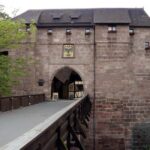
Then you’ll reach Beim Tiergärtnertor, about a 5-minute stop. This is tied to the city wall and its hidden history, plus the idea of “coordinates”—how specific parts of the wall mattered.
Again, short stop time, free entry. But even in 5 minutes, you can get something valuable: an understanding that Nuremberg’s boundaries weren’t just defensive. They were also a map for where power flowed, where people could move, and where secrets could stay protected.
If you like “why is this here?” moments, this stop is worth your focus. It also sets up the final reveal at the castle.
Kaiserburg: flying horses, dark women, and the castle’s shadow
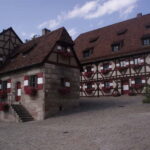
Finally, the tour ends at the Imperial Castle of Nuremberg (Kaiserburg). The walk finishes at Burg 17. This last stop is about 15 minutes, and the theme is dark stories—everything from flying horses to stories connected with women of bad life.
This is a strong closing chapter because a castle makes legend feel believable. Even when the stories are exaggerated, the mood changes instantly when you’re in a castle setting. You end with a sense of Nuremberg as a place where myths, power, and fear collided.
Practical tip: if you want photos, plan your shots during the guide’s talk. At the end, it’s easy to drift into “free time” mode and miss the most pointed story beats.
Price and value: $19.60 for a guided story route
At $19.60 per person, this tour sits in the “cheap for what you get” category—especially because it includes a Spanish guide and multiple major stops with free admission. You’re not paying just for walking; you’re paying for someone to connect the dots and give you context fast.
The 2.5-hour duration matters for value too. You’ll cover a meaningful chunk of the old town without needing a full-day commitment. For short trips, that efficiency is real money saved in time.
Also, with mobile tickets and a group size capped at 30, you’re less likely to feel lost or trapped in a huge crowd. And from the feedback on guide quality—especially Fede—the storytelling is clearly a central part of why people recommend this.
The guide factor: why Fede makes the difference
The biggest praised aspect is the guide himself: Fede. People highlight that he communicated to help the group meet up, and that he combines lots of study with humor. That matters more than you might think.
In a themed tour like this, the guide is your filter. If the stories aren’t delivered clearly, it turns into random spooky trivia. With a good guide, the weird stuff becomes memorable because it’s explained and tied to real places.
You’ll also notice the tone: between jokes and the ability to keep momentum even when things get wet or uncomfortable, the tour stays enjoyable. So if you’re booking with friends or family, it’s the kind of experience that can handle different moods in one group.
Who this Medieval Nuremberg tour fits best
This tour fits you best if you want history that feels like a story, not a textbook. It’s ideal for couples, solo travelers, and small groups who like folklore, civic myths, and “what really went on here” explanations.
You’ll also likely enjoy it if you care about language support. With a guide in Spanish, you can focus on understanding rather than playing catch-up.
If you’re hoping for lots of museum time, long stops, or quiet self-paced exploring, you may find this format too fast. The tour is designed for variety and momentum, not deep technical detail in one single location.
Should you book this Medieval Tour in Nuremberg (Spanish)?
I’d book it if you want your Nuremberg to include its darker legends alongside the famous sights, and you want a guide to make the city feel connected. The value is strong for the price, and the free-admission stops help you keep it simple.
I’d skip—or at least switch expectations—if your ideal day is silent sightseeing, long indoor time, or heavy architectural study without story framing. This is a walk built on characters and themes: witches, tricksters, punishment, marriage rituals, and the castle’s shadow.
If that sounds like your style, you’ll leave with stories you can retell—and a map in your head that goes well beyond the usual highlights.
FAQ
What language is the tour guided in?
The tour is guided in Spanish.
How long is the Medieval tour in Nuremberg?
It lasts about 2 hours 30 minutes.
How much does it cost?
The price is $19.60 per person.
Where does the tour start and end?
It starts at Hauptmarkt 14, 90403 Nürnberg, Germany, and ends at the Imperial Castle of Nuremberg (Kaiserburg), Burg 17, 90403 Nürnberg, Germany.
What time does the tour begin?
The start time is 3:30 pm.
Do I need a paper ticket?
No. It uses a mobile ticket.
Are the entrances included for the stops?
Admission is free at the listed stops during the tour.
What’s the group size?
The tour has a maximum of 30 travelers.
Is the meeting point easy to reach?
Yes. It’s near public transportation.
Is free cancellation available?
Yes. You can cancel up to 24 hours in advance for a full refund.