REVIEW · NUREMBERG
Nuremberg Old Town Walking Tour in English
Book on Viator →Operated by Nuremberg City of Empires Tours · Bookable on Viator
Nuremberg history fits in a two-hour walk, mixing medieval scenes with the hardest 20th-century chapters at street level in the Old Town and Third Reich context. You get guided photo stops, quick orientation, and enough story to help you read the city on your own afterward.
I especially like the way the route threads art and power together, from the Albrecht Dürer House to the imperial Kaiserburg setting. I also like the built-in rhythm: short viewpoints, photo moments, and then a change of pace at Hauptmarkt, where December brings the Christkindlesmarkt energy.
One possible drawback: it’s a fast-moving walk with brief time at each location, so if you want long church visits or a slower pace, you may feel time pressure.
In This Review
- Key highlights at a glance
- Where the walk starts, how it moves, and how much you’ll actually cover
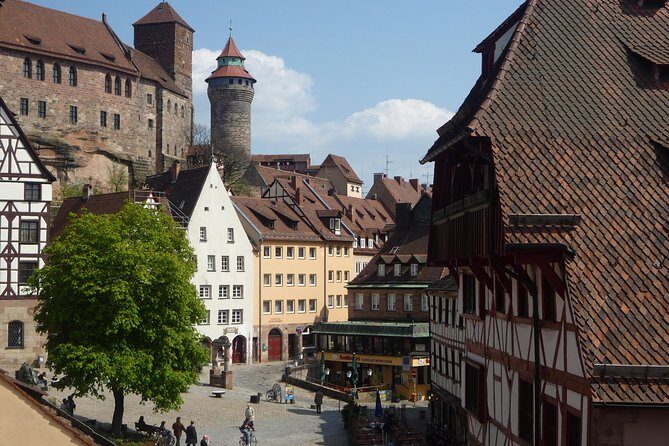
- Old Town streets that set the mood fast: half-timbering, Pegnitz views, and wall angles
- Albrecht Dürer’s house stop: art history without the museum slog
- Kaiserburg Nuremberg Castle: emperors, courtyards, and why power was local
- The Third Reich and Nazi history part: why the tone and pacing matter
- St. Lawrence Church, the near-miss wartime story, and city-wall photo pauses
- Schöner Brunnen and the wishing ring: the best “quick stop” in town
- Hauptmarkt and the Christmas market rhythm (especially in December)
- Handwerkerhof, Altes Rathaus, and St. Sebaldus: finishing the story with street-level landmarks
- Guide style: what you can expect from local talent (and what to watch)
- Price and time value: is $21.77 for 2 hours actually worth it?
- Should you book the Nuremberg Old Town walking tour?
- FAQ
- How long is the Nuremberg Old Town walking tour?
- Where do I meet the guide?
- Where does the tour end?
- Is the tour offered in English?
- What is the price per person?
- Is admission included for stops on the route?
- What walking level should I expect?
- What if the weather is bad or I need to cancel?
- Are service animals allowed?
Key highlights at a glance
- English-led, mobile-ticket tour starting in the station area and ending at Hauptmarkt
- 2 hours with a max group size of 25
- Kaiserburg Castle grounds tied to emperors, saints, and sinners (with clear local context)
- St. Lawrence Church spire and war damage history, plus city-wall photo angles
- Schöner Brunnen with the wishing ring and golden tower for classic Nuremberg shots
- Christkindlesmarkt focus in December and a crafts-market stop with shops and food
Where the walk starts, how it moves, and how much you’ll actually cover
This tour is built for orientation. You meet at Nürnberg Hbf, then you work your way through the old core and finish at Hauptmarkt. The whole thing runs about 2 hours, so it’s realistic even if you’ve only got one morning or one afternoon in town.
The group size caps at 25, which matters. It makes it easier for your guide to keep control on cobblestones and in crowded squares, and it also means you’re more likely to hear answers to questions without the guide talking over the entire group. It’s offered in English and uses a mobile ticket, which is handy on travel days when you don’t want to hunt for paper.
One thing to plan for: the ground is old and uneven. Expect cobbled streets and some strolling through hilly terrain. The good news is the effort isn’t a killer. The tour is described as only slightly strenuous, with just one not-particularly-steep hill to mind.
You can also read our reviews of more walking tours in Nuremberg


Old Town streets that set the mood fast: half-timbering, Pegnitz views, and wall angles
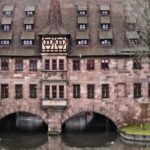
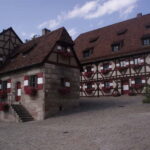
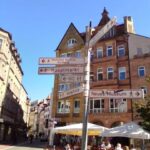
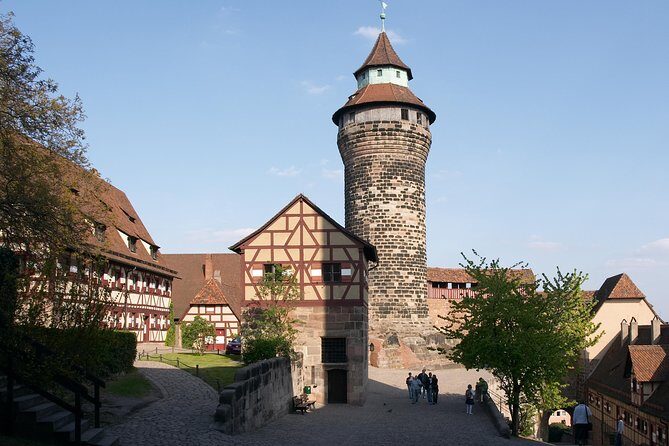
The best start point for first-timers is usually the feeling of place. This route gives you that quickly. As you move through the old lanes, you’ll see the timber-framed houses that make Nuremberg look like it’s from a storybook, plus the cobbled street texture underfoot that helps the city feel real.
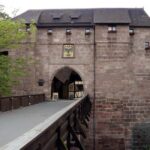
You also get photo chances that are more than postcard angles. The walk includes time for medieval city-wall viewpoints and the look of the old town from key stops. If you like taking pictures that actually explain where you are, you’ll appreciate those pauses.
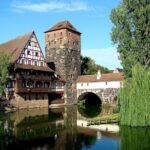
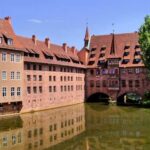
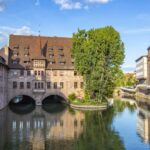
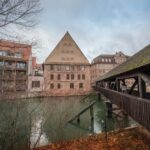
There’s also a small but satisfying nature thread: the River Pegnitz appears as part of the old-town scenery. It’s not a “river cruise” moment, but it keeps the walk from feeling like only stone and towers.
Practical tip: bring shoes you don’t mind on rough surfaces. Even if the tour isn’t long, you’ll feel it if you’re in slick soles.
Albrecht Dürer’s house stop: art history without the museum slog
One of the smartest moves on this tour is starting with art anchored in a real address. You stop at the original home of Albrecht Dürer, now a museum. Even if you don’t plan to go inside right away, the exterior and the setting do something useful: they connect the Renaissance name you’ve heard with the place it grew out of.
This matters because Nuremberg isn’t only medieval. You’ll see the city across eras, and Dürer gives you a bridge. The guide ties his significance to what was happening in the city’s cultural orbit, not just to dates on a timeline.
If you’re an art person, you’ll probably want to follow up later with more museum time on your own. But for most visitors, this short stop hits the right balance: context now, optional deep dive later.
Kaiserburg Nuremberg Castle: emperors, courtyards, and why power was local
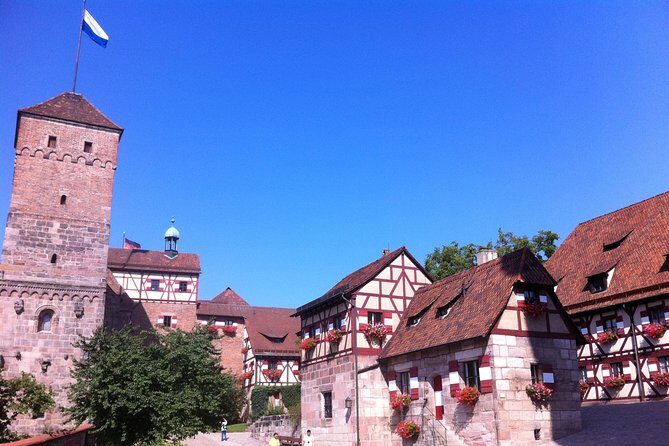
The heart of the “big story” on this walk is the Kaiserburg area. This is the imperial castle complex dating back to at least 1050, and your guide uses it to explain Nuremberg’s role in broader German history.
What I like about the way this is handled for a short tour is that it doesn’t treat “history” as distant. You’re given a sense of how emperors and courtly life shaped what cities built, how they defended themselves, and how people organized daily life around centers of power. The stops are brief, but the commentary is designed to give you something to carry with you after you leave the castle grounds.
There’s also a practical side. When you’re near a major landmark like Kaiserburg, it’s easier to orient yourself on later walks—especially if you plan to wander independently after the tour ends at Hauptmarkt.
The Third Reich and Nazi history part: why the tone and pacing matter
Nuremberg’s 20th-century history is part of the city’s story, and this tour addresses the city’s association with the Third Reich and Nazi history. For many visitors, this is exactly what they came for: not just pretty old stones, but the truth of what happened here.
Still, how that content is handled can shape your experience. Some people report that certain guides kept the discussion appropriate and clear, while others felt the presentation crossed personal comfort lines (including comments or photo choices that didn’t land well). You can’t always control a guide assignment, but you can control your response.
If this topic is sensitive for you, I’d suggest arriving with a plan: be ready to hear direct historical framing, and if something feels off, you can ask the guide to shift tone toward facts. On a short walking tour, questions are often the best tool to steer the experience toward what you need.
Also, note that one review flagged a lack of depth on the Holy Roman Empire explanation, with the guide describing it as complicated. That’s a reminder: if you want a heavy academic breakdown, come prepared with your own reading list or plan a longer history-focused activity in addition to this walk.


St. Lawrence Church, the near-miss wartime story, and city-wall photo pauses
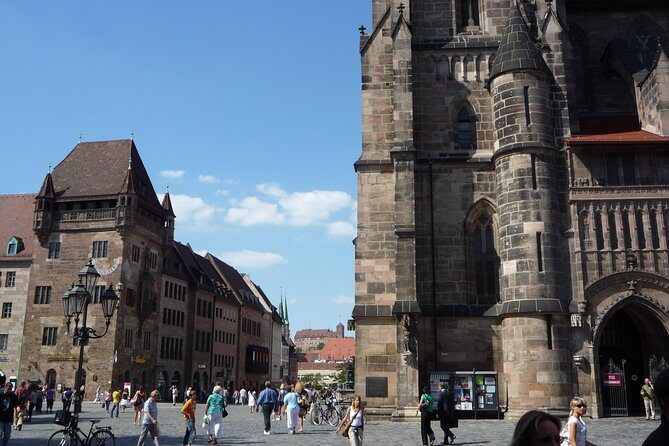
A standout moment is the stop tied to St. Lawrence Church. The spire is a defining Nuremberg feature, and the guide shares the wartime story: the church was almost demolished during World War II. That detail changes how you look at the architecture. It’s not only medieval design anymore—it’s survival and rebuilding, visible in stone.
You’ll also take photos around the medieval city walls. This is one of those practical tour gifts: you get the angles that most people miss when they wander without a map or local prompting. If you’re someone who likes proof-in-the-frame photos—where the view tells you what mattered—these pauses are worth it.
If you’re hoping for long church time, keep expectations realistic. The tour is a walking overview with short stops, so use this as a photo-and-context moment, then decide later if you want a deeper church visit when you’re not on a schedule.
Schöner Brunnen and the wishing ring: the best “quick stop” in town
Few city fountain stories feel as specific as this one. You’ll reach Schöner Brunnen (the Beautiful Fountain), with a golden Gothic tower and the famous wishing ring of Nuremberg. It’s one of the most iconic photo spots in the old center, and the guide gives you enough background to make the details feel meaningful rather than random.
This is also a good example of how the tour keeps you engaged. It slows down just long enough for pictures, then moves you on. You won’t spend the whole tour stuck waiting for people to get their shot.
Practical note: this fountain area can be busy, especially in December. If you want photos without stress, do them early in the stop window and move calmly.
Hauptmarkt and the Christmas market rhythm (especially in December)
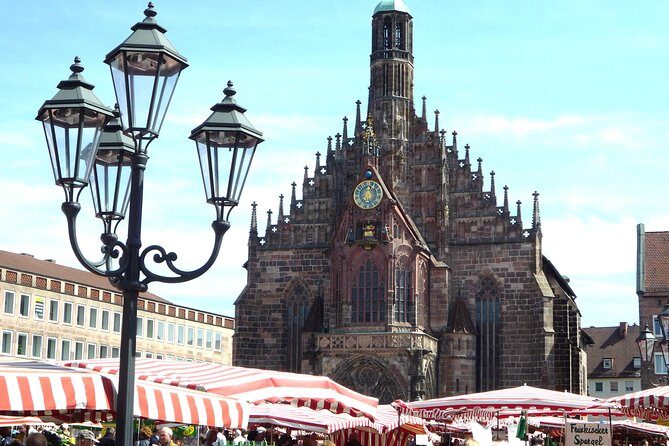
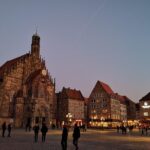
The route funnels you into Hauptmarkt, the central square that’s been the center of the city since the 1300s. This is where the tour’s atmosphere changes. You’re no longer just looking at history—you’re in the living center of town.
In December, this becomes the site of the Christkindlesmarkt, one of Germany’s oldest and most famous Christmas markets. Even if you’re not a full-on holiday market person, this is where you understand why Nuremberg sells its identity so well: the square’s shape and tradition create a strong sense of continuity.
Important timing reality: outside December, you won’t get the Christmas market. But you’ll still get the square’s scale and layout, which helps you navigate later when you do want to visit in season.
Handwerkerhof, Altes Rathaus, and St. Sebaldus: finishing the story with street-level landmarks
After the main square, the walk continues with a set of stops that round out the old-town texture.
- Handwerkerhof: a reconstructed craftsman’s market with shops and restaurants. This is a good “taste the place” stop, even if you don’t buy anything.
- Altes Rathaus: the old town hall from 1622, which adds a civic-government layer to the story beyond castle and church.
- St. Sebaldus Church: the oldest church in the city and the city’s patron-saint story. Entry isn’t included, so treat it as a stop for exterior time and guided context unless you plan to pay separately to go inside.
If you’re the type who likes to pop into churches when the mood hits, plan to do that on your own afterward. The tour doesn’t promise long interior time at every stop.
Guide style: what you can expect from local talent (and what to watch)
This tour shines when your guide keeps the walk lively without losing clarity. Many guides on this route are praised for being fun to listen to and for answering questions. Names you might encounter include Hannes, Jeff, Suzanne, Dimitri, Paul, Jason, Josh, Chris, Natasha, and Elizabeth—each with a slightly different teaching style.
A few patterns show up in the guide stories:
- Some guides keep a steady pace but still provide breathing room, so you don’t feel dragged along.
- Some guides are very organized, using small group management techniques to prevent stragglers from being left behind.
- Some guides link history to what to eat nearby, with suggestions like Lebkuchen and other local treats.
The possible friction points are also useful to know:
- One person found a guide walking too fast and not waiting for the whole group. If you prefer a relaxed pace, tell yourself to stay close at the front of the group.
- Another person felt the explanation of Holy Roman Empire basics was too thin. If that topic is a priority, consider adding a museum or lecture later.
- One complaint involved inappropriate language or photo choices. If you have strict preferences about content, you’ll be happier if you focus on asking questions for factual detail.
Price and time value: is $21.77 for 2 hours actually worth it?
At $21.77 per person, you’re paying for one key thing: a local guide who stitches the city into a story you can reuse later. Two hours is short, but it’s the kind of short that works well in Nuremberg because the old center is dense. You get multiple landmarks in one go without spending your entire day reading maps.
You also get practical value from the stop design. Several stops are listed with free admission, which helps keep the tour from becoming expensive once you arrive. The one notable exception is that St. Sebaldus Church admission isn’t included, so you may want to budget for a ticket if you choose to go inside.
The booking pattern also hints at demand: it’s commonly reserved about a month ahead on average. If you’re traveling in peak holiday weeks, book early so you don’t gamble on last-minute availability.
And yes, there’s a weather reality here. The experience requires good weather, so if rain hits hard, plan flexibility. The good side of that: if it’s canceled due to poor weather, you’re offered another date or a full refund.
Should you book the Nuremberg Old Town walking tour?
I’d book this if you want an efficient, English-led orientation to Nuremberg’s old core—especially if it’s your first time in town and you want your independent wandering to make sense fast. The mix of imperial castle context, church and wall photo stops, and the Christmas-market anchor in December gives you a strong “whole-city picture” in one sitting.
I’d hesitate if you need slow pacing and lots of interior time at churches or museums. This tour is designed for movement and viewpoints, not for deep museum hours. I’d also be cautious if you’re very particular about presentation style on sensitive historical topics, because guide delivery can vary.
If you do book, the best move is simple: wear good shoes, stay near the front when the pace picks up, and come ready with at least one question. That turns a short walk into something you’ll remember long after Hauptmarkt and Schöner Brunnen fade from view.
FAQ
How long is the Nuremberg Old Town walking tour?
It runs about 2 hours (approx.).
Where do I meet the guide?
You start at Nürnberg Hbf Bahnhofspl., 90443 Nürnberg, Germany.
Where does the tour end?
It ends at Hauptmarkt, 90403 Nürnberg, Germany.
Is the tour offered in English?
Yes, the tour is offered in English.
What is the price per person?
The price is $21.77 per person.
Is admission included for stops on the route?
Admission is free at several stops, but St. Sebaldus Church has admission not included.
What walking level should I expect?
Most travelers can participate, and the tour involves walking on old town streets. One mild hill is noted as not particularly steep.
What if the weather is bad or I need to cancel?
The experience requires good weather. If it’s canceled due to poor weather, you’ll be offered a different date or a full refund. You can cancel for free up to 24 hours in advance for a full refund.
Are service animals allowed?
Yes, service animals are allowed.