Nuremberg comes at you fast on foot. This guided walk is an easy way to get oriented in the old town, hitting the big landmarks and the stories behind them without wasting time stuck in traffic.
What I like most is the mix of stops: Gothic meets Romanesque, merchant squares meet fortress views, and you end with a better sense of how Nuremberg turned into one of Germany’s powerhouses. I also love that the guide does the navigating for you, so you can focus on the details instead of arguing with your phone map.
One drawback to plan around: the route includes a steep climb to Kaiserburg Castle and lots of cobbles. Comfortable shoes help, and if hills are a problem for you, you’ll want to pace yourself and be ready to take breaks.
In This Review
- Key highlights you’ll feel right away
- Getting your bearings in Nuremberg’s old town
- Starting at Schöner Brunnen: legend meets Gothic detail
- St. Sebaldus Church: Reformation-era stories and music history
- Hauptmarkt: Nuremberg’s main square and the Männleinslaufen
- Kaiserburg Castle: the “triple castle” and the big climb
- Albrecht Dürer House: one medieval home that tells a whole story
- Tiergartnertorturm: defensive walls you can actually picture
- Weissgerbergasse: craftsmen’s street and World War II reconstruction
- Altstadt finishing loop: hidden corners and the executioner’s house
- Pace, comfort, and who this tour suits best
- Price and value: why this costs so little (and why it still works)
- Should you book this Nuremberg walking tour?
- FAQ
- FAQ
- What is the duration of the Walking Tour Nuremberg?
- Is the tour offered in English?
- Where does the tour start and end?
- What time does the tour begin?
- Do I get a mobile ticket?
- How big is the group?
- Is the tour near public transportation?
- Are service animals allowed?
- Can most travelers participate?
- Is there free cancellation?
Key highlights you’ll feel right away
- Local guidance that actually steers you: no map needed while you’re walking
- A standout stretch for photos: the castle area gives you big views and clear landmarks
- Stop-by-stop context: legend, Reformation-era religion, and craft/trade stories
- Landmarks plus the quieter corners: castle gardens and even the executioner’s house make an appearance
- Albrecht Dürer House context: built around 1420, tied directly to Dürer’s life and work
Getting your bearings in Nuremberg’s old town
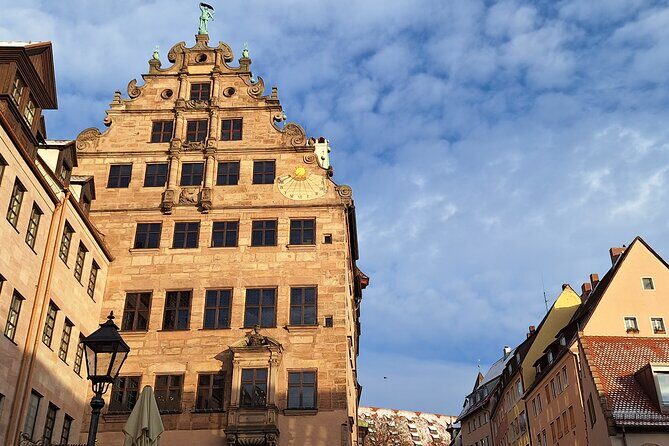
This is a classic “start here, understand this city” walking tour. In about 2.5 hours, you cover the core of Nuremberg’s historic center at a pace designed for sightseeing rather than sprinting from one Instagram spot to the next.
The format is simple: you follow a born-and-raised, English-speaking guide through the old streets, and they narrate as you go. That matters in Nuremberg, because the buildings aren’t just pretty. They’re loaded with clues about trade power, church politics, and civic pride—plus the darker chapters the city has had to face.
The group size max is 50, so you get a real guide experience without feeling like you’re in a moving tour bus. Past guides have included people like Daniella, Andreas, Alexandra, Dennis, and Tom, and the common thread is clear storytelling plus plenty of time for questions. You’ll also be grateful the meeting point and route bring you back at the end.
If you’re trying to decide between a half-day city bus and a focused walk, this is the one that helps you connect the dots. You’ll leave knowing which streets to return to on your own.
You can also read our reviews of more walking tours in Nuremberg

Starting at Schöner Brunnen: legend meets Gothic detail
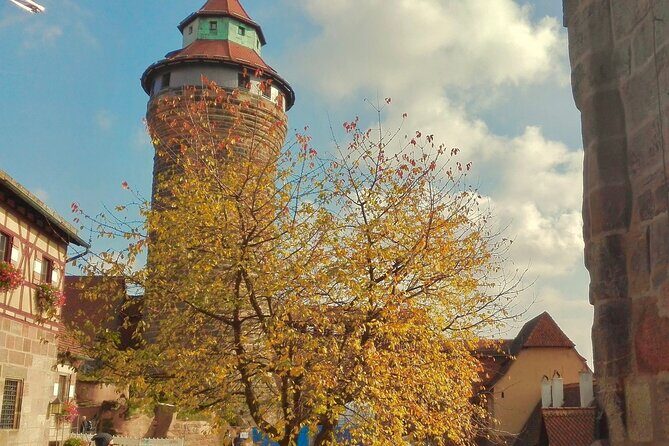
You begin near the Schöner Brunnen, a Gothic masterpiece with deep roots going back to the late 14th century. Even if you don’t consider yourself a fountain person, this is a strong opener because it gives you a sense of Nuremberg’s civic confidence. The city didn’t just build houses and walls. It built symbols.
The guide also sets up one of Nuremberg’s most famous legends tied to this spot. That’s the trick here: you’re not just staring at stonework. You’re learning how people in earlier centuries used stories to explain their world and protect their pride.
Time at this first stop is brief, but it’s the right kind of brief. It gets you warmed up and gets your ears tuned to what the city is about.
St. Sebaldus Church: Reformation-era stories and music history
Next up is St. Sebaldus Church, described as Nuremberg’s most important church. It’s a Romanesque-Gothic mix, and the point of the stop isn’t to force you into architecture homework. It’s to show you how religion shaped public life—and how the Reformation era changed what people in Nuremberg cared about.
A useful detail: the guide connects this church to Nuremberg’s well-known musicians. That can change how you view sacred buildings. They stop feeling like “just a church” and start feeling like a hub of culture.
If you like history that has human angles—people, belief, and art—this stop lands well. If you’re impatient, you may find it a bit long for a quick photo, but the time given is still manageable.
Hauptmarkt: Nuremberg’s main square and the Männleinslaufen
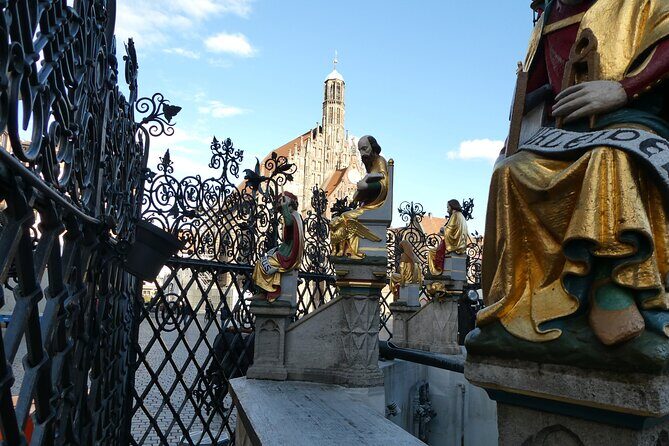
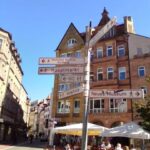
At Hauptmarkt, you’re in the beating heart of the old town. This is the central square where you can orient yourself immediately. You also get major sights in view: the Frauenkirche, the Beautiful Fountain, and the highlight the guide will bring up—the Männleinslaufen.
Männleinslaufen refers to a well-known spectacle connected to this square. Even if you don’t catch the event during your visit, learning what it is helps you understand why locals treat this place like more than a backdrop. It’s theater built into civic space.
One practical plus: Hauptmarkt is where you’ll feel the city’s rhythm. If you want a quick drink break later, this is the kind of area where you can usually find options. Just keep moving with the group so you don’t miss the castle segment.
Kaiserburg Castle: the “triple castle” and the big climb
Then comes Kaiserburg Nürnberg, Nuremberg’s landmark. Here’s why this stop is a highlight: the castle is not a single thing. It’s a triple castle complex, including the Imperial Castle, the Burggrafenburg, and imperial city buildings.
And yes, it involves walking uphill. You’ll see why the guide keeps emphasizing the viewpoints. The climb is not “far” in map terms, but it can feel steep in real life, especially with cobblestones. Wear shoes you can trust.
Once you reach the castle area, you’re there for more than photos. You get the sense of how power worked: this is where the city’s leadership, imperial connections, and defensive strategy converged. It’s the kind of place where the stones make sense only after you hear the context.
Also, the itinerary includes a short break in this area for photos or a quick drink. That’s a smart design choice because it prevents the castle visit from turning into a rushed checkbox.


Albrecht Dürer House: one medieval home that tells a whole story
Next is the Albrecht Dürer House, built around 1420 and later reshaped by modernization by Bernhard Walther after 1500. From 1509 until his death in 1528, it served as Albrecht Dürer’s home and workplace.
This stop is valuable because it makes “famous artist” feel specific. You’re not just hearing a name. You’re learning how a real person lived and worked in the same medieval setting that Nuremberg used as its creative engine.
If art history isn’t your main travel interest, you’ll still likely enjoy this one. It’s grounded in the city’s fabric. Dürer wasn’t floating above the world. He was part of it.
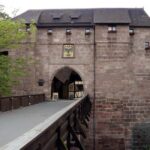
Tiergartnertorturm: defensive walls you can actually picture
At Tiergartnertorturm, you’re looking at a 14th-century defensive tower over one of Nuremberg’s most beautiful squares. This is where the walk helps you build mental images.
Instead of learning defense as abstract military history, you see how towers controlled movement and protected the city. It’s also a nice visual break after the major church and castle stops, because it shifts you from “look up at power” to “think about how the city worked day to day.”
The stop is short, but it gives your tour a sense of balance. Not everything is monumental. Some of it is practical.
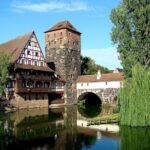
Weissgerbergasse: craftsmen’s street and World War II reconstruction
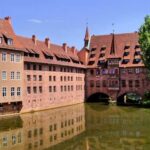
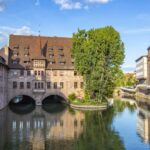
Then you hit Weissgerbergasse, often singled out as Nuremberg’s most beautiful craftsmen’s street. This is one of those places where the guide’s ability to connect old trade life to modern memory really matters.
You’ll also learn about destruction and reconstruction after World War II. That part can be heavier than the fountain-and-church segment, but it’s handled in a way that fits the overall tour tone: history with care, not shock for shock’s sake.
This stop can be a turning point. After you’ve walked through “golden age” pride and civic legend, you see that rebuilding is part of the city’s identity too. It makes Nuremberg feel less like a museum town and more like a living one that had to recover.
Altstadt finishing loop: hidden corners and the executioner’s house
The tour wraps with time in Altstadt, the old town stretch that ties everything together. The guide covers key sights like churches of St. Sebald and St. Lorenz, plus main market and the imperial castle area you’ve already been learning about.
But the best part is how the walk also includes quieter corners, like castle gardens and the executioner’s house. These are the spots that most people miss when they’re just following a list of attractions.
This is also where the guide tends to shine with useful recommendations for the rest of your stay—so you can turn your half-day tour into a full stay plan.
If you want to maximize your time in Nuremberg, this last leg matters. It leaves you with a mental map you can use later.
Pace, comfort, and who this tour suits best
This walking tour is best for visitors who want a smart overview quickly. It’s also a good match if you like your history told as stories and not as lectures.
Here’s the reality check: Nuremberg has hills and uneven surfaces. The castle climb is the big one. Cobblestones can be tough on knees and ankles, and you’ll likely notice the effort more during the ascent.
Guides have been praised for pacing—people like Daniella and Andreas are specifically noted for adjusting to the group and taking care with timing. That helps, but you should still plan to slow down a little and wear supportive shoes.
If you’re traveling with seniors or anyone with mobility limits, consider that you may need to take the hill more slowly or plan alternative options.
Price and value: why this costs so little (and why it still works)
The listed price is low—about $3.63 per person—and that alone grabs attention. What’s more important, though, is what you’re actually paying for: a 2.5-hour guided orientation across Nuremberg’s core sights.
A walk like this saves you from two common problems:
- you waste less time figuring out routes
- you don’t miss the context that makes buildings meaningful
The reviews also suggest some people experience it as a free tour model where you tip at the end, which can be a big reason it attracts good value-seeking visitors. Either way, for the amount of ground covered and the quality of storytelling tied to real local guides, this feels like one of the most practical uses of a half day in Nuremberg.
You’re not paying for luxury. You’re paying for clarity—and a tour that helps you explore the city with confidence afterward.
Should you book this Nuremberg walking tour?
Book it if you want a high-impact first visit. It’s a strong choice when you’re only in town for a short time, or when you’ve had enough of wandering with a phone map and want a human to connect the dots.
Skip it (or be cautious) if you know hills and cobblestones are likely to wear you down fast. The castle segment is the main strain. If that’s a deal-breaker, you may want a flatter option and explore the castle area separately.
If you do book, go with one mindset: treat it like orientation plus storytelling. Bring water if you run hot. Wear shoes that grip. And keep asking questions—this tour is designed so the guide can answer, not just talk at you.
FAQ
FAQ
What is the duration of the Walking Tour Nuremberg?
The tour lasts about 2 hours 30 minutes.
Is the tour offered in English?
Yes, the tour is offered in English.
Where does the tour start and end?
The tour starts at Schöner Brunnen/Hauptmarkt, 90403 Nürnberg, Germany, and ends back at the same meeting point.
What time does the tour begin?
The start time is 11:30 am.
Do I get a mobile ticket?
Yes, the tour includes a mobile ticket.
How big is the group?
The tour has a maximum of 50 travelers.
Is the tour near public transportation?
Yes, it is near public transportation.
Are service animals allowed?
Yes, service animals are allowed.
Can most travelers participate?
The tour notes that most travelers can participate, but it includes walking and hills, including the climb up to Kaiserburg Castle.
Is there free cancellation?
Yes. You can cancel up to 24 hours in advance for a full refund.