REVIEW · NUREMBERG
Nuremberg: Walking Tour of Former Nazi Party Rally Grounds
Book on GetYourGuide →Operated by Geschichte Für Alle e.V. · Bookable on GetYourGuide
Nuremberg’s Nazi Party sites hit harder on your feet. This 2-hour walking tour connects the buildings and parade routes to what the Nazis were trying to do to people. I especially like how the guide uses visual comparisons (including a photo folder of how things looked when they were new) so you can actually picture the scale and the staging.
My second favorite part: the tour keeps the focus on the mechanics of propaganda—architecture, crowd choreography, and the worldview behind it—without turning it into a cold checklist. One possible drawback is simple: it’s a lot of walking on uneven ground, and in winter the daylight can run out before you finish seeing everything clearly.
In This Review
- Key points before you go
- Entering Nuremberg’s rally grounds: why a guided walk matters
- Meeting at the Dokumentationszentrum: start with the right framing
- Kongresshalle (Congress Hall): why 40 meters feels so deliberate
- Große Straße (Great Road): the north–south axis as a persuasion tool
- Zeppelin Field: seeing the rally machine from the ground up
- Zeppelin Tribune: imagining 200,000 people without losing the point
- Current discussion and memory: why this site is still controversial
- Price and time: $15 for 2 hours is a real bargain
- How much walking is it, and who should do it
- Tips to get more out of the tour
- Should you book this Nuremberg Nazi Party Rally Grounds tour?
- FAQ
- How long is the Nuremberg walking tour of the former Nazi Party Rally Grounds?
- How much does the tour cost?
- Where do I meet the guide?
- Is the tour offered in English?
- Does the tour run in bad weather?
- Is this tour suitable for people with mobility impairments?
Key points before you go
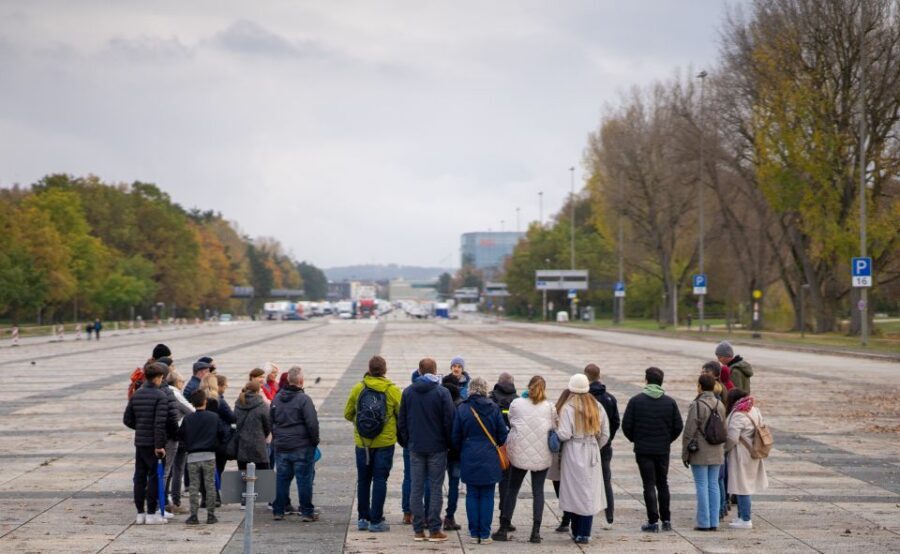
See how Nazi staging worked, not just what’s left standing
Photo-based explanations help you picture the rally sites as they once were
Congress Hall reaches about 40 meters, and the guide shows why that mattered
The Great Road axis leads your eyes straight toward Zeppelin Field
Finish at the Zeppelin Tribune, built for crowds up to 200,000
Rain or shine, so plan for weather and comfy shoes
Entering Nuremberg’s rally grounds: why a guided walk matters
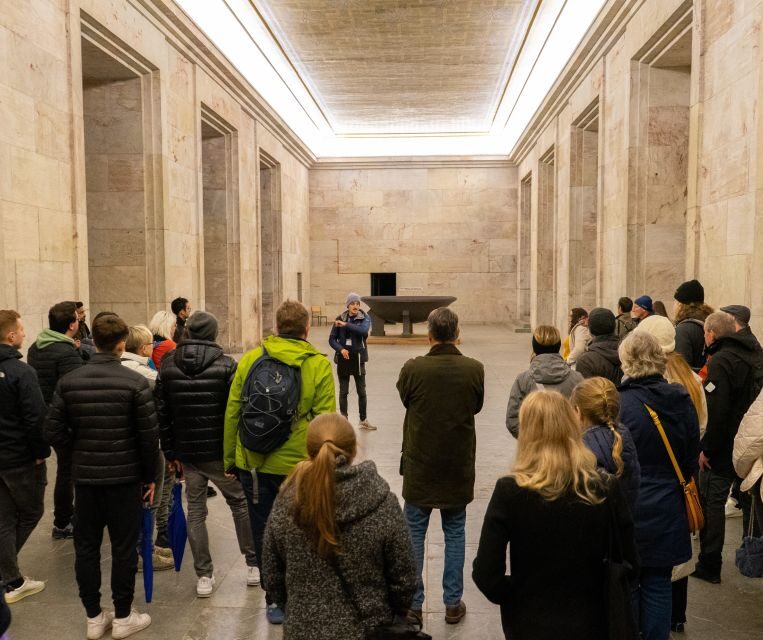
This isn’t the kind of tour where you stroll, snap a few pictures, and call it a day. The Nazi Party Rally Grounds cover a big area, and a lot of it is now ruins, re-used structures, and open space. Without context, it’s easy to miss the point: these sites weren’t built for quiet remembrance. They were built to persuade, intimidate, and recruit support through spectacle.
A guided walk gives you something you can’t easily DIY: a clear explanation of how the National Socialist Party used architecture and mass events to push their crimes and propaganda into public life. You’ll hear about the party’s role, the imagery and messaging, and the way rally days were engineered for maximum psychological impact.
And yes, it’s emotionally heavy. Guides on this tour are careful about how they handle the subject, while still speaking plainly about the violence and ideology behind it. That balance matters.
You can also read our reviews of more walking tours in Nuremberg
Meeting at the Dokumentationszentrum: start with the right framing
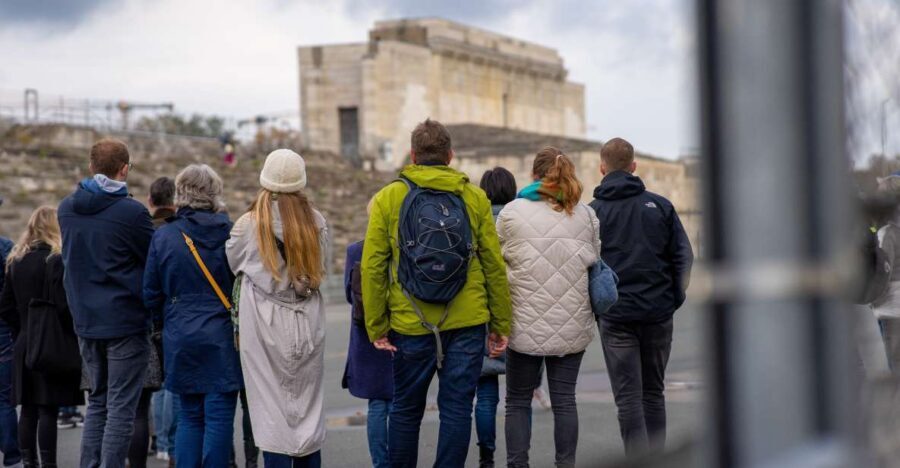
You’ll meet at the entrance stairs next to the Dokumentationszentrum Reichsparteitagsgelände (Bayernstraße 110). The guide will be holding a picture folder and wearing a name tag for Geschichte Für Alle e.V. Right away, that setup tells you the tone: this is a guided learning experience, grounded in visuals and explanation.
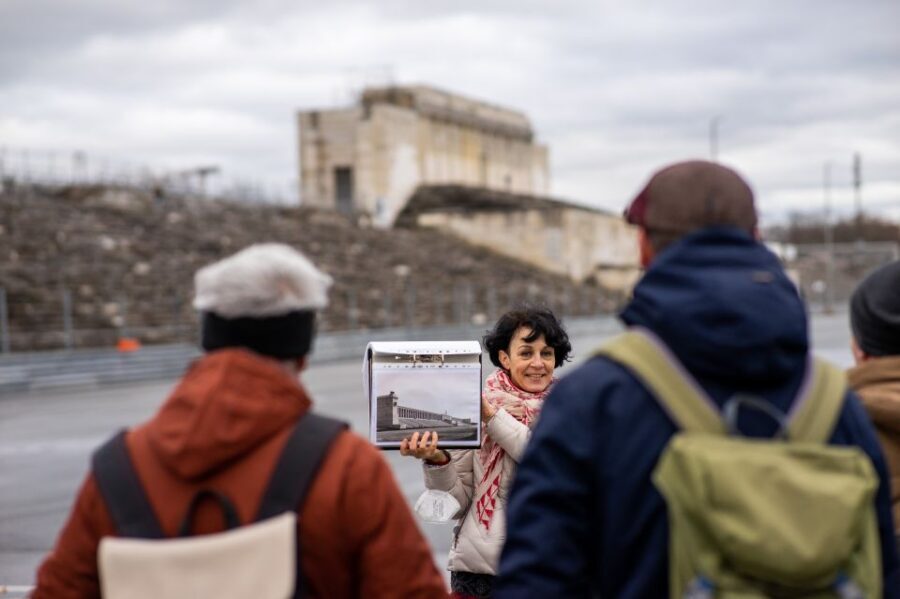
Here’s what I’d encourage you to do immediately upon meeting: take a second and scan the photo folder materials the guide shows early on. Those images are the bridge between what you see now (ruins and reconstructions) and what the Nazis intended when the buildings were functioning as rally machinery. It makes the rest of the walk far more readable.
Also, the tour runs in German and English. Even if you’re traveling solo, you’re not left to guess your way through the history.
Kongresshalle (Congress Hall): why 40 meters feels so deliberate
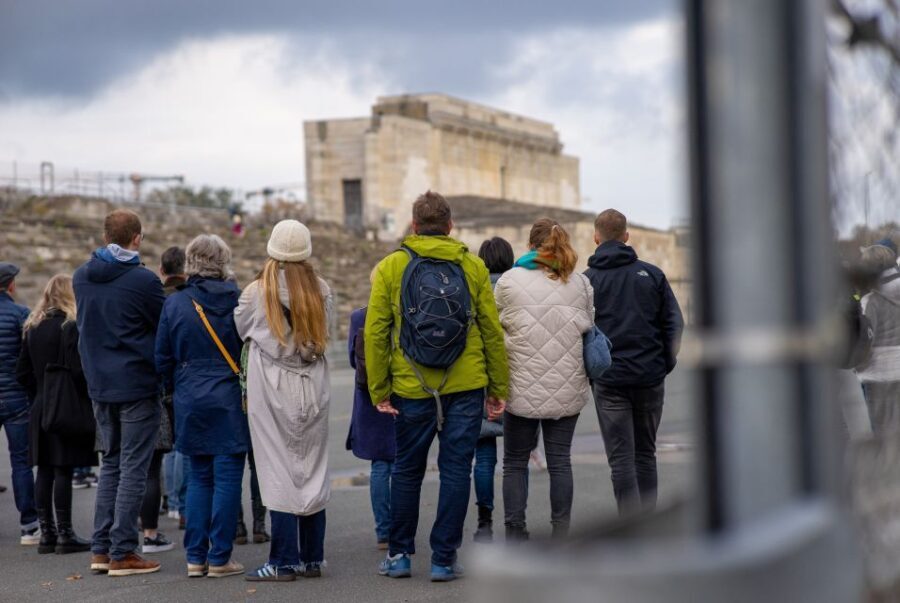
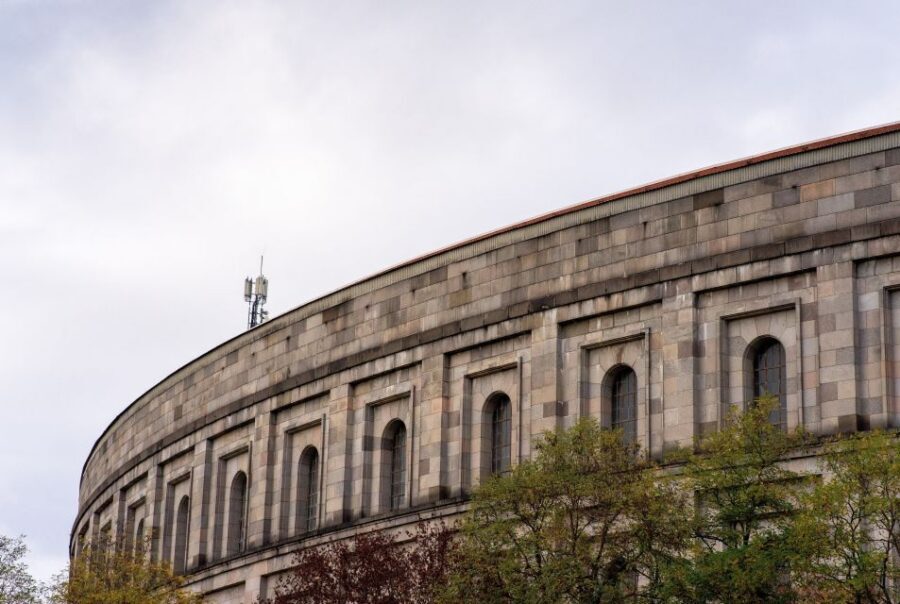
One of the biggest stops is the Kongresshalle, and the tour highlights the striking scale—standing at roughly 40 meters. That number alone doesn’t do it justice. The guide’s job is to show you how the height and mass of the structure were part of the message.
What I like about this kind of site interpretation is that you don’t just hear what the building was. You learn how it functioned as a stage. The Nazi leadership wanted architecture to communicate authority and inevitability. They used size, symmetry, and formal staging to send the message that their power was permanent and unquestionable.
Practical note: even if the ruin isn’t what it used to be, you can still see the geometry and the impact of the perspective lines. The guide points out those “designed sightlines” so you understand why people would have moved and gathered the way they did.
Große Straße (Great Road): the north–south axis as a persuasion tool
Next comes the Große Straße, often described as the “Great Road.” This is where the tour becomes especially useful for anyone who likes how cities and monuments are planned. Your guide has you walking the north–south axis that connects major parts of the grounds, including toward Zeppelin Field.
Why does that matter? Because propaganda at this scale wasn’t only about speeches. It was about choreography. A long, planned route funnels people into a shared visual experience and creates rhythm: step, pause, look, join the crowd. Even if you don’t experience the full rally day setup, you can feel how the space encourages a certain kind of movement and attention.
This stop is also where the guide typically connects the architecture to the Nazis’ narrative about history—what they wanted people to believe, and how they tried to make that belief feel like common sense. You’ll hear about the basic features of the Nazi view of history and how the rallies supported that message.
Zeppelin Field: seeing the rally machine from the ground up
Then you reach Zeppelinfeld, the central outdoor space for mass events. The tour makes it clear that this wasn’t just an empty field with occasional events. The Nazi leadership treated crowd-scale public theater as a weapon—something meant to overwhelm individuals and pull them into collective emotion.
A key strength of the walk here is that the guide ties the physical space to the human experience. You’ll get explanations of the function and effect of the architecture and how it shaped the staging of the Nazi Party rallies. The goal is for you to understand both:
- the “public” side (parades, ceremonies, performance)
- and the “hidden” side (how ideology connected to persecution and the concentration camp system)
The tour also touches on mass-scale propaganda shows and the “other side” of that concentration camp system—language that signals you’re not only learning about aesthetics. You’re learning about the harm behind the spectacle.
Zeppelin Tribune: imagining 200,000 people without losing the point
The tour finishes with a look at the Zeppelin Tribune, designed to hold up to 200,000 people. That capacity number is hard to picture until you’re standing in the area and hearing the explanation that turns space into staging.
This is a good moment to watch how the guide talks about scale and placement. You’re learning why grand stands and long approaches can make people feel small and “part of something bigger.” The Nazi system exploited that feeling—turning crowds into an instrument.
One caution I’d give you: in shorter winter days, you may end the tour after dark. That can make it harder to properly view Zeppelin Field and the surrounding structures in their full form. If you can, consider booking a time that gives you more daylight.
Current discussion and memory: why this site is still controversial
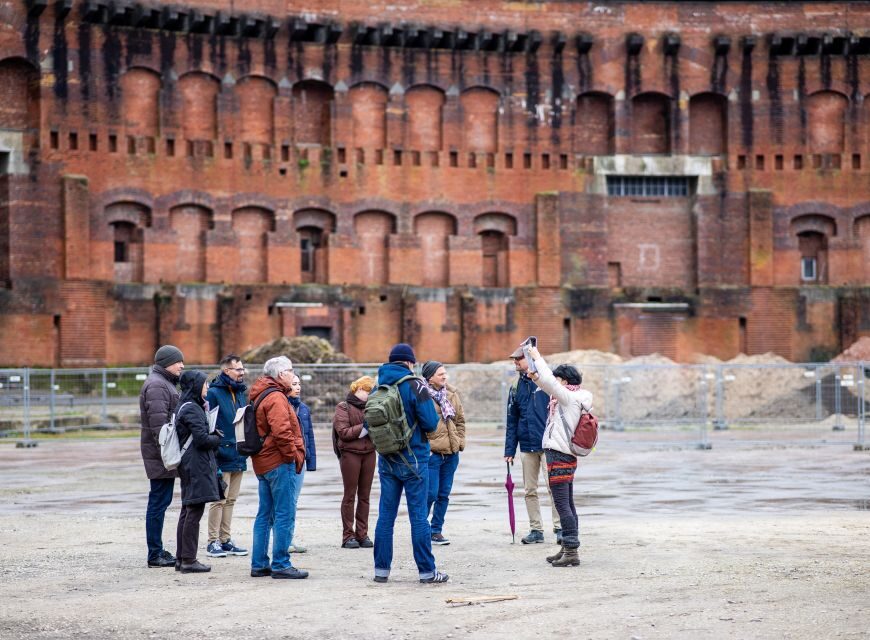
What I appreciate here is that the tour doesn’t treat the rally grounds as a sealed museum topic. It mentions the current discussion about how the site is used today, and that matters.
Sites like this create a constant tension: people want to remember victims and understand history, while also dealing with the fact that physical spaces can still evoke strong emotions. A thoughtful guided tour helps you think through why interpretation and presentation are part of the ethics of remembering.
This is also where the guides’ approach becomes important. Different guides have different speaking styles, and names that come up often include Thurston, Frank, Anita, Sylvia, Marina, Kai, Ralf, Kristina, Bettina, Alan, Andreas, Mike, and Anne. Across those different voices, the common theme is clear: they explain without sensationalizing and they encourage questions without dodging hard topics.
Price and time: $15 for 2 hours is a real bargain
At $15 per person for a 2-hour guided walking tour, the value is strong—especially for a site this complex. You’re paying for interpretation, pacing, and context. If you tried to learn all of this on your own, you’d likely spend more time piecing together sources and still miss the way the guide connects architecture to propaganda psychology.
What’s not included is simple: food and drinks. Bring water, especially since you’re outdoors and walking continuously.
You should also know the tour happens rain or shine. That’s not a gimmick; it’s practical. Wear shoes you trust on wet surfaces and keep a compact layer for cold or drizzle.
How much walking is it, and who should do it
This is not a sit-on-a-bus kind of tour. Expect a moderate walking route across the grounds with stops for explanations. One helpful reality check from past experiences: it’s often discussed around the ballpark of about 5,000 steps in 2 hours, which feels manageable if your legs are ready and you pace yourself.
Still, it’s not suitable for everyone. The tour notes it’s not suitable for people with mobility impairments. If walking distances or uneven ground are an issue, you’ll want to look for a different format.
This tour is a great fit if you:
- want to understand how propaganda used architecture and crowds
- enjoy learning with photos and clear staging explanations
- like asking questions and getting direct answers from the guide
- are comfortable with a serious, sensitive topic handled plainly
Tips to get more out of the tour
Here are a few small moves that will make the experience click faster:
- Wear comfortable shoes with good grip. You’re on your feet for about 2 hours and the ground can be damp or uneven.
- If it’s winter, protect your daylight. Multiple people have pointed out that the tour can end with darkness before you fully enjoy Zeppelin Field, so pick a start time when you’ll still have light.
- Bring a curious mindset. The best guides use questions in a smart way, sometimes asking how you think people might have felt and why the Nazis designed these spaces for crowd participation.
- Use the photos. Even if you’re taking your own pictures, the guide’s photo folder is about understanding what you’re seeing now compared to what used to exist.
Should you book this Nuremberg Nazi Party Rally Grounds tour?
Book it if you want more than ruins and names. This guided walk helps you connect the dots between Congress Hall, the Great Road, Zeppelin Field, and the Zeppelin Tribune—and it does that in a way that’s structured, visual, and morally serious.
Skip it (or think twice) if you’re looking for an easy, low-effort outing. You’ll walk a lot, it runs outdoors in all weather, and the subject matter is intense.
If you’re coming to Nuremberg to understand history in context—especially the role of propaganda and public theater in Nazi power—this is one of the most efficient ways to do it in two hours.
FAQ
How long is the Nuremberg walking tour of the former Nazi Party Rally Grounds?
The tour lasts about 2 hours.
How much does the tour cost?
It’s priced at $15 per person.
Where do I meet the guide?
Meet next to the entrance stairs to the Dokumentationszentrum Reichsparteitagsgelände at Bayernstraße 110. The guide will be holding a picture folder and wearing a name tag for Geschichte Für Alle e.V.
Is the tour offered in English?
Yes. The tour guide speaks German and English.
Does the tour run in bad weather?
Yes. The tour takes place rain or shine.
Is this tour suitable for people with mobility impairments?
No. The tour is not suitable for people with mobility impairments.