REVIEW · TIMMENDORFER STRAND
SEA LIFE Timmendorfer Strand Ticket
Book on GetYourGuide →Operated by Merlin Entertainments Group Deutschland GmbH · Bookable on GetYourGuide
Cold facts: it’s small but mighty. SEA LIFE Timmendorfer Strand turns a Baltic Sea day into a mini tour of tropical waters, with 11 themed underwater worlds and a transparent tunnel where sharks and turtles glide overhead. I especially like the clean, well-kept tanks and the staff’s friendly, excited explanations about the animals. One thing to consider: at least one reviewer found the aquarium on the smaller side, so if you expect a huge multi-hour mega-park, set your expectations accordingly.
You’ll get several live feedings each day, plus serious wow moments like blacktip reef sharks and a face-to-face green sea turtle. The experience also includes the kind of up-close interactions you usually only get at a hands-on exhibit, including a touch pool. The main drawback to plan around is that it’s an indoor walk-through without a guaranteed long “guided tour” format, so you’ll want to go with curiosity and comfortable walking shoes.
If you want a straightforward, family-friendly aquarium stop that’s easy to fit into a coastal day, this one works. Just remember you’re choosing timed entry for the selected date/time, and you’ll need to be in before the last admission (one hour before closing).
In This Review
- Key highlights to know before you go
- Where SEA LIFE Timmendorfer Strand Fits: Baltic Beach Day, Not a Big Detour
- The Layout: 11 Themed Underwater Worlds and the Transparent Tunnel
- Rainforest Exhibit Meets Ocean Creatures
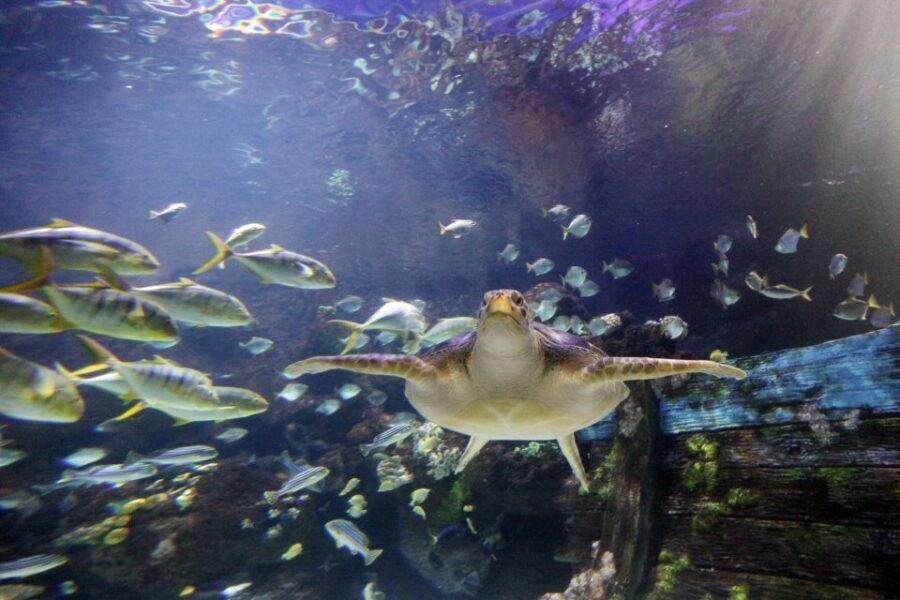
- Blacktip Reef Sharks and Green Sea Turtle: The Face-to-Face Moments
- Rays, Octopus, Clownfish, and Seahorses: The Smaller Details That Stick
- Live Feedings: The Best Time to Stop Being a Tourist and Start Watching
- Touch Pool: Up Close Without Needing to Pretend You’re a Biologist
- Cleanliness and Staff: Why People Rate This Higher Than Average
- Conservation Reality Check: Many Animals Are on Protection Projects
- Price and Time Value: Is $20 Worth It?
- Timing That Actually Helps: Timed Entry and Last Admission
- What to Bring and What Not to: Small Rules That Affect Comfort
- Getting There: Practical Ways to Reach Kurpromenade 5
- Who This Is Best For (and Who Might Feel Underwhelmed)
- Should You Book SEA LIFE Timmendorfer Strand?
- FAQ
- FAQ
- How long is the SEA LIFE Timmendorfer Strand ticket valid for?
- Where is SEA LIFE Timmendorfer Strand located?
- What can I see inside?
- Are there live feedings?
- Is there a tunnel in the aquarium?
- Is there a touch pool?
- What is the price?
- Are meals included?
- Are pets allowed?
- Is it wheelchair accessible?
Key highlights to know before you go
- Rainforest-style exhibit vibe with tropical plants and a large boa constrictor
- Live feedings happening multiple times daily
- The tunnel overhead experience with blacktip reef sharks and green sea turtles
- 12 exhibition areas packed with 2500+ animals
- Touch pool for supervised up-close sea creature encounters
- Conservation angle: many animals are part of red-list protection projects
Where SEA LIFE Timmendorfer Strand Fits: Baltic Beach Day, Not a Big Detour
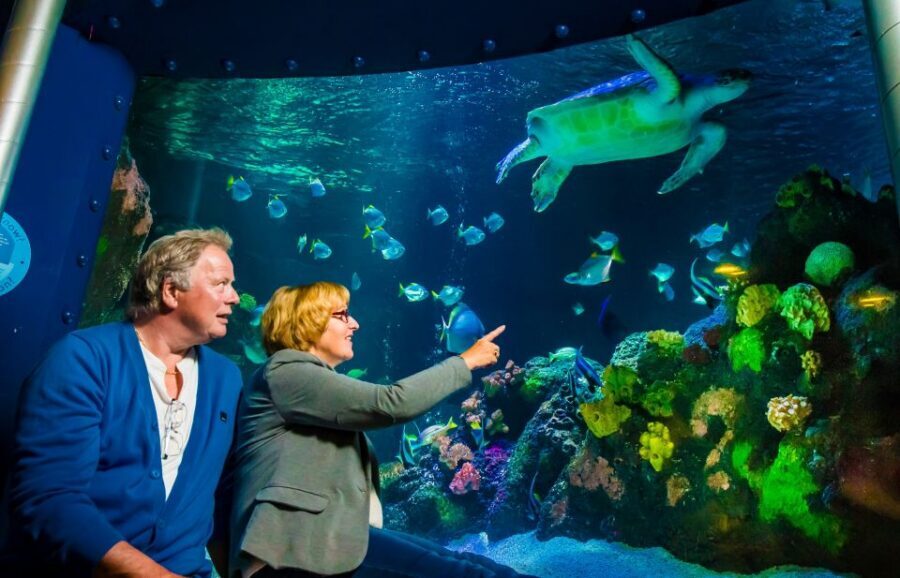
SEA LIFE Timmendorfer Strand is right by the beach in Timmendorfer Strand, in northern Germany. That location matters because you can treat this as a weather-proof “anchor” for a seaside day. When you’re finished, you’re still steps from the promenade and the pier area, so your day doesn’t end when your ticket does.
The aquarium is easy to access by both car and public transport. If you’re coming by train, it’s described as an hourly connection from Lübeck main station, heading toward Puttgarden/Neustadt i.H., with about a 15-minute ride. By car, you take the A1 toward Hamburg–Lübeck–Puttgarden and exit for Timmendorfer Strand, then follow parking signs for SEA LIFE.
This is a smart option for people who want something simple: buy admission, show up at your time slot, walk the circuits, and catch a few scheduled moments like live feeding times. You don’t need to plan an elaborate “itinerary inside the aquarium” because the layout does the work for you.
You can also read our reviews of more tours and experiences in Timmendorfer Strand.
The Layout: 11 Themed Underwater Worlds and the Transparent Tunnel
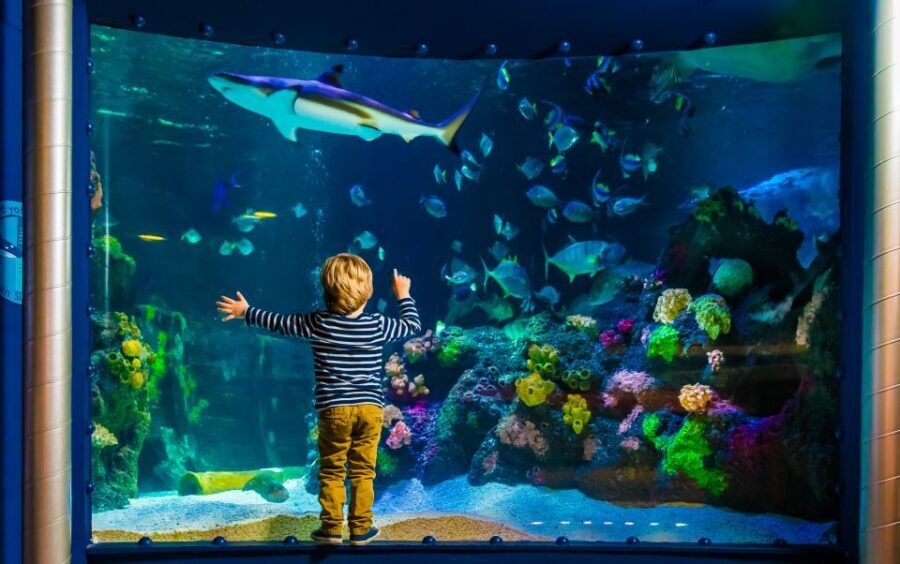
The biggest design feature here is the sense of movement through themed “underwater worlds.” You’ll walk through 11 themed underwater worlds, and the overall experience is described as being spread across 12 exhibition areas. In plain terms: expect a sequence of connected scenes, not one giant single-room tank.
The standout is the transparent underwater tunnel. It’s the kind of exhibit that changes how you look at an aquarium. Instead of you staring at fish in front of you, the animals pass above you and around you. The experience is especially highlighted with blacktip reef sharks and green sea turtles gliding overhead.
If you’re traveling with kids, tunnels and clear sightlines reduce the “Where are we?” feeling. Adults get the reverse benefit: fewer gaps, more continuous viewing, and less time wondering if you’re missing something.
Rainforest Exhibit Meets Ocean Creatures
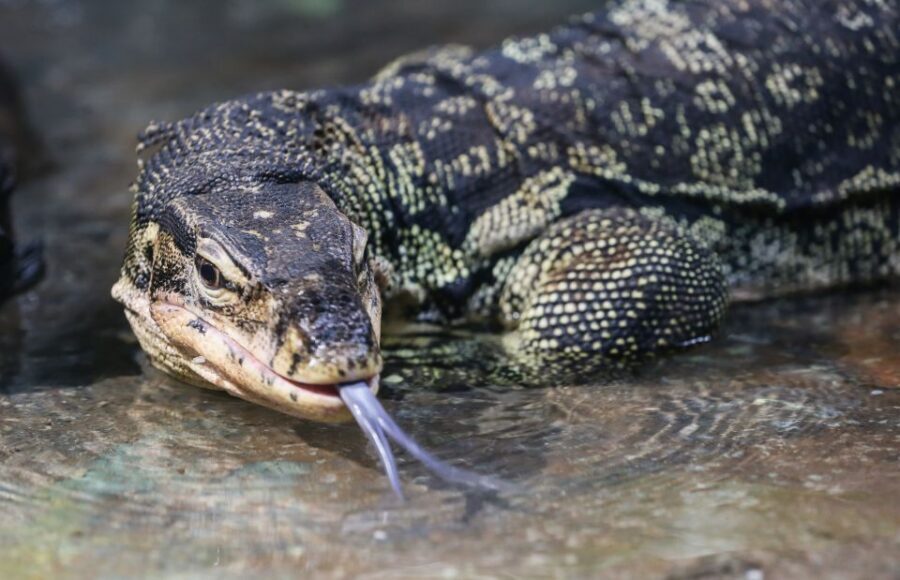
One of the most interesting promised elements is the rainforest area. It’s not just a decorative theme. The experience is described as a place where tropical plants share space with a large boa constrictor. That’s a fun switch from the usual “only marine” expectation and gives you a change of pace in the walkthrough.
And it’s not just about reptiles and rainforest styling. You’ll also encounter the aquarium’s range of ocean life through the themed scenes. The mix is a big part of why this doesn’t feel like a one-note stop.
If your group enjoys animals that aren’t only fish-shaped, this rainforest corner adds variety without turning the day into something complicated. You’ll still be in a standard aquarium flow, just with a more varied feel.
Blacktip Reef Sharks and Green Sea Turtle: The Face-to-Face Moments
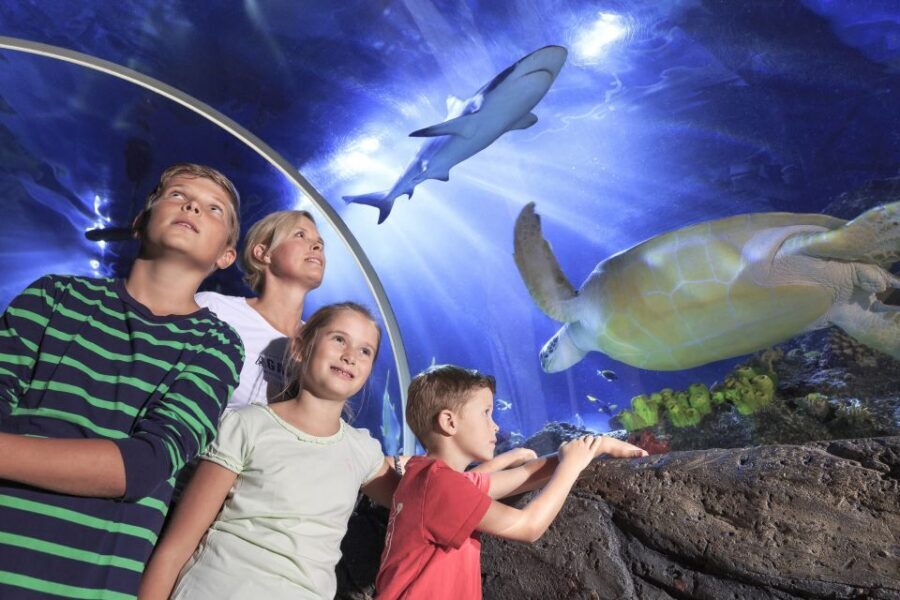
If you like aquariums for their best photo opportunities, you should prioritize the tank areas where you’ll see the headline species listed for this site: blacktip reef sharks and a green sea turtle.
These are specifically tied to the tunnel experience, where you’re positioned to look up as they glide above. That’s the moment where a lot of people stop walking and just watch for a while, because it feels like the animals are moving through your space rather than you moving along theirs.
One review also singled out the “big tank” featuring sharks and the sea turtle as especially impressive. That matches the overall emphasis on the tunnel overhead view. So, if you only want to “power through,” you’ll still want to slow down here for at least a few minutes.
Rays, Octopus, Clownfish, and Seahorses: The Smaller Details That Stick
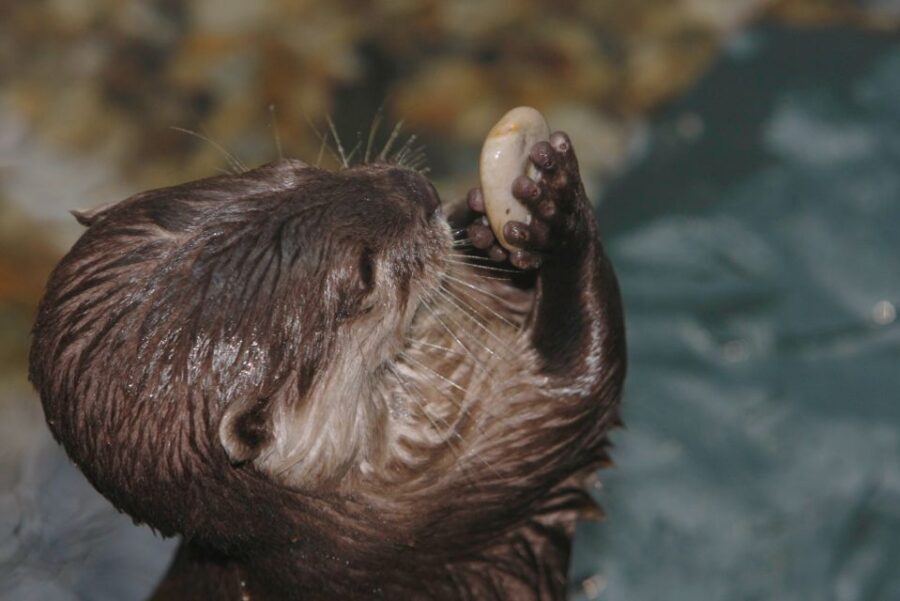
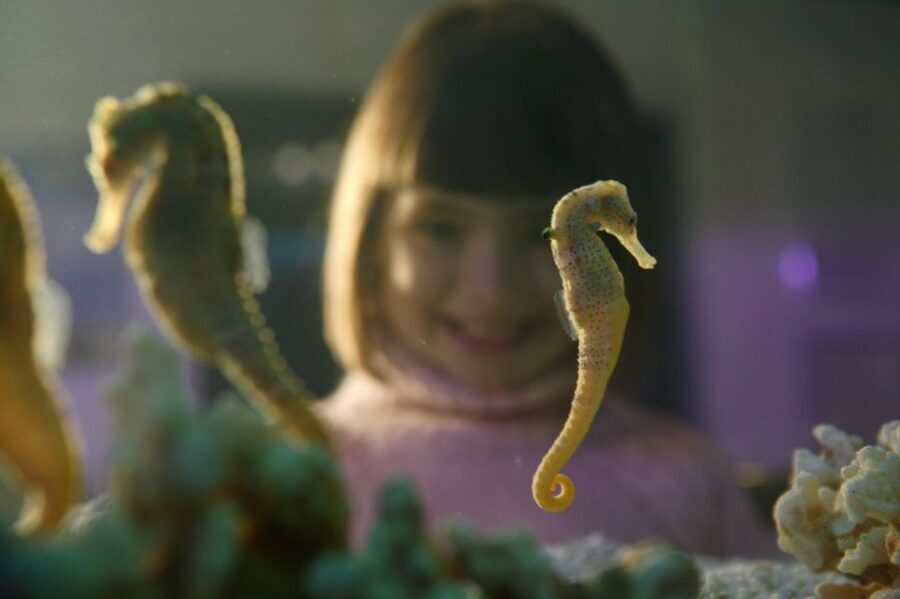
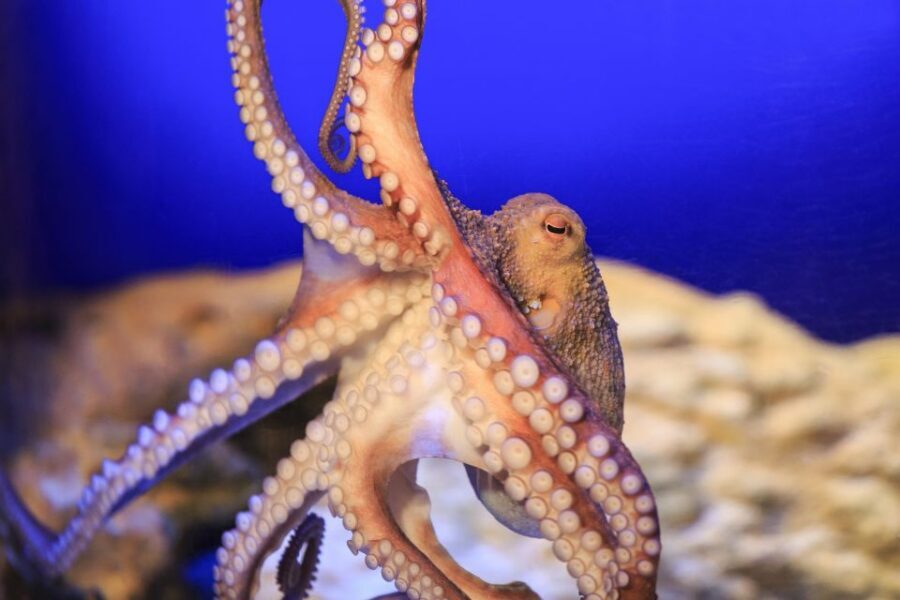
Beyond the headline species, this aquarium promises a wide mix of animals. The description includes rays, an octopus, and familiar aquarium favorites like clownfish and seahorses.
What I like about this kind of spread is that it keeps the visit from turning into a hunt for only one or two creatures. Rays tend to reward patient watching. Octopuses can be unpredictable, but when you catch one moving, it’s memorable. Clownfish and seahorses are good “quick wins” for younger kids and for adults who want variety at a steady pace.
Because the experience is organized across multiple themed worlds and exhibition areas, these animals aren’t all crammed into one corner. That matters for how you pace yourself. You’re not forced to linger too long in one section, but you also won’t feel like you rushed past everything.
Live Feedings: The Best Time to Stop Being a Tourist and Start Watching
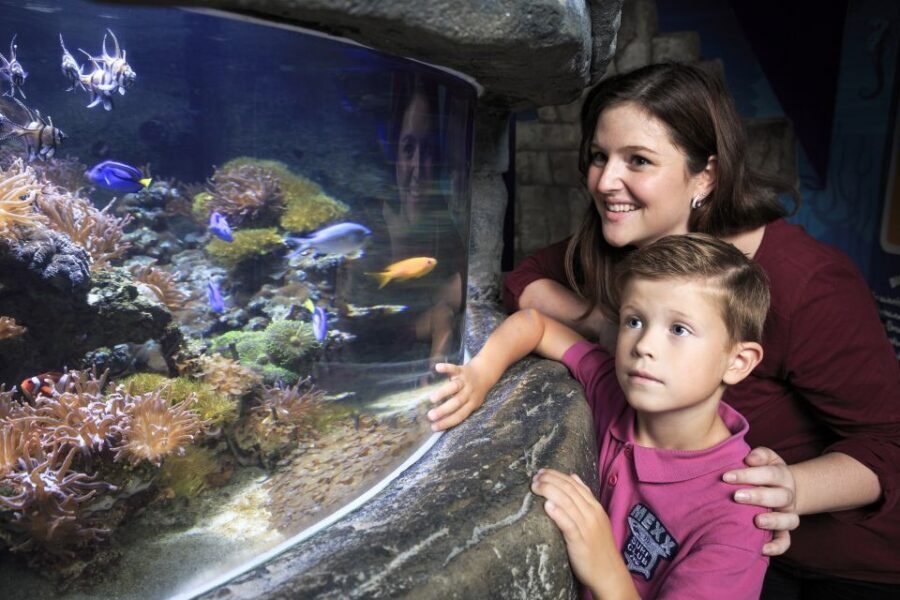
A major part of the SEA LIFE experience is that you can catch live feedings several times every day. Feedings change aquariums. Even when you’ve already seen a tank, the behavior shifts when food is involved.
This is one of the most practical ways to get more value from a timed ticket. If your goal is to see animals behave naturally, live feedings are where the “show” element comes from, even though the aquarium is still a self-guided walk.
Tip: when you arrive, take a quick look at the feeding schedule on-site (if you’re given one at entry) and let that influence where you spend your time. If you chase the feedings, you naturally cover more of the exhibits because you’ll be circulating through the areas that host them.
Touch Pool: Up Close Without Needing to Pretend You’re a Biologist
You’ll also get the chance to encounter sea creatures up close at the touch pool. This is the kind of exhibit that turns “watching fish” into “meeting something.” It can be especially fun for kids, and it’s a good way to break up the tunnel-and-tanks rhythm.
Just know that touch pools typically come with safety rules and staff oversight, and this one is part of an attraction with strict conduct limitations. You’ll want to follow whatever guidance is given at the touch pool station so you keep the interaction safe and smooth for everyone.
Cleanliness and Staff: Why People Rate This Higher Than Average
One review stood out for its praise of how the whole place looks and feels. It specifically highlighted that the tanks were very beautiful, clean, and well maintained. That’s not a small detail. A tidy, well-kept aquarium makes the viewing clearer and the day less stressful.
The same review also praised staff for being friendly and enthusiastic, with staff giving information about the different water residents. That matters because aquariums can feel like a wall of labels. When the people working there are actually engaged, you’re more likely to learn something real, even in a short visit.
So if you’re worried this will be a “just walk and forget” outing, remember: you can get more out of it by asking staff a question while you’re near an exhibit.
Conservation Reality Check: Many Animals Are on Protection Projects
SEA LIFE also includes a conservation angle. The information provided explains that many of the animals shown are on the red list of threatened species. It also notes that these animals were saved and cannot be returned to their natural habitat, or they were born and raised as part of SEA LIFE’s conservation projects.
For you, that means the visit isn’t only about entertainment. It’s also an education experience with an ethical purpose. It’s worth paying attention to the exhibit signage where it explains why the animal is there and what conservation work is connected to it.
This is also a helpful mindset adjustment. You’ll enjoy the animals more when you recognize the aquarium as a rescue-and-protection setting, not just a display room.
Price and Time Value: Is $20 Worth It?
The ticket price is listed as about $20 per person, and the duration is 1 day. For an aquarium, $20 lands in a reasonable zone, especially if you’re comparing it to typical entertainment costs in Germany.
Where the value comes from isn’t only the number of tanks. It’s the combination:
- 2500+ animals across 12 exhibition areas
- 11 themed underwater worlds so you don’t feel like you’re seeing the same scene repeatedly
- several live feedings daily that add “action” to viewing
- a transparent tunnel with strong animal sightlines
- a touch pool that breaks the passive-only format
If you’re traveling with kids, value often means “how many different things can they do” in one place. Feedings and the touch pool make it easier for families to stay engaged without constant supervision-by-boredom.
If you’re an adult who hates crowds and prefers quiet museums, you might find you want more time in the best sections and less time in the rest. That ties into another consideration: at least one review said it felt too small. So plan for a visit you’ll enjoy even if it’s not an all-day labyrinth.
Timing That Actually Helps: Timed Entry and Last Admission
This is a ticket that’s valid for the selected date/time, so you should treat it like a scheduled entry rather than a casual drop-in. The last admission is 1 hour before closing time. That matters because if you arrive late, you might lose the chance to see the whole circuit you planned for.
For most visitors, the winning strategy is simple: arrive with enough buffer to get oriented, then catch the feedings and settle into the tunnel and the headline tanks when lines and movement allow.
Also consider that your visit is self-paced. If you want slower, more detailed viewing (rays, octopus, seahorses), give yourself extra time. If you want a fast hit, you can still get the main moments, but you’ll spend less time watching behavior changes at feedings.
What to Bring and What Not to: Small Rules That Affect Comfort
This aquarium has clear restrictions, and they can affect how easy your day is.
Not allowed:
- Pets
- Baby strollers
- Smoking
- Handcarts
And for safety reasons, pushchairs, handcarts, and bicycle trailers are not permitted inside. That’s important for families who rely on strollers for naps. If you’re traveling with small kids, you’ll likely want to plan an alternative way to handle them outside the attraction or reconsider the timing of naps.
On a practical level, wear comfortable shoes. You’ll be walking through multiple themed worlds and exhibition areas, and the route naturally creates a bit of back-and-forth as you chase feedings and the touch pool.
Getting There: Practical Ways to Reach Kurpromenade 5
The meeting point is listed as Kurpromenade 5, 23669 Timmendorfer Strand. That’s useful if you’re mapping it on your phone or checking parking.
By car: take A1 until exit 18 (Timmendorfer Strand), follow signs for SEA LIFE P2 parking (near Famila parking space). The aquarium is about 300 meters away near the Curschmann-Clinic and the Seebrücke (pier). For satnav, use the address Höppnerweg.
By public transport: there’s an hourly connection from Lübeck main station in the direction of Puttgarden/Neustadt i.H., about 15 minutes.
If you’re staying in the area for a beach trip, the location means you can combine this with outdoor time. That’s one of the best “hidden logistics” benefits: you don’t need to fight your schedule to keep the day intact.
Who This Is Best For (and Who Might Feel Underwhelmed)
I think SEA LIFE Timmendorfer Strand is strongest for:
- Families with kids who’ll enjoy live feedings and the touch pool
- People who like a mix of marine animals plus one or two non-marine theme surprises like the rainforest boa
- Visitors who want a clean, well-organized attraction where staff engagement can help you understand what you’re seeing
- Anyone planning a Baltic Sea day and wanting a weather-friendly activity that doesn’t require hours of complex touring
It may feel less ideal if:
- You expect a giant, hours-long aquarium like some of the biggest international ones
- You prefer quiet, unguided, slow museum-style pacing without crowds or “show” moments
That matches the only clear negative note provided: someone felt it was too small. If you keep that expectation in check, you’re more likely to leave happy rather than comparing it unfairly to larger venues.
Should You Book SEA LIFE Timmendorfer Strand?
Book it if you want an easy, well-run aquarium stop with clear highlights: the tunnel overhead view, blacktip reef sharks, green sea turtles, multiple live feedings, and the touch pool. At around $20, the value is strongest when you factor in the variety of animals (2500+), the themed worlds (11), and the day’s built-in moments of action.
Hold off if you’re the type who needs a marathon attraction. One review flagged that it can feel small. If you’re planning this as your only activity and you hate the idea of finishing sooner than expected, compare your priorities and day length first.
FAQ
FAQ
How long is the SEA LIFE Timmendorfer Strand ticket valid for?
The ticket is valid for 1 day, and it’s tied to the selected date/time.
Where is SEA LIFE Timmendorfer Strand located?
The meeting point is Kurpromenade 5, 23669 Timmendorfer Strand.
What can I see inside?
You’ll walk through 11 themed underwater worlds and 12 exhibition areas featuring 2500+ animals, including blacktip reef sharks and green sea turtles.
Are there live feedings?
Yes. There are several live feedings every day.
Is there a tunnel in the aquarium?
Yes. There is a transparent underwater tunnel where you can see animals like blacktip reef sharks and green sea turtles gliding overhead.
Is there a touch pool?
Yes. You can encounter sea creatures up close at the touch pool.
What is the price?
The price is listed as about $20 per person.
Are meals included?
No. Meals and beverages are not included.
Are pets allowed?
No. Pets are not allowed.
Is it wheelchair accessible?
Yes, the wheelchair accessible tour is available.