REVIEW · NUREMBERG
Nürnberg kennenlernen: Highlights in der Altstadt
Book on GetYourGuide →Operated by Geschichte Für Alle e.V. · Bookable on GetYourGuide
One old town walk changes how you see Nuremberg. I like the Pegnitz River stroll through the center, because it turns street corners into a real timeline of daily life. I also like the stop at Hauptmarkt, where the Christmas mood of the Christkindlesmarket becomes part of the story, not just a photo op.
The only real drawback: it’s a walking tour on uneven streets, and the activity notes that it’s not suitable for people with mobility impairments, even though it also says wheelchair accessible—so check before you go if that matters for you.
In This Review
- Key highlights worth showing up for
- Hangman’s House: the perfect kickoff for Nuremberg’s stories
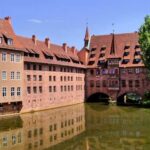
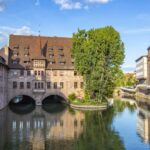
- Pegnitz River to the Flesh Bridge: walking where city life moved
- Hauptmarkt and the Christkindlesmarket center: the city’s stage
- Frauenkirche and the town hall: Gothic spires meet civic power
- Sebalduskirche and Saint Sebaldus: legend you can picture
- Weißgerbergasse: a medieval street that survived the war
- Kettensteg: crossing Europe’s oldest preserved metal suspension bridge
- Maxbrücke finish: closing the loop and setting up your next walk
- What makes the guides feel worth it in 1.5 hours
- Price and value: $15 for a focused Old Town orientation
- Practical tips so you enjoy every step
- Who should book this walking tour?
- Should you book Nürnberg kennenlernen: Highlights in der Altstadt?
Key highlights worth showing up for
- Hangman’s House start point: a spooky-cool entry into city life and legend right away
- Pegnitz River route: great for orientation and easy to follow on foot
- Hauptmarkt and the Christkindlesmarket axis: the historic heart you’ll actually feel in winter
- Weißgerbergasse walking section: a medieval street that was spared from war destruction
- Kettensteg crossing: walking across Europe’s oldest preserved metal suspension bridge
- Sebalduskirche stories: Saint Sebaldus with a mix of fact and legend that keeps it human
Hangman’s House: the perfect kickoff for Nuremberg’s stories
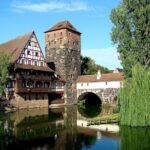
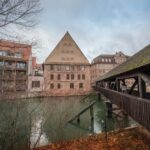
This tour starts at the Hangman’s House, the Henkerhaus Museum. It’s a smart way to begin because you don’t start with a postcard view. You start with a place tied to how the city worked, and that sets the right mindset for everything that comes next.
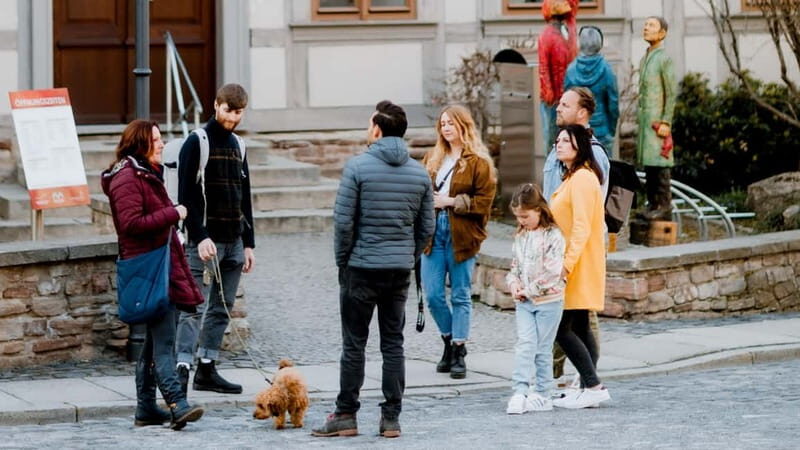
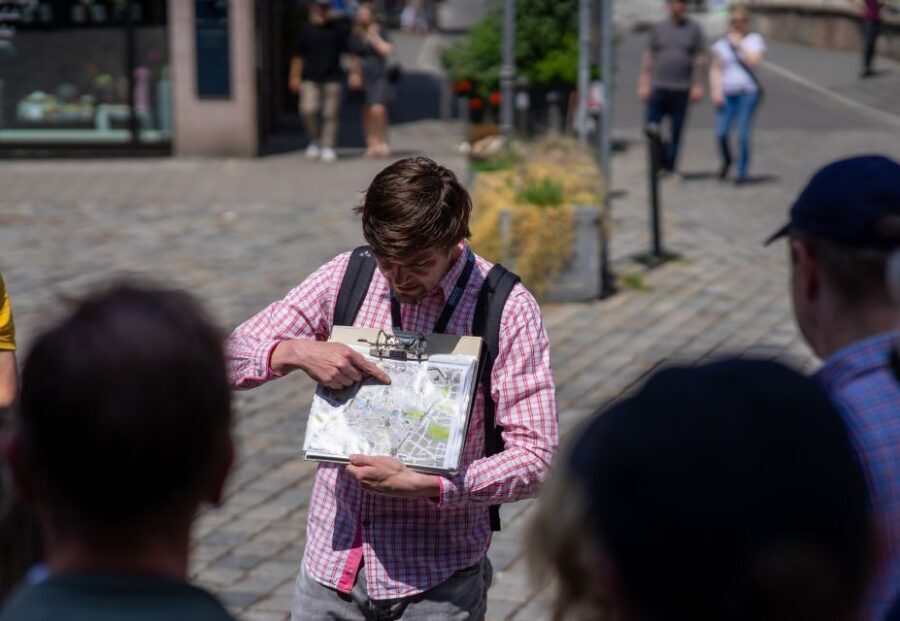
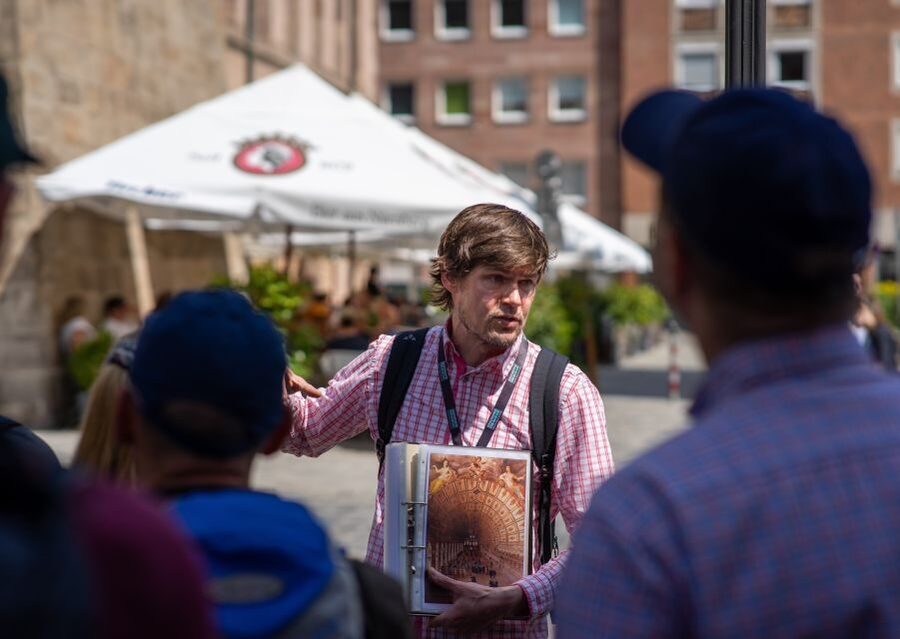
Right away, you’ll meet the guide in front of the museum. They’ll be holding a picture folder and wearing a name tag for Geschichte Für Alle e.V. That small detail matters, because it makes the start easy—no guesswork, no wandering around with your map app.
Expect the guide to connect buildings you see every day with the people who lived around them. Even if you only have 1.5 hours, you’ll leave with a better sense of how Nuremberg formed and why these landmarks sit where they do.
You can also read our reviews of more tours and experiences in Nuremberg.


Pegnitz River to the Flesh Bridge: walking where city life moved
After the start, the route follows the Pegnitz River through the Old Town. I love river walks in European cities because the water is the original guide. It suggests where trade happened, where neighborhoods formed, and why certain streets became important.
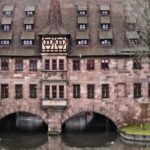
You’ll also cross the Fleisch Bridge along the way. That kind of short bridge stop sounds minor until you notice how often Nuremberg’s crossings line up with the city’s main movement corridors. In a guided format, those connections click fast.
The whole point of this section is orientation. In 10 minutes, you’ll know where you are relative to the big sights like the Frauenkirche and the main market square. It’s the kind of help you’ll use all day after the tour.
Hauptmarkt and the Christkindlesmarket center: the city’s stage
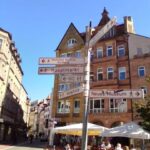
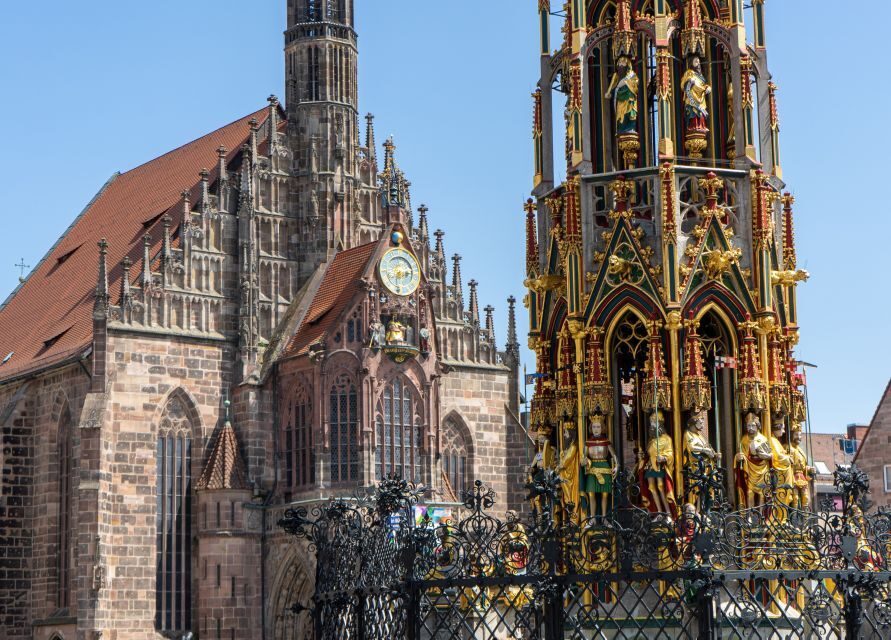
Then you reach Hauptmarkt, Nuremberg’s famous main square. This is the spot tied to the annual Christkindlesmarket, especially in winter. Even if you’re not visiting in peak season, Hauptmarkt still feels like the city’s stage: a wide public room where everything matters.
The guide brings the square to life with context so it doesn’t feel like a stop-and-go checklist. You’re not just seeing buildings—you’re learning why the market center became central.
This is also a good time to take a breath and look around. Notice the flow: where the streets funnel you in, where people pause, and how the space frames the key religious and civic structures you’ll see next.
Frauenkirche and the town hall: Gothic spires meet civic power
From Hauptmarkt, the tour moves toward the Frauenkirche, with its gothic spires leading the eye upward. The guide’s job here is to make that architecture readable. You’ll understand what you’re looking at, not just that it looks impressive.
You’ll also learn about the historic town hall. That matters because it shifts the story away from only churches and toward how decisions got made. Nuremberg wasn’t just a place of worship. It was a place of administration, commerce, and authority.
If you like seeing how different kinds of power sit side by side, this section works well. Religious monuments and civic buildings are placed differently for a reason. In a short walking tour, the guide helps you notice those patterns without making it feel like a lecture.
Sebalduskirche and Saint Sebaldus: legend you can picture
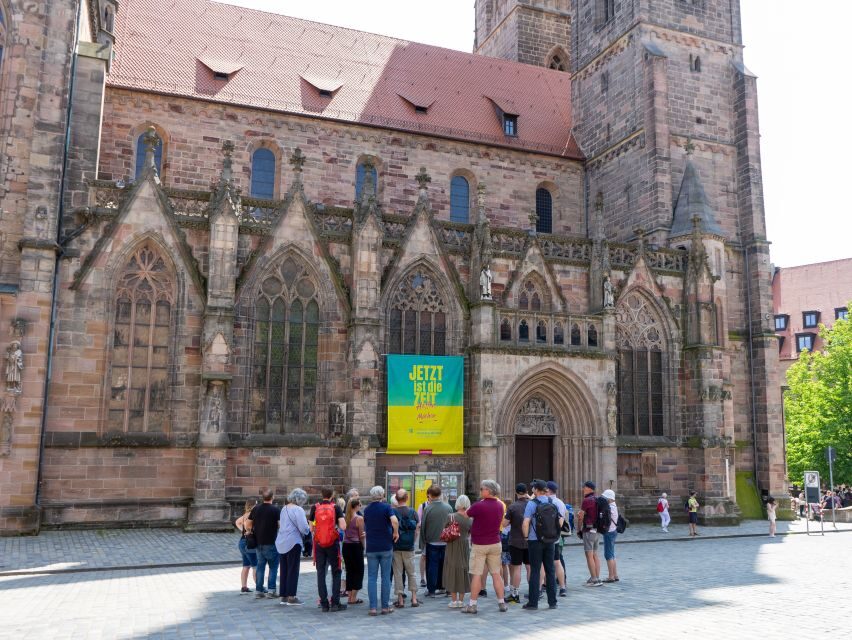
Next comes the Sebalduskirche, one of the oldest churches in the city. This stop is where the tour gets personal. The guide shares stories about Saint Sebaldus, including both fictional and true elements, so the history feels like something people carried around emotionally—not only something written in dates.
I like this approach because it avoids the dry “this happened in year X” trap. When legend and fact sit together, you start to understand why a community repeats certain stories.
You’ll see the church as part of Nuremberg’s identity, not as an isolated building. And once the guide ties it back to the streets you’ve already walked, you’ll feel how the city’s layers build on each other.

Weißgerbergasse: a medieval street that survived the war
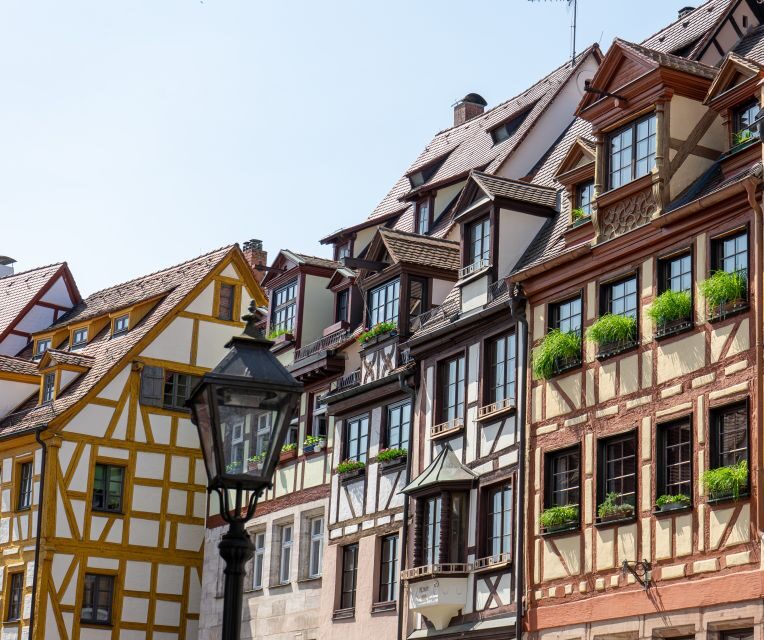
Then the tour heads through Weißgerbergasse, a medieval street spared from war destruction. This is one of the most satisfying parts of the walk because it’s not just sightseeing—it’s continuity.
On a normal trip, it’s easy to assume all old streets are old in name only. Here, you’re walking a segment that gives you a stronger sense of what time can preserve. Even if you don’t consider yourself a history fan, you’ll probably enjoy the practical difference: the street feels lived-in and real, not restored to impress.
The guide also uses this section to reinforce the Middle Ages theme. You’ll likely connect the quiet street vibe to the bigger story of how trades and neighborhoods functioned back then—especially because you’re already in “story mode” after the church and market stops.
Kettensteg: crossing Europe’s oldest preserved metal suspension bridge
Now comes a standout: the Kettensteg. This is the oldest preserved metal suspension bridge in Europe, and crossing it feels like a physical exclamation point at the end of the medieval stretch.
The guide helps you see it as more than a technical curiosity. When you walk across, it becomes part of the timeline—how engineering and modern materials shaped movement and connection in a historic city.
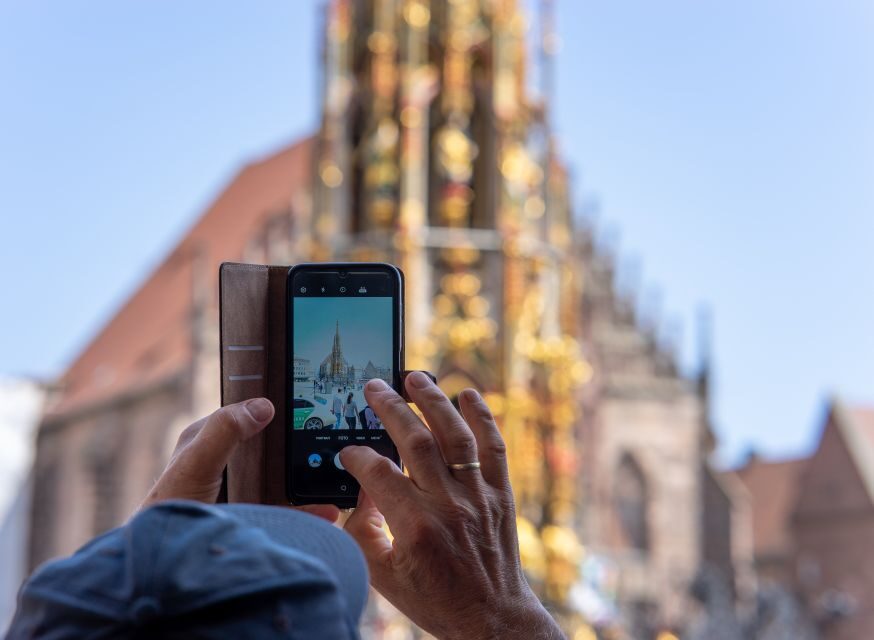
This crossing is also a great photo moment, but I’d treat it as a pause. Stop for a second, look at the river lines and the surrounding Old Town geometry. It gives you that satisfying sense of scale, the kind you miss when you only look from street level.
Maxbrücke finish: closing the loop and setting up your next walk
The tour ends on the other side on the old Maxbrücke. Finishing on a bridge makes sense here because you’ve been moving through crossings all along. By the time you reach the end, you’ve already learned how the city’s layout works.
From this point, you’re usually well positioned to keep exploring on your own. If you want extra time for photos or a quick café stop, this ending point gives you a natural break.
And because you’ve done the big “spine” of the Old Town—the river, the market square, the oldest churches, and the medieval street—you’ll recognize where you are even without a strict itinerary. That’s real travel value in a short time.
What makes the guides feel worth it in 1.5 hours
This tour lives or dies by the guide’s storytelling. The best version of this experience is when the guide can make small details feel connected.
I’ve seen this tour led by guides such as Jo, Klemens, and Sonja, and the common thread is the way they turn facts into short, memorable bits—often with humor. That’s why the 1.5 hours don’t drag. You get a steady rhythm of walking, looking, and learning, without the constant stop-and-start feeling.
It also helps that the guide wears a name tag for Geschichte Für Alle e.V. and uses a picture folder at the start. It gives you a clear structure, so you’re not guessing what you’re supposed to notice.
Price and value: $15 for a focused Old Town orientation
At about $15 per person for 1.5 hours, this tour is priced for people who want guidance without paying a big premium. You’re paying for two things: access to someone who can interpret the sights and the time-saving route that keeps you from backtracking.
In practice, the value comes from how efficiently it covers key stops:
- Old Town river walking
- Hauptmarkt and the historic center
- Frauenkirche and civic landmarks like the town hall
- Sebalduskirche with Saint Sebaldus stories
- Weißgerbergasse as a surviving medieval street
- Kettensteg crossing
- A finish at Maxbrücke
If you’re short on time in Nuremberg, this is a strong way to get your bearings fast and learn enough to explore farther with confidence.
Practical tips so you enjoy every step
Bring comfortable shoes. This is a walking route through historic streets and around bridges, so good traction matters. Wear weather-appropriate clothing and plan for a bit of outdoor time all season long.
Also, bring water, especially if you’re traveling in warmer months. The tour is only 1.5 hours, but it still feels longer when you’re thirsty and trying to keep up.
If you’re visiting in winter, make extra note of the Christkindlesmarket connection at Hauptmarkt. Even if you’re not there during the busiest hours, the square is still the city’s winter heartbeat.
One more note: the activity info lists live guiding in German. If your German is basic, you’ll still get a lot from the visuals and pacing, but comfort with the language will help you catch more of the nuance.
Who should book this walking tour?
I’d book it if you want a guided way to understand Nuremberg’s Old Town fast. It’s ideal for:
- First-timers who want a clean orientation route
- People who like seeing churches and civic buildings in the same story
- Visitors who enjoy bridges, streets, and small-scale medieval details
- Travelers who prefer a short, focused outing over a long day tour
If you’re looking for a relaxed, minimal walking plan, this may not feel right. The tour is built around walking between key sights, and it’s not set up for people with mobility impairments.
Should you book Nürnberg kennenlernen: Highlights in der Altstadt?
Yes, if you want a high-value taste of Nuremberg’s Old Town in just 1.5 hours. You’ll get the main river walk, the market square energy, a medieval street that survived, and a bridge that’s a real European “how did they do that” moment.
Don’t book it if you hate walking, or if mobility needs make a street-and-bridge route difficult. In that case, you’ll likely be happier with a different format.
If you do book, show up at the Hangman’s House with comfy shoes, and give the guide your full attention for the first 10 minutes. The tour gets better as the stories start connecting the places you see.