REVIEW · NUREMBERG
Nuremberg Old Town and Nazi Rally Grounds Walking Tour
Book on GetYourGuide →Operated by Nuremberg City of Empires Tours · Bookable on GetYourGuide
Two stories. One city.
This English walking tour strings together Nuremberg’s medieval Old Town and the Nazi Rally Grounds so the past doesn’t stay in textbooks. I especially liked how guides such as Hannes and Natasha blend humor with hard context, so you can follow the thread without feeling rushed.
What I love most is the focus on places you can actually see and stand in. You’ll walk through working medieval settings like the Craftsmen’s Court, then you’ll shift to Third Reich sites like the Congress Hall remains and the parade ground spaces—connected by clear, plain explanations.
One drawback to plan for: this is real walking. It runs rain or shine, it’s not a good match if you have trouble walking, and the half-day pace can feel long if you’re expecting a slow sightseeing stroll.
In This Review
- Key highlights you should know before you go
- Two Nuremberg Realities in One 4-Hour Walking Circuit
- Starting at Hauptbahnhof: Quick Orientation, Then Right Into the Old City
- Handwerkerhof and the Living Feel of Craftsmen’s Court
- Mauthalle and the City’s Medieval Spine
- St. Lorenz and St. Sebaldus: Church Stops That Don’t Take Over the Day
- Hauptmarkt and Old City Hall: The Market Square That Has Always Been the Stage
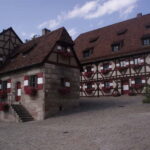
- Imperial Castle Courtyards: Power, Views, and the Holy Roman Connection
- Albrecht Dürer’s House: Art You Can Tie to the Streets
- Lunch Break in the Hauptmarkt: Where the City Tastes Like It Looks
- Bus Out to the Former Nazi Party Rally Grounds: Concrete History in Plain Sight
- Zeppelin Field, Luitpold Arena, and Volksfestplatz: The Scale of Propaganda
- Kongresshalle (Congress Hall) Remains: The Half-Built Roman Fantasy
- How Nuremberg Moves Forward: Hard Context Without Softening It
- Value Check: Is $43 Worth It for 4 Hours and Transit?
- Who Should Book This Tour (and Who Might Want a Different Plan)
- Should You Book This Nuremberg Old Town and Rally Grounds Tour?
- FAQ
- Where is the meeting point for the tour?
- How long does the tour take?
- Is the tour offered in English?
- Is lunch included in the tour price?
- Is transportation to and from the rally grounds included?
- Is admission to the Documentation Center included?
- Does the tour run rain or shine?
- Is the tour suitable for people with trouble walking or mobility impairments?
- Is free cancellation available?
Key highlights you should know before you go
- Craftsmen’s Court (Handwerkerhof): you’ll see artisans working with traditional methods in a place made for everyday craft life, not just photos.
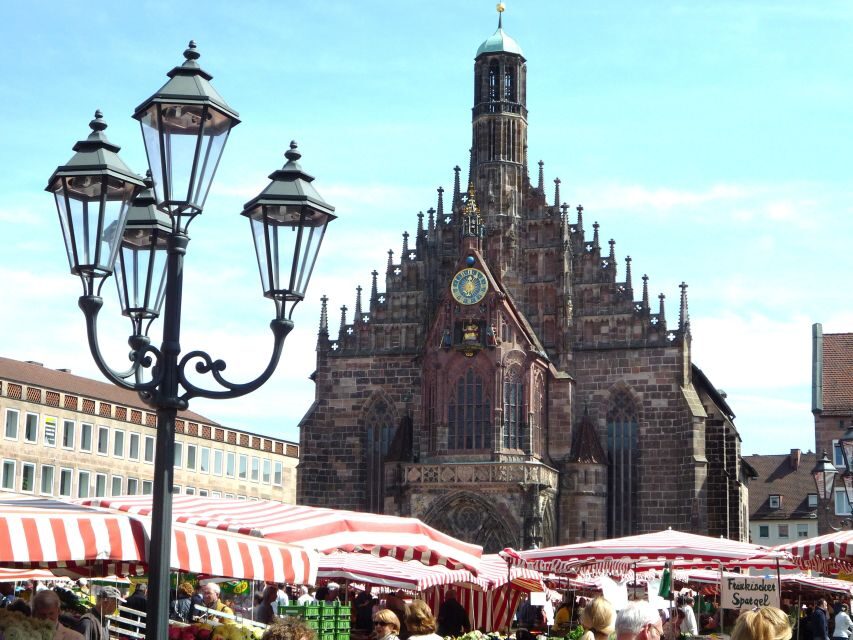
- Hauptmarkt (market square): it’s been a trading center for centuries, and in December it becomes the stage for world-famous Christmas markets.
- Imperial Castle courtyards: you get big views over the city from the same castle area tied to Holy Roman Emperors.
- Sensitive, guided Nazi-era context: the tour explains the Third Reich sites and how the city treats this history today, without turning it into spectacle.
- Transit included, too: bus out to the rally grounds and tram back to Hauptbahnhof are built into the tour time so you’re not figuring logistics mid-day.
Two Nuremberg Realities in One 4-Hour Walking Circuit
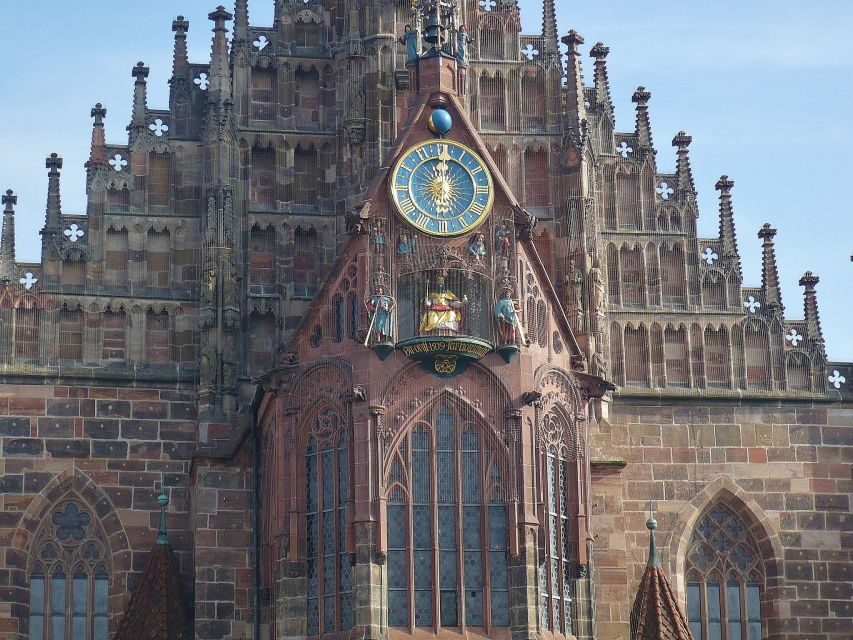
This tour works because it treats Nuremberg like a real place, not a theme park. You start in the medieval walled city—fortifications, churches, and market rhythms that still shape how the city feels. Then you move to the former Nazi Rally Grounds, where the buildings and open spaces are silent but hard to ignore.
The best part for me is the balance. Your guide doesn’t just point. They connect the dots: why the city’s medieval power structures and civic identity mattered, and why the 20th-century nightmare left physical marks that still sit in public view.
Expect a 4-hour experience with a lunch break built into the schedule. That timing matters. It means you’re not spending the whole day on your feet, but you still get enough time to see the big landmarks in both halves of the story.
You can also read our reviews of more walking tours in Nuremberg

Starting at Hauptbahnhof: Quick Orientation, Then Right Into the Old City
You’ll meet outside the big arched entrance of Nuremberg Central Station (Hauptbahnhof), with your guide holding a red and white sign for the tour. This is a smart meeting point because it keeps your day simple if you’re arriving by train.
From there, the tour does what a good orientation tour should do: it gets you oriented fast. You learn the layout of the old walled area as you walk. You also get practical pointers along the way—where to stop, what to notice, and how the city’s medieval center still works as a living hub.
Handwerkerhof and the Living Feel of Craftsmen’s Court
One early stop is Handwerkerhof, also known as Craftsmen’s Court. This is where the tour earns its keep because it shows you something many Old Town walks skip: the sense of how people actually made things.
Your guide points out that local artisans still work here using traditional materials and methods. That means you’re not only seeing old buildings; you’re seeing the city’s craft culture continue in a historic setting. If you like architecture, you’ll enjoy the atmosphere. If you like culture, you’ll enjoy the everyday angle.
Practical note: this section is short, but it’s an easy place to slow your pace for a moment. Good for photos, but also good for just looking at how the space is arranged for work.
Mauthalle and the City’s Medieval Spine
As you continue, you pass through key old-town structures that help explain how Nuremberg functioned as a city. The tour includes a guided look at Mauthalle, and then you’ll weave toward the churches and main civic spaces.
This is where your guide’s storytelling matters. You’re not just collecting names. You’re learning why Nuremberg’s medieval layout produced a city identity that kept going—through renaissance changes, civic pride, and later political shocks.
St. Lorenz and St. Sebaldus: Church Stops That Don’t Take Over the Day
You’ll pass by St. Lorenz Church and St. Sebaldus Church. Even as pass-by stops, they’re useful because your guide uses them as anchors for what you see in the Gothic style—especially when it comes to art and religious works.
If you’re the type who usually thinks church interiors are “nice but skip-worthy,” I still think these pass-bys help. They’re timed so you get the story without losing the tour’s momentum.


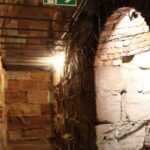
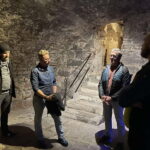
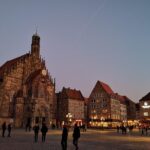
Hauptmarkt and Old City Hall: The Market Square That Has Always Been the Stage
The tour centers on Hauptmarkt Nürnberg, the main market square. This is one of the most important places in the city to understand because it’s been a trading and gathering space for nearly 700 years.
Your guide walks you through the civic core, including the Old City Hall. You’ll see why the square mattered for everyday life—food, commerce, announcements—and why it still matters for events now.
And if your timing is right for December, the tour becomes even more seasonal. Your guide points out that the Christmas markets take over this space. You’ll feel why it’s world-famous: it’s not a random holiday street. It’s the city’s long-term meeting point.
Imperial Castle Courtyards: Power, Views, and the Holy Roman Connection
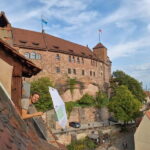
Next up is the Imperial Castle of Nuremberg and its courtyards. This part is worth your energy because it changes your perspective.
In the castle area, you get views over the city, and your guide explains the significance of the castle courtyards tied to Holy Roman Emperors ruling for more than 500 years. Standing here helps the story make sense. You can literally see why leadership wanted this vantage point.
If you’re the type who likes photos, this is one of the better “stop and frame it” segments. If you hate stairs, you’ll still be okay—just wear shoes you can trust. Comfortable soles make the difference.
Albrecht Dürer’s House: Art You Can Tie to the Streets
You also visit Albrecht Dürer’s House. This is one of those stops that helps the tour feel less like two separate halves (medieval vs. 20th century).
Dürer connects to the Renaissance layer of Nuremberg’s identity, and your guide weaves that into the broader story. It’s the kind of art stop that doesn’t require you to be an expert. You just need to be curious.
Lunch Break in the Hauptmarkt: Where the City Tastes Like It Looks
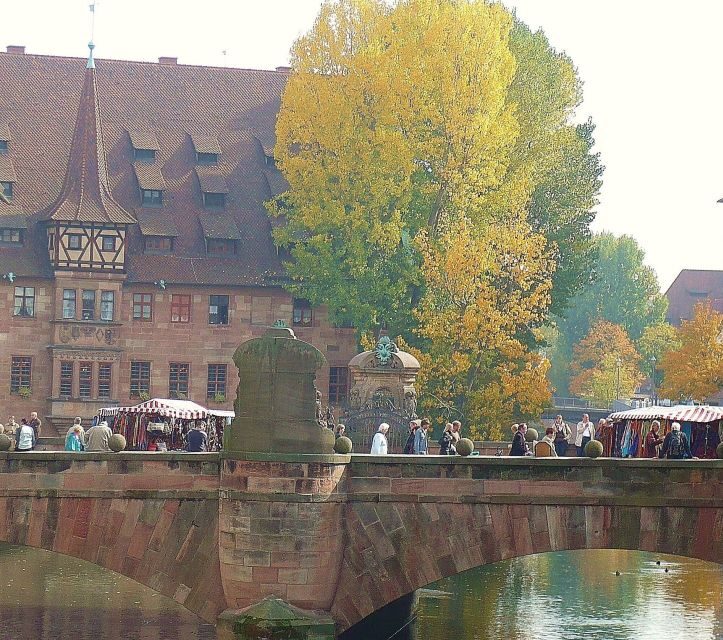
After the Old Town segment, the tour gives you a break in the Hauptmarkt area for lunch. Lunch is not included, but your guide does provide food and drink guidance—classic local options, plus where to find good beer and wine.
This break is more than downtime. It’s strategic. In December, the square’s Christmas market vibe can make it feel like the city is holding your hand while you shift mental gears from medieval Nuremberg to the Third Reich story later in the day.
Guides such as Nic and Hannes (in past tours) are praised for recommending spots that keep you moving—no marathon sit-down required. One review mentioned a sausage roll stop being ideal, and another noted the break is long enough for a quick WC moment or a warm drink like glühwein. That matters if you’re trying to keep the day smooth in winter weather.
Practical tip: plan for snacks if you’re hungry between stops. This tour is tight enough that you’ll want energy for the rally grounds portion.
Bus Out to the Former Nazi Party Rally Grounds: Concrete History in Plain Sight
Then you switch modes. After lunch, you board a bus to the former rally grounds. Public transportation costs are included in the tour price, and later you’ll ride a tram back to Hauptbahnhof—so you’re not managing tickets while you’re in the middle of an emotional, information-heavy visit.
This part can feel heavy fast, and your guide’s approach makes a difference. The tour shows you major spaces tied to Nazi propaganda events—where crowds assembled, where Hitler inspected SS men, and where pseudo-religious cult rituals were staged as part of the machinery of control.
I appreciate that the tour doesn’t only describe what happened. It also discusses how Nuremberg deals with this dark past today. That framing helps you understand why the city still has to live with these sites in public view.
Zeppelin Field, Luitpold Arena, and Volksfestplatz: The Scale of Propaganda
On the rally grounds side, you’ll see key areas such as the Zeppelin Field, Luitpold Arena (also tied to Luitpoldhain), and Volksfestplatz. These names can blur together if you’re reading a map later. During the tour, your guide helps you connect them to the events and planning.
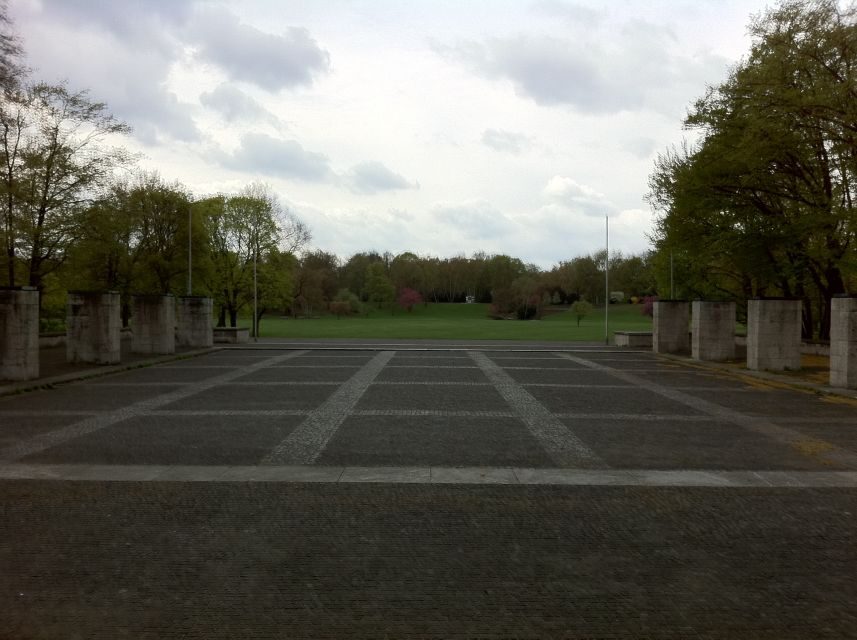
What you notice when you stand in these spaces is the scale. The tour makes the point that the largest Third Reich remains left in the world testify to megalomania. You don’t need extra dramatics. The geometry does it for you: long lines, open areas, places built to move crowds and amplify authority.
Another thing I like: the guide uses visuals when needed. Past groups have mentioned iPad photos used to complement what you’re seeing on the ground. That’s a practical tool. When the remaining structures are incomplete or abstract, pictures help you understand the original layout without guessing.
Kongresshalle (Congress Hall) Remains: The Half-Built Roman Fantasy
The tour includes Kongresshalle, known as the Congress Hall of the Nazi Party. This site is tied to Hitler’s half-finished attempt to build a Roman Colosseum-style monument.
Standing near these remains changes your sense of time. The idea was grand, but the result is unfinished and incomplete—built power that never reached its final form. It’s a stark way to think about how propaganda depends on promises, and what happens when those promises collapse.
If you want a guided experience that respects the topic, this is where you’ll feel it most. The tour aims to be honest and sensitive, and it treats the site as evidence—not a script.
How Nuremberg Moves Forward: Hard Context Without Softening It
One of the most praised aspects of this tour is that guides handle World War II and Nazi-era topics with sensitivity and honesty. That’s exactly what you want here. If the guide is flippant, the experience can feel wrong. When the guide stays thoughtful, the tour becomes an education you can actually use.
This tour also helps you understand something subtle: the city’s relationship with its past is still part of daily life. You’re not just looking at ruins from a distance. You’re learning what the city chooses to teach in public, and how it explains the meaning of these spaces to visitors now.
Value Check: Is $43 Worth It for 4 Hours and Transit?
At $43 per person for a roughly 4-hour experience, this tour is good value—especially because it includes the public transportation costs to and from the rally grounds. That matters because those sites are not walk-from-your-hotel territory once you’re in the city center.
You also get:
- an English-speaking guide,
- a full Old Town walkthrough with major stops and viewpoints,
- a structured transfer to the rally grounds,
- and a tram return to the station.
What you pay for is organization and interpretation. You’re not just getting a list of sights. You’re getting someone to connect the medieval city’s identity to the Nazi-era impact—and help you make sense of what remains.
What you’ll still pay extra for: lunch is not included, and admission to the Documentation Center after the tour is not included. Plan on adding a food budget, and if you want to go deeper after the tour, you’ll need to handle that entrance ticket separately.
Who Should Book This Tour (and Who Might Want a Different Plan)
This is a strong choice if you want:
- a fast introduction to Nuremberg’s Old Town landmarks,
- an English-guided Nazi-era orientation without self-guided confusion,
- and a day that mixes civic medieval sites with 20th-century history in one coherent route.
It may not fit if:
- walking long distances is hard for you,
- or you’re expecting an easy, leisurely stroll.
The tour runs rain or shine, so bring shoes that work on wet pavement. The rally grounds part also benefits from sturdy footing and good stamina.
Should You Book This Nuremberg Old Town and Rally Grounds Tour?
Yes, if you want a guided start that gives you context you can carry into the rest of your Nuremberg day. The mix of Old Town sights (market square, Town Hall area, Imperial Castle courtyards, Dürer’s House) with the former rally grounds makes this more than a checklist.
I’d book it especially if you care about getting the hard history framed clearly. The guide approach—humor where appropriate, careful handling where it counts—is consistently the reason groups rate it highly.
If you’re short on time or you want a reliable way to understand what you’re seeing before you explore on your own later, this is an efficient, meaningful use of a half-day.
FAQ
Where is the meeting point for the tour?
You meet outside the large center arched entrance of Nuremberg Central Station (Hauptbahnhof), and the guide is holding a red and white Nuremberg Tours in English sign.
How long does the tour take?
The tour lasts about 4 hours, including the lunch break.
Is the tour offered in English?
Yes, it’s an English-language live guided tour.
Is lunch included in the tour price?
No. Lunch is not included, though you’ll have a break in the marketplace where your guide can recommend places to eat.
Is transportation to and from the rally grounds included?
Yes. Public transport costs to and back from the former rally grounds are included in the tour price.
Is admission to the Documentation Center included?
No. Admission to the Documentation Center after the tour is not included.
Does the tour run rain or shine?
Yes. The tour takes place rain or shine.
Is the tour suitable for people with trouble walking or mobility impairments?
No. The tour is not suitable for people who have trouble walking, and it’s not suitable for people with mobility impairments.
Is free cancellation available?
Yes. You can cancel up to 24 hours in advance for a full refund.