REVIEW · GOSLAR
Goslar: Hinter den Rathaustüren
Book on GetYourGuide →Operated by GOSLAR marketing gmbh · Bookable on GetYourGuide
Art, packed into one small hour.
This guided walk behind Goslar’s Rathaus doors turns a building you might otherwise skim into a real experience. I especially love the Sternenhimmel on the Rathausdiele (the sort of ceiling that makes you look up without meaning to), and then the chance to step closer to the Huldigungssaal, a late-gothic room painted wall-to-wall. The only real catch: the route has a variety of stairs, so it’s not suitable for rollators or wheelchair users.
What makes it worth the time is how quickly it earns context. In the basement, you’ll get a free World Heritage Info Center about the UNESCO Harz, and in the Beinkeller you learn how the Rathaus grew and changed over centuries—history with names, dates, and practical building logic, not just dates in a caption. If you prefer totally barrier-free sightseeing or hate stair-heavy interiors, you’ll want to think twice.
In This Review
- Key things you’ll notice right away
- Getting Behind the Rathaus Doors in Goslar’s Market-Heart
- Rathausdiele and the Sternenhimmel: Stop Looking at Your Feet
- The Huldigungssaal: Painted Wall-to-Wall, Then Brought Back to Life
- UNESCO Harz in the Kellergeschoss: Context Without the Textbook Vibe
- The Beinkeller: How the Rathaus Grew, One Addition at a Time
- Price and Value: Why $10 Makes Sense Here
- Who This Guided Stop Fits Best
- Practical Tips Before You Go
- Should You Book Hinter den Rathaustüren?
- FAQ
- How long is the Goslar: Hinter den Rathaustüren experience?
- What will I see during the tour?
- Is there a guided tour?
- What is included in the price?
- How much does it cost?
- Is the tour suitable for wheelchairs or rollators?
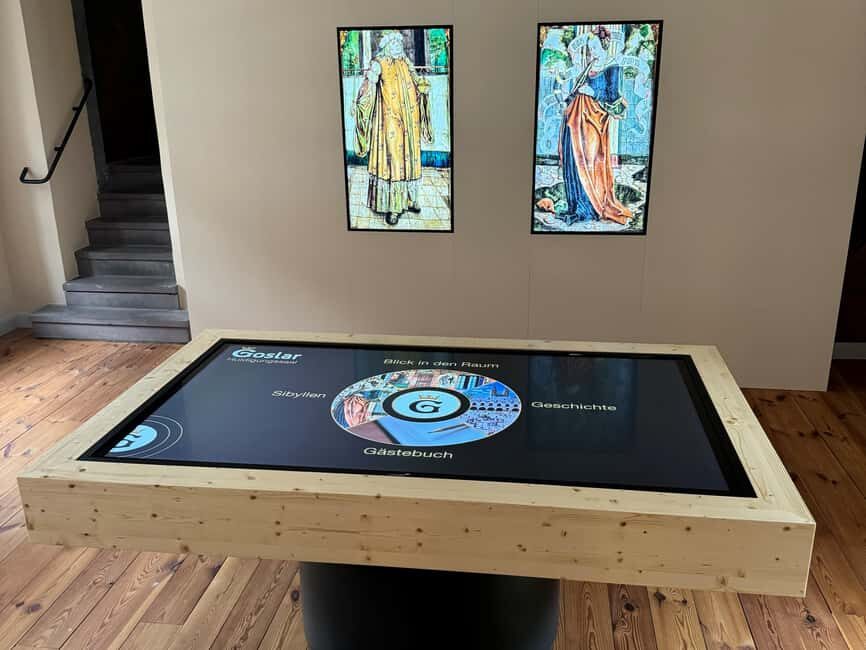
- Are the rooms multimedia-enhanced?
- Is there a UNESCO-related stop?
- Can I cancel for a refund?
- Can I reserve and pay later?
Key things you’ll notice right away
- Sternenhimmel in the Rathausdiele: you’ll spend more time looking up than you expected
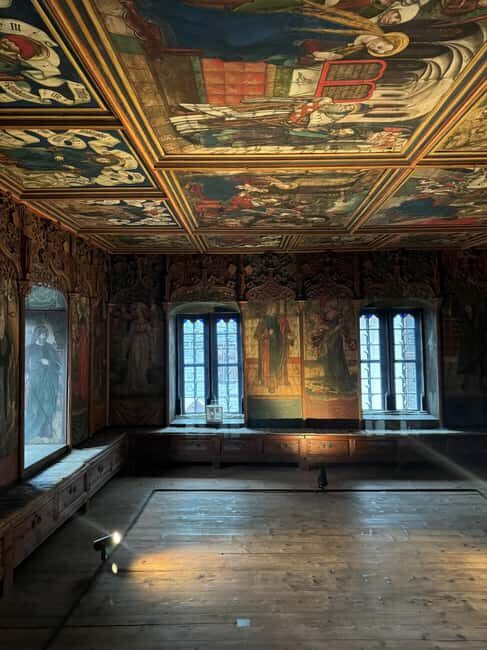
- Huldigungssaal as a full art installation: walls, ceiling, and even window niches are painted
- Multimedia re-activation of the room: the restored space feels alive again
- UNESCO Harz exhibit in the basement: World Heritage told in an easy, local way
- Beinkeller building story: how the Rathaus evolved over more than 400 years
Getting Behind the Rathaus Doors in Goslar’s Market-Heart
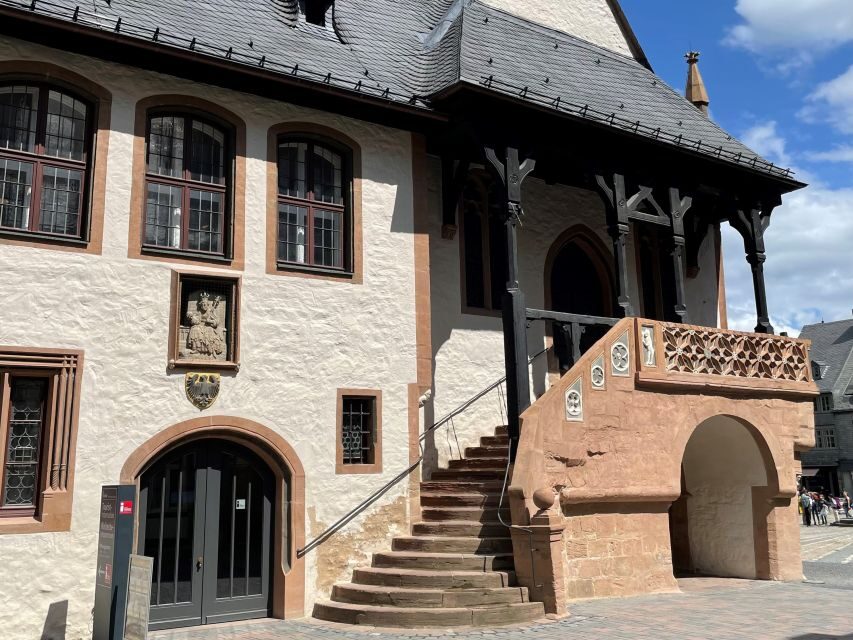
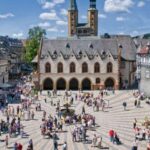
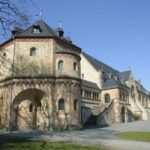
Goslar’s Rathaus is a “centuries-in-the-making” kind of place. Work started in the mid-1400s with the east wing (Ostflügel), whose arcades open toward the Marktplatz. Then the building kept growing for over 400 years, through additions that reflect changing needs of city government and prestige.
This experience focuses on what most visitors miss: the inside atmosphere, the preserved art, and the building logic that explains why Goslar’s town hall looks the way it does today. In other words, you’re not just seeing rooms—you’re learning how a major civic building worked and why it mattered.
You’ll get a guided view that typically takes about one hour, with a live guide speaking German. That matters because the story lands better when it’s told clearly—especially with rooms like the Huldigungssaal, where the details are the point.
You can also read our reviews of more tours and experiences in Goslar.

Rathausdiele and the Sternenhimmel: Stop Looking at Your Feet
The Rathausdiele is the “waiting area” that quietly steals the show. This is where the ceiling known as the Sternenhimmel does its magic—an effect that makes the whole interior feel more dramatic than its surroundings suggest. Even if you don’t know late-gothic art terminology, you’ll still feel what it’s doing: turning everyday civic space into something ceremonial.
I like this first stop because it gives you a visual baseline. Before you enter the big painted room, you’re already primed to notice composition—how artists and craftsmen used surfaces to create atmosphere.
Practical tip: build in a bit of staring time. When you’re guided, you’ll get the explanation, but you’ll still want those 30 seconds of unhurried looking so the ceiling works on you rather than just on the guide.
The Huldigungssaal: Painted Wall-to-Wall, Then Brought Back to Life
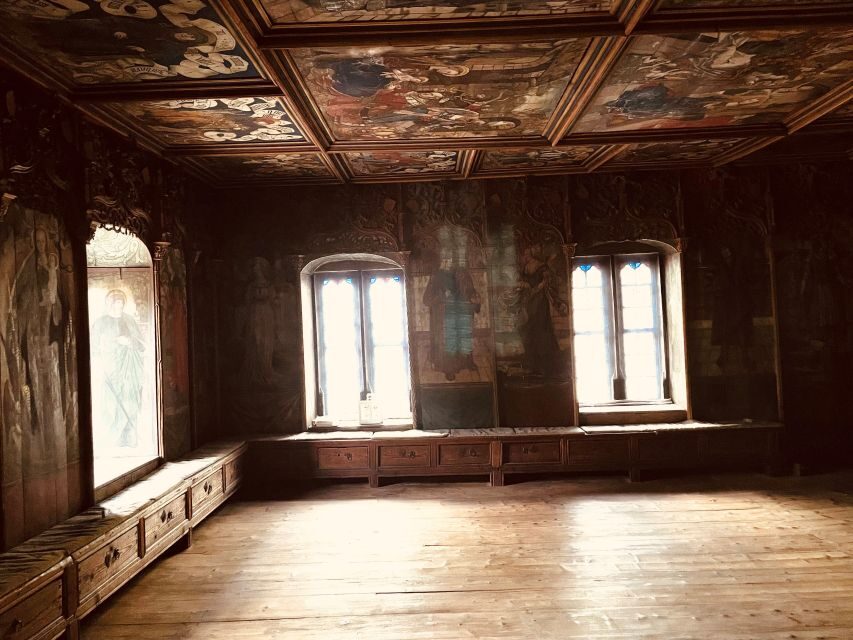
The centerpiece is the Huldigungssaal, set up between 1505 and 1520 as a council meeting space. It’s described as a special kind of late-gothic room art: the walls, the ceiling, and even the window niches are covered with panel paintings (Tafelgemälde). That’s the kind of detail that can sound overwhelming on paper, but in practice it’s the opposite—you start seeing patterns and themes because everything is working together.
After restoration, the room isn’t just visible; it’s protected. You’ll learn that security, climate, and light technology are now in place to keep the paintings from deteriorating. For you, that means the visit isn’t just a look at a preserved room—it’s a controlled, cared-for “living artwork” moment.
Then comes the part that people keep praising: a multimedia inszenierung that helps the Huldigungssaal feel usable and present again. One review specifically called out how the multimedia makes the visit especially memorable during Advent season, which makes sense. If the lighting and timing are designed to match the mood, a restored council hall feels more like a place where something actually happened.
A small-but-important note: the tour includes a view into the Huldigungssaal. If you’re hoping to wander around freely at your own pace, know that this is guided, time-focused, and designed to feed you the key visual beats.
UNESCO Harz in the Kellergeschoss: Context Without the Textbook Vibe
The Rathaus isn’t only about art. In the kellergeschoss (basement), you’ll find a Welterbe-Infozentrum and a free exhibition focused on the UNESCO World Heritage Site Harz.
This part is valuable because it connects civic pride with regional identity. Goslar isn’t floating in a vacuum—its cultural output and preservation choices belong to a larger landscape story. The exhibition format here is meant to be accessible, and you’ll leave with a clearer sense of why the Harz region got the UNESCO designation in the first place.
For your planning: treat this as the “breathing room” stop after the intense visual impact of the Huldigungssaal. It slows the pace and gives your brain a new frame—less about the Rathaus as a single monument, more about how it fits into a broader cultural heritage map.
The Beinkeller: How the Rathaus Grew, One Addition at a Time
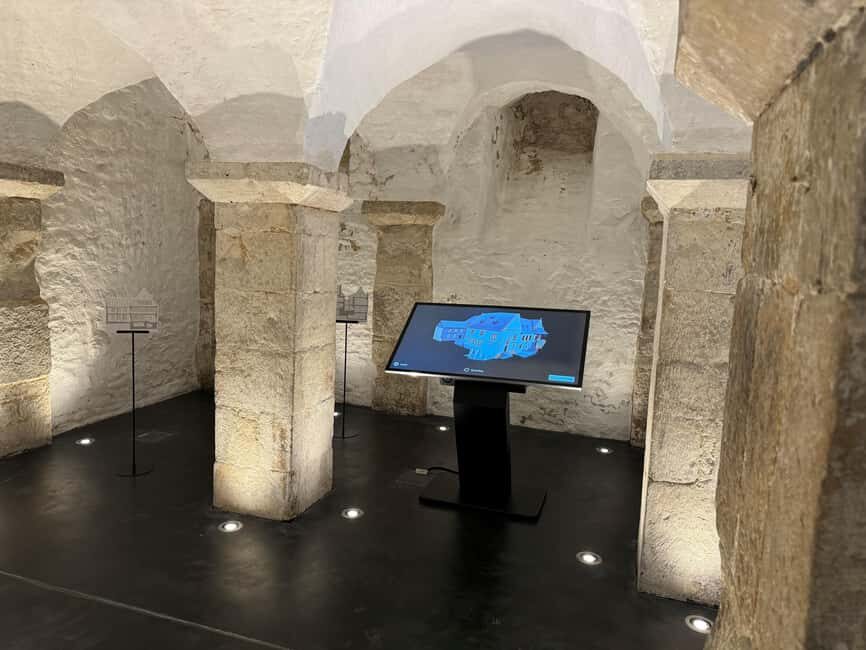
In the Beinkeller, you get the building-history angle. This is where the Rathaus story stops being vague. You’ll learn about construction phases and how the building expanded through time—beginning with that 15th-century start and continuing for generations.
Why I think this matters for you: many historic buildings are hard to “read.” You look at it and think, Okay, it’s old. The Beinkeller explanation gives you a way to see structure and time as part of the same design logic. Instead of collecting random architectural features, you understand the evolution.
This stop also helps balance the overall experience. If you’re the type who loves the drama of the painted halls, the Beinkeller gives you the nuts-and-bolts payoff. If you’re more of a history person, it keeps your attention because it explains what you’re looking at, not just what it means.



Price and Value: Why $10 Makes Sense Here
At about $10 per person for roughly one hour, this is one of those small-ticket experiences that gives outsized returns. You’re paying for three things that are hard to piece together on your own in a short visit:
1) guided interpretation of a major art room,
2) access to the UNESCO Harz information set in the Rathaus context, and
3) a building-history explanation tied directly to what the Rathaus is.
In other words, you’re not just buying entry. You’re buying clarity. And clarity is often what turns a quick stop into a memorable one.
If you’re visiting Goslar and wondering how much time to spend beyond the big-name streets, this is the kind of stop that fits perfectly. It’s short enough to add to a walking day, but focused enough that you don’t feel like you paid for a blur.
Who This Guided Stop Fits Best
This tour is a strong match if you like:
- interiors with art (you’ll enjoy a painted room you can actually understand while standing in it)
- short, guided context that doesn’t turn into a lecture
- UNESCO heritage that connects to everyday place, not just distant theory
It may not be ideal if:
- you need step-free access. The building has varied stairs, and that’s a genuine constraint.
- you prefer self-paced exploring. This is guided and timed, with a view-style approach to the Huldigungssaal.
One detail worth noting from the experience pattern: when the group is small, the tone can feel more personal. That’s great for asking questions and keeping the pace conversational, especially when the guide is handling lots of visual info in a short time.
Practical Tips Before You Go
- Give yourself time to look. Even with a schedule, the places to notice here are visual—the ceiling, the paintings, the room design.
- Expect German narration. If your German is basic, you’ll still likely follow the main story through the room visuals, but the experience is best when you can catch the guide’s explanations.
- Wear shoes you’re comfortable with. The Rathaus has stairs, and the route inside is not built for slow foot shuffles.
Should You Book Hinter den Rathaustüren?
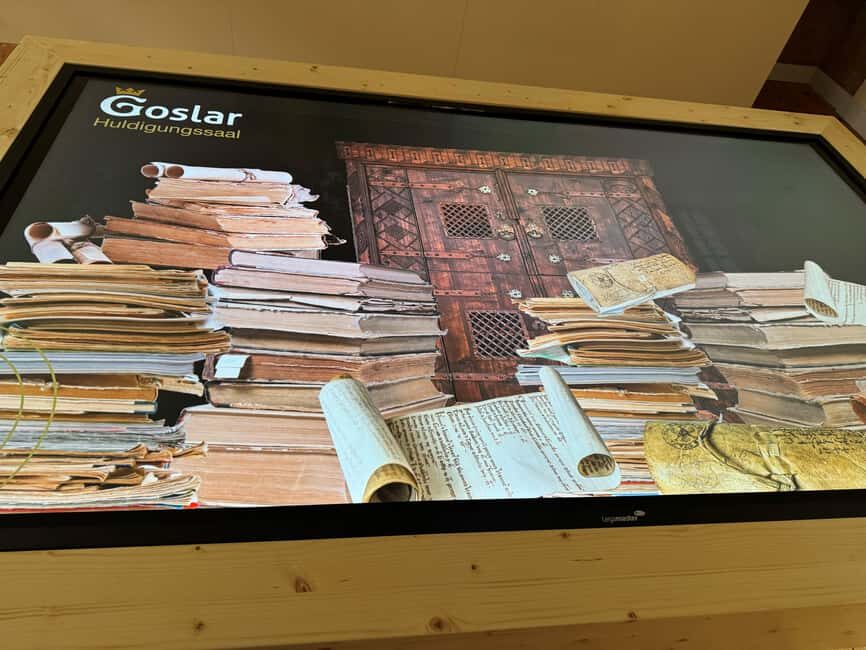
I’d book this if you want one hour in Goslar that feels focused and meaningful. The Huldigungssaal is the headline, but the value comes from how the experience connects art, restoration protection, and the UNESCO Harz context—plus the Beinkeller building story that helps you “read” the Rathaus.
Don’t book it if stairs are a deal-breaker or if you need a fully step-free route. If you’re fine with stairs and you enjoy learning while looking, this is one of those practical add-ons that can quietly become your favorite stop in town.
FAQ
How long is the Goslar: Hinter den Rathaustüren experience?
It lasts about 1 hour.
What will I see during the tour?
You’ll get entry to the town hall area, a view into the Huldigungssaal, and access to the World Heritage Information Center with a free exhibition in the ground-floor level.
Is there a guided tour?
Yes. There is a live tour guide in German.
What is included in the price?
Entry to the town hall, a view of the homage hall, and the World Heritage Information Center (free exhibition on the ground floor) are included.
How much does it cost?
The price is listed as about $10 per person.
Is the tour suitable for wheelchairs or rollators?
No. The town hall has a variety of stairs, so it is unfortunately not suitable for rollators or guests in a wheelchair.
Are the rooms multimedia-enhanced?
Yes. The Huldigungssaal is presented again today with a multimedia installation.
Is there a UNESCO-related stop?
Yes. In the basement there’s an exhibition about the UNESCO World Heritage Harz.
Can I cancel for a refund?
Free cancellation is available, with cancellation up to 24 hours in advance for a full refund.
Can I reserve and pay later?
Yes. There is a reserve now & pay later option, so you can book your spot and pay nothing today.