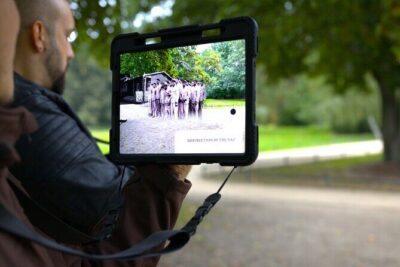
The Wall is still there, if you look. This 3-hour walking tour traces the Berlin Wall’s footprint with a local guide in English, mixing major memorial sites with the parts of the city where the Wall’s presence still shapes daily life. You also get the comfort of a small group (max 12) so your questions don’t get lost in the crowd.
I like how the walk starts at Liesenbrücken, where an abandoned bridge sits right on the Wall’s line, giving the story real geography instead of just dates. I also like the centerpiece Berlin Wall Memorial on Bernauer Straße: you’re looking at an original 70-meter section (rebuilt) plus multiple features like the Chapel of Reconciliation and the Window of Remembrance, and it’s free to enter.
One thing to plan for: this is a walking tour with moderate fitness needed. Also, make sure you’re at the meeting point on time—there have been rare cases of people waiting when the guide didn’t show, so arrive a little early and confirm your details.
In This Review
- Key things I’d plan around
- Why this Berlin Wall walk works: you see the Wall’s shape, not just its story
- Price and value for $24.03: what you’re paying for (and what you’re not)
- Meeting point to Mauerpark finish: logistics that help you stay calm
- Stop 1: Liesenbrücken and why an abandoned bridge hits so hard
- Stop 2: Berlin Wall Memorial on Bernauer Straße (the main event)
- Stop 3: Mauerpark shows what “after the Wall” looks like
- Stop 4: Rabbit Field in the former death strip (where theory becomes uncomfortable)
- Pacing, breaks, and how to dress for this kind of walk
- Small-group energy: why max 12 matters on a Wall walk
- What kind of traveler this fits best
- The one drawback I’d watch: timing, weather, and meeting-point confidence
- Should you book Walking on the Wall?
- FAQ
- FAQ
- How long is the Walking on the Wall tour?
- How much does the tour cost?
- Is the tour offered in English?
- What is the group size?
- Where is the meeting point?
- Where does the tour end?
- Which stops are free and which include tickets?
- Do I get a mobile ticket?
- What physical fitness level do I need?
- Is free cancellation available?
Key things I’d plan around
- Small group (max 12) means more back-and-forth and fewer people to compete with for attention
- Free access at the big memorial stop keeps the cost down while you still get the main sites
- Stop-by-stop Wall geography: bridge, border memorial, park, then the Rabbit Field death-strip area
- Guides like Behzad get praised for making the route feel personal, interactive, and story-driven
- Mauerpark after the memorial adds contrast: you see how the Wall’s line became everyday Berlin
- A short, included stop at Rabbit Field helps you take in the “death strip” idea beyond theory
Why this Berlin Wall walk works: you see the Wall’s shape, not just its story
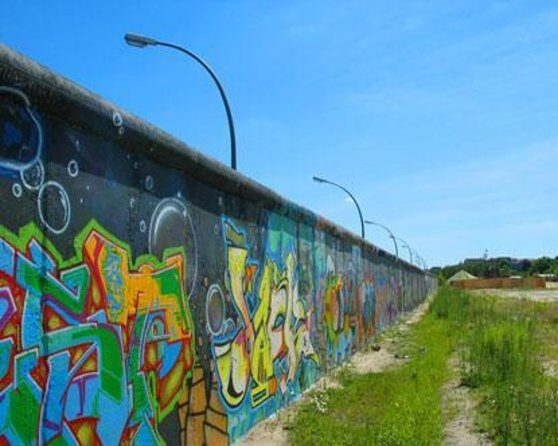
Most Berlin Wall tours treat the Wall like a single object. This one treats it like a line on a map that affected streets, buildings, bridges, and movement—then watches that line become part of the modern city.
In three hours you get that “oh, that’s how it worked” feeling. That comes from the routing: you don’t only sit in front of information boards, you walk between locations that each represent a different piece of the border system.
You can also read our reviews of more walking tours in Berlin



Price and value for $24.03: what you’re paying for (and what you’re not)
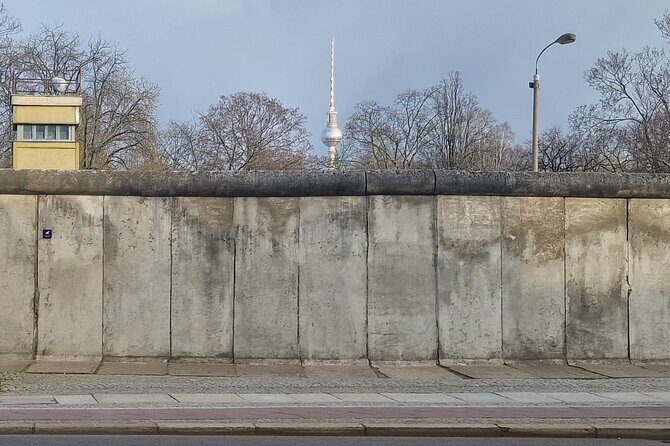
At about $24.03 per person for roughly three hours, the price is mostly paying for two things: a live guide and the time to connect the dots on foot. It’s not paying for a lot of paid museum entrances, because the tour includes free admission at key stops.
Here’s the value picture that matters for you:
- Stop 1 (Liesenbrücken): ticket free
- Stop 2 (Berlin Wall Memorial): ticket free
- Stop 4 (Rabbit Field): ticket included
So your money is focused on interpretation, not on entrance fees. For first-timers, that’s a smart setup. You get guided context right where it counts, while you’re not losing time or budget to extra ticket purchasing.
Meeting point to Mauerpark finish: logistics that help you stay calm
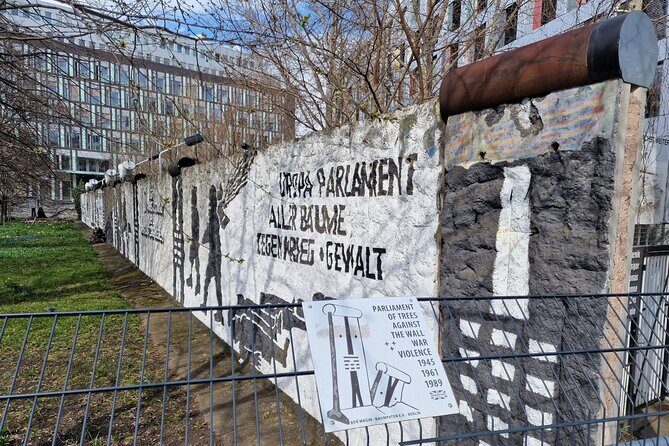
The tour starts at Ida-von-Arnim-Straße 2, 10115 Berlin and ends at Mauerpark, Bernauer Str. 63, 13355 Berlin. That finish is useful because it dumps you into a lively neighborhood feel, not back onto an empty “drop-off street.”
The experience is listed as being near public transportation. That matters because you’re doing a walk that touches a few distinct spots—so you want a plan that doesn’t depend on taxis or long detours.
Also keep in mind: the tour is described as requiring moderate physical fitness. It’s short enough for many people, but it’s still a real walking route. Wear shoes you trust.
Stop 1: Liesenbrücken and why an abandoned bridge hits so hard

Liesenbrücken is an abandoned bridge along the Wall’s path. That’s a small stop by time (about 30 minutes), but it’s a big stop in meaning.
A bridge is all about crossing—about connection. When you look at one that sits in the Wall’s shadow, the story stops being abstract. You start noticing how borders block daily movement, even when the city around them keeps changing.
This is also a great “warm-up” moment. If you’re new to Berlin’s division, you’ll likely find it easier to understand the later stops once you’ve already seen how the Wall interfered with access and routes.
Stop 2: Berlin Wall Memorial on Bernauer Straße (the main event)
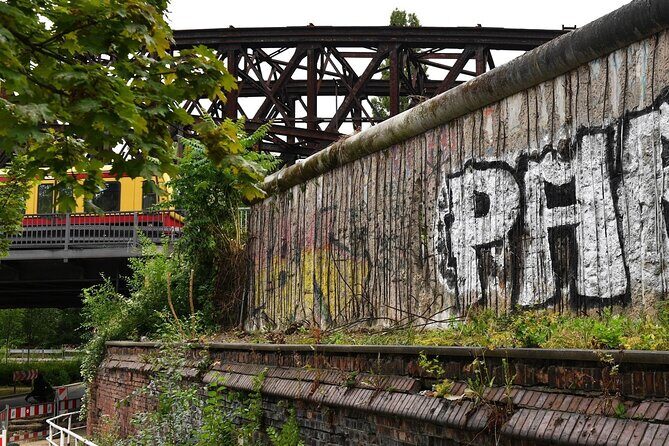
This is the longest stop (about 1 hour 30 minutes) and it’s also the most information-dense part of the route. Admission is free, and the memorial is built on Bernauer Straße, where parts of the original fortifications were recreated and expanded over time.
What you’re looking at here is specific and memorable:
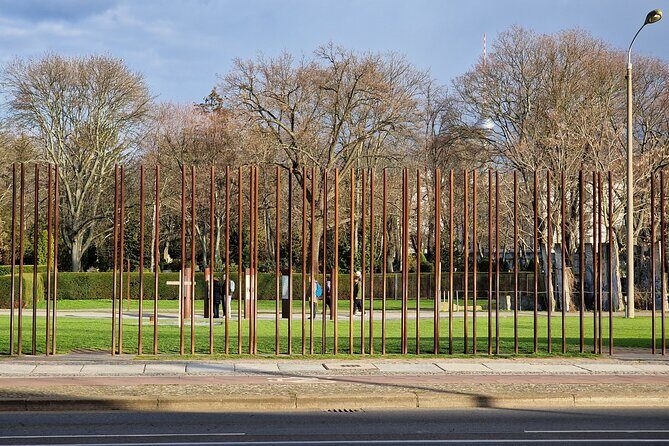
- A 70-meter-long original section (rebuilt in 1998) of the border fortifications
- A memorial stretch of about 1.4 kilometers along the former border strip
- Multiple features beyond the wall segment itself, including an outdoor exhibition, the Chapel of Reconciliation, the Berlin Wall Documentation Centre, and the Window of Remembrance
- A visitor center and additional exhibition connected to the nearby Nordbahnhof S-Bahn station
Why this stop is so valuable (especially for first-timers) is that it turns the Wall from a headline into a system. You can literally connect what you see—the fortifications, the layout of the border strip—to what the guide is explaining about what people faced.
One practical note: a memorial like this is emotional and visually detailed. Even with a guide, you may want to take a slower moment for photos or just to read. If you rush, you’ll miss some of the contrasts the guide will point out.
A few more Berlin tours and experiences worth a look






Stop 3: Mauerpark shows what “after the Wall” looks like
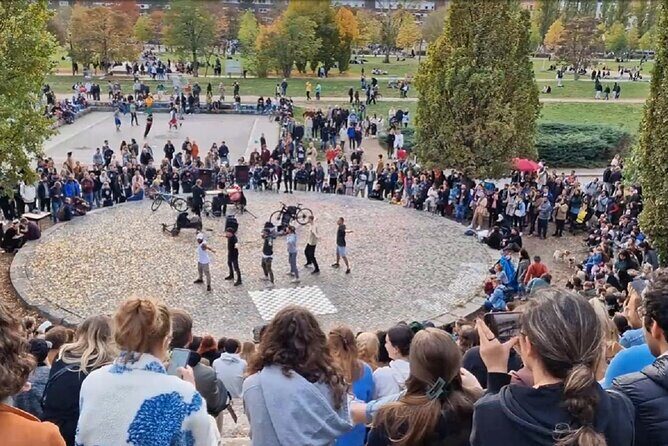
After the memorial, the walk moves into Mauerpark. This stop runs about 30 minutes and is free.
The key detail is that Mauerpark follows the course of the former Berlin Wall along Schwedter Straße. Today it’s a popular local recreation spot, and that means you see the Wall’s line living on inside an active neighborhood.
This contrast is one of the best parts of the whole tour. You get the weight first, then you get the reality of what came next: public space, street music, and the famous local energy of the park area (including a flea market scene).
If you’re the type who worries history tours will feel heavy the whole way through, this stop is a good balance point. It also helps you understand why Berlin’s “Wall story” doesn’t end when the Wall disappears.
Stop 4: Rabbit Field in the former death strip (where theory becomes uncomfortable)
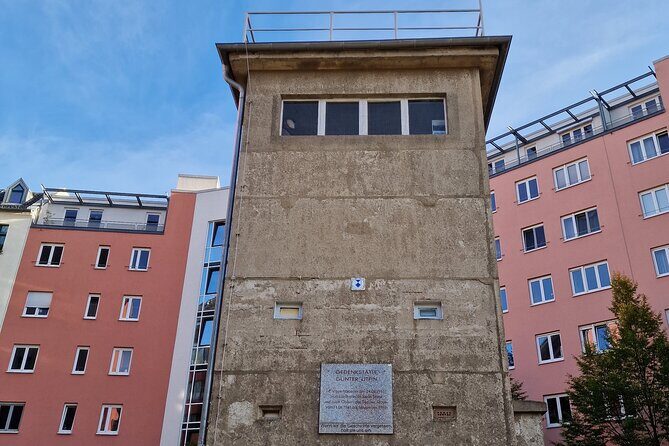
The final stop is Rabbit Field, described as being in the former death strip. Time on this stop is about 30 minutes, and the ticket is included.
This is one of those places where the scale and arrangement of the border matters as much as the message. The death strip idea only clicks when you can see and feel the logic of separation: where people were, where they weren’t allowed to go, and why the border system was so brutal.
From the way the tour is described, the guide likely uses the setting to connect the dots between what you saw at the memorial and what you’re standing near here. It’s also the kind of stop that sticks with you after you’ve left the area—because it’s hard to reduce it to a single fact.
Pacing, breaks, and how to dress for this kind of walk
The duration is about three hours, and the stop durations are fairly even, which usually keeps the pace from turning into a rushed sprint. Still, you should expect a steady walking rhythm.
One detail that shows up in feedback: people appreciate a mid-tour pause for coffee and/or snacks, and it can feel especially welcome if the weather is cold. Berlin mornings can be chilly, and if you’re bundled up, you’ll enjoy it more if you plan layers.
Dress advice that fits this tour:
- Wear comfortable walking shoes with grip
- Bring a layer you can adjust if the temperature swings
- If you’re visiting in cooler months, assume you’ll want that warm drink break
Small-group energy: why max 12 matters on a Wall walk
A max group size of 12 is a practical advantage here. When you’re doing a route that depends on attention—signs, subtle sightlines, and layout details—too many people can mean you lose the thread.
With a small group, you’re more likely to hear the guide clearly, and your questions have a better chance of being answered in context. Feedback also highlights guides like Behzad as engaging, story-driven, and good at bringing everyday life under East/West division into the conversation.
If you like tours where you can ask, pause, and re-focus, this size is a win.
What kind of traveler this fits best
This tour is especially good if:
- You’re a first-time Berlin visitor and want the Wall explained through real locations
- You care about how borders shape movement, not only politics
- You like short, focused tours that end with you still able to explore on your own
It’s also a good family fit for many ages, based on feedback praising how it worked as a learning experience for teens and young adults. If you’re bringing kids or teenagers, you’ll probably enjoy the guide’s storytelling approach and the way the route makes abstract ideas visible.
If you’re someone who needs a lot of “sit-down museum time,” you might find this more walking than you want. But if you want the Wall’s footprint in a human-scale way, that balance is often the point.
The one drawback I’d watch: timing, weather, and meeting-point confidence
Two practical cautions come up in the supplied information.
First, be early. There’s at least one account where a guide didn’t show up after a wait, and the traveler had to spend extra money to get where they needed to be. That’s not the norm you want to gamble on, so treat meeting time seriously and double-check your exact location instructions.
Second, dress for the outdoors. This is a walking route with stops in open-air areas like the memorial space and the park. If it’s cold or windy, your comfort will affect how much you absorb.
Finally, one other edge case: if the minimum number of participants isn’t met, the tour can be canceled, with options offered such as another date or a refund. If your schedule is tight, plan a backup day for this kind of core sightseeing.
Should you book Walking on the Wall?
I’d book it if you want a guided Berlin Wall route that moves through the city’s real geometry. The combination of free major sites, a small group size, and location-based storytelling is a strong value, especially at $24.03 for about three hours.
Skip it (or consider another option) if you hate walking, want lots of seated museum time, or you’re prone to stress about meeting points and timing. In that case, you might prefer a more flexible format.
FAQ
FAQ
How long is the Walking on the Wall tour?
It’s about 3 hours.
How much does the tour cost?
The price is $24.03 per person.
Is the tour offered in English?
Yes, it’s offered in English.
What is the group size?
The tour has a maximum of 12 travelers.
Where is the meeting point?
The start is at Ida-von-Arnim-Straße 2, 10115 Berlin, Germany.
Where does the tour end?
The end point is Mauerpark, Bernauer Str. 63, 13355 Berlin, Germany.
Which stops are free and which include tickets?
Liesenbrücken and the Berlin Wall Memorial are listed as free admission, while Rabbit Field is ticket included.
Do I get a mobile ticket?
Yes, the tour includes a mobile ticket.
What physical fitness level do I need?
You should have moderate physical fitness for a walking tour.
Is free cancellation available?
Yes. You can cancel for a full refund up to 24 hours in advance. If it’s canceled because the minimum number of participants isn’t met, you’ll be offered another date/experience or a full refund.