REVIEW · BERLIN
Private Tour: Jewish Heritage Walking Tour of Berlin
Book on Viator →Operated by Insider Tour Berlin · Bookable on Viator
Berlin teaches fast, and this route teaches deeper. In about 4 hours, you get a private, English-led walk through some of the most important Jewish sites in the city, from pre-war community life to Holocaust memorials. I love that the stops include both quiet remembrance places and more architectural “you can’t miss it” moments like the New Synagogue area. I also love how the tour is built around a professional guide who can pace the story and answer real questions with care. One drawback to plan for: it’s a moderate-walking route with weather changes, so you’ll want real shoes and a backup layer.
This is the kind of tour where private attention matters. You’ll move between courtyards, memorial platforms, and cemeteries at a human pace, and the guide can connect the dots between everyday Jewish life, Nazi persecution, and postwar memory. I especially like the mix of places that show survival and resistance, not only tragedy. Still, the subject matter is heavy, especially around deportations and the Holocaust Memorial, so bring a steady mindset and take breaks when you need them.
In This Review
- Key highlights you’ll remember (and why they matter)
- How this private Jewish heritage walk works
- Hackesche Höfe: where Jewish life showed up in brick and courtyards
- New Synagogue area and the memory of what’s missing
- Museum Blindenwerkstatt Otto Weidt: rescue through work, hiding through craft
- Gleis 17 Memorial: deportations made visible at Grunewald station
- Alter Judischer Friedhof: a cemetery tour that doesn’t feel like a checklist
- Rosenstraße and the Block der Frauen: protest as courage
- Holocaust Memorial: 2,711 slabs of disorientation and memory
- What you’re really paying for: guide skill, pacing, and honest context
- Logistics you should plan around (so the day stays smooth)
- Who this tour is best for
- Should you book this Jewish heritage walking tour of Berlin?
- FAQ
- How long is the Private Jewish Heritage Walking Tour of Berlin?
- Is this tour private or shared?
- What language is the guide available in?
- Does the tour include admission fees for the stops?
- Do I need a Berlin public transport ticket?
- How much walking is involved and what should I bring?
Key highlights you’ll remember (and why they matter)
- Private guide time: your questions and pacing stay in your control.
- Hackesche Höfe + Jewish craft life: Berlin’s Jewish story is shown through real buildings and courtyards.
- Gleis 17 Memorial: you’re standing at a deportation site, not just reading about it.
- Otto Weidt Museum: the rescue story lives in a small workshop space.
- Cemeteries + protest memorials: remembrance spreads across centuries, not one era.
- Holocaust Memorial on foot: the design makes you slow down and feel disoriented for a reason.
How this private Jewish heritage walk works
This tour is designed as a private, 4-hour walking experience in Berlin with a professional guide available in English (and sometimes other languages like German or Hebrew). You can also ask about pickup, and the experience is structured so only your group participates. That’s a big deal on this topic. It means you’re not stuck listening from behind a crowd, and you can steer the conversation—especially if your questions go into family history, local details, or modern Jewish life.
The day includes a moderate amount of walking, and it runs in all weather. Plan like it’s Berlin: you might start sunny and end in wind. Bring good walking shoes and layers you can adjust quickly.
Value-wise, the price sits at $191.62 per person, which sounds steep until you factor in the private guide model and the fact that the major stops are listed as free admission for your time there. The cost isn’t going into pricey entrances—it’s going into guided time, context, and route planning. One practical note: Berlin transit (AB zone) is not included, and you may need a ticket (listed as €2.70) if the route uses public transport.
You can also read our reviews of more walking tours in Berlin



Hackesche Höfe: where Jewish life showed up in brick and courtyards
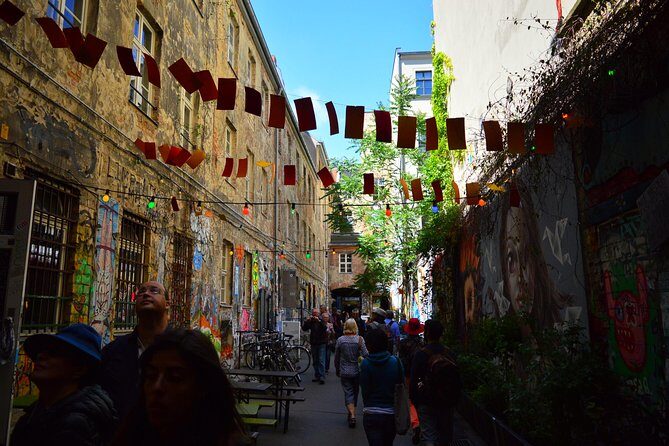
Your first stop is Die Hackeschen Höfe on Rosenthaler Straße—an interconnected courtyard complex that helped shape how Berlin’s neighborhood life worked. The courtyards date to the late 19th century, and the point of the visit is visual: you can see how Jewish immigrants, artisans, merchants, and newcomers fit into the city’s daily rhythm.
What I like about starting here is that it puts you in the “before” phase. Instead of jumping straight to memorials, you begin with the physical setting where community culture could exist—workspaces, walkways, and the layered architecture of a place built for human scale.
This is also a good moment to let your guide set the frame: what Berlin looked like for Jewish residents, how community networks functioned, and how those networks were later targeted.
One consideration: this is more about architecture and place-making than a single museum room, so if you want a lot of indoor time early on, you might feel the walk and outdoor surfaces more.
New Synagogue area and the memory of what’s missing
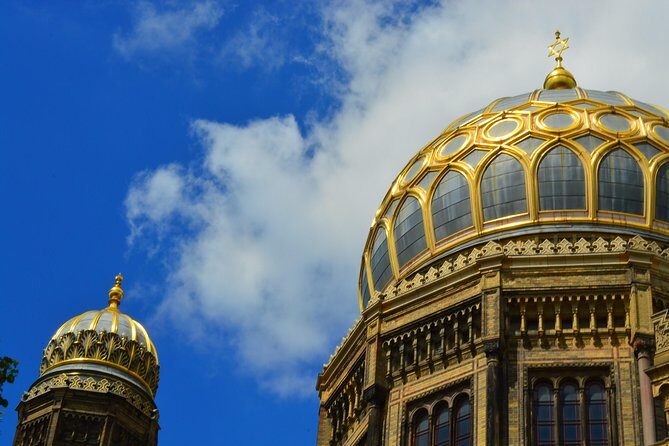
Next, you’ll be in the orbit of the New Synagogue story and the institutions preserving it. The route includes the Stiftung Neue Synagoge Berlin – Centrum Judaicum, housed in the restored New Synagogue complex, which originally opened in 1866. This center works as both a museum and a remembrance place, focusing on Jewish contribution and Jewish continuity in Berlin.
You’ll also see the Missing House site and get a look at the New Synagogue exterior. That combination is powerful. The exterior gives you scale and craftsmanship, while the Missing House element underlines how much was lost—how physical absence becomes part of memory.
Why this stop works: it connects pre-war Jewish life to preservation today. You’re not only learning the facts. You’re seeing how Berlin chooses to keep that story visible in streetscape form.
If you’re planning photos: do it respectfully. Exterior stops are quick, and the best shots often come when you wait for space to clear rather than rushing.
Museum Blindenwerkstatt Otto Weidt: rescue through work, hiding through craft
One of the most moving parts of the route is the Museum Blindenwerkstatt Otto Weidt in Mitte. Otto Weidt was a blind brush maker who provided refuge and employment to Jewish workers during the Nazi regime. This museum is housed in the original workshop setting, which matters more than you might expect.
Instead of hearing the story as only dates and orders, you’re in a place shaped by daily labor. That makes the details feel real: the workshop isn’t a staged set—it’s the environment where protective actions could happen. The museum also covers how Weidt helped protect workers, including strategies like arranging false papers and using influence to keep people safer from deportation.
What you’ll likely feel here: a shift from public tragedy to personal risk and practical courage. It’s not denial of horror. It’s a reminder that individuals could still act—sometimes with very limited power.
Drawback to flag: it’s small and focused, so if you prefer large, high-overhead museum spaces, you might want to mentally prepare for a more intimate setting.
Gleis 17 Memorial: deportations made visible at Grunewald station
Then you reach one of the most direct “this happened here” locations in Berlin: the Gleis 17 Memorial at Grunewald train station. The memorial marks the site where thousands of Jews were forcibly transported between 1941 and 1945.
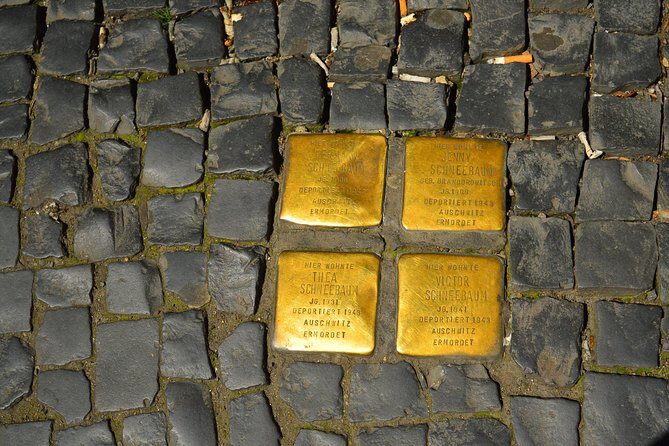
The core installation uses a series of metal plaques embedded in the ground, each bearing names and transport dates. That design forces your body to slow down. You’re not passing a sign—you’re walking among names and time stamps.
This stop is educational, but it’s also meant to be felt. The layout and materials create a quiet intensity that’s hard to get from a lecture alone. And since it’s tied to an actual rail location, the story becomes logistical: how deportations moved people through systems.
Practical tip: if the weather is bad, don’t rush. Cold ground and slippery surfaces can make this part harder physically than it looks on paper.
You can also read our reviews of more private tours in Berlin



Alter Judischer Friedhof: a cemetery tour that doesn’t feel like a checklist
The Old Jewish Cemetery (Alter Judischer Friedhof) is next. Cemeteries aren’t everyone’s favorite stop on a city walk, but this one works well because it’s serene and historically specific. You’ll see intricate tombstones and memorials reflecting different artistic styles and epitaph traditions.
This is also where the time scale expands. You’re not only moving through 20th-century events; you’re standing among people who shaped community life across centuries. The experience can feel reflective in a way that other sites don’t—less about learning something new every minute, more about letting the place talk.
Potential consideration: it’s an outdoor environment. If you’re sensitive to standing still for long stretches, you might want to pace yourself with your guide and ask questions as you walk rather than waiting for quiet time only.
Rosenstraße and the Block der Frauen: protest as courage
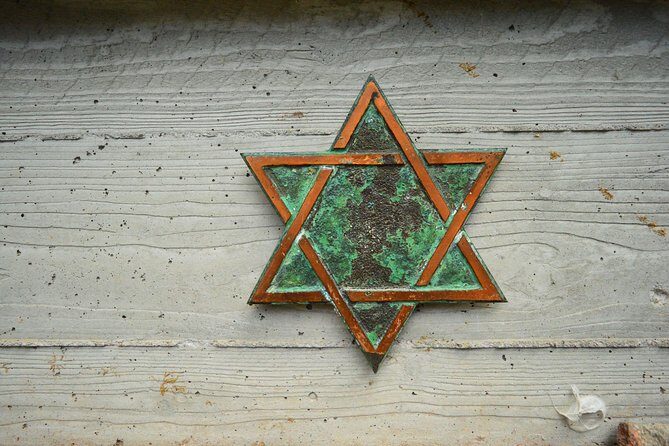
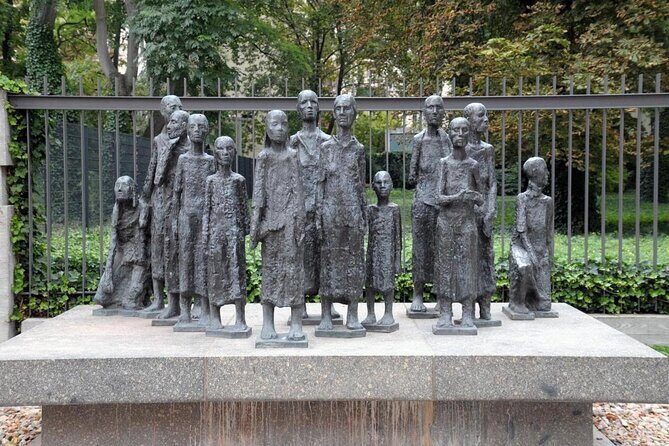
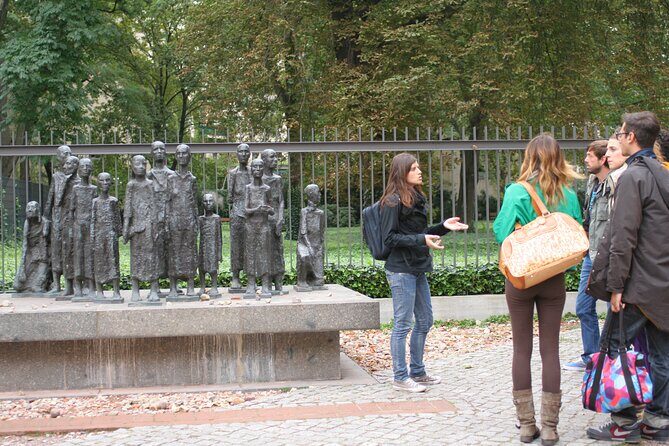
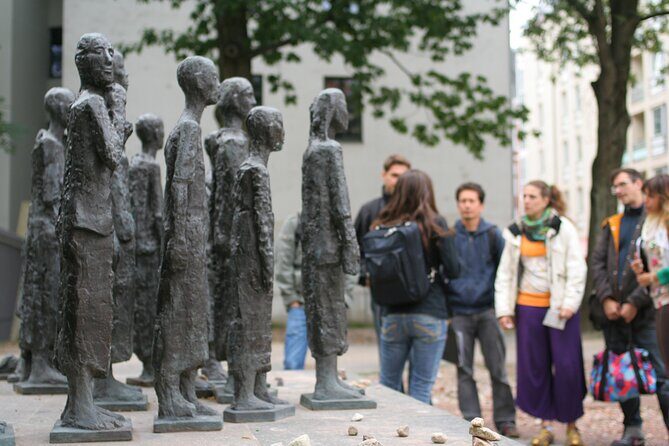
Another powerful stop in the route is the Block der Frauen memorial on Rosenstraße, honoring women who protested for the release of their Jewish husbands. This memorial references the early months of 1943, when many Jewish men were rounded up for deportation.
The story here is about collective action in a moment when fear was everywhere. The protests lasted for several days, and women demanded their loved ones from police headquarters. The memorial includes an inscription describing events at the location, giving context so you understand this wasn’t symbolic protest—it was risky, urgent, and public.
This stop adds balance to the day’s emotional weight. You’re learning that resistance didn’t always look like armed rebellion. Sometimes it looked like stubborn presence, voices raised where they were least welcome.
Holocaust Memorial: 2,711 slabs of disorientation and memory
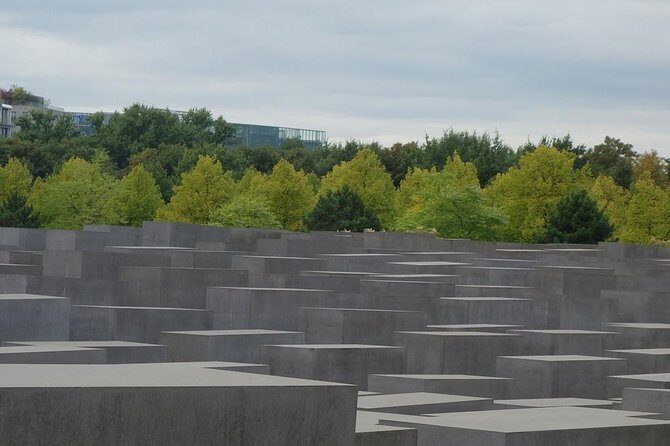
Finally, you’ll end at The Holocaust Memorial (Memorial to the Murdered Jews of Europe), a major site in Berlin. Designed by Peter Eisenman and inaugurated in 2005, it features 2,711 concrete slabs arranged in a grid across a wide undulating field.
The design effect is intentional: as you walk the paths between slabs, your surroundings shift, and it can create confusion and introspection. It isn’t about making you feel good. It’s about creating discomfort that points toward the chaos and dehumanization of what happened.
If you’re visiting with kids or teens, this is still doable, but I’d plan for breaks. The scale can feel overwhelming if you rush through.
Practical tip: wear shoes with grip. It’s easy to step wrong when you’re thinking and moving slowly at the same time.
What you’re really paying for: guide skill, pacing, and honest context
This tour is private, and you feel that in how the story can be paced. Many guides linked with this experience are praised for being friendly, engaging, and patient with questions. You’ll also see examples of guides adjusting for weather—so if rain hits, you’re not stuck pretending it’s fine.
Guide quality matters most on topics like this. A tour like this isn’t only about landmarks; it’s about context, compassion, and the ability to answer hard questions without getting robotic. The strongest guides can handle the range: everyday Jewish life, the machinery of persecution, the rescue efforts of people like Otto Weidt, and what Berlin chose to preserve afterward.
Also, this itinerary includes several free-admission sites, which helps justify the price. You’re paying primarily for guided interpretation and a route that strings together the right places in the right order.
Logistics you should plan around (so the day stays smooth)
A few practical points can make your day easier:
- Budget for transit: the tour notes that the Berlin transport ticket (AB zone) isn’t included. If you use public transport during the walk, have a ticket ready.
- No food included: this is a walking-focused experience, and food and drinks aren’t part of the package. Plan a snack and water break of your own timing.
- Moderate walking: you’ll be moving between sites for about 4 hours. If you’re used to city strolling, you’ll likely be fine. If not, consider bringing blister prevention.
- Weather is real: the tour runs in all weather, so dress like you expect Berlin conditions rather than hoping for perfect skies.
If you’re staying in central Berlin, you’ll likely find the route convenient. It’s also noted as being near public transportation, which helps if you want to meet up at a stop rather than rely on pickup.
Who this tour is best for
This experience fits best if you want more than a quick overview and you appreciate a guide who can handle nuance. It’s a strong choice for:
- First-time Berlin visitors who want a structured introduction to Jewish heritage and Holocaust remembrance.
- People traveling with family who want explanations that can adapt, since the experience is set up for your group to ask questions.
- Jews and non-Jews alike, especially if you want an honest look at how Jewish life changed in Berlin over time, including rescue stories and protest.
If you’re the type who wants only light, photo-friendly sightseeing with no heavy content, you might find parts of the route emotionally intense.
Should you book this Jewish heritage walking tour of Berlin?
I’d book it if you want a private 4-hour route that connects architecture, memorials, and rescue stories into one guided narrative. The stops are well-chosen for meaning: Hackesche Höfe for everyday community life, Otto Weidt for survival through practical action, Gleis 17 for the reality of deportation logistics, and the Holocaust Memorial for a lasting, physical experience of remembrance.
I’d hesitate if you need very short walking, lots of indoor time, or a gentler pace. The topic is heavy, and the walk is real.
If you can handle that, the value is strong: a private guide, free admission at the main stops, and a route that helps you understand Berlin as more than a set of photos.
FAQ
How long is the Private Jewish Heritage Walking Tour of Berlin?
It’s about 4 hours.
Is this tour private or shared?
It’s private, meaning only your group participates.
What language is the guide available in?
The tour is offered in English. In some cases, the guide may also be available in German or Hebrew.
Does the tour include admission fees for the stops?
The stops listed have admission ticket marked free for each visit time shown.
Do I need a Berlin public transport ticket?
A Berlin Transport AB Zone ticket is not included (listed at €2.70).
How much walking is involved and what should I bring?
There’s a moderate amount of walking, so good walking shoes are recommended, and you should dress for the weather since it operates in all conditions.