REVIEW · BERLIN
Berlin Private Custom 3-Hour Tour by Car
Book on Viator →Operated by A Friend in Berlin UG · Bookable on Viator
Berlin moves fast with the right plan. This private 3-hour car tour strings together major sights with real context, and you can adjust the route to your interests. I especially love the flexible itinerary and the car-based convenience, which lets you see a lot without wasting time on transfers.
One consideration: the stops are short, so short stop times mean you’ll want to choose where you linger and where you just soak in the big moments.
In This Review
- Key things you’ll notice on this Berlin car tour
- Why a 3-hour private car tour is a smart first move in Berlin
- Pickup and riding details: how the tour actually feels
- Reichstag and Brandenburg Gate: the political spine of the city
- The Holocaust Memorial and Topography of Terror: where remembrance becomes real
- Potsdamer Platz and Berlin’s Wall edges: continuity after disruption
- Checkpoint Charlie: the most famous crossing, explained simply
- Gendarmenmarkt and the domes: Berlin’s postcard-perfect symmetry
- Unter den Linden: grand boulevard meets the Humboldt Forum
- Berliner Dom, Victory Column, and Kurfürstendamm: monuments plus city life
- Kaufhaus des Westens and Museum Island: two ways to spend what time remains
- Customizing the route: how you get value for your exact interests
- Guides and commentary: what makes this tour feel different
- Price and value: is $337.90 per person worth it?
- How to get the most from the short stop schedule
- Who should book this Berlin Private Custom 3-Hour Tour by Car
- Should you book this Berlin private car tour?
- FAQ
- How long is the Berlin private car tour?
- What is the price per person?
- Is this a private tour?
- What’s included in the price?
- Do you offer pickup anywhere in Berlin?
- Can you pick us up from the airport?
- What language is the tour offered in?
- Are the sightseeing stops included without extra admission fees?
- Does the tour run in all weather conditions?
- What is the cancellation policy?
Key things you’ll notice on this Berlin car tour
- Private, custom pacing: You decide how much you want the driver to focus on highlights versus slower, off-the-grid scenes.
- Car + walk mix: You get quick repositioning by car, then tight walking stops for photos and key context.
- Major east-west touchpoints: The route is built around Berlin’s political scars, from the Holocaust Memorial to the Topography of Terror area.
- High-impact landmarks in one loop: You can hit Reichstag, Brandenburg Gate, Gendarmenmarkt, Unter den Linden, and more in a single morning/afternoon.
- Strong guide energy: Names that show up in guide feedback include Thomas, Winfried, Luka, Sven, and Wilfred, and people consistently highlight detailed storytelling and a good sense of humor.
- Works even when weather is annoying: It’s designed for all-weather days, so you’re not stuck between long outdoor walks.
Why a 3-hour private car tour is a smart first move in Berlin
Berlin is huge, and distances can surprise you. With just a few hours, the biggest win is efficiency: you cover wide ground while your guide explains what you’re actually looking at.
This tour is also private, meaning the pace is for your group. If you want more time near the Reichstag area, for example, you can usually shape the route around that. And because it’s by air-conditioned minivan, you’re not paying for taxi time all day long.
For me, the sweet spot is the combo of car drive and short stops. You get enough time to orient yourself, but not so much that you burn the entire day in traffic or inside lines.
You can also read our reviews of more private tours in Berlin


Pickup and riding details: how the tour actually feels
The tour includes hotel or residency pickup and drop-off, and you can be picked up anywhere in Berlin. If you’re staying near a train station, that also helps, because the tour operates near public transportation if plans change.
You’ll ride in an air-conditioned minivan. That matters because Berlin weather can flip—cold days, rainy days, wind off the parks—and being in a vehicle between stops keeps the day comfortable.
There’s also a mobile ticket included. So you’re not juggling paper vouchers, and it’s one less thing to manage on the road.
If your schedule is tight, note that this is often booked about 40 days in advance on average. That’s not a hard rule, but it’s a hint that popular time slots can fill.
Reichstag and Brandenburg Gate: the political spine of the city
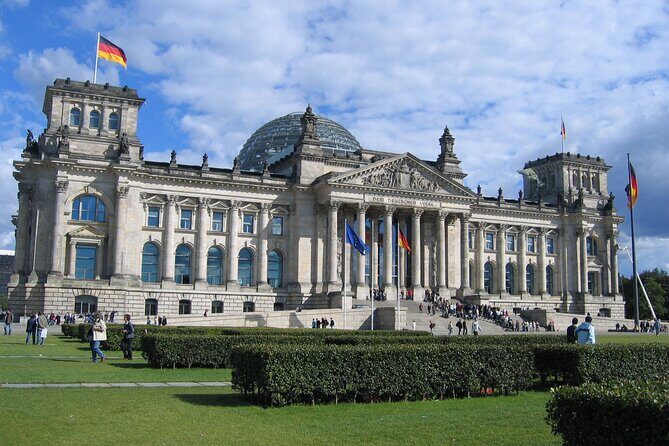
The first big stop is the Reichstag Building. It’s the seat of the German Parliament now, but it also carries a layered past: a fire in 1933, heavy WWII damage, and later renovation. Your guide’s commentary is the part that makes the building click—especially when you connect the architecture to why Berlin became the capital again.
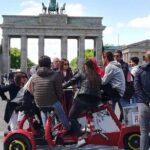
Then you move to the Brandenburg Gate, Berlin’s best-known landmark. It’s one of those places where different eras leave their fingerprints. The tour frames it through the figures who arrived here with history in mind, which gives you a clearer sense of why the Gate matters beyond being a photo stop.
For a lot of people, this is where Berlin starts to feel less like random sightseeing and more like a story. If you remember just one thing, make it this: Berlin’s landmark power comes from what happened around it, not just what it looks like.
The Holocaust Memorial and Topography of Terror: where remembrance becomes real
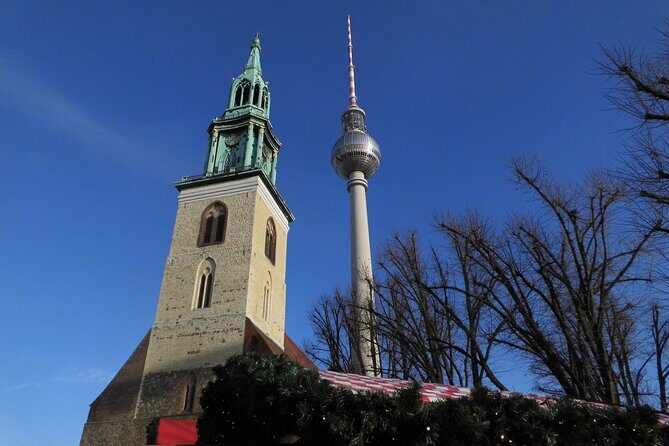
Next comes the Memorial to the Murdered Jews of Europe, the central site of mourning for the six million Jews killed during the Holocaust. This is one of those stops where you might think you know the basics, but a guide’s on-the-ground context helps you see how the space is meant to affect you.
From there you head to Topography of Terror, a site connected to Gestapo and SS headquarters. You’ll see remains associated with the Berlin Wall area and then a documentation center on that ground.
Practical tip: these stops can hit harder than the flashy landmarks. If you’re planning other major museum time later, you might want to keep some breathing room after this part of the tour.
Potsdamer Platz and Berlin’s Wall edges: continuity after disruption
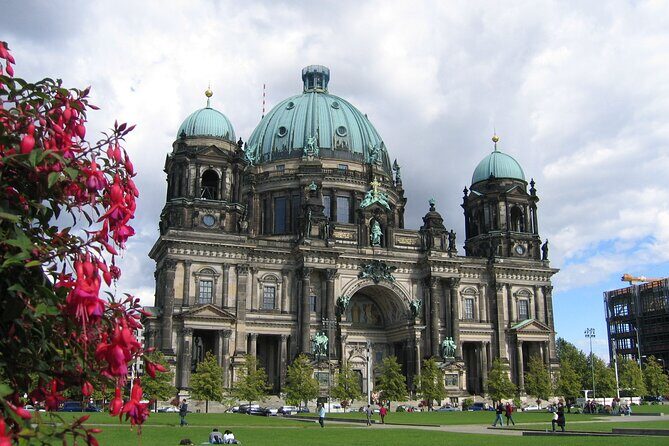
At Potsdamer Platz, the story is about change. The square was once a no-man’s-land for decades, then it sat right next to the Berlin Wall, and now it’s back as one of Berlin’s busiest intersections. In a few minutes, you can feel how the city reassembled itself after division.
This is a good moment to ask questions. A private format makes it easier to clarify what’s East versus West in Berlin’s urban layout, or why certain buildings remained while others disappeared.
If you like city rhythm, Potsdamer Platz is where Berlin feels modern again—traffic, lights, and movement—after the weightier stops.
A few more Berlin tours and experiences worth a look




Checkpoint Charlie: the most famous crossing, explained simply
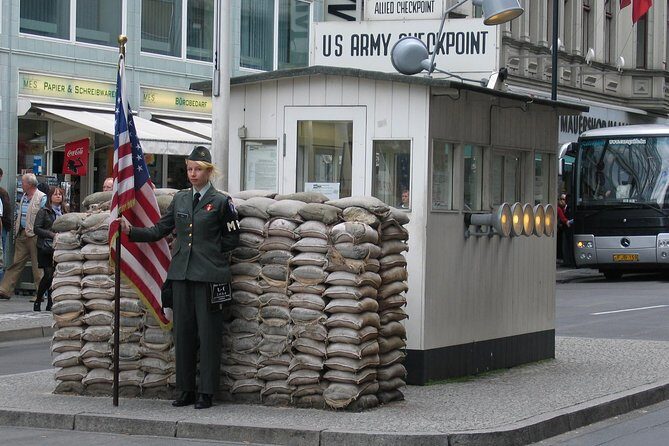
Then you reach Checkpoint Charlie, the best-known crossing point between East and West Berlin. The tour notes that it was reserved for Allied soldiers and other foreigners, while Germans were not allowed to use it.
That one detail can change how you view the area. It’s not just a famous name; it’s a symbol of who was allowed to move and who wasn’t. In just a short stop, you’ll get the basic logic of how borders worked in everyday life.
Because this is a photo-heavy spot, decide in advance whether you want a quick snapshot or a slower walk while your guide explains how the crossing shaped movement and control.
Gendarmenmarkt and the domes: Berlin’s postcard-perfect symmetry
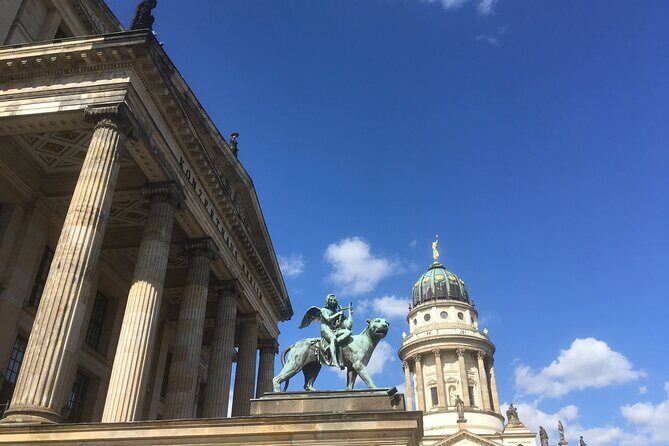
After the darker sites, you get a more elegant change of pace at Gendarmenmarkt. This square is known for the German and French domes framing the space, plus Schinkel’s Concert Hall in the center.
Even if you don’t care about architecture, the layout is easy to read. It’s one of those places where symmetry helps your brain relax after the heavy history stops.
This is also a nice chance to regroup. Take a breath, grab a photo, and let the day shift from tragedy back into everyday city beauty.
Unter den Linden: grand boulevard meets the Humboldt Forum
Next, you travel along Unter den Linden, the famous street running from the Brandenburg Gate toward where the Hohenzollern Palace used to be. The palace was torn down, but the area has been rebuilt as the Humboldt Forum, now functioning as a major museum.
You’ll also spot historic buildings along the way, including the Opera House and the former Armory, which is now the German History Museum. The value here is the guide’s linking: why this avenue became a symbol of power, and how today’s museum functions sit on top of older layers.
If you’re short on time, this stop is a great way to learn what to prioritize later. You’ll get enough context to decide whether you want a full day on Museum Island or a return for one of these institutions.
Berliner Dom, Victory Column, and Kurfürstendamm: monuments plus city life
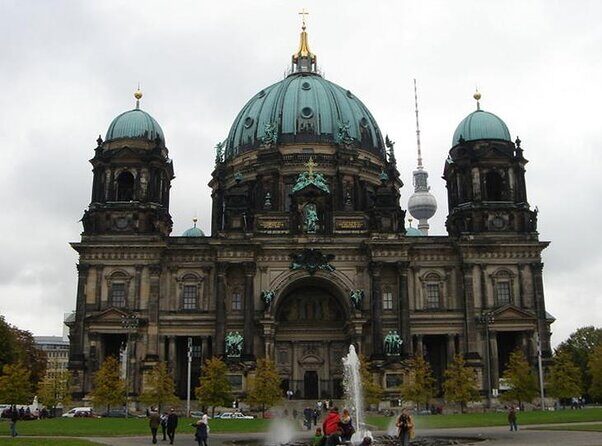
The tour includes Berlin Cathedral (Berliner Dom). It’s described as Germany’s largest Protestant Church, and the visit connects you to the Hohenzollern family buried there, including King Frederic I and Sophie Charlotte.
Then it’s up to Victory Column, which commemorates three Prussian wars, including the last one against France in 1871. The guide also explains its relocation history, which helps you understand Berlin’s evolving center of gravity.
From monuments to shopping energy: Kurfürstendamm, often called Ku’damm, is Berlin’s long boulevard with high-end stores, cafés, restaurants, theaters, and the Memorial Church at its end. You’ll also see the Kaiser Wilhelm Memorial Church, a war ruin next to a modern church built by Egon Eiermann.
If you’re traveling with mixed interests—someone who loves history and someone who just wants atmosphere—this sequence helps keep everyone happy.
Kaufhaus des Westens and Museum Island: two ways to spend what time remains
The tour pauses at Kaufhaus des Westens, described as continental Europe’s largest department store. Even if you don’t shop, it’s worth seeing because it shows Berlin’s consumer and design side.
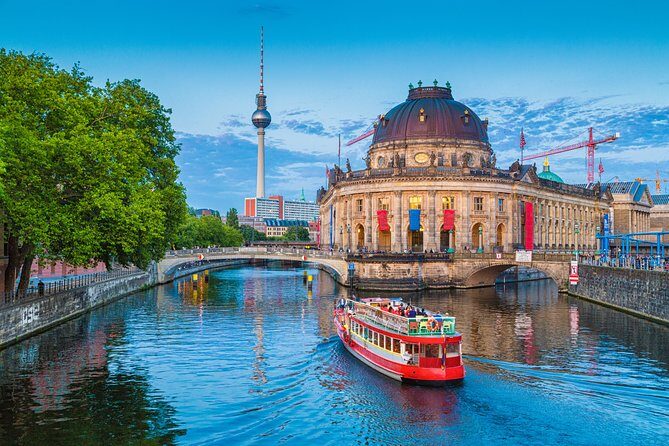
Finally, you reach Museum Island, a UNESCO World Heritage Site. You’ll pass key museums, including the Neues Museum (with Nefertiti inside) and the Pergamon Museum, known here for the Ishtar Gate.
This is where planning matters. A 5-minute stop can’t replace a real museum visit, but it can tell you which museum you’ll want to return to. If you’re the type who likes to pick one big museum and go deep, this tour gives you the shortlist.
Customizing the route: how you get value for your exact interests
The big promise here is flexibility. The tour is set up so you can steer the balance between major highlights and lesser-seen moments, while still hitting the most important reference points.
Ask your guide early what they recommend based on your time and energy level. A common smart approach is:
- Keep the most iconic stops as quick anchors.
- Choose 1 or 2 places where you want more context and time on foot.
- Let the guide decide the order if you’re unsure; they’ll usually choose the easiest flow.
This is also a good option for winter or rainy days. The car reduces exposure, while the short walks keep you from spending the entire day underground or in transit.
Guides and commentary: what makes this tour feel different
The standout pattern in feedback is the combo of story-driven stops and a guide who keeps the pace moving. People often call out guides like Thomas, Winfried, Luka, and Sven/Wilfred for being energetic and structured, with humor and detail.
What you should watch for in your own tour is the quality of explanation. On a route packed with famous names—Reichstag, Brandenburg Gate, Checkpoint Charlie—the difference is how the guide connects each site to the larger arc: division, survival, rebuilding, and the meaning of symbols.
Also, the private format makes it easier to ask follow-up questions. If something at one stop sparks your curiosity—say, a historical detail or a building feature—this tour gives you a chance to clarify without the pressure of a group schedule.
Price and value: is $337.90 per person worth it?
At $337.90 per person for about 3 hours, this is not the cheapest way to see Berlin. The value comes from what you’re buying: private transport, pickup and drop-off, and an all-in guided route that covers a lot of ground.
Think of it like this:
- If you’re a couple, the private car can start to look more reasonable than arranging separate taxis and paying for individual guide time.
- If you have kids or mixed ages, the ride comfort and quick orientation often beats doing multiple public-transport hops.
- If it’s your first day, this tour helps you know where you’re looking later. That can save time when you switch from sightseeing to targeted exploring.
The main reason it might not be worth it for you is if you want long museum time or deep guided discussion inside one site. This tour is built for orientation and context, not for lingering for hours in one place.
How to get the most from the short stop schedule
Because the time at each place is limited, your best strategy is mental, not physical. Decide what you want from each stop:
- For famous exteriors, focus on the big photo and ask one or two history questions.
- For memorials and documentation sites, slow your pace and let your guide finish their point.
- For squares and avenues, use them to reset and scan for what you might return to on foot later.
If you’re traveling during colder months, wear layers. Even with the car, Berlin’s outdoor moments add up across a loop.
And if you’re prone to rushing, pick one “must” stop where you’ll fully switch off and just absorb the context.
Who should book this Berlin Private Custom 3-Hour Tour by Car
This tour fits best if you:
- Want a fast orientation to Berlin’s main landmarks.
- Like history explained in plain language, with practical framing.
- Prefer car comfort over long transit days.
- Are on a tight schedule but still want major sites covered.
It can also work well if you’re traveling with teens who get bored easily—strong guiding and interactive explanations help keep attention.
Should you book this Berlin private car tour?
Yes, if you want a smart first-day plan that connects Berlin’s most important sites into one coherent route. The private car format, pickup convenience, and guide-driven commentary make the time feel productive rather than like a checklist.
But if your priority is museum immersion or long indoor visits, plan this as a foundation, not your whole day. Use it to learn where Berlin’s story lives, then come back on your own for the places you can’t stop thinking about.
FAQ
How long is the Berlin private car tour?
The tour lasts about 3 hours.
What is the price per person?
The price is $337.90 per person.
Is this a private tour?
Yes. It’s a private tour, and only your group participates.
What’s included in the price?
The tour includes local taxes, the driver/guide, hotel pickup and drop-off, a private tour, and transport by air-conditioned minivan.
Do you offer pickup anywhere in Berlin?
Yes. Pickup is offered anywhere in Berlin, including hotels or residences.
Can you pick us up from the airport?
Airport pickup is possible, but special conditions apply. You’ll need to ask.
What language is the tour offered in?
The tour is offered in English, and it may be operated by a multi-lingual guide.
Are the sightseeing stops included without extra admission fees?
The listed stops show Admission Ticket Free, including Reichstag Building, Brandenburg Gate, the Holocaust Memorial, Topography of Terror, Checkpoint Charlie, and more.
Does the tour run in all weather conditions?
Yes. It operates in all weather conditions, and you should dress appropriately.
What is the cancellation policy?
Free cancellation is available up to 24 hours in advance for a full refund. If you cancel less than 24 hours before the start time, the amount paid is not refunded.