REVIEW · BERLIN
Berlin: 75-minute Trabi Safari
Book on GetYourGuide →Operated by Trabiworld Trabi-Safari · Bookable on GetYourGuide
Trabant driving turns Berlin into comedy. In 75 minutes, you’re in an official-style Trabant doing Berlin sights like it’s still the GDR, with a convoy and live radio in your car.
I love how the experience is built around real driving time, not just watching scenery. I also love the souvenir factor: you get a Trabi driver’s license, even if it’s your first time in a manual. The main thing to consider is that this is a loud, old-school car on real streets, so it can feel nerve-racking at first if you hate clutch/gear work or cramped seating.
- Official Trabant-style driving, not a look-and-ride museum moment
- Live radio commentary piped into each car
- Your own car per booking (with others in the convoy, not mixed inside your vehicle)
- You pass big-name sights like Potsdamer Platz and the Brandenburg Gate
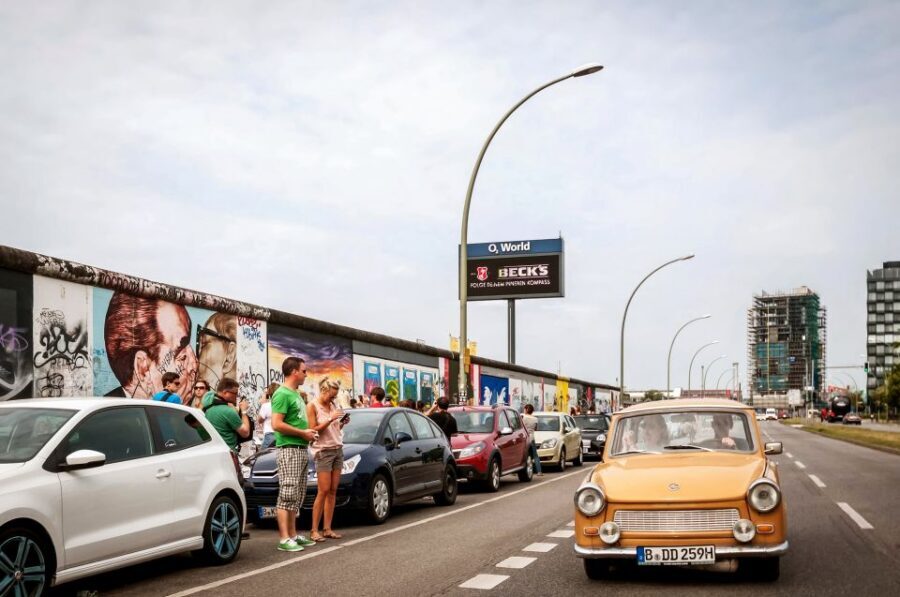
- Wall-area landmarks show up, including East Side Gallery and Oberbaum Bridge
- A driver’s license souvenir you earn during the fun part
In This Review
- Arriving at TrabiWorld: Where the adventure actually starts
- The convoy setup: How Berlin traffic gets managed
- Getting comfortable fast: Two-stroke quirks and a manual gearbox
- Your driving time: 75 minutes that feel like a short movie
- Potsdamer Platz to Unter den Linden: Berlin’s grand streets from street level
- The Wall-area vibe: East Side Gallery and Oberbaum Bridge
- Checkpoint Charlie and the DDR wayfinding effect
- The Trabi driver’s license: A souvenir with a real payoff
- Price and value: Is $93 really fair?
- What to bring and who can drive
- Which sights you’ll likely remember most
- Who should book this Trabi Safari (and who might skip it)
- Should you book the Berlin 75-minute Trabi Safari?
- FAQ
- What is the duration of the Berlin 75-minute Trabi Safari?
- How much does the Trabi Safari cost?
- Where do I meet for the tour?
- Do I need a driver’s license to drive?
- How is seating handled in the Trabant?
- Is my group mixed with other bookings inside my car?
- Are children allowed?
- What’s included in the tour price?
- Is there insurance if the car is damaged?
- What if I need to cancel?
Arriving at TrabiWorld: Where the adventure actually starts
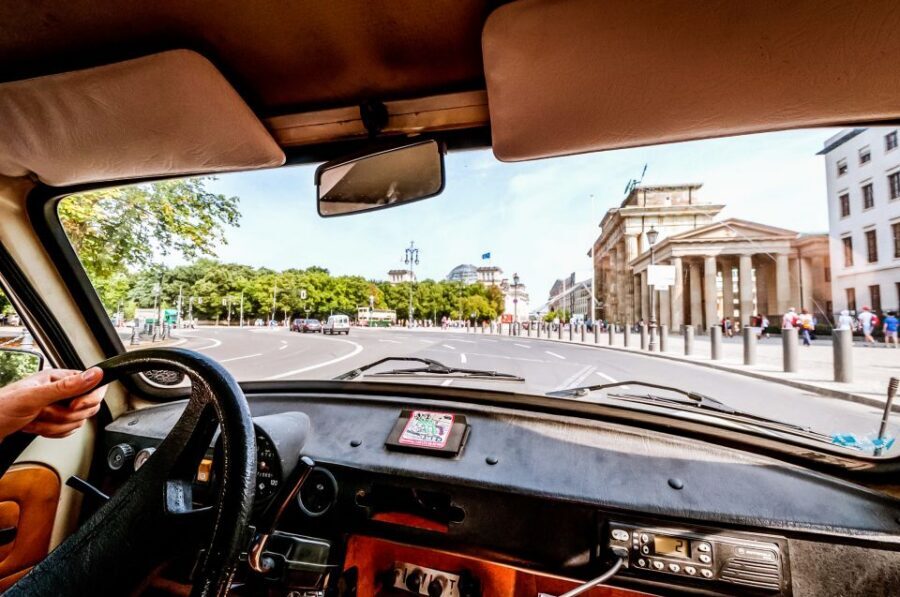
Your start point is TrabiWorld, at Zimmerstraße 97–100, right on the corner with Wilhelmstraße. The location matters because you’re not meeting in some generic “tour bus” spot—you’re dropping into the world of the cars themselves before you even move.
Once you arrive, you’ll get the intro and setup your group needs before you join the convoy. Even if you’re a confident driver, treat the first few minutes like a warm-up, not a victory lap.
The convoy setup: How Berlin traffic gets managed
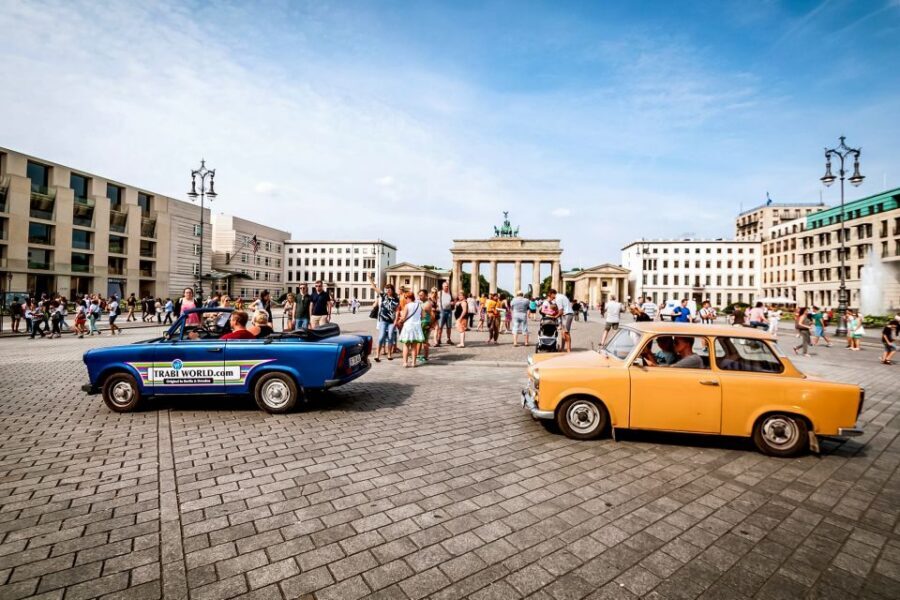
This is a convoy tour, with a guide at the start. That design is practical: Berlin traffic can split groups fast, but the convoy format helps keep you oriented and keeps the trip from turning into a scavenger hunt.
A big plus is that there’s live radio commentary in each car. That means you’re not leaning over to hear a guide above road noise, and you’re not stuck guessing what street you’re on. You get the story while you’re driving, which makes the sights connect in your brain instead of feeling like random passing landmarks.
Also note the group structure: each booking has its own personal car. Other vehicles run in the same convoy, but you’re not sharing your car with strangers from different parties. That’s a comfort point if you’re traveling as a couple or family and want control over who’s in which seat.
You can also read our reviews of more tours and experiences in Berlin.



Getting comfortable fast: Two-stroke quirks and a manual gearbox
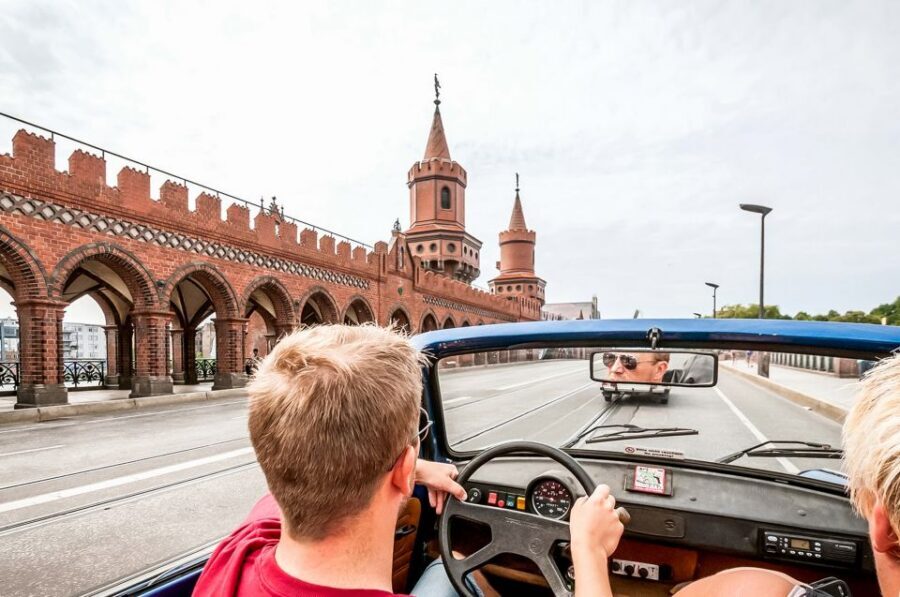
Before you roll out, you’ll get technical instruction, including the basics of the two-stroke engine and the manual gearbox. The goal isn’t to turn you into a mechanic; it’s to prevent the first 30 seconds from feeling like a prank.
Plan on this being a learning curve. Several people found the experience challenging at first—especially if you haven’t driven left-hand drive before or you’re rusty with a manual transmission. The shifter style can take a moment to get used to, and you’ll want to focus on smooth clutch/gear changes rather than speed.
It’s also not a quiet car. Expect that the engine noise is constant and the ride can feel raw over cobbles. If you’re sensitive to noise or any in-cabin exhaust smell, you may want to keep windows positioned how the staff instructs so you’re comfortable during turns and stops.
Your driving time: 75 minutes that feel like a short movie
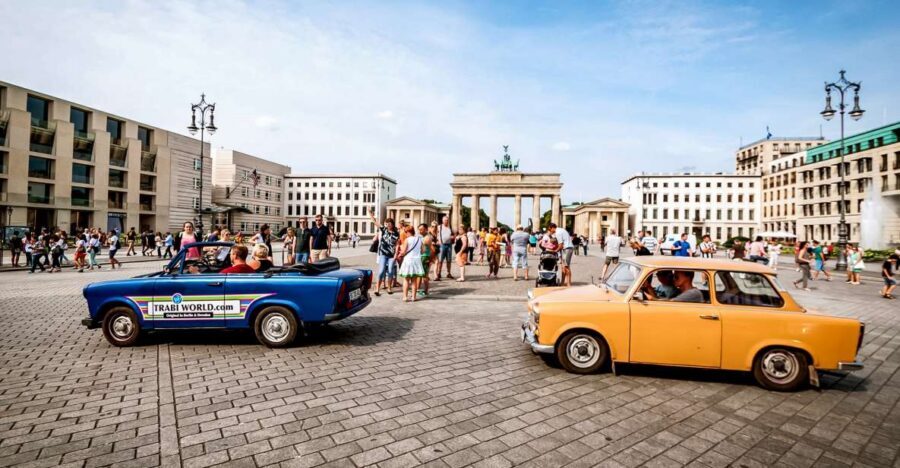
The whole drive is 75 minutes, and the time passes quickly because you’re steering, listening, and watching history unfold from the driver’s seat. You’re not in a cushy sightseeing bubble; you’re moving with the city.
There can also be a mid-tour driver swap, which is useful if you’re traveling as two drivers who want equal time behind the wheel. Even if that isn’t part of your exact plan, it’s a good expectation to have if you’re booking with someone else who wants to drive.
Here’s the real value of the timing: 75 minutes is long enough to get bearings, but short enough that you’re still having fun by the time the novelty wears off. People who treat it like an activity rather than a test tend to love it.
Potsdamer Platz to Unter den Linden: Berlin’s grand streets from street level
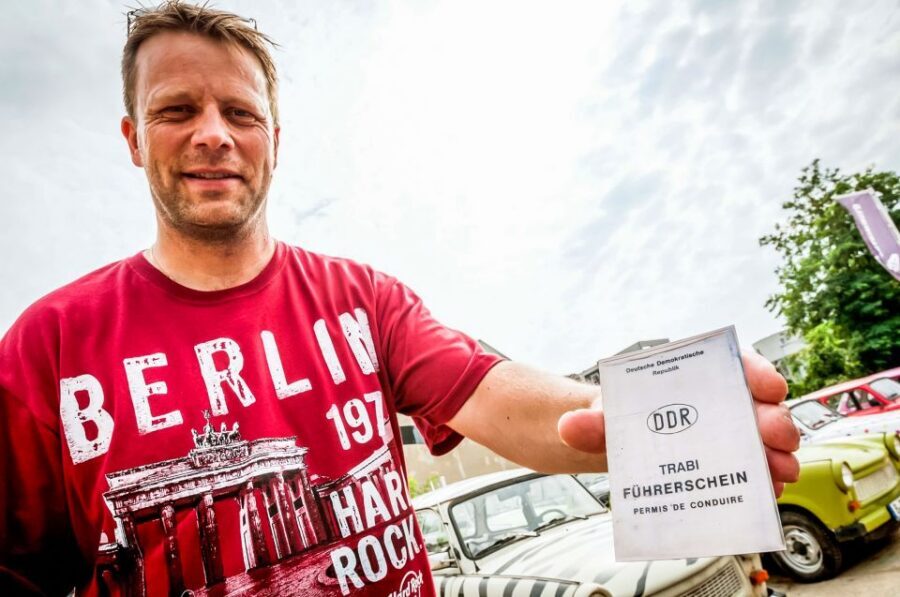
Your route includes several of Berlin’s most recognizable central sights. The payoff is that you see them from a low, old-car vantage point, with the city’s layout clicking into place as you drive.
As you go past Potsdamer Platz, you’re starting in the heart of modern Berlin. Seeing it while you’re also listening to the car-and-city commentary gives you context for how the city grew into what it is today, not just what it looks like on a postcard.
Then you’re in classic central Berlin territory: Brandenburg Gate and Unter den Linden. These are landmarks you may already know from photos, but the drive changes your experience. You’re not just looking; you’re timing your route through lanes and corners as your guide explains what matters about the place and why it became iconic.
You’ll also pass major civic landmarks and major viewing points, including the Berlin Cathedral, the Rotes Rathaus (Red City Hall), and the TV Tower. The “why” of those stops hits harder when you’re driving past them. You start to understand the sightlines—where the city opens up, where it tightens, and how different eras stack next to each other.
The Wall-area vibe: East Side Gallery and Oberbaum Bridge
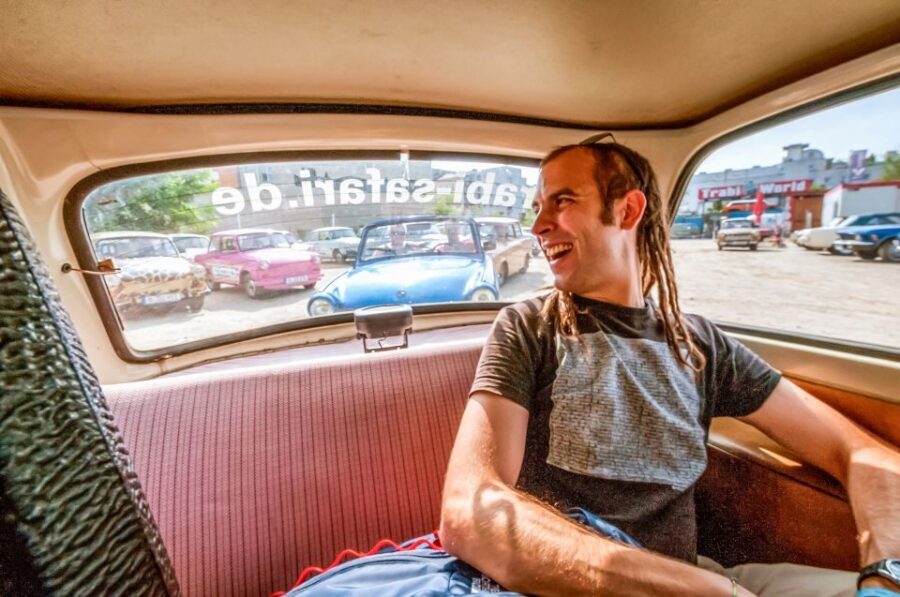
If you come to Berlin for the Wall story, this is where the car really earns its keep. You’ll pass East Side Gallery and the Oberbaum Bridge, both closely tied to the old divisions of the city.
From the driver’s seat, these areas feel more immediate. A Wall landmark isn’t something you can only appreciate by standing still; it’s something you feel in the street geometry—what was kept apart, what connections were cut, and what’s now stitched back together.
Even if you’re not chasing a deep political tour, the emotional weight comes through because your route treats the landmarks as part of your real journey. Add the live radio story and you get the timeline, not just the scenery.



Checkpoint Charlie and the DDR wayfinding effect
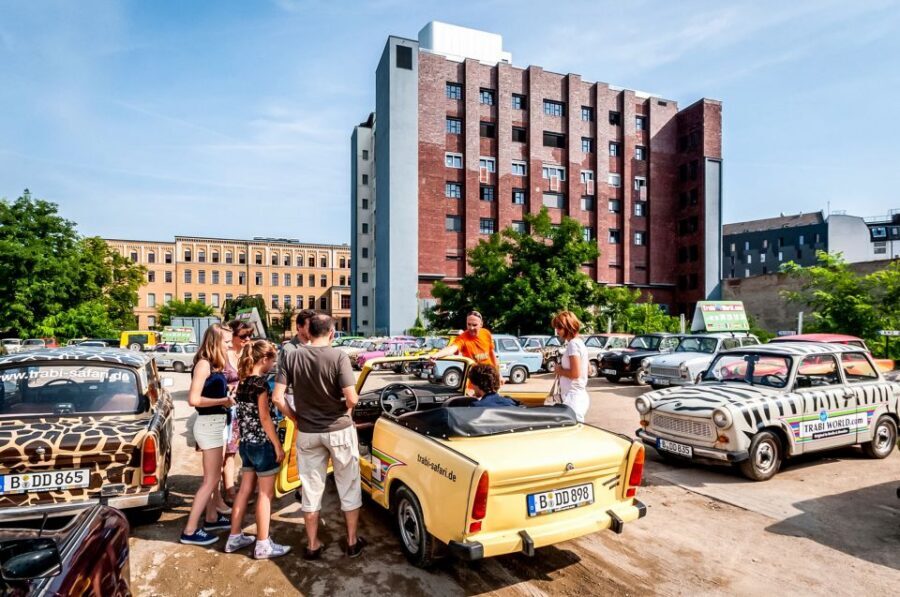
You’ll also pass Checkpoint Charlie, one of Berlin’s most famous border-era sites. The key here isn’t that you’re getting a museum lecture—it’s that you’re driving the streets that connect these places, which helps your brain build a map.
This matters if it’s your first time in Berlin. A lot of sight-seeing can feel like a list. Here, the driving route makes it feel like a course through the city, which helps you plan what you want to see later on foot or by transit.
If you’re the type who likes to learn by moving—rather than standing still—this format tends to work. You get that “Berlin makes sense now” effect, because you’re repeating street movements and turning corners while the guide ties landmarks to the story.
The Trabi driver’s license: A souvenir with a real payoff
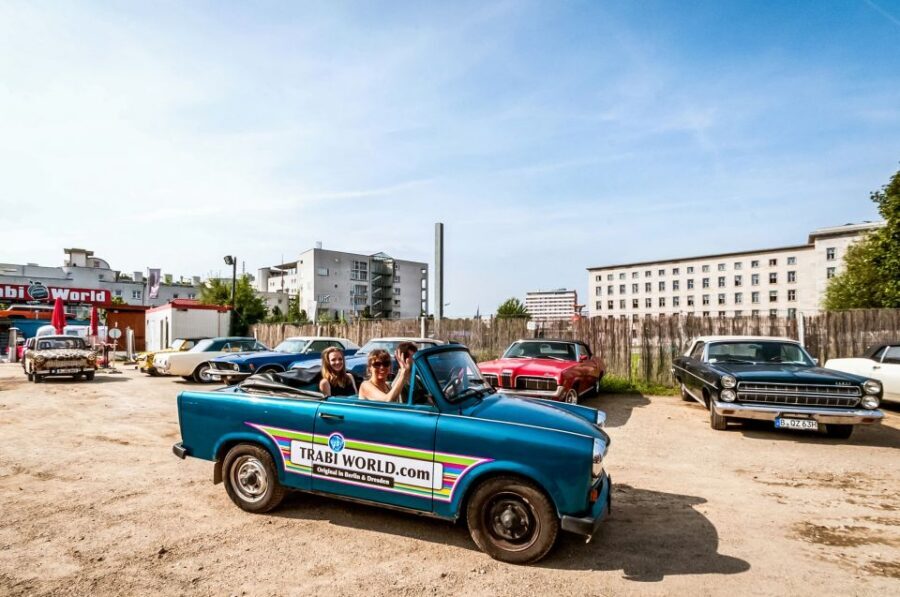
You’ll get a Trabi driver’s license for every new driver. It’s not just a novelty paper; it marks the moment you became part of the experience, especially if you were a little unsure at the start.
I like this type of souvenir because it’s earned during the activity, not handed out at the end like a brochure prize. It also gives you something to show for the effort of actually learning the car basics, even if it’s only for 75 minutes.
And since the tour includes technical instruction, it’s easier to appreciate why the license feels legitimate. You’re not pretending the car is modern—you’re learning how it works well enough to drive it safely through the city.
Price and value: Is $93 really fair?
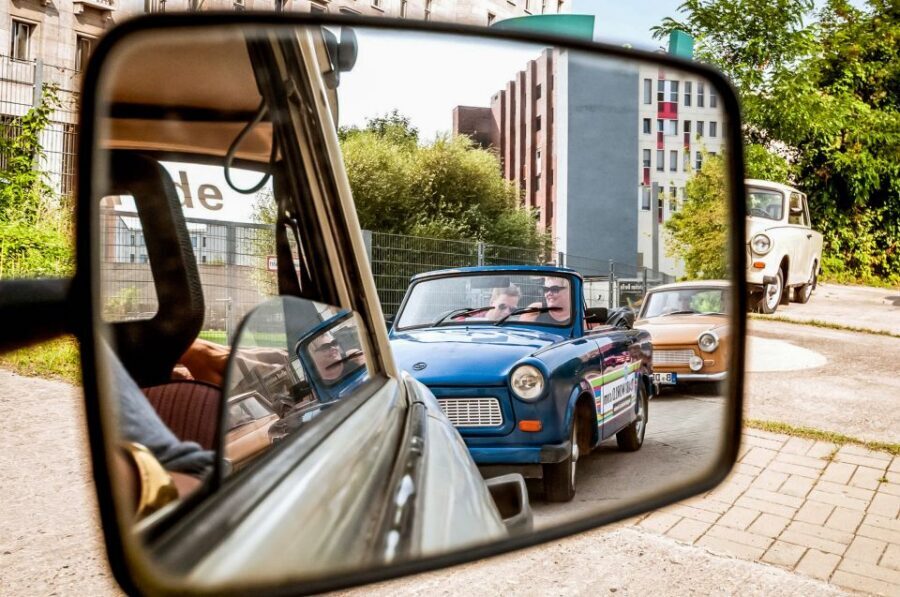
At $93 per person for a 75-minute guided driving experience, you’re paying a premium for two things: access and novelty.
Access means you’re not just seeing Berlin—you’re operating a historic-style car through the city under supervision, with free miles and gas included. The tour also covers live radio commentary in each car, plus you get that driver’s license souvenir. Those extras add up fast compared with a typical short guided activity.
Novelty is the other big cost driver. The Trabant is a recognizable icon, and driving it in Berlin streets is simply not a standard tourist option. The best value comes when you go in with the right mindset: treat it as an experience first, not a polished comfort ride.
There’s also 3rd-party vehicle damage insurance included, with a deductible of 850 EUR. You’ll want to pay attention to that if you’re the kind of driver who gets anxious about every curb and tight turn, because it’s part of the real-world risk equation of driving an older car.
What to bring and who can drive
Bring your driver’s license. The minimum age is 18, and you’ll need driver’s license class B to drive. You also need to be in full fitness to drive.
Inside the car, there are limits: a Trabant is permitted for a maximum of 4 people and up to 330 kg / 727 lb. If you’re traveling with teens or kids, note that children can get a free ticket, but the ticket policy still applies to each person (driver, co-driver, car passenger, and children).
If you have mobility limitations, this can still be worth considering compared with long walking tours, because you’re in a vehicle and the experience is built around driving. Still, the car is old and designed for different body proportions than modern vehicles, so stretching before you start can help.
Which sights you’ll likely remember most
What sticks with people usually comes down to three “memory anchors.”
First is the Wall-area driving—East Side Gallery and Oberbaum Bridge give you emotional context plus visual power. Second is the classic central landmarks, from Brandenburg Gate to Unter den Linden, because they connect the city’s main story in a compact loop. Third is the sheer “I drove that” feeling, reinforced by the Trabi driver’s license.
Even if you already know Berlin’s top sites, the route makes them feel connected rather than separate.
Who should book this Trabi Safari (and who might skip it)
This tour is a great match if you:
- Want a hands-on Berlin experience where you drive, not just ride
- Like quirky, hands-on history with jokes and practical guidance
- Prefer a shorter, high-energy activity that gives you city orientation fast
You might reconsider if you:
- Don’t want to deal with a manual gearbox or clutch basics
- Get stressed by tight controls, noise, or the feel of older vehicle handling
- Expect a quiet, modern comfort ride
The driver-swapping element can help couples and friends share the experience, but the car’s seating and limits are still real—so plan around that.
Should you book the Berlin 75-minute Trabi Safari?
If you want one genuinely different Berlin activity that mixes iconic sights with a real sense of place, book it. The value is strongest when you’re curious enough to accept that the car is old and the ride is loud, and you’re happy to focus on safety and technique for a short window.
If you’re unsure because of driving comfort, I’d still say this is worth trying—just go in knowing you’ll need a bit of patience at the start. For many people, that first-ten-minutes awkwardness turns into pure laughter by the time you’re cruising past the big landmarks.
If you want an easy add-on afterward, consider the Trabi Museum at Trabi World—it pairs naturally with the experience because you’ll see more of the cars’ story right where you started.
FAQ
What is the duration of the Berlin 75-minute Trabi Safari?
It runs for 75 minutes.
How much does the Trabi Safari cost?
The price is $93 per person.
Where do I meet for the tour?
You meet at TrabiWorld, Zimmerstraße 97–100, at the corner of Wilhelmstraße.
Do I need a driver’s license to drive?
Yes. You’ll need your driver’s license. The requirement to drive includes minimum age 18 and driver’s license class B.
How is seating handled in the Trabant?
Each participant needs a ticket. A Trabant can carry up to 4 people and max 330 kg / 727 lb.
Is my group mixed with other bookings inside my car?
No. Each booking gets its own personal car, though there are other vehicles in the same convoy.
Are children allowed?
Children need a ticket like everyone else, and children can get a free ticket.
What’s included in the tour price?
Included are technical instruction, a guide at the start of the convoy, live radio commentary in each car, free miles and gas, and a Trabi driver’s license for every new driver.
Is there insurance if the car is damaged?
Yes. There is 3rd-party vehicle damage insurance included, with an 850 EUR deductible.
What if I need to cancel?
You can cancel up to 24 hours in advance for a full refund.