REVIEW · NUREMBERG
Nuremberg Third Reich Tour in Spanish
Book on Viator →Operated by Hallo Nuremberg! · Bookable on Viator
Nuremberg’s past lands fast. This Third Reich tour in Spanish walks you through key places that connect centuries of antisemitism to Nazi propaganda and the postwar reckoning. I love the way the guide turns the city into a timeline, keeping the pace dynamic without rushing the important parts. I also like that it’s organized around short, focused stops, so you stay engaged even if the afternoon is hot. One possible drawback: the subject matter is heavy, so if you prefer lighter sightseeing, this one will feel intense.
You start at Hauptmarkt at 3:30 pm and finish near the Street of Human Rights, close to the central train area. The tour uses a mobile ticket, and it’s set up for a small group (up to 30), which usually makes questions easier.
In This Review
- Key highlights at a glance
- A 3:30 pm route built for focus, not museum fatigue
- Starting at Hauptmarkt: getting your bearings in the right direction
- Frauenkirche: the 1349 pogrom and how Nuremberg remembered it
- Practical tip for this stop
- St. Sebaldus Church: antisemitism from the Middle Ages to National Socialism
- Nuremberger Rathaus: Hitler’s story and Nuremberg’s connection
- Memorial at the main synagogue: destruction and the Night of Broken Crystals
- A thoughtful way to approach this stop
- Katharinenkirche ruins: battle, liberation, and rebuilding
- St. Lorenz and its Via Crucis link to the concentration camp
- Nuremberg State Theater: opera house, ideology, and public messaging
- Charterhouse Gate: the Nuremberg trials, explained on the street
- Street of Human Rights: walking from ashes toward a new identity
- Price and value: what $19.70 gets you in real terms
- Who this tour is for (and who should skip it)
- Tips to make the tour more comfortable
- Should you book this Nuremberg Third Reich Tour in Spanish?
- FAQ
- FAQ
- Is the tour offered in Spanish?
- How long is the Nuremberg Third Reich tour?
- How much does it cost?
- When does the tour start?
- Where do I meet the guide?
- Where does the tour end?
- What kind of ticket do I get?
- Are admission fees included for the stops?
- How large is the group?
- What happens if the weather is bad?
- Can I get a full refund if I cancel?
Key highlights at a glance
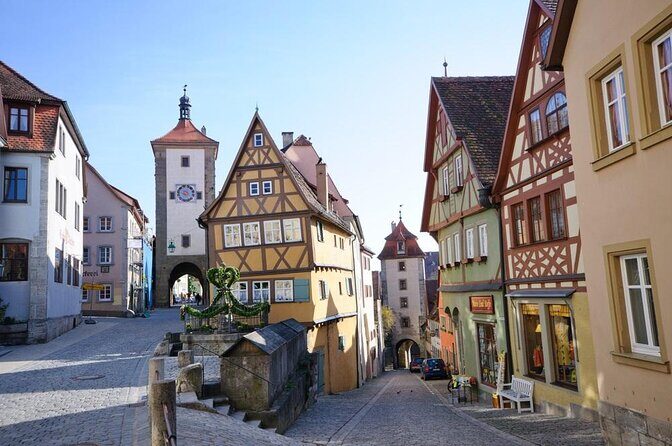
- Spanish-led storytelling that ties the whole Nazi-era story to Nuremberg’s streets
- Short 10–15 minute stops that help you keep attention on the key points
- From 1349 to Kristallnacht to the Nuremberg Trials, in one connected route
- Free entry tickets for each stop, so you’re not juggling extra costs mid-tour
- A guide like Federico (when assigned) who’s praised for being well documented and flexible
- A late-afternoon start that can be easier than starting earlier in the day
A 3:30 pm route built for focus, not museum fatigue
This tour is about staying outside and seeing the story on the actual ground where it happened. It runs for about 3 hours, and the stops are timed like a good conversation: you get enough time to understand what you’re looking at, then you move before it becomes a slow lecture.
I like that the format doesn’t pretend you can absorb everything at once. Each stop is short—mostly 10 to 15 minutes—so you get a steady flow of context. That matters in Nuremberg, because you’re dealing with layers: medieval persecutions, Nazi myth-making, wartime destruction, and then the trials that followed.
You can also read our reviews of more tours and experiences in Nuremberg.
Starting at Hauptmarkt: getting your bearings in the right direction
You meet at Hauptmarkt 14, right in the center of town. This is a smart choice because Hauptmarkt is an easy landmark, and it helps you orient fast before the tour turns serious. Since the tour starts at 3:30 pm, you’re also well-positioned for daylight viewing without needing an early wake-up.
You’ll likely spend the whole tour walking between historic sites. If you’re sensitive to heat, plan for it. One of the most positive themes in the tour feedback is that it stays enjoyable even when the weather runs warm—still, you should bring water because soda/pop isn’t included.
Frauenkirche: the 1349 pogrom and how Nuremberg remembered it
The tour begins with Frauenkirche and the story of the pogrom of 1349. This is where the guide sets up a crucial idea: antisemitism didn’t start with the Nazis. In this part of the walk, you learn how the Jewish quarter and the city’s relationship became part of a longer pattern.
What I appreciate here is the framing. Instead of treating Nazi history as an isolated event, you’re shown how earlier persecution created habits of thought and social tension. That makes later Nazi propaganda feel less like sudden madness and more like something that found fertile ground.
Practical tip for this stop
You don’t need long browsing time here; the goal is to understand what to notice as you look around and move on. Keep your questions ready—this is the kind of topic where a quick clarification can pay off later.
St. Sebaldus Church: antisemitism from the Middle Ages to National Socialism
Next comes St. Sebaldus Church, where the tour links antisemitism across centuries—specifically from the Middle Ages to National Socialism. This stop helps you see how ideas can persist even when politics changes. The guide’s job here is not just to tell you what happened, but to explain why certain prejudices survived long enough to become useful in Nazi messaging.
If you’ve visited churches elsewhere in Germany, you may expect the usual art-and-architecture talk. Here, the focus is different. You’re learning how religious and social narratives can be twisted into political weapons. That shift in tone is one of the reasons this tour works so well for many people: it keeps the theme consistent while moving through different locations.
Nuremberger Rathaus: Hitler’s story and Nuremberg’s connection
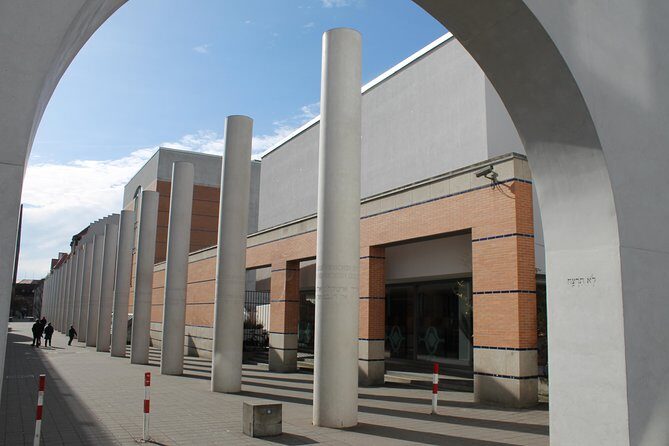
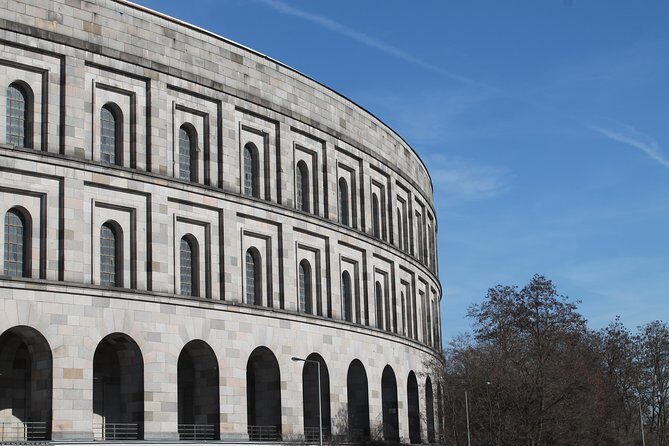
At the Nuremberg Rathaus, you get the tour’s next step: the link between Hitler’s history and the city. This isn’t just biography. The point is to show how Nuremberg became a stage for the Third Reich—chosen not only for geography or convenience, but for symbolic power.
I like this part because it’s where propaganda becomes more concrete. You start seeing Nuremberg not simply as a place where things happened, but as a place that was actively shaped to support Nazi goals. That includes how the city promoted the idea of Germanic tradition and made itself feel like the rightful heir to a larger national story.
Memorial at the main synagogue: destruction and the Night of Broken Crystals
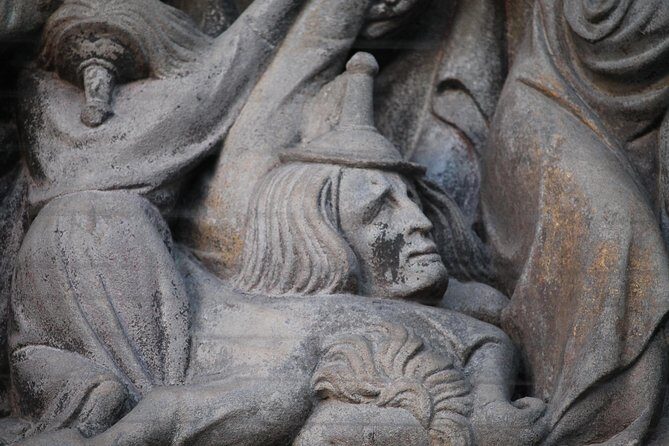
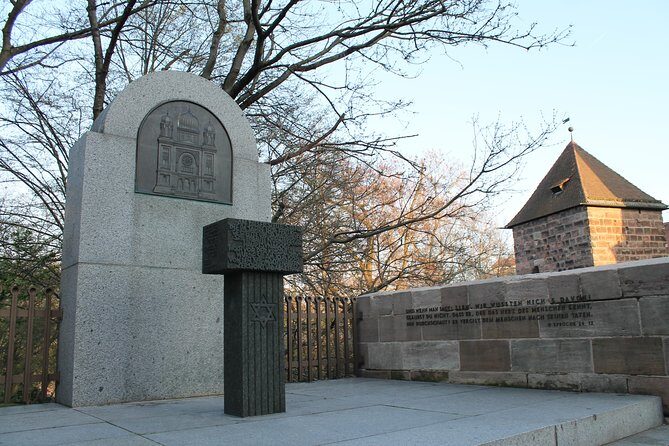
The tour then reaches the Gedenkstätte an der Nürnberger Hauptsynagoge. Here the emphasis is on the synagogue’s destruction and the Night of the Broken Crystals—known for the coordinated violence against Jewish communities across Germany.
This stop hits hard, and it should. What makes it valuable is that it turns a headline event into a human-scale story tied directly to place. You’re not just learning the term Kristallnacht; you’re learning what it meant for a specific community in Nuremberg.
A thoughtful way to approach this stop
Give it a little silence. Even if the guide moves quickly, take a moment to absorb the surroundings before you rush to the next point. It’ll make the next, darker scenes easier to understand.
Katharinenkirche ruins: battle, liberation, and rebuilding
At Katharinenkirche, you’ll see the ruins of the Church of Santa Catalina. The tour uses these remains to talk about the battle and liberation of Nuremberg, and then how the city began its reconstruction.
This is a necessary shift in tone. After confronting destruction and persecution, you also learn how the city rebuilt—because history doesn’t stop at ruin. Nuremberg’s postwar rebuilding becomes part of the story, showing what was saved, what was lost, and what the city chose to rebuild into something new.
St. Lorenz and its Via Crucis link to the concentration camp
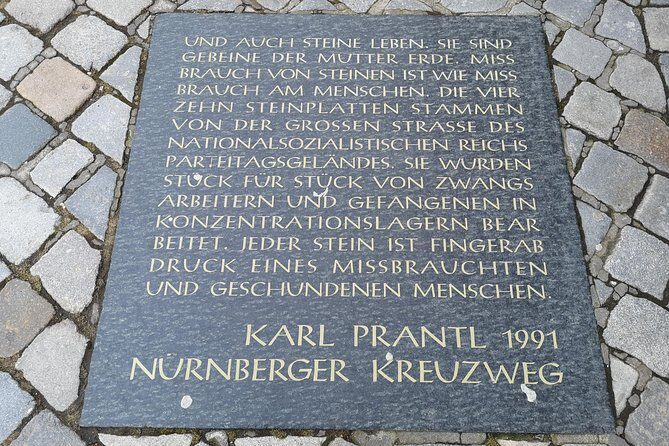
The next stop is St. Lorenz, with a focus on the church’s Via Crucis and its relationship to the Nuremberg Concentration Camp. This connection can be unsettling, because it forces you to think about how suffering can be symbolized, explained away, or used—depending on who controls the narrative.
I like that the guide doesn’t treat this as just “another stop.” It’s presented as an important junction between religious imagery, public messaging, and the reality of state violence. You come away understanding that propaganda was not limited to speeches and posters. It could appear in the way public spaces were interpreted and presented.
Nuremberg State Theater: opera house, ideology, and public messaging
Then you reach the Nuremberg State Theater, where the tour explains its link to National Socialism. This is one of the more surprising stops for many first-time visitors, because it challenges a common assumption: that the Third Reich was only about rallies and uniformed spectacle.
Here, you learn how high culture, public performance, and major institutions could be used to support ideology. The tour doesn’t need a graphic to make the point; it gives you context so the connections make sense.
Charterhouse Gate: the Nuremberg trials, explained on the street
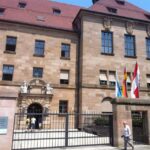
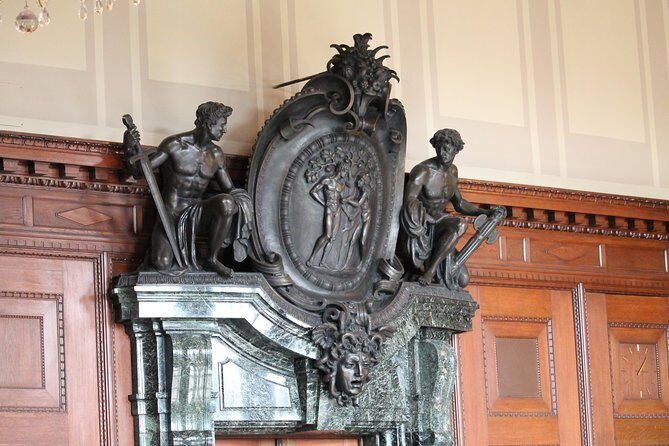
At the Charterhouse Gate, the tour focuses on the Nuremberg trials. This is the “how the world answered” portion of the route. You’re not just learning what crimes occurred; you’re learning how justice—imperfect and complex—played out after the war.
This stop also helps you close the loop. Earlier you learned how Nuremberg became a propaganda center. Now you see the aftermath: the city’s role shifted from staging power to facing accountability.
Street of Human Rights: walking from ashes toward a new identity
The tour ends at the Street of Human Rights, near the central train station, at Kartäusergasse 1, about ten minutes’ walk from the meeting area. This closing stop ties the whole walk together with the idea of rebirth from the ashes of the city of Nuremberg.
It’s a fitting end because it gives you somewhere to go mentally after confronting brutality. You’re not being asked to forget what happened—you’re being asked to see what came after. That’s where the city’s title and legacy shift from Nazi-era symbolism to postwar human rights language.
Price and value: what $19.70 gets you in real terms
At $19.70 per person, this tour is priced like a quick, guided city walk—but it doesn’t feel like a “bare minimum” experience. For the money, you get:
- A Spanish guide for about 3 hours
- A set route of major sites tied to antisemitism, Nazi propaganda, destruction, and trials
- Free admission tickets at the stops listed as ticket-free
- A small group size capped at 30
That mix is the value. Many inexpensive tours either rush past the context or skip the deeper connections between sites. Here, you’re paying for narrative structure: learning why Nuremberg mattered and how different chapters fit together.
Who this tour is for (and who should skip it)
This tour suits you best if you:
- Want a structured overview of Nazi Germany in Nuremberg without hopping between unrelated stops
- Prefer a guided explanation in Spanish
- Like seeing history in the open air, with short stops and clear themes
You might want to think twice if you’re:
- Looking for casual, light sightseeing
- Sensitive to themes involving persecution and state violence
Tips to make the tour more comfortable
Because the route is outside and the timing is tight, small choices help a lot:
- Bring water since soda/pop isn’t included
- Wear comfortable shoes for city-center walking
- If you’re traveling in warmer months, plan for heat and take your time at each stop
- Use the mobile ticket on your phone so you’re not sorting paper while the group is moving
Also, if you’re lucky enough to have a guide like Federico (a name that comes up for being extremely well documented), lean into it. Ask questions when something clicks for you, not only when you’re confused.
Should you book this Nuremberg Third Reich Tour in Spanish?
Yes—book it if you want a serious, well-paced walk through Nuremberg’s darkest chapters, explained in Spanish with strong context. The route is short enough to keep it lively, but focused enough that you finish with a clearer understanding of how persecution, propaganda, destruction, and trials connect in one city story.
Skip it only if the topics feel too heavy for your current mindset. There’s no sugarcoating here, and that’s exactly why it’s useful.
FAQ
FAQ
Is the tour offered in Spanish?
Yes. The tour includes a guide in Spanish.
How long is the Nuremberg Third Reich tour?
The duration is approximately 3 hours.
How much does it cost?
The price is $19.70 per person.
When does the tour start?
The start time is 3:30 pm.
Where do I meet the guide?
You meet at Hauptmarkt 14, 90403 Nürnberg, Germany.
Where does the tour end?
It ends at the Street of Human Rights near Kartäusergasse 1, 90402 Nürnberg, Germany, close to the central train station.
What kind of ticket do I get?
You get a mobile ticket.
Are admission fees included for the stops?
The stops are listed with free admission tickets.
How large is the group?
The tour has a maximum of 30 travelers.
What happens if the weather is bad?
This experience requires good weather. If it’s canceled due to poor weather, you’ll be offered a different date or a full refund.
Can I get a full refund if I cancel?
Yes. Free cancellation is available up to 24 hours in advance for a full refund.