REVIEW · BERLIN
PRIVATE BEHIND THE BERLIN WALL and COLD WAR BERLIN TOUR
Book on Viator →Operated by Birchys Berlin Tours · Bookable on Viator
Berlin’s Wall story hits different. This 4-hour walk strings together key Cold War sites into one clear, human timeline. You’ll move from Potsdamer Platz to the Memorial of the Berlin Wall, with a licensed English guide connecting the geography to the politics.
Two things I really like: the stops are free to enter, so your money goes to the guide instead of ticket lines, and the tour stays active without turning into a sprint. I also like that you can choose morning or afternoon start times, which makes it easier to fit into a busy Berlin day.
One consideration: you should plan on solid walking time in whatever weather you get, and you may do short connections via public transit depending on the route your guide chooses.
In This Review
- Key things that make this tour worth your time
- A 4-hour Cold War walk that keeps the story straight
- Price and value: what $173.75 buys in Berlin
- Where you meet (and how pickup usually works)
- Stop 1: Potsdamer Platz and the rebirth of unified Berlin
- Stop 2: Topography of Terror and the wall fragment that survived
- Stop 3: Checkpoint Charlie and the 1961 face-off
- Stop 4: The GDR watch tower and why it still exists
- Stop 5: The Memorial of the Berlin Wall and the 1-kilometer story
- Guide quality is the real difference: Eugene, Reece, Paul, Cairan, and Kirin
- Logistics tips that make the day feel easier
- Who should book this tour (and who might not)
- Should you book the Private Behind the Berlin Wall and Cold War Berlin Tour?
- FAQ
- FAQ
- How long is the Private Behind the Berlin Wall and Cold War Berlin Tour?
- Is this tour private?
- Are tickets or entry fees included for the stops?
- Do you use a bus or vehicle on this tour?
- Where do we meet, and does the tour end nearby?
- What language is the tour offered in?
- Does the price include food and drinks?
- Can I choose a morning or afternoon start time?
- What’s the cancellation policy?
Key things that make this tour worth your time
- A single-day Cold War thread from Potsdamer Platz through Checkpoint Charlie and the Wall memorial
- Free-entry stops at every major site on the route
- A private group format (only your group), so questions don’t get lost
- Rare survivors like the GDR watch tower saved through a private initiative
- Time-saving pacing—your guide aims to hit key spots when they’re less busy
A 4-hour Cold War walk that keeps the story straight
This isn’t a “look at monuments” tour. It’s a guided walk that explains why Berlin looked the way it did after World War II—and why it stayed split for so long. The best part is that the route follows cause and effect: what happened in the air and on the ground turns into walls, border crossings, and escape attempts you can understand just by standing there.
You’ll spend about four hours moving between five major sites, with a guide who ties each location back to the larger Cold War reality. And because the tour is private, your group pace matters. If you’re curious or you want time for photos, the guide can usually steer the timing.
The tour is offered in English, and you’ll get a mobile ticket. Your confirmation comes at booking, and the experience ends back at the starting point.
You can also read our reviews of more private tours in Berlin


Price and value: what $173.75 buys in Berlin
At $173.75 per person for about four hours, the value comes from two places.
First, the major stops on this route list free admission. That matters in Berlin, where museums and ticketed exhibits can add up fast. Second, you’re paying for an expert guide to interpret what you’re seeing—especially the places where the Berlin Wall story isn’t just “a wall,” but also an operating system of control, fear, and chance.
So instead of spending your limited time on ticket lines, you spend it understanding the city. If you’re a history fan, the guide’s context is the main draw. If you’re not a history buff, that context can still be a lifesaver because it gives you a framework for why each stop exists.
Where you meet (and how pickup usually works)
The meeting point is Birchys Berlin Tours at Ebertstraße 24, 10117 Berlin. The tour also ends back at the meeting point, so you’re not stranded across town.
Pickup is offered, and private tours often handle the “start where you are” idea better than group tours. One reason this matters: Cold War Berlin has a lot of walking and crossing between neighborhoods, so cutting friction at the start helps you stay focused on the story instead of logistics.
Also, since the tour does not use vehicles, you’ll rely on walking (and you might do short hops on public transportation depending on the route your guide chooses). If you want a smooth day, bring comfortable shoes and keep your coat ready—Berlin weather can change how fast you move.
Stop 1: Potsdamer Platz and the rebirth of unified Berlin
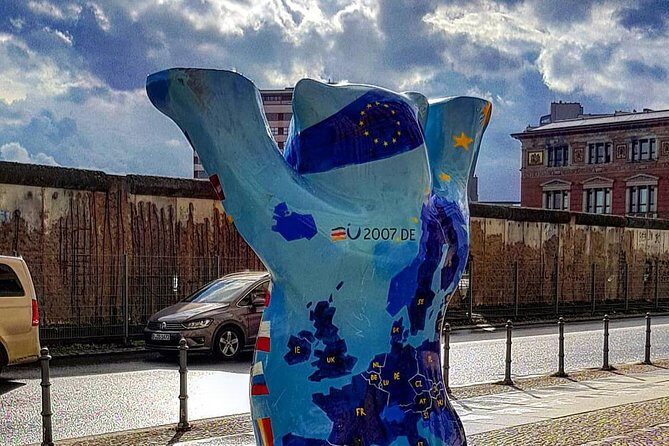
Potsdamer Platz is your first reality check. A spot that once sat close to one of the city’s most tense border areas became a high-rise business and entertainment quarter. Your guide frames it as a transformation you can still read in the city’s layout: what used to be desolate or cut off becomes a place where Berliners gather again.
You’ll spend around 15 minutes here. That’s short, but it’s enough to set the stage. If Potsdamer Platz is new to you, it helps to see it right at the beginning—because later stops start making more sense when you’ve already grasped that the city you see now is layered over a divided past.
A practical tip: because Potsdamer Platz is a busy central area, you may want to take a quick overview photo early, before the tour moves you along.
Stop 2: Topography of Terror and the wall fragment that survived
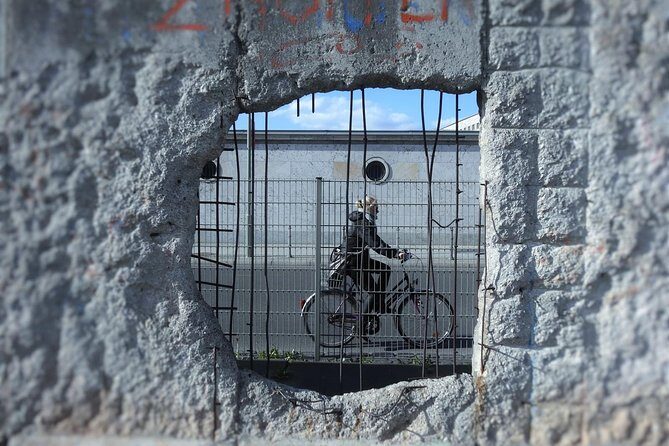
Next is Topography of Terror, and this stop is about something specific: the preserved remnants. In this area, the only surviving fragment of the wall is right alongside the former Luftwaffe headquarters.
That building detail matters. It was used during the East German period as the House of Ministries, which means the location isn’t just symbolic—it ties architecture to power. This is where the Cold War becomes less abstract. You’re not only seeing border history; you’re standing in a place shaped by East German governance.
Your guide also connects the site to escape attempts, including one of the more incredible escape stories tied to this stretch of Berlin. You’ll have about 15 minutes here, so expect the guide to focus on the “why it matters” details rather than turning it into a long museum visit.
Consideration: because this stop is dense in meaning, it can feel like information comes fast. If you like to process slowly, tell your guide. A good guide will adjust the pace without losing the story.


Stop 3: Checkpoint Charlie and the 1961 face-off
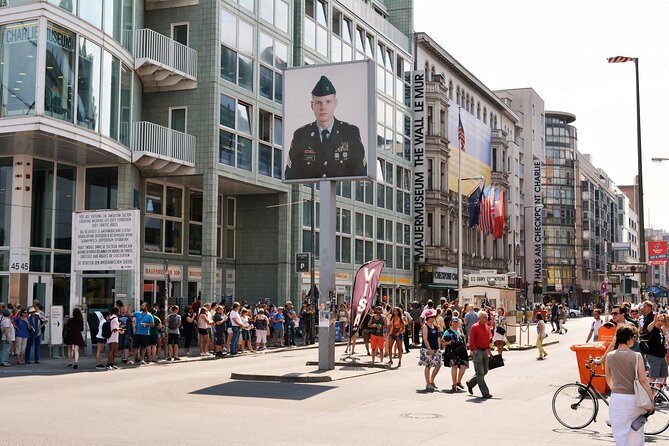
Checkpoint Charlie is the name most people recognize, but the tour keeps it grounded. You’ll hear how this checkpoint became a focal point for many failed and successful escape attempts. Then you’ll go one step deeper: the American and Soviet forces faced off here in the autumn of 1961.
Around 20 minutes is scheduled for this stop. It’s enough time to understand why the checkpoint mattered beyond the postcard image. Standing there, you can see how the Cold War worked like a system—documents, rules, surveillance, and brinkmanship—all wrapped into a tiny slice of street-level geography.
One reason I like this stop in a guided format: the story has multiple threads. Without a guide, it’s easy to remember only the famous name. With a guide, you’ll understand how many different people were trying to use (or break) the system for their own survival.
Stop 4: The GDR watch tower and why it still exists
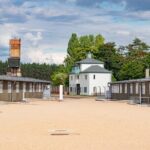
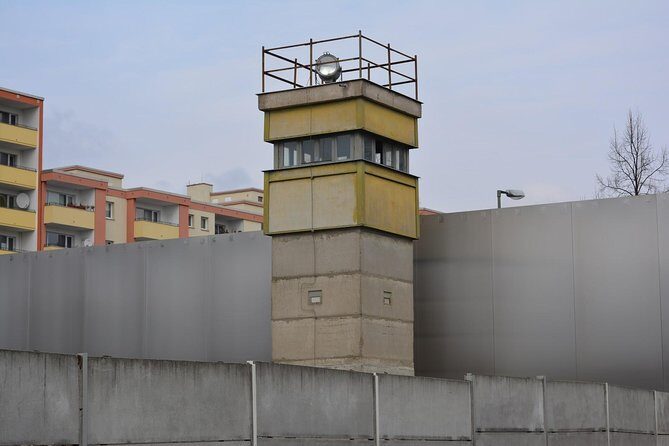
This stop is short—about 10 minutes—but it’s vivid. You’ll visit the GDR watch tower, described as one of the last BT-variant watchtowers that used to surround West Berlin. It also survived thanks to a private initiative, which is a rare and meaningful detail.
That “private initiative” part is more than trivia. It’s a reminder that history doesn’t always get preserved by default. Sometimes it takes individuals deciding the story can’t disappear. You’ll feel that when you stand next to a structure that the Cold War tried to erase or control over time.
Because this stop is brief, treat it like a stop for visuals and for the guide’s explanation. If you want extra time for photos, ask—private groups make that easier than squeezed group tours.
Stop 5: The Memorial of the Berlin Wall and the 1-kilometer story
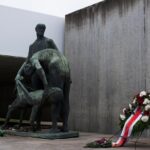
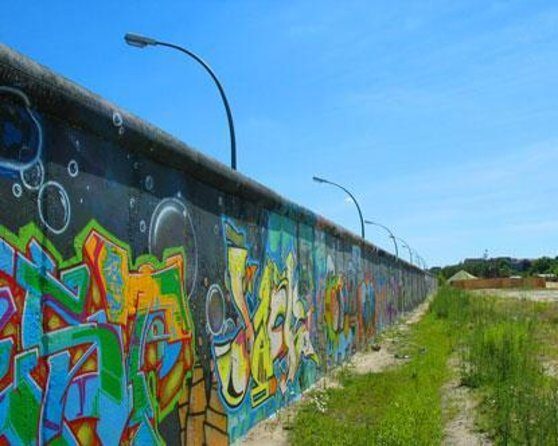
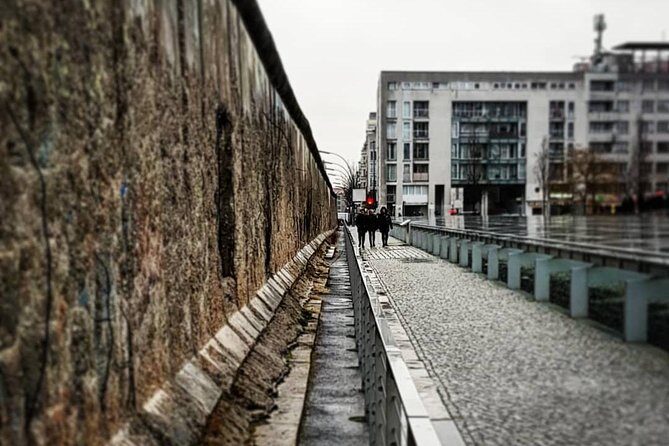
This is the heart of the tour. The Memorial of the Berlin Wall stretches over 1 km, and it includes the only preserved complete cross-section of the Berlin Wall and the Death-Strip. Your guide uses the memorial to explain what the border actually looked like on the ground—not just where it ran.
You’ll spend about 1 hour 20 minutes here, and that extra time makes sense. This site isn’t a quick stop. It’s where the Cold War becomes physical: layered barriers, controlled movement, and the harsh geometry of “where you can go” versus “where you can’t.”
You’ll also get the emotional weight tied to tragic loss and escape attempts. Berlin does memorials in a straightforward way, and this one is designed to be read. In a guided setting, you’ll understand the layout quickly, so you don’t end up wandering without direction.
A practical note: this memorial walk can be cold. Wear layers and be ready to slow down slightly if your feet get tired. Many guides build in a pacing rhythm to keep the group from getting wiped out before the end.
Guide quality is the real difference: Eugene, Reece, Paul, Cairan, and Kirin
The itinerary is strong on its own, but the guides are the reason this tour earns a 5-star reputation again and again. The names you might get include Eugene, Reece, Paul, Cairan, and Kirin—and each has a reputation for turning sites into stories you can picture.
What stands out across the guide styles is how they handle questions and how they connect politics to real people. Some guides even use family photos from the 1970s–80s to make the timeline feel closer. That might sound like a small detail, but it changes the tone from textbook to lived reality.
You’ll also notice the pacing. One guide approach includes timing stops for less busy moments, and another includes planned pauses so the group doesn’t get overheated—or frozen. In cold weather, a cafe break can be a sanity saver, and some guides use that moment to keep the tour moving without rushing.
And if you’re visiting with teens or mixed interests, the guide flexibility matters. In one case, a guide tailored the history to include Nazi-era context before zooming back into the Cold War thread, which helped students connect the dots.
Logistics tips that make the day feel easier
This tour is built for walking and interpretation. So the best “prep” is simple.
- Wear comfortable shoes with good grip. Berlin sidewalks can be slick in rain or winter.
- Bring a warm layer and a rain layer. The tour runs in bad weather; you just want to stay comfortable enough to listen.
- Keep your pace flexible. Even when the itinerary says 4 hours, you may spend extra time at a stop if the conversation is good.
- If you get tired easily, tell your guide early. Private format makes it easier to adjust without making you feel like a burden.
Also, since there’s no vehicle involved, you’re likely moving between spots at a walking pace. That’s part of the value: the geography becomes the explanation.
Who should book this tour (and who might not)
You should book this tour if you want the Wall story told in a clear chain: why Berlin was divided, how the border worked, and how people tried to escape it. History buffs will love the specificity, and first-timers will like having a guide translate street-level clues into meaning.
It also works well for families with older kids, because the guide can keep the story focused and answer questions as they come up. If your group includes someone less into history, the narrative style usually helps. Just be honest about comfort and expectations—this is not a sit-and-watch tour.
If you prefer museum-style exhibits or want long, self-paced time at each stop, you may prefer building your own route. But if you want a guided storyline in one day, this fits the bill.
Should you book the Private Behind the Berlin Wall and Cold War Berlin Tour?
If you’re choosing between a DIY Wall day and a guided storyline, I’d pick the guided tour. The stops are too meaningful to treat like a checklist. You’ll get the context that makes the scenes stick: the surviving wall fragment, the checkpoint tension, the watch tower’s survival, and the memorial’s cross-section that forces you to see the wall as a system, not just a symbol.
For the price, the value is strong because the key stops are free to enter and you’re paying mainly for expert interpretation and pacing. The only reason to skip is if your group hates walking in cold or you’d rather spend your time in ticketed museums instead.
FAQ
FAQ
How long is the Private Behind the Berlin Wall and Cold War Berlin Tour?
It runs about 4 hours (approx.).
Is this tour private?
Yes. It’s a private tour/activity, and only your group participates.
Are tickets or entry fees included for the stops?
Admission for the listed stops is free, so you generally won’t be paying entry fees at these sites.
Do you use a bus or vehicle on this tour?
No. The tour does not use vehicles, so you’ll move on foot and may use public transportation as needed.
Where do we meet, and does the tour end nearby?
You meet at Birchys Berlin Tours, Ebertstraße 24, 10117 Berlin, and the activity ends back at the meeting point.
What language is the tour offered in?
It’s offered in English.
Does the price include food and drinks?
No. Food and drinks are not included.
Can I choose a morning or afternoon start time?
Yes. Morning and afternoon start times are available for your convenience.
What’s the cancellation policy?
You can cancel for a full refund if you cancel at least 24 hours before the experience start time. Free cancellation is available, but cancellations within 24 hours of the start time aren’t refunded.