REVIEW · HAMBURG
Hamburg: Entrance to the Museum Ship Cap San Diego
Book on GetYourGuide →Operated by Cap San Diego Betriebsgellschaft mbH · Bookable on GetYourGuide
This ship runs on stories. On Cap San Diego, you get a 1960s to 1970s Atlantic voyage in your head, then prove it by exploring the bridge and the engine room. I especially liked how the ship mixes hands-on ship life with the big human story of emigrants between 1850 and 1930. One thing to consider: this is a ship layout with tight spaces and lots of stairs, so I wouldn’t pick it if claustrophobia or limited mobility is on your worry list.
I like how practical this visit feels. It’s a self-guided museum ship open daily, with a documentary and a dedicated exhibition that turn a casual walk into a real learning route. If you’re trying to get value from one day in Hamburg, this is a surprisingly strong option for the money.
In This Review
- Key highlights at a glance
- Hamburg’s Cap San Diego: a museum ship you can actually walk through
- Where to go: the ship entrance at Überseebrücke
- Your self-guided route: bridge lookout, saloon calm, and the emigrant documentary
- Hatch 2: General Cargo and Container Handling (1960 to today)
- The machine room: feel the steady pulse of the engines
- How the onboard experience really feels: orientation, crew info, and pacing
- Ticket price and time value: is $14 a good deal?
- Who will enjoy Cap San Diego most?
- Should you book Cap San Diego in Hamburg?
- FAQ
- Where is the meeting point for Cap San Diego?
- What are the museum’s opening hours?
- Is this a guided tour?
- What’s included with the ticket?
- How long is the visit valid?
- What does the visit include besides exploring the ship?
- Is the museum ship wheelchair accessible?
- Is it suitable for people with claustrophobia?
Key highlights at a glance
- Bridge-to-engine exploration: See ship life from the lookout side and the machinery side
- Emigrant history on board: A screening about the fate of emigrants from Hamburg between 1850 and 1930
- Hatch 2 exhibition: General Cargo and Container Handling with clear visuals and text
- Museum ship scale: The largest civil museum ship in the world
- Friendly onboard staff: Helpful crew members who share good information
Hamburg’s Cap San Diego: a museum ship you can actually walk through
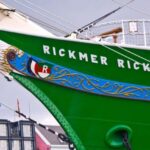
Cap San Diego is not a fake set. It’s a real, preserved cargo ship experience, built for the kind of work that required skill, routine, and nerves of steel. The ship is the last surviving vessel from a group of six fast general cargo ships built in 1961/62 for Hamburg Süd, which sailed to South America until the end of 1981. Since 1988, it’s been operating as a museum ship, which means you can explore it at human pace, from bridge to hatch and from heart to head.
What I liked most is that the experience nudges you to think like a crew member. You’re given an imaginary journey timed to the 1960s and 70s, with the feeling of crossing the Atlantic toward places like Rio de Janeiro and Buenos Aires—then returning. That framing matters because it turns scattered exhibits into a route with rhythm: lookout, cargo work, living spaces, and machinery.
And because it’s Hamburg, the ship’s local connection isn’t just decorative. You spend time on the story of emigrants leaving through the Port of Hamburg, covering 1850 to 1930. It’s a reminder that shipping wasn’t only about freight; it moved lives, too.
You can also read our reviews of more museum experiences in Hamburg



Where to go: the ship entrance at Überseebrücke
Go straight to the ship entrance at the end of Überseebrücke. That’s simple, and it saves you time when you’re sightseeing elsewhere in Hamburg.
Once you’re there, you’ll quickly see the point of the design: it’s built to be toured self-guided. That means you’re not waiting for a group schedule. You can pause for the documentary when you’re ready, linger in the exhibition spaces, and then walk the ship again if you want to compare what you saw from different areas.
For planning, keep the hours in mind: the museum is open 10 AM–6 PM daily. Since it’s open every day, it’s also easier to slot into a day when you don’t want to chase a very specific time window.
Your self-guided route: bridge lookout, saloon calm, and the emigrant documentary
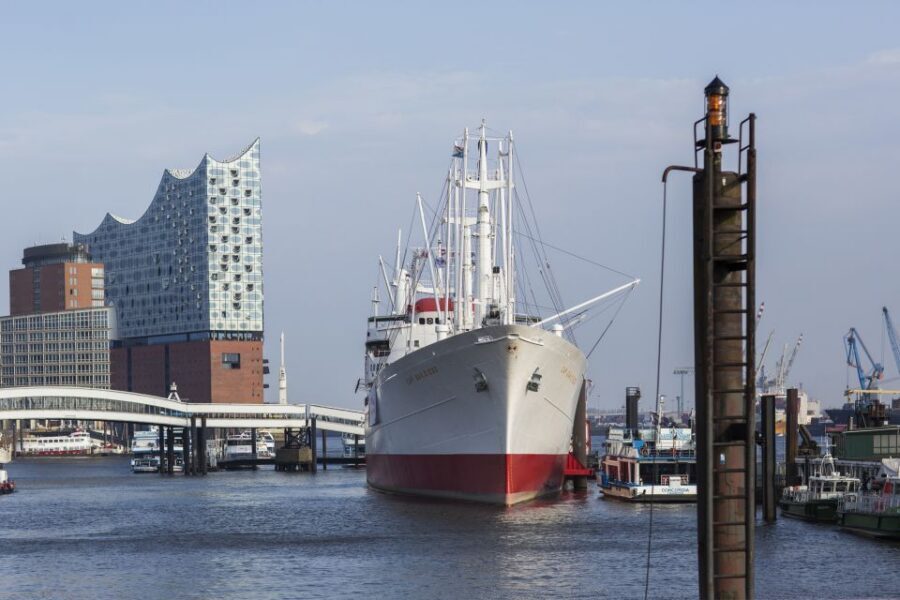
This is a museum ship you explore on your own. There’s no live guide walking you through, which is part of the charm and part of the responsibility. If you like wandering with purpose, you’ll be fine.
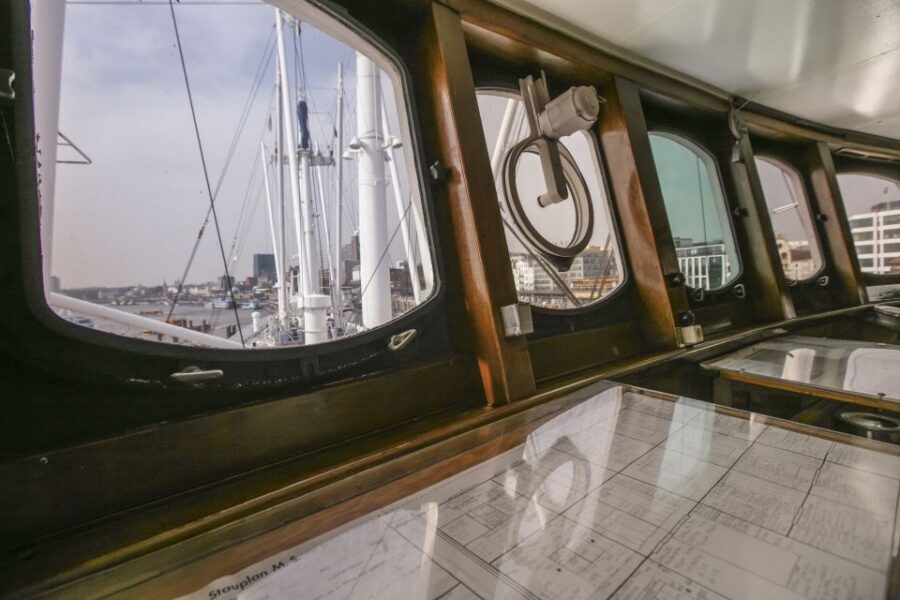
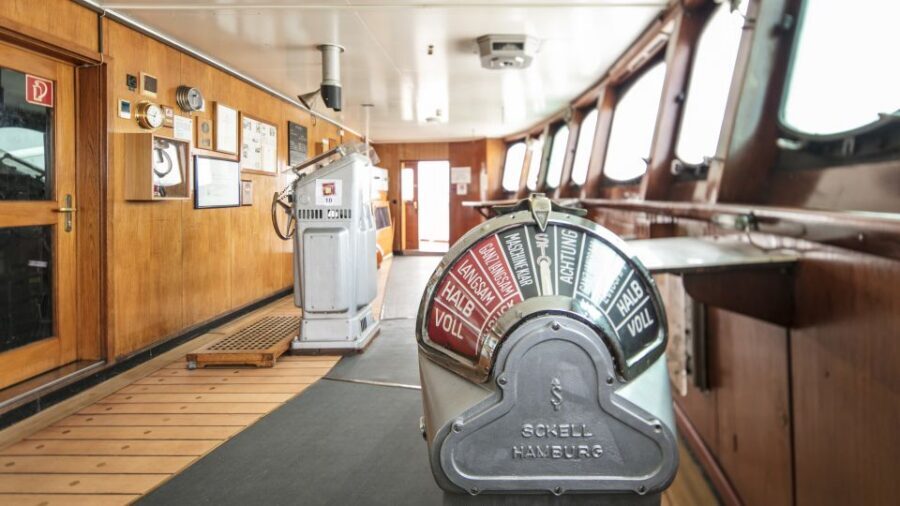
Your visit starts with the ship’s theme: imagine the 1960s and 70s voyage across the Atlantic. You’ll be able to move through spaces that represent roles on board. The bridge lookout area is the most immediate way to get that feeling. You can experience the viewpoint of someone scanning the route, not just someone viewing a ship from a distance.
Then, shift gears to calmer, passenger-facing life. The saloon is part of the “living onboard” picture, and it’s where you can relax while on your fun-filled voyage scenario. The sound environment is part of the experience too, with light music mentioned as part of the onboard atmosphere.
The documentary is a key anchor in the middle of the self-guided flow. During your visit, watch A Suitcase Full of Hope – Emigration Port of Hamburg, which focuses on the fate of emigrants between 1850 and 1930. I like this placement because it stops you from treating the ship as only an engineering object. Suddenly, cargo and passage connect to real people and real outcomes, which makes the rest of your walking feel more meaningful.
If you select the audio guide option, it can help keep your pace steady and your attention on what you’re looking at, instead of turning the visit into a series of random rooms.
Hatch 2: General Cargo and Container Handling (1960 to today)
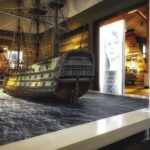
One of the best uses of your time here is Hatch 2. That’s where you’ll find the permanent exhibition General Cargo and Container Handling, which clearly explains the history of sea freight transport from 1960 to today.
This is where the ship’s engineering story gets translated into something you can understand quickly. The exhibition uses historical images and explanatory texts to connect the ship you’re standing in to the bigger changes in how goods moved around the world. Since the ship operated in an era right in the middle of containerization and modernization, the subject isn’t abstract—it’s tied directly to the vessel’s purpose.
What I found valuable is that this exhibition doesn’t just list facts. It gives you context that you can then look for while walking elsewhere on the ship. After Hatch 2, you’re more likely to notice how cargo handling and ship layout were designed around efficiency and workflow.
If you’re the type who enjoys museums but hates long, slow lectures, you’ll probably appreciate this format: clear sections, lots of visuals, and a topic that links the past to the present.
The machine room: feel the steady pulse of the engines
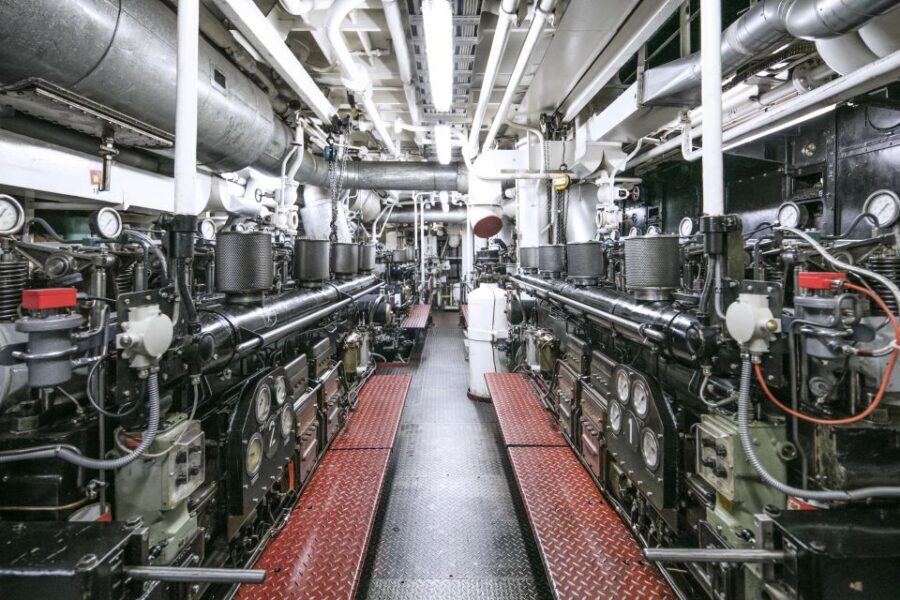
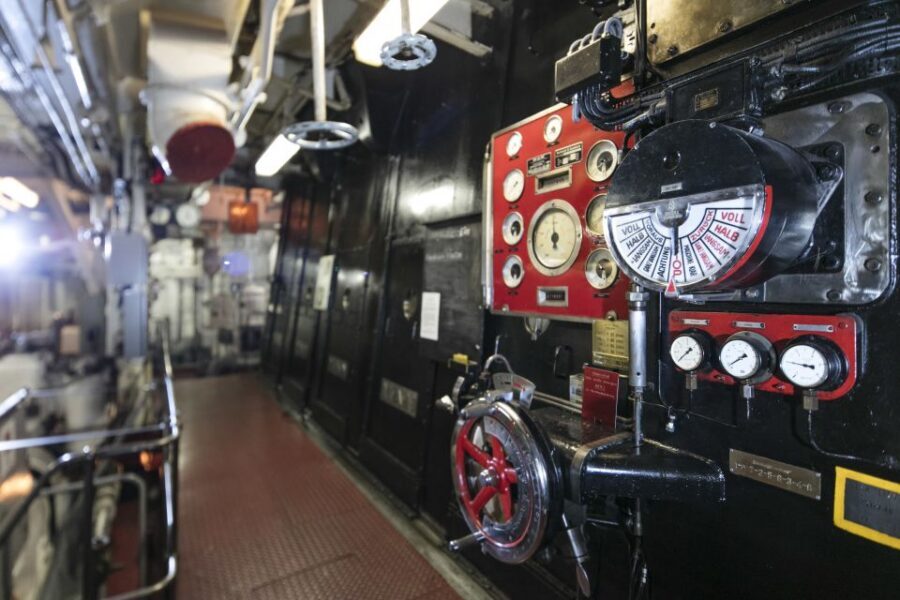
If you want the most memorable moment of the day, it’s the engine side of the ship. The machine room is where you go from seeing ship history to sensing ship life. You’ll be deep within the Machine Room, placed so you can feel the steady pulse of the engines.
This part of the experience is exactly why Cap San Diego works as a museum ship rather than a static display. Seeing the outside of a ship tells only half the story. The engine room tells the other half: the constant work that powered voyages, the physical reality behind schedules and routes.
It also changes how you interpret the rest of the ship. When you’ve been close to machinery like this, the bridge lookout and cargo spaces feel less like “rooms” and more like a system. You start thinking about movement, timing, and how every part of the ship has a job.
Important reality check: the machine room experience is not recommended for people with claustrophobia or mazeophobia. The spaces are part of the point, but that also means this is one of those visits where you should be honest with yourself about comfort and mobility.




How the onboard experience really feels: orientation, crew info, and pacing
Because this is self-guided, the ship’s layout is your map. I found that you can get oriented fast once you’ve taken a few careful steps and followed the intended flow between major areas. Wayfinding can be improved, but it’s not so confusing that you lose the plot for long.
A standout detail is the tone of the staff. The crew is described as extremely kind and giving good information. Even though there’s no live guide, it helps to know that help is available if you’re unsure where to go next or what you’re looking at in a particular section.
Pacing is also in your control. You can watch the emigrant documentary earlier to set context, or save it to give meaning after you’ve already walked the ship. Either way, the structure tends to keep you from feeling like you’re just circling for time.
If you like to linger, this ship rewards that instinct. The attraction isn’t one single moment; it’s a chain of moments: bridge, saloon, documentary, Hatch 2, then machinery.
Ticket price and time value: is $14 a good deal?
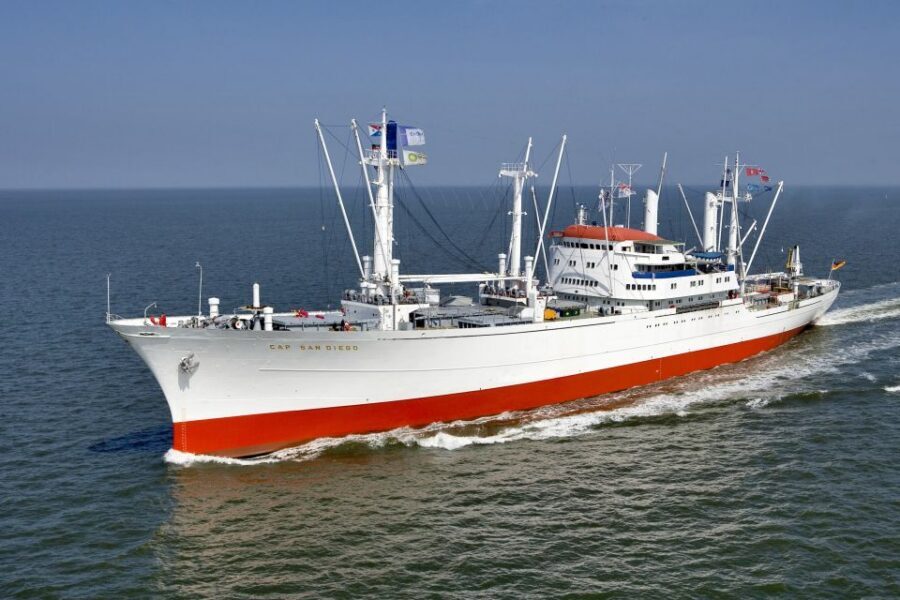
At $14 per person, Cap San Diego is priced in a way that makes it easier to justify even if you only have one day to spend on “something different.” You’re paying for more than a single exhibit. You get a full museum ship experience that includes multiple distinct zones: the bridge and viewpoints, a saloon space with atmosphere, the emigrant documentary, and a specific permanent exhibition in Hatch 2, plus access to the machine room.
The other value point is that it’s open daily from 10 AM–6 PM. That gives you flexibility. You’re not locked into a tiny window where the timing has to be perfect. And because it’s self-guided, you’re not paying for a rigid group format; you’re paying for independent access to the ship’s spaces and information points.
If your Hamburg day is packed, the one-day timing works well: you can treat this as a focused block of your day without needing an entire evening program. Just plan to spend enough time to see the main areas rather than sprinting through, because the ship’s power comes from moving between zones.
Who will enjoy Cap San Diego most?
I think this visit is best for travelers who like tactile learning—people who don’t just want to read a sign, but want to stand where the action happened.
You’ll probably enjoy it if:
- You’re curious about maritime history but want it tied to a real ship layout.
- You like social history as well as engineering, especially stories connected to migration and the Port of Hamburg.
- You want a structured self-guided experience with obvious “anchor stops” like the documentary and Hatch 2 exhibition.
It’s less ideal if you need wheelchair access or have mobility limitations. The museum isn’t wheelchair accessible and involves multiple flights of stairs. Also, if tight spaces trigger anxiety, skip it due to claustrophobia and mazeophobia concerns.
Should you book Cap San Diego in Hamburg?
Yes, I’d book it if you’re looking for a high-value, one-day experience that’s truly different from typical city museums. The reason is simple: you get both the human story and the ship’s technical reality, all in one place.
If you can handle stairs and don’t worry about tight spaces, Cap San Diego is one of the strongest ways to spend a day in Hamburg that isn’t just about viewpoints. Pair it with your other Hamburg sights and treat it as your “hands-on history” anchor.
If you do have mobility needs or claustrophobia, it’s better to choose a different type of museum where access is easier and spaces are wider.
FAQ
Where is the meeting point for Cap San Diego?
You should go directly to the ship entrance located at the end of Überseebrücke.
What are the museum’s opening hours?
The museum is open 10 AM–6 PM daily.
Is this a guided tour?
No. It’s a self-guided tour with no live guide.
What’s included with the ticket?
The entrance ticket is included, and an audio guide is included if you select that option.
How long is the visit valid?
The ticket is valid for 1 day. Starting times depend on availability.
What does the visit include besides exploring the ship?
During your visit, you can watch the documentary A Suitcase Full of Hope – Emigration Port of Hamburg and see the permanent exhibition General Cargo and Container Handling in hatch 2.
Is the museum ship wheelchair accessible?
No. It is not wheelchair accessible and involves multiple flights of stairs.
Is it suitable for people with claustrophobia?
No. It is not recommended for people with claustrophobia or mazeophobia.