REVIEW · HAMBURG
Ticket for the Emigration Museum BallinStadt Hamburg
Book on Viator →Operated by BallinStadt Auswanderermuseum Hamburg · Bookable on Viator
Emigration in Hamburg hits close to home. At BallinStadt Emigration Museum Hamburg, you walk through three historic houses and follow stories of migration across four eras, using an English audio guide. It’s a smart, hands-on way to turn big history into something you can actually process.
I especially like the museum’s interactive approach. You can play games, search your own genealogy in the family research center, and keep the story moving without feeling like you’re stuck reading walls of text. I also appreciate the kid-friendly touches, including the museum rat Jette designed for little ones.
One thing to consider: the museum’s story covers migration broadly, not only emigration from Hamburg before 1934. If you’re expecting the earlier, more narrow focus, you may find the framing feels wider than that. Still, the pre-1934 Hamburg emigration thread remains a core part of the experience.
In This Review
- Key highlights you’ll care about
- BallinStadt’s three-house setup in the heart of Hamburg
- Four eras, one audio guide: keeping the timeline straight
- House 1: Albert Ballin and the Hamburg emigration focus
- Houses 2 and 3: the emigrant journey as a lived experience
- A quick heads-up on the museum’s scope (pre-1934 vs. broader migration)
- Family research center: genealogy search that makes the exhibits personal
- Interactive games: learning with your hands (not just your eyes)
- Museum rat Jette: a smart way to include little kids
- Price, time, and value for a 1.5-hour English visit
- Opening hours and practical timing in Hamburg
- Who should book this museum, and who might want to reconsider
- Should you book BallinStadt Emigration Museum Hamburg?
- FAQ
- How long does the BallinStadt Emigration Museum visit take?
- Is the experience available in English?
- What is included with my ticket?
- What are the opening hours?
- Are service animals allowed?
- Is the ticket refundable?
Key highlights you’ll care about

- Three houses and 2,500 square meters make this feel like a real walk-through journey, not a quick stop.
- Four eras guided by an English audio guide keep the timeline clear.
- Albert Ballin’s connection to Hamburg’s emigration halls anchors the museum in a specific place.
- Interactive games and genealogy searching help you personalize the stories.
- The museum rat Jette adds an easy, playful entry point for families with young kids.
BallinStadt’s three-house setup in the heart of Hamburg

BallinStadt is set up like a route, not a single exhibit hall. You spend your time moving through three separate houses, spread across about 2,500 square meters, which helps the experience feel like an unfolding journey. In practice, that structure matters: you get natural breaks, and you’re not trying to absorb everything in one crowded room.
The museum is tied to Hamburg’s emigration story, but it’s not frozen in time. The content is designed around people’s motives—war, hunger, persecution, or the simple pull of adventure and a better life—and those reasons are treated as timeless. That makes it easier to relate the past to present-day movement without turning it into a lecture.
You’ll want to plan for about 1 hour 30 minutes of museum time. That’s long enough to take the audio guide seriously and still short enough that it won’t feel like a marathon if you’re traveling with children or you’re coming off a busy day.
A few more Hamburg tours and experiences worth a look



Four eras, one audio guide: keeping the timeline straight
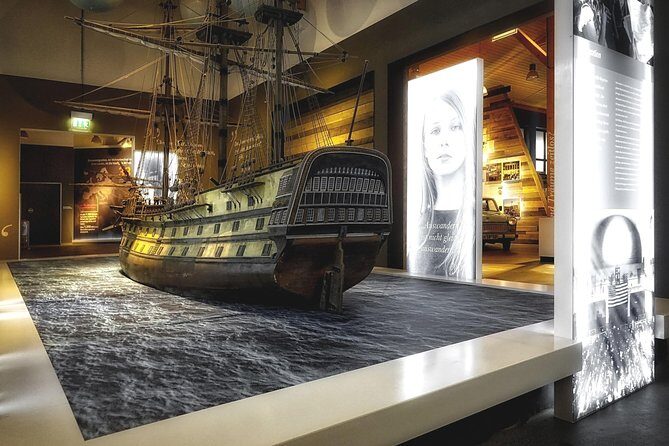
The museum’s biggest storytelling tool is its audio guide, which carries you through migration and emigration across four distinct eras. This is a real advantage. When history is spread across multiple floors and rooms, audio guidance keeps you from getting lost in the details.
Here’s what that means for you while you’re there: instead of bouncing randomly between displays, you follow a line. The audio guide turns the visit into a sequence, so you can connect the “why” of migration with the “how” of travel, processing, and arrival. It also gives you context to interpret what you’re seeing in each house.
English is available, so if you’re not comfortable reading German labels for the entire visit, you can still get the full experience. And because it’s self-guided with audio, you can pause, replay, or speed up depending on how you like to travel.
House 1: Albert Ballin and the Hamburg emigration focus
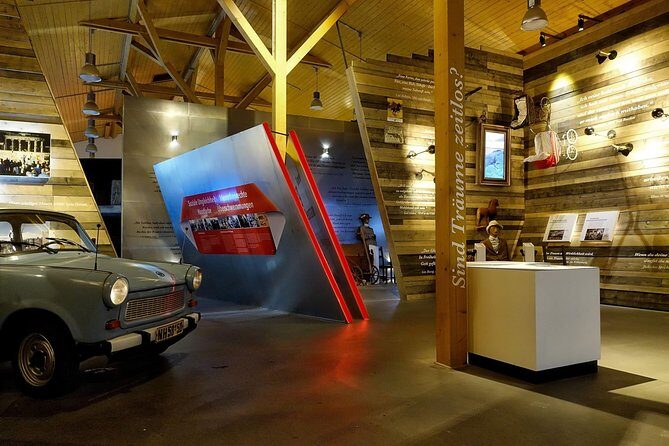
Your main stop starts at the core museum area dedicated to Hamburg’s emigration story. The museum centers on emigration via Hamburg from 1850 to 1934, and it builds that theme through its architecture and exhibits across the first house. This is where the museum’s grounding in Hamburg’s emigration halls becomes most obvious.
A key name you’ll run into here is Albert Ballin, the founder associated with the former emigration halls in Hamburg. That matters because it ties the story to a specific person and a specific system, not just abstract “migration history.” When you understand that there was an organized infrastructure behind departures—routes, paperwork, processing, and logistics—it makes the journey feel more real.
The museum also frames emigration as a mixture of dreams and forced choices. That blend is important for setting expectations. You’re not only learning about departures as a neat timeline; you’re seeing them as a human decision under pressure, with hopes mixed in alongside fear.
Houses 2 and 3: the emigrant journey as a lived experience
After the first house, you move into the next stages of the journey. The museum is designed so you tour three houses that together showcase how emigrant travel unfolded—from motivations, to movement, to what people carried with them and what they left behind.
A practical benefit of this layout is flow. Instead of treating each display as a standalone fact, you get a sense of movement through stages. That makes it easier to remember what you saw because it’s organized like a route.
Also, this is where the museum leans heavily into making it interactive. You’ll find games and activities built into your path. And there’s a “this could be you” element too, because you can search your own genealogy in the family research center.
For many people, that’s the turning point in the visit. The museum shifts from you watching history to you trying to connect your own family story to the bigger pattern of movement. Even if you don’t find a match right away, the process itself gives you a better sense of how genealogical research works.
A quick heads-up on the museum’s scope (pre-1934 vs. broader migration)
One fair caution: the museum’s overall focus is migration as a whole, not just emigration via Hamburg before 1934. That broader framing is part of the museum’s newer concept, and some visitors who loved the older, narrower version may feel the emphasis is less exclusive.
That said, the pre-1934 Hamburg emigration thread is still central. If your goal is specifically the years before 1934, plan to spend extra attention in the areas devoted to that era—especially within the content of House 1 and parts connected with House 2. The museum is set up to include that story as a major strand, not a side note.
You can also read our reviews of more museum experiences in Hamburg






Family research center: genealogy search that makes the exhibits personal
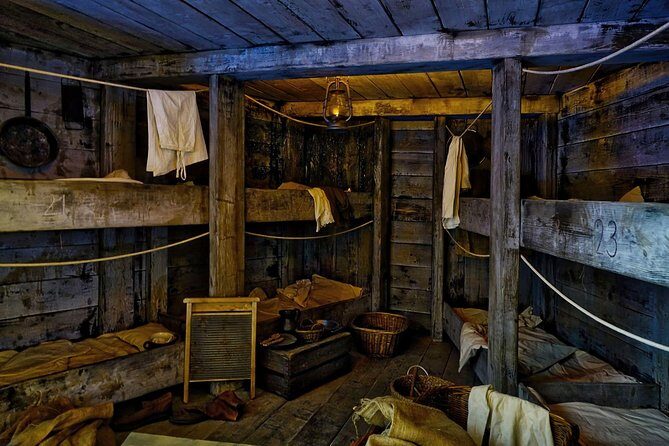
If you like history but also like personalization, you’ll probably enjoy the family research angle most. The museum invites you to search your own genealogy as part of the visit. That turns the museum from a one-way learning experience into something more like problem-solving.
In practical terms, this kind of activity helps you focus. You’re not just reading about people leaving Hamburg. You’re asking, in real time, questions like: could my ancestors be part of these records? Even if the answer isn’t immediately obvious, you’re training your attention to look for clues the way researchers do.
This is also where the visit becomes more kid-friendly without dumbing anything down. Families can treat genealogy searching as a game: compare names, look for possible matches, and discuss what you’d need to confirm. It’s a different kind of “museum learning,” and it suits many ages.
Interactive games: learning with your hands (not just your eyes)
BallinStadt doesn’t rely only on plaques and dioramas. It builds in interactive games across the experience, so you can take a break from passive reading while still moving through the story.
That design choice is practical for your attention span. After a long travel day, it’s easy for museum visits to feel heavy. Interactivity helps keep momentum, and it also gives you something to do besides check your phone every two minutes.
The games also support a broader theme: migration isn’t a single moment. It’s a series of actions, choices, documents, and decisions. When you do something hands-on, those steps become easier to visualize.
Museum rat Jette: a smart way to include little kids
If you’re traveling with kids, the inclusion of the museum rat Jette is a real plus. The museum offers content that helps little ones engage, and it’s not just “look at this object” kid entertainment.
What works here is the tone. A story with an approachable character gives kids permission to explore without getting overwhelmed. It also lets parents spend less time translating every label line-by-line, because the museum provides a structure for younger visitors to participate.
For families, this can turn a historically serious museum into something you can enjoy together. Even if your kids don’t absorb every historical detail, they can still track the overall idea: people leave home for reasons, travel, and start a new life somewhere else.
Price, time, and value for a 1.5-hour English visit
The ticket cost is $15.62 per person, and the visit runs about 1 hour 30 minutes. For Hamburg, that price lands in a sensible zone for a museum ticket—especially because this one includes audio guidance and multiple houses rather than a single-room exhibit.
You also get admissions included with the ticket you buy, so you’re not stuck guessing about add-ons once you arrive. And since it’s offered in English, you can count on getting the main story without needing perfect German.
One more value tip: this is commonly booked about 11 days in advance. That doesn’t mean you need to book a year ahead. But it does suggest it’s popular enough that you shouldn’t wait until the last minute, particularly if you’re traveling during busy weeks.
Opening hours and practical timing in Hamburg
BallinStadt is open Tuesday through Sunday from 10:00 AM to 6:00 PM during the listed operating dates. With a typical duration of about 1 hour 30 minutes, you’ll usually have a lot of scheduling flexibility.
If you want a smoother visit, aim for late morning or early afternoon. You’ll have enough time for the audio guide and the interactive activities without feeling rushed toward closing time.
The museum is also described as near public transportation, which is helpful in a city where transit planning can save you time and energy. Service animals are allowed, and the experience notes that most travelers can participate—good signals for families and mixed-age groups.
Who should book this museum, and who might want to reconsider
Book BallinStadt if you want a migration museum that teaches through stories, movement, and interaction. I think it’s a strong choice for families because of museum rat Jette, and it’s also a good fit if you like history that connects to your own identity—especially with the genealogy search.
You might want to manage expectations if you’re laser-focused on one narrow slice of the past, like only the emigration via Hamburg before 1934. The museum’s broader migration framing is intentional, and the newer concept reaches beyond the older version’s narrower storyline. Still, that pre-1934 Hamburg thread remains central, so you’re not walking into a totally different subject.
Also, if you dislike audio guides in general, this might feel like more structure than you prefer. The audio guide is a key part of keeping the four eras straight, so you’ll get the best results if you’re willing to use it.
Should you book BallinStadt Emigration Museum Hamburg?
I’d book it if you want an easy-to-handle museum visit with real structure: three houses, a clear four-era timeline, and interactive learning that makes the topic feel human. At $15.62 and about 90 minutes, it’s good value for the amount of content you cover, and the English option is a plus.
If your goal is family history and you enjoy hands-on learning, the family research center and interactive games make it especially worthwhile. And if you’re bringing kids, the museum rat Jette concept is a practical way to keep young visitors engaged without losing the historical focus.
FAQ
How long does the BallinStadt Emigration Museum visit take?
The visit is about 1 hour 30 minutes (approximately).
Is the experience available in English?
Yes. The tour is offered in English.
What is included with my ticket?
Your admission ticket is included.
What are the opening hours?
BallinStadt is open Tuesday through Sunday from 10:00 AM to 6:00 PM (during the listed operating period).
Are service animals allowed?
Yes, service animals are allowed.
Is the ticket refundable?
No. This experience is non-refundable and cannot be changed for any reason.
If you want, tell me your travel month and whether you’re visiting with kids, and I’ll suggest a good time window to plan around opening hours and the 1.5-hour pace.