REVIEW · BERLIN
Berlin: Sachsenhausen Concentration Camp Tour in English
Book on Viator →Operated by Insider Tour Berlin · Bookable on Viator
Sachsenhausen will change how you see history. This English tour from Berlin takes you out to the Sachsenhausen Memorial and Museum near Oranienburg, where you walk through the very places tied to Nazi terror. You’ll hear what happened there in clear, respectful language, including the brutal machinery of imprisonment and execution at Sachsenhausen Memorial with an English guide.
Two things I really like. First, you’re not just looking at buildings. You get a guide who can explain how the camp worked, why certain sites mattered, and how the story fits into the Third Reich. Second, the stops are specific: punishment cells, execution areas like Station Z, and the gas chamber and crematorium, not vague generalities.
One drawback to plan for: it’s a long walking day in a former prison site that won’t feel like a normal sightseeing stop. Even with a guide keeping things moving, you’ll want warm layers and sturdy shoes, and you should be ready to go without a proper meal mid-tour.
In This Review
- Key highlights worth centering your day on
- Berlin to Oranienburg: the train rhythm that keeps you on schedule
- A short Oranienburg walk that connects the town to the camp
- Inside Sachsenhausen: walking the camp designed for total control
- Station Z and the execution system: where ideology became engineering
- The gas chamber and crematorium: confronting the industrial scale
- Punishment cells, infirmaries, and pathology: how cruelty worked day to day
- The return trip to Berlin: time to absorb, not just escape
- How much is it, and is it worth it?
- Logistics that actually matter: walking, weather, and hearing your guide
- Who this tour suits best
- Should you book Sachsenhausen from Berlin?
- FAQ
- How long is the Berlin to Sachsenhausen tour?
- Where do I meet for the tour?
- Is the tour offered in English?
- Is the entrance fee to the Sachsenhausen memorial included?
- What sites will we see inside Sachsenhausen?
- Do I need extra public transport tickets?
- Are food and drinks included?
- What walking level should I expect?
- Is there a group size limit?
- What is the cancellation policy?
Key highlights worth centering your day on
- Licensed, memorial-trained English guidance that keeps the tone respectful while still being direct.
- Exact camp landmarks: old barracks, prison and torture cells, Station Z, the gas chamber, crematorium, and more.
- A focus on how the ideology operated, starting from early political prisoners and widening to people targeted as racially or biologically inferior.
- Small group feel (maximum 29), which makes questions and pacing easier.
- A built-in Berlin-to-Oranienburg rhythm with a train out and back so you’re not stuck solving transit while thinking about heavy history.
Berlin to Oranienburg: the train rhythm that keeps you on schedule
You start at Reichstagufer 17, 10117 Berlin, and you’ll find your group near major transit connections in the Friedrichstraße area. Plan to arrive about 15 minutes early, since this kind of trip runs on a tight timeline. The tour is about 5 hours 30 minutes total, and the structure is simple: meet, train out, walk the town briefly, then the long camp visit, then train back.
The ride itself matters more than you might think. By the time you reach Oranienburg, your brain has already switched from Berlin sightseeing mode into something more serious and grounded. That helps when the tour starts pointing out how the camp wasn’t a sealed-off fantasy—it was part of real communities and systems.
You can also read our reviews of more tours and experiences in Berlin.


A short Oranienburg walk that connects the town to the camp
Before you get deep into the memorial site, you make a quick stop in Oranienburg for about 15 minutes. You’ll walk around the town and learn about how local people were complicit, plus you’ll see where inmates used to work.
That is a small window, but it’s a powerful one. Many first-time visitors only focus on the camp walls. This brief town segment adds context: the terror system relied on more than just guards. It relied on cooperation, profit, fear, and day-to-day willingness to look away.
Don’t expect this part to feel like a casual stroll. It’s short, but the takeaway is intentional, and you’ll want to stay mentally switched on even during the quick walk.
Inside Sachsenhausen: walking the camp designed for total control
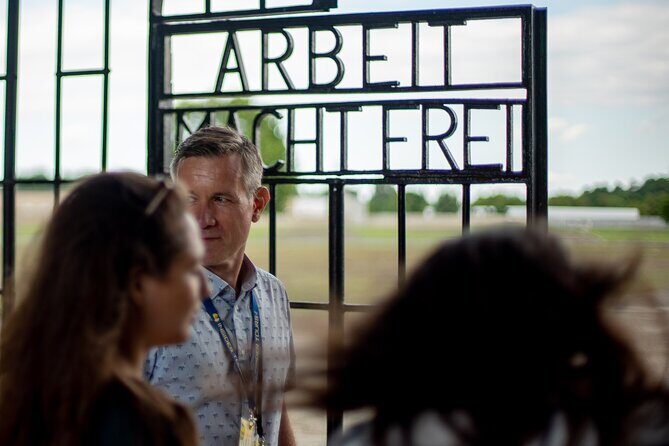
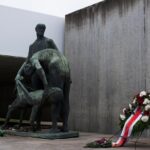
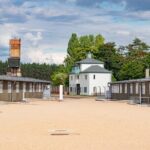
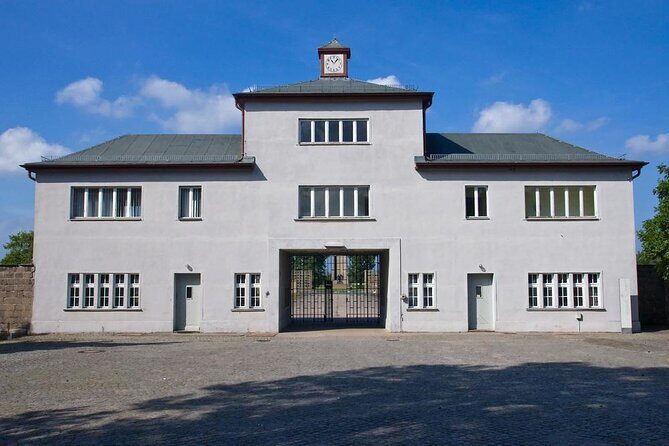
When you reach the Gedenkstätte und Museum Sachsenhausen, you’re stepping into a site that was built to function as a concentration camp. The tour walks through the interior of the first camp specifically built for that purpose, which is important. Existing structures can blur meaning; purpose-built spaces tend to show intent.
The guided circuit focuses on several major areas, including old barracks and prison spaces. You’ll also see prison cells and torture cells, the camp kitchen, and key infrastructure used to run daily life under coercion. There’s also a guard element: Tower A, the main guard tower, so you can understand the camp from a watch-and-control perspective.
One practical note: this is not a museum where you can drift. You’ll cover a lot, and your guide’s pacing helps you keep up without feeling rushed.
Station Z and the execution system: where ideology became engineering
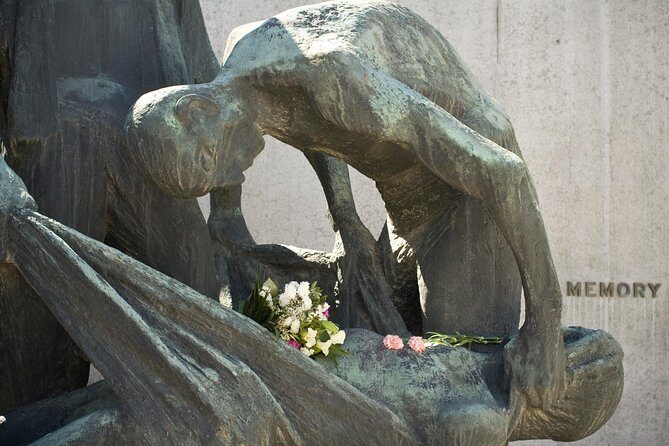
Some camp stops hit hardest because they’re specific. At Sachsenhausen, Station Z is one of those places. It’s tied to mass executions, and the guide’s job is to explain what made sites like this possible—how the camp’s internal logic turned human beings into targets and statistics.
You also visit other execution-related locations such as gallows areas and the burial pits on site. It’s heavy. It’s also clarifying, because the tour doesn’t treat atrocities as random cruelty. It shows them as systematic steps in a larger plan.
I appreciate when a guide stays factual and calm here. The best experience is one where you can absorb the facts without the story being sensationalized. Based on the strong feedback around guides like Georgia, Daniel, Tina, Will, and Mikhail, the tone tends to be clear, respectful, and built around explanation rather than shock tactics.
The gas chamber and crematorium: confronting the industrial scale
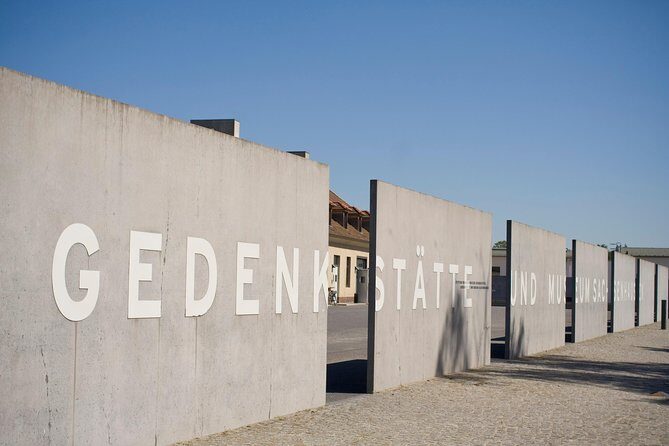
Seeing the gas chamber and crematorium is the moment where your understanding stops being abstract. The tour includes these sites inside the memorial area, so you’re not just reading about them—you’re standing where they happened.
This is the part where you should slow down mentally. If you feel overwhelmed, that’s normal. Let the guide’s structure help you process: where you are, what the site was used for, and how it relates to the camp’s role in Nazi policies of racial extermination.
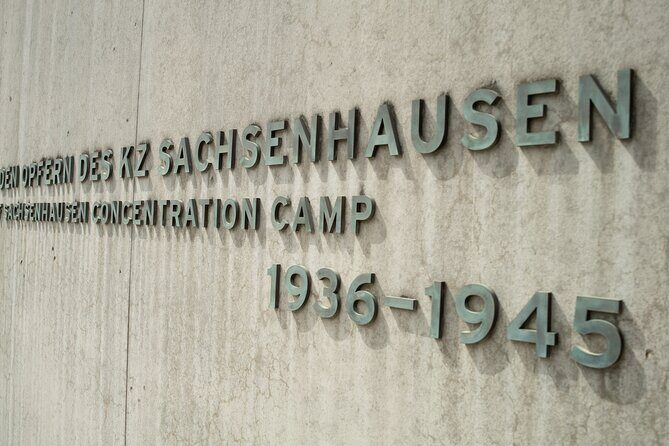
It also helps that the tour doesn’t skip the broader timeline. You’ll hear how Sachsenhausen held different groups across the years: political opponents first, then people defined as racially or biologically inferior, and later large numbers of citizens from occupied European states by 1939.



Punishment cells, infirmaries, and pathology: how cruelty worked day to day
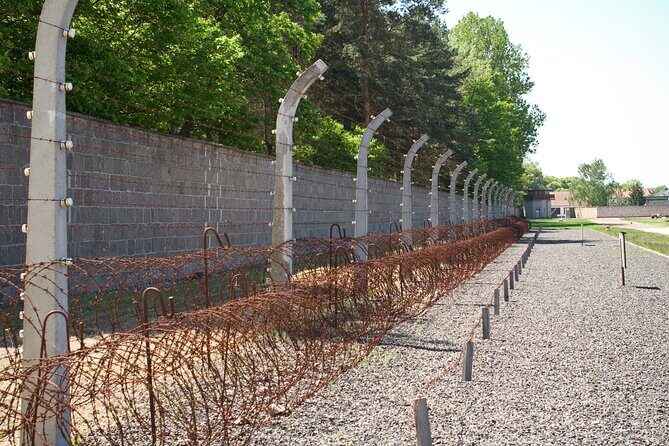
The tour doesn’t only highlight execution sites. It also goes into the spaces that reveal how people were broken before the final stages: punishment cells, and other areas connected to maltreatment. You’ll also see the infirmaries and the pathology center.
That matters because camp life wasn’t only about one event. It was about constant deprivation and institutional violence. You’ll learn that tens of thousands died from starvation, disease, forced labor, and mistreatment. The camp’s medical and scientific spaces are part of that story too, and the guide will help you understand the meaning without turning it into graphic spectacle.
If you’re the kind of traveler who likes building a full picture, this is your section. It gives you the sense of a whole system: capture, exploitation, punishment, and then the final mechanisms tied to extermination policies.
The return trip to Berlin: time to absorb, not just escape
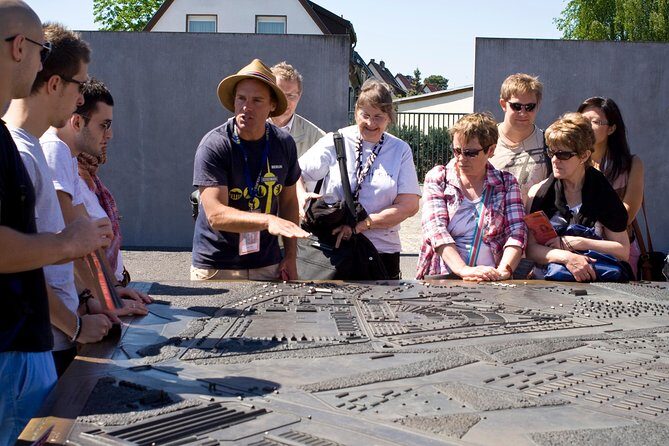
After the memorial portion, you take the train back to Berlin. In your day, that return ride becomes a small pocket of silence. You’ve spent hours in a space that forces reflection. The train gives you a chance to process, ask one more question, or just let the day land before dinner and nightlife.
One reason I like this tour format is that it avoids the stress of figuring out transit while your emotions are high. You’re set up for the round trip, and the group structure keeps you on track.
How much is it, and is it worth it?
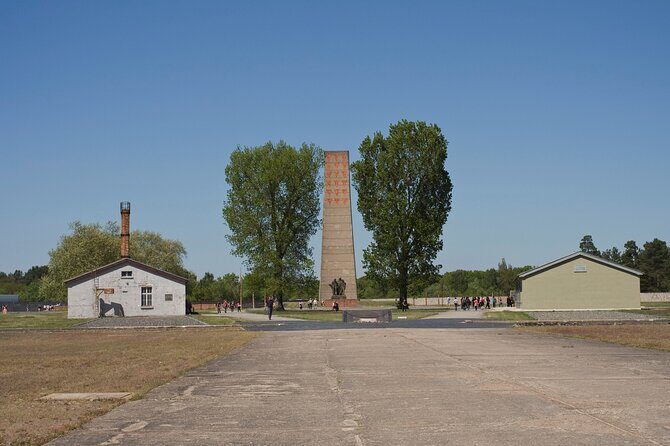
At $36.16 per person, the price is low compared with many full-day guided tours, especially when you factor in what’s included. Your ticket covers a licensed guide trained by the memorial authority, English guidance, and entry to the memorial. It also includes an insider donation: €3 donated per guest to the Sachsenhausen memorial.
What’s not included is important for budgeting. You’ll need transport tickets: a transport ticket for Berlin zones ABC (about €9 per person) and an additional ABC train ticket required for the round trip from the meeting point to the memorial (listed at €10.00 per person). Food and drinks are also not included.
So the real value equation is this: you’re paying for a guided, memorial-authority-trained interpretation of a very complex and emotionally heavy site, plus you’re covered for entry. You’re mainly paying extra for getting there and keeping fed on the day.
Logistics that actually matter: walking, weather, and hearing your guide
This is a walking tour with moderate physical fitness required. It’s not recommended if you have limited mobility or walking impairments. Even if you’re fine physically, you should expect the memorial grounds to be cold in winter and exposed in many seasons, with less shelter than you’d get on a normal city walk.
I’d treat this like a “dress for discomfort” day. Wear good walking shoes and warm layers. If weather is changeable, bring an umbrella. One review-style tip that lines up with what this kind of site demands: bring food and water, because you’re on the move for a long stretch and there isn’t a comfortable built-in meal stop.
Also: while the maximum group size is listed as 29, camp tours can still have moments where you feel a little stretched for hearing. The simplest fix is practical—stay near the front or where you can see your guide clearly.
Who this tour suits best
This is a great match if you want context, not just photos. You’ll likely enjoy it most if you like getting the bigger picture of Nazi Germany and how an ideology turned into a functioning prison/extermination system.
It also works well if you care about respectful storytelling. The strongest feedback around guides highlights clear explanations, patient question-answering, and a morally grounded narrative—exactly what you need at a place like Sachsenhausen. Names that came up for standout delivery include Georgia, Daniel, Tina, Hannah, Will, Emma, Scott, Mikhail, Ariel, and Pete, all praised for being organized, engaging, and respectful with time.
If you’re traveling with kids or teens, you’ll need to judge your family’s readiness for intense historical material. This is not a casual history stop.
Should you book Sachsenhausen from Berlin?
Yes, you should book this tour if your goal is understanding, structure, and an expert-guided visit to major Sachsenhausen sites. The guide-led focus on specific locations—Tower A, Station Z, the gas chamber and crematorium, and the punishment and prison spaces—helps you learn more than you would on your own wandering.
Skip it (or choose a different format) if you hate long walking days, get overwhelmed easily by heavy subjects, or need lots of mobility support. Also keep your expectations realistic: this is a memorial visit, not a scenic outing, and the day may run cold and long.
If you can handle that, this is a strong value way to connect Berlin to one of Germany’s most important—and most difficult—historical sites.
FAQ
How long is the Berlin to Sachsenhausen tour?
The duration is approximately 5 hours 30 minutes.
Where do I meet for the tour?
The tour starts at Reichstagufer 17, 10117 Berlin, Germany. The meeting area is near public transportation.
Is the tour offered in English?
Yes. It is offered in English.
Is the entrance fee to the Sachsenhausen memorial included?
Yes. Entry in to the memorial is included.
What sites will we see inside Sachsenhausen?
You’ll walk around the camp and see areas including old barracks, prison cells and torture cells, the camp kitchen, Station Z, the gas chamber and crematorium, infirmaries and a pathology center, and Tower A.
Do I need extra public transport tickets?
Yes. You will require a Transport ticket for Berlin zones ABC (about 9 euros per person) and an ABC train ticket for the round trip from the meeting point to the memorial (listed as 10.00 euros per person).
Are food and drinks included?
No. Food and drinks are not included.
What walking level should I expect?
You should have a moderate physical fitness level, and it is not recommended for individuals with limited mobility or walking impairments. Good walking shoes are recommended.
Is there a group size limit?
Yes. The maximum group size is 29 travelers.
What is the cancellation policy?
Free cancellation is available up to 24 hours in advance for a full refund. The experience requires good weather, and if it’s canceled due to poor weather, you’ll be offered a different date or a full refund.