REVIEW · HAMBURG
Hamburg: St. Pauli 1.5-Hour Tour
Book on GetYourGuide →Operated by Landgang St. Pauli · Bookable on GetYourGuide
St. Pauli changes fast; your guide slows time. In 1.5 hours, you get a streets-and-stories tour that compares old photos and original sources to what you see today. It’s an efficient way to understand the district’s layers without getting lost in it.
I love how the tour starts with historical photos and original sources—it makes the neighborhood feel like more than just a mood. I also like that the route mixes well-known stops (like St. Pauli Church and Beatles-Platz) with lesser-known corners, so you don’t just stick to the loudest streets.
One thing to consider: this is a walking tour and it stays outdoors most of the time, so if the weather is nasty, bring the right layer. Also, it’s an orientation tour, not an inside-look at clubs.
In This Review
- Key highlights you’ll feel during the walk
- Why this 1.5-hour St. Pauli tour works (and where it doesn’t)
- Starting at Spielbudenplatz 31: the Davidwache moment
- Historical photos and original sources: the tour’s secret weapon
- Davidstraße and Hans-Albers-Platz: learning to read the streets
- St. Pauli Church and Beatles-Platz: landmarks with a purpose
- Grosse Freiheit and the back corners: the neighborhood’s side streets
- Small group size (2–12): why the pacing feels personal
- German and English guides: what language changes on this route
- Price and value: $30 for 1.5 hours in Hamburg
- What to wear and bring for a St. Pauli walk
- Who should book this tour (and who should pick something else)
- Should you book the Hamburg St. Pauli 1.5-hour tour?
- FAQ
- How long is the Hamburg St. Pauli 1.5-hour tour?
- Where does the tour start?
- How much does it cost?
- What stops are included?
- What languages is the tour offered in?
- How big are the groups?
- Is the tour wheelchair accessible?
- What are the cancellation options?
Key highlights you’ll feel during the walk
- Davidwache police station is the launch point, so you start with context fast
- Historical photos and original sources turn “history” into something you can actually compare
- Small group size (2–12) means you can ask questions without waiting
- A route through Davidstraße, Hans-Albers-Platz, St. Pauli Church, Beatles-Platz, and Große Freiheit gives you real structure
- Local resident guides know the neighborhood rhythms and the stories behind the streets
Why this 1.5-hour St. Pauli tour works (and where it doesn’t)
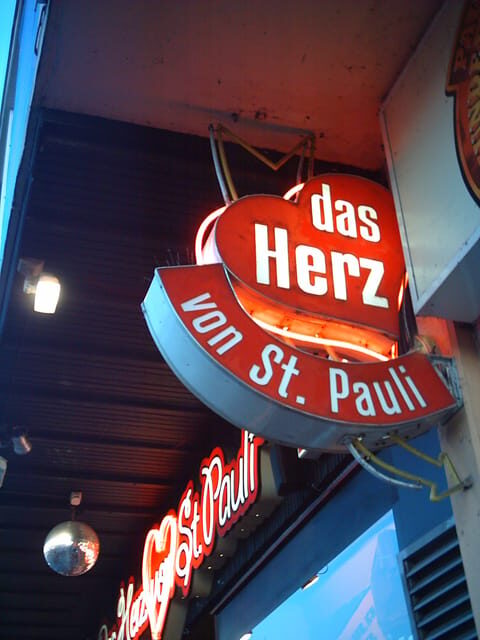
St. Pauli is one of those places where first impressions can be misleading. From a distance, it can look like one big scene. Up close, it’s a patchwork of street life, architecture, and history—much of which is easy to miss if you’re wandering on your own.
This tour is built for that exact problem. You’re not trying to “see everything.” You’re getting a guided way to understand what you’re looking at as you walk. The pacing is tight enough to fit into a day plan, but structured enough that you won’t feel like you’re just being marched around.
Where it might not satisfy everyone: if you’re looking for long, deep, indoor storytelling or special access to venues, this isn’t that. Think of it as a guided orientation—sharpen your understanding, then explore on your own with better instincts.
You can also read our reviews of more tours and experiences in Hamburg.



Starting at Spielbudenplatz 31: the Davidwache moment
You meet at Spielbudenplatz 31, in front of the Davidwache police station. It’s a smart choice for a tour because it’s a recognizable anchor point and it signals that this neighborhood has always had rules, order, and public presence—not just nightlife mythology.
Arrive a little early so you can settle in before the guide begins. From that starting point, the tour’s tone is clear: you’re going to walk, stop, and look at how the district’s story evolved.
Practical tip: wear shoes that handle cobblestones and uneven pavement. With only 1.5 hours, every minute counts, and you’ll want your feet to cooperate.
Historical photos and original sources: the tour’s secret weapon
After a brief introduction, the guide sets you up with historical photos and original sources. This is the part that makes the rest of the walking click.
Instead of hearing vague references to the past, you get visual anchors. When you later pass the same kind of street scene, it helps you notice details you’d normally skip—building edges, street alignment, and how the neighborhood “shape” seems to have held up or shifted.
You’ll also get a sense that St. Pauli’s history isn’t one single story. It’s a sequence of changes—some visible, some only explained by what the guide points out.
Davidstraße and Hans-Albers-Platz: learning to read the streets
One of the strengths of this tour is that it doesn’t rely on one grand landmark. It uses the street network itself.
On Davidstraße, your guide helps you compare what you see now with what came before, using the earlier photo and source context as your reference point. This is where you start to learn a key skill: watching how a street can feel different while still carrying the same basic role.
Then the walk continues toward Hans-Albers-Platz. A named square like this is the kind of place where you can easily pass without thinking. On this tour, it becomes a checkpoint. You’re meant to stop, look around, and notice how the area functions in the present—then let the guide connect it to the district’s larger timeline.
What you’ll take away: after a couple of stops, you’ll start “seeing like a local”—not by memorizing facts, but by understanding why certain streets and places keep showing up in the neighborhood story.
St. Pauli Church and Beatles-Platz: landmarks with a purpose
The route includes St. Pauli Church and Beatles-Platz—two stops that work well for comparison.
Churches and major squares tend to act like neighborhood milestones. They’re not just pretty buildings (or quick photo stops). They give the guide something steady to build contrast around. The tour framework encourages you to look at today’s scene and mentally lay it next to the earlier historical images.
At St. Pauli Church, pay attention to how the area around it feels compared to the surrounding streets. Your guide will steer the conversation toward what the neighborhood looked like and how the identity of the district evolved.
At Beatles-Platz, you’ll likely get a shift in scale—how St. Pauli became known beyond its immediate streets. Even if you don’t read every detail, you’ll come away with a clearer sense of why certain places in this district became recognizable symbols.
Simple strategy: at each landmark, ask yourself what seems permanent and what seems changeable. That’s what the tour is training you to notice.






Grosse Freiheit and the back corners: the neighborhood’s side streets
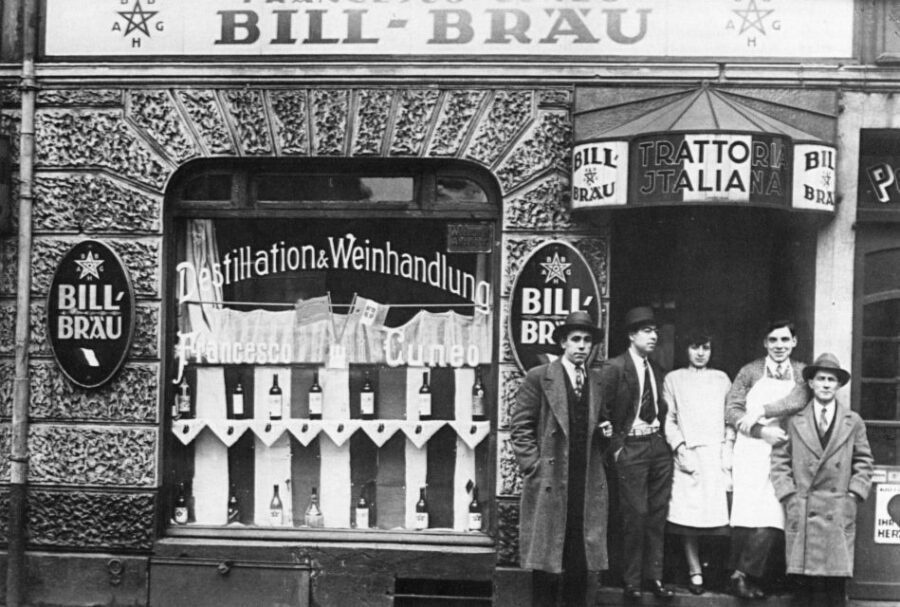
The walk also takes you to Grosse Freiheit and includes lesser-known corners of St. Pauli. This is where the tour feels most “local,” because it’s not only about the obvious highlight points.
Grosse Freiheit is a strong mid-to-late stop. By then, you’ve already been oriented by the history photos and earlier street comparisons. That means you’ll understand what to look for when you reach a place associated with the district’s public face.
Then come the side corners. The guide’s ability matters here. Because you’re not on autopilot, you can actually absorb why these less famous streets are worth your attention. A good local guide doesn’t just show you sights; they explain how the neighborhood works at human scale.
You’ll leave with a better map in your head, not just coordinates in your phone.
Small group size (2–12): why the pacing feels personal
This tour is designed for small groups (2–12 people), and that’s a real difference-maker. With fewer people, questions don’t get lost in the shuffle.
It also shapes the pacing. You can move at a comfortable walking speed while still having time at stops to ask about what you’re seeing—especially when the guide is using photos and sources to compare past and present.
One extra bonus: because the guides are mostly local residents who clearly care about St. Pauli, the answers tend to feel practical. You’re more likely to get guidance that helps you understand what to do next, instead of just a narration of what you’ve already seen.
German and English guides: what language changes on this route
The tour runs with live guides in German and English. An English option is a genuine advantage in Hamburg, because not every city tour is timed or tuned for visitors.
In practice, the language choice affects more than comfort. It affects how much you can ask. Since the tour encourages questions, having a guide who can speak your language clearly helps you get the details you actually care about—especially when you’re discussing historical photos and “what changed here.”
If you’re comfortable in either language, pick the one that lets you ask follow-ups without hesitation. That’s how you turn a good tour into a memorable one.
Price and value: $30 for 1.5 hours in Hamburg
At $30 per person for 1.5 hours, the price is fair when you think about what you’re buying: a structured introduction plus a local’s interpretation of the district.
You’re not paying just for movement through the neighborhood. You’re paying for:
- A guided route through specific points (Davidstraße, Hans-Albers-Platz, St. Pauli Church, Beatles-Platz, Grosse Freiheit)
- Historical photos and original sources that help you connect past and present
- A small group experience where you can ask questions
- Local resident storytelling, which tends to be more useful than generic facts
And because the tour is short, it fits neatly into a day without stealing half of your schedule. If St. Pauli is new to you, that efficiency matters.
Also worth noting: there’s free cancellation up to 24 hours in advance and a reserve now, pay later option. That reduces the risk if your plans are still shifting.
What to wear and bring for a St. Pauli walk
This one is simple: treat it like a neighborhood walk.
Bring:
- Comfortable shoes for uneven streets
- A layer for wind and chill (it’s an outdoor-heavy experience)
- A phone with enough battery for street photos if you like comparing images afterward
If it’s raining, don’t count on getting everything sheltered. Plan for the fact that you’ll be outside much of the time.
Who should book this tour (and who should pick something else)
This tour is ideal if:
- You want a quick, guided orientation to St. Pauli in limited time
- You like history when it’s connected to the actual street scene
- You’d rather ask questions than just read signs
- You want a small group experience instead of a huge crowd tour
It may not be the best fit if:
- You’re hoping for lots of indoor venue access
- You want a long, deep deep study that takes the whole morning or afternoon
- You’re only interested in one specific street and nothing else
In other words: it’s great for first-timers and good for repeat visitors who want a sharper understanding, not for people looking for a behind-the-scenes nightlife pass.
Should you book the Hamburg St. Pauli 1.5-hour tour?
I’d book it if you’re heading to St. Pauli for the first time and want to understand what you’re seeing without wasting time. The tour is short, the group is small, and the photo-and-source approach is the kind of method that helps you walk away with real context.
Skip it only if you’re specifically hunting for indoor access to nightlife venues or you’d rather wander freely without a planned route. Otherwise, this is a solid way to get oriented and start exploring the neighborhood with better instincts.
FAQ
How long is the Hamburg St. Pauli 1.5-hour tour?
It lasts 1.5 hours.
Where does the tour start?
The meeting point is Spielbudenplatz 31, in front of the Davidwache police station.
How much does it cost?
It costs $30 per person.
What stops are included?
The tour goes through Davidstraße, Hans-Albers-Platz, St. Pauli Church, Beatles-Platz, and Grosse Freiheit, plus some lesser-known corners.
What languages is the tour offered in?
The live guide offers German and English.
How big are the groups?
The tour runs with small groups of 2–12 people.
Is the tour wheelchair accessible?
Yes, it is wheelchair accessible.
What are the cancellation options?
You can cancel up to 24 hours in advance for a full refund, and there is a reserve now, pay later option.