REVIEW · RAVENSBURG
Der Klassiker RAVENSBURGER STADTGESCHICHTE
Book on GetYourGuide →Operated by Amt für Tourismus und Stadtmarketing · Bookable on GetYourGuide
Ravensburg’s story is written on its streets. This 90-minute city history tour turns the medieval core of Baden-Württemberg into an easy, guided timeline, with stops that include Marienplatz, Bachstraße, the town hall, the Kornhaus, the Evangelical City Church, and the upper town museum area. I like how it keeps the focus on the city’s growth as an imperial center and Lake Constance trading hub, and I like that it points you toward real medieval living quarters at the Humpis Quarter Museum. The one thing to consider: the live guide speaks German only, so plan on following along in that language.
If you want history that actually helps you look around, this is a strong pick. You’ll start at the Tourist Information area near Lederhaus, walk the preserved old town, and finish at Obertor Ravensburg, where the city’s gate-and-tower identity makes instant sense. At about $14 per person for 1.5 hours, it’s the kind of guided overview that can save you guesswork later—especially if this is your first time in Ravensburg.
In This Review
- Key highlights at a glance
- Ravensburg’s Altstadt: A City of Gates You Can Read on Foot
- How This 90-Minute Ravensburg City History Tour Fits Together
- Marienplatz and Bachstraße: Where the City’s Daily Story Starts
- Town Hall and the Kornhaus: Civic Power Meets Trade Storage
- Evangelical City Church and the Upper Town: How Elevation Changes the Feeling
- Humpis Quarter Museum District: Medieval Living Quarters, Not Just Facades
- Obertor Ravensburg: Finishing Where the City Controlled the Approach
- Price and Value: What $14 Buys in the Ravensburg Old Town
- Who Should Book Der Klassiker Ravensburger Stadtgeschichte
- Should You Book This Ravensburg City History Tour?
- FAQ
- How long is the Ravensburg City History tour?
- Where do I meet for the tour?
- Where does the tour finish?
- How much does it cost?
- What language is the live guide?
- Is the tour wheelchair accessible?
- What is included in the experience?
- Can I cancel for a refund?
Key highlights at a glance
- Old town streets that still feel medieval, with squares and buildings you can recognize as part of the city’s preserved core
- City of gates and towers framing how Ravensburg protected trade and traffic in the late Middle Ages
- Marienplatz and Bachstraße as key threads for understanding how the city was laid out
- Town hall and Kornhaus for the practical story of civic power and storage linked to trade
- Evangelical City Church and the upper town for a sense of height, structure, and changing neighborhoods
- Humpis Quarter Museum district as the stop that connects dates to daily life
Ravensburg’s Altstadt: A City of Gates You Can Read on Foot
Ravensburg works well as a walking town because so much of the medieval plan is still visible. Instead of history as a list of dates, you get history as a route: streets, squares, and buildings that show how a place functioned when commerce mattered as much as politics.
That “city of gates and towers” idea isn’t just a slogan. You can feel it when the tour takes you through the preserved core and up toward the upper town. The city layout is basically telling you where movement happened and where it was controlled. Even if you’re not hunting for every architectural detail, the guided flow helps you spot patterns: where authority sat, where goods were kept, and how the city separated everyday areas from more prominent spaces.
How This 90-Minute Ravensburg City History Tour Fits Together
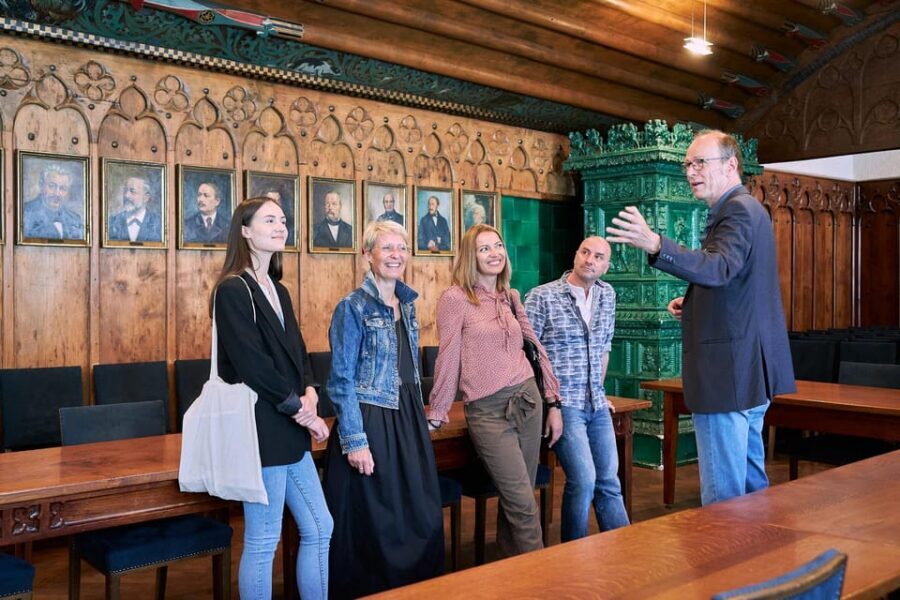
This isn’t a marathon. The timing is tight enough that you won’t lose energy—or your group’s attention—but long enough for the guide to connect the dots.
The tour runs about 1.5 hours with a live German guide. The emphasis stays on Ravensburg’s origins and the main eras up to today, so you leave with a “mental map,” not just photos. You also get a clear start and finish: meeting at the Vordereingang Tourist Information, Lederhaus, then ending at Obertor Ravensburg. That matters because it prevents the common problem with history walks: wandering back through the same streets without meaning.
One more practical note: guides for this classic city route tend to keep things lively. The common praise you’ll see is for explanations that are both humorful and flexible, so if a question pops up or the group needs a bit more time at a stop, the pace adapts.
Marienplatz and Bachstraße: Where the City’s Daily Story Starts
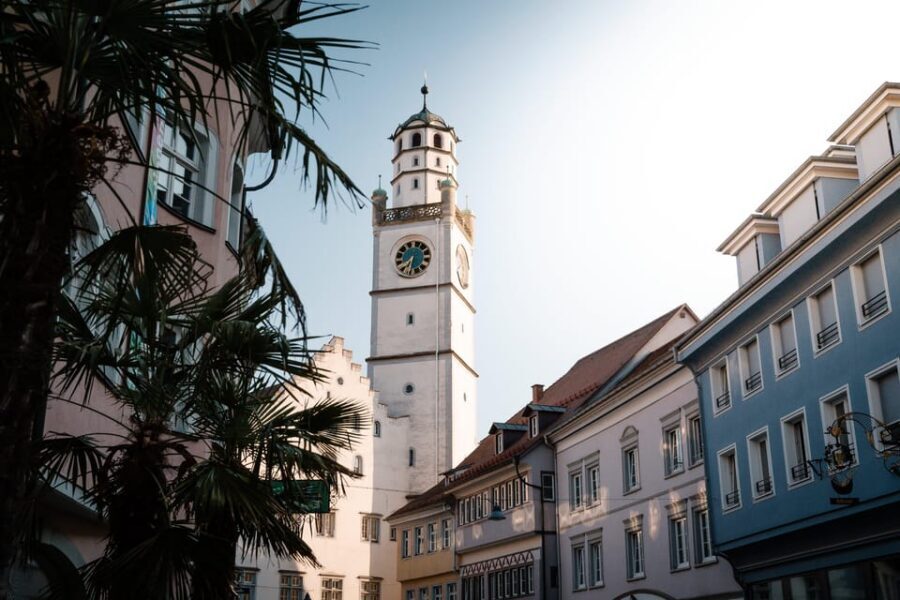
Your first big takeaway from these stops is that Ravensburg’s center wasn’t just pretty. It was functional. Places like Marienplatz and Bachstraße help you understand how a medieval town organized everyday movement—where people gathered, where the action likely concentrated, and how the urban design supported regular life.
Marienplatz is the kind of square where it’s easy to imagine civic announcements, market rhythms, and the steady flow of people tied to local business. Bachstraße then gives you a street-level feel for how the town’s shape guided walking routes and connections between important parts of the core. Even if you only catch pieces, the guide’s job is to make those pieces click into a single picture.
The benefit for you: once you’ve seen these as “story anchors,” you’ll be able to explore the rest of the Altstadt with better instincts. You’ll look at buildings and think, Oh, that’s tied to that era.
Town Hall and the Kornhaus: Civic Power Meets Trade Storage
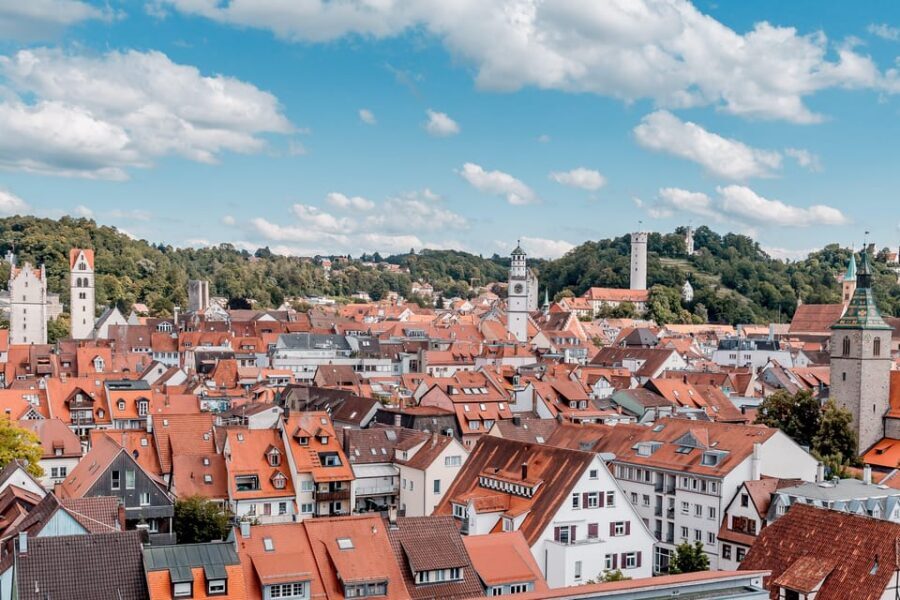
If you care about the how and why behind a historic city, the pairing of town hall and Kornhaus is smart. City hall tells you about governance and public authority. Kornhaus—literally grain-related storage— points you toward the practical engine of an imperial-era city: provisioning and trade-linked wealth.
This is where Ravensburg’s role as a key center in the Lake Constance region becomes more than a sentence. The late Middle Ages theme isn’t abstract here. The guide turns it into a picture: the city grows because commerce and trading networks make it worth building and maintaining strong systems. A town hall is where decisions happened. A Kornhaus points to what cities needed to keep people fed and businesses running.
You’ll come away with a useful lens. Instead of asking, What is this building? you start asking, What job did it do in the city’s economy? That shift makes your later sightseeing more rewarding.
Evangelical City Church and the Upper Town: How Elevation Changes the Feeling
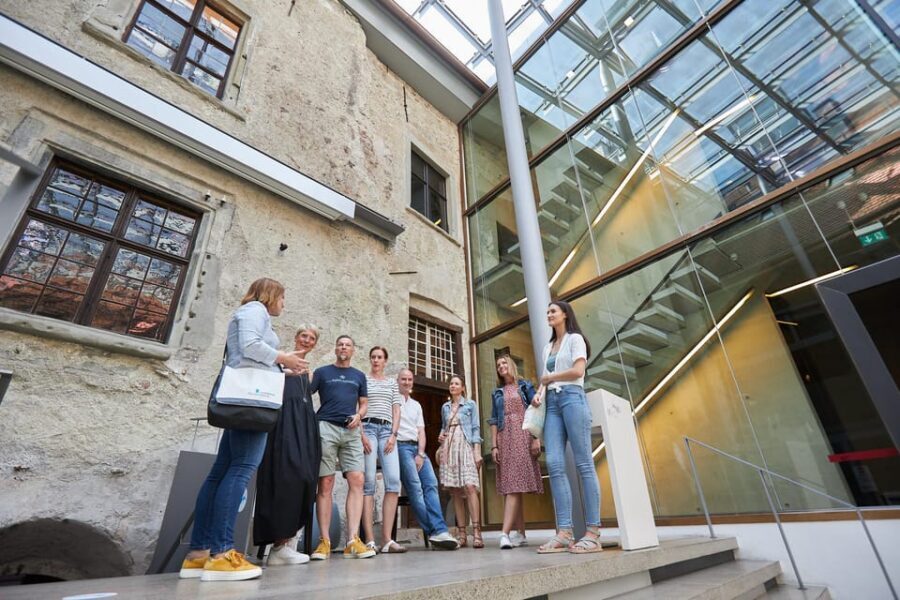
The tour doesn’t stay flat. It climbs into the upper town area, where the character of the city can feel different simply because you’re higher and the spaces are more structured.
Stops including the Evangelical City Church and the shift toward the museum district help you notice how religious institutions and prominent neighborhoods sat within the broader city story. Even if you’re not chasing architectural measurements, you can still feel the difference in scale and prominence. That matters because it shows you how Ravensburg expressed values—who mattered, where influence was visible, and how spaces were set aside for specific roles in community life.
This segment is also valuable because it sets you up for the final theme: the city’s defensive and gate identity. When you reach those gate-adjacent areas, you’ll interpret them as part of the same system that governed movement, visibility, and control.
Humpis Quarter Museum District: Medieval Living Quarters, Not Just Facades
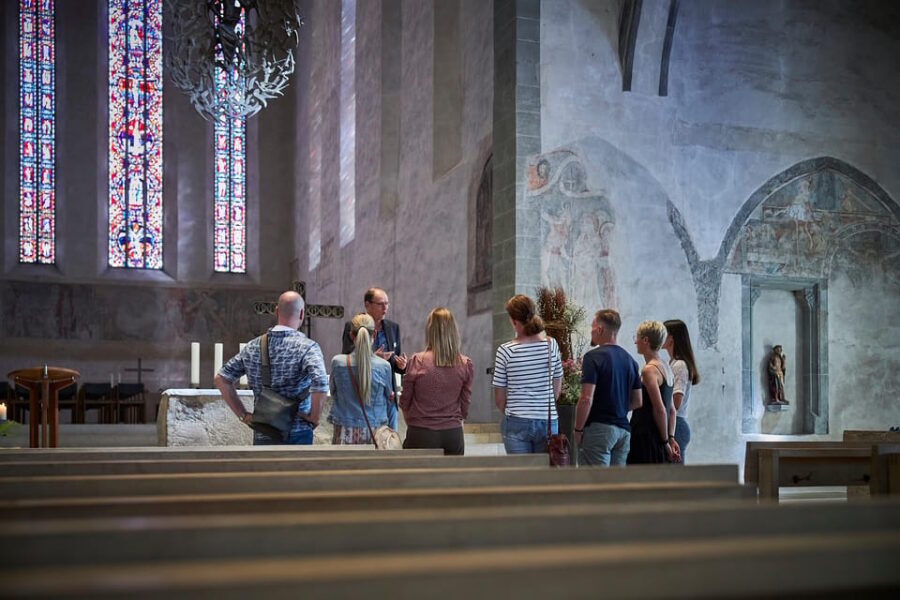
One of the best reasons to choose this particular city history walk is that it doesn’t stop at big landmarks. It takes you toward the Humpis Quarter Museum, the part of Ravensburg’s story that connects medieval urban life to spaces people actually occupied.
“Humpis Quarter” is the kind of concept that can sound niche until you understand what it’s trying to do: bring daily life into focus. In a preserved city, the temptation is to treat old buildings like stage sets. This stop nudges you to treat them like homes, workplaces, and shared social spaces within the medieval town structure.
For you, the payoff is an immediate mental change. After seeing living-quarter-focused material in this preserved old area, the rest of the streets feel more human. You stop imagining only rulers and merchants and start thinking about how ordinary life unfolded in the same urban fabric.
Obertor Ravensburg: Finishing Where the City Controlled the Approach
Ending at Obertor Ravensburg is a smart final move because it gives you a “wrap-up image” you can remember. Gates are more than doors in a wall. They’re about how a city managed entry, defended itself, and shaped movement of goods and people.
By the time you reach the upper town and the museum-focused area, you’ll be ready for that final interpretive step. The gate location helps you connect earlier stops—trade storage, civic authority, and church prominence—to the larger question: how did Ravensburg function as a center where Lake Constance connections mattered?
When you finish at Obertor, you also have a practical advantage. You’re not left somewhere random in the middle of sightseeing. The tour gives you a clear ending point that fits the city’s theme, so you can continue walking or plan your next stop with less guesswork.
Price and Value: What $14 Buys in the Ravensburg Old Town
At about $14 per person for a 1.5-hour guided walk, the value is in the structure. You’re paying for more than someone pointing things out. You’re paying for an ordered explanation of Ravensburg’s development—from imperial roots to its late medieval center role—tied directly to specific places you’ll actually pass.
Here’s what makes that good value for you:
- You get a guided sequence of meaningful stops instead of a self-made route.
- You learn the “why” behind the preserved core, not just the “what.”
- The guide’s humor and flexibility (noted in the tour’s consistently high marks) can make the walk feel shorter than the clock says.
If you’re visiting with limited time, this kind of overview can be worth it even if you plan to do more exploring later on your own. Think of it as your base map for the Altstadt.
Who Should Book Der Klassiker Ravensburger Stadtgeschichte
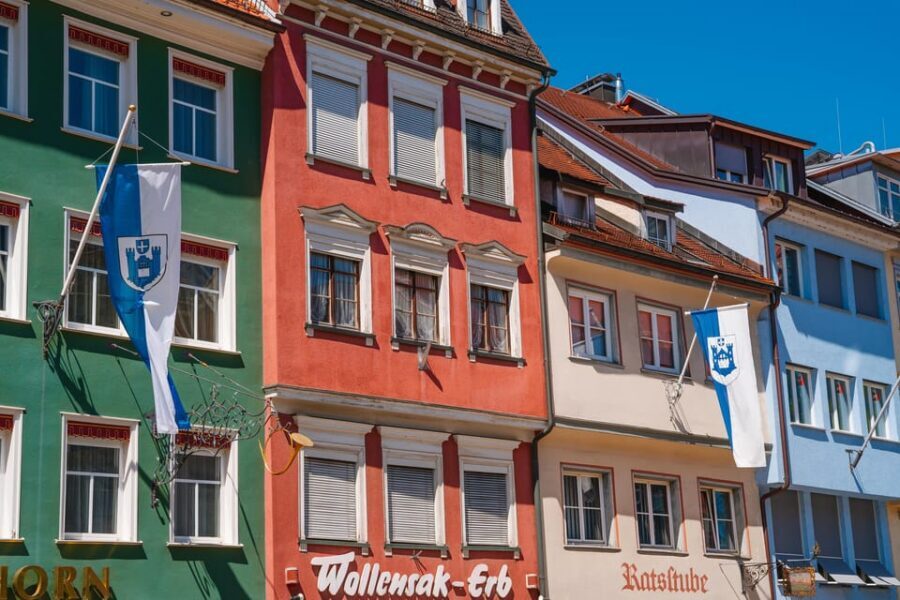
This tour suits you best if you want:
- A first-time orientation to Ravensburg’s old town and major landmarks
- A guided explanation that connects commerce, civic life, and medieval urban design
- A route that includes both prominent sights and the Humpis Quarter Museum living-quarter focus
- A manageable time commitment that fits easily into a day
It may feel less ideal if you need English-only interpretation, because the guide listed here speaks German. Also, if you dislike walking, keep in mind this is built around an old-town stroll with multiple stops.
That said, the experience is described as wheelchair accessible, so it’s worth considering if you’re planning mobility-aware sightseeing in the area.
Should You Book This Ravensburg City History Tour?
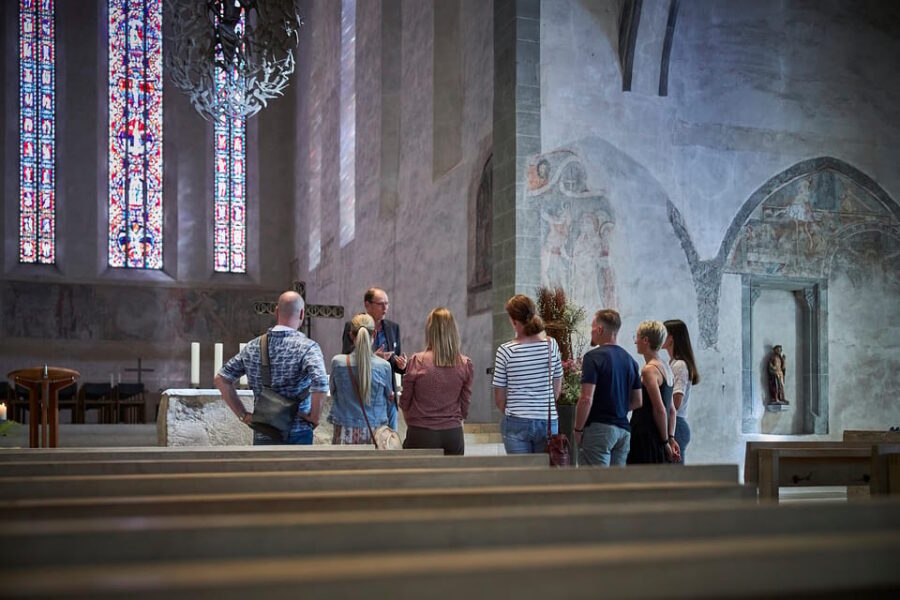
Yes—if you want your Ravensburg time to feel organized and meaningful. This is one of those city tours that gives you a real sense of place fast: gates and towers, trade-linked landmarks like the Kornhaus, civic identity at the town hall, and a living-quarter stop that helps you picture medieval life rather than just admire old stones.
Book it if:
- You enjoy walking but don’t want to plan a route from scratch
- You want a guide who keeps the tone friendly and the pace easy to follow
- You’d like a structured intro that helps you explore the Altstadt afterward
Skip it (or plan for language help) if:
- You need English guidance for comfortable understanding
- You’re only interested in a quick photo loop and not in explanation
If your goal is to leave Ravensburg understanding what made it matter in the Lake Constance region—and how the old town still shows that—you’re making a good call with this classic city history tour.
FAQ
How long is the Ravensburg City History tour?
The tour lasts about 1.5 hours.
Where do I meet for the tour?
You meet at the Vordereingang Tourist Information, Lederhaus.
Where does the tour finish?
The tour finishes at Obertor Ravensburg.
How much does it cost?
The price is listed as $14 per person.
What language is the live guide?
The live tour guide is German.
Is the tour wheelchair accessible?
Yes, it is wheelchair accessible.
What is included in the experience?
It includes a 90-minute guided city tour through the old town of Ravensburg, covering the main sights.
Can I cancel for a refund?
Yes. Free cancellation is available up to 24 hours in advance for a full refund.