REVIEW · BERLIN
The History of Berlin: WWII PRIVATE Walking Tour With Locals
Book on Viator →Operated by Withlocals · Bookable on Viator
Berlin’s WWII story is messy and close. On this private walking tour, I love how a local guide connects the dots between WWII and the Cold War as you move from site to site, and I love the pace control that comes with going one group at a time. You get the most important heavy-hitters in the mix—think the Palace of Tears, Cold War crossings, and memorials—without feeling rushed, which is hard to pull off on group tours; the only real caution is that it’s still a lot of walking, and because the route can be customized, you’ll want to state your must-see stops upfront so you don’t end up with a more architecture-focused plan.
You meet at Oranienburger Strasse 36 (easy to reach on public transportation), and the day runs about four hours back to the same spot. Most stops are viewed from the outside, so the tour works best if you’re happy with street-level context and storytelling, rather than expecting lots of ticketed museum time.
The best part is how the guide experience can vary in style. Some guides—like Seth and Sara—are praised for turning the facts into clear, question-friendly walking lessons, while others (like Miha or Pablo) are noted for making the city feel navigable and personal. Just know the same private setup that lets the route fit you also means you should communicate preferences early, especially if you’re coming for specific landmarks.
In This Review
- Key Highlights Worth Planning For
- Why This Private WWII and Cold War Walk Feels Different
- Starting Smart at Oranienburger Strasse
- Museum Island and Reichstag: Power and Culture Under One Roof of Time
- Cold War Berlin at Eye Level: Checkpoint Charlie and the Palace of Tears
- New Synagogue, Brandenburg Gate, and the Holocaust Memorial: Seeing Monuments Without Flattening Them
- Hitler’s Bunker and WWII Reality Checks
- Bebelplatz and Museum Island Again: Architecture as a Clue
- What to Watch for: When a Private Route Changes Your Must-Sees
- Price and Value: Is $143.97 a Smart Spend?
- How to Handle the Walking (and Avoid Getting Grumpy)
- Should You Book This Tour?
- FAQ
- How long is the WWII private walking tour?
- Where does the tour start and where does it end?
- Is this tour private or shared?
- Are entrance tickets included for attractions?
- What language is the tour offered in?
- Can I cancel for a full refund?
Key Highlights Worth Planning For

- Private for your party, with a local host: You control questions and pace more than on standard group tours
- WWII meets Cold War on foot: You connect buildings to escape attempts and political power
- Most sights are outside: No ticket pressure for interiors, but you’ll want comfortable footwear
- Landmark mix plus tailoring: Expect big names, yet the order and exact routing can shift
- Guides get high marks for engagement: Seth, Sara, Miha, Pablo, and Boyd show up in standout feedback
Why This Private WWII and Cold War Walk Feels Different
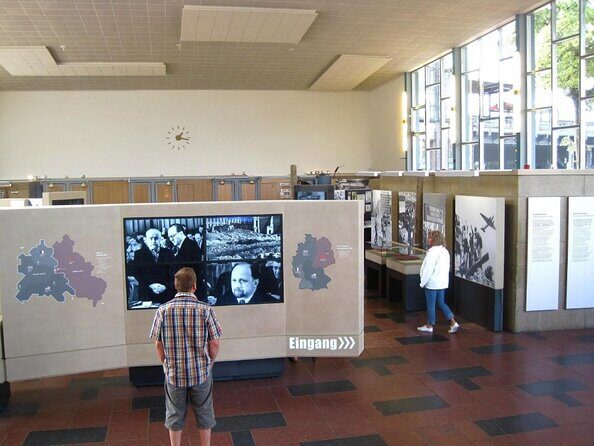
Berlin can overwhelm you fast. You see a memorial, you see a grand building, you move on—and suddenly the story doesn’t quite land. This kind of private walking format helps because the guide can slow things down and make the connections in real time, right where you’re standing.
Two things make a difference. First, you’re not competing with a crowd for attention at each stop. If something clicks for you—East versus West Berlin, the rise of the Nazi party, or the mechanics of escape during the Cold War—you can ask follow-ups without watching the clock. Second, the tour is built to feel personal. It’s explicitly private and can be customized, so you’re not stuck with a single rigid script.
Now the “yes, but” part. Customization cuts both ways. One person’s perfect route is another person’s missing stop list. The tour description signals a particular set of major locations, but the real-world routing depends on your guide and what they think best fits your interests. If Berlin’s WWII/Cold War story is your top priority, you’ll get the most value by telling your guide your must-sees early in the walk.
You can also read our reviews of more walking tours in Berlin



Starting Smart at Oranienburger Strasse
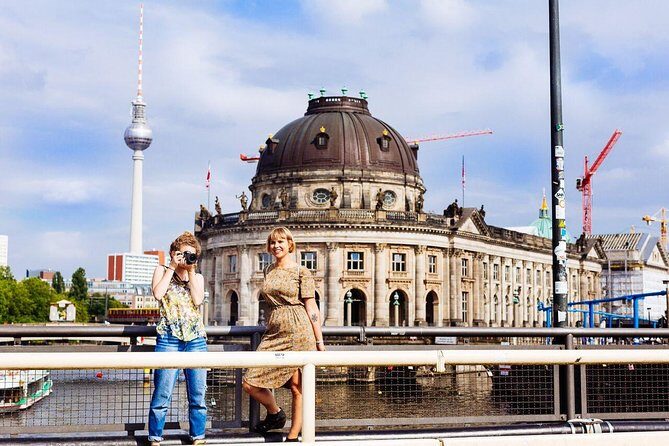
Your meeting point is Oranienburger Strasse 36. That’s a practical choice: it’s in the historical core and near public transportation, so you’re not wasting time crossing half the city before the story begins.
Because there’s no hotel pickup, you’ll want to show up a few minutes early and settle in. I also recommend checking the weather beforehand and bringing a layer. Berlin can do quick temperature swings, and four hours of walking means you’ll feel it.
One more practical point: most stops are from the outside. That can be a relief. You won’t spend the whole day in ticket lines or waiting for museum entry systems. But it also means your shoes matter. Expect plenty of walking—one review called out around 15,000 steps—and plan like it’s a half-day stroll, not a light sightseeing loop. If you’re someone who hates lingering, you might still want to bring a water bottle and be ready for short pauses that help you process what you’re seeing.
Museum Island and Reichstag: Power and Culture Under One Roof of Time
A lot of Berlin’s 20th-century story becomes clearer once you see how culture, government, and conflict overlap. This tour typically starts at Museum Island, the museum complex on the northern part of Spree Island in the historic center.
Even without going inside, Museum Island gives you a real sense of where Berlin placed value—art, learning, and prestige—before the city was brutally reshaped by war and ideology. It’s one of Germany’s best-known museum areas, and the layout alone helps you understand why Berlin used to feel like a capital with confidence.
From there, you move toward the Reichstag building area. The Reichstag is closely tied to the political shocks of the early 20th century: it was opened in 1894 to house the Imperial Government of the German Empire and later was badly damaged after a fire in 1933. On a walking tour, this isn’t just architectural trivia. It’s a way to frame how political systems crumbled and reassembled—often faster than ordinary people could understand.
A key practical note: admission tickets aren’t included. If you expect to go inside the Reichstag or add museum time, you’ll need to plan that separately. The tour still works well if you’re there for exterior context and the guide’s narrative linking events to place.
Cold War Berlin at Eye Level: Checkpoint Charlie and the Palace of Tears
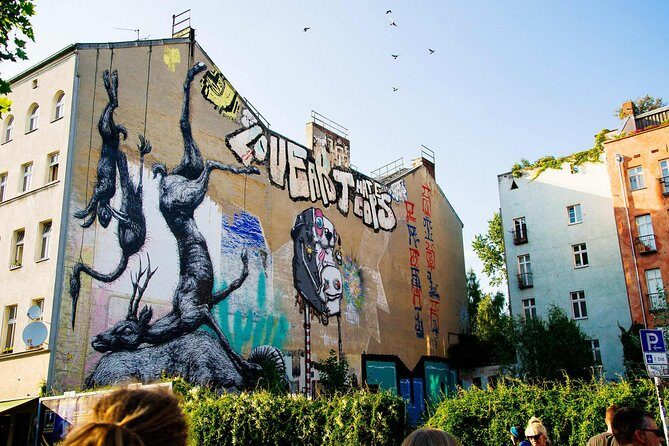
This is where Berlin’s division stops feeling abstract. When you get to Cold War-era landmarks, the story becomes human—families, fear, and risk—rather than just dates.
Checkpoint Charlie is one of the most famous Wall crossing points between East and West Berlin during the Cold War. Even if you’ve seen it in photos before, standing nearby with a guide helps you understand why it became such a symbol. It wasn’t only about border control; it was also about the theater of negotiation, propaganda, and escape.
The tour description also points to the Palace of Tears, a former border point between East and West Berlin. That name alone is heavy. In the guide’s hands, the site becomes more than a stop on a route. You get an explanation of how residents tried to flee from Russian-occupied East Berlin into Allied-occupied West Berlin—an attempt to escape violence and control by crossing a line that wasn’t just a line on a map.
This is also a good moment to take photos, but I’d treat them like memory anchors, not souvenirs. Capture the big visual markers and then listen for the details about how the border functioned. The stories are often the part you’ll remember a year later.
New Synagogue, Brandenburg Gate, and the Holocaust Memorial: Seeing Monuments Without Flattening Them
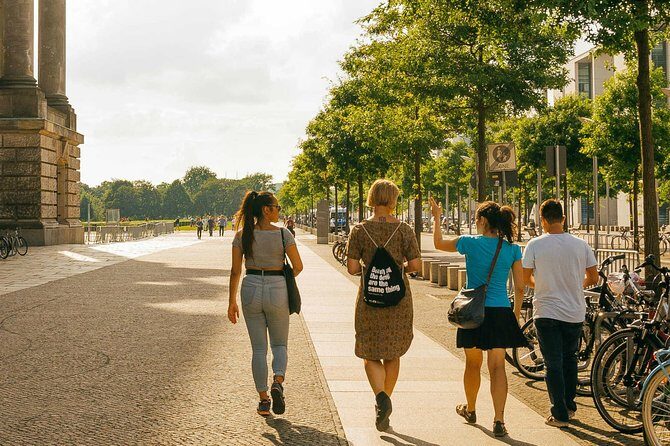
Berlin’s skyline is packed with monuments that look like they belong to different centuries. A good WWII/Cold War guide helps you stitch them together, and you can feel the shift as you move through contrasting architectural styles and political meanings.
The New Synagogue is called out in the tour description for its Moorish architecture. That detail matters because it reminds you Berlin wasn’t always a city of ruins and memorials. It also sets up a theme that keeps repeating: a place can be both beautiful and deeply damaged by persecution and war.
Then you get to Brandenburg Gate, one of the city’s most significant historic monuments. It’s a classic photo spot, yes. But with WWII and Cold War framing, it becomes more than a postcard. You’ll likely hear how it functioned as a stage for power, ideology, and national identity—especially during eras when Berlin was under pressure from competing visions of the future.
Right after that, you walk through the Holocaust Memorial, described as a poignant reminder of the city’s dark past. This part can feel emotionally intense, and it’s worth slowing your pace. If your guide is tuned in—people like Sara and Boyd are often mentioned for making stories clear and responsive—you’ll get help making sense of what you’re looking at without turning it into a quick stop.
One more note: a move like this is exactly where private pacing helps. Group tours can keep you on rails. Private tours let you pause longer if something hits you, or speed up if you prefer to keep moving. Just don’t try to power through it like a checklist.
You can also read our reviews of more private tours in Berlin





Hitler’s Bunker and WWII Reality Checks
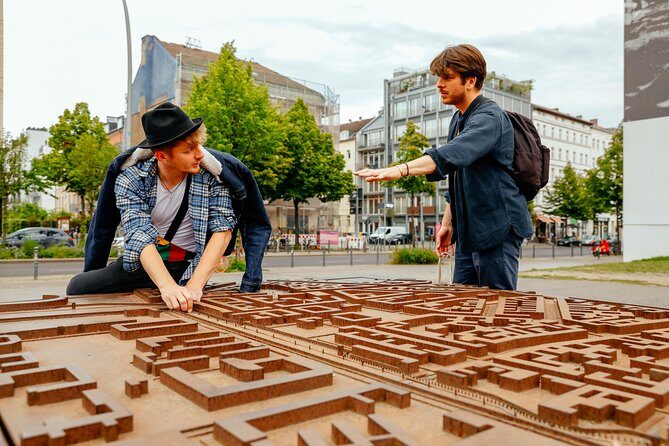
The tour description includes a visit to Hitler’s bunker area as part of the WWII context. That’s not an easy topic, and it shouldn’t be treated like a “dark sightseeing” gimmick. The value of this stop is the way it can connect ideology to outcomes—how a political movement shaped policy, war, and the lived reality of Berliners.
Because the tour is customizable, the exact time you spend at each WWII marker can vary. But if Hitler’s bunker is on your priority list, make sure you mention it at the start. If you don’t, you might still get major landmarks, but the day could skew toward Cold War boundaries, exhibitions, and post-war architecture depending on your guide’s route.
That’s also why I suggest choosing the right expectations. This tour is focused on WWII and the Cold War story connecting multiple sites. It’s not just one memorial. It’s a chain of places showing how power and survival played out across decades.
Bebelplatz and Museum Island Again: Architecture as a Clue
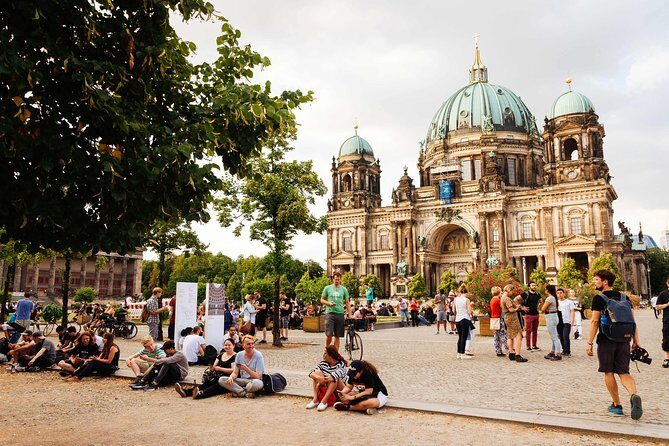
Bebelplatz is part of the walking arc described in the tour outline, and it’s known for its impressive architecture. On this kind of history walk, you don’t just look at buildings—you treat them like clues.
You’ll also cross over toward UNESCO-listed Museum Island again as the route closes, ending back at the starting point. That structure makes sense: you build the story as you move through the city, then you come back to the cultural center where Berlin’s identity feels most visible.
Even if you’re not the type who loves museums, the UNESCO label matters because it shows why Berlin invests in protecting what it can and interpreting what it can’t change. The guide’s job is to connect those ideas to what you saw earlier: the city rebuilding itself, reshaping spaces, and keeping memory in view.
What to Watch for: When a Private Route Changes Your Must-Sees
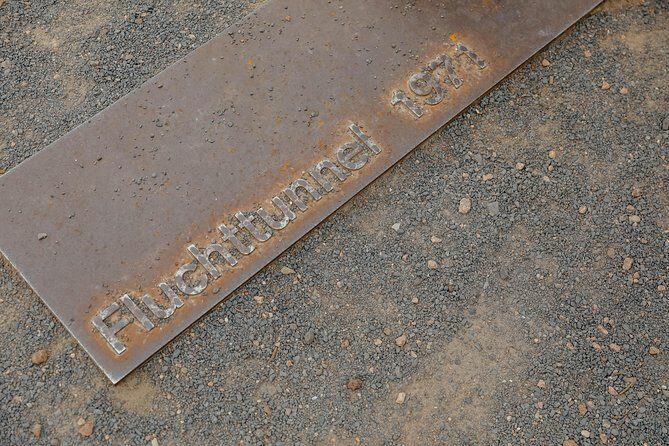
Here’s the honest practical concern: because the itinerary can be customized, you should not assume every headline stop will appear in your exact order.
Some people report that key Cold War and WWII symbols were not covered as expected on their route, even though the overall tour theme suggests them. That doesn’t mean the tour is “wrong.” It means private tailoring changes the math. Your best defense is simple: tell your guide your must-see list when you meet.
If you care most about specific sites, say it directly. For example: Brandenburg Gate, Holocaust Memorial, Checkpoint Charlie, and Palace of Tears. Ask how they’re planning to fit them into the walk. If you’re not able to see everything, you still want a plan—not surprises.
A private guide is there to adapt. But adaptation works best when you start with clear priorities.
Price and Value: Is $143.97 a Smart Spend?
At $143.97 per person for about four hours, this is not a bargain-basement option. But it can be solid value if you measure what you actually get.
You’re paying for:
- a private guide for just your group
- storytelling that connects multiple eras (WWII to Cold War)
- flexibility to go at your pace and ask questions
- CO2-neutral operation with emissions offset
- mobile ticket convenience and English language delivery
- and access to major sites mostly from the outside, which saves time
For families or couples deciding between a large-group tour and this private format, the economics often swing toward privacy when you want more conversation and fewer bottlenecks. If you’re the kind of traveler who likes to ask Why did this happen, and how does this place fit into the story, private time usually feels worth it.
Where the price can feel less attractive is when you’re hoping for a lot of ticketed entrances. Entrance tickets for attractions aren’t included, and the plan is mostly exterior viewing. So if you’re trying to pack in lots of indoor visits, you’ll need to budget for additional admissions separately.
How to Handle the Walking (and Avoid Getting Grumpy)
Comfort matters on this tour. One review noted around 15,000 steps, which tells me this isn’t a “sit every 10 minutes” plan. The tour does include opportunities to stop and take refreshments and bathroom breaks, depending on the guide, but you should still plan like it’s an active half-day.
Bring:
- sturdy shoes (no thin soles)
- a small water bottle
- a light layer for weather changes
- patience for pauses when the guide explains something that you’ll want to process
Also, if you’re traveling with kids or anyone with limited mobility, the tour says it’s for moderate physical fitness and isn’t really framed for small children unless the guide is notified in advance. So if that’s your situation, message ahead and be clear about needs.
Should You Book This Tour?
Book it if you want Berlin’s WWII and Cold War story told on foot, site by site, with time to ask questions. The private format makes a real difference, and the guide quality shows up again and again in feedback—names like Seth and Sara, plus Miha, Pablo, and Boyd, are often mentioned for turning the city into a clear, coherent narrative.
Skip or at least adjust expectations if you want lots of indoor museum time with included admissions, or if you need a very light walk. And if you have specific landmarks you must see, treat this as a planning conversation, not a surprise itinerary. Tell your guide your top priorities at the start.
If you do those two things—comfortable shoes and a must-see list—you’ll get a day that feels like Berlin’s history is walking right beside you.
FAQ
How long is the WWII private walking tour?
It’s listed at about 4 hours.
Where does the tour start and where does it end?
The meeting point is Oranienburger Str. 36, 10117 Berlin, Germany, and the tour ends back at the same meeting point.
Is this tour private or shared?
It’s private. Only your group participates.
Are entrance tickets included for attractions?
Entrance tickets are not included. The tour visits attractions from outside.
What language is the tour offered in?
The tour is offered in English.
Can I cancel for a full refund?
Yes. You can cancel up to 24 hours in advance for a full refund.