REVIEW · BERLIN
Architectural Berlin: Private Tour with a Local Expert
Book on Viator →Bookable on Viator
Berlin buildings tell stories fast. I like how this private, two-hour format keeps you moving with purpose, and I love the way the Reichstag’s Norman Foster glass dome turns politics into something you can actually see and understand. One thing to keep in mind: with an architecture-focused tour, the experience will rise or fall with the guide’s depth and preparation—so it’s worth starting with a few questions.
I also appreciate that your route isn’t carved in stone. The plan adjusts to your interests, your walking pace, and even the weather, which matters in Berlin when conditions can change quickly.
You’ll finish near Herbert-von-Karajan-Straße 1, right by the Berlin Philharmonie area—perfect if you want to keep going on foot afterward. This tour works best when you want architecture more than museum shopping: details, viewpoints, and “why did they build it this way?” answers.
In This Review
- Key things to know before you go
- Berlin Architecture, Up Close: The Value of a Private 2-Hour Tour
- Starting at Bodestraße: Getting Oriented Before the Buildings Take Over
- Museum Island’s Neoclassical Gallery: Classic Lines and 19th-Century Art
- Berlin Cathedral by Lustgarten: Renaissance-Baroque Power Under a Big Dome
- A Modern Eco-Friendly Office Building: Berlin’s Present-Tense Architecture
- Reichstag and Norman Foster’s Glass Dome: Transparency You Can See
- A Building That Blends Modern Lines with Historic Context
- Berlin Philharmonie: The Tent Roof, Acoustics, and Music Heritage
- The Berliner Fernsehturm Connection: Why the TV Tower Belongs in the Story
- Guide Quality Makes the Difference: Georg and Rüdiger as Proof Points
- Price for a Private Group of Two: When $639.96 Feels Fair
- Practical Tips for a Smoother Walk Through Berlin’s Design Layers
- Should You Book This Architecture Tour?
- FAQ
- How long is the architecture tour?
- What’s the group size for this private tour?
- Where does the tour start and end?
- Is a mobile ticket included?
- Is entry to museums and monuments included?
- Are service animals allowed?
- Can I cancel for a full refund?
Key things to know before you go
- Exclusive small-group pacing: you’re capped at up to 2 people, so you get real back-and-forth instead of listening over a crowd.
- Museum Island to the Philharmonie stretch: the tour ends in the concert-hall district, giving you an easy “from power to culture” arc.
- Reichstag glass dome context: you’ll connect the building’s modern glass feature to the idea of transparency in government.
- Modern design alongside classics: you’ll see how Berlin doesn’t treat old and new like enemies.
- Eco-minded contemporary architecture stop: there’s at least one modern office-building moment aimed at sustainability and urban change.
- Your guide matters: the quality of the architecture storytelling seems to vary by guide, so go in ready to ask questions.
Berlin Architecture, Up Close: The Value of a Private 2-Hour Tour
Berlin architecture can feel like a crash course. One block you’re in neoclassical calm; the next you’re staring at a political machine, then a music hall shaped like a tent. This tour is smart because it gives you a tight time window to make sense of that mix.
The private format is the main value. At $639.96 per group (up to 2), you’re paying for one local expert to steer the conversation and pacing for you—not for a seat in a larger bus-style experience. If you’re the type who wants to ask follow-ups like Why this dome? or What makes this façade eco-friendly? then the price starts to feel reasonable.
There’s also a practical angle: with a local expert leading, you waste less time “figuring it out.” You get curated viewpoints and a walking plan that ties buildings together into a bigger story—historic heritage meeting modern design, without turning it into a lecture marathon.
You can also read our reviews of more private tours in Berlin



Starting at Bodestraße: Getting Oriented Before the Buildings Take Over
You start at Bodestraße 1 (10178 Berlin). That’s a handy starting point because it puts you near central sights and keeps the walking route logical. You’ll end at Herbert-von-Karajan-Straße 1 (10785 Berlin), which is near the Berlin Philharmonie—so you end in a place that makes you want to keep exploring.
Because the tour is private and your itinerary adapts to your interests, I like that you can shape the walk early. If you care more about political architecture, you’ll naturally spend more brainpower on the Reichstag area. If you’re more into art and museum buildings, you’ll be ready to linger a bit around Museum Island.
Also, you receive a mobile ticket. That’s one less thing to manage on the day, and it helps if you’re juggling other plans in the city.
Museum Island’s Neoclassical Gallery: Classic Lines and 19th-Century Art
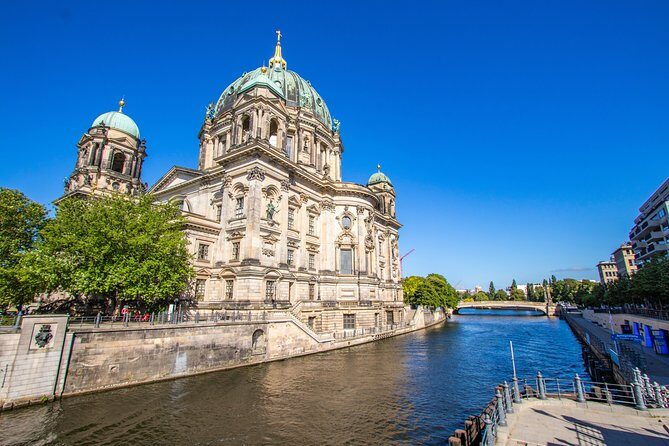
One of your first stops centers on a key Museum Island gallery. It’s known for its neoclassical architecture, and it houses a collection of 19th-century art, which gives you a double lesson: style and what Berlin chose to celebrate.
Here’s what you’ll get out of it. Neoclassicism is all about order—columns, symmetry, and a sense that “culture” deserves a solid frame. Even if you’re not a museum superfan, this kind of architecture teaches you how Berlin presented itself as a city of learning and taste.
The trade-off is that the stop may feel more explanatory than spectacular depending on what you personally love. If you want purely dramatic exteriors or you’re hoping for nonstop skyline views, you might want your guide to point out the small details that reveal the building’s intentions—materials, proportions, and the way the façade connects to the surrounding Museum Island setting.
Berlin Cathedral by Lustgarten: Renaissance-Baroque Power Under a Big Dome
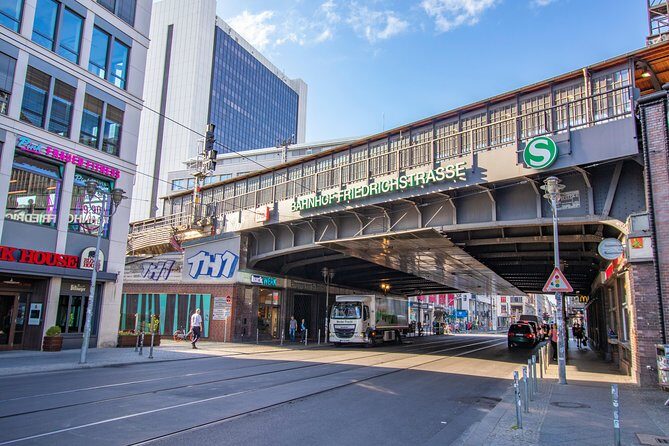
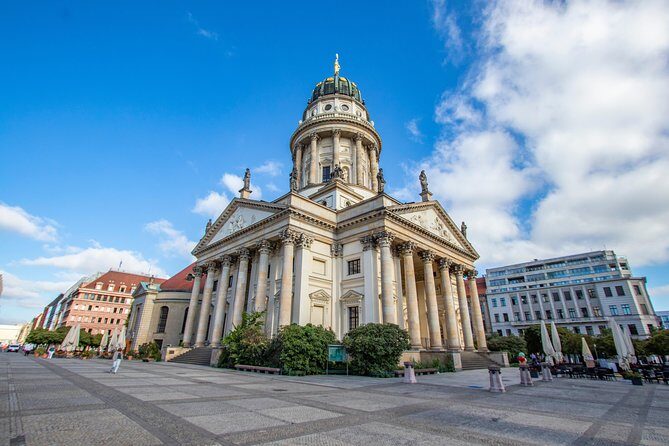
Next comes a grand church near Lustgarten park. This is the kind of building where the dome does half the talking. The style mix—Renaissance and Baroque—matters because it signals a time when religion and city identity were tied together in stone and ornament.
What makes this stop worth your time is the scale and drama. You can read a lot about Berlin from the way it allowed religious architecture to look both grand and “alive,” with design that pulls your eye upward and inward. The large dome also gives your guide a natural talking point: domes aren’t just decorative; they create a sense of ceremony and presence.
One practical consideration: churches are sometimes busy or may have areas with restricted access at certain times. Since the tour notes that entry isn’t included for monuments and that stops can vary with weather, you should treat this as a major architecture stop even if you don’t plan a long interior visit.
A Modern Eco-Friendly Office Building: Berlin’s Present-Tense Architecture
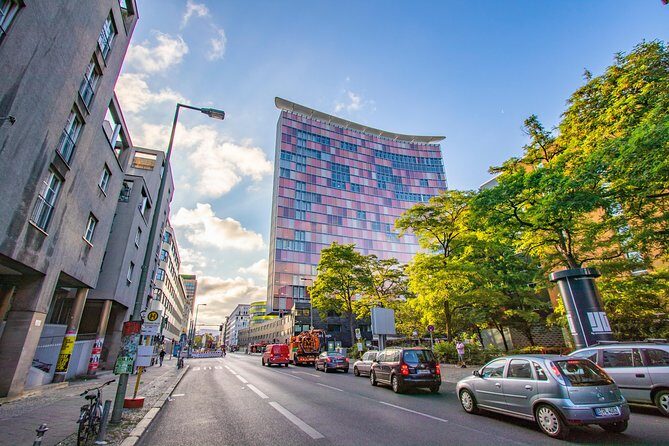
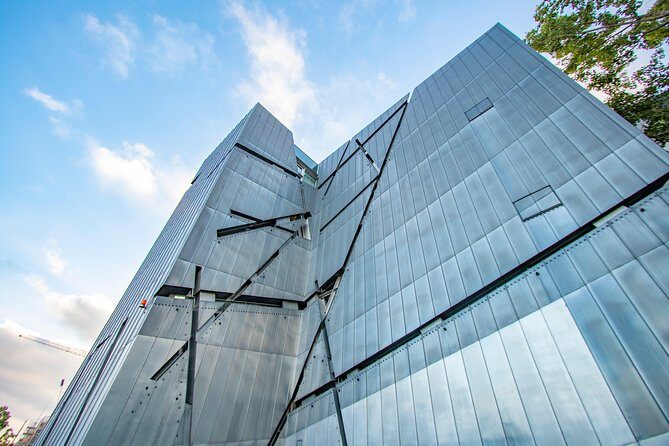
Then you switch gears to a modern office building recognized for innovative, eco-friendly architecture. This is where Berlin’s character becomes clear: the city doesn’t only preserve—it experiments.
I like this stop because it forces you to compare values across time. Earlier architecture often tells you about power through permanence—stone, symmetry, tradition. Eco-friendly modern design tells you a different story: power through efficiency, systems, and a belief that buildings can respond to environmental needs.
The caution is simple: modern office buildings can be more about what you can understand than what you can photograph. If you’re hoping for a cathedral-level “wow factor” exterior, lean on your guide to explain what makes the design eco-friendly and how that shows up in the building’s form and function.





Reichstag and Norman Foster’s Glass Dome: Transparency You Can See
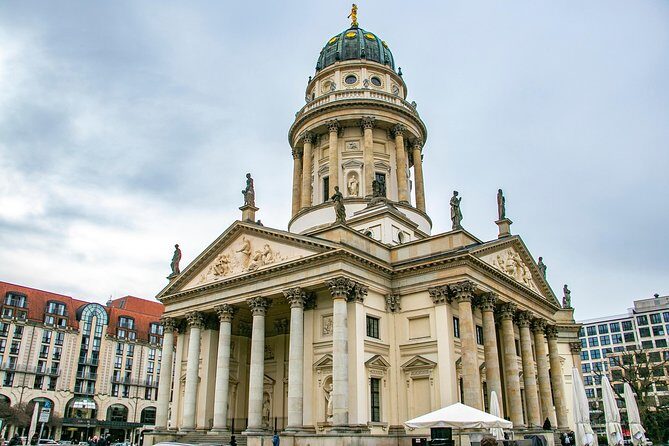
The Reichstag is the big centerpiece on this walk. This is the seat of the German parliament, and your standout moment is the iconic glass dome by Norman Foster—famous for representing the fusion of historic architecture with modern elements and the idea of political transparency.
This stop is valuable because it turns an abstract concept into a visible design choice. The dome isn’t only about style; it’s a physical metaphor you can stand near and think about. Your guide can help you connect the older parliamentary setting to this modern glass layer, and that connection is the whole point.
Practical note: the Reichstag area can be a bit of a “systems zone” during certain periods—security and crowd flow can affect how long you can linger. Since entry tickets for monuments aren’t included, plan your time with flexibility. If you’re mainly there for exterior and the architecture story, you’ll still get a lot.
A Building That Blends Modern Lines with Historic Context
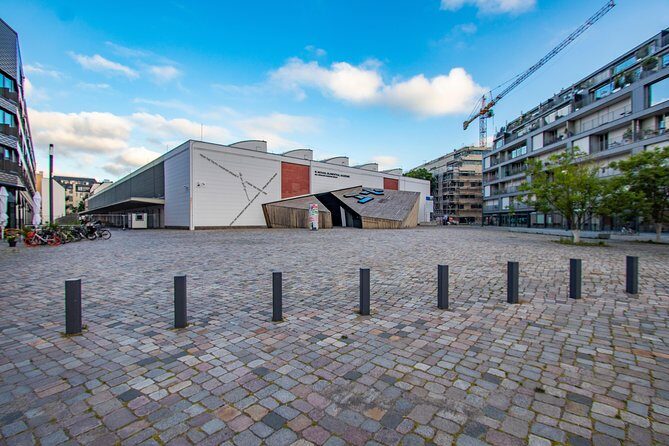
After the Reichstag, you’ll see another site that shows how Berlin can let modern architecture play alongside older street context. The tour description doesn’t name it as a single iconic building, but the concept is clear: Berlin’s architectural identity isn’t either-or.
This part of the tour is useful because it teaches you how cities actually work. Historic buildings aren’t frozen; they share space with new development. That means you should look for the “conversation” between materials, height, and street alignment—how the newer design respects, interrupts, or reinterprets what’s around it.
If you’re impatient with nuance, this stop might feel less dramatic than the glass dome or the cathedral dome. The fix is to ask your guide what specific contrast they want you to notice. Even one pointed question can turn a “generic modern building” stop into a real learning moment.
Berlin Philharmonie: The Tent Roof, Acoustics, and Music Heritage
Your final major architecture moment is the Berlin Philharmonic building, known for its distinctive tent-like shape and brilliant acoustics. This is architecture that’s built around sound and how people experience music—less about imposing authority and more about shaping emotion through space.
I love how this stop changes the theme of your Berlin story. You’ve seen art institutions, religious power, political transparency, and modern urban change. Now you land on a building where architecture is meant to carry sound and help music thrive.
The shape is part of the legend, but acoustics is the real reason this place matters. Even if you can’t see every detail the way you would inside, your guide can help you understand how the form supports listening.
Since the tour ends near Herbert-von-Karajan-Straße 1, it sets you up to continue naturally. If you’re in the mood, you can line up other nearby sights on foot—without having to backtrack across town.
The Berliner Fernsehturm Connection: Why the TV Tower Belongs in the Story
Even though your walk focuses on key architectural sites, the broader theme includes how Berliner Fernsehturm (TV Tower) shaped Berlin’s skyline. That matters because the skyline is Berlin’s biggest “architecture poster.” The TV tower is a visual anchor, and it influences how you perceive height, modern identity, and distance across the city.
If you’re the kind of person who likes skyline comprehension—where to look, what to track, how landmarks relate—this tour gives you the story thread. Ask your guide how the TV tower changed the way Berlin looks and why it became such a strong symbol.
This is one of those architecture topics that can feel abstract until someone points out what to watch for. With a local expert, it becomes practical: you start “reading” the city from multiple angles, not just staring at individual buildings.
Guide Quality Makes the Difference: Georg and Rüdiger as Proof Points
The biggest factor here is your guide. One great guide can turn building facts into real understanding. One weak guide can make the whole thing feel like a polite walk past landmarks.
In the best cases, you’ll get someone like Georg, who’s described as interesting, personable, and top-notch—exactly the kind of person who can connect details without sounding robotic. Another example is Rüdiger, who coordinated a smooth pickup by arrangement and delivered a varied route that included more creative options and also some quieter, colder building moments.
And there’s the downside: if your guide doesn’t have strong architecture preparation or doesn’t check whether sites are open or accessible, you can lose time and momentum. In an architecture tour, that’s not a minor issue—it’s the whole product.
My advice is to start the tour with a simple mindset: you’re here to learn, so ask your guide what architectural feature they want you to notice first. If you feel the answers are vague, you can still steer the walk by asking more pointed questions about materials, design intent, or what you should look for at the next stop.
Price for a Private Group of Two: When $639.96 Feels Fair
At $639.96 per group (up to 2) for about two hours, this isn’t a budget move. But it can be strong value if you compare what you’re buying: time with one local expert, tailored pacing, and a route that connects buildings into a coherent theme.
To decide if it’s worth it for you, ask yourself:
- Do you want architecture explained in a way you can talk back to?
- Would you rather pay more and get close attention, or pay less and accept a generic group script?
- Are you likely to take photos and then want help understanding what you’re actually seeing?
If you’re traveling as a pair, the private price becomes more reasonable, because you split the cost without splitting attention. If you’re solo, this is still doable, but it’s a bigger “learning investment,” so make sure you’re genuinely excited by architecture and city design.
Practical Tips for a Smoother Walk Through Berlin’s Design Layers
A couple of small habits can make this tour feel sharper.
First, wear shoes you can trust. The stops run from Museum Island-adjacent areas toward the Berlin Philharmonie zone, and that’s real walking time even if your guide adjusts the pace.
Second, come ready with preferences. The itinerary is tailored to your interests, so if you care most about one theme—politics and design, religious architecture, museum building style, or modern eco-friendly design—say it early.
Third, remember that entry for transportation, museums, and monuments isn’t included. So if you’re hoping for inside access to specific buildings, you’ll need to plan separate tickets (or accept an exterior-focused experience). The tour’s strength is the architecture conversation, not a guaranteed museum stamp.
Finally, keep an eye on weather. Stops may vary depending on conditions, and that’s normal. In Berlin, rain can make certain surfaces slick and certain outdoor viewing less comfortable, so flexibility is smart.
Should You Book This Architecture Tour?
Book it if you want a private, architecture-first walk that links classic Berlin buildings with modern design choices, and you like the idea of getting answers from a local expert as you go.
Skip it or be cautious if you’re someone who expects heavy inside access to multiple monuments, because entry tickets aren’t included and the experience is built around guided architecture viewing and interpretation. Also, because guide quality matters a lot here, go in with a few questions ready and steer the conversation if you’re not getting the level of detail you came for.
If you’re the kind of traveler who watches domes, reads façades, and wants to understand why Berlin looks the way it does, this tour can give you a fast, satisfying way to get your bearings.
FAQ
How long is the architecture tour?
It runs for about 2 hours.
What’s the group size for this private tour?
It’s an exclusive private tour for your group, up to 2 people.
Where does the tour start and end?
The tour starts at Bodestraße 1, 10178 Berlin, Germany and ends at Herbert-von-Karajan-Straße 1, 10785 Berlin, Germany.
Is a mobile ticket included?
Yes, the tour includes a mobile ticket.
Is entry to museums and monuments included?
No. Entry tickets for transportation, museums, and monuments are excluded.
Are service animals allowed?
Yes, service animals are allowed.
Can I cancel for a full refund?
Yes. You can cancel up to 24 hours in advance for a full refund.