REVIEW · BERLIN
Berlin: City’s Highlights Walking Tour
Book on GetYourGuide →Operated by Sandemans Tours · Bookable on GetYourGuide
Berlin hits hard, fast, and on foot. This 2-hour highlights tour lines up the city’s biggest 20th-century moments in a tight route, from the Brandenburg Gate to the places where Germany faced what it did and how it rebuilt. I love how the stops feel grounded in real streets, not just photos. I also like that the pacing gives you time to actually think at the Memorial to the Murdered Jews of Europe, not just rush past it. One drawback: because it covers heavy material and a lot of ground, you’ll want to arrive mentally ready, not just sightseeing with headphones.
The best part is the guide-led storytelling. You’ll hear clear, street-level explanations about war, division, and reunification while you walk between landmarks that still shape how Berliners talk about the past. Guides can be in English or Spanish, and names like Nir and Rodrigo come up in the feedback for strong, easy-to-follow explanations. Plan for comfortable shoes and expect a brisk, focused walk—rain or shine.
In This Review
- Key points worth knowing before you go
- Why a 2-Hour Berlin Walk Works for Real First-Timers
- Meeting at the Brandenburg Gate Starbucks: Getting Oriented Fast
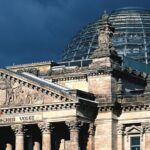
- Brandenburg Gate: From Prussian Power to Reunified Germany
- Hitler’s Bunker Site: Ending the Nazi Story Without Flinching
- Holocaust Memorial: How to Slow Down and Actually Reflect
- Berlin Wall Remnants: Seeing Division in Real Space
- Checkpoint Charlie: Cold War Stories You Can Picture
- What Makes the Guides Matter (Nir and Rodrigo Are a Signal)
- Price and Value: What $4.71 Buys You in Berlin
- What’s Included, What’s Not, and How to Plan Your Day
- Best for First-Timers, History Lovers, and Shoppers for Meaning
- Should You Book It? My Practical Recommendation
- FAQ
- How long is the Berlin highlights walking tour?
- Where does the tour start?
- What are the main stops on the tour?
- Is the tour in English or Spanish?
- Is food or drinks included?
- Are paid attractions included?
- Is the tour wheelchair accessible?
- What should I bring?
- What’s the cancellation policy?
Key points worth knowing before you go

- A 2-hour sprint through 20th-century Berlin with guided stops that keep the story moving
- Brandenburg Gate as your starting anchor, tying Prussian history to modern Germany
- Hitler’s bunker site stop that frames the collapse of Nazi Germany without fluff
- Memorial time for reflection, not just a quick photo moment
- Wall remnants and Checkpoint Charlie that turn the Cold War into something you can picture
Why a 2-Hour Berlin Walk Works for Real First-Timers
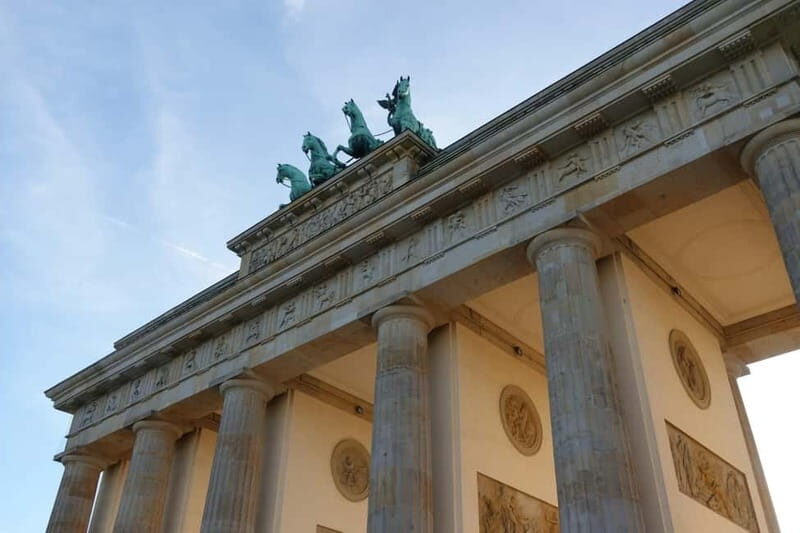
Berlin is huge on themes, not just geography. A tour like this works because it doesn’t try to cover every landmark. Instead, it picks the key “hinge points” where the 1900s changed course: empire to catastrophe, division to reunification.
In two hours, you get more than a checklist. You get cause and effect. How did a symbol like the Brandenburg Gate shift meaning over time? Why did Berlin become the front line of the Cold War? What does it mean to stand at a memorial designed for silence and thought? The guide helps you connect the dots while you walk, so you leave with a clearer mental map.
And because it’s designed as a highlights walk, you can keep the rest of your day flexible. After this, you’re better at choosing what to explore next—whether that means more museums, a café break, or just wandering the neighborhoods with a purpose.
You can also read our reviews of more walking tours in Berlin



Meeting at the Brandenburg Gate Starbucks: Getting Oriented Fast
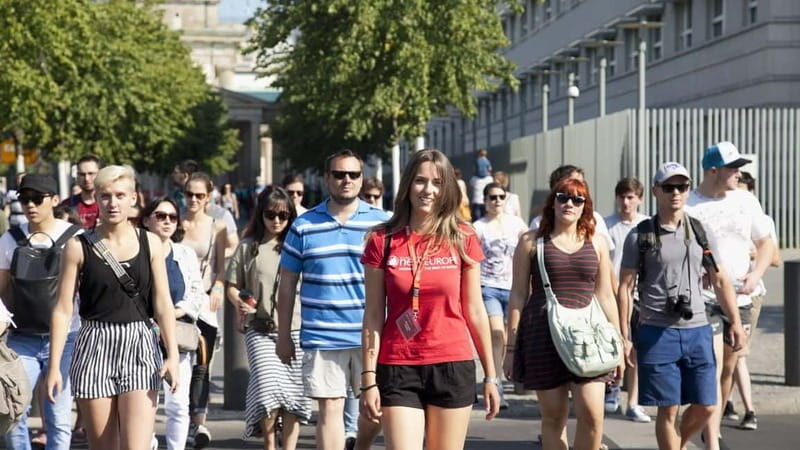
Your morning (or afternoon) starts in a very practical spot: in front of a Starbucks at the Brandenburg Gate, near the S/U-Bahn Brandenburger Tor. It’s easy to find, and it matters on a first visit. You’re not spending your first hour hunting meeting points while Berlin moves on without you.
From there, the tour keeps you on a straightforward walking loop through the city center. Expect a guided stop rhythm that makes the time feel manageable. Each main landmark is given its own focused explanation, which helps when topics are heavy and your attention could wander.
If you’re traveling with friends who get restless on long tours, this one has a built-in advantage: it stays structured. You’ll know what’s coming next, and the guide uses each stop to move the story forward. That structure is also helpful if you’re trying to fit Berlin into a short trip.
Brandenburg Gate: From Prussian Power to Reunified Germany
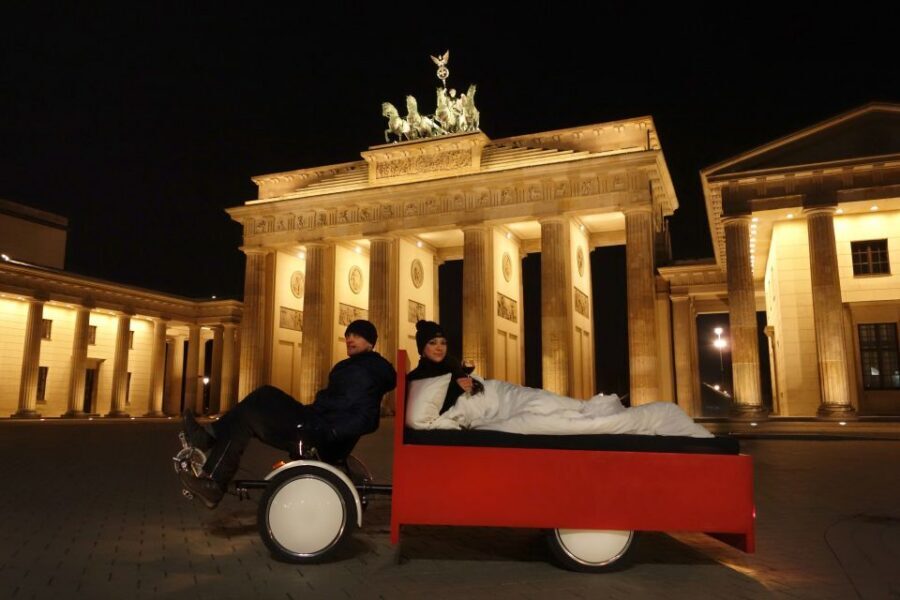
The Brandenburg Gate is the logical place to begin because it’s already loaded with meaning. Even if you’ve seen it on postcards, standing there in person hits differently. It’s not a monument that stays in the past. Its story changes with Germany’s own changes.
Your guide explains its role across different eras, starting from Prussian times and then moving forward into modern Germany. That framing is important. Without it, you’d just see a famous gate and move on. With it, the gate becomes a timeline you can walk around—an object that absorbed shifting political meanings.
This stop is also a great way to understand how Berlin talks about history. The city often doesn’t hide its layers. It keeps old and new in the same frame. So you’ll start to notice how Berliners live with the past: not by ignoring it, but by deciding how to remember it.
Hitler’s Bunker Site: Ending the Nazi Story Without Flinching
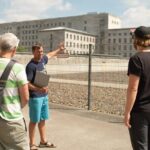
Next comes the stop at the site connected to Hitler’s bunker. This is one of those places where the details matter, but the goal isn’t shock value. The guide’s job here is to explain how Nazi Germany met its end in 1945, and why that matters to the city you’re standing in.
Even though you’re not touring a museum room for an extended period, you still get context. The tour connects the fall of the Nazi regime to what followed: devastation, reckoning, and then the long rebuild that later led into postwar division.
One thing I appreciate is that this stop helps you avoid the common mistake: treating WWII as a vague, distant event. Here it’s tied to Berlin’s geography and the timeline of what happened when power collapsed. It sets up the next stops, especially the Holocaust memorial and the Wall remnants, by showing how the city’s physical and political story is linked.
Holocaust Memorial: How to Slow Down and Actually Reflect
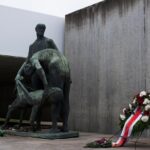
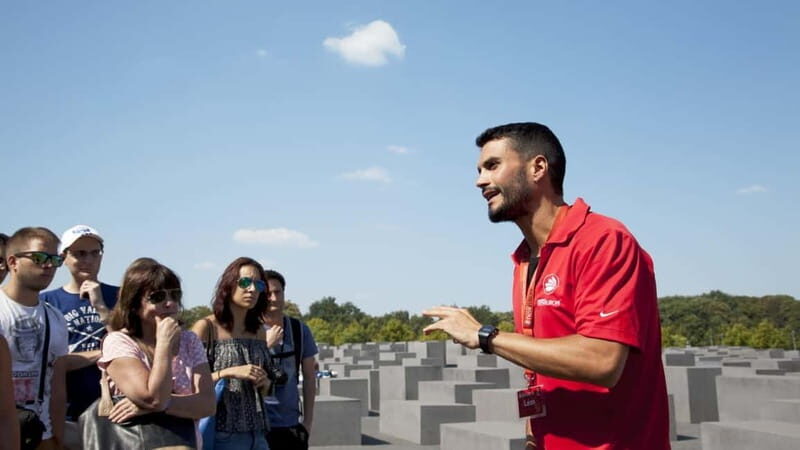
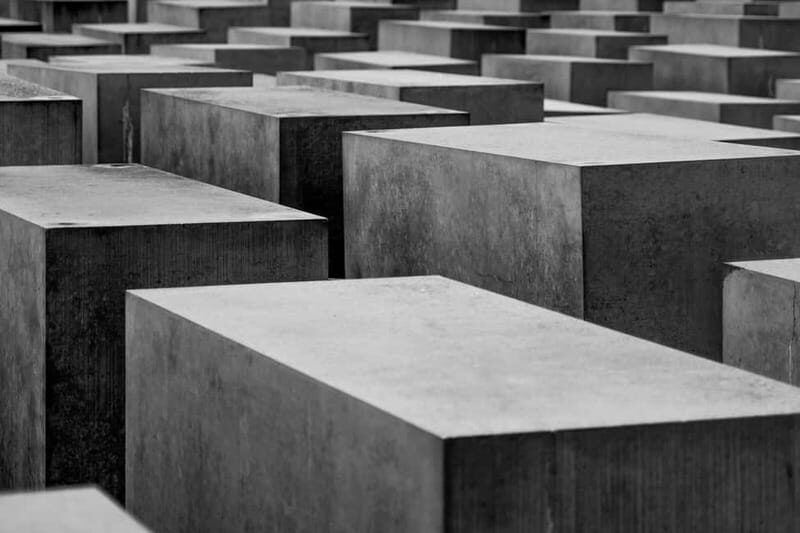
The Memorial to the Murdered Jews of Europe is designed for thought. The layout invites you to slow your pace, and the guide encourages reflection instead of racing through.
What you take in here is hard to summarize, which is part of the point. You’re given context about what the memorial represents and why it’s built the way it is. Then you stand in the space long enough for it to land. In a tour that moves fast by nature, this stop is the moment that reminds you the story isn’t just history data. It’s people, loss, and memory.
I find this especially valuable if Berlin is your first stop in Germany or if you’ve only skimmed WWII and the Holocaust before. The guide helps you stop treating these topics like textbook chapters and start treating them like lived reality and collective responsibility.
If you want a smooth experience, wear shoes that let you stand comfortably. This is not about sitting; it’s about being present.
You can also read our reviews of more city tours in Berlin




Berlin Wall Remnants: Seeing Division in Real Space
Then the tour turns toward the Berlin Wall, including remnants you can still see. This is where Berlin becomes very real, very fast. A wall sounds like a concept until you’re looking at surviving fragments in the city’s layout.
The guide explains how Berlin was divided after WWII and why the Wall became such a defining part of daily life for decades. You’ll also hear about the era in between—when Berlin’s history wasn’t just war and rubble, but also transformation, including the period people often remember as the Golden Twenties.
After that background, the Wall remnants don’t feel like random ruins. They feel like evidence. Evidence of control, separation, fear, and the attempt to freeze a political reality in place.
This stop is also a good moment to look around the streets. Even if you can’t fully imagine the old border life, you can see how the city grew around the scars. That’s a Berlin pattern: growth, adaptation, and constant re-interpretation of space.
Checkpoint Charlie: Cold War Stories You Can Picture
Finally, you reach Checkpoint Charlie, the famous border crossing between East and West Berlin. This is where the Cold War becomes a story with characters, tension, and consequences.
Your guide shares Cold War tales of spies and escapes. Even more interesting, you’ll hear how a simple miscommunication played into events tied to the fall of the Wall and the reunification of the city. That detail matters because it reminds you history doesn’t only change through grand speeches. Sometimes it turns on a small mistake, a wrong message, or a moment of uncertainty.
Checkpoint Charlie also helps you understand Berlin’s tone after division. The city isn’t stuck in a single mood. It swings between solemn remembrance and the practical energy of a united capital.
If you like history but hate dry lectures, this stop is a great payoff. It gives your brain a release valve before the tour ends, while still keeping the storyline honest.
What Makes the Guides Matter (Nir and Rodrigo Are a Signal)
A tour like this rises or falls on the guide. The good news: the feedback points to strong communication and clarity, with names like Nir and Rodrigo singled out for excellent explanations.
That matters because you’re dealing with topics that can easily become overwhelming. A strong guide does three things well:
- They keep the story chronological enough to follow.
- They connect each site to the next one.
- They make room for your emotions at the right stops, like the memorial.
I also like that this experience runs with expert English-speaking local guiding, and the tour can be in Spanish too. That’s useful when you’re traveling with someone who prefers one language over another. You won’t lose the core story if you’re not in the same language track.
And because the tour is rain or shine, your guide is effectively coaching you on how to observe in less-than-ideal weather. That’s a small thing until you’re standing at a windy monument trying to keep your notes in place.
Price and Value: What $4.71 Buys You in Berlin
At $4.71 per person, this tour is priced like a bargain, especially for a 2-hour guided walk through multiple landmark-level sites. The value isn’t just the route. It’s the interpretation.
Here’s what you’re really paying for:
- An expert local guide who can explain how each place fits into the bigger story
- Time saved. Berlin’s history is everywhere. A guide helps you choose what to notice
- Insider tips on where to eat, drink, and explore after the tour
There’s also a practical angle. Doing this on foot means you learn a workable layout of central Berlin. You’ll be more confident moving between neighborhoods afterward, rather than relying on guesswork.
Could you read about these places on your own? Sure. But for a short trip, this kind of guided sequence is a smarter use of limited time.
What’s Included, What’s Not, and How to Plan Your Day
This experience includes the expert local guide and the insider tips. That tip part is underrated. Berlin has plenty of choices, and the guide can help you aim your next steps toward something you’ll enjoy rather than something that looks good on a map.
Not included are food and drinks, plus entrance to paid attractions (if you want them after). That means you can plan a sensible meal around your energy level. For a tour that touches intense topics, you may want a calm place to reset afterward.
Also bring comfortable shoes. You’re on a walking tour in a city where sidewalks and pavement can vary a lot. A small blister can turn history into a chore.
If you want to make the day flow, plan a less structured afternoon after the tour. You’ll leave with questions, and Berlin rewards that. You can chase those questions by exploring nearby streets or adding an extra stop where the guide’s story sparked your interest.
Best for First-Timers, History Lovers, and Shoppers for Meaning
This tour fits best if you want a strong orientation to Berlin’s core 20th-century story. It’s especially good for:
- First-time visitors who don’t want to piece together the city’s political history alone
- Travelers who like guided explanations at major sites, not just audio apps
- People who want a short, structured walk that still includes reflection
If you prefer museum time over walking time, you might find this brief. But you can treat it as your foundation. You’ll know what to look for when you do choose deeper dives on your own terms.
If you’re traveling with someone who thinks “Germany history” means only WWII, this tour also corrects that assumption. The story arcs through empire, war, division, and reunification, with Berlin’s own transformations threaded through the route.
Should You Book It? My Practical Recommendation
Book it if you’re short on time and you want your Berlin to make sense. This tour gives you a guided sequence through the country’s hardest topics, plus the places where those topics still shape daily life. The 2-hour format is ideal when you’re trying to balance seeing a lot with keeping your attention intact.
I’d skip it only if you want a slow, museum-style experience with long stops. This is a walking tour: focused, moving, and guided. You should come prepared for a mix of informative storytelling and serious reflection.
If you book, do one simple thing: wear comfortable shoes and keep your schedule open right after. You’ll likely want to follow the story thread into your next meal, your next street walk, or your next stop on the map.
FAQ
How long is the Berlin highlights walking tour?
The tour lasts 2 hours.
Where does the tour start?
It starts in front of the Starbucks at the Brandenburg Gate (S/U-Bahn Brandenburger Tor).
What are the main stops on the tour?
You’ll visit the Brandenburg Gate, the site of Hitler’s bunker, the Memorial to the Murdered Jews of Europe, Berlin Wall remnants, and Checkpoint Charlie.
Is the tour in English or Spanish?
The live tour guide is available in Spanish and English.
Is food or drinks included?
No. Food and drinks are not included, though you can buy them separately.
Are paid attractions included?
Entrance to paid attractions is not included. If you want additional paid sites, they’re optional after the tour.
Is the tour wheelchair accessible?
Yes, the tour is wheelchair accessible.
What should I bring?
Wear comfortable shoes.
What’s the cancellation policy?
You can cancel up to 24 hours in advance for a full refund.