REVIEW · BERLIN
Berlin: City Sightseeing Hop-On Hop-Off Bus Tour
Book on GetYourGuide →Operated by City Sightseeing Europe · Bookable on GetYourGuide
Berlin in a day feels possible, fast. This hop-on hop-off bus tour strings together big landmarks with multilingual audio and open-top views so you can get your bearings quickly. I really like the way the stops cover both the famous postcard sights and the practical “what’s around here” parts of the city, and that includes Checkpoint Charlie. One thing to consider: in real life, headphones can be temperamental, and on rainy days the top deck setup may not keep everyone fully dry.
You’ll get a smart, self-paced way to move between neighborhoods. The included audio guide runs in 13 languages with headphones, and the onboard descriptions help you understand why places like the Berlin Wall area matter before you hop off to explore. The other big win is the stop-by-stop support, plus the app that helps you spot buses and plan your next hop without waiting around blindly.
The only real “watch the details” moment is scheduling. The buses run on set hours and frequencies, and if you get picky about zero-wait time, you’ll still need to be flexible for traffic and crowds.
In This Review
- Key highlights worth planning around
- Why this Berlin hop-on hop-off setup works so well
- Classic Route vs East Berlin and Wall: which ticket logic to use
- Stop-by-stop: the Classic Route route you’ll want to ride first
- Trendy East Berlin and Wall: the shorter route with sharper context
- Audio guide, Wi‑Fi, and the practical joy of not guessing
- Timing and frequency: how to plan a 24–48 hour loop without losing your day
- Price: why $25 for a hop-on hop-off bus can be good value
- Comfort and weather realities: seats, rain, and headphone hiccups
- Who this tour suits best in Berlin
- Should you book this Berlin hop-on hop-off bus tour?
- FAQ
- What’s the duration of the Berlin hop-on hop-off bus tour?
- How much does the tour cost?
- Which route is included with my ticket?
- Where can I start the tour?
- What languages are available for the audio guide?
- Is Wi‑Fi included on the buses?
- What are the Classic Route operating times and frequency?
- What are the Trendy East Berlin and Wall Route operating times and frequency?
- What should I bring, and what isn’t allowed?
Key highlights worth planning around
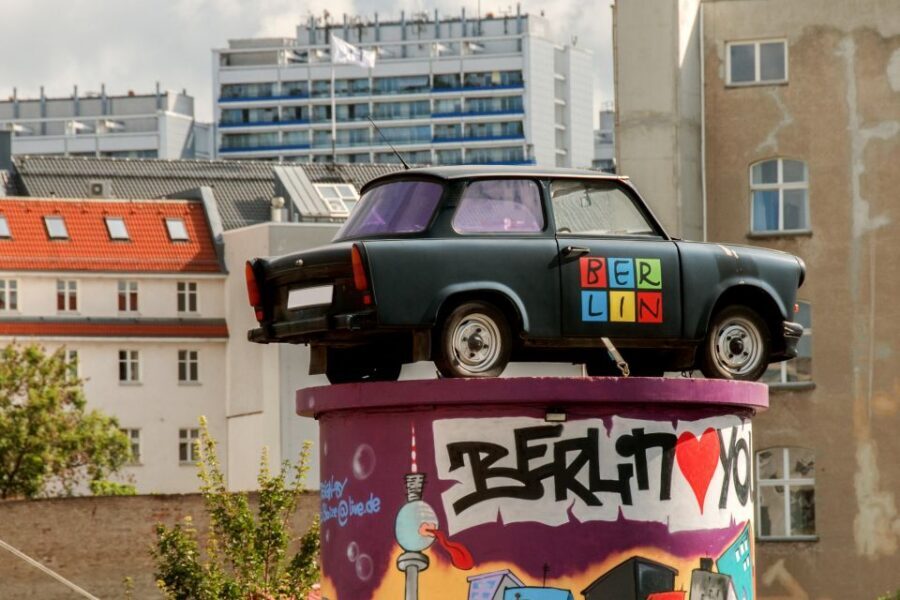
- Brandenburg Gate + Reichstag area: you can ride past, then choose whether you want extra time on the ground
- Checkpoint Charlie stop: quick access to one of Berlin’s most tour-friendly history nodes
- Two route choices: Classic for the core sights, plus East Berlin & Wall for the wall-era story
- On-board audio in 13 languages with headphones: you control the pace while learning as you go
- Free Wi‑Fi on all buses: useful for checking the next stop in the app
- Staff at stops + the app: you can switch plans if you want to linger or move faster
Why this Berlin hop-on hop-off setup works so well

Berlin is wide. That’s the honest problem. Hop on hop off tours solve it by doing the hard part—getting you quickly between districts—while you handle the fun part—walking and choosing what to see up close.
This one is built around two things you’ll feel immediately: frequency and information. When the buses come often enough, you can treat the tour like a rolling map. And when the audio guide is clear and multilingual, you don’t just see buildings—you understand why they’re there.
I also like that the route design covers both “must-see” sights and the in-between areas you’d otherwise skip. You’ll pass major squares and grand streets, but you’ll also hit stops that are useful for planning a day: transport hubs, big museums, and central viewpoints.
You can also read our reviews of more city tours in Berlin



Classic Route vs East Berlin and Wall: which ticket logic to use
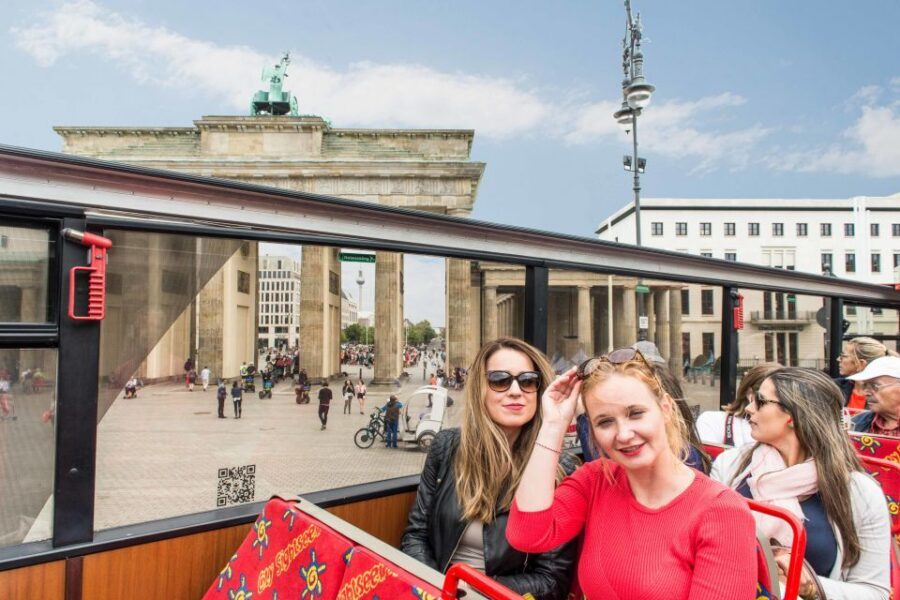
The Classic Route is included on all tickets. It’s the one that strings together the headline sights from west Berlin landmarks toward central Berlin highlights, with stops around major squares and viewpoints. If it’s your first time in Berlin or you only have a day, this is your default.
The Trendy East Berlin and Wall Route is shorter (and it’s included only if you pick the option that includes all lines). This is the route you choose when you want more direct wall-era context and you’re more interested in the neighborhoods that shaped the divided city.
If you have 48 hours, the best approach is usually simple: do the Classic on day one to build your mental map, then take the East Berlin & Wall route so the history clicks into place. Even if you don’t plan to memorize dates, you’ll start noticing patterns—how streets, borders, and memorials shaped everyday life.
Stop-by-stop: the Classic Route route you’ll want to ride first
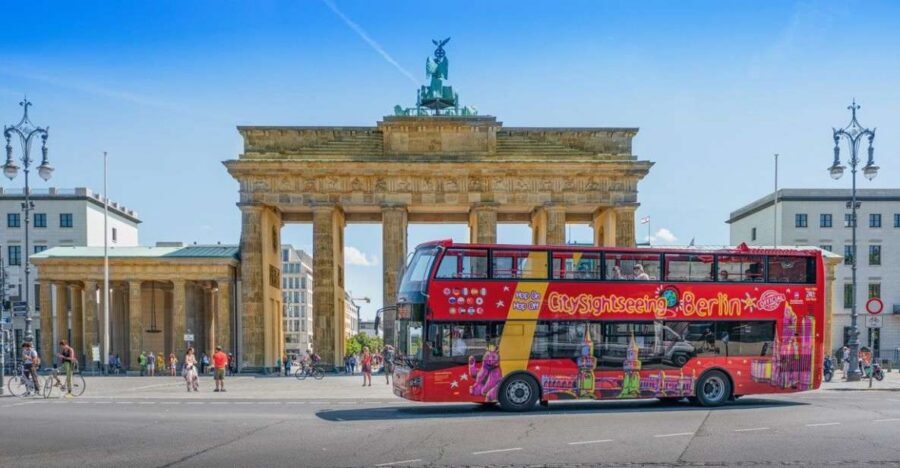
The Classic Route is designed for coverage. You’re not just cruising past sights; you’re meant to hop off at key points, then continue when you’re ready.
Tauentzienstraße (near KaDeWe)
This is a strong starting area because it drops you into central Berlin’s shopping-and-street vibe right away. It’s useful if you like to start walking from the first stop instead of waiting until later.
KaDeWe (one of Berlin’s iconic department stores)
Even if you don’t shop, KaDeWe is a classic orientation point. It’s also one of those stops where you’ll likely want extra time just to see how central it feels compared with the quieter stretches that come later.
Lützowplatz / Kulturforum (Tiergarten side)
This area helps connect Berlin’s museum and cultural zones with the parks and broad avenues nearby. If you want a calmer moment mid-route, this is the kind of stop you can use to regroup.
Potsdamer Platz / Kollhoff-Hochhaus
This is where modern Berlin shows up in a big way. From here, it’s easier to understand how the city rebuilt itself and moved forward while keeping layers of the past visible.
Martin-Gropius-Bau (Gropiusbau area)
A good stop when you want a museum-focused pause. Even if you only plan to look from outside, the stop makes it simple to decide if you want to add a ticket on the ground.
Checkpoint Charlie (Friedrichstraße)
This is one of the tour’s most recognizable stops for a reason. You can treat it like a history briefing station, then decide whether you want more than the basic context offered by the bus audio.
Gendarmenmarkt
This square is all about classic symmetry and postcard views. If you like architecture and open plazas, this is one of the places where photos come out well because the space frames buildings cleanly.
Neptunbrunnen / Rotes Rathaus (Rathausstraße)
This is a central “city center” anchor for viewpoint energy and quick walking connections. It’s also an easy stop for building a plan: cafés, short walks, and a sense of where major streets converge.
Alexanderplatz / Park Inn
Alexanderplatz is Berlin’s large-scale urban hub. Use this stop when you want transit access and a sense of scale, not just a single monument.
Lustgarten
This stop gives you a green break in the middle of the big-street sweep. It’s ideal if you want a short walk with fewer crowds than you might see at the most famous landmarks.
Unter den Linden / Friedrichstraße
This stretch is the classic boulevard moment. It’s a good “ride and then walk” area because the bus audio helps you understand what you’re passing, and the street itself invites a slower pace.
Brandenburg Gate
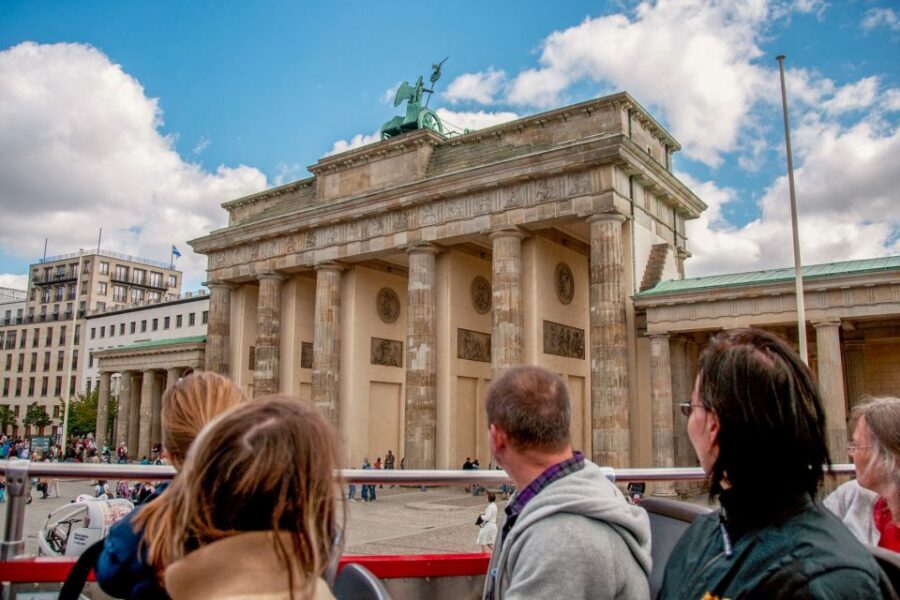
The Brandenburg Gate stop is the headline for many first-time visitors, and it’s also where you can choose how long you want to linger. The key advantage of the bus stop is timing: you can come here when you’re ready, not when your schedule forces you.
Reichstag area
Right here, you feel the political gravity of the city. The bus makes it easy to get to the area, and the audio helps you frame what you’re looking at before you commit time on the ground.
Berlin Central Station (Hauptbahnhof)
This stop is practical. It’s useful if you want to reposition quickly, grab transit, or connect your bus route to the rest of your day’s plan.
Schloss Bellevue
This adds a government-and-formality angle to the route. Even without going inside, it helps round out the “Berlin as a capital” theme.
Victory Column (Siegessäule) / Hofjägerallee
This is a great stop for viewpoint potential. If the sky is clear, you’ll likely want to spend a bit here because Berlin’s sightlines can be excellent from elevated points.
Zoo / Elephant Gate (Elefantentor)
This connects the city center to a different mood: family-friendly energy and a park-adjacent feel. It’s a smart stop if you want your walking break to feel less like pure sightseeing.
Café Kranzler (Kurfürstendamm 21–24 area)
This stop is for food and people-watching, even if you don’t sit for long. It’s also helpful for planning a break without losing your spot on the route.
Kurfürstendamm 236
This is a fitting final note for west-side style. If you’re tired, it’s also a simple place to end your ride and head onward with a sense of where you are.
Trendy East Berlin and Wall: the shorter route with sharper context

The East Berlin & Wall route is the one you take when you want the divided-city story with fewer stops and tighter focus. It’s built for comprehension, not just sightseeing.
Neptunbrunnen / Rotes Rathaus
This start keeps you anchored in central Berlin before you head toward the wall-era locations. It’s a helpful warm-up even if you already did the Classic route earlier.
Oranienburger Straße
This is where you start feeling the shift toward the areas tied to Berlin’s older divisions. Use it as a “connect the dots” stage while the audio ties locations together.
Mauergedenkstätte (Wall memorial area)
This is one of the most meaningful stops on the route because it turns the wall story from abstract into physical space. It’s the kind of stop where you should slow down for a few minutes, even if you don’t do anything ticketed.
Mauerpark
Mauerpark helps you see how places tied to division can later become community spaces. That contrast is often what makes the route stick in your mind.
Alexanderplatz / Park Inn
Coming back to Alexanderplatz on this route works well because it’s a big, recognizable center. You’ll likely use this stop for timing—either to reset or to connect your walking to the next leg.
Karl-Marx-Allee
This stop gives you a longer, grand-street impression that fits the East Berlin narrative. It’s a good place for taking photos from the sidewalk and noticing how the architecture creates an atmosphere.
East Side Gallery
This is the headline art stop for wall history. The bus makes it easy to arrive without wrestling with navigation, and the audio helps you understand why this stretch matters beyond the artwork.
Ostbahnhof
Ending around Ostbahnhof is practical. It gives you a clean exit point so you can keep exploring on foot or switch to other transit without feeling stranded.
Audio guide, Wi‑Fi, and the practical joy of not guessing
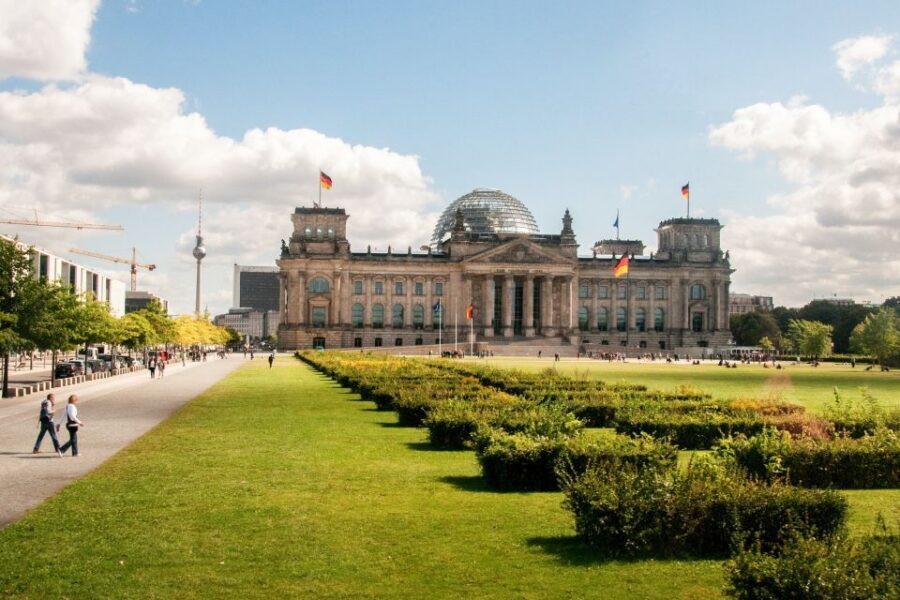
This tour wins points for how it handles information. You get headphones and an audio guide in 13 languages, so you’re not stuck reading signage you don’t understand. The audio helps you interpret what you’re seeing as you pass it, which makes each hop off feel more intentional.
The free Wi‑Fi on all buses is a surprisingly useful perk. You can use the City Sightseeing Berlin app to track buses and check stop locations. That matters because Berlin’s sights are spread out; “arriving near” is not the same as “arriving at the right stop.” The app reduces that stress.
I also like the on-stop support. You may find representatives at stops who help you confirm which bus is coming and how to move between routes. On a short trip, that kind of human guidance can save time.
One note: audio quality is only as good as your headphone connection. If your earphone jack seems loose, try adjusting seats and connections quickly so you don’t waste the first segment of the narration.




Timing and frequency: how to plan a 24–48 hour loop without losing your day
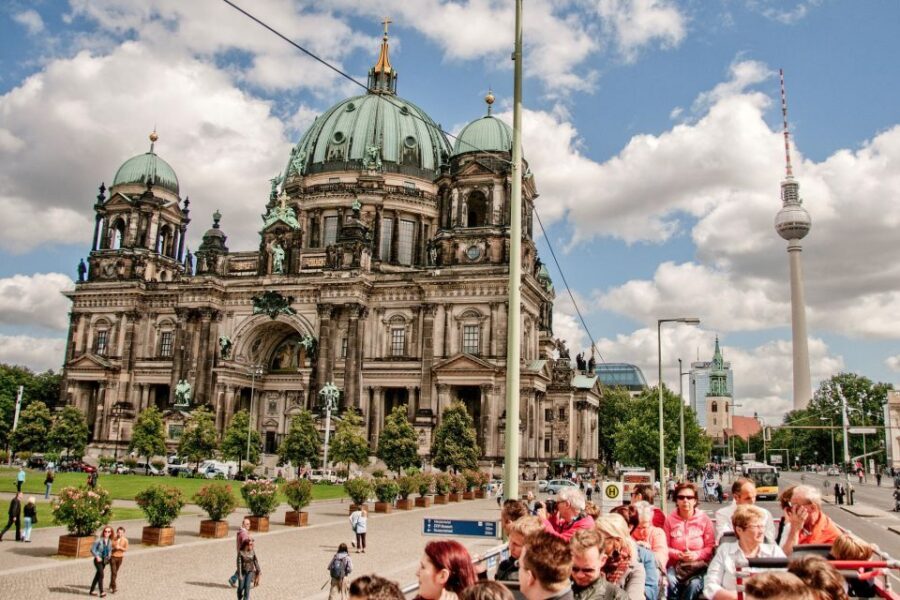
Your ticket covers 1–2 days, but the bus ride only runs during operating hours. On the Classic Route, the first departure is 9:30am from Stop 1 and the last departure is 5pm, with buses every 25 minutes. The Trendy East Berlin & Wall Route runs a bit later in the day with the first departure at 10am, last at 5pm, and buses every 40 minutes.
So here’s the practical strategy that works for most schedules: start earlier than you think you need to. Berlin daylight helps, and it also gives you buffer time for choosing whether you want extra time at big stops like Brandenburg Gate or Checkpoint Charlie.
If you’re moving fast, you can do a full loop by staying onboard between clusters of stops. If you’re moving slow, hop off where the stop is useful as a walking base: squares, plazas, station areas, or museum zones.
Because routes differ in length and frequency, I recommend using the shorter East route for a focused block. Then use the Classic route to keep options open and return to areas that looked most interesting from the bus.
Price: why $25 for a hop-on hop-off bus can be good value

At around $25 per person, this is priced like a budget-friendly orientation tool. The value comes from what you don’t have to do: you avoid constant rideshares and you reduce the mental load of mapping transit across a sprawling city.
You’re also getting more than transport. You get headphones plus the audio guide in 13 languages, and you can choose to spend time at major stops like Gendarmenmarkt, Alexanderplatz, Brandenburg Gate, and the Reichstag area. Those are the sites that tend to cost time even if tickets are free, so having a built-in way to reach them efficiently is where the money pays back.
If you only buy one route, keep it simple and go Classic. If you’re staying longer and you care about understanding Berlin’s division and wall history, adding the East route makes the ticket feel like a more complete storyline rather than a list of highlights.
Comfort and weather realities: seats, rain, and headphone hiccups
An open-top bus is great when the sky behaves. In rain, you’ll likely care more about the canopy and your personal comfort than about taking photos. Some people note rain can find its way in, and that can be annoying if you were hoping for a totally dry ride.
Seats are also a real-world factor. You’re sitting for stretches between stops, and while the buses are practical, the top deck isn’t always the most ergonomically forgiving spot for long stretches. If you expect to stay on board for the full ride window, I’d pack a light layer and plan to rotate your seating spot if needed.
Headphones are included, but if you run into a damaged port or a wonky connection, don’t wait. Switch seats, try another headphone jack if one is available, and get back to listening fast. Your enjoyment will depend on hearing the narration.
Who this tour suits best in Berlin
This works best if you want a city overview without turning every day into a navigation project. You’ll love it if you’re the type who learns as you go and then chooses what to do next—museum, memorial, viewpoint, or just a café break.
It’s also a great choice for:
- First-timers who want Brandenburg Gate, Checkpoint Charlie, and East Side Gallery on your radar fast
- Short-trip visitors who need to maximize movement between neighborhoods
- People who like history but don’t want to schedule a full day of ticketed tours back to back
If you already know Berlin well and you prefer deep local walks, you might find you use it more as transport between neighborhoods than as a “tour.” Still, the included audio can add helpful context quickly while you ride.
Should you book this Berlin hop-on hop-off bus tour?
If your goal is to see the big landmarks plus understand what you’re looking at, I think you should book it. The combination of open-top sightlines, audio in 13 languages, and a stop network that covers both west-central highlights and wall-era locations gives you solid value for the time you have.
I’d book it especially if:
- You’re in Berlin for 1–2 days and need an easy plan
- You want the flexibility to hop off, decide, then hop back on
- You like learning in transit so your walking time feels smarter
I’d hesitate only if you’re sensitive to small comfort issues like headphone connections or rainy-weather shelter. If that’s you, bring a backup plan for rain gear and be ready to adjust your seating and audio setup quickly.
FAQ
What’s the duration of the Berlin hop-on hop-off bus tour?
The tour is listed as 1–2 days.
How much does the tour cost?
The price is listed as $25 per person.
Which route is included with my ticket?
The Classic Route is included in all tickets. The Trendy East Berlin and Wall Route is only included if you select tickets that include all lines.
Where can I start the tour?
You can start from any bus stop along the route. There are also two starting location options, and you can check the latest stop locations in the City Sightseeing Berlin app.
What languages are available for the audio guide?
The audio guide is available in English, Spanish, French, German, Italian, Hebrew, Japanese, Chinese, Portuguese, Russian, Polish, Arabic, and Turkish.
Is Wi‑Fi included on the buses?
Yes. Free Wi‑Fi is available on all buses.
What are the Classic Route operating times and frequency?
First departure is 9:30am and the last departure is 5pm, with buses every 25 minutes.
What are the Trendy East Berlin and Wall Route operating times and frequency?
First departure is 10am and the last departure is 5pm, with buses every 40 minutes.
What should I bring, and what isn’t allowed?
Bring a passport or ID card. Pets are not allowed, and smoking is not allowed. Attraction tickets and food and drinks are not included.